Home Blog Page 131

Kuvimba’s Tendai Madondo Appointed Vice Chair of PetroTrade Board

0

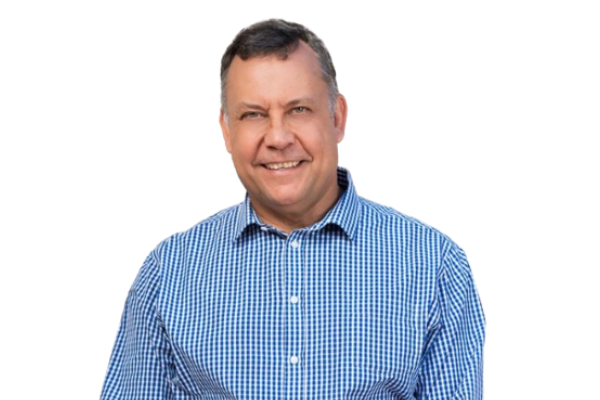
Kuvimba Mining House (KMH) Head of Corporate Affairs, Ms Tendai Madondo, has been appointed Vice Chairperson of the PetroTrade (Private) Limited board, a key appointment announced by the Chief Executive Officer of the Mutapa Investment Fund, Dr John Panonetsa Mangudya, Mining Zimbabwe can report.

By Rudairo Mapuranga

This appointment was made under the Sovereign Wealth Act [Chapter 22:20] and is effective from January 1, 2025.

Madondo joins a distinguished board chaired by Mr Joshua Tapambgwa, with other members including Ms Tendai Chigudu, Ms Paidamoyo Hazel Maenzanise, Mr Bevin Ngara, Mr Kennedy Nyangoni, and Mr Willing Zvivero. The board’s full composition represents a strategic team set to steer PetroTrade’s growth in the energy sector.

As Vice Chairperson, Madondo brings extensive corporate experience, particularly from her leadership as Kuvimba Mining House’s Head of Corporate Affairs. Her work at Kuvimba has been instrumental in transforming the company’s public image, positioning it as a key player in Zimbabwe’s mining industry, and enhancing its corporate reputation through effective communication strategies and stakeholder engagement.

Madondo’s leadership and experience in the mining sector are expected to provide valuable insights to her new role at PetroTrade as the company seeks to strengthen its presence in Zimbabwe’s petroleum and energy markets.

Gold buying prices per gram in Zimbabwe,17 February 2025

Gold buying prices per gram in Zimbabwe today 17 February 2025, from the official gold buyer and exporter Fidelity Gold Refinery (FGR).

SG 90% and ABOVE US$88.75g
SG ABOVE 85% BUT BELOW 90% US$87.81g
SG ABOVE 80% BUT BELOW 85% US$86.87/g
SG ABOVE 75% BUT BELOW 80% US$85.93/g
SAMPLE BELOW 10g BUT ABOVE 5g US$84.52/g

Fire Assay CASH $89.22/g

NB: Fire Assay cash price is for gold above 100gs, no sample is deducted.
For the Fire Assay Transfer price, a sample of not more than 10g is deducted
A 2% royalty is charged on all deposits (Small-scale miners)
A 5% royalty is set for Primary Producers

Cash available. Fidelity Gold Refinery prices will be changing daily to match the world market.

VP Mohadi Hails PLZ’s Role in Advancing Zimbabwe’s Lithium Industry

0
The Vice President of Zimbabwe, Hon. Kembo Mohadi, hailed Prospect Lithium Zimbabwe’s (PLZ) significant contributions to the mining sector during a recent tour of the company’s operations in Goromonzi. He also reaffirmed government support for the industry, Mining Zimbabwe can report.
By Ryan Chigoche
During the exclusive tour of the Arcadia lithium project, one of Africa’s largest hard rock lithium processing plants, PLZ, a subsidiary of Huayou Cobalt, showcased its $700 million investment.
This has created employment for over 2,000 Zimbabweans and introduced cutting-edge mining practices, including efficient extraction methods, advanced ore processing, and improved safety protocols.
During the tour Mohadi commended PLZ for its state-of-the-art mining technologies and its role in advancing the country’s lithium industry, a key driver of Zimbabwe’s economic transformation visited Prospect Lithium Zimbabwe (PLZ) in Goromonzi, where he

”The mining sector, no doubt, stands as a cornerstone of Zimbabwe’s economy, and Huayou Cobalt’s investment through PLZ has become a significant driver within this sector, I’m pleased to note the massive infrastructural development at this place here which I witnessed during the tour. The government welcomes the modern mining technologies and practices brought about by PLZ in the country. These include more efficient extraction methods, improved ore processing techniques as well as advanced safety protocols. We must leverage these advancements to improve overall efficiency and sustainability in the whole mining sector,” Mohadi said.
PLZ’s Arcadia project has the capacity to process 4.5 million tons of hard rock lithium per year into concentrate for export. The project is expected to play a crucial role in Zimbabwe’s economic transformation, aligning with the country’s Vision 2030 goal of achieving upper-middle-income status.
Speaking at the tour Mr. Henry Zhu, General Manager of PLZ said ” We are thrilled to have had the opportunity to showcase our operations to the Hon. Vice President, The government’s support for the lithium industry is crucial to our success, and we appreciate the Vice President’s interest in our project.”
Zhu also expressed gratitude to the government for its continued support, which has enabled the company to contribute significantly to national economic goals.

Beyond its mining operations, PLZ has launched various corporate social responsibility (CSR) initiatives in Mashonaland East Province. In December 2024, the company unveiled the US$1.2 million Goromonzi Community Development Projects, which include the Health to Success healthcare program, Skill to Success youth vocational training, Weaving the Future women’s empowerment initiative, and Energy Equity to Success, focused on improving local electricity access.

The Vice President’s visit underscored the government’s commitment to supporting investments that drive economic growth. With lithium playing an increasingly strategic role in global energy markets, Zimbabwe’s mining sector remains a focal point for both local and international investors.

Mine Shaft Horror: Cage Falls, Overturns, and Crushes Victims

0
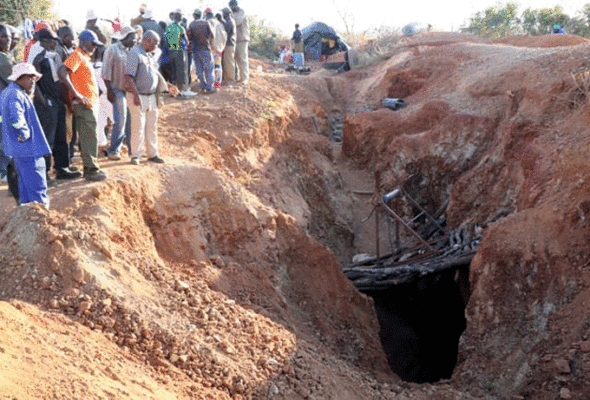
Three miners tragically lost their lives on Thursday at Yellowsnake 37 Mine in Kwekwe after a mining shaft accident, Mining Zimbabwe can report.
By Rudairo Mapuranga
According to the Zimbabwe Republic Police (ZRP), the victims were fatally injured when a safety hook fastening the rope to a cage they were using to exit the shaft broke, leading to the cage falling down the shaft and subsequently overturning. The cage then crushed the three victims.
ZRP Spokesperson Commissioner Paul Nyathi confirmed the incident, stating that the cage crushed the miners as they were going out.
“The victims had entered the mine shaft using a cage. As they were getting out of the shaft, a safety hook that was fastening the rope to the cage broke, resulting in the cage falling. The cage overturned and tragically crushed the victims,” he said.
The victims’ bodies were recovered and taken to Kwekwe General Hospital for post-mortem examinations.
Authorities are investigating the accident to determine the cause of the safety hook’s failure, and efforts are being made to reinforce proper safety measures to avoid similar incidents in the future.
The mining community in Kwekwe has been left devastated by the accident, which highlights ongoing safety concerns in the artisanal and small-scale mining sector. The ZRP has called for enhanced safety precautions in mining operations to prevent further loss of life.

Mining Sector Suffered US$800 Million Loss Following RBZ’s September ZIG Devaluation

0

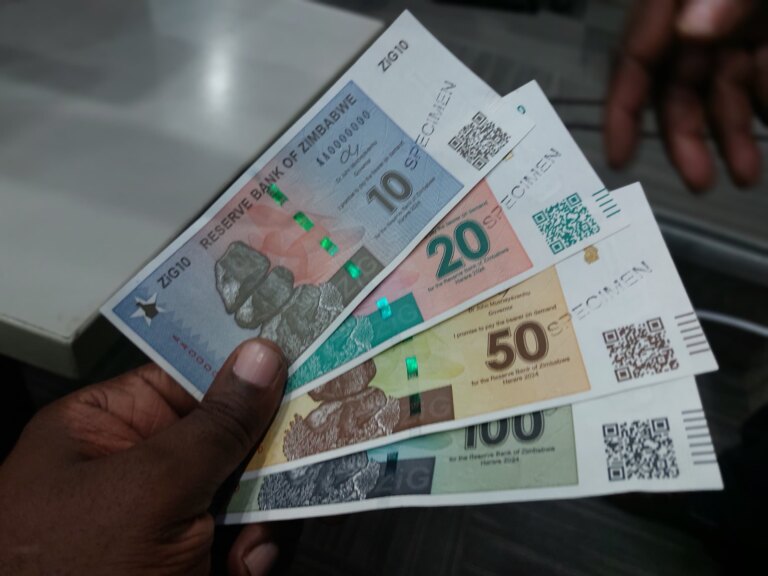
The Zimbabwe mining sector, the country’s largest export earner, suffered a significant setback when the Reserve Bank of Zimbabwe (RBZ) decided to devalue the ZIG currency by 40% in September 2024, Mining Zimbabwe can report.

By Ryan Chigoche

This decision led to a staggering loss of US$800 million for the sector, further highlighting the fragility of Zimbabwe’s economic situation.

The impact of the devaluation was keenly felt across the industry, which already faced numerous challenges, including inflation and exchange rate instability.

At the recently concluded CEO Roundtable event, renowned economist Eddie Cross took the opportunity to address the economic damage caused by the RBZ’s monetary policies.

He criticized the central bank’s lack of foresight and its failure to support business and production, highlighting the disastrous consequences for key sectors, particularly mining.

In September 2024, Zimbabwe’s central bank made the controversial decision to allow the newly launched, gold-backed currency to fall over 40% against the US dollar.

This came after weeks of sustained pressure on the ZIG, which had only been introduced in April. Despite the promise of stabilizing the economy through this currency, the reality was quite different—currency depreciation continued to worsen, adding to the financial strain on businesses and individuals alike.

Speaking at the event, Cross said, “To be honest, the RBZ is not serious at all. They are at the root of many of the problems the economy faces today. The mining sector alone lost a staggering $800 million during the Zim-dollar devaluation—a massive blow to the sector. This not only undermined productivity but also severely damaged investor confidence, contributing to the ongoing economic crisis.”

The devaluation of the ZIG is not just an isolated issue for the mining sector—it represents a larger, systemic problem that has shaken Zimbabwe’s economy. According to analysts, the devaluation exacerbated Zimbabwe’s economic instability, affecting every sector that depends on foreign currency, including agriculture, manufacturing, and services.

The Reserve Bank justified the devaluation as a necessary step to address “resurgence in exchange rate pressures,” which had been reflected in the widening gap between the official exchange rate and the parallel market exchange rate. Inflationary pressures also rose significantly during this period, further eroding purchasing power for businesses and households.

During the September devaluation, miners were only allowed to retain 75% of their foreign currency earnings, with the remaining portion being converted into the ZIG.

However, this move proved disastrous as the currency was devalued, leading to massive exchange rate losses. Miners, already grappling with inflation and rising costs, found themselves in an even more precarious financial position, significantly harming their ability to reinvest and expand operations.

In a recent development, the RBZ has further reduced the foreign currency retention threshold for exporters, including miners, from 75% to 70%. This new policy diverges from the expectations of businesses, which had anticipated being able to retain at least 85% of their foreign currency earnings to weather the ongoing economic challenges.

Since its introduction in April 2024, the ZIG currency has faced numerous hurdles. The Reserve Bank has been forced to intervene multiple times by injecting USD into the market, trying to stabilize the situation.

However, these interventions have had limited success, as inflation continues to rise and the value of the ZIG continues to fluctuate erratically, hurting miners severely.

Meanwhile, over the years, Zimbabweans—both citizens and businesses—have become accustomed to the volatility of the country’s currency. Over the past two decades, the value of savings, pensions, and insurance policies has been effectively wiped out, leaving individuals with diminished purchasing power.

The constant devaluation of the currency has led to a cycle of reduced confidence in the economy, with many citizens choosing to move their assets into foreign currency or gold, further straining the local currency.

In the mining sector, a critical part of Zimbabwe’s export-driven economy, the challenges are even more pronounced. Foreign investors have been wary of Zimbabwe’s economic volatility, leading to decreased investment in mining projects.


 

Battery vs Petrol: The Great Debate

Battery-operated outdoor power equipment is a game-changer

Do you need to update your outdoor power equipment but you’re not sure if battery or petrol-operated is the better option? With the recent advancements in technology, choosing between the two makes for an interesting debate.

Alec Philp, Director at Cutting Edge, says the benefits of each are more evenly matched than ever: “When it comes to power and durability, you can’t go wrong with Husqvarna’s petrol tools. However, with the advancements being made in their battery products, they’re more than just a replacement for older petrol-operated equipment – they’re an upgrade.”

Battery power is transforming the way people work. Lawnmowers, chainsaws, brush cutters, hedge trimmers and blowers, once thought to be too underpowered, are fast becoming the equipment of choice for groundsmen, forestry workers, farmers and landscapers. “Convenience and cost efficiencies have transcended the gardeners’ electrical products into the everyday working life of professionals using outdoor power tools,” Philp adds.

So which power option should you choose? He shares his top reasons why battery-operated equipment is a serious consideration:

1. Silent performance

The main benefit of fully electrical power equipment such as Husqvarna’s battery series is the low noise levels. Battery power whispers in at 65 to 83 decibels, so you probably couldn’t tell if your neighbour was operating a chainsaw or a lawn mower next door. For professionals, these low noise levels are the solution for working in sports grounds, schools, hospitals and other areas where noise pollution is an issue.

2. Power

We are often asked if petrol-operated equipment is more powerful than its battery counterparts. The simple answer is “yes”. There is still a difference in power and Husqvarna’s petrol tools remain the best choice for heavy jobs. Battery power is, however, now widely recognised as the smarter way to power through everyday tasks, delivering a new level of performance and dependable power. With extensive and impressive run times and minimal charge times, Lithium-ion batteries offer a reliable power source and the tools are tough enough to handle most jobs.

3. Safety

Battery products provide improved safety as they remove the need for fuel filling and on-site storage. No more teaching crews how to mix and handle fuel properly. There’s no engine oil, reducing the risk of engine damage and there’s no tugging away with recoil starts.

4. The healthier option

Battery power is clean, and operators are exposed to fewer emissions. For professional users, another benefit is the huge reduction in vibration. This makes battery tools more ergonomic to use, particularly when operated all day and reduces the risk of Hand-Arm-Vibration syndrome, a common occupational hazard.

5. Convenience

More user-friendly, battery-powered tools are easier to operate and start instantly, allowing crews to perform their work more efficiently. It’s a simple case of charge-and-go. At the press of a button, instant full power is available. Batteries are also easily swapped on-site, minimising downtime. And, Husqvarna’s batteries are designed to fit a wide range of tools, making them interchangeable among lawnmowers, hedge trimmers, brush cutters, blowers and even chainsaws. This versatility enhances productivity and reduces the need for multiple battery types.

6. Cost-effective operation

Ultimately, battery products are also good for your bank balance. Once the initial investment has been made, the running costs are much lower as electricity is generally significantly cheaper than petrol. You will also save on maintenance as there are fewer moving parts and no need to change filters, oil or spark plugs. This adds up to significant savings in the long term – certainly, a factor to consider when purchasing equipment for professional teams.

It’s easy to see why many professionals and domestic gardeners are turning to the ‘charge and go’ option, given the numerous benefits of battery power. These tools offer all the necessary power while providing advantages for the environment, users, and those nearby: lower emissions, reduced noise, less vibration, greater safety, and decreased costs. “Battery vs petrol? Ultimately, the choice depends on what suits your specific needs and working environment best,” Philp concludes.

For more information or to view Husqvarna’s range of battery-operated products, visit https://www.husqvarna.com/zw/

Gold buying prices per gram in Zimbabwe, 14 February 2025

Gold buying prices per gram in Zimbabwe today 14 February 2025, from the official gold buyer and exporter Fidelity Gold Refinery (FGR).

SG 90% and ABOVE US$88.24g
SG ABOVE 85% BUT BELOW 90% US$87.31g
SG ABOVE 80% BUT BELOW 85% US$86.37/g
SG ABOVE 75% BUT BELOW 80% US$85.44/g
SAMPLE BELOW 10g BUT ABOVE 5g US$84.04/g

Fire Assay CASH $88.71/g

NB: Fire Assay cash price is for gold above 100gs, no sample is deducted.
For the Fire Assay Transfer price, a sample of not more than 10g is deducted
A 2% royalty is charged on all deposits (Small-scale miners)
A 5% royalty is set for Primary Producers

Cash available. Fidelity Gold Refinery prices will be changing daily to match the world market.

RBZ Wary of Subdued PGM Prices’ Impact on Export Earnings

0

The Reserve Bank of Zimbabwe (RBZ) is concerned about the anticipated decline in platinum group metal (PGM) prices in 2025, driven by slowing demand from the automotive sector as the shift to renewable energy accelerates.

By Rayan Chigoche

Platinum prices have fluctuated significantly over the years. In March 2008, platinum hit an all-time high of $2,290 per ounce due to strong demand and supply concerns. However, following the global financial crisis, prices dropped. By mid-2022, platinum was around $1,300 per ounce, falling below $1,000 per ounce by June 2022 due to reduced demand, a stronger U.S. dollar, and economic uncertainty.

Between 2022 and 2023, platinum prices remained volatile, fluctuating between $900 and $1,000 per ounce. Market forecasts predict further weakening in 2025, with prices likely staying within this range due to economic slowdowns and increased recycling supply.

In the 2025 RBZ Monetary Policy Statement, Governor John Mushayavanhu warned that declining PGM prices would significantly impact export earnings. “The demand for PGMs is likely to remain subdued owing to the shifting structure of the automotive sector against the growth in the electric vehicle sub-sector. These developments will weigh down prices, with negative spillovers to Zimbabwe’s export proceeds,” he said.

To counteract this, the RBZ announced a controversial policy—the liquidation of 30% of export proceeds, a move seen as a significant blow to PGM producers.

However, the RBZ remains optimistic about gold prices, which are expected to stay strong due to geopolitical tensions and safe-haven demand, helping stabilize export revenues.

Meanwhile, total foreign currency receipts for 2024 amounted to US$13.32 billion, a 21% increase from US$11 billion in 2023. Export proceeds contributed 59.2% of this, totalling over US$7.8 billion.

Kuvimba Seeks US$950M to Supercharge its Projects

0

Zimbabwe’s state-owned miner, Kuvimba Mining House (KMH), is gearing up for a new round of financing to revitalize several key mining projects, just a year after the government took full control of the company through the Mutapa Investment Fund, the country’s sovereign wealth fund, Mining Zimbabwe can report.

By Rudairo Mapuranga

Under the leadership of GCEO Trevor Barnard, Kuvimba is seeking to raise US$950 million from development banks, mining companies, and international traders. This funding will support the development of lithium, platinum, and gold assets, Barnard said in an interview.

“Access to all the large development banks, to all the funding, to all the major traders has just opened up,” said Barnard, praising the company’s change in ownership structure. He noted that the restructuring has significantly boosted Kuvimba’s credibility and ability to attract investment.

A major portion of the capital—more than half—will be directed toward building an underground platinum mine at the long-delayed Darwendale project. Barnard, who assumed the CEO role in December, emphasized the importance of this platinum project but also pointed out that a US$275 million lithium venture may come online sooner due to faster development timelines.

Kuvimba has already secured a joint venture with Chinese mining companies to develop its lithium assets, with plans to finalize the deal by March 2025. The first phase of the project, known as Sandawana, will commence production within 15 months of signing, eventually producing 500,000 tons of lithium concentrate annually. The Chinese partners will finance the development and hand over the project to Kuvimba once the loan is repaid, a process expected to take less than five years.

Barnard also revealed that the company is exploring further development of the Sandawana area and has already attracted interest from international investors, including Cluff Africa Ltd. and a major European commodity trader. Additional Chinese investors have expressed interest, and a deal could be finalized within six to 12 months.

In terms of platinum, Kuvimba is planning to begin with a smaller open-pit mine at the Darwendale deposit this year. The open-pit project will require an investment of about US$50 million, with the company intending to partner with another miner to process the extracted ore. Simultaneously, Kuvimba is in discussions with development banks for loans to finance the larger underground platinum mine and processing facilities, which are expected to be operational within the next three years.

Zimbabwe boasts the world’s second-largest platinum reserves after South Africa and has emerged as Africa’s leading lithium producer, positioning Kuvimba as a key player in the country’s mining sector. The company is now 70% owned by the Mutapa Investment Fund, with the remaining shares held by entities controlled by the Ministry of Finance, including state pension funds, power utilities, and a deposit insurance fund.

This ambitious fundraising initiative marks a significant step forward for Kuvimba as it seeks to unlock the potential of Zimbabwe’s vast mineral wealth and contribute to the country’s economic growth.

Mnangagwa Appoints second Deputy Minister of Mines

0

President Mnangagwa has appointed Mutoko North Member of Parliament, Hon Caleb Makwiranzou, as the second Deputy Minister of Mines and Mining Development, Mining Zimbabwe can report.

By Rudairo Mapuranga

As announced by Dr Martin Rushwaya, Chief Secretary to the President and Cabinet, on Thursday, the appointment—made under Section 104, Subsection 2 of the Constitution of Zimbabwe—is with immediate effect.

Hon. Makwiranzou will be responsible for overseeing the critical areas of oil and gas research, as well as other strategic minerals exploration.

The Ministry now has two Deputy Ministers with the first being Sanyati MP Polite Kambamura.

Kambamura is an experienced Engineer by profession who has worked for local mines including Mimosa and some South African mines.