

Home Blog Page 136

RioZim in Crisis as Gold Output Plunges 54%, Company Seeks Lifeline from Investors

0

RioZim, once a dominant player in Zimbabwe’s gold sector, has hit a new low. The mining firm’s gold output fell by a staggering 54% in 2024, just as other companies are thriving thanks to record-high gold prices.

By Ryan Chigoche

Once a pillar of Zimbabwe’s mining industry, RioZim’s dramatic decline has deepened the company’s financial woes, with widening losses, shrinking liquidity, and growing doubts about its long-term viability.

Now under pressure from labour unions pushing for corporate rescue, RioZim is banking on potential backing from a group of Chinese investors to turn things around.

The company’s 2024 financial results paint a bleak picture. Only 428 kilograms of gold were produced last year, down from 940 kg in 2023.

For context, competitors like Caledonia and Padenga produced more gold in a single quarter than RioZim did all year. Caledonia’s Blanket Mine delivered 541 kg, and Padenga’s Dallaglio operations yielded 620 kg during the first three months of 2025.

Production was hit hard by a prolonged strike at Renco Mine caused by unpaid wages.

At the same time, operations at Cam & Motor suffered due to repeated equipment failures.

RioZim stated that the mine operated with just one functioning mill throughout the year after the second one was taken out of service.

Despite soaring gold prices globally, RioZim couldn’t capitalize due to its poor output. Renco’s production dropped by 45% to 243 kg, while Cam & Motor’s output plummeted by 63% to just 185 kg.

RioZim’s diamond unit, once a more stable part of the business, also declined. Murowa Diamond Mine’s output fell by 13%, with only 359,000 carats produced.

The company blamed old and inefficient machinery, saying it had to retire all its heavy equipment due to frequent breakdowns and escalating maintenance costs.

“The current fleet (of equipment) has passed its economic life. The low plant performance resulted in the mine decommissioning all its heavy mobile equipment during the year, as it became unsustainable to run due to persistent breakdowns,” RioZim says.

After years of underperformance and deteriorating conditions, the sale of some of RioZim’s assets now appears unavoidable.

To give a bit of their background, RioZim is an integrated mining and metallurgical company in Zimbabwe with an extensive portfolio of resources in gold, base metals, diamonds, coal, and chrome.

Its mining operations include Renco Gold Mine in Masvingo Province, and Cam & Motor Gold Mine and Empress Nickel Refinery, both in Mashonaland West Province.

RioZim also has interests in Sengwa Colliery Limited with coal assets in Gokwe North; Murowa Diamonds Limited with operations in Zvishavane; and Marnatha Ferrochrome Refinery in Kadoma.

RioZim separated from its parent company, Rio Tinto plc, in 2004 to become a wholly-owned Zimbabwean company.

Its subsidiaries include RioGold Limited, RioZim Base Metals Limited, and RioDiamonds Limited. RioZim Group Limited is listed on the Zimbabwe Stock Exchange.

Gold buying prices per gram in Zimbabwe, 3 June 2025

Gold buying prices per gram in Zimbabwe today, 3 June 2025, from the official gold buyer and exporter Fidelity Gold Refinery (FGR).

SG 90% and ABOVE US$102.41/g.
SG ABOVE 89% BUT BELOW 90% US$101.33/g.
SG ABOVE 80% BUT BELOW 85% US$100.24/g.
SG ABOVE 75% BUT BELOW 80% US$99.16/g.
SAMPLE BELOW 10g BUT ABOVE 5g US$97.53/g.

Fire Assay CASH $102.95/g.

NB: Fire Assay cash price is for gold above 100g; no sample is deducted.
A sample of not more than 10g is deducted for the Fire Assay Transfer price.
A 2% royalty is charged on all deposits (Small-scale miners).
A 5% royalty is set for Primary Producers.

Gold buying prices per gram in Zimbabwe, 2 June 2025

Gold buying prices per gram in Zimbabwe today, 2 June 2025, from the official gold buyer and exporter Fidelity Gold Refinery (FGR).

SG 90% and ABOVE US$99.57/g.
SG ABOVE 89% BUT BELOW 90% US$98.52/g.
SG ABOVE 80% BUT BELOW 85% US$97.47/g.
SG ABOVE 75% BUT BELOW 80% US$96.41/g.
SAMPLE BELOW 10g BUT ABOVE 5g US$94.83/g.

Fire Assay CASH $100.10/g.

NB: Fire Assay cash price is for gold above 100g; no sample is deducted.
A sample of not more than 10g is deducted for the Fire Assay Transfer price.
A 2% royalty is charged on all deposits (Small-scale miners).
A 5% royalty is set for Primary Producers.

ZINIRE Highlights Valuable Insights Gained During Zimplats Technical Visit

0

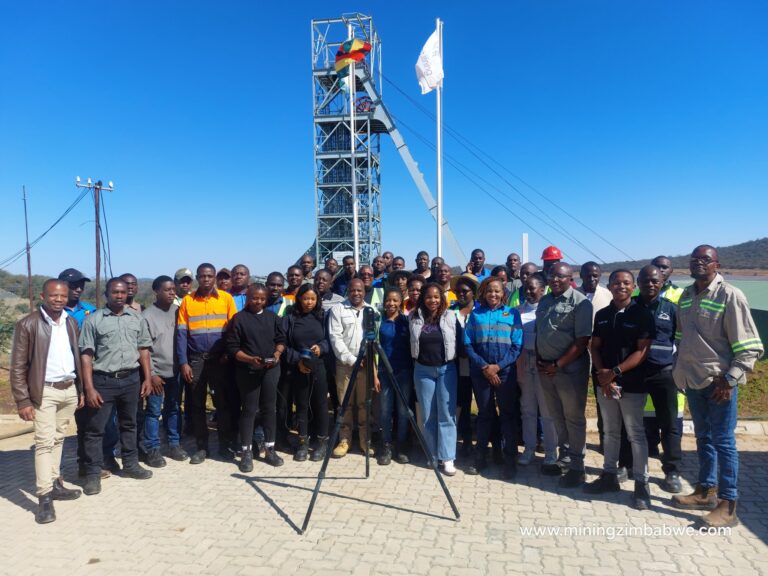
The Zimbabwe National Institute of Rock Engineering (ZINIRE) recently conducted a technical visit to Zimplats’ Rukodzi Underground Mine, offering mining professionals an in-depth look at the latest technologies and practices shaping underground mining in Zimbabwe.

By Ryan Chigoche

Hosted by Zimplats, the visit focused on the company’s ongoing pillar reclamation project, where attendees observed innovations such as semi-automated ore lashing systems, advanced geotechnical monitoring tools, and real-time ground support analysis.

These technologies are designed to improve operational efficiency, enhance underground safety, and promote sustainable resource extraction.

The event attracted strong participation from across the mining sector, reflecting a growing interest in practical, industry-driven learning.

Speaking to Mining Zimbabwe, ZINIRE representative Munyaradzi Musembwa praised the turnout and the knowledge-sharing that took place during the visit.

“The ZINIRE technical visit was a success with an 80% turnout. The technical visit provided valuable insights into modern rock engineering practices, technological advancements, and innovative solutions within the industry. Technical visits like these play a crucial role in keeping professionals informed, improving mining strategies, and strengthening industry-wide connections,” Musembwa said.

Attendees observed streamlined workflows emphasising safety-first protocols, efficient material handling, and optimised excavation methods.

A key highlight was Zimplats’ approach to sequential pillar extraction in hard rock environments, supported by enhanced seismic monitoring systems to maintain underground stability.

Beyond the technical demonstrations, the visit offered valuable professional development opportunities.

Participants engaged directly with advanced engineering tools, bridged theory with practice, and exchanged insights with peers and experts across the sector.

Such visits also help deepen awareness of evolving industry standards and regulatory expectations.

By witnessing modern mining methods firsthand, professionals gained broader perspectives on how innovation is driving safety, performance, and sustainability in the field.

As Zimbabwe’s mining industry continues to evolve, ZINIRE’s technical outreach remains essential in strengthening local expertise and aligning national practices with global best standards.

Zimplats’ Rukodzi Mine Set to Close Following Successful Pillar Reclamation Project

0

The country’s leading platinum group metals (PGM) producer, Zimplats, is preparing to close operations at its Rukodzi Mine in June 2025, marking the end of a pivotal chapter in the history of one of its oldest mining assets.

By Ryan Chigoche

This closure comes on the heels of a highly successful pillar reclamation project that significantly boosted resource recovery while maintaining rigorous safety standards.

Pillar reclamation is the process of safely extracting ore from the pillars—large blocks of ore deliberately left in place during initial mining to support underground structures.

By reclaiming these pillars, Zimplats was able to increase the extraction ratio from 81% to nearly 91%, unlocking previously inaccessible ore without compromising mine stability.

Following the closure of primary mining in June 2022, Zimplats initiated pillar reclamation in July 2022, beginning with a carefully monitored one-year trial.

This phase focused on testing the feasibility and behaviour of pillar extraction while prioritising worker safety and underground stability.

The trial’s success enabled Zimplats to move into full production reclamation in July 2023.

Despite the mine’s initial closure announcement, production remained strong, averaging approximately 2,500 tonnes per day and approximately 18,500 tonnes per month—a remarkable achievement for a mine once considered closed.

This sustained output underscores the effectiveness of the reclamation strategy.

The operation, conducted at a maximum depth of 90 meters, employed around 190 people, including contractors, who worked with two production fleets.

A key aspect of the project was the disciplined mining sequence and the use of a 30-degree planer to maintain consistent extraction rates.

This approach helped manage stress redistribution underground, preventing pillar failures and ensuring safety throughout the process.

As reclamation nears completion, the worked-out areas have advanced closer to the mine declines, signalling the final stage of production at Rukodzi.

Zimplats’ pillar reclamation project at Rukodzi Mine exemplifies how innovation and meticulous planning can extend the life of ageing mining assets while maximising resource recovery and upholding the highest safety standards.

While Rukodzi will soon close, the success of this project sets a strong example for future reclamation efforts within Zimplats and the wider mining industry.

Parliament Calls for Stronger ESG Commitment in Mining Sector, Says Impact Must Go Beyond Taxes

0

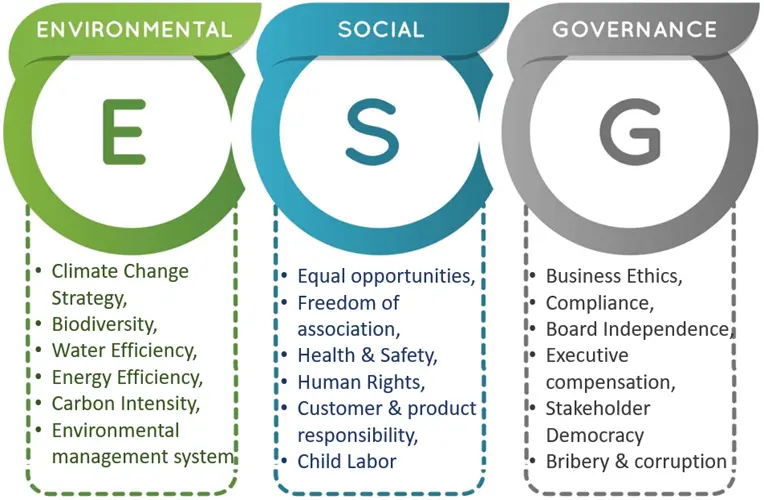
The Chairman of the Parliamentary Portfolio Committee on Mines and Mining Development, Hon Remigious Toendepi Matangira, has called for a more comprehensive Environmental, Social, and Governance (ESG) approach in Zimbabwe’s mining sector, urging mining companies to invest more meaningfully in communities and the environment, Mining Zimbabwe can report.

By Rudairo Mapuranga

Speaking at the Chamber of Mines Annual Mining Conference in Victoria Falls, Hon. Matangira emphasised Parliament’s oversight role in ensuring that mining activities are not only economically beneficial but also socially responsible and environmentally sustainable.

“Mining is like making an omelette — you can’t do it without breaking an egg,” he said. “Likewise, you cannot mine without affecting the soil and the environment. But responsible mining is not a choice anymore; it is a must.”

Hon. Matangira raised concerns shared by communities across mining districts, where massive open pits, degraded landscapes, and diminishing mountains are becoming permanent scars of extraction. He noted that while large-scale mining operations often shift the blame to artisanal miners, all players in the industry bear equal responsibility.

“What will the people of Zimbabwe have to show in 20 years if lithium is depleted and mining houses leave? Will we be left with nothing but pits and dust?” he asked.

He pointed out that while some companies were contributing positively to local development, many still fell short of public expectations. “Yes, some have done well, but others must be honest — they are not doing enough for the communities from which they extract value,” he said.

Parliament, he said, believes that mining’s contribution should go far beyond paying taxes to the Treasury. It must include:

  • Development of infrastructure such as roads, telecommunications, and water systems
  • Investment in social amenities like schools, clinics, and recreational facilities
  • Effective partnerships with rural district councils
  • Long-term community development plans

Hon. Matangira said the committee is committed to engaging with the sector to track and audit community benefit obligations through the lens of ESG. He praised the Chamber of Mines for organising a workshop aimed at scoping and mapping the sector’s community contributions.

“Parliament is not here to fight mining. We are here to ensure that the wealth beneath our soil builds schools, connects communities to clean water, and creates lasting livelihoods — especially as we drive towards Vision 2030,” he said.

His remarks come at a time when ESG expectations are rising globally, and investors increasingly factor in sustainability, transparency, and social license to operate when evaluating mining ventures. In Zimbabwe, the discussion around ESG is gaining momentum as communities grow more vocal about unfulfilled promises, degraded environments, and limited long-term benefits from mineral wealth.

Hon. Matangira closed his address with a call for unity between the government, Parliament, mining companies, and financial institutions to create a future where mining leaves behind more than empty holes.

“We must mine with pride, responsibility, and foresight. Let Zimbabwe’s mineral wealth not only lift our GDP, but also our people’s lives.”

DISCO Calls for Urgent Railway Overhaul to Unlock Zimbabwe’s Trade Potential

0

Ben Xu Says Grand Railway Solution Key to Efficient Steel, Mineral Exports

Dinson Iron and Steel Company (DISCO) Chief Executive Officer Ben Xu has called for urgent investment and coordination in Zimbabwe’s railway and logistics infrastructure, warning that the country’s ambitions for industrial growth and mineral exports could stall without efficient transport systems, Mining Zimbabwe can report.

By Rudairo Mapuranga

Speaking at the 2025 Chamber of Mines Annual Conference and Exhibition in Victoria Falls, Xu said while Zimbabwe is geographically landlocked, it must become “trade-linked” by creating seamless connections between production hubs and export markets. He warned that the growing output of minerals like iron ore, chrome, lithium, and steel would overwhelm the current logistics systems unless decisive action is taken.

“Zimbabwe is a landlocked country, but we want to make it trade-linked,” said Xu. “To link markets effectively, logistics are critical. Whether it’s steel, lithium, iron ore, or chrome, we need to ensure these products can move efficiently to ports and buyers.”

He stressed that steel in particular requires rail for bulk transportation and efficiency. Without it, Zimbabwe’s largest integrated steel operation could face serious bottlenecks.

“Steel is not a light product. It’s not ideal for long-distance road haulage. To move large volumes efficiently, we must depend on the railway network,” he said.

Xu announced that DISCO has already taken the lead in proposing what he called the “Grand Railway Solution,” a special purpose vehicle (SPV) designed to partner with the National Railways of Zimbabwe (NRZ), government, and other stakeholders in reviving and expanding the national rail network.

“DISCO is not a railway company,” Xu acknowledged, “but we believe NRZ should take the lead, supported by all stakeholders. We have already initiated the Grand Railway Solution and are engaging with government to move the project forward quickly.”

The Grand Railway Solution is expected to improve bulk cargo capacity and reduce the cost of transporting steel and related inputs. Xu emphasised that without rail, the company’s steel exports — and Zimbabwe’s broader industrial ambitions — would be stuck.

“If we cannot move steel efficiently to the neighbouring countries, we will be stuck,” he warned. “That is why a robust transport solution is not just important — it’s critical.”

DISCO’s call aligns with rising concerns in the mining and manufacturing sectors about the state of Zimbabwe’s logistics infrastructure. Several mining executives at the conference, including those from lithium and platinum projects, highlighted the need for dependable freight options as mineral output increases.

Xu’s remarks come as DISCO ramps up production at its $1 billion steel plant in Manhize, with the target of producing 600,000 tonnes of steel annually. The success of this mega project — one of Zimbabwe’s flagship industrial ventures — hinges heavily on cost-effective transport.

Industry analysts believe an efficient rail system could save mining companies millions in transport costs and help Zimbabwe become a regional export hub for minerals and industrial products.

While rail revival has been on the agenda for years, Xu’s proposal may be the catalyst needed to move the needle. With private sector players like DISCO stepping up, the ball is now in the court of NRZ and the government to collaborate and make the Grand Railway Solution a reality.

China’s “Supergiant” Discovery Could Be the Largest Gold Deposit Ever Found

0

Geologists in China may have uncovered what could become the largest gold mine in the world, following the discovery of a massive deposit beneath the Wangu gold field in Hunan Province, Mining Zimbabwe can report.

By Rudairo Mapuranga

Dubbed a “supergiant” find, the ore body is estimated to contain up to 1,100 tons of gold—a figure that, if confirmed, surpasses even South Africa’s famed South Deep gold mine.

The scale of the discovery is staggering—and it’s not just about quantity. Chinese officials report that the gold veins identified so far yield ore with an average grade of 138 grams of gold per ton, far exceeding typical commercial gold mining standards. Many of the rock cores extracted reportedly contain visible gold, a clear indicator of the deposit’s exceptionally high quality.

Discovered by a team of geologists using deep drilling and 3D modelling technology, the deposit is located beneath Pingjiang County’s Wangu gold field and extends as deep as 9,800 feet below the surface. Initial tests revealed more than 40 individual gold veins comprising around 330 tons, but computer modelling suggests the entire deposit could contain more than three times that amount, pushing the total value to an estimated $83 billion.

“This find is not just large; it’s unprecedented in terms of depth, grade, and overall scale,” said Chen Rulin, an ore-prospecting expert at the Hunan Geological Bureau.

If confirmed, the new discovery would dethrone South Deep Mine in South Africa, which currently holds the record with 1,025 tons of gold, according to Mining Technology. It would also leapfrog top global mining sites in Indonesia, Russia, Papua New Guinea, and Chile.

A Game Changer for China — and the Global Gold Market

Already the world’s largest gold producer, China accounts for about 10 percent of global production. Yet despite its mining output, China is also the biggest consumer and importer of gold, using nearly three times more gold annually than it produces. This dependence on foreign gold has made the country vulnerable to global price swings and trade dynamics.

The timing of the discovery is particularly impactful, as global gold prices recently surged to $2,700 per ounce, driven by inflation fears and central bank buying. Markets are already reacting to the news out of China, and further developments could have significant ripple effects on global pricing and trade.

More Gold May Be on the Horizon

And the story may not end there. According to Liu Yongjun, deputy head of the Hunan Geological Bureau, additional gold ore has been detected in surrounding zones during recent peripheral drilling activities, hinting that the deposit could extend even further.

China’s ability to exploit this discovery efficiently will depend on the infrastructure and investment directed toward extraction. But if the projections are accurate, this “supergiant” mine could shift the centre of gravity in the global gold sector, placing China not only at the top of the production list, but also in control of one of the most significant reserves in modern history.

To put this into perspective, 233,000 tons of gold have been mined throughout human history—two-thirds of which has been extracted since 1950. The Wangu find represents nearly half a per cent of all gold ever mined, concentrated in a single site.

As China continues to increase its geopolitical and economic footprint, this discovery could become one of the most strategically important resource finds of the 21st century.

Karo Platinum Unveils Energy Strategy to Tackle Zimbabwe’s Power Deficit

0

Karo Platinum has announced a multi-pronged strategy to mitigate Zimbabwe’s chronic power shortages, including strengthening regional grid access and investing in renewable energy infrastructure to support its mining operations in Mashonaland West Province.

By Ryan Chigoche

The emerging platinum group metals (PGM) developer, a key player in Zimbabwe’s mining expansion drive, revealed its plans during a recent investor engagement ahead of the company’s upcoming bond listing on the Victoria Falls Stock Exchange.

Zimbabwe’s mining sector, the country’s largest foreign currency earner, has been hit hard by persistent electricity shortages that have disrupted operations and delayed project timelines.

Despite ambitious targets under the government’s US$12 billion mining roadmap, power deficits—exacerbated by ageing infrastructure, drought-induced low hydroelectric output, and limited generation capacity—continue to undermine sector performance. Mining companies, particularly energy-intensive operations like platinum, chrome, and lithium producers, have been forced to invest in alternative power solutions to safeguard production and ensure long-term viability.

Karo Platinum, which is developing a major platinum group metals (PGM) project that is expected to produce approximately 200,000 ounces once operational, is among the firms taking proactive steps to secure a reliable energy supply.

The company has unveiled a hybrid power strategy that includes regional grid access and renewable energy investments to cushion its operations from Zimbabwe’s chronic power woes.

Karo Country Director Dr. Joe Zimba said the company has entered a power supply agreement with the Zimbabwe Electricity Transmission and Distribution Company (ZETDC), which allows it to tap into electricity from the Selous substation, part of the wider Southern African Power Pool (SAPP).

“So we’ve got a power supply agreement with the ZETDC. To the extent that power is available, we’ll draw on that power. We’re going to get power from the Selous substation, which is part of the regional network of the Southern African Power Pool. From there, you can actually get power from Mozambique, South Africa, Zambia—you can get power from any of those countries coming to Selous.”

To reinforce energy reliability, Karo, in collaboration with Zimplats, is upgrading the Selous substation infrastructure by increasing transformer capacity to ensure sufficient redundancy and power stability for large-scale industrial use.

“What we’re going to do is increase the backbone of the Selous substation,” Dr. Zimba explained. “At the moment, it’s got two 300 MVA transformers. We’re going to put in an additional 175 MVA transformer. Zimplats is also putting in another one. So there’ll be four 175 MVA transformers. That gives you enough redundancy. When you run transformers, you don’t run them to the max, because if one of them is down, then you’re going to have some redundancy,” he added.

In addition, Karo is developing a 30 MW solar photovoltaic (PV) plant near its operations in Chegutu. The solar power project, which will be financed separately by a third-party investor, is expected to supply electricity to the mine and possibly contribute surplus power to the national grid.

“There’s some material that’s going along in terms of that. That will be financed separately by a third party,” Dr. Zimba noted. “But we obviously are a key part of that process.”

Zimbabwe’s peak electricity demand exceeds 2,000 MW, yet generation remains unstable, fluctuating between 1,000 MW and 1,400 MW due to capacity limitations at the Kariba South Hydro and Hwange thermal power stations.

These limitations have left most sectors of the economy vulnerable to load-shedding and erratic supply, despite the government’s efforts to stabilise the sector.

Karo’s energy strategy aligns with the government’s call for mining companies to invest in self-generation capacity as the sector scales up production targets under the US$12 billion mining economy roadmap.

Karo Platinum Advances Project as It Seeks $165M to Complete Zimbabwe’s Next Major PGM Operation

0

Karo Platinum, a Zimbabwean platinum group metals (PGM) project owned by Tharisa, is ramping up construction at its Chegutu site as it works to close a $165 million funding round critical to completing the first phase.

By Ryan Chigoche

Delayed by a slump in global platinum prices, the project is now regaining momentum with visible progress on site and a clear path forward.

To support its financing goals, Karo recently hosted a site tour for potential investors, showcasing the scale and progress of its operations.

The company has already raised $37 million through a bond listed on the Victoria Falls Stock Exchange and plans to extend the facility.

Apart from that, Karo is also pursuing a $50 million to $100 million gold streaming agreement, leveraging gold produced as a by-product to secure upfront capital.

Located on Zimbabwe’s mineral-rich Great Dyke, Karo’s long-life operation will include a 10-year open-pit phase followed by a 30-year underground mine, producing up to 226,000 ounces of PGMs annually.

This would make it Zimbabwe’s third-largest producer, behind Zimplats and Unki.

Despite early ambitions to complete the mine in 2024, the downturn in platinum prices forced a revised timeline.

The current plan targets first ore to mill within 15 months after closing the fundraising round, aligning construction and commissioning with capital availability.

On the ground, construction is advancing steadily.

Karo has prioritised foundational earthworks ahead of the rainy season to prevent delays.

A key development is a 710-metre-long, 14-metre-high dam nearing completion.

Located 7.5 km from the plant, it will store 5,000 megalitres of water—essential for processing—and is being built using labour-intensive rock packing, creating 220 local jobs in the process.

Power infrastructure is also progressing. A 35-kilometre, 132 kV transmission line is under construction, linking the Saloon substation to the site.

Substations and electrical buildings are being built early, enabling contractors to start installations in parallel.

Power will be stepped down to 11 kV and 550 volts for plant operations.

With foundational work largely complete, the site is moving into vertical construction.

The thickener area is nearly finished, with steel installation scheduled for early 2025. The towering 30-metre mould building, which will house 125-tonne moulds, will require a 600-tonne crane for installation, reflecting the project’s technical complexity. Simultaneously, steelwork on the flotation circuit is underway.

Beyond infrastructure, the project’s socio-economic impact is significant. Karo expects to employ 1,000 people in mining and processing, with a further 1,500 jobs during plant expansion.

Indirect employment could bring the total benefit to around 10,000 people, supporting families and local suppliers.

At full capacity, Karo is expected to produce 200,000 ounces of PGMs per year, contributing nearly 20% of Zimbabwe’s national output.

With PGMs priced between $1,400 and $1,500 per ounce, annual revenues could reach $300 million, equivalent to nearly 1% of Zimbabwe’s GDP.

To handle the scale of the operation, Karo has also established an on-site bonded warehouse, reducing customs delays by up to two weeks per shipment.

The completed plant will include 260 kilometres of electrical cabling and nearly 2,000 tonnes of structural steel.

With support from CBZ, ABSA, and growing investor interest, Karo Platinum is steadily transforming the Chegutu project into Zimbabwe’s next major PGM operation.

As construction advances and funding nears completion, the project stands to deliver not just minerals but lasting economic value for the country.