Home Blog Page 143

Anjin Diamonds Targets 1 Million Carats Amid Challenges

0

Chinese diamond mining company Anjin Investments, operating in Zimbabwe’s Chiadzwa diamond fields, has set an ambitious target of producing 1 million carats in 2025, Mining Zimbabwe can report.

By Rudairo Mapuranga

This target comes after a challenging year in 2024, during which the company is expected to fall short of its original target of 720,000 carats, achieving only 45% to 50% of that goal. This shortfall was revealed in a Ministry of Mines and Mining Development report based on monitoring visits conducted from September 29 to October 12, 2024.

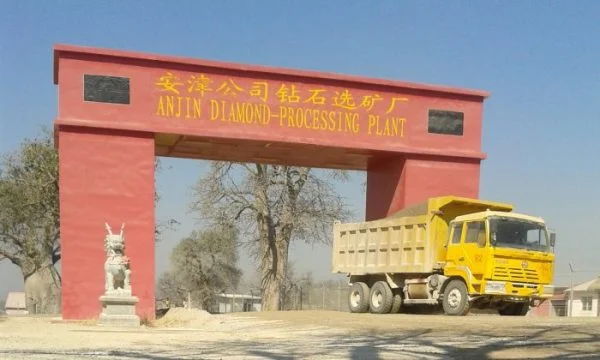
Anjin, which first operated in Chiadzwa from 2010 to 2016 before being shut down and reopening in 2020, has faced numerous challenges affecting its production capacity. Upon reopening, the company invested $28 million to recapitalize and repair vandalized equipment. However, much of the machinery has since outlived its lifespan, with current operations running at only 50% of full capacity.

Production Challenges

As of the time of the report (September to October 2024), Anjin had produced 260,000 carats—well below the anticipated annual output. The shortfall is attributed to an outdated fleet of equipment, including excavators and dump trucks, which now operates at only half the capacity it had during the company’s initial operational period (2010–2016).

In response, Anjin plans to acquire new excavators and dump trucks in 2025 to enhance production. The company is currently mining in Portal D, with ongoing exploration in Portal C, aiming to commence operations there next year. Exploration in Portal B has already been completed, revealing a proven reserve of 9.8 million tonnes of ore. This reserve is expected to sustain a 10-year mine life, with an annual production capacity of 1 million tonnes of ore.

Strategic Expansion

Despite the challenges, Anjin remains optimistic about its future. The company has outlined a strategy to establish additional mining sites, a move deemed critical to increasing revenues and mitigating the negative effects of falling diamond prices and the high mining costs associated with deeper operations in Portal D.

One significant hurdle is the impact of low diamond prices on the company’s operations. An auction for the sale of 10% of production reserved for the local market failed, as bidders were unable to meet reserve prices. This reflects broader market challenges facing Zimbabwe’s diamond sector.

Additional Challenges

Other obstacles include outdated equipment, frequent power cuts caused by load shedding, and the proliferation of illegal mining activities. The proximity of homesteads to mining zones has exacerbated the issue, making it easier for illegal miners to encroach on operational sites and further complicate Anjin’s work.

Optimism for the Future

Despite these difficulties, Anjin remains committed to achieving its target of 1 million carats in 2025. The company is banking on new equipment acquisitions, increased exploration efforts, and the development of additional mining sites to meet its goal.

With a proven ore reserve and a clear strategic plan, Anjin aims to position itself as a key player in Zimbabwe’s diamond industry, contributing to the country’s long-term economic goals, including the Vision 2030 goal of achieving upper-middle-income status. However, the company must address its operational and market challenges to unlock its full potential.

The diamond sector remains one of Zimbabwe’s critical industries, and Anjin’s ability to ramp up production will play a crucial role in sustaining growth in this sector, despite the difficulties currently facing mining companies across the country.


Gold buying prices per gram in Zimbabwe 14 January 2025

These are the official gold buying prices per gram in Zimbabwe today 14 January 2025, from the official gold buyer and exporter Fidelity Gold Refinery (FGR).

SG 90% and ABOVE US$81.10/g
SG ABOVE 85% BUT BELOW 90% US$80.24g
SG ABOVE 80% BUT BELOW 85% US$79.38/g
SG ABOVE 75% BUT BELOW 80% US$78.53/g
SAMPLE BELOW 10g BUT ABOVE 5g US$77.24/g

Fire Assay CASH $81.53/g

NB: Fire Assay cash price is for gold above 100gs, no sample is deducted.
For the Fire Assay Transfer price, a sample of not more than 10g is deducted
A 2% royalty is charged on all deposits (Small-scale miners)
A 5% royalty is set for Primary Producers

Cash available. Fidelity Gold Refinery prices will be changing daily to match the world market.

EMA Urges Responsible Mining After Tailings Spill Pollutes Shashe River

0

The Environmental Management Agency (EMA) has issued a stern warning to mining entities across the country, urging them to adopt responsible mining practices following a recent water pollution incident at Cambria 4 Mine in Masvingo, Mining Zimbabwe can report.

By Rudairo Mapuranga

According to EMA spokesperson Amkela Sidange, heavy rains in the area caused a tailings dam failure, leading to an accidental discharge of slurry into a stream feeding into the Shashe River on New Year’s Day.

“The Agency promptly responded by attending to the pollution issue and conducting an on-site inspection. Samples from the river revealed traces of cyanide and a rise in pH, which were suspected to be from sodium hydroxide contamination,” the EMA spokesperson said.

The EMA representative stated that, as part of immediate mitigation measures, the mine was ordered to cease operations and was issued an environmental protection order alongside a fine for the violation.

“The mine must meet all recommendations made by the Agency to rectify the accidental discharge and prevent future occurrences,” Sidange added.

Key Measures Demanded by EMA

  1. Applying ferrous sulphate along the stream to neutralize contamination.
  2. Reconstructing and deepening the tailings dam walls to prevent overflows.
  3. Widening the emergency trenches around the dam to contain future discharges.

EMA is also monitoring water quality along the Shashe River, with recent tests indicating that the water is now environmentally safe. However, the incident has reignited concerns about the potential for similar failures at other mines, particularly during the rainy season.

“With the current rains being received across the country, mining entities should deepen and widen their cut-off trenches around tailings dams to prevent spillages into the environment. Miners must always uphold basic tailings dam design standards to prevent such failures. The time to adopt the tenets of responsible mining is now,” Sidange emphasized.

A Call for Stricter Compliance

The call for stricter compliance comes as Zimbabwe continues to face significant environmental challenges due to mining activities. EMA remains vigilant, urging all mining operators to ensure their operations do not harm the environment or public health.

Electricity, Water and Capital Crises Endanger 2030 Vision After US$12 Billion Target Failure

0

The mining industry, once envisioned as a key driver for achieving a US$12 billion industry by 2023, is now grappling with critical challenges that have left the country far short of its target. Despite efforts to boost mining output, the sector failed to meet its revenue goal. This failure is now threatening Zimbabwe’s broader objective of becoming an upper-middle-income economy by 2030, Mining Zimbabwe can report.

By Rudairo Mapuranga

A 2023 report by the Ministry of Mines and Mining Development highlights the operational constraints faced by key mining companies, including Bindura Nickel Corporation (BNC), Prospect Lithium Zimbabwe (PLZ) and Natural Stone Export. The report reveals how electricity shortages, water scarcity, and limited access to capital have stifled production.

As the country shifts focus from the missed US$12 billion milestone to the 2030 vision, these unresolved challenges raise concerns about the mining sector’s ability to contribute meaningfully to national economic transformation.

A Missed Milestone: The US$12 Billion Target Failure

Zimbabwe’s mining sector was projected to generate US$12 billion in annual revenue by 2023, leveraging the nation’s rich mineral resources, including gold, platinum, lithium, and nickel. This goal aimed to catalyze economic growth, create jobs, and secure foreign currency reserves. However, the Ministry of Mines’ report shows that operations across the sector operated at reduced capacity due to electricity shortages, water scarcity, and financial constraints.

In 2023, mines operated at only about 50% of their capacity, diminishing output across key minerals and contributing to the sector’s inability to reach its target.

Bindura Nickel Corporation: From Production to Care and Maintenance

Among the hardest hit is Bindura Nickel Corporation (BNC). In 2023, BNC produced nickel concentrates below full capacity due to electricity and equipment challenges. By 2025, it had been placed under care and maintenance, a consequence of persistently low global nickel prices and depleted high-grade ore at its Trojan Mine.

The company had shifted from a high-grade, low-volume production model to a low-grade, high-volume one. Rising costs, high electricity tariffs, and outdated equipment rendered operations unsustainable, forcing the company to cease production while awaiting improved market conditions.

Electricity Crisis: A Sector in the Dark

Electricity shortages remain a critical threat. The Ministry of Mines’ 2023 report noted that BNC was spending USD 550,000 to USD 700,000 per month on electricity, yet frequent outages hindered full-capacity operation.

Companies like Natural Stone Export in Mutoko faced even harsher challenges, accessing electricity for just two hours daily in 2023. This forced reliance on diesel generators, consuming up to 4,000 liters of fuel daily, driving up costs, and lowering output.

Without reliable electricity, the mining sector cannot operate efficiently or expand. Resolving this issue is crucial for achieving the 2030 vision.

Water Scarcity: A Growing Concern

Water scarcity also undermines mining production. PLZ, operating in Goromonzi, reported that water shortages limited its ability to process lithium concentrates. The company plans to build a processing plant in 2024, but this expansion depends on securing reliable water supplies.

Similarly, Natural Stone Export and Hongri Trading Company in Mashonaland East have faced significant disruptions due to water shortages, with local dams drying up and production capacities further constrained.

Capital Shortages: Limiting Growth Potential

Capital shortages compound the sector’s challenges. BNC, Umbrella 77 B Gold Mine, and Tabatana Mining Syndicate have struggled to secure funding for expansion and modernization.

For instance, BNC needs USD 200 million to repair its Subvertical Service Shaft but has raised only USD 100 million internally. Umbrella 77 B Gold Mine cannot complete its fourth shaft, while Tabatana Mining Syndicate lacks modern equipment, resulting in suboptimal production.

The government must facilitate access to affordable capital, particularly for small- and medium-scale operations, to enable growth.

Corporate Social Responsibility: Contributions Amid Challenges

Despite these challenges, some companies continue to prioritize corporate social responsibility (CSR). PLZ allocated USD 2 million in 2023 for projects such as schools, clinics, and boreholes in Goromonzi, along with road infrastructure improvements. Similarly, Natural Stone Export has built schools, drilled boreholes, and supported local services.

Looking Ahead: Urgent Interventions Required

Zimbabwe’s mining sector faces significant obstacles, as outlined in the Ministry of Mines’ 2023 report. Electricity, water, and capital shortages persist into 2025, threatening the sector’s ability to support the 2030 vision.

To address these issues, the government must prioritize investments in infrastructure, particularly electricity and water supply systems, and improve access to affordable financing for mining operations.

While the failure to achieve the US$12 billion milestone is a setback, the mining sector still holds potential to drive sustainable growth. With the right support and investment, Zimbabwe’s vast mineral resources could unlock prosperity by 2030. However, time is running out, and swift action is needed to ensure the industry fulfills its role in the country’s economic ambitions.

China Sees Major Leap in Lithium Reserves, Strengthening Its Global Market Position

0

In a significant development, China has announced a sharp increase in its lithium reserves, now accounting for 16.5% of global resources, up from just 6% previously.

By Ryan Chigoche

This surge places China as the second-largest holder of lithium reserves worldwide, trailing only Chile. The discovery of new reserves, particularly along the 2,800-kilometer West Kunlun-Songpan-Ganzi lithium belt, has been pivotal to this dramatic growth, further solidifying China’s strategic importance in the global lithium market.

The findings have expanded the variety of lithium ores available in China, bolstering its position as a dominant global player.

Advancements in lithium extraction technologies have also driven this surge in reserves. More efficient extraction from salt lakes and lithium mica has significantly increased determined resources. Newly identified salt lake lithium resources alone exceed 14 million tons.

The extraction of lithium from brine in salt lakes, known for its lower cost and reduced environmental impact, has notably boosted reserves in regions like the Qinghai-Tibet Plateau. This development positions China as the third-largest salt lake lithium resource hub globally, after South America’s Lithium Triangle and the U.S. western region.

Breakthroughs in lithium mica extraction have also been crucial. Previously, high costs and complex processes made this challenging, but improved technologies have added 10 million tons of proven lithium resources to China’s stock.

These advancements have eased China’s historically tight lithium supply and contributed to stabilizing the global lithium market.

Lin Boqiang, Director of the China Center for Energy Economics Research at Xiamen University, emphasized the significance of these developments, highlighting how China’s lithium reserves and technologies reinforce its leadership in the global market. He also noted that China’s comprehensive industrial chain enables the production of high-quality batteries at lower costs, strengthening its dominance in the lithium-ion battery industry.

From January to October 2024, China produced 890 gigawatt-hours of batteries, a 16% year-on-year increase. During this period, over 200 gigawatt-hours of energy storage lithium-ion batteries were produced, and installations for new energy vehicles reached approximately 405 gigawatt-hours.

Opportunities for Zimbabwe

Zimbabwe, one of the world’s largest untapped lithium sources, can strategically leverage its potential amid China’s increasing dominance. While China’s advancements intensify global competition, Zimbabwe has the opportunity to attract investments, enhance mining technology, and develop a competitive edge.

By aligning with global trends, Zimbabwe could position itself as a key player in the global lithium supply chain, benefiting from the surging demand for electric vehicles and renewable energy technologies.

China’s continued leadership in extraction technologies also presents collaboration opportunities for Zimbabwe. By adopting similar innovations, Zimbabwe could significantly boost its lithium production, drive economic growth, and contribute to global market stability.

Tharisa’s Salene Chrome Still Fails to Beneficiate After Three Years: A Disappointing Outcome

0

Three years after the government of Zimbabwe imposed a ban on chrome ore exports, Tharisa’s Salene Chrome project in Mhondoro Ngezi remains under care and maintenance, Mining Zimbabwe can report.

By Rudairo Mapuranga

This continued inactivity has raised serious concerns, as small mining companies in Zimbabwe have already adapted to the ban, producing chrome concentrates to meet the government’s beneficiation policy. In contrast, Tharisa, one of the largest chrome producers in the world, has made little progress in beneficiation, a glaring failure that reflects poorly on the company’s commitment to Zimbabwe’s value addition goals.

In its FY2024 Results Presentation, Tharisa explained that “Salene Chrome (Private) Limited (‘Salene Chrome’) is a development stage, low-cost, open-pit asset located on the Great Dyke in Zimbabwe. Salene Chrome was placed on care and maintenance following the introduction of a ban on exports of chrome concentrates by the Government of Zimbabwe and the business case is pending a review.”

However, this justification fails to account for why a major global chrome producer like Tharisa has not been able to invest in beneficiation facilities within a three-year period. The government’s decision to ban chrome ore exports was intended to push mining companies to add value to the raw materials before export, ensuring that Zimbabwe maximizes the economic benefits of its resources.

Small-scale miners, despite their limited resources, have managed to rise to the challenge, producing chrome concentrates in compliance with the government’s directive. Yet, three years later, Tharisa’s Salene Chrome is still unable to beneficiate chrome into either concentrates or ferrochrome. This is unacceptable for a company of Tharisa’s size, resources, and global standing.

The failure to act raises serious questions about Tharisa’s commitment to Zimbabwe’s economic growth and the role of local beneficiation in strengthening the mining industry. While other companies, including small-scale miners, have made significant investments to meet the new regulations, Tharisa has lagged behind. For a giant in the global chrome industry to still be reviewing its business case for beneficiation three years after the export ban, there is a lack of urgency and possibly a disregard for local policy.

The government’s decision to ban chrome concentrate exports, which came into effect in July 2022, was intended to give producers enough time to invest in beneficiation. The cabinet even noted that the investment in beneficiation technology was low-cost and relatively simple to implement. Yet, Tharisa has failed to capitalize on this window, leaving its Salene Chrome project stagnant and unable to contribute to the country’s goals.

Zimbabwe’s chrome sector has the potential to be a key player in the global market, particularly as stainless steel production – the main consumer of chrome – has seen a resurgence, with global production increasing by 6.3% in the first half of 2024. China, which accounts for a significant share of this production, remains a major market for Zimbabwean chrome. However, Tharisa’s inaction has meant that it cannot fully participate in this booming market.

The company’s failure to move forward on beneficiation is even more perplexing given its strong global presence. South Africa supplies 80% of China’s chrome needs through companies like Tharisa. Despite logistical challenges and supply chain disruptions in Southern Africa, the company has managed to deliver on its commitments in other regions, making its inaction in Zimbabwe even more concerning.

While the Zimbabwean government has continued to support local smelters and promote beneficiation as part of its national economic strategy, the smelting capacity is at risk of shrinking due to insufficient feedstock from companies like Tharisa. If large-scale operators like Salene Chrome fail to step up and increase chrome beneficiation, the entire sector could face bottlenecks, ultimately undermining the country’s efforts to build a thriving mining industry.

Three years is more than enough time for a company of Tharisa’s caliber to comply with Zimbabwe’s beneficiation policies. Small-scale miners have proven that it is possible to adapt to the regulations and continue operations successfully. Tharisa’s failure to do so is uncalled for, and it needs to be held accountable for not prioritizing the local beneficiation of chrome.

The government and industry stakeholders must now demand that Tharisa expedite its efforts to bring Salene Chrome into full operation, including beneficiation. Zimbabwe cannot afford to have one of its key players in the chrome sector idling, while smaller players make progress. If Tharisa does not act swiftly, it risks not only damaging its reputation but also hindering the country’s economic development goals.

Zimbabwe’s Minister of Mines to Attend Mining Indaba 2025

0

Minister of Mines and Mining Development Hon Winston Chitando is set to attend this year’s Investing in African Mining Indaba, a premier event for mining professionals, investors, and industry leaders looking to capitalise on the vast opportunities in Africa’s mining sector.

The prestigious event, popularly known as Mining Indaba is scheduled to take place in Cape Town, South Africa at the Cape Town International Convention Centre (CTICC), from February 3 to February 6, 2025. It is the premier gathering for mining stakeholders worldwide, attracting investors, industry leaders and policymakers.

With the nation boasting abundant resources such as gold, platinum, lithium, chrome, diamonds and coal, Mining Indaba presents a strategic platform for Zimbabwe to engage with global investors, share its mining success stories and outline the country’s vision for sustainable growth in the sector.

Zimbabwe’s delegation, led by Minister Chitando, will also include representatives from government mining agencies and mining companies. The country’s pavilion at the exhibition will serve as a hub for potential investors, offering insights into available opportunities, partnerships and the nation’s commitment to sustainable mining practices.

Minister Chitando is likely to emphasize ongoing and upcoming flagship projects, such as steel production, lithium production initiatives and exploration efforts in untapped areas like the Cabora Bassa Basin.

About Mining Indaba

Since its inception in 1994, the Investing in African Mining Indaba conference has become a pivotal event for mining professionals, investors and industry leaders looking to capitalise on the vast opportunities in Africa’s mining sector.

With a focus on fostering long-term economic growth and sustainability, the event serves as a premier meeting place for networking, deal-making, and discussions on topics such as technological advancements in mining, sustainable mining practices and investment opportunities in African mining projects.

As the event continues to grow in size and influence, it remains a crucial platform for shaping the future of mining on the African continent.

Registration

Secure your ticket to attend Mining Indaba 2025. Select the ticket type that suits you and complete the registration form HERE.

Failure to Pay Mining Royalties on Time Now Carries Severe Penalties

0

Individuals and companies responsible for remitting mining royalties to the Government of Zimbabwe could face up to six months in prison if they fail to do so within the stipulated timeframe, without a valid reason according to provisions in the new Finance Act, which recently came into effect, Mining Zimbabwe can report.

By Rudairo Mapuranga

The Act outlines strict guidelines for the timely remittance of royalties, and failure to comply by the given deadlines will result in accumulating interest. The interest rate, determined by the Minister of Finance, Economic Development, and Investment Promotion, begins accruing the day after the due date and continues until the outstanding amount is fully paid.

In exceptional cases, the Commissioner-General of the Zimbabwe Revenue Authority (ZIMRA) has the discretion to extend the deadline for remitting royalties without imposing interest. However, this is only applicable under special circumstances.

The Finance Act is clear on the penalties for non-compliance: “As soon as it comes to the notice of the Commissioner-General of ZIMRA that any person responsible for remitting royalties timeously (which requires that royalties be remitted in the form of the mineral concerned and part local currency and foreign currency) has failed to do so, the Commissioner shall serve upon that person notice to pay an amount equal to the amount of the royalties payable (hereinafter called ‘the primary civil penalty’).”

If the recipient of such a notice does not comply within the first seven days of the specified period (181 days), they will face an additional penalty. This secondary civil penalty amounts to either US$30 or the level 4 fine, whichever is lower, for each day they remain in default, up to a maximum of 181 days.

“If the person continues to be in default after the period specified in subparagraph (a) (181days), they shall be guilty of an offence and liable on conviction to a fine not exceeding level 10 or to imprisonment for a period not exceeding six months, or to both such fine and such imprisonment,” reads part of the Finance Act.

The penalties for non-payment do not end with civil fines. Both primary and secondary penalties owed by defaulters are considered debts due to ZIMRA. These can be recovered through legal proceedings in any court with competent jurisdiction, with the proceeds being directed to the Consolidated Revenue Fund.

In instances where the failure to pay royalties within the required time frame was not motivated by an intention to avoid or delay payment, the Commissioner-General of ZIMRA has the authority to waive any penalties or interest, either in part or in full. However, this is only applicable where the failure to pay is deemed to have occurred without intent to evade or postpone liability.

Regardless of any pending legal cases related to the non-payment of royalties, those responsible are still obligated to remit royalties on time to avoid penalties. Failure to comply could result in both civil and criminal charges, further emphasizing the seriousness of this legal obligation.

The Finance Act is designed to ensure strict compliance with royalty remittance in Zimbabwe’s mining sector, reinforcing the government’s commitment to securing revenue from the country’s natural resources.

Gold buying prices per gram in Zimbabwe 13 January 2025

These are the official gold buying prices per gram in Zimbabwe today 13 January 2025, from the official gold buyer and exporter Fidelity Gold Refinery (FGR).

SG 90% and ABOVE US$81.65/g
SG ABOVE 85% BUT BELOW 90% US$80.78g
SG ABOVE 80% BUT BELOW 85% US$79.92/g
SG ABOVE 75% BUT BELOW 80% US$79.05/g
SAMPLE BELOW 10g BUT ABOVE 5g US$77.76/g

Fire Assay CASH $82.08/g

NB: Fire Assay cash price is for gold above 100gs, no sample is deducted.
For the Fire Assay Transfer price, a sample of not more than 10g is deducted
A 2% royalty is charged on all deposits (Small-scale miners)
A 5% royalty is set for Primary Producers

Cash available. Fidelity Gold Refinery prices will be changing daily to match the world market.

Invictus Energy Secures a Three-Year Extension for Muzarabani Oil Project

0

Victoria Falls Stock Exchange-listed oil and gas exploration junior, Invictus Energy Limited, has successfully renewed its Special Grant (SG) 4571 licence. This allows the company’s 80%-owned subsidiary, Geo Associates, to continue oil and gas exploration activities in the Cabora Bassa Basin for an additional three years, Mining Zimbabwe can report.

By Rudairo Mapuranga

The extension, formally granted by the Minister of Mines and Mining Development and gazetted under General Notice 2113 of 2024, extends the licence validity until December 19, 2027. This renewal reflects the government’s commitment to fostering exploration in Zimbabwe’s untapped energy sector.

The SG 4571 licence renewal highlights Zimbabwe’s ambition to become a key player in the global energy market. As outlined in Section 301 of the Mines and Minerals Act [Chapter 21:05], the extension provides Geo Associates with the legal framework to continue exploration efforts, including 3D seismic acquisition and appraisal drilling, in the resource-rich Cabora Bassa Basin. The potential discovery of hydrocarbon resources could significantly transform Zimbabwe’s economic and energy security landscape.

This development is crucial as Invictus Energy has already made significant progress in identifying promising hydrocarbon prospects in the area, notably with its Mukuyu-2 well discovery, which revealed potential oil and gas reserves. The renewal allows the company to further explore and appraise these prospects with the aim of unlocking commercially viable quantities of oil and gas.

The SG 4571 licence falls under Zimbabwe’s Mines and Minerals Act, which governs energy resource exploration such as natural gas, oil, and coal bed methane. Under this legal framework, companies are granted an initial three-year licence, renewable based on exploration progress, and can apply for a production special grant upon making commercial discoveries.

Advantages of the SG 4571 Licence Renewal

The extension of the SG 4571 licence brings several benefits to Zimbabwe’s energy sector:

  1. Continued Investment and Stability: The renewal signals the government’s support for sustained investment in Zimbabwe’s energy sector, enabling Invictus Energy to secure additional funding and resources for its exploration activities.
  2. Exploration Expansion: The company plans to intensify its work program, including advanced 3D seismic acquisition and further drilling to better understand the basin’s geology and hydrocarbon potential.
  3. Economic Growth: The successful discovery and development of oil and gas reserves could inject billions of dollars into Zimbabwe’s economy, creating jobs, driving industrial growth, and increasing government revenue.
  4. Energy Security: Developing local oil and gas reserves would reduce Zimbabwe’s dependence on imported fuel, providing a stable and reliable domestic energy supply.
  5. Technological Advancements: Exploration activities will introduce cutting-edge technologies to Zimbabwe, fostering local expertise and benefiting the energy sector.

Promising Discoveries in Muzarabani

Invictus Energy’s recent interpretation of the 2023 2D Infill Seismic Survey (CB23 survey) revealed multiple amplitude-supported prospects in the Dande Formation, suggesting substantial hydrocarbon accumulations. These seismic findings have heightened optimism regarding the Muzarabani project, with further exploration expected to uncover commercially viable oil and gas reserves.

Scott Macmillan, Managing Director of Invictus Energy, expressed his enthusiasm, stating, “The new amplitude-supported targets in the Dande Formation present a strong opportunity for gas discoveries, and we are eager to build on our progress to date.”

A Step Toward Energy Independence

With the SG 4571 licence extension, Invictus Energy is poised to advance its ambitious work program, including additional seismic surveys, exploration drilling, and further appraisal to confirm the size and commercial potential of the hydrocarbon resources. The extension also allows the company to apply for a production special grant if significant discoveries are confirmed.

This renewal strengthens Zimbabwe’s position as a prospective energy hub in Southern Africa. Exploration efforts in Muzarabani have the potential to redefine Zimbabwe’s role in the global energy market, providing the country with a strategic advantage in the production and export of oil and gas.