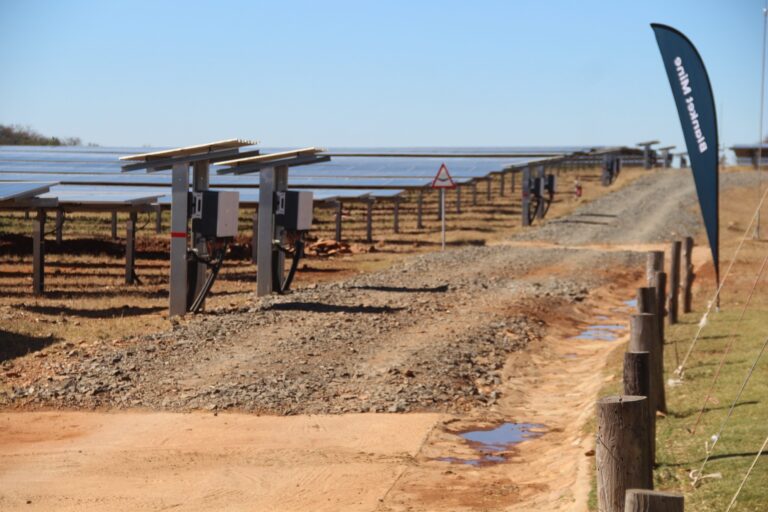
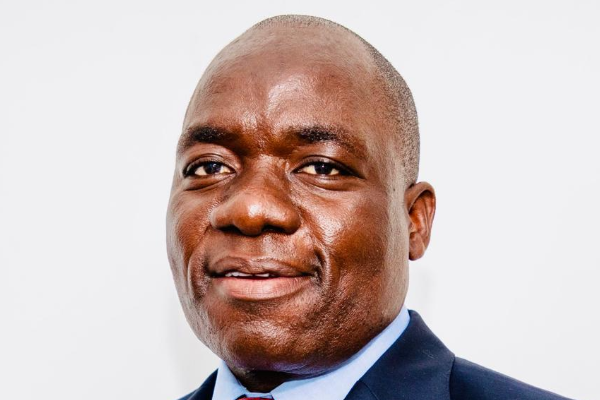
When the long shadows of dusk fall over Hwange’s coalfields and the rusted headgear of Shabanie‑Mashava Mines punctuates the Midlands skyline, it is the modest stirring of possibility that offers new light. At the heart of that stirring stands Munashe Shava, the mining strategist tasked with resurrecting Zimbabwe’s two most formidable yet dormant mineral legacies.
By Rudairo Mapuranga
As Administrator of Hwange Colliery Company Limited (HCCL) and government-appointed overseer of the revitalisation of Shabanie‑Mashava Mines (SMM)—all while still leading the Platinum Group Metals cluster at Kuvimba Mining House—Shava now underpins a bold national mission to reclaim industrial dignity, jobs, and structural value for Zimbabwe.
A National Mission Rooted in Hope and Strategy
Munashe Shava did not arrive by happenstance in these assignments. His enduring stewardship of the PGM cluster at Kuvimba Mining House—spearheading assets including Great Dyke Investments (Darwendale), Shamva Gold, and Sandawana—earned him a reputation for navigating complex stakeholder dynamics, regulatory frameworks, and capital mobilization in Zimbabwe’s high‑value mining sector. That same precision and integrity underpinned his more recent roles at state mining entities. At Hwange, his administration steered the company out of limbo, agreeing landmark funding for a US$50 million investment from Zhong Jian Investments, stabilizing payroll, increasing coal output, and delivering a net profit of over US$10 million in the latest financial reports—a milestone few believed possible under years of administrative inertia.
Now, as the government gazetted under General Notice 1007 of 2025, Shava has been appointed Administrator of Shabanie‑Mashava Mines with a two‑year reconstruction mandate under the Reconstruction of State‑Indebted Insolvent Companies Act (Chapter 24:27). Yet in Zvishavane and Mashava, scepticism runs deep. Despite more than two decades of ritual announcements, actual revival at SMM has never materialised—workers remain unpaid, infrastructure sits derelict, and Mangwana’s April 2025 admission that previous investor pledges failed to secure financing has punctured any illusions of progress.
It is in this mix of wounded expectation and strategic need that Shava’s leadership becomes crystalline in purpose. While Hwange’s immediate financial health signals momentum, the SMM mission is still in its infancy, defined by painstaking audits, community consultations, environmental assessments, and formal stakeholder mapping. There is nothing performative about this effort—it begins with slow, measured groundwork that many past administrators skipped, neglecting regulation, social license, and local agency in favour of grand announcements.
Hwange’s Turnaround: A Blueprint for Regional Energy Leadership
Hwange Colliery Company Limited, long synonymous with Zimbabwe’s coal backbone, is now undergoing a corporate transformation that seeks to deliver near‑term revenue while positioning the business for the energy realities of the 2020s. Under Shava’s administration and the leadership of CEO William Gambiza—officially appointed head of HCCL Holdings—the operations are being articulated around a cluster of subsidiary entities: Hwange Coal Gasification Company, Hwange Coke Company, Hwange Transport, Hwange Properties, and Hwange Power & Energy. This structure is designed to integrate extraction, value addition, logistics, and energy off‑take, forging new export channels and commercial synergies across Southern Africa.
At each level, Shava’s influence is evident. Early remediation of salary arrears, doubling of coal output, procurement of new mining equipment, and establishment of joint‑venture frameworks with foreign investors signal his operational discipline. Hwange’s reported profit of over US$10 million before tax underscores the early returns of this approach—but more importantly, it reinforces a message: Zimbabwe’s mining companies can deliver profitability alongside governance and community responsibility.
Long‑term, HCCL’s subsidiary structure allows the company to invest in coke oven batteries for steel inputs, gasification plants serving national grids or regional customers, transport logistics along the railway corridor, and property development on company‑owned land. These investments all rely on disciplined capital planning, transparent vendor selection, and alignment with environmental standards—domains where Shava has insisted on corporate rigor and external oversight.
Shabanie‑Mashava Mines: Rethinking Revival with Realism
SMM’s reputation precedes any future plans. Once the continent’s largest chrysotile asbestos producer, the Mines employed over 5,000 workers and sustained hundreds of downstream operations—from roofing materials to export‑bound fibre. Yet by the early 2000s, global asbestos bans, infrastructure decay, and ownership disputes (notably under businessman Mutumwa Mawere) had emptied SMM of its life. Government judicial controls in 2004 failed to alter its trajectory, while successive administrators oversaw asset sales, salary non‑payment, and further erosion of industrial infrastructure.
Over time, redevelopment plans fizzled—investors signed contracts, tenders flew, salaries were advertised, but nothing brewed substantive progress. Communities held on to fragile hope only to be repeatedly disappointed. As of April 2025, government figures conceded that mesothelioma scares and market contraction made asbestos revival unlikely. Mangwana admitted that investor promises remained unfulfilled—and rhetorically called the dream exactly that: a pipe dream.
Yet Shava’s charge is defined around the reversal of past patterns. His assignment begins with forensic asset audits, debt valuation, infrastructure assessment, environmental baseline reports, and local stakeholder engagement, including retrenched workers, civic leaders, and municipalities. Unlike past administrations that prioritised headlines over outcomes, this reset effort emerges from groundwork. The hopes now are modest: rehabilitate processing plants, de‑water shafts, assess syndicate equity structures, and evaluate alternative usages—whether that be controlled tailings re‑processing, diversification into lithium or agro‑industrial zoning, or renewable energy zoning under a post‑asbestos framework.
Shava himself has emphasised that resuscitation does not mean rushing extraction, but rather reconstructing an industrial narrative that includes health, environment, and future growth. “If we cannot reopen it under safe, compliant conditions, we must envision something else. Restarting is not enough—reviving responsibly is essential,” he has stated in stakeholder meetings.
Communities in Waiting: Human Cost, Human Dignity
In Zvishavane and Mashava, the social fabric has frayed over the years of economic collapse. Former employees and their families still occupy mine housing, dependent on informal allowances without pensions or medical benefits. The local schools and clinics once maintained by SMM are crumbling; local businesses have shuttered; livelihoods are sparse. Universities like Midlands State University and Great Zimbabwe University now operate in former mine buildings—symbolic of both local adaptation and economic displacement.
Worker unions, including ZDAMWU, have viewed previous administrations with mistrust. Many former employees were rehired briefly into phantom operations only to be sent home unpaid. Now, when Shava’s team engages communities via public forums and listening exercises, some feel composed between scepticism and guarded optimism.
Stories emerge of miners who returned repeatedly to sites, expecting gates to open, only to find rusted lockboxes. Local vendors who spent savings stocking materials when reopening was promised. Families displaced while waiting for compensation packages that never came. These are the human costs of revival delays—costs Shava’s program must rectify through transparent benefit schemes, phased labor re-engagement, and local procurement pledges.
Governance, Ethics, and Reconstruction
The central difference between today and past revival efforts is nuance. Under Shava, Hwange and SMM are being governed under professional administrator regimes, where every action—procurement, finance, community engagement—is subject to third‑party audits, environmental impact assessments, and stakeholder advisory boards that include workers, civic leaders, and technical experts.
Past failures at SMM included asset sales under administrators accused of self-enrichment, using depositions to fund personal commissions instead of mine recovery. Shava’s directive comes with internal compliance units and external oversight by the Ministry of Justice and anti-corruption bodies to guarantee transparency and accountability.
In Hwange, salary arrears are no longer permissible; procurement decisions follow documented policies; environmental baseline studies guide new engineering works; and every Hwange subsidiary reports publicly on output and community investment. Under Shava’s leadership, a shifted culture of governance emerges: state mining assets must be institutions of national pride, not political patronage or invisible bottomless pits.
Economic Logic and the Way Forward
Reviving SMM will never be cheap, nor quick. But failure to try again could consign Zimbabwe to permanent industrial loss. The infrastructure, while dilapidated, still holds value—shafts that could host downstream mining, tailings suitable for controlled dump retreatment, and land that could be repurposed under agro-industrial schemes or renewable energy installations with lithium or green hydrogen potential.
Hwange’s early profitability demonstrates that disciplined governance can unlock return. The coal price environment in Southern Africa remains robust, demand for coking and gasification is rising, and strategic logistics corridors are expanding. Hwange is positioned to leverage export avenues to Mozambique or South Africa, especially with demand from industrial operators and utility firms.
The narrative moving ahead is multi-layered: HCCL Holdings seeks to deliver stable revenues, create skilled mining jobs, attract energy off‑takers, and build logistics capacity. Meanwhile, the SMM project, within its two-year scope, will deliver clarity: whether to rehabilitate, repurpose, or merge with broader resource ventures. And in both, Shava’s leadership will function as the institutional bedrock for cautious optimism.
A Vision for 2030
Munashe Shava speaks often of Vision 2030—not as a slogan, but as a measure of progress. Zimbabwe’s long-term mining target is US$40 billion in export revenues—a goal unreachable without putting idle assets to work, deploying best-in-class governance, and retaining value locally. Hwange and SMM, under this mandate, become more than mines—they become blueprints for national revival.
Stakeholder alliances are forming: with financiers exploring lithium zones near Zvishavane, with communities seeking formal CSR partnerships, with energy regulators mapping gasification grids, and with technical experts developing ESG-aligned business cases. Hwange is already producing; SMM is auditing. Together, the duo’s potential lies in how quickly they integrate into broader mining opportunity pipelines.
Shava’s dual roles—PGM leadership at Kuvimba and administrator roles at Hwange and SMM—make him a central figure. He bridges Zimbabwe’s mineral past with its energy future. His approach: methodical, technically grounded, socially attuned, and strategically resilient.
Closing Reflections: From Skepticism to Structured Revival
Zimbabwe knows the cost of false dawns. Communities know how it feels to await reopening only to endure silence. But today, under the stewardship of Munashe Shava, the narrative shifts from empty declarations to operational deliverables, from broad rhetoric to phased milestones, and from fragmented governance to structured enterprise oversight.
Hwange is already showing profit and building forward momentum. SMM’s revival is cautious and grounded in audit, consultation, and real-world constraints. Governance protocols are in place to prevent past administrative failures. And communities at both sites are no longer treated as afterthoughts but invited stakeholders in design and delivery.
For Zimbabwe, the lessons of loss have sharpened its resolve. To reawaken these mining giants means confronting financial complexity, health concerns around asbestos, institutional mistrust, and economic transformation. That is no small task. But if anyone can pioneer it, combining reputation, capacity, and national mandate, it is Munashe Shava.
As dusk yields to dawn across Hwange’s coalfields and Shabanie‑Mashava’s silent pits, what matters is not yesterday’s promises, but tomorrow’s proof. Shava’s assignments—writ large across Zimbabwe’s most iconic mining sites—are Zimbabwe’s test of whether legacy assets can be reborn with integrity, benefit local destiny, and help build a future fit for Vision 2030.