Home Blog Page 149

Learmonth Increases His Caledonia Ownership to 0.97%

0

Multi-listed, gold-focused miner Caledonia Mining Corporation Plc’s CEO and Director, Mark Learmonth, has increased his ownership stake in the company to 0.97%, Mining Zimbabwe reports.

By Rudairo Mapuranga

Learmonth recently purchased 2,047 depositary interests, representing the same number of common shares, at GBP8.30 per share. This brings his total shareholding in Caledonia to 187,031 shares.

The purchase signifies Learmonth’s confidence in the company’s long-term growth and stability. As a key decision-maker, his increased stake sends a strong signal of alignment between the company’s leadership and its shareholders, fostering positive sentiment among investors.

Key Implications of the Purchase

  1. A Vote of Confidence in Caledonia’s Future
    Executives like Learmonth purchasing company shares are often seen as a reflection of their belief in the business’s future prospects. Learmonth’s action indicates his optimism regarding Caledonia’s strategic direction and ongoing projects, which bodes well for the company’s financial performance and growth potential.
  2. Enhanced Leadership Alignment with Shareholders
    By increasing his personal stake, Learmonth is further aligning his financial interests with those of Caledonia’s shareholders. This demonstrates sound corporate governance and suggests that decisions made at the top will prioritize enhancing shareholder value.
  3. Positive Market Sentiment
    Insider buying by senior executives often has a positive impact on market sentiment. Investors may interpret this as a signal of strength, stability, and forthcoming positive developments for the company. Learmonth’s purchase is likely to boost confidence among existing shareholders and attract potential investors.

Kamlesh Pattni Sanctioned by U.S. for Gold Smuggling Network Exposed in Gold Mafia

0

Gold trader Kamlesh Pattni has been placed under U.S. sanctions for his role in a global gold smuggling and money laundering network, with his most recent activities in Zimbabwe exposed in the Gold Mafia documentary, Mining Zimbabwe can report.

By Rudairo Mapuranga

On Monday, the U.S. Department of the Treasury’s Office of Foreign Assets Control (OFAC) sanctioned Pattni and 27 other individuals for their roles in illicit activities, as part of ongoing efforts to combat corruption and money laundering.

Pattni, notorious for his involvement in Kenya’s Goldenberg scandal in the 1990s which cost that country an estimated Sh27 billion three decades ago, is accused of exploiting Zimbabwe’s natural resources for personal gain, enriching corrupt officials while depriving the nation’s citizens of their rightful benefits. His operations allegedly involved bribing government officials and establishing a network of companies and trusted associates to obscure asset ownership.

Key Individuals and Companies

Others sanctioned alongside Pattni include his brother-in-law, Mukesh Manushklal Vaya, who oversees several companies within Pattni’s network, and Rahul Sood, a director linked to businesses controlled by Pattni. The sanctions were part of a coordinated effort by the U.S. and the UK, with the UK also imposing restrictions on Pattni and his associates.

Links to the Gold Mafia

The move follows Pattni’s appearance in the Gold Mafia documentary earlier this year, which exposed his illegal gold trading activities across Southern Africa. The documentary highlighted the extent of his operations and connections within the region.

The sanctions aim to dismantle Pattni’s network and block him and his associates from accessing their illicit wealth, striking a significant blow to one of the most prominent gold smuggling and money laundering syndicates in Southern Africa.

Gold buying prices per gram in Zimbabwe 10 December 2024

These are the official gold buying prices per gram in Zimbabwe today 10 December 2024, from the official gold buyer and exporter Fidelity Gold Refinery (FGR).

SG 90% and ABOVE US$81.17/g
SG ABOVE 85% BUT BELOW 90% US$80.31g
SG ABOVE 80% BUT BELOW 85% US$79.46/g
SG ABOVE 75% BUT BELOW 80% US$78.60/g
SAMPLE BELOW 10g BUT ABOVE 5g US$77.31/g

Fire Assay CASH $81.60/g

NB: Fire Assay cash price is for gold above 100gs, no sample is deducted.
For the Fire Assay Transfer price, a sample of not more than 10g is deducted
A 2% royalty is charged on all deposits (Small-scale miners)
A 5% royalty is set for Primary Producers

Cash available. Fidelity Gold Refinery prices will be changing daily to match world market prices.

Namib Minerals Set to Become Nasdaq-Listed Gold Miner

0

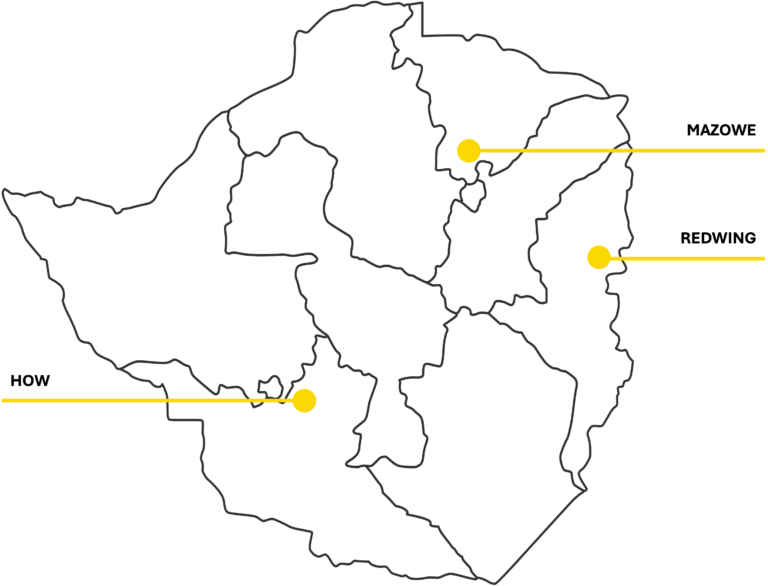
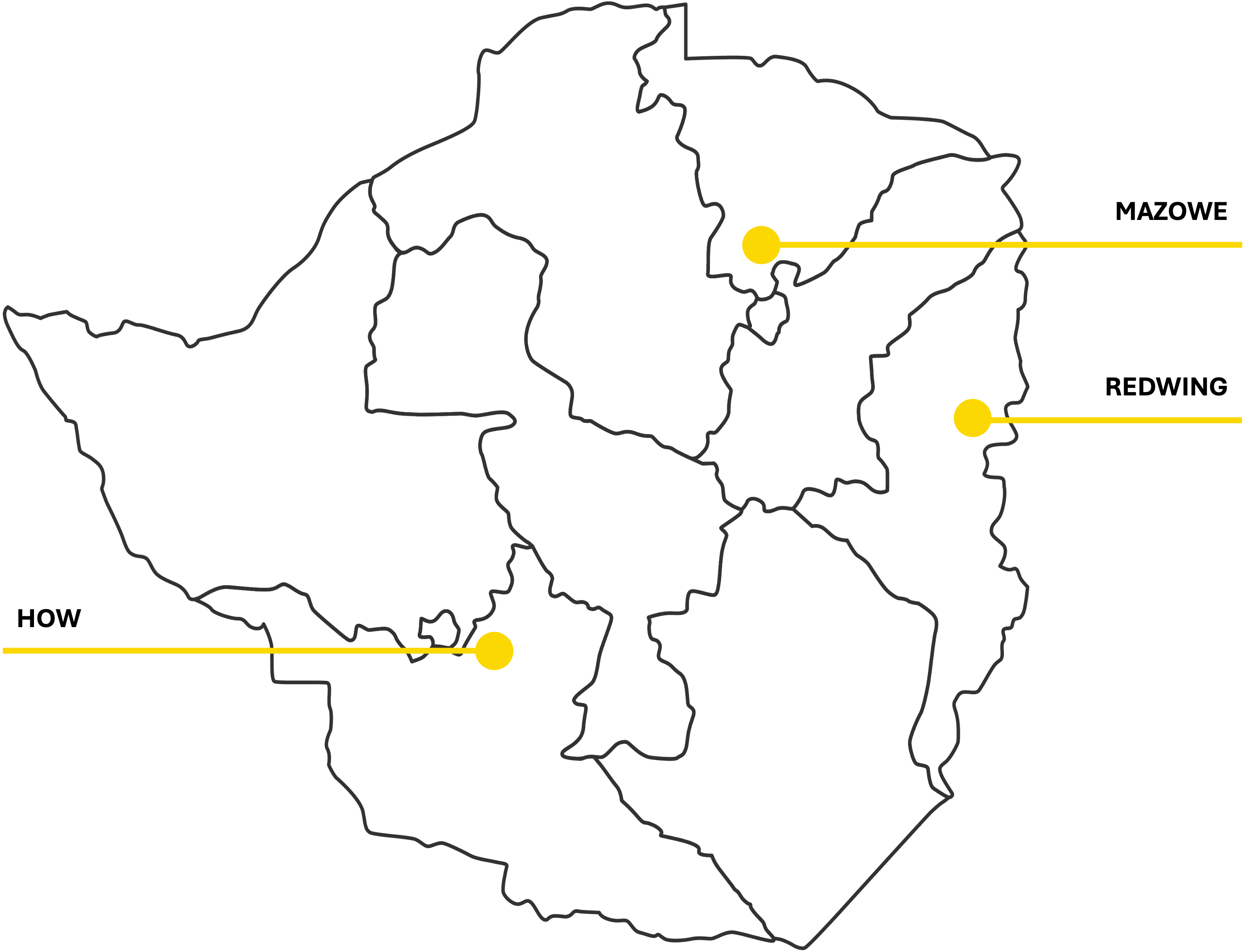
Namib Minerals is poised to join the Nasdaq stock exchange following Africa’s largest-ever shell company acquisition, which includes a producing mine, How Mine, and former top gold mines Redwing and Mazowe mines.

Namib MineralsThe proposed US$500-million merger with special purpose acquisition company (SPAC) Hennessy Capital Investment Corp. VI (Nasdaq: HCVI) is expected to close in the first quarter of 2025. The deal values the combined enterprise at approximately US$609 million. Namib Minerals’ management team will continue to lead the company following the transaction.

“As Namib Minerals takes this significant step toward becoming a publicly traded company, we remain dedicated to our mission of creating safe, sustainable, and profitable mining operations,” said Namib CEO Ibrahima Tall in a news release.

Strategic Assets in Zimbabwe

Namib Minerals’ portfolio includes the award-winning How Mine and the past-producing Mazowe and Redwing mines, all located within Zimbabwe’s greenstone belt. Proceeds from the merger will be allocated to enhancing operations at the How Mine and funding the restart of Mazowe and Redwing.

The How Mine is a high-grade, cash-generating gold asset that has produced 1.8 million ounces of gold between 1941 and 2023. In 2023, the mine generated US$65 million in revenues, with an additional US$42 million earned in the first half of 2024.

Mazowe and Redwing have substantial gold resource estimates. Mazowe’s measured and indicated resources are 291,000 ounces, with an additional inferred estimate of 915,000 ounces. Redwing’s measured and indicated resources total 1.19 million ounces, while inferred resources stand at 1.33 million ounces.

Merger Details and SEC Filings

The merger, announced in June, involves the issuance of 50 million Namib ordinary shares, with an additional 30 million shares (valued at US$300 million) tied to operational milestones. Namib filed registration documents with the U.S. Securities and Exchange Commission (SEC) on Monday.

The transaction is contingent on shareholder approvals from HCVI and Greenstone Corp., an affiliate of Namib Minerals and co-registrant with the SEC. Upon closing, Greenstone’s existing shareholders will own nearly 75% of the newly formed company.

The combined entity will operate under the Namib Minerals name with the ticker symbol NAMM and will incorporate all Greenstone’s mining and exploration assets.

Expanding Into Battery Metals

In addition to its Zimbabwean gold projects, Greenstone holds interests in 13 battery metals exploration permits in the Democratic Republic of the Congo. Early-stage diamond drilling in the Haut Katanga and Lualaba provinces has shown significant potential for copper and cobalt, diversifying the company’s asset base.

This merger positions Namib Minerals for significant growth as a publicly traded company, leveraging its diverse portfolio of gold and battery metals assets.

Interview – Eng. Gift Mapakame, General Manager Shamva Mine

0

Gift Mapakame is an accomplished leader in Zimbabwe’s gold mining sector. With over 14 years of experience—more than seven in senior management— Engineer Mapakame has played a significant role in transforming Shamva Gold Mine into one of the nation’s leading gold producers.

Under his leadership, the Shamva mine has achieved remarkable milestones, including significantly scaling up production and surpassing 1.2 million fatality-free shifts.

In this exclusive interview, we delve into his inspiring career were he shares his insights on leadership, operational success, safety excellence, and the future of Zimbabwe’s gold mining industry amidst a dynamic regulatory and environmental landscape.


Q: Could you share a bit about your background before pursuing mining as a career? What inspired you to choose mining engineering, and how has your journey evolved to your current position as General Manager of Shamva Gold Mine?

A: Growing up in the mining town of Bindura, I developed a passion for engineering and the built environment. Both my parents worked at Anglo-American’s Bindura Nickel Corporation, which exposed me to the mining industry early on. Career guidance sessions and interactive events hosted by Anglo inspired me to pursue mining engineering.

After earning my degree from the University of Zimbabwe, I began my career at Bindura Nickel Corporation and later transitioned to Freda Rebecca Gold Mine, where I contributed to its revival in 2010. My journey progressed through various roles, culminating in my appointment as General Manager of Shamva Mining Company in 2022, where I now contribute to the growth of a broader commodities group.


Q: With over 14 years in gold mining, including seven in senior management, what key leadership strategies have helped you successfully manage Shamva Gold Mine?

A: Building a competent team and fostering a culture of attention to detail, analytical thinking, and prompt decision-making were key strategies. This alignment between roles and competencies ensured the team worked cohesively toward shared goals.

I also embrace vulnerability in my leadership style, always striving for continuous improvement. This mindset has transformed Shamva into a learning organization that refines fundamentals to achieve predictable and consistent performance.


Q: Shamva Gold Mine has reached milestones such as producing 55,000 tonnes of ore monthly—up from 20,000 tonnes—and achieving over 1.2 million fatality-free shifts. What factors contributed to these accomplishments?

A: Success stems from assembling the right team, defining clear business objectives, and implementing transformative operational measures. Safety is at the core of our values, supported by rigorous training, awareness programs, and an internationally recognized management system.

Our Board and group have been instrumental, offering both financial flexibility and lessons from past challenges, which enhanced our production processes.


Q: KUVIMBA Mining House has projected that Shamva Gold Mine requires US$150 million for processing facilities. What are the main plans for this investment, and how will it transform Shamva into a world-class operation?

A: Shamva hosts one of Zimbabwe’s largest sulphide-gold deposits, paving the way for a significant open-pit operation. The investment will fund a Definitive Feasibility Study and new processing facilities. Once operational, Shamva Mine will compete among the nation’s top gold producers, achieving new production heights.


Q: Shamva has not reached this level of production since 1910. What innovations or operational changes have revitalized productivity?

A: We streamlined underground operations with a present-value approach, enhanced resource evaluation, and optimized infrastructure along the mine-to-mill value chain. Additionally, starter-pit projects serve as precursors to larger open-pit operations.


Q: Could you describe the technological and operational frameworks in place at Shamva Gold Mine? How have they contributed to safety and efficiency?

A: We are certified under ISO 45001, ISO 14001, and ISO 9001 standards and are working towards additional certifications like ISO 17025 and ISO 55000. This risk-based system ensures hazard identification, risk assessment, and implementation of preventive measures for each task.


Q: Shamva Mine uses conventional mining methods with 10-tonne locomotives. What are the advantages and challenges of this approach in modern gold mining?

A: Conventional methods allow for selective mining, optimizing mineral yield. However, they expose personnel to risks. To address this, we are exploring advanced technologies like battery-powered trackless equipment, modular tunnel boring, and raise boring to improve safety and efficiency.


Q: As a member of the AMMZ Executive Council, what are your thoughts on the future of Zimbabwe’s gold mining industry, especially regarding sustainability and regulatory developments?

A: The future is bright with opportunities for growth. However, the sector must tackle underinvestment in exploration, development, and equipment. Strengthening lobbying institutions like the Chamber of Mines is critical to aligning industry needs with policy goals.


Q: How has your educational background in Mining Engineering, an MBA in Finance, and an MSc in Mineral Economics influenced your approach to mine management?

A: My education has bridged knowledge gaps across technical, business, and economic aspects of mining. This holistic perspective enhances decision-making and enables strategic, informed leadership.


Q: You were the Past President of the Mine Rescue Association of Zimbabwe. How has this experience shaped your approach to safety at Shamva Gold Mine?

A: Mine rescue instills a commitment to emergency preparedness, which is central to Shamva’s safety protocols. We have developed an on-site rescue team equipped with rigorous training and mock drills to handle potential crises effectively.


Q: What advice would you give to young mining engineers aspiring to senior management roles in Zimbabwe’s gold mining sector?

A: Stay focused, eager to learn, and committed to hard work. Respect and courtesy are crucial. Most importantly, embrace the challenges—they offer invaluable learning opportunities.


Q: Mining can be demanding, especially in leadership roles. How do you balance your professional and personal life?

A: I enjoy golfing and outdoor adventures, including camping at Mana Pools. These activities help me recharge and maintain a healthy work-life balance.


This interview first appeared in the Mining Zimbabwe Magazine edition 76 which was first distributed at the AMMZ AGM 2024


Opportunities for Improved Mineral Revenue Transparency in Zimbabwe’s Mining Sector

0

Zimbabwe’s mining sector continues to grapple with the challenges of transparency in revenue collection and distribution. While mineral extraction significantly contributes to national income, the absence of clear and accountable financial systems has impeded the sector’s ability to reach its full potential, Mining Zimbabwe reports.

By Rudairo Mapuranga

Speaking during a parliamentary engagement program hosted by Green Governance Zimbabwe Trust on Friday, Obert Bore of the Zimbabwe Environmental Law Association (ZELA) underscored the need for stronger legislative measures to enhance mineral revenue transparency in the mining sector.

Bore explained that the current Mines and Minerals Act lacks explicit provisions mandating mining companies to disclose financial transactions, including taxes and royalties paid to the government. While some companies—particularly those listed on international stock exchanges—voluntarily disclose this information, many others, especially Chinese-owned entities, do not. This lack of transparency undermines accountability within the sector.

“Illicit financial flows from mining are well-documented, yet there are no penalties in place to address them,” Bore stated.

He emphasized the importance of strengthening collaboration between institutions like the Zimbabwe Revenue Authority (ZIMRA) and the Environmental Management Agency (EMA) to address these issues.

Bore also highlighted the opportunities presented by the ongoing drafting of the Mines and Minerals Amendment Bill. He noted that the bill provides a critical opportunity to introduce penalties for illicit financial flows, enhance beneficial ownership disclosures, and promote contract transparency, as mandated by Section 315 of Zimbabwe’s Constitution. He also advocated for Zimbabwe to join initiatives like the Extractive Industries Transparency Initiative (EITI), which would align the country with global standards for governance and accountability in the mining sector.

“Stronger regulatory frameworks and independent oversight are essential for the future of Zimbabwe’s mining sector,” Bore concluded, urging Parliament to prioritize these reforms.

The Framework for Gold Trading in Zimbabwe

0

The following constitutes the framework and process for gold trading in Zimbabwe.

By James Tsabora (PhD) Mining and Mineral Law Consultant[1]


Gold Export out of Zimbabwe

  1. Trading in gold in Zimbabwe is regulated under the Gold Trade Act.[1] The main anchor of the Act is to prohibit the trading or dealing in gold by unauthorized or unlicenced persons.
  2. The Act criminalises the unauthorized possession of gold, regulates the awarding of permit and licenses for possession of and dealing in gold.
  • Dealing in gold means to buy, sell, barter, pledge, exchange, give or receive, or offer or expose for sale, barter, pledge or exchange, or have any other dealing or transaction whatever.
  1. The export of gold requires the exporter to be a holder of a gold dealing licence, which is issued subject to any conditions set by the Minister responsible for finance.
  2. A gold exporter requires to apply for a licence and pay the requisite gold export licence fees in terms of the Gold Trade (Licences Fees) Notice, 1978. In 2023, the Notice was amended to the effect that an exporter must pay USD200,000,00 for a permit/licence to export gold.[2]
  3. The licence granted under this Notice is called the gold dealing licence and allows the holder to buy, refine and export gold.
  • To control the trade of gold in Zimbabwe, the Reserve Bank of Zimbabwe incorporated a company, Fidelity Gold Refiners (Pvt) Ltd (formerly Fidelity Printers and Refiners Pvt Ltd), which in turn was granted licensed as a dealer in gold in terms of the Gold Trade Act. In recent years, Fidelity has engaged and licensed other persons/entities to buy gold as agents of Fidelity.
  • The gold buying agents of Fidelity are given a gold buying agency licence which allows them to buy gold on behalf of Fidelity in areas where Fidelity does not have gold buying centres. This licence costs USD2 500 per annum.
  1. In June 2024, the Government passed the Value Added Tax (General) (Amendment) Regulations, 2024 (No. 69), which removed the 15% VAT payable by gold miners when delivering gold to Fidelity.[3]
  2. In practise, there is a general reluctance for the government to grant persons a gold export permit. Thus, because of this practical restriction, gold in Zimbabwe is exported almost solely by the Reserve Bank of Zimbabwe through its subsidiary Fidelity.
  3. The Reserve Bank of Zimbabwe regularly opens a window of opportunity that allow large scale companies to export some portion of gold subject to several favorable conditions. These actions are undertaken in terms of Exchange Control Regulations Statutory Instrument 109 of 1996.[4] A notable example is as follows:
  4. In June 2021, in terms of Exchange Control Circular Directive 4 of 2021, the Zimbabwe central bank issued a statement that miners who delivered gold above their average monthly output would be entitled to a retention level of 80% (instead of the designated 75%) on the incremental portion of gold delivered to Fidelity.[5]
  5. Further, large scale producers who qualify for the 80% retention threshold would be entitled to export directly the gold equivalent to the incremental portion of gold delivered to Fidelity. Fidelity would facilitate the exportation process of the qualifying gold. The 5% royalties payable would still apply.
  6. The incremental export incentive scheme was renewed and extended in 2022 in terms of Exchange Control Directive 3 of 2022.
  7. In 2023, this incremental export incentive was discontinued through Directive 2 of 2023 issued in February 2023. The Circular stated in specific terms that ‘the incremental export incentive scheme has been discontinued with effect from 01 February 2023’.[6]
  8. In substitution, the new regime for export incentives pegged the export retention threshold at 75%, and the remaining 25% of the export proceeds to be sold to the RBZ at the prevailing interbank rate, with effect from February 2023.[7]
  9. This regime was maintained for 2024 through RBZ Circular Z56 of 2024, dated 8 April 2024. Small -scale gold producers however retain 100% of their export proceeds.


  • Fidelity Gold buys gold; it proceeds to refine it and sell to other refineries and other entities out of Zimbabwe. It can sell to other entitles once it is assured that the destination of the gold would be a gold refinery.


Gold Import from Zimbabwe

  • Interested importers are required to first communicate their intention to Fidelity through a Letter of Intent addressed to the General Manager. The Letter of Intent from the prospective buyer must be accompanied by company documents showing the company articles and Memorandum of Association, beneficial ownership and tax compliance details, among other documents.
  • Once the letter reaches the office of the General Manager of Fidelity, s/he submits a Letter of Response, highlighting the terms and conditions upon which Fidelity offers the gold.
  1. Once the prospective buyer is agreeable, s/he sends an Acceptance Letter to the General Manager.
  • Thereafter, a Contract is drafted between Fidelity and the prospective buyer. A critical clause in the contract is the statement by Fidelity that delivery of the requested quantity is subject to availability.
  • This correspondence leads to the registration by gold buyers with Fidelity for purposes of buying gold.
  • The buyer and Fidelity enter into a prefinancing model, whereupon gold is availed by Fidelity after 10 days at a price discounted by 3% LBMA.
  • There is also an even smaller window for ‘direct export’ that can be used by large-scale producers, with full authority of Reserve Bank and facilitation by Fidelity. Fidelity will facilitate all the assaying and export processes to destination.
  1. Roughly, the process is as follows:
  2. The prospective exporter must have the gold dealing licence stated above.
  3. The exporter must be a large scale producer, who delivers a large quantity of gold to Fidelity. Fidelity confirms to Reserve Bank possible payment challenges, and receives authority and approval from Reserve Bank Exchange Control authorities for the export of gold to a refinery outside Zimbabwe.
  4. Fidelity proceeds to semi-refine the gold and export it to a refinery outside Zimbabwe; the receiving foreign refinery does the final refining process and the gold is sold on behalf of the Zimbabwean large-scale gold producer.
  5. The Zimbabwean large-scale producer receives the proceeds of the gold sales directly into its bank account in Zimbabwe within a few days of delivery to the final refinery.
  • The Exchange Control authorities in Zimbabwe confirmed with us that this route can be considered in exceptional circumstances. In 2023, it was used in respect of gold export by a certain large gold producer.[8] In relation to this example, the gold producer was allowed to ‘directly sell’ to a refiner outside Zimbabwe, but through facilitation by Fidelity, which is the sole holder of the gold buying licence. In reality, Fidelity does the actual sale, and retains its 5% royalties from the submitted gold.
  • In our view, this route is rather an informal and exceptional arrangement that is difficult to seek with authorities in ordinary circumstances. It requires delivery of large quantities of gold as would make it difficult for Fidelity to pay to the producer in good time.


Accordingly,

  • Gold producers can only sell their gold through Fidelity Gold Refiners, which, in turn can export the gold to international markets.
  • A different kind of sale, loosely termed ‘direct sale’ of gold from a large producer is possible in exceptional circumstances with full authorization and approval by the Reserve Bank Exchange Control authorities. However, in our view, this route does not eliminate the facilitation and involvement of Fidelity. It simply quickens the process of payment and adds flexibility to the receipt of payment from the foreign gold buyers.
  • The central bank regularly introduces gold export incentives for producers, which creates windows of opportunity for more profitable sales for producers.
  • In contrast, gold import from Zimbabwe is rather straightforward, and takes the form of contract. Fidelity offers a 1% discount against the international price of gold to importers.
  • For international investors, importing gold from Zimbabwe is a less challenging option than gold export. Gold import has less costs, bureaucratic hurdles, extremely few regulatory restrictions and other controls, and is also quicker.

This article first appeared in the Mining Zimbabwe Magazine edition 76

[1]James is a legal consultant in mining and mineral law in Zimbabwe. His email address is [email protected] or [email protected]

[1] Chapter 21:03

Gold buying prices per gram in Zimbabwe 9 December 2024

These are the official gold buying prices per gram in Zimbabwe today 9 December 2024, from the official gold buyer and exporter Fidelity Gold Refinery (FGR).

SG 90% and ABOVE US$80.12/g
SG ABOVE 85% BUT BELOW 90% US$79.27g
SG ABOVE 80% BUT BELOW 85% US$78.43/g
SG ABOVE 75% BUT BELOW 80% US$77.58/g
SAMPLE BELOW 10g BUT ABOVE 5g US$76.31/g

Fire Assay CASH $80.55/g

NB: Fire Assay cash price is for gold above 100gs, no sample is deducted.
For the Fire Assay Transfer price, a sample of not more than 10g is deducted
A 2% royalty is charged on all deposits (Small-scale miners)
A 5% royalty is set for Primary Producers

Cash available. Fidelity Gold Refinery prices will be changing daily to match world market prices.

Govt Impressed with Zimplats Beneficiation Investment

0

The Government of Zimbabwe has expressed satisfaction with Zimplats‘ progress in fulfilling its value addition and beneficiation commitments. This follows the company’s significant investments in expanding smelting and refining capacity at its operations, Mining Zimbabwe can report.

By Rudairo Mapuranga

Speaking to Mining Zimbabwe on the sidelines of a recent visit to Zimplats’ Selous Metallurgical Complex, the Minister of Mines and Mining Development, Hon. Winston Chitando, commended the platinum giant for making substantial strides toward meeting the goals outlined in the US$1.8 billion Memorandum of Understanding (MoU) it signed with the government. The MoU aims to expand mining capacity and establish key value addition infrastructure, including a new smelter and refinery.

Minister Chitando highlighted that Zimplats had already invested approximately US$1.1 billion of the total US$1.8 billion commitment. These funds have been allocated to increasing the company’s mining output, expanding its smelting facilities, and developing a state-of-the-art Base Metal Refinery (BMR), which will enhance the company’s ability to process base metals such as nickel, copper, and cobalt.

“Zimplats signed a US$1.8 billion agreement with the Government of Zimbabwe to increase and replace mining capacity and undertake value addition, specifically the expansion of smelter capacity and the establishment of refining capacity. I am very pleased with the progress they’ve made. They have not only signed the agreements but have also upheld the spirit of the agreement,” he said.

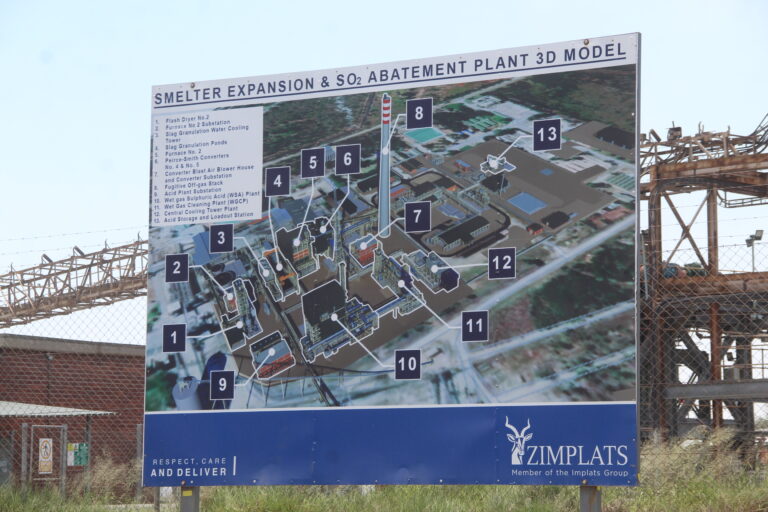
The Minister noted that the smelter is now fully operational and that the refinery is in an advanced stage of construction. Once completed, the refinery will enable Zimplats to process base metals, reducing the need for external refining and aligning with Zimbabwe’s push for local beneficiation.

“All the major components necessary for the operationalization of the refinery have been procured. Some items have already been assembled. We are now at the stage of the nickel section of the refinery, which will soon be producing nickel,” Chitando added.

The expansion of Zimplats’ smelting facilities has tripled its processing capacity, allowing the company to handle a larger volume of concentrates, not only from its operations but also from other platinum mines. Mimosa, for instance, is set to begin toll processing its concentrates at Zimplats’ smelter in January 2024.

The Minister emphasized that the establishment of the refinery marks a significant milestone in achieving the government’s vision for local value addition and beneficiation, which is a cornerstone of Zimbabwe’s broader economic strategy to achieve upper-middle-income status by 2030.

“Zimplats has made significant progress in fulfilling His Excellency’s vision of value addition and beneficiation in the country. The next steps are to complete assembly and operationalize the refinery, which will be a major milestone for both the company and the nation,” he said.

Once fully operational, the Base Metal Refinery will make Zimplats one of the few platinum miners in Zimbabwe capable of carrying out full beneficiation on-site. This will contribute significantly to the country’s industrialization and economic growth.

The government’s focus on value addition and beneficiation, particularly in the platinum sector, is expected to boost Zimbabwe’s export revenues, create more local jobs, and enhance the country’s standing as a leading player in the global mining industry.

Zimplats’ US$1.8 billion investment is a testament to the company’s commitment to aligning with the government’s economic goals, ensuring that the benefits of mining extend beyond extraction to sustainable development.

Global Grassroots Exploration Slumps by 8% in 2024, Now at Record-Low 22% of Budgets

0

Global mining companies have slashed spending on grassroots exploration to a historic low. The share of global budgets allocated to early-stage exploration, primarily for nonferrous metals, dropped by 8% in 2024, bringing the total to just 22%, or $2.79 billion, Mining Zimbabwe reports.

By Rudairo Mapuranga

According to S&P Global’s latest report, the sharp decline signals a major strategic shift as companies increasingly prioritize expanding known deposits over pursuing new discoveries.

In contrast, the late 1990s to early 2000s were characterized by a robust focus on uncovering new mineral resources. Between 1997 and 2004, nearly 50% of exploration budgets were allocated to grassroots initiatives. However, over the last two decades, exploration firms have steadily reduced their early-stage spending, choosing instead to allocate more funds to late-stage and mine site exploration.

Cesar Pastrana, data analyst at S&P and the report’s lead author, highlighted the negative impact of this trend on the pace of new discoveries.

“The number of new finds, particularly for key metals like copper and gold, has been declining consistently. The amount of contained metal within these discoveries has also dropped significantly over the years,” Pastrana said.

This slowdown in early-stage exploration has raised concerns about the future availability of critical resources. Copper and gold, essential for industries ranging from electronics to energy, are particularly affected by the reduced exploration focus.

Factors Behind the Shift

Several factors have contributed to this shift in priorities. Following a sharp decline in metal prices after 2012, mining companies adopted a more cautious, risk-averse approach to their investments. The reduced focus on grassroots exploration reflects a broader industry trend of limiting financial risk by extending known mineral deposits rather than pursuing high-risk, high-reward new discoveries.

“This reallocation of budgets allows companies to boost their resources from existing projects, but it limits the potential for uncovering new large-scale deposits. We are seeing more reserves come from older mines, which isn’t a sustainable strategy in the long term,” Pastrana said.

According to the S&P report, late-stage exploration experienced the largest budget cuts in 2024, with spending dropping to $4.71 billion. This represents a marked decline from recent years, breaking a three-year trend of increasing investment in late-stage projects. Late-stage exploration now accounts for 38% of the global budget, the second-largest category after mine site exploration.

Meanwhile, mine site exploration—the least risky of the three stages—saw modest growth, rising by 2% in 2024. This stage, which focuses on extending existing operations, has emerged as the most attractive option for many companies operating in a tight capital environment, particularly those focused on gold and copper projects.

Regional Trends

A significant portion of the decline in grassroots exploration spending has been driven by Australia, a leading global mining hub. According to S&P, the country’s allocation toward grassroots gold and copper projects fell sharply by 32% and 25%, respectively, in 2024. Rio Tinto, Australia’s largest grassroots explorer, slashed its spending in the region by 57%, signalling a major pivot in strategy.

Australia’s cutbacks were mirrored in Latin America, where countries like Ecuador, Mexico, and Chile each reduced their grassroots exploration budgets by over $20 million.

The Future of Exploration

S&P Global’s report highlights the risks of this trend for the long-term sustainability of mineral resources. Pastrana emphasized that while focusing on known deposits can temporarily boost reserves, it ultimately limits the industry’s ability to discover new resources, raising concerns about the supply of critical minerals in the future.

“The industry’s cautious approach, shaped by volatile metal prices and constrained financing, is causing companies to play it safe,” Pastrana said. “This could jeopardize the long-term availability of key metals, making it harder to meet future demand.”

As the global mining landscape continues to evolve, the challenge will be balancing financial risk with the need for new discoveries. For companies and investors, navigating this dynamic environment will be critical to ensuring resource sustainability in the years to come.