

Home Blog Page 151

Gold buying prices per gram in Zimbabwe, 4 April 2025

Gold buying prices per gram in Zimbabwe today, 4 April 2025, from the official gold buyer and exporter Fidelity Gold Refinery (FGR).

SG 90% and ABOVE US$94.73/g
SG ABOVE 89% BUT BELOW 90% US$93.73/g
SG ABOVE 80% BUT BELOW 85% US$92.73/g
SG ABOVE 75% BUT BELOW 80% US$91.72/g
SAMPLE BELOW 10g BUT ABOVE 5g US$90.22/g

Fire Assay CASH $95.23/g

NB: Fire Assay cash price is for gold above 100gs; no sample is deducted.
For the Fire Assay Transfer price, a sample of not more than 10g is deducted.
A 2% royalty is charged on all deposits (Small-scale miners).
A 5% royalty is set for Primary Producers.

Mining Revenue Generation Goes Beyond 3% Royalties

0

The mining sector in Zimbabwe is often misrepresented in public discourse, particularly when discussing its contribution to government revenue. While official figures from the Zimbabwe Revenue Authority (ZIMRA) indicate that mining royalties contribute just 3% of total revenue collections, this figure alone does not reflect the sector’s overall economic impact, Mining Zimbabwe can report.

By Rudairo Mapuranga

The reality is that mining plays a far more significant role in Zimbabwe’s economy, contributing between 12% and 15% of the Gross Domestic Product (GDP) and accounting for approximately 70% of total export earnings.

Beyond direct royalties, mining companies contribute significantly to Zimbabwe’s fiscal revenues through multiple tax avenues, including corporate income tax, customs and excise duties, withholding taxes, and Pay-As-You-Earn (PAYE). Furthermore, mining firms are mandated to surrender 30% of their foreign currency earnings to the Reserve Bank of Zimbabwe (RBZ), effectively functioning as an additional indirect tax, given the disparities between official exchange rates and parallel market rates.

Moreover, mining companies invest millions of dollars annually in Environmental, Social, and Governance (ESG) initiatives, directly benefiting communities and contributing to sustainable development. This article explores the full scope of mining’s fiscal and socio-economic contributions beyond the commonly cited royalty figures, providing a comprehensive analysis of the industry’s financial footprint in Zimbabwe.

The Mining Industry’s True Fiscal Contribution to Zimbabwe

1. Corporate Income Tax

Corporate Income Tax (CIT) is one of the major revenue sources for the Zimbabwean government, and the mining industry is a key contributor. In Zimbabwe, the standard corporate tax rate is 24%, but mining companies often pay higher effective tax rates due to additional levies, royalties, and other sector-specific obligations.

Estimated Contribution of Mining to Corporate Income Tax

In H1 2024, Zimbabwe collected a total of ZIG 10.07 billion in Corporate Income Tax, which translates to approximately USD 359.64 million at the exchange rate of 1 USD = 28 ZIG. Given that mining contributes between 12% and 15% of the GDP, it is reasonable to estimate that the sector contributed between ZIG 1.21 billion and ZIG 1.51 billion (USD 43.21 million – USD 53.93 million).

2. Customs and Excise Duties

Customs and excise duties are levied on imported and locally manufactured goods, and the mining industry is subject to various such duties. While mining equipment imports often benefit from tax rebates, other consumables and inputs used in the mining process attract customs duties.

Estimated Contribution of Mining to Customs and Excise Duties

ZIMRA collected ZIG 3.53 billion in customs and excise duties in H1 2024, which is approximately USD 126.07 million. Mining-related imports, including fuel, chemicals, and spare parts, likely contribute around 3-5% of customs and excise duties, translating to an estimated ZIG 106 million to ZIG 176 million (USD 3.79 million – USD 6.29 million).

3. Pay-As-You-Earn (PAYE)

Mining is one of the largest employers in Zimbabwe, with thousands of workers employed directly and indirectly. PAYE taxes are levied on employee salaries, with mining employees generally earning higher-than-average wages, leading to substantial PAYE contributions.

Estimated Contribution of Mining to PAYE

In H1 2024, PAYE collections amounted to ZIG 5.22 billion (USD 186.43 million). Given that mining is among the highest-paying sectors and employs a significant workforce, it is reasonable to estimate that 10-12% of total PAYE revenue originates from the mining sector, amounting to between ZIG 522 million and ZIG 626 million (USD 18.64 million – USD 22.36 million).

4. Withholding Taxes

Mining companies engage numerous service providers, contractors, and consultants who are subject to withholding taxes on payments received from mining firms.

Estimated Contribution of Mining to Withholding Taxes

Withholding tax accounted for ZIG 1.28 billion (USD 45.71 million) in H1 2024. Given the extensive outsourcing practices in the mining sector, mining companies likely contribute around 30-40% of withholding taxes, equating to an estimated ZIG 384 million to ZIG 512 million (USD 13.71 million – USD 18.29 million).

The Hidden Tax: Foreign Currency Surrender Requirements

A major yet often overlooked contribution of the mining industry to Zimbabwe’s economy is the foreign currency retention policy imposed by the RBZ. Under the current policy, mining companies are required to surrender 30% of their export earnings at the official interbank rate. Given that the mining sector generates over USD 5 billion annually in export revenues, this means that approximately USD 1.5 billion is forcibly converted to local currency at the interbank rate. Due to the significant gap between the interbank and parallel market rates, this results in an effective loss for mining companies, functioning as an implicit tax.

Mining Sector’s Commitment to ESG: Investments in Communities

Mining companies in Zimbabwe have also made substantial contributions to social and environmental sustainability through ESG initiatives. These programs include investments in education, healthcare, infrastructure, and environmental conservation.

ESG Spending by Major Mining Companies

Zimplats

Zimplats, Zimbabwe’s largest platinum producer, has been at the forefront of ESG investments, spending over USD 45 million in 2023 alone on various social and environmental projects. Some key initiatives include:

  • Healthcare Investments: Funding hospitals and clinics in mining communities.

  • Education Support: Building schools and offering scholarships for students.

  • Infrastructure Development: Constructing roads, bridges, and water supply systems.

  • Environmental Conservation: Implementing sustainable mining practices and land rehabilitation projects.

Caledonia Mining Corporation (Blanket Mine)

Caledonia Mining, which operates the Blanket Mine, spent USD 1.5 million on community development in 2023, with 92% of its procurement sourced locally.

Other Major Mining ESG Investments

  • Mimosa Mining Company: Invested in renewable energy and waste management.

  • Freda Rebecca Gold Mine: Supports local entrepreneurship through business grants and training programs.

Wrapping up

The mining sector’s financial contributions to Zimbabwe extend far beyond the 3% in royalties reported by ZIMRA. Through corporate income tax, customs duties, PAYE, withholding taxes, and foreign currency surrender requirements, the industry plays a vital role in sustaining the economy. Furthermore, mining companies invest heavily in ESG initiatives, positively impacting local communities and ensuring long-term sustainability.

A more nuanced understanding of mining’s contributions is essential for crafting policies that balance economic growth with fiscal sustainability. Rather than focusing solely on royalties, policymakers and stakeholders should recognize and support the mining industry’s broader economic impact, ensuring that it continues to drive Zimbabwe’s development for years to come.

Zimbabwe’s Platinum Industry Poised for Expansion Despite Weak Price Recovery

0

Zimbabwe’s platinum industry is set for growth in 2025, with production expected to rise despite a sluggish recovery in global metal prices, Mining Zimbabwe can report.

By Ryan Chigoche

According to the Chamber of Mines, platinum output is projected to reach 19.6 tonnes, up from 18.9 tonnes in 2024, while palladium production is set to increase by 3% to 16 tonnes. Major producers, including Zimplats, Mimosa, and Unki Mines, are expected to maintain full-capacity operations, ensuring a steady supply even amid challenging market conditions.

Driving this growth are significant investments aimed at sustaining and enhancing production. Zimplats is leading the way with a US$190 million investment to refurbish its Base Metal Refinery (BMR) and complete several projects between 2025 and 2028. This initiative is expected to strengthen local refining capacity and improve long-term profitability.

Meanwhile, Mimosa Mining Company is allocating US$2.1 million toward developing tailings storage facilities, extending the mine’s operational lifespan.

Unki Mines is also focusing on expansion and sustainability, investing US$500,000 in open-pit mining and US$200,000 in solar energy projects, which are projected to increase production by 1%.

However, despite these investments, the sector continues to face financial pressures due to weak metal prices.

While some companies anticipate a price rebound, cash flow constraints have forced them to put large expansion projects on hold. Nonetheless, the commitment to ongoing development reflects confidence in the long-term viability of Zimbabwe’s platinum industry.

Market analysts predict a continued weak recovery in PGM prices in 2025, with platinum expected to average $965 per ounce, up slightly from $955 per ounce in 2024. Palladium prices are forecasted to average $985 per ounce, compared to $970 per ounce the previous year. This sluggish price movement is largely attributed to an oversupply of PGMs and declining demand, particularly from the automotive sector, which has traditionally been a key consumer.

Adding to the uncertainty are global concerns about the long-term demand for PGMs as the world accelerates its shift toward renewable energy. While platinum has been considered a substitute for palladium in autocatalysts, the narrowing price gap between the two metals has limited its impact on overall demand. This trend raises further questions about the future role of PGMs in industrial applications.

Despite these market challenges, Zimbabwe’s platinum sector remains resilient. Steady production growth and strategic investments are positioning the industry for long-term stability. While weak prices may slow down large-scale expansions, ongoing development projects and the country’s abundant platinum reserves provide a strong foundation for sustained growth in the years ahead.

Gold buying prices per gram in Zimbabwe, 3 April 2025

Gold buying prices per gram in Zimbabwe today, 3 April 2025, from the official gold buyer and exporter Fidelity Gold Refinery (FGR).

SG 90% and ABOVE US$94.78/g
SG ABOVE 89% BUT BELOW 90% US$93.78/g
SG ABOVE 80% BUT BELOW 85% US$92.77/g
SG ABOVE 75% BUT BELOW 80% US$91.77/g
SAMPLE BELOW 10g BUT ABOVE 5g US$90.27/g

Fire Assay CASH $95.28/g

NB: Fire Assay cash price is for gold above 100gs; no sample is deducted.
For the Fire Assay Transfer price, a sample of not more than 10g is deducted.
A 2% royalty is charged on all deposits (Small-scale miners).
A 5% royalty is set for Primary Producers.

Pickstone to Boost Production by 26% with Multi-Million Dollar Investment

0

Pickstone Peerless Mine, operated by Padenga’s gold business, Dallaglio Investment, is set to invest US$15 million to increase its gold production by 26%.

By Ryan Chigoche

This substantial capital expenditure will fund exploration and expansion projects, marking a pivotal move as the mine refines its production strategy and infrastructure in response to surging gold prices.

This investment aligns with the positive outlook from the Chamber of Mines, which projects a 7% increase in mineral output across Zimbabwe in the coming year. Specifically, gold production is expected to rise to 42 tons in 2025, up from 38.5 tons in 2024.

This growth will be driven by the expansion of existing operations like Pickstone Peerless, as well as new projects in the sector.

The US$15 million investment is also part of the mine’s strategic shift from open-pit mining to underground operations. This transition was bolstered by an US$18 million underground mining project commissioned in August 2024, expected to continue until mid-2025.

The underground mining operations are expected to enhance ore grades significantly, improving the mine’s production efficiency.

With underground ore grades ranging between 3 to 5 grams per tonne, compared to the open-pit grades of 1.8 grams per tonne, this shift is anticipated to lead to higher-quality production, taking advantage of rising gold prices.

In addition to the underground transition, Pickstone Peerless is making significant investments in infrastructure to improve gold recovery.

The mine’s current recovery rate stands at 70%, but the addition of three large Carbon-in-Leach (CIL) tanks, alongside the installation of a fourth ball mill, is expected to increase recovery rates, boosting overall output.

These upgrades are vital for capitalizing on high gold prices, ensuring that the mine maximizes the value extracted from its ore.

Pickstone Peerless has already contributed significantly to Zimbabwe’s gold output, producing 750 kilograms in 2024.

Combined with production from Eureka Mine in Guruve, the two mines currently produce 210 kilograms per month. The mines are on track to increase this to 230 kilograms in 2025 and 250 kilograms per month by 2026.

This growth trajectory is in line with the broader positive outlook for Zimbabwe’s gold industry, fueled in part by bullish gold prices, which are expected to sustain demand and profitability.

Meanwhile, gold revenues are projected to exceed US$3 billion in 2025, up from US$2.5 billion in 2024. Furthermore, the average capacity utilization for the gold sector is set to increase to 96% in 2025, from 95% in 2024.

The mine’s ongoing investments in efficiency, recovery systems, and higher ore grades from underground operations are perfectly positioned to capitalize on surging gold prices.

This development not only strengthens Pickstone Peerless’ role within Zimbabwe’s mining sector but also signals the broader industry’s potential for continued growth, driven by favorable market conditions and strategic investments.

With rising gold prices and increasing production efficiency, Pickstone Peerless stands as a key player in Zimbabwe’s mining sector, poised to thrive amidst global gold demand and contribute to the country’s growing gold revenue.

Premier and Canmax Technologies Amend Offtake, Prepayment Agreement

0

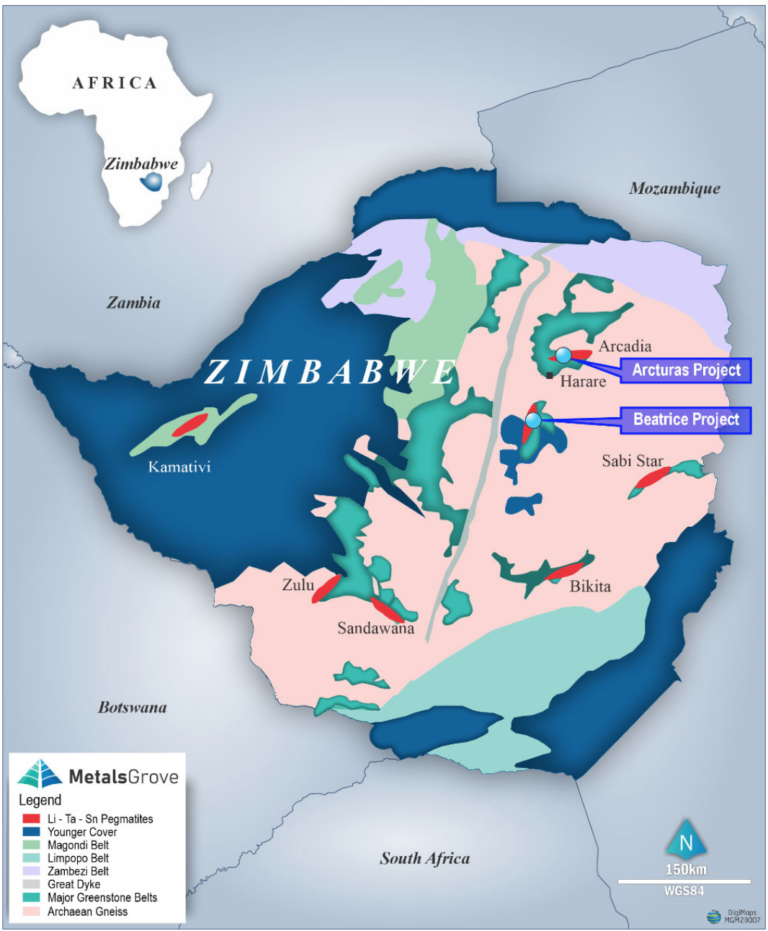
London Stock Exchange-listed mining and exploration junior Premier African Minerals Limited has reached a further amendment to its Offtake and Prepayment Agreement with Canmax Technologies Co., Ltd concerning the Zulu Lithium and Tantalum Project, Mining Zimbabwe can report.

By Rudairo Mapuranga

The amendment, which revises the Long Stop Date, solidifies Canmax’s commitment to working alongside Premier in the project’s development.

Key Amendments and Conditions

Under the amended agreement, the Long Stop Date has been extended from April 1, 2025, to either December 31, 2025, or until Premier secures a reputable buyer approved by Canmax to settle the Prepayment Amount plus interest. The adjustment is contingent upon several conditions:

  1. Canmax’s Participation Rights – Canmax retains the right to receive partial repayment through new ordinary shares in Premier, ensuring it holds 13.38% of the company’s shares on a fully diluted basis post-funding.

  2. Financial Oversight – Canmax will monitor and control Premier and Zulu Lithium’s operational financial activities, including trade creditor budgets, until the full settlement of the Prepayment Amount plus interest.

  3. Insolvency Safeguards – Neither Premier nor Zulu Lithium should be subject to insolvency proceedings unless contested and resolved within 30 days.

  4. Asset Security – Premier cannot pledge or encumber its assets, including mineral rights, without prior written approval from Canmax.

  5. Expression of Interest Requirement – A non-binding letter of interest from a reputable buyer acceptable to Canmax must be secured within 30 days of signing the addendum. Should the initial interest be withdrawn, Premier will have an additional 30 days to secure an alternative buyer.

  6. Board Commitment – Premier’s directors must personally commit to these conditions until full settlement of the Prepayment Amount plus interest.

Failure to meet these conditions allows Canmax to exercise its full rights under the amended agreement.

Premier’s Default and Increased Interest Rate

This amendment follows Premier’s default on the initial offtake agreement, where the company failed to deliver the minimum 1,000 tonnes of lithium spodumene per month in November and December 2023. As a result, Canmax invoked its rights under the agreement, carrying forward a US$3 million balance ($1.5 million per month) and increasing the interest rate to 12% per annum, effective December 1, 2023.

Premier CEO George Roach acknowledged Canmax’s continued support despite the defaults, stating that Premier remains committed to meeting its delivery obligations. The company aims to resume production by late February, contingent on contractor commitments.

Background of the Prepayment Agreement

The relationship between Premier and Canmax dates back to an August 3, 2022, agreement in which Canmax pre-purchased US$34.64 million worth of lithium spodumene concentrate. This prepayment was intended to fund the construction and commissioning of the Zulu plant.

Under the agreement:

  • Canmax was to receive 25% of Premier’s gross sale proceeds from lithium shipments until May 30, 2024.

  • From June 1, 2024, until full repayment, Canmax would receive 50% of Premier’s gross sale proceeds.

  • Premier was required to begin repaying the Advance Purchase Amount no later than November 1, 2023, at a rate of 1,000 tonnes per month.

If Premier failed to deliver the minimum tonnage, it had to compensate Canmax through cash payments. Failure to make two consecutive deliveries would increase the interest rate further to 10%, and a prolonged failure could lead to Canmax converting the outstanding balance into Premier shares or even claiming a direct interest in Zulu Lithium based on a US$200 million valuation.

Golden Valley to Invest Nearly a Million in Plant, Solar for Increased Gold Output

0

Golden Valley Mine is set to inject US$600,000 into upgrading its processing plant and solar power infrastructure, a move expected to significantly boost production amid rising global gold prices, Mining Zimbabwe can report.

By Rudairo Mapuranga

The investment, revealed in the Chamber of Mines Commodity Outlook 2025, comes as Zimbabwe’s mining sector accelerates efforts to improve efficiency and sustainability.

With Zimbabwe’s energy challenges continuing to impact mining operations, Golden Valley’s decision to invest in solar power marks a critical step towards energy security and cost efficiency. The transition to renewable energy is expected to reduce operational costs, ensure uninterrupted production, and align the mine with global environmental sustainability trends.

Solar power adoption is gaining momentum in Zimbabwe’s mining sector, with companies seeking alternatives to unstable grid power and costly diesel generators. By investing in solar, Golden Valley is not only ensuring consistent processing operations but also contributing to Zimbabwe’s green energy transition.

Golden Valley’s plant investment will focus on improving recoveries and increasing throughput, enabling the mine to take advantage of record-breaking gold prices. As of April 1, 2025, gold prices have surged past $100/g ($3,126.97/oz), driven by geopolitical tensions, inflation fears, and increased demand from central banks.

The Fidelity Gold Refinery (FGR) in Zimbabwe is currently offering $94.64/g for gold of 90% purity and above, while fire assay cash prices stand at $95.14/g. With these high prices, efficiency improvements at Golden Valley will allow for higher profitability and increased returns on investment.

Financial institutions have revised their gold price targets upward, with Goldman Sachs projecting $106.08/g ($3,300/oz) by year-end, and some analysts predicting a possible $144.76/g ($4,500/oz) in extreme scenarios. The ongoing price rally presents a golden opportunity for Zimbabwean miners to expand production and maximize export revenues.

Golden Valley’s investment strategy aligns with the government’s broader Vision 2030, which aims to transform Zimbabwe into an upper-middle-income economy. This reinforces the importance of value addition and sustainable energy adoption in Zimbabwe’s extractive sector.

With rising gold prices, enhanced processing efficiency, and a shift towards sustainable energy, Golden Valley is poised for significant growth, positioning itself as a key player in Zimbabwe’s mining future.

Chamber of Mines Singles Out Zimasco, Afrochine to Lead Ferrochrome Production Increase

0

Zimbabwe’s ferrochrome production is set for a major boost as two key players, Zimasco Mining Company and Afrochine Smelting Company, ramp up investments in mine expansion and smelting capacity. These strategic initiatives are expected to ensure a steady supply of mineral resources and drive increased output, according to the Chamber of Mines Commodity Outlook 2025.

By Rudairo Mapuranga

Afrochine Smelting Company plans to invest US$22.6 million in mine exploration to sustain ferrochrome production and feed its expanding smelting operations. The company is also investing in two new smelters, expected to be completed by October 2025, which will help maintain steady production levels in a globally competitive market.

Zimasco Mining Company, on the other hand, is investing approximately US$3 million in expanding its mining operations. Additionally, Zimasco is committing US$43,243 to the 19M01 Ngezi 3D 24 underground project, which is expected to be completed by 2026 and is anticipated to boost ferrochrome production by 28%.

These investments align with Zimbabwe’s drive to increase ferrochrome exports, leveraging the country’s vast chromite reserves to meet rising global demand for stainless steel production.

Zimbabwe’s mining sector is forecasted to grow by 7% in 2025, despite a challenging global economic environment characterized by sluggish growth, trade disruptions, and declining commodity prices.

According to the Chamber of Mines Commodity Outlook 2025, Zimbabwe’s mineral revenue is projected to rise from US$5.9 billion in 2024 to US$6.2 billion in 2025. While the gold sector is expected to be the primary driver of this growth, ferrochrome expansion projects by Zimasco and Afrochine will also play a pivotal role.

The mining industry still faces significant risks, including:

  • Power supply challenges affecting consistent production.
  • Foreign exchange shortages limiting access to capital.
  • High operational costs, including electricity tariffs and fiscal charges.

Globally, commodity markets are expected to be bearish in 2025, with the World Bank Commodity Price Index projected to drop 5%, driven by weaker demand from China and an oversupply of platinum, palladium, and nickel. However, Zimbabwe’s focus on ferrochrome expansion and its efforts to attract foreign investment are expected to counterbalance these global pressures.

With sustained investment in production capacity, Zimbabwe’s ferrochrome sector is poised to strengthen its position in global markets. The government’s US$12 billion mining industry roadmap includes a strong focus on value addition, and the expansion projects by Zimasco and Afrochine will contribute significantly to this vision.

As Zimbabwe works to maximize its mineral potential, the expansion of the ferrochrome sector will enhance export earnings and ensure that the country remains a key supplier in the global stainless steel industry.

Gold buying prices per gram in Zimbabwe, 2 April 2025

Gold buying prices per gram in Zimbabwe today, 2 April 2025, from the official gold buyer and exporter Fidelity Gold Refinery (FGR).

SG 90% and ABOVE US$95.20/g
SG ABOVE 89% BUT BELOW 90% US$94.20/g
SG ABOVE 80% BUT BELOW 85% US$93.19/g
SG ABOVE 75% BUT BELOW 80% US$92.18/g
SAMPLE BELOW 10g BUT ABOVE 5g US$90.67/g

Fire Assay CASH $95.71/g

NB: Fire Assay cash price is for gold above 100gs; no sample is deducted.
For the Fire Assay Transfer price, a sample of not more than 10g is deducted.
A 2% royalty is charged on all deposits (Small-scale miners).
A 5% royalty is set for Primary Producers.

Zimbabwe’s Gold Industry Booms as Global Prices Surge Past $100/g

0

Gold prices have continued their meteoric rise, breaching the $100-per-gram mark globally, with spot gold reaching a record $100.55/g (US$3,126.97/oz) during Monday’s morning trade, Mining Zimbabwe can report.

By Rudairo Mapuranga

The rally, driven by heightened geopolitical tensions and economic uncertainty, is expected to bring significant benefits to Zimbabwe’s gold mining sector.

At the same time, Zimbabwean gold producers are witnessing record prices from Fidelity Gold Refinery (FGR). As of April 1, 2025, FGR is offering $94.64/g for gold of 90% purity and above, while fire assay cash prices stand at $95.14/g. Small-scale miners, who contribute the bulk of Zimbabwe’s gold production, are set to benefit significantly, particularly as the country pushes for increased deliveries to formal channels.

The latest surge in gold prices is attributed to concerns surrounding U.S. President Donald Trump’s aggressive tariff policies, global economic instability, and inflation fears. As a result, investors are rushing toward gold as a safe-haven asset, pushing the metal’s annual gains to 18% so far in 2025.

For Zimbabwe, where gold is the backbone of foreign currency earnings, this rally presents a golden opportunity. Higher prices incentivize more deliveries to FGR, potentially reducing smuggling and boosting government revenues. This is particularly crucial as Zimbabwe works towards its US$12 billion mining industry target, where gold plays a leading role.

Several leading financial institutions have revised their gold price targets upwards. Goldman Sachs now projects prices could hit $106.08/g ($3,300/oz) by year-end, while Bank of America’s previous target of $98.50/g ($3,063/oz) has already been surpassed. Some extreme forecasts suggest that in a worst-case economic scenario, gold could even skyrocket to $144.76/g ($4,500/oz).

According to analysts at OCBC Bank, “Gold’s appeal as a safe haven and inflation hedge has further strengthened amid geopolitical concerns and tariff uncertainty.” This sentiment is echoed by Marex consultant Edward Meir, who predicts that “tariff issues will continue driving prices higher until there is some finality to the tit-for-tat campaign.”

With global central banks increasing their gold reserves and investor demand soaring, Zimbabwean gold producers stand to benefit immensely. However, challenges remain, including power shortages, foreign currency retention policies, and smuggling. Industry players are urging authorities to align local pricing policies with global market trends to ensure miners get maximum value.

If the current rally continues, 2025 could be a record-breaking year for Zimbabwe’s gold sector, with increased output, higher export revenues, and a stronger contribution to the national economy.