Home Blog Page 155

AMMZ Elections: Engineer Abel Makura Re-elected as President for the 2024-25 Term

0

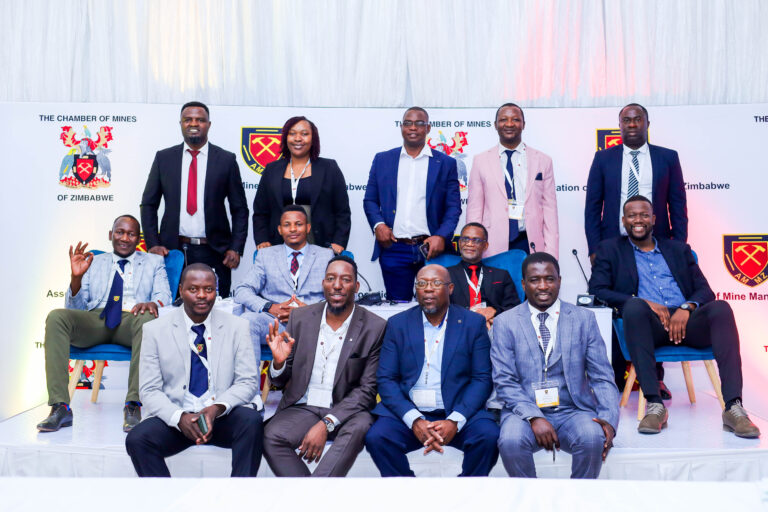
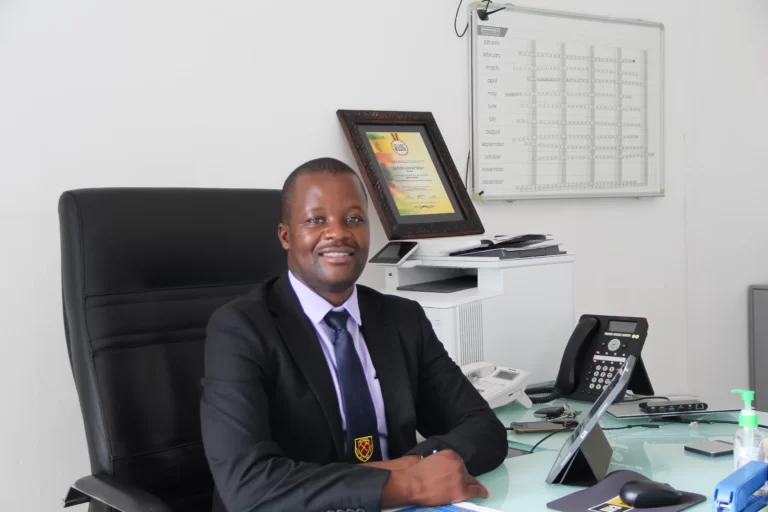
Engineer Abel Makura was re-elected as the President of the Association of Mine Managers of Zimbabwe (AMMZ) for the 2024-25 term. The election took place during this year’s AMMZ Annual General Meeting (AGM) held at the Holiday Inn, Bulawayo.

By Kelvin Sungiso

Dr Alfred Chinyere and Engineer Stella Chitakunye were elected into the AMMZ Council, replacing outgoing members Ray Chiridza and Cloete Munjoma.

The full Presidium and Council Members of the Association of Mine Managers for the 2024-25 term are as follows:

Presidium

  • President: Abel Makura (Unki Mines)
  • Vice President: Alfred Madowe (Pickstone Peerless)
  • Past President: Elton Gwatidzo (Blanket Mine)

Council Members

  • Gift Mapakame (Shamva Mine)
  • Dr. Alfred Chinyere (Freda Rebecca)
  • Larnston Gowera (AI Vision)
  • Eddington Vere
  • George Waeni (RZM Murowa Diamonds)
  • Stella Chitakunye (Unki Mines)
  • Coburn Katanda (Eureka Gold Mine)
  • Walter Madzimure (Intrachem)

The AMMZ remains dedicated to advancing leadership excellence and technical expertise in Zimbabwe’s mining industry, with the newly elected team poised to drive innovation and growth in the sector.

MVSZ Commits to Auditing Mines Ventilation Lab and Recommending Technology

0

The Mine Ventilation Society of Zimbabwe (MVSZ) has committed to auditing the Ministry of Mines and Mining Development’s Ventilation Lab in Gweru. MVSZ will recommend the latest available technology and provide training on how to use the new equipment, Mining Zimbabwe reports.

By Rudairo Mapuranga

Speaking at the Association of Mine Managers of Zimbabwe Annual General Meeting, held at the Holiday Inn Hotel in Bulawayo, MVSZ Chairman Joshua Tigere emphasized that the society has the experience and technical expertise to train practitioners at the lab and recommend technology that aligns with today’s challenges.

“To complement that, we are also going to offer training on the use of the recommended technology. Since I lead the training arm of the Ventilation Society of Zimbabwe and also conduct practical training for the Chamber of Mines of South Africa, I believe we have the competence to train all mine inspectors on the instruments that will be housed in that lab,” said Tigere.

Chief Government Mining Engineer, Eng. Michael Munodawafa, expressed his appreciation for MVSZ’s support, saying, “Thank you so much. I believe I’ve got something valuable to take with me. It’s great when there is someone willing to help us. I think this is something we’ve been waiting for — someone who can assist in finding that solution. Through your invitation, as MVSZ mentioned, I’m happy to leave with something tangible.”

The importance of proper mine ventilation cannot be overstated, especially in a country like Zimbabwe, where gaps in safety standards persist. Ventilation in underground mines is critical to ensure the safety of workers, providing a flow of fresh air to remove hazardous gases, dust, and heat, which can lead to life-threatening conditions if unchecked.

Zimbabwe’s mining industry faces numerous challenges related to the complexity of its ventilation legislation. Many mines, especially artisanal and small-scale ones, struggle to meet safety requirements due to limited access to modern technology and insufficient regulatory oversight. The legislation governing mine ventilation in Zimbabwe was designed to protect workers, yet enforcement is inconsistent, leaving many mines at risk of dangerous conditions underground.

Ventilation standards vary depending on the type of mining operation. For large-scale operations, such as those run by multinational companies, ventilation systems are generally state-of-the-art, adhering to global best practices. However, smaller mines often lack the resources or technical expertise to implement such systems, resulting in hazardous working environments.

A significant gap in Zimbabwe’s ventilation regulations is the lack of a comprehensive framework that addresses all types of mining operations. Current legislation often focuses on large-scale mining, overlooking the particular needs and risks associated with small-scale and artisanal mining. As a result, smaller operations frequently operate with outdated or inadequate ventilation systems, putting miners’ lives at risk.

To bridge these gaps, the MVSZ’s initiative to audit the Ministry of Mines’ ventilation lab and recommend modern technology represents a crucial step forward. By providing expert recommendations and training, the society hopes to enhance the capacity of mine inspectors and practitioners, ensuring that mines across Zimbabwe can maintain safe and efficient ventilation systems.

Mining Zimbabwe Live Streaming: Association of Mine Managers of Zimbabwe AGM

0

We are excited to announce that Mining Zimbabwe is currently live streaming the Association of Mine Managers of Zimbabwe (AMMZ) Annual General Meeting in Bulawayo. This prestigious event brings together top professionals in the mining industry to discuss important developments, share insights, and plan for the future of mining in Zimbabwe.


Join us live now and stay up to date with the discussions, presentations, and key takeaways from this important conference.


Watch the live stream here: AMMZ Annual General Meeting LIVE


Stay tuned for more updates!

Blanket Mine Wins AMMZ SHE Award for Continual Improvement

0

Victoria Falls Stock Exchange-listed, gold-focused miner Caledonia Mining Corporation’s Blanket Mine has been honored with the prestigious Continual Improvement Award at the Association of Mine Managers of Zimbabwe (AMMZ) Safety, Health, and Environmental (SHE) Awards, Mining Zimbabwe can report.

By Rudairo Mapuranga

The award highlights the mine’s dedication to enhancing its safety, health, and environmental protocols, positioning it as a leader in the mining sector for its consistent progress in these crucial areas.

Speaking at the award ceremony, Alfred Chinyere, General Manager of Freda Rebecca Mine and Chairman of the AMMZ and Chamber of Mines SHE Committee, commended Blanket Mine’s remarkable performance in 2024. Chinyere emphasized that the mine’s substantial improvements in its safety record were a key factor in its selection for the award.

“The award for continual improvement goes to the mine that has demonstrated significant progress in 2024, and that mine is Blanket Mine,” said Chinyere.

Chinyere further noted that the mining industry’s SHE performance has shown significant improvement compared to the previous year.

“If you look at how we are faring in 2024 compared to 2023, on a calendar year basis, you can clearly see an improvement in terms of safety performance. In 2023, we had 212 fatalities, but this year we have reduced that number to 140. Similarly, lost-time accidents dropped from 51 last year to 36 this year. This is a better performance, and we don’t expect anything worse in the remaining months of the year,” said Chinyere.

He highlighted the general improvement in safety metrics across the industry, which he referred to as lagging indicators. Chinyere encouraged applause for the progress made and expressed optimism for further improvements by addressing key issues such as fall-of-ground accidents, which contribute to nearly 50 percent of total accidents.

“The key issue driving accidents in mining is the fall of ground, and if we put more effort into managing these incidents, we can significantly reduce the number of fatalities in our mines,” Chinyere explained.

He urged the mining industry to adopt new technologies, particularly the Technology Adoption Plan (TAP), which has shown positive results in mines that have implemented it for fall-of-ground management.

In addition to Blanket Mine’s recognition, Chinyere discussed the broader safety competitions held throughout the year, noting an increase in participation in certain regions despite economic challenges affecting some mines. He expressed gratitude to mines like MIMOSA and ZIMPLATS for hosting the competition finals, acknowledging the financial strain on some operations due to declining metal prices.

Chinyere also introduced a shift in how safety audits and competitions will be conducted going forward.

“Instead of ranking mines against each other, we will now evaluate each mine against its own past performance. This continuous improvement model will foster a healthier culture around safety audits,” he said.

Blanket Mine’s award underscores its leadership in promoting a culture of continual improvement, which has enhanced safety performance and positioned it as a role model within the mining sector. As the industry moves toward more sustainable and technologically advanced practices, Blanket Mine’s achievements highlight the critical importance of prioritizing worker safety and environmental protection.


Caledonia Plans to Build Zimbabwe’s Largest Gold Plant in Bubi

0

Caledonia Mining Corporation, a Victoria Falls Stock Exchange-listed, gold-focused miner, has revealed plans to construct the largest gold plant in Zimbabwe at its Bilboes project in Bubi over the next three years. This development is part of the company’s strategic goal to become Zimbabwe’s biggest gold producer.

By Rudairo Mapuranga

During a technical visit by the Association of Mine Managers of Zimbabwe (AMMZ) to Blanket Mine, Caledonia’s Blanket Mine General Manager, Elton Gwatidzo, announced the company’s goal of establishing the country’s largest gold plant at Bilboes, located near the Motapa project.

Gwatidzo mentioned that Caledonia is currently completing the second phase of its feasibility study for Bilboes and conducting exploration at Motapa. He added that the plant, once completed, will serve both the Bilboes and Motapa projects within the next two to three years.

“Bilboes and Motapa are our exploration projects. We are currently concluding the second phase of our feasibility study for Bilboes, and we are conducting exploration at Motapa with the intention of establishing the largest gold plant in Zimbabwe at Bilboes. This will support both Bilboes and Motapa in the next two to three years,” Gwatidzo said.

The Bilboes project, acquired by Caledonia Mining Corporation, is a significant asset with the potential to transform the company’s gold production capacity. The project consists of three mining leases covering a total area of 1,563 hectares. These leases have an estimated gold resource of over 2 million ounces, making Bilboes one of the most promising gold projects in Zimbabwe. The company’s plans for an open-pit mine at Bilboes include the construction of a large processing plant capable of handling ore from both Bilboes and nearby exploration projects like Motapa.

Caledonia Mining has also announced highly encouraging results from its ongoing exploration campaign at the Motapa Project, adjacent to Bilboes. The company’s CEO, Mark Learmonth, reported significant high-grade gold intercepts from recent drilling programs at Motapa, including 4.00 meters at 10.95 grams per tonne (g/t) of gold. These results are a positive step towards delineating Motapa’s potential and integrating it into Caledonia’s long-term development strategy.

Motapa, acquired in November 2022, is a highly prospective exploration lease situated in the Archean greenstone belt of the Zimbabwe Craton. The region’s complex geological setting, featuring extensive shear zones, provides favourable conditions for gold mineralization, particularly in sulphide-rich zones below historical oxide pits.

The company has conducted a comprehensive exploration campaign at Motapa, including 12,724 meters of trenching, 4,143 meters of diamond drilling, and 5,433 meters of reverse circulation drilling. This program has revealed widespread gold mineralization across multiple prospects, with drilling results showing high-grade gold intercepts at various depths.

The development of the Bilboes and Motapa projects, along with the planned construction of the country’s largest gold plant, is crucial for Caledonia’s growth and for Zimbabwe’s mining industry. The plant will not only increase the company’s production capacity but also contribute to the country’s broader gold output, helping to meet Zimbabwe’s ambitious target of becoming an upper-middle-income economy by 2030.

By integrating these projects, Caledonia is positioning itself as a key player in Zimbabwe’s gold sector, ensuring long-term sustainability and growth through continued exploration and development.

AMSZ’s New ExCo Focuses on Growth and Legislative Reforms

0

The newly elected executive committee of the Association of Mine Surveyors of Zimbabwe (AMSZ) has set its focus on growing the association and addressing regulatory challenges to protect their profession, Mining Zimbabwe reports.

By Ryan Chigoche

This newly elected AMSZ committee will serve a two-year term. They assume office at a time when many mining practitioners face a range of challenges, with regulation being the most pressing issue.

For some time, surveyors have been calling for regulatory changes to better align with evolving technological advancements. There are growing concerns that outdated regulations threaten the profession’s long-term viability.

Speaking to Mining Zimbabwe on behalf of the new leadership, AMSZ President Stewart Gumbi outlined their priorities for the term. He emphasized that their main objectives would focus on growth and safeguarding the profession by addressing legislative issues.

“The first issue we need to tackle urgently is the growth of the association so that our initiatives have a broader reach. We also need to address regulations. One of the core objectives of the association is to protect the profession and to do that, we must collaborate with various regulators to review existing legislation. We also need to lobby for necessary changes and improvements,” Gumbi said.

“It’s not that we have any significant issues with the current state of affairs, but everything is evolving. Legislation and our policies must reflect these changes and advancements. That way, we can better safeguard the profession and enhance its contribution to the mining industry,” he added.

Gumbi stressed that the ultimate goal is to drive higher productivity and efficiency in the mining industry, with a strong emphasis on improving safety standards.

In addition, the new leadership aims to address the issue of recognition for mine surveyors and the critical roles they play in the industry. Currently, the recognition and compensation for these roles do not align with the level of expertise required. The new ExCo intends to push for a benchmark that will guide industry standards on how to better recognize and reward the skills and contributions of mine surveyors.

While the new committee has a clear vision for addressing these challenges, Gumbi emphasized that they are not starting from scratch. The outgoing committee has made considerable progress in recent years, and the new leadership plans to build on those achievements.

“These changes need to happen quickly, and we’re already making progress. We’re not starting from zero; we’re carrying forward the work that the previous leadership began. There is a lot to be done, but I’m confident that the new committee has the right mix of experience, vision, and commitment to get the job done,” Gumbi said.

In addition to legislative reforms, the AMSZ leadership plans to implement a series of strategic initiatives aimed at enhancing the association’s visibility, expanding membership, and improving its role in shaping policy discussions within the broader mining sector.

This will involve regular consultations with key stakeholders, including mining companies, regulators, and other professional organizations, to ensure that the association remains at the forefront of industry developments.

To achieve these goals, the AMSZ will hold a series of strategic meetings and discussions with key industry players, regulators, and government representatives throughout their term. The leadership team is committed to driving positive change and positioning the association to better serve its members and the mining industry as a whole.

AMSZ Expo Demo Day Highlights Technological Advancements in Mine Surveying

0

The Association of Mine Surveyors of Zimbabwe (AMSZ) has described the Expo Demo Day held at its 39th AGM, as a crucial event for survey professionals, offering them a hands-on experience with the latest cutting-edge technology and equipment, Mining Zimbabwe reports.

By Ryan Chigoche

The event took place today in Nyanga as part of the AMSZ’s ongoing 39th Annual General Meeting (AGM) and conference.

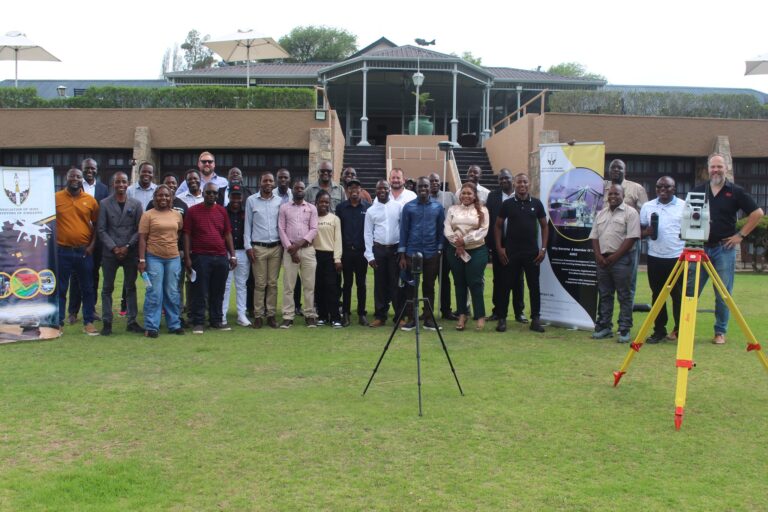
At the Expo Demo Day, AMSZ members physically interacted with new technology and equipment from Leica SA. Members had the opportunity to test the technology, see how it works, and compare it to the tools they currently use at their workstations, providing them with an overview of the innovations in mine surveying.

One of the Association’s primary goals is to promote safety, efficiency, and productivity, and new technology plays a crucial role in helping surveyors discover better ways to work.

In an interview with Mining Zimbabwe, newly elected AMSZ president Stewart Gumbi emphasized the success of the Expo Demo Day, highlighting how it allowed members to gain valuable hands-on experience with the latest surveying technology.

“One of the key takeaways is that some of our members are unaware of the technologies available. They get to see them firsthand and ask questions. These insights are brought back to their offices, helping mining companies adopt these new technologies,” Gumbi explained. “As you’ve seen, people have been very engaged. They’ve asked many technical questions about accuracy and cost, as they want to factor these into their budgets for 2025.”

Gumbi further noted that the Expo demonstrated the potential for improved efficiency and productivity in mining operations, while also minimizing safety risks.

“Now, people don’t have to enter inaccessible areas. They can measure them without exposing themselves to hazards. They can collect the same amount of data in less time. That’s efficiency,” Gumbi said. “These are the goals we are driving as an association. We want people to be more efficient, productive, and safer.”

The AMSZ Expo Demo Day comes at a pivotal moment for Zimbabwe’s mining sector, which is undergoing a technological renaissance. Innovations such as drones and Geographic Information Systems (GIS) are reshaping the future of mine surveying by improving accuracy, safety, and operational efficiency.

As these technologies continue to evolve, the ongoing 39th AGM and Conference of AMSZ provides a platform to further define the future of the profession and continue the momentum of technological integration.

AMSZ is focused on several strategic goals that align with the industry’s technological advancements. A key objective is to elevate the role of mine surveyors in Zimbabwe, shifting the traditional view of surveyors as technical specialists to recognizing them as strategic advisors. These professionals are increasingly seen as integral contributors to mine planning, resource management, and sustainability efforts, thanks to their expertise in digital tools such as drones and GIS.

In this rapidly evolving landscape, the role of the mine surveyor is more crucial than ever, ensuring that the mining sector not only keeps pace with technological change but leads it.

Premier Appoints VSA Capital as Corporate Adviser to Advance Zulu Project

0

London Stock Exchange-listed mining and exploration junior Premier African Minerals Limited has taken a significant step in its journey to unlock the potential of its flagship Zulu Lithium and Tantalum Project in Fort Rixon by appointing VSA Capital Group plc (VSA) as a corporate adviser. VSA will assist in advancing strategic objectives, particularly corporate and financing options for the project.

By Rudairo Mapuranga

Announcing the partnership, Premier’s CEO George Roach expressed optimism about the expertise VSA brings to the table.

“We are delighted to have appointed VSA, which has a track record of working with and successfully concluding natural resource deals with China-based companies. Given their experience in the natural resources sector, particularly in battery minerals, and their presence in Africa and Asia, we believe VSA will provide invaluable support as we pursue our corporate objectives,” Roach said.

This move comes on the heels of Premier’s recent updates on Zulu, which revealed significant potential in spodumene recovery and a promising mineral resource profile. However, the project remains stalled due to financing challenges.

VSA Capital is a London-headquartered investment banking and broking firm specializing in natural resources, transitional energy, and technology. With a footprint in Shanghai and partnerships in Australia, Kenya, and South Africa, VSA’s global reach aligns with Premier’s ambitions to engage international markets, particularly in Asia and Africa.

The firm’s recent strategic partnership with Drakewood Capital Management Limited enhances its capabilities in commodities trading and fund management, making it a fitting partner for Premier as it seeks financing solutions for Zulu.

Premier’s Zulu Project has long been regarded as a high-potential lithium and tantalum resource in Africa, but operational progress has been hampered by funding constraints. The company has explored various options, including partial sales, joint ventures, and self-financing additional spodumene flotation plants.

Despite challenges, recent test work has shown that minor adjustments to the plant’s reagent setup could achieve acceptable spodumene grades and recoveries without significant structural changes. However, financing remains the critical barrier to restarting operations.

The announcement of VSA’s appointment has sparked mixed reactions among stakeholders. Some investors remain skeptical, citing ongoing delays and dilution of shareholder value, while others see this as a positive step toward resolving Zulu’s financing woes.

Premier’s decision to bring in VSA as a corporate adviser signals a renewed commitment to advancing the Zulu Project. With the global demand for battery minerals on the rise, the successful development of Zulu could position Premier as a key player in the lithium supply chain.

Stewart Gumbi Appointed AMSZ President

0

Stewart Gumbi has been appointed the new President of the Association of Mine Surveyors of Zimbabwe (AMSZ), succeeding Gabriel Mwale, who previously led the organization.

By Ryan Chigoche

The 38-year-old Gumbi emerged victorious in the elections held during the first day of AMSZ’s 39th Annual General Meeting which will see the Midlands-based surveyor lead the organisation for the next two years.

Meanwhile Jeremiah Gasitende was elected Vice President, while Takunda Mubayiwa retained his position as Secretary General.

The new AMSZ executive committee comprises of Prosper Ngwerume, Tavengwa Ndlovu, Jubilee Magurei, Collet Ngulube, Wayne Silunde, Jeremiah Gasitende, and Martin Mapfumo.

Gumbi takes on this role at a pivotal moment when the industry is grappling with significant challenges, including outdated regulations, limited access to modern surveying technologies, and the increasing informalization of the mining sector, where many miners operate without formal permits or adherence to industry standards.

The 39th Annual General Meeting (AGM) which began on November 20 will conclude tomorrow. This year’s event, themed “From Survey to Strategy: Empowering Mine Surveyors as Leaders in the Mining Industry for Sustainable Growth,” aims to broaden the role of mine surveyors beyond technical expertise to include leadership in driving safety, efficiency, and sustainability across the industry.

Building on this vision, the new AMSZ leadership is committed to promoting the adoption of modern technologies to enhance the efficiency and sustainability of mining operations. This forward-looking approach will also emphasize transparency and accountability within the sector. A key objective of the association is to increase public access to vital mining-related data, including revenue generation, environmental impact assessments, and ownership structures.

According to AMSZ, transparency in these areas is essential for ensuring that mining benefits are equitably distributed, corruption is minimized, and public trust is strengthened. By advocating for clearer reporting standards, AMSZ seeks to foster a more accountable mining sector that serves Zimbabwe’s citizens effectively.

In addition to its advocacy efforts, AMSZ is dedicated to capacity building and professional development within the mining sector. This includes designing training programs for mine surveyors and other stakeholders to ensure they are equipped with the knowledge and skills necessary for effective policy implementation.

As AMSZ intensifies its advocacy and lobbying efforts, it remains focused on guiding Zimbabwe’s mining sector toward modernization. By balancing economic, environmental, and social responsibilities, AMSZ aims to influence policies that support the sector’s long-term, sustainable growth. Under Gumbi’s leadership, AMSZ seeks to ensure the industry evolves in a way that not only improves operational efficiency but also enhances safety and sustainability for future generations.

Govt to Engage Stakeholders in Formulating Mandatory ESG Policy

0

The Zimbabwean government is set to engage stakeholders in the mining industry as it moves towards making Environmental, Social, and Governance (ESG) compliance mandatory, Mining Zimbabwe can report.

By Rudairo Mapuranga

Speaking to Mining Zimbabwe recently, Mines and Mining Development Deputy Minister Dr. Polite Kambamura shared that the government is actively working on the development of a new ESG policy, which it plans to implement next year.

Dr. Kambamura revealed that this policy, which is currently a work in progress, will require mining firms to comply with ESG standards as a prerequisite for the issuance of mining licenses.

“Currently, there is no policy that forces companies to comply with ESG, and that’s why the government is thinking of coming up with a policy that speaks to ESG. We are looking forward to implementing it in the coming year,” he said.

The new policy is expected to cover all mining subsectors, regardless of scale, integrating social, environmental, and economic goals to ensure sustainable development across the industry. This approach, according to Dr. Kambamura, will align Zimbabwe’s mining sector with global ESG standards, as countries around the world respond to climate change and sustainability challenges.

“We will integrate social, environmental, and economic developmental goals to drive sustainability in all mining subsectors, regardless of scale,” Dr. Kambamura noted, signaling the government’s intention to ensure that even small-scale and artisanal miners meet these new requirements. One of the key aspects of the new ESG policy will be the involvement of stakeholders throughout the formulation and implementation process. Dr. Kambamura assured that the government is committed to engaging with all relevant parties, including mining companies, community representatives, and other industry stakeholders, to ensure that the policy is both practical and effective.

“When such a policy is formulated and adopted by the government, normal policy implementation procedures will be done, and any policy instruments used, if need be during these processes, stakeholders will be engaged prior and after for policy impact assessment,” he said.

The engagement process will allow stakeholders to provide input on how the policy can be shaped to address local conditions while still meeting international standards. Dr. Kambamura’s remarks indicate that the government aims to create a framework that not only protects the environment but also promotes social responsibility and ethical governance in the mining sector.

The push for mandatory ESG compliance is in line with global trends, as industries worldwide face growing pressure to prioritize sustainability and ethical practices. Dr. Kambamura emphasized that Zimbabwe cannot remain isolated from these global influences, particularly when it comes to addressing climate change and green ethics.

“It is important that we move with global standards and how countries are responding to climate change issues, green ethics, and sustainability. We cannot be isolated from global influences,” he said.

The government’s focus on ESG is expected to enhance the mining sector’s long-term sustainability while attracting foreign investment by showcasing Zimbabwe as a responsible mining destination. Furthermore, integrating ESG compliance into the issuance of mining titles will help ensure that new projects meet the necessary standards before operations begin.