Zimbabwe is taking a bold step toward value addition in its lithium sector by announcing that exports of lithium concentrate will be banned starting January 2027, Mining Zimbabwe can report.
By Rudairo Mapuranga
The government says the move is meant to promote domestic processing and drive the country’s ambition to become a hub for the electric vehicle (EV) battery supply chain.
Speaking during a post-Cabinet briefing on Tuesday, Minister of Information, Hon. Jenfan Muswere, revealed that Zimbabwe mainly produces spodumene-type lithium ores, which are critical for the global energy transition. However, as the world races toward electrification, Zimbabwe wants to stop being just an exporter of raw minerals and start reaping the real benefits through local beneficiation.
“With effect from January 2027, the export of lithium concentrate will no longer be allowed,” said Muswere. “The ores produced locally are multi-element and must be fully processed within our borders.”
Bikita and Arcadia Take the Lead
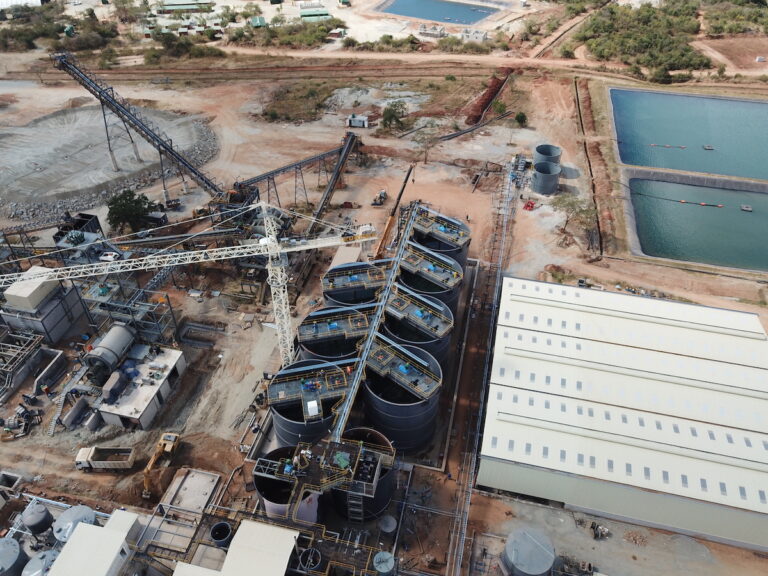
Currently, two Chinese-owned operations—Bikita Minerals, now owned by Sinomine, and Arcadia Lithium Mine, owned by Huayou Cobalt—are leading the charge in domestic value addition. Both companies are investing heavily in lithium sulphate processing facilities, positioning themselves as Zimbabwe’s pioneers in downstream lithium processing.
Minister of Mines and Mining Development, Hon. Winston Chitando, called on all lithium producers—especially those lacking immediate capital or capacity for processing—to partner with Bikita or Arcadia through toll-processing arrangements, ensuring their concentrate is beneficiated locally rather than exported.
“We encourage all lithium producers to sign agreements with these two companies for toll processing if they don’t have the capacity to build their own plants,” said Chitando during the same press briefing.
A Strategic Move Amid Chinese Dominance
While Zimbabwe is keen to retain more value from its vast lithium deposits, Chinese firms dominate the landscape, controlling the largest operations and the bulk of new investments. According to the China-Global South Project, China’s dominance is a double-edged sword—on one hand, it brings capital and technology, but on the other, it raises concerns about transparency, profit repatriation, and long-term developmental impact.
Still, the government’s latest directive marks a pivotal shift from “dig and export” toward industrialising the lithium value chain. This is in line with what several producers have said recently: “We’re not just digging—we’re building an industry.”
What This Means for Zimbabwe
With Zimbabwe already recognised as one of Africa’s top lithium producers, the upcoming ban could spark a wave of investment in processing plants, create more skilled jobs, and significantly boost foreign currency earnings.
However, there are potential challenges:
Smaller players might struggle with access to capital to establish processing plants.
Power and infrastructure deficits could hinder processing operations.
There’s a risk of market bottlenecks if toll-processing facilities become overwhelmed.
Despite these concerns, Zimbabwe’s stance is clear: the country wants to stop being a source of cheap raw lithium for foreign processors and become a critical player in the global energy transition.
As the world shifts to clean energy, Zimbabwe is not just supplying lithium—it’s building an industry to last.
Zimbabwean mining and agribusiness group Padenga says it is banking on the strong rally in gold prices to eliminate its debt before the year closes, while also being on the lookout for new opportunities to expand its mining business.
By Ryan Chigoche
This was revealed by Group Chief Executive Michael Fowler, who acknowledged that surging bullion prices have enabled the company to reduce its debt—a key focus as the group looks to invest further in Zimbabwe’s mining sector.
According to the group’s financials for the period ending December 2024, Padenga managed to cut US$13.6 million off its debt, thanks to sustained high bullion prices throughout the year, which helped the mining unit record significant profits.
Gold prices hit multiple records last year, with the LBMA Gold Price PM peaking at US$2,777.80 per ounce in October amid inflation concerns, geopolitical tensions, and strong central bank buying, particularly from emerging markets.
The rally has continued into early 2025, with prices surpassing US$3,200 per ounce, driven by escalating U.S.-China trade tensions and sustained investor demand for safe-haven assets.
With Padenga’s group debt currently standing at US$55.92 million and gold prices on an upward trend, Group CEO Michael Fowler said they plan to eliminate all borrowings by year-end.
“The gold prices have been very fortuitous. I’m happy the gold prices helped us a lot, and it’s enabled us to reduce debt, do the capex we want. But we remain focused on costs and making sure we’re an official producer. We would like to eliminate all our borrowings by year-end.”
While debt reduction remains the company’s top priority, Fowler added that they are still actively scouting for new investment opportunities in the mining sector.
“However, if we can find other opportunities, we may invest into other opportunities which will maintain the borrowings. So we’re keeping our eyes open at the moment. In Zimbabwe, there are lots of opportunities in gold. Our geology team and our management are constantly looking at where there are opportunities,” Fowler added.
Historically, Padenga was known for breeding crocodiles for the leather industry, a sector that once defined its core business. However, recognizing Zimbabwe’s immense mineral potential, the company gradually shifted its focus to gold mining.
Over the past decade, it has invested a staggering US$107 million in developing the Eureka and Pickstone-Peerless mines, resulting in a dramatic transformation of its revenue streams.
Padenga’s transition from crocodile farming to gold mining began in 2019 when it acquired a controlling stake in Dallaglio Investments through a US$19.9 million capital injection. This marked a pivotal shift, allowing the company to capitalize on Zimbabwe’s thriving gold sector and unlock substantial financial gains.
Since then, mining has proven to be a game-changer for the VFEX-listed company. In 2024, the group recorded a turnover of US$223 million, a 43% increase from the US$155.58 million recorded the previous year.
This growth was largely driven by increased gold production volumes as well as firm gold spot prices, as revenue contributions from the group’s business units were as follows: Dallaglio 86% (up from 81% in FY23), and Padenga Agribusiness 14% (down from 19% in FY23).
In 2024, crocodile farming accounted for just 14% of Padenga’s total revenue, a stark contrast to its previous business model. This rapid ascent in gold production has placed Padenga in direct competition with Zimbabwe’s mining heavyweights.
The sentencing comes as Zimbabwe tightens enforcement measures against unauthorised mining activities, particularly riverbed operations that threaten the country’s ecosystems and water security.
Gwanda Duo Jailed for Illegal Gold Prospecting
Evelyn Nkomo (34) and Rasper Nkomo (26) were convicted by the Gwanda Magistrates’ Court on June 10, 2025, for illegally prospecting along the Njeni River in Lupane. Police detectives on routine patrol apprehended the pair on June 4, 2025, at around 3:30 PM, finding them in possession of mining tools, including a shovel, iron bar, plastic bucket, dish, and a makeshift James table. When asked to produce a prospecting license, they failed to present any legal authorisation.
The NPAZ reiterated that illegal gold prospecting carries a mandatory two-year prison sentence, warning the public against engaging in unauthorised mining. The case follows a series of recent convictions as authorities escalate efforts to curb environmental degradation and revenue losses from illicit mining activities.
Nationwide Crackdown on Illegal Riverbed Mining
The Gwanda sentencing aligns with Zimbabwe’s broader clampdown on illegal mining, particularly along riverbeds, where unregulated operations have caused severe ecological damage. Just weeks earlier, Kudakwashe Mapinda of Siakobvu was jailed for two years after being caught illegally panning for gold along the Karongwe River. Game rangers arrested Mapinda on May 5, 2025, after he was observed diverting water and shovelling mud into a wooden panning dish without a mining license.
Another case involved Simbarashe Chayambuka (38) from Mount Darwin, who was fined US$200 for illegal riverbed mining along the Fuse River. Chayambuka was apprehended by Ruia Mine security guards on March 4, 2025, before being handed over to the Minerals, Flora and Fauna Unit (MFFU).
Government Bans Riverbed Mining Amid Environmental Crisis
These prosecutions follow the Zimbabwean government’s recent ban on all riverbed mining and desiltation activities, citing irreversible harm to water sources and biodiversity. Cabinet reports indicate that large-scale alluvial mining—ongoing since 2011—has devastated rivers such as Nyagadzi, Mazowe, and Insiza, leading to severe water pollution and ecosystem disruption.
Information Minister Hon. Jenfan Muswere emphasised the environmental toll, stating, “The destruction of rivers through alluvial mining has resulted in severe consequences, from water pollution to the disruption of ecosystems. The damage has far outweighed any potential benefits.”
The crisis is particularly evident at Bulawayo’s Umzingwane Dam, which is currently at just 2% capacity, partly due to siltation caused by illegal mining. Authorities now classify unauthorised mining near water sources as a national security threat, given its role in exacerbating water scarcity.
Mining Federation Backs Government Action
The Zimbabwe Miners Federation (ZMF) has endorsed the ban, with President Ms. Henrietta Rushwaya stating that it supports sustainable mining practices. “Riverbed mining was hindering our efforts toward responsible mining due to its adverse effects on the ecosystem,” she said.
The ZMF has also introduced an Environmental, Social, and Governance (ESG) strategy for artisanal and small-scale miners (ASM), promoting solar energy adoption and water stewardship to align with global sustainability standards.
A New Era of Enforcement
The NPAZ’s latest convictions underscore the government’s commitment to combating illegal mining under its “Combating Crime and Corruption” initiative. With climate change and water shortages intensifying, authorities are prioritising environmental protection over short-term mineral gains.
As Zimbabwe’s judiciary delivers stricter penalties, the message is clear: illegal mining will no longer be tolerated. The crackdown not only aims to restore ecological balance but also to safeguard the nation’s water resources for future generations.
Zimbabwe’s platinum mining sector is entering a new era of opportunity as global platinum prices surge to three-year highs, with the precious metal recently breaking through the $1,050 per ounce barrier. This signifies potential for the country’s major platinum producers—Unki Mines, Zimplats, Mimosa, and emerging players like Karo Resources—to expand operations and increase their contribution to Zimbabwe’s economy, Mining Zimbabwe can report.
By Rudairo Mapuranga
The price rally comes at a critical time as these mining giants implement various strategies to optimise production and secure long-term viability in an increasingly competitive global market.
Market Dynamics Driving Platinum’s Resurgence
The current platinum price surge represents the metal’s strongest performance since 2021, driven by a combination of structural supply constraints and growing industrial demand. Major producing nations like South Africa have faced operational challenges that have constrained output, creating supply deficits in global markets. Simultaneously, industrial demand has strengthened significantly, particularly from the automotive sector, where platinum remains crucial for catalytic converters in both traditional internal combustion engines and hybrid vehicles.
Perhaps more importantly, platinum is gaining recognition as a critical component in hydrogen fuel cell technology, positioning it as a key metal in the global energy transition. This dual demand from both traditional and emerging green technologies has attracted renewed investor interest, with firms like Valterra Resource Corporation increasing their exposure to platinum assets. The investment community is beginning to recognise platinum’s potential as both an industrial metal and a store of value, particularly as it continues to trade at a significant discount to gold and palladium.
Zimbabwe’s Platinum Powerhouses Prepare for Expansion
Zimbabwe boasts the world’s second-largest platinum reserves, and the current price environment presents an ideal opportunity for the country’s major producers to maximise their potential. Leading the charge is Unki Mines, a subsidiary of global mining giant Anglo American Platinum, which has consistently been one of Zimbabwe’s most efficient platinum producers. The mine has maintained steady production throughout various market cycles and is now well-positioned to capitalise on the improved pricing environment.
Zimplats, Zimbabwe’s largest platinum producer, has been implementing strategic initiatives to maintain production levels despite operational challenges. The company recently revived open-pit mining operations to offset declining output from its underground mines, demonstrating the flexibility and adaptability of Zimbabwe’s platinum sector. This move not only helps maintain production volumes but also provides employment opportunities and sustains crucial revenue streams for the company and the nation.
Mimosa, another key player in Zimbabwe’s platinum sector, has been working closely with the government to secure a life-of-mine extension for its operations. Despite reporting a 40% revenue drop in recent financial results, the company remains optimistic about its long-term prospects, particularly with the government affirming strong support for the mining sector. The current price rally could provide the financial boost needed to make these expansion plans viable.
Emerging platinum producer Karo Resources represents the new generation of Zimbabwean platinum mining. The company has been making significant progress toward a new bond listing as investor interest grows in its ambitious development plans. Karo’s entry into production could significantly boost Zimbabwe’s platinum output in the coming years, particularly if current price levels are sustained.
Government Policy and Sector Development
The Zimbabwean government has been actively supporting the platinum sector through policies aimed at encouraging beneficiation and value addition. There is growing recognition of the need to move beyond raw mineral exports and develop domestic processing capacity, which would capture more value from the country’s platinum resources. The current price environment may accelerate these efforts, as higher margins make additional processing investments more economically viable.
However, the sector still faces significant challenges that could constrain its growth potential. Infrastructure limitations, particularly in power supply and transportation networks, continue to affect production efficiency across all major operations. Policy uncertainties around indigenisation requirements and royalty structures also create headwinds for long-term investment planning. Additionally, the sector remains vulnerable to global economic fluctuations that could impact demand for platinum group metals.
The Road Ahead for Zimbabwe’s Platinum Sector
As the global economy continues its uneven recovery from pandemic disruptions, Zimbabwe’s platinum producers find themselves in an enviable position. The combination of strong prices and significant reserve bases provides a solid foundation for growth, but realising this potential will require careful navigation of both domestic and international challenges.
Unki Mines’ operational efficiency, Zimplats’ production optimisation strategies, Mimosa’s life extension plans, and Karo Resources’ ambitious development program collectively position Zimbabwe’s platinum sector for a potential renaissance. If current price levels are sustained and the government maintains its supportive stance, Zimbabwe could see substantial increases in platinum production, export revenues, and employment opportunities in the coming years.
The performance of these platinum miners will be crucial not just for the mining sector but for Zimbabwe’s broader economic recovery. With proper management and continued investment, the platinum sector could become an even more significant contributor to the nation’s GDP and foreign currency earnings. As global demand for platinum in both traditional and green technologies continues to grow, Zimbabwe’s vast reserves and established production base position it as a key player in the global platinum market for decades to come.
The International Monetary Fund (IMF) has expressed its desire for Zimbabwe’s gold-backed currency, the ZiG, to evolve into a fully functional national currency, Mining Zimbabwe can report.
By Rudairo Mapuranga
The desire comes as Zimbabwe seeks approval for a new Staff-Monitored Program (SMP), following previous economic reform efforts that were derailed by fiscal slippages and unrestrained monetary expansion.
Introduced in April 2024, the ZiG—short for Zimbabwe Gold—was launched with the ambitious goal of restoring confidence in the local currency after repeated failures of previous regimes.
It is Zimbabwe’s sixth attempt since 2009 to move away from US dollar dependency. Backed by gold and foreign currency reserves, the ZiG replaced the Zimbabwean dollar (ZWL), which had suffered chronic depreciation and triggered hyperinflation. Yet, less than six months into its rollout, the ZiG faces scepticism from both markets and the public.
According to IMF mission chief Wojciech Maliszewski, who is in Zimbabwe to review the country’s SMP request, full adoption of the ZiG will require key structural reforms. “We’d like to see the ZiG fully becoming a national currency,” he said, emphasising the need to deepen the foreign exchange market and eliminate the persistent gap between the official and parallel market rates.
Although the official rate has remained relatively stable at around ZiG 26.95 per US dollar, the currency trades at ZiG 32 to 35 on the informal market, reflecting limited public confidence. A 43% devaluation in September, intended to bring the official rate closer to market realities, further dented the currency’s credibility and accelerated dollarisation in the retail and informal sectors.
The IMF insists that it is not advocating for further devaluation, but rather for convergence between the official and unofficial rates. “We’re not pushing for depreciation,” Maliszewski said. “What we want is a market-driven rate supported by strong fiscal discipline. There’s a good chance the two rates will converge if the government stays the course.”
However, achieving that convergence remains an uphill task.
Public Scepticism and Structural Flaws
As previously reported, many Zimbabweans view the ZiG as merely another unstable local currency masked by gold-backing rhetoric. “You can say it’s backed by gold, but if you can’t convert it into gold or something stable, people won’t trust it,” a Harare-based trader said. The ZiG is not fully convertible, which means holders cannot exchange it for its gold equivalent, limiting its appeal.
The situation is exacerbated by government overspending and policy inconsistency—issues that have undermined all previous monetary reforms. According to The Conversation, the root problem lies in Zimbabwe’s fiscal indiscipline—large public deficits often financed by central bank money printing. Unless the government reins in its spending and restores trust in institutions, no currency—ZiG included—will retain value in the long term.
Economist Gift Mugano argues that the ZiG’s current trajectory mirrors that of its predecessors. “As long as government spending outpaces revenue and monetary policy lacks credibility, the market will continue to dollarize,” he said. The Conversation notes that the real test for the ZiG lies not in the strength of its gold reserves, but in the strength of public trust.
What’s Next for ZiG?
The IMF’s engagement through a staff-monitored program could provide a pathway to macroeconomic stabilisation—if Zimbabwe adheres to strict reforms. This includes improving transparency in public finance, allowing true market forces to set exchange rates, and ending reliance on ad hoc monetary interventions.
Yet, for ordinary Zimbabweans, hope remains thin. Daily transactions continue to favour the US dollar, from groceries to school fees, while the ZiG is increasingly treated as a placeholder rather than a store of value.
With inflation still a threat and confidence in the financial system fragile, the ZiG faces an uncertain future. As analysts caution, no currency can succeed without trust, and trust is something Zimbabwe must now earn, not decree.
Mimosa Mining Company continues to cement its status as one of Zimbabwe’s leading platinum producers through a model that merges environmental stewardship, sustainable mining, and socio-economic development, Mining Zimbabwe can report.
By Rudairo Mapuranga
During a recent site visit by the Minister of Finance and Investment Promotion, Prof. Mthuli Ncube, the mine’s General Manager, Mr. Stephen Ndiyamba, outlined key initiatives and infrastructure that reflect Mimosa’s long-term vision.
From Waste to Wealth: The West Dam Model
Mr. Ndiyamba revealed that 97% of the material processed at Mimosa ends up as tailings—waste material—which is deposited at the West Tailings Storage Facility (TSF). While tailings traditionally pose environmental challenges, Mimosa has turned this into an opportunity.
“We decided to make a bigger dam so we can introduce a bit of ecotourism,” said Ndiyamba, referring to the development around the TSF. Now a thriving ecosystem, the area features zebras, kudus, and aquatic life, including catfish and tilapia. The facility also provides recreation for both workers and the surrounding community.
Importantly, the dam is central to the mine’s water recycling system. Approximately 60% of the water used at the plant is recovered and reused from the dam, with only 40% being drawn from fresh sources. The company is working to raise this recycled ratio to 80% by investing in larger pumps.
“This model not only reduces our environmental footprint but ensures that when the mine eventually closes, the dam remains a sustainable community asset,” said Ndiyamba.
Fish Farming and Eco-Recreation Vision
Mimosa has already introduced fish fingerlings into the dam and envisions a time when visitors will be able to catch their own lunch.
“Next time when you come, you fish for your own lunch. You don’t catch, you don’t eat,” joked Ndiyamba, highlighting the company’s innovative and community-focused reuse of mine infrastructure.
Energy Independence and Renewable Power Integration
On energy, Ndiyamba confirmed that Mimosa is currently working on developing a solar power plant that will enable the mine to run on clean energy. The solar project, expected within 18 months, will not require battery storage. Instead, Mimosa will use a “power banking” model with ZESA, supplying surplus power to the national grid during the day and drawing it back at night.
Prof. Ncube expressed full government support for such initiatives, citing national energy policy provisions that favour captive power projects.
“We offer incentives for these projects through national project status and can give them liquid asset status, allowing pension funds to invest,” said the Minister. “This becomes a true public-private partnership.”
The Finance Minister reaffirmed that such renewable efforts are not just welcome, but a core part of Zimbabwe’s energy strategy, noting similar support for companies like PPC Cement and Zimplats.
Government Backs Mimosa’s Expansion Plans
Prof. Ncube toured land earmarked for Mimosa’s potential expansion and indicated the government’s willingness to provide necessary support. “They’ve got a solid design for the tailings facility, executed by a local contractor—a world-class job,” he said. “This has enabled the collection of water in a well-built dam, now transformed into a space for biodiversity and recreation.”
He also highlighted the mine’s socio-economic footprint. “Mimosa employs around 3,000 people. Most own homes, and the mine supports schools, transportation, and infrastructure accessed by local communities. It’s not just about shareholder returns—it’s a business embedded in national development.”
Empowering Local Enterprise and Supply Chain Inclusion
Mimosa’s commitment to sustainable business extends beyond the mine gates. Prof. Ncube commended the company for outsourcing non-core services to local entrepreneurs. “They’ve farmed out trucking and other support services to Local Economic Development (LED) partners, creating independent businesses and boosting entrepreneurship,” he said.
The model not only boosts local economic activity but supports skills development and value chain localisation—essential pillars of Zimbabwe’s Mining Vision 2030.
SG 90% and ABOVE US$101.40/g.
SG ABOVE 89% BUT BELOW 90% US$100.33/g.
SG ABOVE 80% BUT BELOW 85% US$99.26/g.
SG ABOVE 75% BUT BELOW 80% US$98.18/g.
SAMPLE BELOW 10g BUT ABOVE 5g US$96.57/g.
Fire Assay CASH $101.94/g.
NB: Fire Assay cash price is for gold above 100g; no sample is deducted.
A sample of not more than 10g is deducted for the Fire Assay Transfer price.
A 2% royalty is charged on all deposits (Small-scale miners).
A 5% royalty is set for Primary Producers.
The University of the Witwatersrand’s School of Mining Engineering — already one of the most influential mining education institutions in Africa — is setting its sights on becoming a global top-ten leader under the stewardship of its new head, Dr Paseka Leeuw, Mining Zimbabwe can report.
By Rudairo Mapuranga
Taking over from Zimbabwean-born Professor Cuthbert Musingwini earlier this year, Dr Leeuw brings over two decades of blended academic and operational mining experience, with a clear mandate: elevate the Johannesburg-based school beyond its current 11th spot in the QS World University Rankings for Mineral and Mining Engineering.
“Wits is already a global brand in mining education,” said Dr Leeuw. “Now, it’s about pushing the envelope further — we’re building on strong foundations laid by my predecessor and taking a bold step towards a top-ten global ranking.”
From the Pit to the Podium
Dr Leeuw is no stranger to the industry or academia. A Wits graduate himself (BSc Mining Engineering, 1994), he spent formative years managing operations at Kimberley Mines, later serving in roles such as section manager and technical services manager. His industry tenure in South Africa’s diamond sector earned him invaluable experience, which he carried back into academia in 2009.
He went on to obtain an MBA from De Montfort University in the UK and completed both his MSc and PhD at Wits — further solidifying his technical and strategic grounding.
With over 700 enrolled students and a staff complement of 23, the Wits School of Mining Engineering is among the largest globally. Dr Leeuw credits the School’s reputation not just to its numbers, but to its dynamic, tech-forward, and collaborative academic culture.
Championing Digital-First Mining Education
In 2018, under Prof. Musingwini’s leadership, Wits Mining embraced the Fourth Industrial Revolution (4IR), aligning its curriculum with emerging mining technologies and digital transformation.
That legacy continues. “Second-year students at Wits are now taught programming and exposed to automation and robotics in mining,” Dr Leeuw noted. “We are deliberately equipping our graduates with data analytics skills — because the future of mining is digital, data-driven, and smart.”
Through the Wits Mining Institute’s partnership with Sibanye-Stillwater, students have access to the cutting-edge DigiMine Laboratory — a one-of-a-kind digital mining research facility focused on safety and sustainability.
Adapting to a Changing Industry
Dr Leeuw reflects on how mining education has changed. In the past, students arrived with bursaries from major mining houses and could count on post-graduation job placements. Today, most learners fund themselves and may never have stepped foot on a mine.
“We’re bridging that gap with simulated underground environments on campus and forging deeper industry linkages to offer real-world exposure,” he said.
This shift has made industry-academic collaboration even more crucial. The School continues to work closely with mining giants like Anglo American, Harmony, Seriti Resources, African Rainbow Minerals, and Sibanye-Stillwater, while also building partnerships with junior mining outfits.
Global Outlook, African Roots
Dr Leeuw succeeds Prof. Musingwini, who made history as the first Zimbabwean-born academic to lead the Wits School of Mining Engineering. With over 30 years’ experience, including time in Zimbabwe’s gold mining sector and at the University of Zimbabwe, Musingwini’s tenure was marked by curriculum transformation, expanded research output, and international collaborations.
Today, Wits Mining maintains academic exchanges and staff development programmes with institutions in Nigeria, Namibia, Pakistan, and Mozambique — many facilitated through European and Dutch government-funded initiatives like Erasmus+ and NICHE.
There are also partnerships on the horizon with Sierra Leone’s Kono University of Science and Technology, and other mining departments across the globe.
The Road to the Top 10
As the mining sector across Africa transitions to more sustainable, tech-enabled operations, the demand for digitally skilled professionals is surging. Dr Leeuw believes Wits can play a transformative role in preparing the continent’s future mining leaders.
“Our mission is to support Africa’s economic growth through relevant, high-quality education that’s aligned with industry needs,” said Dr Leeuw. “We’ve consistently ranked among the top 20 globally since 2016 — now we’re ready to claim a seat at the top table.”
SG 90% and ABOVE US$100.84/g.
SG ABOVE 89% BUT BELOW 90% US$99.78/g.
SG ABOVE 80% BUT BELOW 85% US$98.71/g.
SG ABOVE 75% BUT BELOW 80% US$97.64/g.
SAMPLE BELOW 10g BUT ABOVE 5g US$96.04/g.
Fire Assay CASH $101.38/g.
NB: Fire Assay cash price is for gold above 100g; no sample is deducted.
A sample of not more than 10g is deducted for the Fire Assay Transfer price.
A 2% royalty is charged on all deposits (Small-scale miners).
A 5% royalty is set for Primary Producers.
As Zimbabwe’s mining sector continues to evolve amid shifting global dynamics and growing calls for sustainability, the leadership of the Chamber of Mines plays a pivotal role in guiding the industry.
In this exclusive interview, the outgoing President of the Chamber of Mines, Thomas Gono, reflects on his two-year tenure, highlighting key achievements such as record export earnings, strengthened stakeholder relations, and progress in environmental, social, and governance (ESG) compliance.
What would you consider your most significant achievements during your tenure as President of the Chamber of Mines?
During the past two years that I have served as the Chamber President, the mining industry has achieved some key milestones that are a direct outcome of the collaborative effort between the Government and the Chamber. The industry celebrated record export earnings of US$5.9 billion in 2024, despite a challenging commodity markets environment. We also managed to consolidate our improved relationship with key stakeholders, including Parliament, Government, and other key Government departments such as RBZ, ZESA, and ZIMRA. Our engagements with ZESA have seen the mining industry being prioritised in the allocation of scarce power.
On the industry labour front, there were enhanced engagements with the workers’ unions, resulting in labour relations harmony, with no industrial action having been undertaken. We managed to work closely with the Government, and on most occasions, we were consulted during policy and legislative formulation, and most importantly, our key submissions were considered. During the tenure, we also managed to set up the Chamber Centre of Excellence, which is set to improve the delivery model of the Chamber, with improved efficiency and a wider range of products for our members and stakeholders. I am happy to have contributed to these achievements during my tenure.
What were the biggest challenges you faced leading the Chamber, and how did you navigate them?
My tenure coincided with a marked downturn in key mineral markets that resulted in prices for commodities including PGMs and base metals taking a huge knock, resulting in revenue losses. This situation occurred at a time when operating costs were rising, driven by new taxes and increases in electricity tariffs. Consequently, the viability of mining projects during this period was severely compromised. As price takers, we had to engage the Government and other departments, including ZESA, to assist in reducing the cost of production.
Further worsening the situation was the widening disparity between the official and parallel market exchange rates, which also resulted in the loss of value on the surrender portion of export proceeds. Engaging the RBZ for adequate forex and fair compensation of the surrender portion was equally a significant task. However, we managed to achieve some positive outcomes, including the review of the special capital gains tax framework, while most tax heads were maintained despite the Government also facing significant revenue pressures during the period under review.
What role did the Chamber play in shaping discussions around responsible mining and environmental compliance during your term?
During my tenure, the Chamber adopted Environment, Social, and Governance (ESG) as one of our strategic priorities. In this regard, a scoping study for an ESG framework for the mining industry was undertaken, and an ESG Guidelines framework is being developed. The Chamber of Mines also undertook Safety, Health, and Environment audits that supported the continual improvement work of individual mines. These audits were conducted with the support of regulatory bodies such as EMA, SAZ, and the Ministry of Mines and Mining Development. The audited entities noted the value they received from participating in the audits.
How did the Chamber address concerns around mine worker safety, wages, and labour rights during your presidency?
The Chamber of Mines, through the SHE Committee, undertook several initiatives to support mines in improving their SHE performance. In addition, the Chamber engaged the Ministry of Mines and shared information on fatal accidents. First Aid and Mine Rescue competitions were conducted to enhance the capacity of mines to respond to emergencies. On several occasions, the Mine Rescue Association of Zimbabwe provided support to small mines in the rescue of miners trapped in underground operations.
What progress, if any, was made toward improving beneficiation and value addition in the sector during your tenure?
The Chamber of Mines fully supports the Government’s thrust of maximising the contribution of the mining sector to the economy through increased beneficiation of the country’s mineral resources. I am happy to report that the mining industry, specifically the PGMs sector, achieved key beneficiation milestones in the last year. The PGMs sector and the Government agreed on a beneficiation roadmap that will result in the country exporting a minimum of PGMs matte, with all concentrates being smelted in-country.
In line with this agreement, it is encouraging to report that the PGMs industry now has adequate smelting capacity, and all concentrates are now being processed locally. The lithium industry has also made significant progress. The Chamber successfully engaged the Government and agreed on a beneficiation roadmap for the lithium industry that will result in the production of lithium sulphate. Already, most lithium producers are investing in beneficiation facilities in line with the agreed timelines.
What advice would you give to your successor to ensure continued growth and sustainability in Zimbabwe’s mining industry?
The Chamber has developed a tradition of maintaining a close working relationship with our key stakeholders in improving the operating environment for the mining industry. Over the past years, this approach has significantly improved the operating environment, culminating in the growth of our mining sector. My advice to my successor is to work closely with the Chamber Secretariat and Committee Structures to consolidate and entrench this winning approach in achieving our strategic goals.
Looking back, is there anything you wish you had done differently or any unfinished business you hope the next leadership will take forward?
The Chamber operates with a clearly defined strategy and operational plans that have clear deadlines. My feeling is that we have been working according to our plans and could not have done the job differently from the agreed-upon plans.
Where to from here?
I remain part of the Chamber family and, as Immediate Past President, I am still part of the Chamber leadership. I will continue to work closely with the new Presidium and the Chamber Secretariat, sharing my experiences during my tenure to achieve our objectives.
Thomas Gono was on the cover of Mining Zimbabwe’s 80th edition
This interview first appeared in the Mining Zimbabwe Magazine edition 80, which was first distributed at the 2025 Chamber of Mines annual mining conference and exhibition held in Victoria Falls.
To provide the best experiences, we use technologies like cookies to store and/or access device information. Consenting to these technologies will allow us to process data such as browsing behavior or unique IDs on this site. Not consenting or withdrawing consent, may adversely affect certain features and functions.
Functional
Always active
The technical storage or access is strictly necessary for the legitimate purpose of enabling the use of a specific service explicitly requested by the subscriber or user, or for the sole purpose of carrying out the transmission of a communication over an electronic communications network.
Preferences
The technical storage or access is necessary for the legitimate purpose of storing preferences that are not requested by the subscriber or user.
Statistics
The technical storage or access that is used exclusively for statistical purposes.The technical storage or access that is used exclusively for anonymous statistical purposes. Without a subpoena, voluntary compliance on the part of your Internet Service Provider, or additional records from a third party, information stored or retrieved for this purpose alone cannot usually be used to identify you.
Marketing
The technical storage or access is required to create user profiles to send advertising, or to track the user on a website or across several websites for similar marketing purposes.