Home Blog Page 163

Zimplats Reports 3% Rise in Mined Volumes

0

Zimbabwe Platinum (Zimplats) has reported a notable 3% increase in mined volumes in its latest quarterly update, primarily due to increased production at its Mupani Mine.

By Ryan Chigoche

This growth demonstrates the company’s resilience, coming despite ongoing challenges from declining global metal prices, which have created a tough market environment.

To bolster its energy security, Zimplats has also commissioned a $36 million solar plant. This facility marks the first phase of a broader initiative to develop a total of 185 MW of solar power, crucial for supporting the company’s ambitious $1.8 billion expansion projects.

Zimplats has also enhanced capacity, successfully increasing Bimha Mine’s annual production capacity from 2 million to 3.1 million tonnes. Additionally, the development of Mupani Mine is progressing well, with plans to reach full production of 3.6 million tonnes per year by FY2029.

In response to the challenging global market that has impacted profitability, the new solar facility is expected to significantly reduce Zimplats’ reliance on imported electricity. Historically, this dependence has inflated operational costs by 40%, compounded by persistent power shortages and high tariffs in Zimbabwe. The solar energy investment aims to reduce pressure on the national grid while providing reliable power for Zimplats’ operations.

Alongside the solar initiative, Zimplats has implemented upgrades at Bimha Mine to offset anticipated production losses from the nearing end of operations at Mupfuti Mine, scheduled for closure by 2029. As of September 30, 2024, Zimplats has invested $413 million across various projects, aligning closely with a budget of $468 million.

The expanded smelter is currently undergoing commissioning, with the first matte produced this month, further demonstrating Zimplats’ commitment to boosting its operational capacity.

During this period, Zimplats has also effectively managed the closure of Ngwarati Mine in June 2024 by increasing output from Rukodzi Mine’s pillar reclamation and continuing production at Mupani Mine.

Overall, Zimplats’ proactive investments in solar energy and mining capacity not only strengthen its operational resilience but also reinforce its position as a leader in Zimbabwe’s platinum sector, enabling the company to navigate a complex mining landscape and prepare for future challenges.

Gold buying prices per gram in Zimbabwe 1 November 2024

These are the official gold buying prices per gram in Zimbabwe today 1 November 2024, from the official gold buyer and exporter Fidelity Gold Refinery (FGR).

SG 90% and ABOVE US$83.07/g
SG ABOVE 85% BUT BELOW 90% US$82.19g
SG ABOVE 80% BUT BELOW 85% US$81.31/g
SG ABOVE 75% BUT BELOW 80% US$80.43/g
SAMPLE BELOW 10g BUT ABOVE 5g US$79.11/g

Fire Assay CASH $83.50/g

NB: Fire Assay cash price is for gold above 100gs, no sample is deducted.
For the Fire Assay Transfer price, a sample of not more than 10g is deducted
A 2% royalty is charged on all deposits (Small-scale miners)
A 5% royalty is set for Primary Producers

Cash available. Fidelity Gold Refinery prices will be changing daily to match world market prices.

Moyo Calls for Reinstatement of Indigenization Laws to Protect National Interests

0

The government has been urged to reconsider the Indigenization and Economic Empowerment Act to protect Zimbabwe’s mineral wealth, Mining Zimbabwe can report.

By Rudairo Mapuranga

According to Zimbabwe Miners Federation (ZMF) Secretary for Gemstones, Mr Privelage Moyo, the current investment landscape, which allows foreign investors to hold majority stakes in mining projects, undermines Zimbabwe’s long-term economic interests.

Speaking at the Zimbabwe Alternative Mining Indaba (ZAMI) 2024, Moyo argued that Zimbabwe’s abundant mineral resources far outweigh the value of foreign investment. He highlighted the example of small-scale miners who, despite limited capital, can extract substantial amounts of gold, whereas foreign companies with only modest capital investments are able to extract even more valuable minerals.

“With our vast mineral wealth, we cannot just give away equity to whoever comes simply because they have money. The value of our minerals far exceeds any investment brought in,” Moyo said.

Moyo emphasized the need for inter-ministerial coordination to ensure mining operations align with the needs and aspirations of local communities. He criticized the lack of consultation with local authorities, especially traditional leaders, which often leads to social tensions and conflicts.

“Civil organizations must push for better synchronization between government ministries, ensuring they work hand-in-hand on issues affecting communities. When one ministry operates independently of another, problems arise. This disconnect can result in local chiefs feeling sidelined, as they often only learn about new investments once they are already established, creating a lack of trust and increased tension,” Moyo added.

Furthermore, Moyo called for greater regional integration and value addition within Africa. He urged Zimbabwe, as the current Southern African Development Community (SADC) chair, to advocate for policies that encourage mineral processing within the continent rather than exporting raw materials. This, he argued, would create jobs, stimulate economic growth, and ensure the benefits of mineral wealth are shared across African nations.

“Africa needs to process its minerals here, ensuring that communities and people are not deprived,” Moyo asserted, stressing the need for a structured approach to retain the value chain within Africa.

Moyo’s insights highlight the urgency of reinstating indigenization laws to protect Zimbabwe’s mineral resources and promote sustainable economic empowerment. By advocating for a balanced approach to foreign investment and prioritizing local needs, Zimbabwe can ensure that its mineral wealth translates into tangible benefits for all citizens, fostering a prosperous and equitable future.

In 2018, the Zimbabwe government amended the Indigenization and Economic Empowerment Act to limit its application to designated diamond and platinum mining businesses. These amendments, published in a March 14 Government Gazette Extraordinary, expanded ownership of businesses in the 12 reserved sectors to “citizens of Zimbabwe” rather than “indigenous citizens.”

Non-citizens who commenced business before January 1, 2018, are permitted to continue operating, provided they register with both the Zimbabwe Revenue Authority and the Indigenous and Economic Empowerment Unit and Fund. The new fund, housed within the designated ministry and staffed by civil servants, replaces the former National Indigenization and Economic Empowerment Board, which functioned autonomously outside the civil service.

Additionally, non-citizens operating businesses in designated areas are required to open and maintain bank accounts in compliance with the law. The amendments also extend certain pre-existing tax incentives and offer businesses the opportunity to revise indigenization implementation plans previously approved under the 2010 law.

The extent to which the Indigenization and Economic Empowerment (General) Regulations of 2010 remain in force is currently unclear.

Ventilation Practitioners Urged to Invest in Technology to Reduce Gassing Accidents

0

The Permanent Secretary of Mines and Mining Development, Pfungwa Kunaka, emphasized the importance of ventilation practitioners investing in technology to curb the rise in gassing accidents, especially in the small-scale mining sector.

By Ryan Chigoche

Kunaka’s remarks were conveyed on his behalf during the ongoing Zimbabwe Mine Ventilation Conference.

Ventilation in mining operations is vital for the safety and health of workers. Small-scale miners face significant challenges that increase the risks associated with inadequate ventilation. Chief among these concerns is the exposure to harmful gases, such as methane and carbon monoxide, which can accumulate in confined spaces.

In 2024, Zimbabwe recorded 11 gassing accidents, resulting in 12 fatalities. The small-scale mining sector accounted for the majority of these incidents due to inadequate ventilation systems and insufficient knowledge.

In his speech, Permanent Secretary Pfungwa Kunaka urged ventilation practitioners to adopt technological solutions to address the rising number of incidents.

“We are now living in a world where technology evolves daily, and we need to invest in it to stay aligned with global trends,” Kunaka stated. “We can enhance our skills through training and collaboration. I must note, however, that the upsurge in gassing accidents is lamentable, as these incidents are avoidable given the available technology. As ventilation practitioners, your work demands precision, and as we transition to the digital age, we must leverage new equipment and tools to our advantage.”

The conference, organized by the Mine Ventilation Society of Zimbabwe (MVSZ), is themed “Ventilation Engineering Solutions for Solid Safety Performance.”

Mine ventilation is a critical branch of mining science and technology that includes the measurements and calculations required to document air quality throughout the mining cycle. The Ministry has expressed concern that many mines do not prioritize the training of ventilation practitioners.

This oversight has led to an increase in incidents, many of which have been fatal. Additionally, aspiring Full Blasting License (FBL) candidates often lack practical exposure to ventilation during their examinations.

Currently, the failure rate among FBL candidates is high. In 2023, of 258 candidates, 150 failed, with only 108 passing. This trend has continued this year, with 83 of the 158 candidates failing, while 75 passed.

Commenting on these developments, the Permanent Secretary emphasized, “Mine managers should be accountable for these failures. Another concern is that the FBL syllabus lags behind technological advancements. I suggest that the Mine Ventilation Society of Zimbabwe assist in reviewing and updating the FBL syllabus, especially in regard to ventilation aspects.”

What is Just Transition? A Fadzai’s Typical Transition

0

The concept of a “just transition” is at the forefront of discussions on sustainable development and climate change. But what does it really mean? For many, it represents a shift toward greener economies while ensuring no one is left behind, especially the workers and communities that depend on high-carbon industries.

By Rudairo Mapuranga

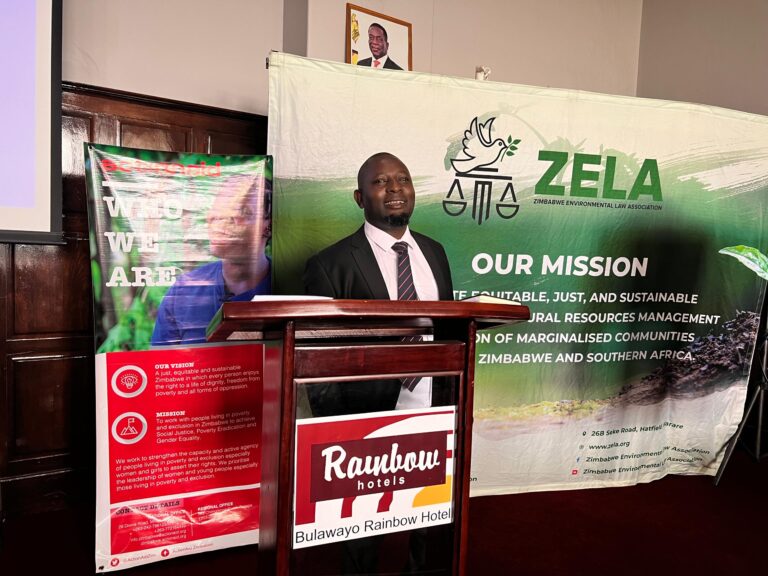
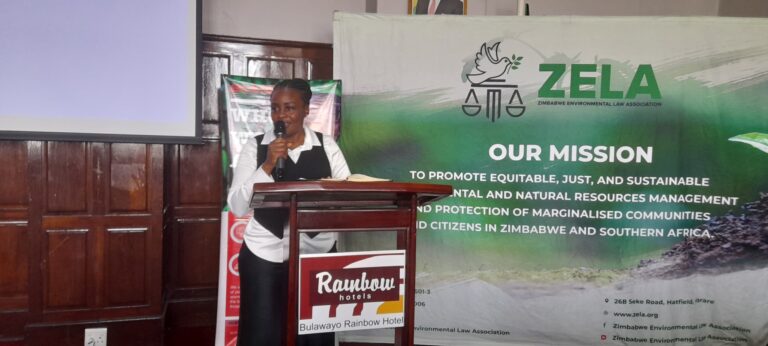
However, for Ms. Fadzai Midzi of the Zimbabwe Environmental Law Association (ZELA), just transition goes beyond policy, it’s about everyday life. Speaking at the Zimbabwe Alternative Mining Indaba (ZAMI) 2024 in Bulawayo, Fadzai painted a vivid picture of her ideal just transition.

Fadzai’s Story: A Day of Just Transition

Fadzai opened ZAMI’s day four-morning session on “Research Launch: From Mining to Renewable Energy: Lessons Learned from Benefit-Sharing Legislation for a Just Transition in Africa” with a speech that described a typical day in her life, a day that encapsulates her personal view of a just transition.

“I wake up in the morning, open my window, breathe fresh air, and look at a view of the river. Then I move to the kitchen, pour drinking water from a tap into my bottle.” For Fadzai, this simple act of accessing clean water directly from the tap is at the heart of a just transition, where essential services like water are not only available but sustainable and safe.

“Because I love fitness, I wear my running gear, dash outside… I run through my garden, past a river, and through a group of antelopes and zebras drinking water by the riverside.” Fadzai’s vision is one where people coexist harmoniously with nature—a future in which environmental degradation is no longer a threat, and the effects of climate change are no longer felt.

After her run, Fadzai imagines returning home to make a smoothie from fruits she picks at the local park, highlighting the importance of fresh, organic produce. She envisions a world where this kind of food security is a reality for everyone. Her day continues with her responsibilities as CEO of Fadzai Green Investments Limited, a company dedicated to sustainable business practices.

She concludes her day imagining a life where technology, energy, and resources are seamlessly integrated into a greener, more sustainable lifestyle.

“This is my typical day, which I imagine… not in America, but in Zimbabwe,” she emphasized.

For Fadzai, just transition is personal. It is not only about reducing emissions or adopting renewable energy but about ensuring that daily life is sustainable, equitable, and environmentally friendly.

“To me, a just transition is a transition where I wake up, switch on my lights, and there’s electricity… I use running water, and it’s there on tap, not having to buy water that’s been purified,” she said, describing her vision of a world where essential services are available to all.

While Fadzai’s vision is deeply personal, her story resonates with broader themes of the just transition debate. For many in Zimbabwe, the concept focuses on ensuring that as the country moves toward cleaner energy sources, workers, especially those in industries like mining and coal, are not left behind. Zimbabwe’s economy is heavily reliant on these sectors, and any shift must consider the livelihoods of those involved.

At ZAMI 2024, this sentiment was echoed by several participants who highlighted the need for equitable opportunities in the transition. Some emphasized that Zimbabwe, like many other African nations, needs international support to finance its transition. Others pointed to the importance of re-skilling workers in high-carbon industries to prepare them for greener jobs. The challenge is ensuring that the economic impact of the transition is not borne by the most vulnerable.

One recurring theme was the need for climate justice. Developing nations, including Zimbabwe, contribute the least to global carbon emissions yet face some of the harshest consequences of climate change. There is a strong argument that wealthier nations, which have historically contributed the most to the problem, should bear a larger financial responsibility in supporting just transitions in countries like Zimbabwe.

Fadzai Midzi’s narrative offers a hopeful and practical vision of what a just transition could look like—not just on a policy level, but in everyday life. Her story serves as a reminder that while just transition is about shifting economies and industries, it is also about improving lives. As she put it, “I open up the window to clean air… there’s electricity, there’s running water, everything works, and the effects of climate change are over.”

At the same time, the broader conversation about just transition acknowledges that there are many layers to achieving this vision. From re-skilling workers to ensuring that international climate finance is directed to those who need it most, just transition must address economic, social, and environmental justice.

For Fadzai and many others, just transition is about creating a future where people and the planet can thrive together. Whether through policy changes, investment in clean energy, or reimagining daily life, the goal remains the same: a fair, sustainable, and inclusive future for all.


RioZim Drags its Unpaid Workers to Court Over “Illegal” Strike

0

RioZim Limited has taken its employees to court over what it says is an unlawful industrial strike, as the workers demand updated salaries, which were last paid in July.

By Ryan Chigoche

According to court documents, Rio Zim claims that its inability to pay its workers has resulted in 13 days of lost production, equivalent to a loss of 1.01 kg of gold per day, valued at US$80,896.46. This amounts to over US$1,051,000 in losses for the 13 days, with Rio Zim attributing the delay in wages to low gold production.

More than 1,200 workers at Renco Mine have been on strike since October 9, demanding payment of their outstanding salaries. Frustrated by ongoing financial instability, the workers voted to dissolve their Workers Council Committee through a no-confidence vote, accusing it of failing to represent their interests effectively.

Tensions escalated as management was compelled to vacate the mine premises and instructed to mediate the salary dispute with Rio Zim’s top management in Harare. The workers have made it clear that mining operations will not resume until their demands are met. However, essential services such as the clinic, sanitation, and water treatment have continued to function to maintain basic needs at the mine.

Rio Zim is now taking its employees to court over the “unlawful” industrial action, which it claims has cost the mine over US$1 million.

According to the applicant, the sit-in is unlawful because the company applied to the Ministry of Labour for a Show Cause order, stating that the workers must immediately return to work pending a disposal order, despite the fact that workers have not been paid since July.

The Show Cause order was sought on the grounds that the sit-in was unlawful, following the workers’ decision to dissolve the Workers Council Committee, which they felt was ineffective. Rio Zim argued that it had not received any notice of the sit-in and that it was not sanctioned by major workers’ unions, such as the Associated Mine Workers of Zimbabwe and the Zimbabwe Diamond and Allied Minerals Workers Union.

The workers, who are the respondents, argued that Rio Zim is deliberately ignoring their plight, evading its legal, moral, and economic obligation to pay them fairly and on time.

The respondents further contended that Rio Zim’s application was defective, as the company failed to properly identify the respondents, instead referring to them as “Renco Mine Workers” rather than by their actual names.

This sentiment was echoed by the Zimbabwe Diamond and Allied Workers Union (ZDAWU), which argued that there is no respondent named “Renco Mine Workers,” rendering Rio Zim’s application improperly presented before the courts.

This is not the first time workers at Renco Mine have resorted to industrial action. Since April 1, 2021, workers have gone on strike annually over salary issues. In 2022, the mine’s parent company, Rio Zim, received a $19 billion investment from shareholders to stabilize operations; however, workers continue to face irregular salary payments and financial hardship.

The strike underscores the ongoing financial challenges within Rio Zim’s operations, despite efforts to revive the company’s fortunes. As the workers continue their strike, Rio Zim’s leadership faces increasing pressure to find a lasting solution to the labour crisis. The situation at Renco Mine remains tense, with workers vowing not to relent until their dues are fully paid.

Gold buying prices per gram in Zimbabwe 31 October 2024

These are the official gold buying prices per gram in Zimbabwe today 31 October 2024, from the official gold buyer and exporter Fidelity Gold Refinery (FGR).

SG 90% and ABOVE US$84.39/g
SG ABOVE 85% BUT BELOW 90% US$83.50g
SG ABOVE 80% BUT BELOW 85% US$82.61/g
SG ABOVE 75% BUT BELOW 80% US$81.71/g
SAMPLE BELOW 10g BUT ABOVE 5g US$80.37/g

Fire Assay CASH $84.84/g

NB: Fire Assay cash price is for gold above 100gs, no sample is deducted.
For the Fire Assay Transfer price, a sample of not more than 10g is deducted
A 2% royalty is charged on all deposits (Small-scale miners)
A 5% royalty is set for Primary Producers

Cash available. Fidelity Gold Refinery prices will be changing daily to match world market prices.

Mines Perm Sec to Headline Mine Ventilation Conference

0

The Permanent Secretary in the Ministry of Mines and Mining Development, Pfungwa Kunaka, will headline the upcoming Mine Ventilation Society of Zimbabwe (MVSZ) Conference 2024, set to begin tomorrow and conclude on Friday.

By Ryan Chigoche

This was confirmed by the MVSZ, who will be hosting their much-anticipated two-day Annual General Meeting and Symposium in Masvingo this week.

The conference will address critical issues surrounding mine ventilation, particularly focusing on artisanal and small-scale miners who are disproportionately affected by ventilation challenges.

Ventilation in mining operations is essential for ensuring the safety and health of workers. For small-scale miners, several significant challenges exacerbate the risks associated with poor ventilation. One primary concern is exposure to harmful gases, such as methane and carbon monoxide, which can accumulate in confined spaces.

Small-scale miners often lack the resources to implement adequate ventilation systems, putting them at increased risk. The absence of proper monitoring equipment hampers small-scale miners’ ability to test airflow and gas concentrations, particularly after blasting operations. This lack of technology makes it challenging to assess whether the air quality is safe for miners.

Many small-scale miners may not be aware of the dangers associated with poor ventilation or the best practices for mitigating these risks. The conference aims to address this knowledge gap by providing educational resources and workshops.

Additionally, small-scale mining operations often operate on limited budgets, which can prevent the installation of effective ventilation systems. Financial constraints also limit the ability to conduct regular maintenance on existing systems, further compromising air quality.

Following the conference, a series of workshops will be held across the country. These sessions, organized in collaboration between the MVSZ and the Ministry of Mines, aim to raise awareness among small-scale miners about ventilation risks. Participants will receive training on how to identify, manage, and mitigate these hazards effectively.

During the AGM, the MVSZ will also elect new board members, signalling a commitment to strengthening governance within the sector. The elected board will play a crucial role in advocating for improved regulations and resources to support safe mining practices. As the conference unfolds, it promises to be a pivotal event in addressing the critical challenges related to mine ventilation, ultimately fostering a safer environment for small-scale miners across Zimbabwe.

Gold buying prices per gram in Zimbabwe 30 October 2024

These are the official gold buying prices per gram in Zimbabwe today 30 October 2024, from the official gold buyer and exporter Fidelity Gold Refinery (FGR).

SG 90% and ABOVE US$84.13/g
SG ABOVE 85% BUT BELOW 90% US$83.24g
SG ABOVE 80% BUT BELOW 85% US$82.35/g
SG ABOVE 75% BUT BELOW 80% US$81.46/g
SAMPLE BELOW 10g BUT ABOVE 5g US$80.12/g

Fire Assay CASH $84.57/g

NB: Fire Assay cash price is for gold above 100gs, no sample is deducted.
For the Fire Assay Transfer price, a sample of not more than 10g is deducted
A 2% royalty is charged on all deposits (Small-scale miners)
A 5% royalty is set for Primary Producers

Cash available. Fidelity Gold Refinery prices will be changing daily to match world market prices.

Gold Export Surge Fails to Curb Growing Trade Deficit in September

0

Despite a 40.2% surge in gold output in August, up from 37.9% in the previous month, Zimbabwe’s trade deficit widened by 4.2% in September, reaching US$207.6 million, up from US$199.1 million in August, according to the latest trade data released by Zimstat.

By Ryan Chigoche

This increase in the trade deficit was primarily attributed to a substantial 14.7% decrease in exports, which fell to US$575 million from US$674 million in August 2024—a decline of US$99.1 million. Although imports also dropped by 10.4%, totalling US$782.6 million, down from US$873.2 million in August, the significant decrease in exports outweighed this reduction.

Notably, this decline occurred despite the rise in gold production. The increase in gold exports was insufficient to close the gap, as overall export values decreased during the reported period. The widening trade deficit was further exacerbated by sharp declines in other exports, particularly nickel ores and concentrates, which were cut in half. The country’s sole primary nickel miner, Bindura Nickel Corporation, is currently under administration, with most nickel now coming as a by-product from PGM miners.

The decline in exports was also influenced by a sharp drop in nickel prices, which saw the average annual price for 2023 fall by 15.3% to $21,688 per tonne, down from $25,618 per tonne in 2022. This decrease was driven by an oversupply of nickel and weak demand, particularly from industries reliant on stainless steel—a trend that has continued into this year.

Zimstat’s trade data also indicated that ferroalloy exports experienced a reduction of more than half, and a decline in coke and semi-coke coal exports further weighed on the overall export value.

In September 2024, the top ten exported products included semi-manufactured gold, tobacco (either partly or wholly stemmed/stripped), and nickel mattes, which accounted for 40.2%, 19.3%, and 13.0% of the total export value of US$575 million, respectively.

The primary destinations for these exports were the United Arab Emirates (41.0%), South Africa (25.4%), and China (14.2%), collectively contributing about 81% of the total export value.

Conversely, the top ten imported products for the same month included mineral fuels, mineral oils and products, machinery and mechanical appliances, vehicles, and cereals, representing 20.7%, 14.6%, 8.2%, and 7.6% of the total import value of US$782.6 million.

The major source countries for imports were South Africa (36.8%), China (19.2%), the Bahamas (6.1%), and Singapore and the UAE, each at 4.6%. Together, these five countries accounted for approximately 71% of the total import value.