Home Blog Page 166

Unki Production Increases, but Not Enough to Boost Anglo

0

Local Platinum Group Metals (PGM) producer Unki Mine recorded a 3% increase in production for the third quarter ending September 30, 2024, while its parent company, Anglo American Platinum, experienced a 10% decline in output due to reduced performance at other mines.

By Ryan Chigoche

Unki’s modest production increase, reaching 62,200 ounces, was attributed to higher underground throughput. Anglo American Platinum’s Group Chief Executive Craig Miller explained that the overall production decline was largely due to a mill breakdown at one of its South African mines.

“The decrease in total PGM production of 10% for the quarter was mainly due to the breakdown at the primary mill at the Mogalakwena North Concentrator on July 1, which led to a four-week downtime and a loss of 45,000 ounces, though this was partially offset by improved performance at the South Concentrator. Other factors included safety stoppages at Amandelbult, resulting in a 20,000-ounce loss following two fatalities in June, and the transition of Kroondal volumes to a 4E toll arrangement effective September 1,” Miller said.

Unki Mine, located in Gweru, Midlands Province, is one of Zimbabwe’s largest platinum reserves, with estimated reserves of 34 million ounces. It produces approximately 64,000 ounces of platinum annually. Meanwhile, owned production at Anglo was stable quarter-on-quarter at 552,000 ounces.

This stability was offset by lower output from Mogalakwena and Amandelbult, leading to an overall 10% decrease in PGM production compared to the previous period.

During the quarter, Mogalakwena’s production of 217,800 ounces was significantly impacted by an electrical failure in the North Concentrator’s primary mill in July, causing a 45,000-ounce loss.

At Amandelbult, PGM production dropped by 14% to 158,200 ounces, primarily due to operational safety stoppages in July aimed at improving safety following the two fatalities in June. This incident reduced production by 20,000 ounces. Despite this, Amandelbult maintained Q2 2024 production levels, showing progress in turnaround and operational excellence initiatives.

Mototolo’s PGM production declined by 3% to 74,100 ounces, mainly due to challenging ground conditions as the Lebowa shaft nears the end of its life. This decline was partly offset by increased production at Borwa. Positively, production rose by 12% from Q2 2024, reflecting improvements from measures to address skill shortages and stabilize the new seven-day mining shift cycle.

Refined PGM production (from owned production, excluding tolling) rose by 22% to 1,106,900 ounces, mainly due to the drawdown of work-in-progress inventory. PGM sales volumes (excluding trading) also increased by 16% to 1,102,200 ounces, supported by higher refined production.

However, the average realized basket price for Q3 2024 was $1,477 per PGM ounce, a 4% decline (or 9% in ZAR terms) from Q3 2023, primarily driven by a 17% drop in palladium prices and a 14% decrease in ruthenium prices.
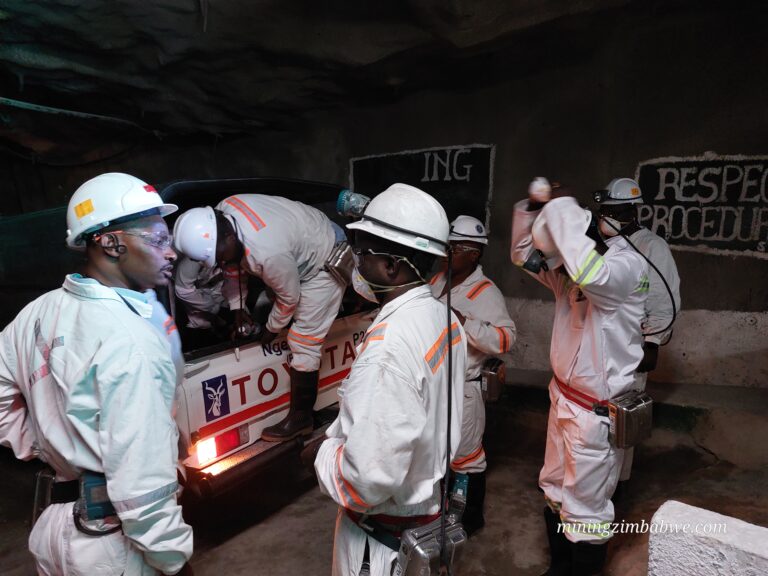
Tharisa Advances Karo Platinum Project Despite Funding Challenges, Remains Bullish on PGM Outlook

0

Johannesburg Stock Exchange-listed mining company Tharisa plc continues to advance its Karo Platinum project despite ongoing funding challenges and volatile platinum group metals (PGMs) prices, Mining Zimbabwe can report.

By Rudairo Mapuranga

The company remains optimistic about the long-term fundamentals of the PGM market, positioning itself to benefit from an eventual rebound in prices.

In October last year, Tharisa announced a delay in commissioning its US$391 million Karo Platinum mine until June 2025, citing the ongoing slump in platinum prices as a key factor.

Originally set to be commissioned in July this year, the mine’s completion was deferred to 2025 as the company adjusted to the lower price environment and uncertainties in the global economy.

The delay reflects concerns that weak commodity prices, coupled with a fragile global economic outlook, could hamper Zimbabwe’s ambitions to attract investment in the mining sector.

Located on the Great Dyke in Mhondoro-Ngezi, the Karo mine is one of the most significant developments in Zimbabwe’s platinum mining industry. Once fully operational, the mine is expected to produce up to 194,000 ounces of PGMs annually, making it the country’s third-largest platinum operation after Zimplats and Mimosa. This output would boost Zimbabwe’s total platinum production by approximately 20%, further strengthening its position as a key player in the global PGM market.

Despite the postponement, construction at the Karo site has progressed since it began in December 2022. However, the company has remained cautious with its capital deployment, adjusting its strategy in line with available funding.

In a recent production report, Tharisa CEO Phoevos Pouroulis reaffirmed the company’s commitment to the project, stating, “We remain optimistic on the fundamentals of the PGM market and have thus continued to optimise our Karo Platinum project and progressed with the plant construction, in line with capital availability.”

Tharisa’s cautious approach reflects broader concerns in Zimbabwe’s mining sector, where local operators are grappling with the dual impact of falling global metal prices and rising operating costs.

The Chamber of Mines recently warned that these factors are straining mining operations across the country, casting a shadow over Zimbabwe’s hopes of increased mining investment.

The decline in platinum prices has been partly driven by expectations that the European Union will ban conventional vehicles in just over a decade. Such a move would significantly reduce demand for platinum and palladium, which are key materials in catalytic converters used to lower vehicle emissions.

When the Karo project was initially conceived, Tharisa had based its financial projections on an average PGM 6E price of US$2,140 per ounce and production costs of US$1,096 per ounce. Under these assumptions, the mine would generate a 30.1% return on capital and an internal rate of return (IRR) of 26.1%. However, with the average annual PGM price dropping by 28% to US$1,362 per ounce in 2024 (compared to US$1,893 in 2023), Tharisa’s revenue expectations have been significantly revised downward. The price averaged US$1,370 per ounce during the fourth quarter of the 2024 fiscal year.

Nevertheless, Tharisa’s long-term view on PGMs remains bullish, and the company is positioning itself to capitalize on a market recovery.

Pouroulis emphasized that the ongoing work at Karo Platinum aligns with the company’s belief in the resilience of PGM demand in the future, driven by industrial applications and the eventual transition to hydrogen fuel cell technology, which relies heavily on platinum.

In the face of current headwinds, Tharisa’s strategy of maintaining progress on its Zimbabwean platinum venture while optimizing capital allocation underscores the company’s confidence in the long-term viability of the project and the PGM market. While the path to commissioning may have been extended, Tharisa’s steady hand on the Karo Platinum project promises to strengthen Zimbabwe’s platinum industry and position the company for growth once market conditions improve.

As Tharisa continues to navigate the challenges posed by fluctuating global PGM prices, its commitment to Zimbabwe’s mining future remains clear. The Karo Platinum mine, despite delays, will ultimately be a critical asset in the country’s platinum mining landscape.

Q2 Mining Confidence Index Down to 12.9: ZIMSTAT

0

The Zimbabwe Statistical Agency (Zimstat) Business Tendency Survey for the second quarter of 2024 reveals that the mining confidence index has declined to 12.9 from 15.9 in the first quarter. Miners cited cash flow difficulties among other significant challenges affecting the sector.

By Ryan Chigoche

The survey aims to produce indicators that monitor the current business situation and short-term developments in the manufacturing and mining sectors. The index values range from 0 to 100, with readings above 50 indicating sector expansion and those below 50 signifying contraction.

Insights on business performance during the second quarter were gathered from 80 mining companies, achieving a response rate of 62.5%. According to Zimstat,

“The Mining Confidence Index decreased to 12.9 in the second quarter of 2024, from 15.9 recorded in the first quarter of 2024. The mining sector faced the following three major challenges: cash flow difficulties, a shortage of electricity, and uncertainty regarding the economic environment.”

Zimbabwe’s mining sector faces several obstacles hindering its growth and development. A significant issue is the unstable policy environment. Frequent changes in mining regulations create uncertainty, discouraging investment and complicating long-term planning. Ongoing amendments to key laws, such as the Mines and Minerals Act and the Economic Empowerment Bill, further exacerbate this instability.

Another major challenge is the exchange rate disparity. Mining companies are suffering substantial losses due to the gap between the official exchange rate for export proceeds and the parallel market rate for input costs, effectively acting as a tax on their gross proceeds.

Power supply issues also plague the sector. Frequent and prolonged outages disrupt mining operations, resulting in increased costs and reduced productivity, particularly for energy-intensive processes.

These interconnected challenges contribute to a difficult operating environment for mining companies in Zimbabwe, limiting their potential to drive economic growth and development. Addressing these issues requires a comprehensive and coordinated approach involving both government and industry stakeholders.

In terms of capacity utilization, the agency reports that the mining sector stood at 57.5% in the second quarter, up from 50.3% in the first quarter of 2024. Notably, 20% of respondents expressed more optimism about the general business climate, with 45% expecting an increase in production levels during the third quarter.

Regarding total order books for the second quarter, approximately 64% of respondents felt that conditions were normal for the season, although the sector recorded negative net balances in this area during the same period. Additionally, 17.9% of mining sector respondents noted that supplier delivery times in the second quarter of 2024 were faster than in the first quarter.

Disco to Begin Steel Bar Production in 2025 as Manhize Plant Ramps Up

0

Dinson Iron and Steel Company (Disco)’s US$1.5 billion steel plant in Manhize is set to begin manufacturing steel bars by April 2025, marking a significant development that will expand the plant’s product range and boost Zimbabwe’s industrial output, Mining Zimbabwe reports.

By Rudairo Mapuranga

The company, currently operating at 60% of its capacity, aims to increase production to 75% by the second quarter of next year. The introduction of steel bars is a key driver of that growth.

The plant, located between Chivhu and Mvuma on the border of Midlands and Mashonaland East provinces, began production in July this year and is already producing pig iron and steel billets.

According to Dinson’s projects director, Mr Wilfred Motsi, the company’s move to start manufacturing steel bars marks a new operational phase, significantly boosting the plant’s capacity utilization and job creation.

“Currently, we are operating at 60% capacity utilization, and we expect to reach 75% in the second quarter of next year when we introduce steel bars to our product range.

“Employment figures, as a result of the steel bars we will be producing, will rise to 2,700,” Motsi said.

The introduction of steel bars is expected to create 500 additional jobs in the second quarter of 2025. The Manhize plant, which currently employs 2,200 workers, is projected to employ 10,000 people directly by the time it reaches its final production phase, making it the largest steel plant in Africa.

Dinson is one of three local subsidiaries of China’s Tsingshan Holdings, a global giant in the steel industry. The other two subsidiaries operating in Zimbabwe are Afrochine Smelting in Selous, Mashonaland West Province, and Dinson Colliery in Hwange, Matabeleland North Province. Together, these operations form part of a broader strategy to revitalize Zimbabwe’s steel industry and reduce the country’s reliance on imports.

When fully operational, the Manhize steel plant is expected to produce 600,000 tonnes of products annually in its first phase, with production rising to 1.2 million tonnes in the second phase. By the third phase, output will increase to 3.2 million tonnes, ultimately reaching five million tonnes at full capacity. These products will serve both local and international markets, with exports to regions such as Asia and Europe expected to generate significant foreign currency earnings for Zimbabwe.

“So far, we haven’t started exporting, but we are producing for the local market,” Mr Motsi explained. “As for the tonnage we are producing, I don’t have the figures offhand, but we have started selling, and our sales figures so far have been promising.”

To support the plant’s growing energy needs, Dinson has launched a 50-megawatt power plant, with plans to increase its capacity to 500MW as the project scales up. The 50MW plant will help the company achieve energy self-sufficiency, reducing its dependence on the national grid. The current plant consumes 28MW of power, with the excess capacity set to be synchronized with the national grid, further contributing to the country’s energy security.

The Manhize steel project is seen as a major step in Zimbabwe’s efforts to industrialize and restore its steel production capabilities following the closure of the Redcliff-based Zimbabwe Iron and Steel Company (Zisco) in 2008. Once one of the largest integrated steel plants in Africa, Zisco’s collapse left Zimbabwe dependent on steel imports from countries such as China and India. Dinson’s project, forecasted to generate revenues of up to US$4.5 billion annually in its final phase, is expected to transform the country’s steel industry and reduce the need for imports.

As Dinson continues to expand its operations, the company is poised to become a key player in the global steel market, positioning Zimbabwe as a hub for steel production in Africa.

Grid Africa Partners with Huawei for 72MW Solar Project to Boost Mining Efficiency

0

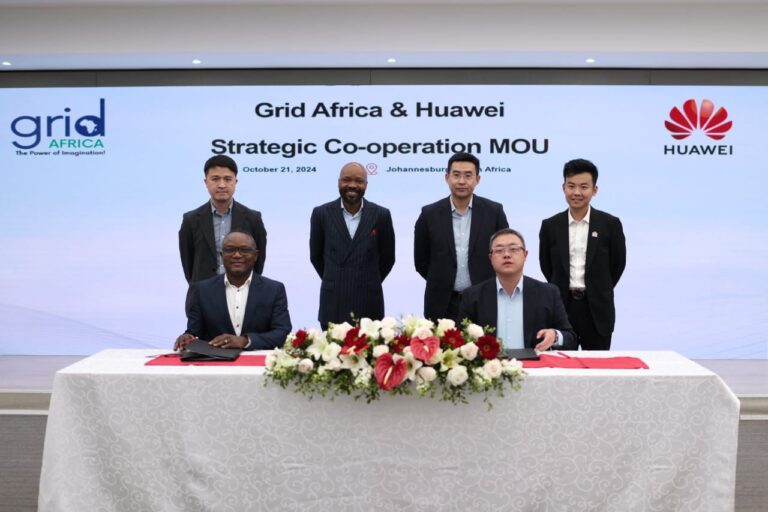
Grid Africa, a leading renewable energy provider, has partnered with Huawei, a global technology powerhouse, to implement a 72-megawatt (MW) solar power infrastructure in Zimbabwe. The project, aimed at addressing the country’s chronic energy shortages, is set to significantly enhance the efficiency of the mining sector, Mining Zimbabwe reports.

By Rudairo Mapuranga

Zimbabwe has faced frequent power outages in recent years, negatively impacting the economy, particularly the mining industry.

The 72MW solar project will provide a critical alternative energy source, reducing the nation’s reliance on the strained national grid and ensuring a more stable and reliable power supply.

The partnership between Grid Africa and Huawei merges their expertise in renewable energy and technology. Grid Africa will manage the design, construction, and operation of the solar power plants, while Huawei will provide its advanced solar inverter technology and energy management solutions.

The 72MW solar project is expected to bring substantial benefits to Zimbabwe, including:

  • Alleviating power shortages: By supplying a significant amount of clean energy, the project will help ease the country’s chronic power shortages and improve electricity reliability.
  • Boosting mining efficiency: As the mining sector is a major electricity consumer, the solar project will provide a more stable and cost-effective power source, enabling mining companies to improve operational efficiency and productivity.
  • Creating jobs: The construction and operation of the solar power plants will create numerous direct and indirect jobs, contributing to Zimbabwe’s economic growth.
  • Reducing greenhouse gas emissions: The project will lower Zimbabwe’s carbon footprint by replacing fossil fuel-generated electricity with clean solar power.

Norman Moyo, CEO of Grid Africa, highlighted the partnership’s potential to make Zimbabwe energy-sufficient while providing clean, affordable power.

“This partnership with Huawei is a significant step toward our mission of delivering sustainable and affordable energy solutions to Zimbabwe. We are confident that the 72MW solar project will have a transformative impact on the country’s energy landscape and support the growth of its mining industry,” Moyo said.

Mr. Xia Hesheng, Huawei Digital Power Sub-Saharan Region President, echoed Moyo’s optimism, emphasizing Huawei’s commitment to sustainable development and technological innovation.

“We are excited to collaborate with Grid Africa on this crucial project. Our advanced solar inverter technology and energy management solutions will ensure the efficient and reliable operation of the solar power plants,” he said.

The 72MW solar project highlights the growing importance of renewable energy in Zimbabwe and the potential for international partnerships to drive sustainable development. As the project progresses, it is expected to serve as a model for other renewable energy initiatives across the region.

Mine Ventilation AGM and Conference Kicks Off Next Week!

0

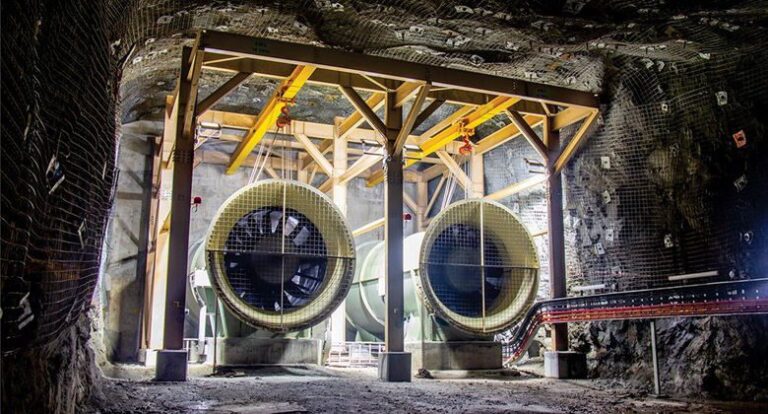
The Mine Ventilation Society of Zimbabwe (MVSZ) will hold its Annual General Meeting (AGM) and Conference next week in Masvingo, Mining Zimbabwe can report.

By Rudairo Mapuranga

Running under the theme “Ventilation Engineering Solutions for Solid Safety Performance,” the event will take place from October 31 to November 1, 2024, at the Great Zimbabwe Hotel.

It will bring together mining professionals to discuss critical ventilation challenges, particularly concerning safety, as Zimbabwe’s mining sector experiences rapid growth.

The event kicks off on October 30 with the arrival of delegates, followed by the President’s Cocktail, an exclusive networking session for MVSZ members.

The formal conference will begin on October 31 with registration, followed by a series of presentations and exhibitions over the two days.

Presentations will focus on key issues such as innovations in ventilation technology, health and safety standards, and engineering solutions that help mitigate risks in mining environments. Participants, including mining engineers, ventilation specialists, and industry stakeholders, will explore ways to enhance safety and operational efficiency through advanced ventilation techniques.

A highlight of the event is the Annual General Meeting (AGM), which will take place on November 1. This members-only session will discuss important decisions regarding the society’s future. To conclude, a Networking and Sunset Cruise will provide a relaxed atmosphere for attendees to engage further and strengthen industry relationships.

The conference fees for members are set at US$150, while suppliers can participate for US$250, with up to three delegates allowed. Accommodation is not included, and attendees are encouraged to register by October 31.

This gathering promises to be a vital platform for addressing ventilation challenges and advancing safety in Zimbabwe’s mining sector.

Caledonia Targets US$309 Million Bilboes Project to Chart Growth by 2025

0

Victoria Falls Stock Exchange-listed gold miner Caledonia Mining Corporation is advancing its US$309 million Bilboes gold project in Matabeleland, aiming to finalize a comprehensive feasibility study by early 2025, Mining Zimbabwe can report.

By Rudairo Mapuranga

The Bilboes project marks a major step in Caledonia’s growth strategy, which will see the company transform from a single-asset operator to a multi-asset gold producer.

Caledonia CEO Mark Learmonth, in an interview during the Gold Forum Americas held in Colorado Springs, emphasized the significance of the Bilboes project, which the company acquired in early 2023 after a seven-year pursuit.

The project has the potential to yield up to 1.5 million ounces of gold over a ten-year-period, with peak production expected to reach 150,000 ounces annually.

“Bilboes will be the catalyst for our evolution. We aim to maximize net present value per share and drive our share price higher,” said Learmonth.

According to Learmonth, funding for the project is expected to come primarily from development finance institutions, with a portion supplemented by equity.

He highlighted Caledonia’s ability to raise capital in Zimbabwe, noting that the company has secured more funding locally than in any other market.

“We are confident in our ability to finance this project effectively, especially given the strong local support,” he said.

Addressing concerns about operating in Zimbabwe, Learmonth downplayed worries over the business environment, citing the country’s educated and motivated workforce as a key asset.

“We have found the unions to be cooperative, not militant,” he noted, adding that operational challenges, while present, are manageable.

With the Bilboes project set to redefine Caledonia’s production capabilities, the company is positioning itself for substantial growth in the Zimbabwean mining sector.

Miners Support Shift from Indigenization Act to Economic Empowerment Bill

0
Miners in Zimbabwe are showing significant support for a transformative change in economic policy, as highlighted in the latest State of the Mine Industry Survey report sponsored by the Chamber of Mines Zimbabwe (CoMZ).

By Ryan Chigoche

An impressive 99% of mining executives commend the government’s intention to replace the existing Indigenization Act with the proposed Economic Empowerment Bill. This change reflects a significant shift in the industry, with executives advocating for a framework that prioritizes local participation and sustainable economic benefits for communities.

The survey shows that industry leaders are actively engaging with the government, having received the gazetted Bill and submitted proposals through the Chamber of Mines. This proactive involvement underscores a collective commitment to align with government initiatives focused on economic empowerment, moving away from the equity-based model that has previously dominated the sector.

The proposed Economic Empowerment Bill offers several advantages over the Indigenization Act. By emphasizing local content, the new framework encourages the participation of local suppliers and businesses, creating valuable economic opportunities within communities. Unlike the equity model, which often ties dividends to company performance and results in limited benefits during downturns, the new framework aims to provide immediate and sustainable advantages for local stakeholders. Additionally, many mining companies are already implementing initiatives to support local enterprise development, demonstrating a strong commitment to empowerment and collaboration.

To ensure the successful implementation of the Economic Empowerment Bill, the report recommends that the government clarify its policy on exempting mining companies from the equity model, providing clear guidelines to encourage further investment. Furthermore, expediting the finalization of the empowerment framework is crucial for attracting both domestic and foreign investments, ultimately stimulating growth in the mining sector.

However, there are concerns regarding the broader legislative landscape. Mining executives are generally pessimistic about the prospects for an improved policy environment in 2025. A significant 80% of respondents expect the legislative policy environment to either worsen or remain unpredictable, similar to conditions in 2024. Key concerns include frequent policy reversals, an unstable macroeconomic environment, and uncertainty surrounding the finalization of amendments to the Mines and Minerals Act, the Economic Empowerment Bill, and the Local Content Implementation Framework.

Executives have recommended that the government expedite the finalization of amendments to these key legislative frameworks. As the mining industry navigates these challenges, the transition from the Indigenization Act to the Economic Empowerment Bill remains a critical opportunity for economic transformation, with the potential to foster a more equitable and sustainable environment for all stakeholders involved in Zimbabwe’s mining sector.

Defold Mine Champions Breast Cancer Awareness in Guruve

0

Mutapa Investment Fund-owned Defold Mine, in collaboration with San HE Mining, has taken a pivotal step in promoting breast cancer awareness and early detection within the Guruve community by hosting a breast cancer awareness event on Friday, Mining Zimbabwe can report.

By Rudairo Mapuranga

Defold Mine will lead this impactful initiative at Nyamuswe Secondary School under the theme “No One Should Face Breast Cancer Alone.” As part of its corporate social responsibility (CSR) efforts, the mine has partnered with San HE Mining to deliver this critical campaign. The event aims to educate women and girls about the symptoms and risk factors of breast cancer, while also offering free screenings to encourage early detection.

The awareness campaign will feature a variety of activities, including:

  • Educational Talks: Breast health experts will provide informative presentations on the causes, symptoms, and preventive measures for breast cancer. They will also highlight the importance of early detection and timely treatment.
  • Free Screenings: Medical professionals will conduct free breast examinations for women and girls attending the event, helping to identify potential early signs of breast cancer.
  • Awareness Activities: The event will also include interactive demonstrations and activities aimed at raising awareness and encouraging active community participation.

Defold Mine’s dedication to breast cancer awareness reflects its commitment to ensuring that no one faces this life-threatening illness alone. Through education, screenings, and support, the company aims to empower the women and girls of Guruve to prioritize their health and seek early medical intervention when needed.

Defold Mine’s Acting General Manager, Wilfred Tanyanyiwa, emphasized the importance of such initiatives in improving the well-being of the community, particularly for women who are often the most vulnerable to health challenges.

He expressed the mine’s commitment to not only promoting economic development but also addressing critical health issues affecting the lives of those in Guruve.

“We are proud to spearhead this breast cancer awareness campaign in Guruve. Breast cancer is a serious health concern that affects women of all ages. By offering education, screenings, and support, we hope to make a meaningful difference in the lives of women and girls in our community,” said Tanyanyiwa.

ZCDC Donates US$55,000 in Food Hampers in Manicaland

0

Zimbabwe’s biggest diamond producer, Zimbabwe Consolidated Diamond Company (ZCDC), has responded to the ongoing El Niño-induced drought that severely impacted communities by donating nearly US$55,000 worth of food in Manicaland province, Mining Zimbabwe reports.

By Rudairo Mapuranga

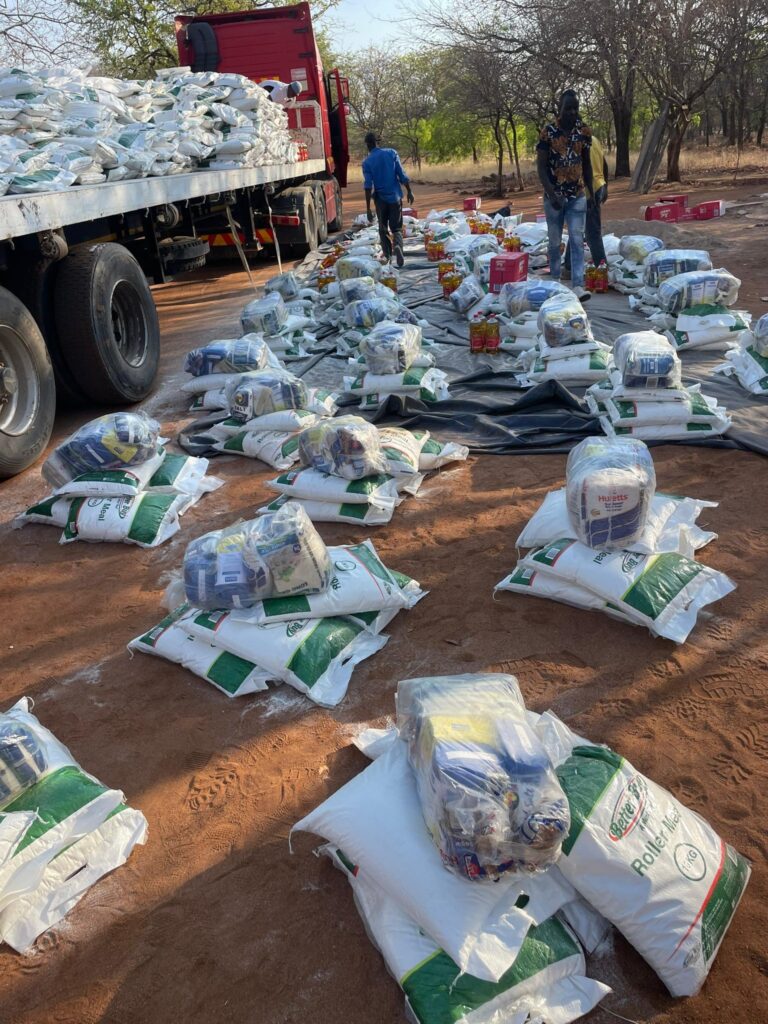
ZCDC, in collaboration with the Chiadzwa Community Share Ownership Trust, donated US$55,000 worth of food hampers to vulnerable families in Chiadzwa, Marange, Mukwada, and Arda Transau.

According to ZCDC’s Corporate Affairs Executive, Sugar Chagonda, this initiative is part of ZCDC’s broader commitment to corporate social responsibility (CSR) and comes at a critical time when food security is under serious threat due to the drought.

The hampers, containing essential items such as mealie meal, sugar, and cooking oil, aim to provide immediate relief to drought-stricken households.

Chagonda emphasized ZCDC’s concern for the welfare of the local communities and its dedication to supporting them during these challenging times.

“We are deeply concerned about the impact of the drought on the people of Chiadzwa. We believe it is our responsibility to help those in need, and we are committed to providing support wherever possible,” said Chagonda.

ZCDC has been working closely with government agencies, including the Department of Social Welfare, to identify the most vulnerable families. The company’s partnership with the Chiadzwa Community Share Ownership Trust, which represents local interests, is crucial in ensuring that the support reaches those in greatest need.

The severity of the current drought, driven by the El Niño weather phenomenon, has heightened food insecurity across Zimbabwe.

The government has acknowledged the pressing need to mitigate the effects of the drought and has implemented several programs to provide relief to affected communities. However, with resources stretched thin, ZCDC’s contribution has become a vital supplement to the government’s efforts.

ZCDC has a strong history of CSR, demonstrated through various community development initiatives. These include investments in education, healthcare, and infrastructure in regions where the company operates. For instance, through its social investment strategy, ZCDC has undertaken projects aimed at improving living conditions, including building schools, health centers, and providing clean water to local communities.

As the drought continues to threaten livelihoods, ZCDC’s intervention underscores the importance of corporate involvement in addressing national challenges.

“We believe that it is important for businesses to give back to the communities in which they operate. We are proud to be able to make a difference in the lives of the people of Chiadzwa,” said Chagonda.

The hampers are expected to provide critical relief to thousands of families, and ZCDC has pledged to continue monitoring the situation, ensuring further assistance as needed.

This donation reflects the company’s ongoing efforts to support the communities in Manicaland, reinforcing its role not only as a key player in the diamond mining industry but also as a partner in national development.