Home Blog Page 167

Gold buying prices per gram in Zimbabwe 23 October 2024

These are the official gold buying prices per gram in Zimbabwe today 23 October 2024, from the official gold buyer and exporter Fidelity Gold Refinery (FGR).

SG 90% and ABOVE US$83.14/g
SG ABOVE 85% BUT BELOW 90% US$82.26g
SG ABOVE 80% BUT BELOW 85% US$81.38/g
SG ABOVE 75% BUT BELOW 80% US$80.50/g
SAMPLE BELOW 10g BUT ABOVE 5g US$79.18/g

Fire Assay CASH $83.58/g

NB: Fire Assay cash price is for gold above 100gs, no sample is deducted.
For the Fire Assay Transfer price, a sample of not more than 10g is deducted
A 2% royalty is charged on all deposits (Small-scale miners)
A 5% royalty is set for Primary Producers

Cash available. Fidelity Gold Refinery prices will be changing daily to match world market prices.

All Set for the Geological Society of Zimbabwe Summer Symposium

0

The Geological Society of Zimbabwe (GSZ) is gearing up for one of its most anticipated events of the year, the Summer Symposium and MacGregor Memorial Lecture.

By Ryan Chigoche

This event, set to take place from 1 to 2 November, 2024, at the Natural History Museum of Zimbabwe in Bulawayo, will bring together geologists, students, and enthusiasts for a day of knowledge, exploration, and networking.

This year’s symposium will feature a lineup of distinguished speakers and experts in geology. Attendees can look forward to engaging presentations covering a variety of topics, including geochronology, mineral resources, and innovative sustainable practices in geological research. The event aims to foster collaboration and discussion, allowing participants to share ideas and insights that could shape the future of geological studies in Zimbabwe and beyond.

A key highlight of the day will be the MacGregor Memorial Lecture, delivered by Professor Benjamin Mapani from the Namibia University of Science and Technology. His lecture, titled

“Zircon Geochronology: A Handle in Plate Reconstructions, Geological Evolution of Mobile Belts, and Assessment of Mineral Deposit Fertility,”

is scheduled to begin at 3:30 PM. Open to the public, this lecture presents a unique opportunity for everyone, from professionals to casual enthusiasts, to deepen their understanding of geological processes and their implications for mineral exploration.

Following the symposium, participants are invited to join an exciting field trip to the Diana’s Pool area in Matobo on November 2. This excursion will offer a firsthand look at the region’s captivating geological features, including its renowned orbicular granite formations. Guided by experienced geologists, attendees will gain valuable insights into the area’s geological history, making it a perfect complement to the symposium’s discussions.

The Geological Society of Zimbabwe has a rich history. It was founded in 1981 after operating as a branch of the Geological Society of South Africa since 1962. This transition marked a pivotal moment for geological study and collaboration within Zimbabwe, allowing for a more localized focus on the unique geological challenges and opportunities in the region.

As the date approaches, excitement is building for this remarkable gathering of minds in the geological community.

Cyanide Bottle Roll Leach Test procedure

0

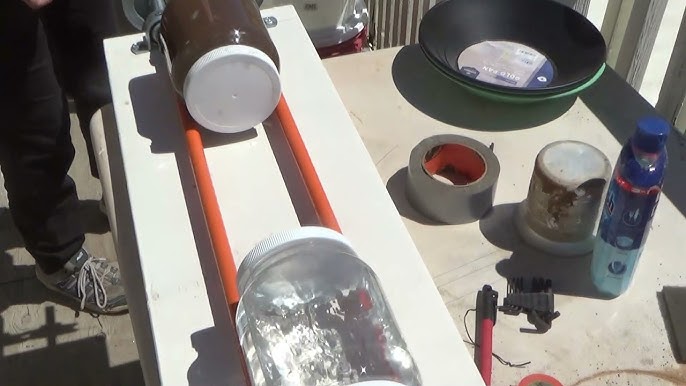
Cyanide bottle roll tests are the industry standard for the first step in evaluating gold recovery through cyanide leaching. They give valuable insights into expected recovery rates, reagent costs, and the necessary addition rates.

Equipment Needed:

  • Bottles with lids: To hold the test samples.
  • Tape: To securely seal the bottle tops.
  • Airlines: For adding air if needed.
  • Stirring device: To mix the contents (magnetic or mechanical).
  • Basic tools: Timer, pH meter, thermometer, and scale for measuring.
  • Leaching solution: The liquid used to extract metals (can be acidic, alkaline, or neutral).
  • Filter: To separate the liquid from solids (using vacuum or pressure).
  • Titration setup: To measure chemical concentrations.

Procedure:

  1. Prepare the ore: Dry it and crush it to the required size.
  2. Mix the solution: For example, dilute sulfuric acid with water to a specific strength.
  3. Leaching: Add the crushed ore sample into a bottle, then pour in the leaching solution.
  4. Stir and wait: Mix the sample for about an hour, ensuring the pH, temperature, and other conditions are right.
  5. Filter: After leaching, filter the liquid to collect the metal-rich solution (leach liquor).
  6. Wash and weigh: Clean the remaining solids and record their weight.
  7. Analyze: Test the residue and the liquid for metal content.

Bottle Leach Procedure for Cyanidation.

Use at least 500g of material for the test, but 1000g is ideal. Make sure the bottle is large enough, and lay it on its side for the roller test. The lid should have a small hole to let air in, or you can use an air bubbler during the leach.

For kinetic tests, remove the bottle from the roller at intervals (2, 4, 6, 24 hours, and every 24 hours after that) to take samples. After each sample, add air or oxygen to simulate what happens during the process. If possible, measure the dissolved oxygen, as it’s crucial for the leach to continue. Just having enough cyanide isn’t enough if oxygen levels are too low.

It is recommended to conduct kinetic leaching tests. These are a bit more complex because you’ll need to replace the liquid you remove during sampling and account for the gold that’s removed. Make sure to use at least 3 points to create your kinetic curve: one after the second cyanide addition in your circuit (CIL tank 4), another at the end, and one more convenient point. Don’t cut the test short; if more time might lead to higher recovery, add more time. The balance sheet I provided has 8 points for tracking.

At each sampling point, measure the cyanide concentration. Your metallurgist and operators should be familiar with the titration process. Add enough cyanide to bring the concentration back to the target level. The circuit typically starts with 600-650 ppm, then adds cyanide midway to 300-350 ppm.

Before starting, ensure your sample is well-mixed (homogenized). If you don’t properly split your lab samples, the results might be inconsistent. Use samples from the flotation tail and check that your lab results match the actual plant performance. Test the water you’re using too—consider filtering off the old water and adding the intended test water. Run enough tests to confidently know what the expected results are for your circuit. Think of this as a calibration. If you’re unsure whether your lab tests match real-world results, be cautious with your conclusions. Make sure your sample heads match across tests. You should aim to reproduce a 95% match, though 92% is acceptable if you have coarse gold, which can be harder to replicate. Use duplicate tests to boost your confidence.

A test program begins by applying your current conditions to the new ore. If recovery is good, you’re done—congrats! If not, adjust one variable and run another test. It is recommended to test a known sample alongside the new one and also test another new sample with a higher cyanide concentration. Running only one test at a time can be slow, as it may take up to a week for results. Handling more than six tests at once can be challenging for one technician, although a well-prepared technician can manage up to 20 tests.

Key Tips:

  • Always wear eye protection when handling acid.
  • Slowly add acid to water, never the other way around, to avoid dangerous reactions.
  • Make sure to thoroughly wash the ore residues after leaching to remove all chemicals.

For longer tests (kinetic leaching), samples are taken over time to measure how much metal is extracted at different intervals. Regularly monitor and adjust cyanide and oxygen levels to keep the process going.

Make sure your test conditions mimic the actual processing environment as closely as possible and always take safety precautions when working with hazardous materials like cyanide.

Invictus Energy Secures Over 90% Shareholder Approval for Key Resolutions at 2024 General Meeting

0

Australia Stock Exchange-listed Invictus Energy Ltd achieved a significant milestone, securing over 90% shareholder approval for several key resolutions during its October 2024 General Meeting, Mining Zimbabwe reports.

By Rudairo Mapuranga

The ratification of shares under Listing Rules 7.1 and 7.1A received 93.43% and 95.59% approval, respectively. This reflects investor confidence as Invictus advances its oil exploration in Zimbabwe’s Muzarabani Basin, one of Africa’s largest undrilled oil prospects. These share issuances have been pivotal in securing resources to fuel ongoing exploration efforts.

While there was slight resistance concerning options granted to key management personnel, these resolutions passed successfully. Robin Sutherland, Chief Operating Officer, received 56.88% approval for his option issuance, while Managing Director Scott Macmillan garnered a stronger 64.87%. Although these percentages are lower compared to share ratifications, they demonstrate a general endorsement of the leadership team’s performance.

Moreover, the Remuneration Report saw overwhelming support, with 94.89% of votes in favour. This suggests satisfaction among shareholders with how the company structures executive compensation, particularly as it ties compensation to performance, aligning with investor interests.

These strong results provide Invictus Energy with the necessary backing to continue its ambitious exploration and development plans in Zimbabwe’s rapidly evolving energy sector. The company’s flagship Cabora Bassa Project in the Muzarabani Basin remains at the core of this strategy, attracting both local and international attention for its potential to unlock significant oil and gas resources.

The October 2024 meeting was crucial as it came at a time of immense opportunity for Invictus Energy. The robust shareholder endorsement of capital-raising measures and executive performance incentives ensures that the company is well-capitalized to navigate the challenges ahead. The Cabora Bassa Project, specifically, has been heralded as a potential game-changer for Zimbabwe’s energy independence, and the international spotlight on this project continues to grow.

The successful resolutions passed during the General Meeting confirm that shareholders are aligned with the company’s direction. With the financial and managerial backing secured, Invictus is poised to advance its exploration efforts and deliver long-term value for its investors, solidifying its position in Zimbabwe’s burgeoning oil and gas sector.

Despite the lower approval rates for related-party transactions, the overall outcome demonstrates significant trust in Invictus’ leadership. Shareholders’ slight caution toward the allocation of company equity to executives is not uncommon, especially in junior exploration companies where capital is critical for operations. However, the approval of these options signifies general satisfaction with the company’s governance practices.

As Invictus Energy moves forward, the approval of key resolutions at the General Meeting provides a strong foundation for future growth. The backing of shareholders will be essential as the company advances its ambitious goals, with the potential for oil and gas discoveries in Zimbabwe’s Muzarabani Basin making Invictus a significant player in Africa’s evolving energy landscape.

Gold buying prices per gram in Zimbabwe 22 October 2024

These are the official gold buying prices per gram in Zimbabwe today 22 October 2024, from the official gold buyer and exporter Fidelity Gold Refinery (FGR).

SG 90% and ABOVE US$83.13/g
SG ABOVE 85% BUT BELOW 90% US$82.26g
SG ABOVE 80% BUT BELOW 85% US$81.38/g
SG ABOVE 75% BUT BELOW 80% US$80.50/g
SAMPLE BELOW 10g BUT ABOVE 5g US$79.18/g

Fire Assay CASH $83.57/g

NB: Fire Assay cash price is for gold above 100gs, no sample is deducted.
For the Fire Assay Transfer price, a sample of not more than 10g is deducted
A 2% royalty is charged on all deposits (Small-scale miners)
A 5% royalty is set for Primary Producers

Cash available. Fidelity Gold Refinery prices will be changing daily to match world market prices.

Zimplats Appoints Axcentium as New Auditor, Marking a Strategic Shift After Deloitte’s Exit from Zimbabwe

0

Implats owned Zimplats, is set to undergo a significant change in its auditing arrangements following the impending exit of Deloitte from the Zimbabwean market, Mining Zimbabwe can report.

By Rudairo Mapuranga

The announcement, made in the lead-up to Zimplats’ Annual General Meeting (AGM) scheduled for October 24, 2024, confirmed the appointment of Axcentium as the company’s independent auditor.

This decision follows Deloitte Zimbabwe’s announcement of its plans to exit the country by October 31, 2024. Deloitte Zimbabwe is part of the Deloitte Africa network.

According to Zimplats, the decision to replace Deloitte with Axcentium followed a comprehensive due diligence process led by the Zimplats board, which endorsed Axcentium’s appointment. The new firm will officially take over from Deloitte, pending shareholder approval at the upcoming AGM.

The departure of Deloitte from Zimbabwe marks the end of an era for one of the country’s most established professional services firms. Deloitte Zimbabwe has long been recognized as a major player in the audit and consulting landscape, operating as part of the broader Deloitte Africa network. However, senior partners within Deloitte Zimbabwe recently agreed to undertake a management buyout (MBO), which will see the firm exit the Deloitte network and operate independently under a new brand.

In March, Deloitte Zimbabwe issued a statement explaining that the exit was the result of a mutual decision reached after extensive discussions between Deloitte Africa and its Zimbabwean branch.

According to Deloitte Zimbabwe Managing Partner Charity Mtwazi, the move signals a new phase for the firm, which will continue serving its clients in the country under the new brand identity—Axcentium.

Mtwazi emphasized that while departing from the global Deloitte brand marks a transition, the firm’s commitment to delivering high-quality services in Zimbabwe remains unchanged.

“With Deloitte’s exit from Zimbabwe, we will enter a new phase. We are excited to continue our legacy of serving clients in Zimbabwe, but under a different brand,” said Mtwazi.

She added that rebranding to Axcentium would allow the firm to tailor its services more closely to the unique needs of the local market.

Axcentium will retain the core team of professionals that clients have relied on at Deloitte Zimbabwe, ensuring continuity of service.

The rebranding is seen as more than just a change of name, reflecting a shift in focus toward aligning the firm’s offerings with the specific challenges and dynamics of the Zimbabwean market.

Axcentium’s leadership has stressed the importance of maintaining the highest professional standards, even as it exits the Deloitte Africa network.

“Axcentium represents a new chapter in our story. It is a strong statement of agility, growth, and a bold vision for the future. Our goal is to leverage our deep-rooted expertise and local knowledge to deliver solutions that resonate with the Zimbabwean business community,” Mtwazi said.

Axcentium plans to embrace innovation and thought leadership as it navigates Zimbabwe’s challenging economic environment, characterized by currency volatility, inflation, and regulatory shifts. The firm has pledged to stay ahead of industry trends and employ cutting-edge technologies to enhance client value, particularly through the use of real-time data analytics to inform decision-making.

For Zimplats, the appointment of Axcentium represents a strategic decision to ensure continued audit excellence amidst the changing professional services landscape in Zimbabwe. Deloitte has served as Zimplats’ independent auditor for many years, providing audit and assurance services for one of the country’s most significant mining operations. With the transition to Axcentium, Zimplats aims to maintain the same high standards of financial transparency and accountability that are critical for its operations, particularly in an industry where investor confidence is paramount.

The decision to appoint Axcentium follows a period of strategic introspection for many Zimbabwean companies, as the country’s economic and regulatory environment continues to evolve. For Zimplats, a leading player in the mining sector, ensuring that its financial operations are audited by a reliable, experienced firm is essential for maintaining investor trust and securing future investments.

Zimplats’ management assured stakeholders that Axcentium had been selected after a rigorous evaluation process and expressed confidence in the firm’s ability to provide the same level of expertise that Deloitte had offered.

“We are confident that Axcentium will deliver the high-quality services that Zimplats requires, and we look forward to working with them as we continue to grow our operations,” a Zimplats representative stated.

U.S. Investment in Zimbabwe’s Mining Sector Stalled by Policy Inconsistency and Currency Volatility?

0

Zimbabwe’s mining sector is struggling to attract substantial investment from U.S. companies, despite its rich mineral resources. Experts cite policy inconsistency and currency volatility as the primary reasons for investors’ reluctance to enter the market. In stark contrast, Chinese companies have increasingly dominated the sector, raising concerns about the long-term implications for Zimbabwe’s economic independence and development.

A significant challenge facing potential investors is the government’s history of policy flip-flops. Frequent changes to regulations and incentives create an unpredictable business environment, causing uncertainty for companies considering long-term investments. This lack of consistency can deter investors who seek stable conditions to mitigate risks and ensure the viability of their ventures.

U.S. companies often weigh the rule of law, contract enforcement, and regulatory stability heavily when making investment decisions, and Zimbabwe’s policy inconsistencies have not provided the assurance they seek.

The Victoria Falls Stock Exchange (VFEX) was initially viewed as a beacon of hope for attracting mining companies. Launched with incentives, such as exempting firms from a 25% export levy if they were listed on the exchange, VFEX successfully attracted notable players like Caledonia Mining and Padenga.

As investment analyst Tafara Mtutu, head of research at Morgan and Co., explained,

“When the VFEX was commissioned, mining companies could save significantly by keeping all their USD if they listed there. However, within a year, the government reversed these incentives, and since then, we haven’t seen a mining company listing on the exchange.”

The abrupt removal of these incentives, made without prior consultation with industry leaders, has severely impacted investor confidence. This lack of stability has led many to question the investment climate, and since these benefits were withdrawn, no new mining companies have listed on the VFEX, underscoring the urgent need for stable and predictable policies.

Currency volatility further complicates the investment landscape. Over the past six months, Zimbabwe has experienced a rapid transition between three currencies: the U.S. dollar (USD), the Zimbabwean dollar, and the Zimbabwe Investment Currency (ZIC). Such fluctuations create an unsettling environment for investors who prefer to operate in stable currencies.

While bringing capital into the country can be relatively straightforward, challenges in withdrawing funds deter potential investors. Many fear that barriers to capital mobility could prevent them from recouping their investments, further contributing to the hesitancy surrounding U.S. investments in Zimbabwe.

In contrast to the U.S. challenge, Chinese firms have aggressively expanded their presence in Zimbabwe’s mining sector. However, the majority of these investors often do not engage in meaningful corporate social responsibility (CSR) initiatives, which leads to limited benefits for local communities. Additionally, there have been reports of human rights abuses associated with Chinese mining operations, raising serious ethical concerns. The growing dominance of Chinese companies raises questions about the balance of power in the sector and its implications for local communities and the environment.

The benefits of attracting U.S. investors, as opposed to relying heavily on Chinese firms, are manifold. U.S. companies often prioritize ethical practices, adhere to stricter environmental standards, and engage more meaningfully in CSR activities. This could lead to improved local infrastructure, better community relations, and sustainable development practices. Furthermore, U.S. investment could enhance Zimbabwe’s international standing, potentially opening doors to more diverse sources of investment and trade.

Experts warn that as Chinese investments continue to grow, Zimbabwe may find itself increasingly dependent on foreign powers, potentially undermining its sovereignty and long-term economic goals. The influx of Chinese capital also raises concerns about the transparency and sustainability of mining practices, as local regulations are often overlooked.

As Zimbabwe’s mining sector holds significant potential, addressing these pressing issues will be crucial for revitalizing U.S. investment and ultimately benefiting the country’s economy. Balancing foreign investment sources will be vital for ensuring sustainable development and protecting Zimbabwe’s interests.

Govt Urges Industry to Collaborate and Implement Local Content Strategy

0

The Government of Zimbabwe has called on stakeholders within the mining sector to collaborate and strengthen the value chain by implementing the local content strategy, Mining Zimbabwe can report.

By Ryan Chigoche

Currently, the local manufacturing sector contributes just 15% to the mining industry, with approximately US$2.1 billion of the US$5.4 billion in revenue generated being spent on imports, indicating a troubling reliance on foreign products and minimal local procurement.

In June 2019, the Government of Zimbabwe approved the Local Content Strategy (LCS) to promote the utilization of domestic resources across various value chains. This strategy aims to create a supportive ecosystem within industries, aligning with the vision of transforming Zimbabwe into a highly industrialized economy. Key objectives of the LCS include increasing average local content levels in prioritized sectors from approximately 25% to 80% by 2023, raising capacity utilization from around 45% to 75%, and boosting manufactured exports in these sectors by at least 5% annually between 2019 and 2023. However, these objectives have yet to be fully realized, as the mining sector continues to heavily rely on imports, underscoring the need for more effective implementation of the local content policy.

Addressing industry suppliers recently, Thomas Wushe, Permanent Secretary in the Ministry of Industry and Commerce, emphasized the necessity of collaboration to ensure the success of the local content policy. Local manufacturers in Zimbabwe are predominantly small-scale and often face challenges due to limited resources and outdated equipment. This not only hampers efficiency but also affects product quality, making it difficult to meet the mining sector’s standards.

“I urge each one of you—government officials, industry leaders, and community representatives—to collaborate toward realizing this vision of enhanced local content in Zimbabwe’s mining sector. Together, we can ensure that our rich mineral resources contribute not only to national wealth but also uplift every citizen from different angles,” Wushe stated.

He further added, “To enhance local procurement in Zimbabwe, we propose the following: establish a local content rating system for tenders, enforce a mandate that at least 60% of government procurement comes from local manufacturers while limiting imports to non-locally produced items, institutionalize the Buy Zimbabwe Programme, harmonize standards and specifications to promote the procurement of locally available goods, and engage with the Procurement Regulatory Authority of Zimbabwe to refine tender modalities and revisit the definition of a local producer. Together, these measures will support local industries and foster economic resilience.”

Mining is a core sector of the Zimbabwean formal economy, significantly contributing to GDP, employment, and export receipts. Both the African Union’s Mining Vision (AMV) and the Southern African Development Community’s (SADC) Regional Mining Vision (RMV) emphasize the importance of enhancing mineral extraction and processing linkages, particularly in the mining supply chain, through increased local content.

Success stories of local content policies from countries like Angola, South Africa, Zambia, Tanzania, Nigeria, and Brazil highlight the potential benefits. South Africa, for example, identifies local content as a strategic industrial policy instrument to reduce the trade deficit, foster emerging industries, and increase the tax base. The South Africa Mining Charter of 2019 stipulates that a minimum of 70% (by value) of mining goods must be manufactured or assembled in the country, requiring at least 60% local content during manufacture or assembly, and 80% of services required by holders.

To bolster local procurement and foster economic development in Zimbabwe, several key initiatives can be implemented. One primary strategy is to prioritize preferential local procurement. By favoring local suppliers in government contracts, this initiative aims to boost local economies and ensure financial resources circulate within communities.

Another essential component is funding to capacitate local suppliers. Allocating financial resources to enhance their capabilities will enable these suppliers to meet public procurement demands effectively. This approach will improve the quality of goods and services while creating numerous business opportunities for local firms, fostering a competitive and innovative marketplace.

Inclusivity is also critical. By creating opportunities specifically for women, youths, and people with disabilities, the framework promotes broader economic participation, leading to significant advancements in entrepreneurship and contributing to a more equitable economic landscape.

Capacity building and employment creation are vital aspects of these efforts. Investing in training programs will enhance the skills of the local workforce, preparing them for the demands of modern industries, strengthening local businesses, and creating jobs.

The transfer of technology is another important facet. Encouraging technology transfer to local firms can improve efficiency, productivity, and competitiveness. Coupled with a strong emphasis on research and development (R&D), this will drive innovation, leading to the development of new products and services tailored to local needs.

Fiscal support plays a crucial role in this framework as well. By providing fiscal incentives and support to local businesses, the government can help them thrive in a competitive environment. This support, along with local production and consumption awareness programs, will raise community awareness about the benefits of supporting local businesses, encouraging greater investment in local economies.


ZIDA Q3: Mining Dominates, Accounts for 50% of Total Projected Investment Value

0

According to the Zimbabwe Investment Development Agency (ZIDA) Q3 report, the mining sector accounted for half of the projected value of licensed projects, totalling US$1.171 billion for the quarter. This highlights the sector’s significant role in the country’s economic growth aspirations.

By Ryan Chigoche

The total projected value of mining licenses issued was US$579.90 million, with 74 new licenses issued during this period—the highest number for any sector. In total, 168 new licenses were granted, solidifying the mining sector’s dominant position, representing 50% of the aggregate investment value. In comparison, the energy sector followed with 22%, while other sectors accounted for the remaining 16%.

The mining sector also remains the most popular area of interest, representing 18% of total investment inquiries. This statistic underscores sustained enthusiasm for the industry. Agriculture and manufacturing each accounted for 8% of inquiries, while other sectors, including automotive, construction, education, financial services, ICT, health, tourism, real estate, services, and transport, received fewer inquiries. Notably, “not specified” inquiries have decreased, indicating improved targeting and information dissemination.

“Also encouraging is the fact that investors have fully embraced the online DIY Licensing Portal. On September 1, 2024, the Agency adopted the digital DIY Portal as the sole means for investors to apply for the ZIDA Investment License. In terms of the sectors where investors are obtaining licenses, the mining sector continues to attract the most interest, closely followed by the energy sector,” commented Tafadzwa Chinamo, the agency’s Chief Executive.

“Looking ahead, ZIDA remains committed to attracting, facilitating, and establishing investments for economic growth and development. We will continuously refocus our strategies on sustainable development initiatives to unlock untapped potential and create meaningful economic growth that benefits all citizens,” he added.

During this period, there was a 9% increase in the number of licenses issued in Q3 2024 compared to Q2 2024. However, this represents a 7% decrease from the same quarter in 2023. This increase is attributed to enhancements in the licensing process, confirming that investors are increasingly adopting the online DIY Licensing Portal. Nonetheless, the agency recorded a 66% decrease in projected investment values compared to Q3 2023.

Regarding investor sentiment, the Investor Sentiment Survey, launched in Q2 in collaboration with the International Finance Corporation (IFC), closed on September 10, 2024. The IFC has begun validating and analyzing the responses, which will be included in the final report expected in Q4.

Project Pipeline

By the end of Q3, the projected value of projects processed through Business Development is estimated at US$14.9 billion, surpassing the Q3 target of US$11.25 billion.

However, there was a 56% decline in the number of licenses renewed compared to the same period in 2023. Globally, the renewal rate from 2023 to Q3 2024 was 100%, indicating that most investors licensed in 2022 are renewing their licenses. To promote timely renewals, the agency launched a campaign reminding investors of their obligations and associated penalties.

Of the 266 projects licensed in 2022, 72 were identified as operational by the end of September 2024, demonstrating that 27% of those projects became operational. The total reported investment during these renewals amounted to US$137.29 million, primarily from capital equipment imported by foreign shareholders.

Finally, most projects licensed in 2023 still hold valid licenses, with only three renewal submissions made to date. Actual investments from these projects will be reported in Q4 2024, coinciding with the agency’s rollout of the DIY Portal. Investors will be required to submit their investment update reports through this platform, ensuring a streamlined process for tracking project investments.

Heap Leaching Methods Explained

0

Heap leaching is a common method for extracting gold from low-grade gold-copper ores. The ore is crushed and stacked into piles, then impregnated with a solution that dissolves the gold. The resulting gold-containing solution is collected and processed to recover the gold.

First, the gold-copper ores are crushed into appropriate particle sizes and stacked in special open-air stacking areas. Next, the accumulated ore is regularly or continuously sprayed with a leaching solution containing specific chemicals. For gold minerals, a commonly used leach solution is a cyanide solution, while for copper minerals, a leach solution containing sulfuric acid may be used. The leach solution seeps into the ore pile, reacting with the gold and copper minerals within it, and the gold and copper dissolve from the ore into the leach solution. After leaching is completed, the leachate containing dissolved gold and copper is collected in a sump or other container at the bottom.

The separation and recovery of gold and copper from the leachate often require further processing. For gold, a common method is to use electrolytic deposition to recover gold from the leachate. For copper, methods such as electrolytic refining or solvent extraction are usually used.

1. Electrolytic refining

This method used to purify copper is often called electrolytic refining of copper. First, prepare an electrolytic tank and add an electrolyte containing copper, usually a copper sulfate solution, to the electrolytic tank. This electrolyte acts as an ionophore, helping to transport copper ions between the electrodes. By passing an electric current, copper ions move from the anode to the cathode. During this process, copper ions are reduced to pure copper metal and precipitated on the cathode. Impurities in copper can be removed, making the copper purer. These impurities often form scum or become trapped at the anode.

2. Electrowinning

An electrochemical process for recovering precious metals such as gold from solution. Similar to electrorefining, electrowinning requires an electrolytic cell containing an anode and a cathode for the purpose of depositing gold from a solution. An electrolyte containing gold, usually a solution containing cyanide, is added to the electrolytic cell. When an electric current is passed through, gold ions are deposited from the electrolyte onto the cathode, forming metallic gold, mainly high-purity gold.

3. Solvent extraction

This is an important process used to separate and purify copper from copper-containing solutions. First, you need to prepare a copper sulfate (copper sulfate) solution. In the extraction stage, the copper sulfate solution is in contact with a specific organic solvent, which can better absorb copper ions. The organic solvent containing copper passes through the solution containing other impurities and non-copper metals. Separate by sedimentation, centrifugation or other separation methods. The copper ions in the organic phase can be released by changing conditions such as acidity or temperature and further reduced to pure copper metal. The organic solvent can be recovered and reused, to improve the economic efficiency of the process.

Heap leach tailings contain most of the unextracted impurities beyond the gold and copper that have been extracted and require further processing or storage to reduce environmental impact. Heap leaching is relatively low-cost and suitable for low-grade ores. However, it takes a long time to extract gold and copper and is not suitable for high-grade ore or rapid recovery of gold and copper.