Home Blog Page 169

Zulu Lithium Resource Upgrade Boosts Production Potential with 23% Increase in Spodumene

0

Premier African Minerals Limited has announced a significant upgrade to the mineral resource estimate (MRE) at its wholly owned Zulu Lithium and Tantalum Project, Mining Zimbabwe reports.

By Rudairo Mapuranga

The updated MRE, compliant with the South African Code for the Reporting of Exploration Results, Mineral Resources, and Mineral Reserves (SAMREC) and the Joint Ore Reserves Committee (JORC) standards, highlights a 23% increase in contained spodumene and a 17% increase in contained tantalum.

The company’s Chief Executive Officer, George Roach, expressed satisfaction with the results, attributing the increases to factors such as improved grade control assessments and additional data. The updated MRE has been prepared on a depleted basis, following the mining conducted to date.

“With ongoing mining activities, further sections of the ore body are expected to be reclassified into a measured category, supported by close-spaced in-pit grade control assessments,” Roach said.

“We believe that Zulu is likely to produce spodumene concentrates with low iron and higher spodumene concentrate grades.”

The MRE is based on assay results from surface drill holes, grade control holes, and surface trenches conducted between 2016 and 2023. The geological model has been developed from extensive drilling on a nominal 50-meter by 50-meter drill spacing.

This updated MRE is expected to positively impact Premier African Minerals’ production plans, positioning the company to increase production at the Zulu Lithium and Tantalum Project and leverage the growing global demand for lithium and tantalum.

The Zulu Lithium and Tantalum Project represents a major development for Zimbabwe’s mining sector, with the potential to contribute significantly to the country’s economy and create jobs.

Local Mining Companies Should Adopt Latest Technologies

0

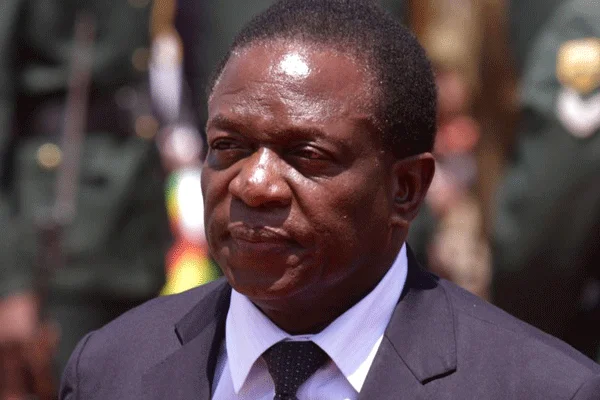
Bold decisions must be taken within locally-owned mines to embrace the latest technology and ensure upstream and downstream communities benefit through the expansion of mineral exploration, extraction, beneficiation, and value addition, President of Zimbabwe Dr Emmerson Mnangagwa said.

By Rudairo Mapuranga

Speaking at the Mine Entra 2024 Conference’s official opening held at the Zimbabwe International Exhibition Centre (ZIEC) in Bulawayo on Thursday, President Mnangagwa stated that mining companies should strengthen partnerships with suppliers, including institutions of higher learning, to develop technological solutions and new methods in mining projects and operations.

“This will allow for symbiotic relationships with mining suppliers who have extensive local knowledge and are capable of providing customized solutions for mining needs. New frontiers such as electromobility, zero-waste mining, and continuous mining, among others, should equally be prioritized. The use of artificial intelligence in research and development, particularly in engineering, design, communication of mineral deposits, smart mining, and market forecasting, is also encouraged,” President Mnangagwa said.

The mining sector provides essential minerals like rare earths, gold, platinum, and lithium, which form the building blocks of modern society. These minerals are vital to the production of everything from smartphones to electric vehicles and renewable energy systems.

Today, mining companies and industry professionals recognize the importance of adopting new technologies to remain competitive, increase efficiency, and optimize resource use. These advancements are crucial for accessing more complex mineral deposits, improving productivity, and enhancing exploration and extraction precision.

The benefits of modern mining must extend beyond mere resource extraction to positively contribute to communities and the environment.

As the world rapidly progresses into the Fourth Industrial Revolution, the mining industry is poised to play a significant role in driving industrialization, contributing to the national economy, and creating positive spillovers into sectors like manufacturing, construction, and agriculture.

Chamber Requests Government Support to Revise Fiscal and Electricity Frameworks

0

The Chamber of Mines of Zimbabwe (CoMZ), representing the country’s large-scale miners, has called on the government to revise fiscal and electricity frameworks that are increasingly straining operations and driving up costs in the mining sector, Mining Zimbabwe reports.

By Rudairo Mapuranga

Speaking at a Pre-Budget Capacity Building Workshop for the Parliamentary Portfolio Committee on Mines and Mining Development, held in Bulawayo on Wednesday on the sidelines of the Mining, Engineering, and Transport (Mine Entra) Expo, former Chamber of Mines President Collin Chibafa emphasized the need for government support to help reduce the cost of doing business and prevent inconsistencies in policy application.

Chibafa highlighted that the high operational cost environment has pushed mining companies to focus on enhancing efficiency, maximizing current resources, postponing projects, and, in some cases, reducing workforce sizes.

“There are increased costs due to higher royalties, elevated electricity tariffs payable solely in U.S. dollars, and the need to finance ongoing projects. Mining companies are now focused on improving efficiency, maximizing existing resources, deferring projects, and, unfortunately, sometimes reducing workforce costs. I request that the sector be given support as we work through these fiscal challenges,” Chibafa said.

He noted that the Ministry of Finance faces revenue collection challenges, with the remaining formal sectors bearing a disproportionate portion of the tax burden. Chibafa urged for policies that create an enabling environment for mining to drive the country’s growth without being excessively taxed.

The issue of capital gains tax, he explained, has added to the perception of policy inconsistency. He advocated for a return to the tax’s original rate, arguing that if adjustments are needed, they should apply prospectively rather than retroactively.

“The first issue relates to the special capital gains tax. To illustrate, consider roads where the maximum speed limit is 120 kilometres per hour. With this tax, they went back five years, set the limit at 80, and now fine anyone who was driving above 80 at that time. From the sector’s perspective, it was applied retrospectively. People conducted transactions based on the rules that existed, and now the government has retroactively increased the tax rate to 20% from 5%. Our plea is for this tax to be revised back to its original level. If there is a need to increase it, Parliament should apply it going forward rather than retroactively,” he explained.

Chibafa also urged a review of the country’s royalty rates, which he noted are higher than those in the region, particularly for platinum (7%) and diamonds (10%). He proposed aligning Zimbabwe’s rates with regional standards, lowering diamond royalties to around 7%, and possibly introducing a price-linked royalty rate for platinum, with rates fluctuating in response to market prices.

The sector is also committed to advancing down the value chain. Zimplats, for example, will commission its expanded smelter this year, with the capacity to process ore for other companies, shifting exports from concentrate to smelted material by year-end. Plans are in place for a base metal refinery, and the Chamber has requested a continued deferral of the beneficiation tax as these initiatives take shape.

Mining fees and levies, another major cost factor, also need government attention. As market-driven industries, mining and farming do not control their prices, and with current low commodity prices, high fees and levies strain profitability. A recent additional 1% levy further exacerbates costs. The Chamber proposes adjusting these fees to a more sustainable level.

Foreign exchange remains a critical cost for mining companies. While 75% of their revenue is retained in foreign currency, the remaining 25% in local currency is difficult to spend. Suppliers align prices with parallel market rates, effectively doubling costs. Moreover, ZIMRA only accepts tax payments in foreign currency, adding strain on miners. Chibafa urged the government to set an example by accepting local currency to promote its use, as miners lose value with a currency that depreciates over time.

On electricity, Chibafa acknowledged ZESA’s need for viability but highlighted that current tariffs are high and misaligned with regional benchmarks. Although miners are open to importing power at regional rates, they are required to use domestic power, which is costly and affects the sector’s overall viability. The Chamber appealed to Parliament to address the escalating cost pressures that hinder the competitiveness of Zimbabwe’s mining industry.

CBZ to Avail US$200 Million Facility to Empower Mining Suppliers

0

Leading financial institution CBZ Holdings is set to provide a US$200 million financing facility through its Enterprise Supply Chain Development (ESD) program to support suppliers in the mining sector. This facility follows the success of a similar arrangement with Mimosa Mining Company, where the bank assisted the miner in financing its supplies through the Local Enterprise Development (LED) program.

By Ryan Chigoche

This initiative comes at a time when mining sector suppliers in Zimbabwe have struggled to access long-term financing.

Currently, loans to the mining sector account for only 11% of total industry loans in Zimbabwe, compared to 20% for individuals.

This discrepancy arises mainly because Zimbabwean banks’ balance sheets are still too small to independently support large mining projects, as these projects have extensive life cycles involving stages such as prospecting, exploration, mine development, production, and reclamation, each requiring sustained and patient capital.

While international funding options are available, rising global risks and Zimbabwe’s perceived country risks have made acquiring financing prohibitively expensive, a situation further worsened by tight liquidity. Additionally, commodity price volatility, driven by geopolitical tensions and global economic conditions, has severely impacted local mines, particularly in the PGMs sector. These challenges have affected the entire sector’s value chain.

However, despite these challenges, CBZ Executive Director of Wholesale Banking, Phibeon Mutibura, said they are concluding talks with more mining companies to establish financing arrangements similar to the one with Mimosa in efforts to strengthen the sector’s supply chain.

“We have signed a US$15 million MoU with a leading mining house, Mimosa, to support their LED program, and we are in discussions with several miners for a similar structure. We are targeting to invest US$200 million in the ESD program, as we see an opportunity to support economic growth by capacitating SMEs, creating employment, and driving growth,” he said.

“Despite these challenges, CBZ’s commitment to the mining sector is evident in the growth of our mining book, rising from 7% in 2021 to 18% by Q1 2024. As of June 2024, it’s significant, and the momentum continues. ESD is gaining traction in supporting Mimosa, and we believe many other companies will follow suit, allowing us to grow the mining industry. We are at advanced stages with many local mines, leading in signing LED MoUs, and by this time next year, we will have numerous small businesses sharing their success stories,” Mutibura added.

In this financing arrangement, CBZ targets SME suppliers trusted by mining companies and who have signed MoUs with the bank. These suppliers can access working capital, short-term loans, capital expenditure financing, and yellow equipment finance to boost their production. This financing is backed by referrals from the mining companies, ensuring transparency and reliability. By financing local suppliers, the initiative will ensure that Zimbabwe’s mining sector operates efficiently, free from supply disruptions, while also saving foreign currency through import substitution.

However, CBZ believes that to strengthen the mining sector’s supply chain, a collaborative approach between miners, banks, financial institutions, and suppliers is essential.

“Banks must offer tailored financial solutions to local suppliers, provide technical assistance, and capacity-building support. They should also collaborate with the government and mining companies to develop financing schemes. Miners, in turn, must commit to purchasing goods and services from local suppliers, provide mentorship and technical assistance, and ensure suppliers invest in capacity building and quality improvement while complying with industry standards and regulations,” said Mutibura.

Additionally, the government was urged to develop policies and regulations that promote local content, create a conducive environment for local suppliers, and provide financial incentives and support to the LED programs.

CBZ’s Enterprise Supply Chain Development (ESD) financing solution leverages non-traditional bank lending methods to provide financing to local enterprises and value chain suppliers within the mining industry. The focus of ESD is on creating commercial linkages between SME suppliers and mining companies.

ZAWIMA Highlights Gaps in Women’s Mining Safety

0

The Zimbabwe Association of Women in Mining (ZAWIMA) has called for urgent action to address the significant health and safety challenges faced by women in the mining sector, Mining Zimbabwe can report.

By Rudairo Mapuranga

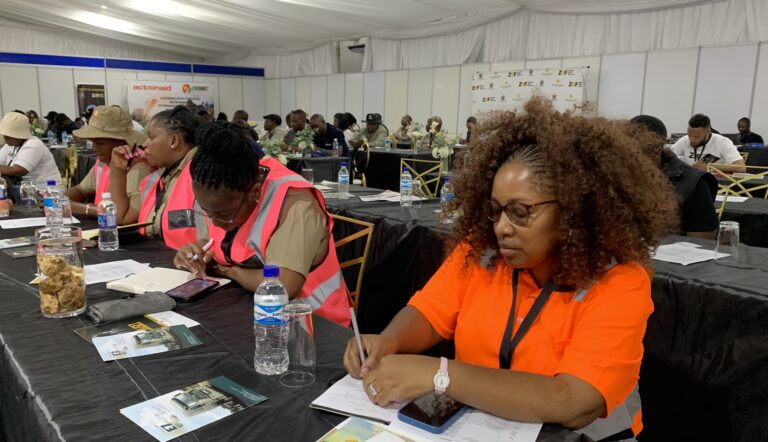
Speaking to this publication on the sidelines of the Mining, Engineering, and Transport Expo (Mine Entra) in Bulawayo last week, ZAWIMA Chairperson Kundai Chikonzo highlighted the need for policy reforms and improved working conditions for women miners.

“Our recent congress revealed several critical issues that must be addressed to ensure the well-being of women in mining,” Chikonzo said. “These include inadequate personal protective equipment (PPE), lack of appropriate sanitation facilities, and concerns about reproductive health.”

According to Chikonzo, ZAWIMA’s survey found that many women miners are not provided with PPE suitable for their specific needs, putting them at risk of injury. Additionally, she said the lack of adequate sanitation facilities at mining sites can lead to health problems, particularly for women.

“We are also concerned about the potential impact of mining chemicals on women’s reproductive health,” Chikonzo added. “More research is needed to assess these risks and implement preventive measures.”

ZAWIMA has called for the government to review and amend the Mineral and Mines Bill to ensure that it adequately addresses the specific needs of women in mining. The organization has also urged mining companies to prioritize the health and safety of their female employees.

“We believe that by working together, we can create a safer and more inclusive mining sector for women,” Chikonzo said. “ZAWIMA is committed to advocating for the rights of women in mining and ensuring that their voices are heard.”

Challenges Faced by Women in Mining

Women in mining face a unique set of challenges that significantly impact their health and safety. These challenges include:

  • Lack of access to appropriate PPE: Many women miners are not provided with PPE suitable for their specific needs, putting them at risk of injury.
  • Inadequate sanitation facilities: The lack of adequate sanitation facilities at mining sites can lead to health problems, particularly for women.
  • Reproductive health concerns: Mining chemicals may negatively impact women’s reproductive health.
  • Gender-based violence: Women in mining are at risk of gender-based violence, which can have devastating effects on their physical and emotional well-being.
  • Discrimination and harassment: Women in mining often face discrimination and harassment, making it difficult for them to perform their jobs and feel safe in the workplace.

The Importance of Addressing These Challenges

Addressing these challenges is essential to ensuring the well-being of women in mining and promoting gender equality and diversity in the sector.

ZAWIMA’s Recommendations

ZAWIMA has made several recommendations to address the challenges faced by women in mining:

  • Review and amend the Mineral and Mines Bill: The government should review and amend the Mineral and Mines Bill to ensure it adequately addresses the specific needs of women in mining.
  • Prioritize the health and safety of women miners: Mining companies should prioritize the health and safety of their female employees.
  • Provide appropriate PPE: Mining companies should provide women miners with PPE that is suitable for their specific needs.
  • Improve sanitation facilities: Mining companies should improve sanitation facilities on their sites to ensure they meet the needs of women.
  • Conduct research on reproductive health: More research is needed to assess the impact of mining chemicals on women’s reproductive health.
  • Implement measures to prevent gender-based violence: Mining companies should implement measures to prevent gender-based violence in the workplace.
  • Promote gender equality and diversity: Mining companies should promote gender equality and diversity in the workplace.

ZAWIMA’s call for action is timely and important. By addressing the challenges faced by women in mining, we can create a safer and more inclusive mining sector for all.

MENTAL HEALTH IN THE MINING INDUSTRY

0

Thursday, October 10, 2024, was World Mental Health Day. The official theme was “It is time to prioritise mental health in the workplace.”

By Dr Sydney Mukonoweshuro

In the mining industry, men make up roughly 85% of the workforce. Everyone will at some stage be affected by mental health problems, whether it is directly or indirectly in a support role as a partner, parent, friend or workmate. Problems such as depression, anxiety and substance use are serious but common conditions.

1 in 8 men will experience depression, 1 in 5 will experience anxiety and around 1 in 14 will have problems with substance use at some stage of their lives, with many others likely going undiagnosed. In most cases, treatment for mental health problems is effective. However, it is estimated that only around 35% of people who are struggling with their mental health seek professional help. Men are statistically less likely to seek help for mental health problems compared to women. This increases the risk of mental health problems going unrecognised and untreated. Left untreated, mental health problems such as depression can be a high-risk factor for suicide.

In Australia, there are approximately 2,200 suicides each year and 80% of suicides are by men. Suicide is the leading cause of death for men under the age of 44 in Australia, and the highest rates of suicide are among men of working age.

Risk Factors for Mental Health Problems In The Mining Industry

There are several factors associated with working in the mining industry that may contribute to mental health problems or make problems worse. These include:

  • Repetitive and or dangerous tasks,
  • Physically demanding roles,
  • Physical health problems including injury at work or chronic
  • Fatigue associated with long working hours, shift work, overtime or long commute
  • Social isolation, particularly for those working in regional, rural or isolated settings away from extended family or social
  • Fly-in-flyout or drive-in-drive-out workers may have difficulty connecting with
  • Industry downturn, which can affect people’s sense of job security

There are several early warning signs you can watch out for in yourself or your workmates that might suggest you/they are having problems These include:

  • Feeling moody, irritable, sad or
  • Shutting off or not wanting to see
  • Loss of interest in usually enjoyable
  • Sleeping more or
  • Eating more or
  • Getting easily
  • Giving up on
  • Feeling sick and run
  • Trouble with concentrating or decision
  • Putting off
  • Not wanting to deal with day-to-day things (e.g. opening mail, paying bills, )
  • Relying on alcohol or
  • Learn practical tips on how to support someone experiencing problems with their mental
  • Find out where and how to access support services for the person you are
  • Learn about ways to look after yourself

Everyone experiences these symptoms from time to time. However, if several of these signs persist for more than a couple of weeks and interfere with your ability to manage life, it’s best to go and see a doctor, or talk to someone you can trust like a friend or family member who can help you make an appointment. It can be difficult to take the first step to get some support, but it is important to take action before mental health problems reach a crisis point.

There are a range of effective treatments, health professionals and services available (see Other Resources below). There are also many things that you can do to help yourself. To maintain your own wellbeing and reduce stress, try adopting some of these practical tips:

Postpone major life changes – Making major changes in your life can be stressful at any time. Resolve personal conflicts – Ongoing stress in personal relationships can contribute to anxiety. Take part in activities and learn to relax, such as allocating time to do enjoyable activities such as exercising, meditating, reading, gardening or listening to music. Maintain a healthy lifestyle by eating healthily, exercising regularly and getting enough sleep.

Recommendations On Setting Up a Mental Health Programme:

  1. Promote mental health awareness and remove any
    • Raise awareness through global and local mental health activities and
    • Increase knowledge through regular
    • Reduce stigma by educating on the critical role of well-being.
  2. Support colleagues and encourage
    • Enhance capacity globally through Mental Health First
    • Articulate support internally and
    • Enable colleagues through a colleague
  3. Create and sustain a safe
    • Early recognition and intervention through Line manager and HR mental health
    • Risk factor-based education g. workplace stress, lifestyle factors (drugs/alcohol)
    • Promote work-life balance g. through well-being, flexible working.
  4. Build and maintain a positive
    • Normalise mental health – spaces to discuss factors affecting well-
    • Revised HR policies reflecting support of and commitment to mental
    • Integrate into employee life-cycle – recruitment, sickness absence and returning to
  5. Monitor, review and improve

·         Implement a robust measurement approach.

  • Review risk factors contributing to mental illness and make workplace adjustments as
  • Analyse feedback from employee engagement surveys, exit interviews etc to identify trigger

Zimbabwe Courts Canadian Investors to Unlock Mineral Wealth

0

The Zimbabwe government is actively courting Canadian investors to tap into the country’s rich mineral resources. The Zimbabwe Investment Development Agency (ZIDA) and the government are working to conclude talks regarding Exclusive Prospecting Orders (EPOs) and the export of mineral claims to attract Canadian investors.

By Ryan Chigoche

This was revealed by Minister of Finance and Investment Promotion, Mthuli Ncube, at the recent 3rd Canada-Africa Business Conference, held for the first time in Harare yesterday.

Earlier this year, the government of Zimbabwe issued a directive to suspend the issuance of new EPOs and cancelled all existing ones, in an effort to curb speculation and create a level playing field for investors.

EPOs grant investors the right to prospect for new mineral deposits in specific geographic locations to promote the discovery of new deposits, leading to the opening of new mines and the expansion of existing operations in Zimbabwe. Approximately 90% of Zimbabwe’s vast mineable mineral lands are under EPOs issued in 2021, which were valid for three years.

Addressing the Canada-Africa Chamber of Business delegates at the conference, Minister Ncube said they are advancing discussions on EPOs with ZIDA, who are lobbying to attract Canadian investors into the country.

“The Agency is actively lobbying the government to finalize processes such as the outstanding Exclusive Prospecting Orders (EPOs), the export of mining samples, and ensuring Zimbabwe’s mining claims comply with the Canadian NI43-101 framework, laying a solid foundation for advancing Canadian investment in Zimbabwe,” Ncube said.

“Opportunities exist in the areas of exploration, mining, beneficiation, value addition, smelting, and refining of minerals such as platinum, chrome, gold, and lithium. The transition to green economies has increased demand for lithium-ion batteries used in electric vehicles and equipment. This resource and other green minerals are found in Zimbabwe,” he added.

The conference and other key initiatives followed ZIDA’s engagements with Canadian stakeholders on the sidelines of the Prospectors and Developers Association of Canada (PDAC) conference in March 2024.

Zimbabwe’s mining sector has a diversified mineral resource base of over 55 exploitable minerals, which should underpin growth and development moving forward.

Canada’s Ambassador to Zimbabwe, Adler Aristilde, expressed Canada’s interest in increasing trade with Zimbabwe, seeing the potential for growth between the two countries.

“Last year, Canada’s two-way trade with the continent was $16.3 billion, of which sub-Saharan Africa accounted for US$10.5 billion. Our main exports were cereals, machinery, equipment, precious stones, metals, and fertilizers. Trade with Zimbabwe is more limited, but we see growth potential and are working to tap into it,” Aristilde said.

The conference aimed to enhance cooperation and investment between Africa and Canada, bringing together representatives from Canadian companies and local stakeholders to discuss investment opportunities and foster dialogue.

The engagement highlighted various sectors with attractive investment potential, including infrastructure development, mining, tourism, renewable energy, agriculture, information and communication technology (ICT), and manufacturing.

In recent times, the government has been actively implementing key reforms to stimulate private investment, focusing on achieving macroeconomic stability, improving the business environment, and enhancing the competitiveness of domestic industries.

In the past few years, Zimbabwe’s economy has demonstrated positive growth, with real GDP growth rates of 8.5% in 2021, 6.5% in 2022, and an estimated 5.5% in 2023, with projected growth of 2% in 2024, partly impacted by severe drought conditions.

To improve the investment climate, Ncube added that the government remains committed to prudent monetary and fiscal policies, enacting necessary reforms to stabilize the business environment and address price and exchange rate issues.

To enhance the investment landscape, the government established the Zimbabwe Investment Development Agency (ZIDA) to promote and facilitate investment in Zimbabwe. The agency’s One-Stop Investment Services Centre (OSISC) offers comprehensive support services, ranging from investment analysis and company registration to tax clearance, licensing, utility connections, investment promotion, public relations, and aftercare services.


Zimbabwe: A Wealth of Opportunity Awaits Investment

0

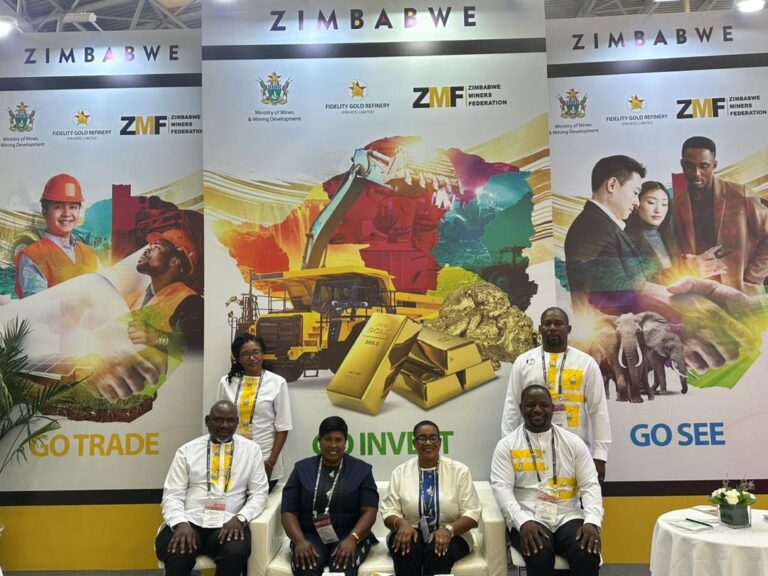
With a trove of natural resources and a government actively courting foreign investment, Zimbabwe is poised to become a major player in the global mining sector. Zimbabwe Miners Federation (ZMF) President, Ms Henrietta Rushwaya, highlighted these exciting prospects at the China-Africa Mining Conference in Tianjin.

By Rudairo Mapuranga

Rushwaya’s address focused on the compelling reasons for companies to invest in Zimbabwe’s mining industry, noting the sector’s significant contribution to the country’s GDP, which accounts for an impressive 80% of its exports. She outlined the role mining plays in driving Zimbabwe’s economic growth and emphasized the government’s commitment to creating a favourable investment climate, underscored by President Emmerson Mnangagwa’s “Zimbabwe is Open for Business” initiative.

A Track Record of Successful Collaborations

Zimbabwe’s mining sector has seen remarkable success through joint ventures with international companies, particularly from China. These partnerships have led to high-impact projects that exemplify the country’s collaborative spirit and mining potential. Ms. Rushwaya highlighted several flagship initiatives:

  • Prospect Lithium Zimbabwe: This joint venture swiftly developed a world-class lithium mine and processing plant in Goromonzi within nine months, demonstrating Zimbabwe’s efficiency and readiness for large-scale projects.
  • Huayou Cobalt: With a $300 million investment, Huayou established a petalite and tantalum processing plant, creating over 2,500 jobs and supporting local communities through corporate social responsibility programs.
  • Sinomine Resource Group: Their $180 million acquisition of Bikita Minerals laid the groundwork for a $300 million spodumene processing plant in Masvingo, commissioned in late 2023.
  • Max Mind: At Sabi Star Mine, Max Mind invested $130 million in a lithium flotation plant, projected to generate over $1 billion in annual revenue, underscoring Zimbabwe’s lithium potential on the global stage.

Revitalizing Zimbabwe’s Mining Legacy and Building for the Future

Beyond greenfield projects, Zimbabwe is reinvigorating its historical mining sites. Rushwaya highlighted the reopening of the Kamativi lithium mine, by Kamativi Mining Company, which was previously a tin operation. With an initial investment of $100 million, the project has created over 1,000 jobs and showcases Zimbabwe’s capacity to rejuvenate legacy assets.

Looking to the future, Rushwaya pointed to the $1.5 billion Dinson Iron and Steel Company project in Manhize. Set to last 200 years, the project aims to produce 5 billion tonnes of steel annually, positioning Zimbabwe as one of Africa’s largest steel producers. Additionally, the initiative will spur the development of Manhize Town and a new Science University, cementing the project’s economic and educational impact for generations.

Beyond Lithium: Zimbabwe’s Diverse Mineral Wealth

While lithium stands out, Zimbabwe’s mineral resources span much further. The country’s record-breaking gold production reached an all-time high of 37.3 tonnes in 2022. In addition, Zimbabwe’s vast chrome, diamond, and platinum group metal reserves offer expansive opportunities for diversified mining investment.

“Progress is also evident in Zimbabwe’s coal and coke production sectors,” Rushwaya said.

Gold buying prices per gram in Zimbabwe 16 October 2024

These are the official gold buying prices per gram in Zimbabwe today 16 October 2024, from the official gold buyer and exporter Fidelity Gold Refinery (FGR).

SG 90% and ABOVE US$80.48/g
SG ABOVE 85% BUT BELOW 90% US$79.63g
SG ABOVE 80% BUT BELOW 85% US$78.78/g
SG ABOVE 75% BUT BELOW 80% US$77.92/g
SAMPLE BELOW 10g BUT ABOVE 5g US$76.65/g

Fire Assay CASH $80.91/g

NB: Fire Assay cash price is for gold above 100gs, no sample is deducted.
For the Fire Assay Transfer price, a sample of not more than 10g is deducted
A 2% royalty is charged on all deposits (Small-scale miners)
A 5% royalty is set for Primary Producers

Cash available. Fidelity Gold Refinery prices will be changing daily to match world market prices.

Karoro Shines as Top Female Graduate, Wins Over US$1,800 at School of Mines

0

The Association of Junior Mining Professionals of Zimbabwe (AJMPZ) Secretary-General, Hazel Tsungai Karoro, was honored as the top female graduate at the 2024 Zimbabwe School of Mines graduation ceremony in Bulawayo, receiving over US$1,800 in awards.

By Patricia Rwafa

This prestigious recognition highlights Ms. Karoro’s dedication to the mining industry and her outstanding academic performance. Her achievements, including being named the Best Mine Ventilation student and receiving multiple awards from leading industry players, demonstrate the high regard in which she is held within the sector.

AJMPZ President, Eng. Wayne Mudamburi, praised her accomplishments, stating, “Ms. Karoro’s exceptional achievements are not only a testament to her hard work but also a reflection of AJMPZ’s commitment to nurturing talent and leadership in Zimbabwe’s mining sector.”

He added that with leaders like Hazel at the helm, AJMPZ is well-positioned to promote innovation, sustainability, and professionalism among junior mining professionals.

The Association expressed immense pride in Ms. Karoro and confidence that her accomplishments signal a bright future for Zimbabwe’s mining industry, inspired and led by the next generation of industry leaders.

Ms. Karoro’s notable awards include:

  • Mimosa Mining Company: US$800, Certificate of Academic Excellence, Floating Shield, and Personal Shield
  • ZB Bank: Floating Trophy
  • WFDR Risk Services: Floating Trophy
  • Zimbabwe Consolidated Diamond Company (ZCDC): Floating Trophy and US$200
  • Stanbic Bank: Floating Trophy
  • Elevate Trust Zw: Floating Trophy and Personal Shield
  • Schweppes Zimbabwe Ltd: Hamper
  • Nissan Clover Leaf Motors: Floating Trophy
  • Zimplats: US$650, Certificate of Academic Excellence, Floating Shield, and Personal Shield
  • Zimbabwe School of Mines (ZSM): Personal Shield
  • Association of Mine Managers Zimbabwe (AMMZ): US$125
  • Freda Rebecca Mine: Laptop
  • Old Nic Mine: US$50
  • ZIMDEF: ZWL 3,181.82