Home Blog Page 17

Gold buying prices in Zimbabwe per gram/ ounce, 19 January 2026

Gold buying prices in Zimbabwe per gram/ ounce, 19 January 2026, from the official gold buyer and exporter Fidelity Gold Refinery (FGR).

1 oz = 31.1035 g

CategoryPrice ($/g)Price ($/oz)
SG 90% and above140.094,357.29
SG 85% and above but below 90%138.614,311.25
SG 80% and above but below 85%137.124,264.91
SG 75% and above but below 80%135.644,218.88
Sample 5g and above but below 10g133.424,149.83
Fire Assay CASH140.834,380.30


Note: The Fire Assay cash price applies to gold above 100g, with no sample deduction.

A sample of not more than 10g is deducted for the Fire Assay Transfer price.

Why Zimbabwe Must Invest in Exploration Before It Can Tax Value Addition

0

Zimbabwe’s current focus on beneficiation taxes ignores the foundational need for state-led exploration, stifling the sector’s growth before it even begins, Mining Zimbabwe can report.

By Rudairo Mapuranga

A fundamental misalignment in Zimbabwe’s mining policy is putting the cart before the horse. The government’s intense focus on enforcing value addition through export taxes on concentrates, such as the 10% levy on chrome and lithium, addresses a late-stage problem while ignoring the critical early-stage crisis.

The primary concern should not be how to tax what is being mined, but how to dramatically increase what can be mined in the first place. A thriving, expanded mining sector is the only viable foundation for a successful value-addition strategy.

By fixating on penalties for a lack of processing, the government is inadvertently weakening the very base it hopes to transform. The conversation must shift back to the true starting point: a sovereign, strategic, and aggressively funded national exploration drive.

Without discovering and proving new resources, talk of beneficiation is premature. The economy, not a single mine, must be the central prize, and that begins with knowing what lies beneath.

The current policy framework assumes a mature, cash-rich industry ready for refinement. In reality, Zimbabwe’s mining sector is under-explored and under-capitalised, especially among indigenous players.

The Premature Beneficiation Tax: Levying a 10% tax on concentrates is a growth tax that comes too early in the value chain. For a sector needing billions in capital for basic exploration and development, this levy extracts scarce capital that should be risked on discovering and proving new orebodies. It makes developing complex minerals like lithium or PGM concentrates less viable, especially for local miners who lack access to cheap capital. This policy effectively channels indigenous miners towards gold, where the state handles refining via Fidelity Gold Refinery, and away from the very minerals central to the global energy transition.

The Arcadia Lesson in Sovereignty and Missed Opportunity: The Arcadia Lithium Mine’s journey from discovery to a USD400 million sale is instructive. Prospect Resources, an Australian firm, bore the risk, cost, and expertise to explore and develop the asset, reaping the ultimate financial reward. This model cedes sovereign wealth creation to foreign entities. The state’s role was reduced to regulator and future tax collector, not creator. Had a state-backed entity executed that exploration and development, the proceeds from a sale could have been reinvested into a sovereign fund to seed the next ten projects. The state must move from being a passive collector of rents to an active creator of mining assets.

The Glaring Omission: Zero Investment in Exploration: The most telling indicator of misplaced priorities is the budgetary neglect of exploration. The Ministry of Mines and Mining Development’s Mining Promotion Corporation (MPC) and the Geological Survey Department are starved of the funds needed to conduct modern, pre-competitive geoscientific surveys. Exploration is the research and development (R&D) of mining; no nation has built a knowledge-based economy without investing in R&D. By not investing here, Zimbabwe outsources the most value-generating phase of the mining cycle and remains ignorant of its full mineral potential, forever reacting to discoveries made by others.

Successful mining economies understand that a strong, knowledge-based public sector in mining is non-negotiable. They invest first to grow the pie.

Australia: The Public-Private Partnership Model
Australia’s mining supremacy is built on a bedrock of public data.

Geoscience Australia as the Pioneer: The federal agency spends hundreds of millions annually on airborne geophysical surveys, geochemical sampling, and deep geological mapping. This data is made public, de-risking the initial, most speculative phase of exploration for private companies worldwide. The state acts as the initial risk-taker, creating a gravitational pull for global investment. The goal is to maximise discovery, knowing each find expands the economic base for decades.

Supportive, Not Punitive, Downstream Policy: Only after a robust pipeline of resources is secured does policy encourage processing, achieved through co-investment in research (via CSIRO) and infrastructure, not punitive taxes on raw exports.

China: The Integrated Strategic Model
China views exploration as a matter of national security and industrial policy.

State-Directed Exploration: Through its state-owned enterprises (SOEs) and geological institutes, China directs massive resources towards strategic mineral exploration both domestically and abroad. The goal is not short-term revenue but long-term secured supply for its manufacturing juggernaut.

Control from Mine to Market: Exploration success allows China to control the entire value chain. The profits from mining, processing, and manufacturing are captured within its national industrial ecosystem, with the state as a central player, not a bystander.

Both models show that the state’s first role is to be an investor in knowledge and opportunity creation, establishing the foundation upon which private capital and value addition can securely build.

To shift the centre from mining to the economy, Zimbabwe must launch a national project centred on sovereign exploration. The Mutapa Investment Fund must be transformed from a holding company into the nation’s primary engine for mineral discovery.

  1. Mandate and Capitalise Mutapa for Exploration: Mutapa’s primary mining mandate should be clear: to fund high-risk, high-reward greenfield exploration. It should be capitalised through:

    • A fixed percentage of all existing mineral royalties.

    • Proceeds from future asset sales (learning from the Arcadia model).

    • Direct budgetary allocations, treating this as the highest-priority national infrastructure investment.

  2. Empower the Technical Arms (MPC & Geological Survey): Mutapa must work through and massively fund the Ministry of Mines’ MPC and the Geological Survey Department. Their task is to:

    • Conduct nationwide airborne geophysical and spectroscopic surveys.

    • Identify and stake high-potential greenfield claims on behalf of the state.

    • Build a world-class public geodata portal to attract global junior explorers.

  3. The New State Mining Model: Explore, Prove, Monetise: The state’s role should evolve into:

    • Phase 1: Explore: Use Mutapa capital to fund initial surveys and drilling on state-held ground.

    • Phase 2: Prove: Once a resource is identified, use further investment or form strategic partnerships to fund feasibility studies.

    • Phase 3: Monetise: Then, and only then, auction the proven project to the highest-bidder developer (with value-addition commitments), or take a carried equity stake. The returns replenish the Mutapa fund, creating a perpetual cycle of investment.

  4. Reform Tax Policy to Incentivise Growth: With a pipeline of state-discovered projects coming online, the focus of fiscal policy can shift:

    • Suspend or drastically reduce concentrate taxes for new mines for a capital-recovery period.

    • Implement a simple, transparent royalty regime, using a portion to feed the Mutapa exploration fund and creating a direct link between mining revenue and future discovery.

Zimbabwe stands at a crossroads. It can continue as a tax collector on a constrained mining base, debating how to slice a modest pie. Or it can become a treasure hunter, using its sovereign wealth to discover and expand that pie exponentially.

The 10% beneficiation tax on a stagnant sector is a symbol of limited ambition. A Mutapa-led national exploration drive, funded with urgency and purpose, is a declaration of boundless potential.

The economy can only be placed at the centre if the state first invests in uncovering the full scale of the wealth that can fuel it. It is time to invest in the beginning, to fund the search, so that the benefits of refining and processing will one day be debated from a position of strength and abundance.

Wife Among Three Trapped in Filabusi Mine Collapse

0

In a heartbreaking mining accident that underscores the ever-present dangers of the industry, three people, including the wife of one of the miners, are trapped after a shaft collapse at Hebenia Mine in Filabusi on the morning of 17 January 2026, casting a pall over the community, Mining Zimbabwe can report.

By Rudairo Mapuranga

The Zimbabwe Republic Police (ZRP) has confirmed the accident, stating that rescue efforts are underway for the three victims trapped in the approximately 11-metre-deep shaft. The tragedy has taken a particularly emotional turn with the confirmation that one of those trapped was not an underground worker but a miner’s wife who was at the surface.

According to the police report and local accounts, the accident unfolded with terrifying speed. Two miners were working inside the shaft when the ground gave way. Above them, the wife of one of the miners was outside the shaft entrance, preparing a meal.

Witnesses report that she noticed the ground moving and, in a moment of panic and concern for her husband, rushed toward the shaft opening. It was at that moment that the collapse fully occurred, tragically ensnaring her as well. All three were buried by the fall of ground and remain trapped.

The community of Filabusi has been left in shock, with the inclusion of the miner’s wife amplifying the sense of tragedy. “It is a devastating situation. Her instinct was to help, and now she is caught in this danger too. Our hearts are with the families,” said a local community leader who asked not to be named.

The ZRP, along with mine officials and local emergency teams, is coordinating the rescue operation. The instability of the collapsed ground is understood to be a major challenge, as rescue teams work carefully to avoid causing further subsidence.

When contacted for comment, officials from the Ministry of Mines and Mining Development recalled the stark warnings issued just weeks prior. In early December, the Ministry had publicly implored all miners to exercise extreme caution during the rainy season, specifically highlighting the risks of “weakened ground leading to falls and ground subsidence.”

This accident appears to be a grim example of the very hazards the Ministry warned against. The current rainy season saturates soils, dramatically increasing the risk of collapses in both formal and informal mining operations.

In its December statement, the Ministry had urged miners to carry out “thorough risk assessments before miners get into underground shafts” and to stop work entirely if risks were present. “Let us remember that human life is by far worth more than any mineral, so let’s preserve it.”

As rescue teams in Filabusi fight against time and unstable earth, that message resonates with painful clarity. The nation now waits, hoping for a miracle for the three souls trapped deep in the Hebenia Mine.

Zimbabwe at Mining Indaba 2026: What Global Investors Are Asking

0

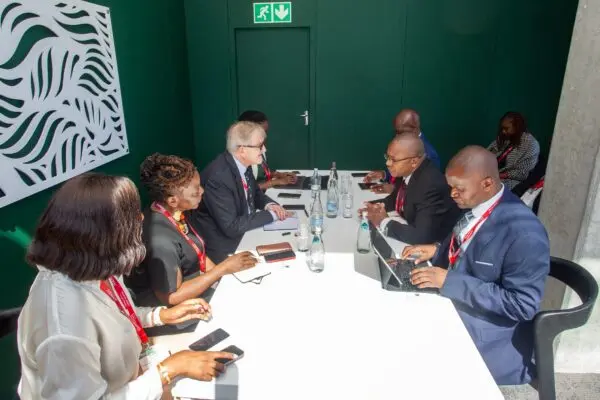
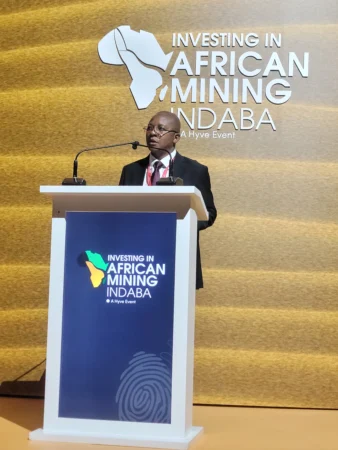
As Zimbabwe takes to the floor at Mining Indaba 2026, the country’s mining story is no longer framed solely by potential, but by credibility, consistency, and delivery. Global investors engaging with Zimbabwean delegates in Cape Town are asking more targeted, commercially grounded questions, reflecting a shift from curiosity to conditional confidence.

At the heart of these conversations is a clear theme: investors are no longer asking what Zimbabwe has, but how projects will be executed and under what terms.

Is Policy Stability Finally Taking Hold?

One of the most frequently raised issues is policy consistency. Investors are seeking reassurance that recent fiscal and regulatory stability, particularly around royalties, ownership structures, and capital expenditure allowances, will be maintained over the life of mining projects.

Zimbabwe’s decision to reverse proposed increases in gold royalties and preserve capital expenditure tax treatment has been closely noted. For long-term investors, these moves suggest a more consultative and investment-aware policy approach, easing concerns that rules could change mid-cycle.

Which Projects Are Truly Investment-Ready?

Global capital at Mining Indaba is increasingly disciplined, favouring projects with completed feasibility studies, clear permitting pathways, and realistic timelines. Investors are therefore pressing Zimbabwean companies to distinguish between aspirational projects and those that are genuinely bankable.

Gold, platinum group metals, and lithium projects are drawing the strongest interest, particularly assets with scale, long mine lives, and expansion optionality. Investors are also keen to understand where joint venture opportunities exist and how risk is being shared between local developers and capital partners.

How Are Power and Infrastructure Risks Being Managed?

Energy reliability remains a critical concern. Investors are asking detailed questions about power supply, backup systems, and long-term energy strategies, particularly for energy-intensive operations such as processing and beneficiation.

Zimbabwean operators are responding by highlighting investments in solar, hybrid power systems, and captive generation, alongside broader national efforts to stabilise the grid. The emphasis has shifted from reliance on public infrastructure to self-managed solutions that protect production continuity.

What Does Beneficiation Really Mean in Practice?

Beneficiation continues to be a key topic, but investors are now seeking clarity rather than resisting the concept outright. Questions focus on timelines, thresholds, and flexibility, specifically, whether beneficiation requirements will align with project economics and market conditions.

Zimbabwe’s messaging at Mining Indaba suggests a more phased and pragmatic approach, particularly for critical minerals such as lithium and platinum. This has helped temper concerns that value addition policies could undermine project viability.

How Are Governance and Transparency Improving?

Another recurring line of inquiry relates to governance, reporting standards, and compliance. Institutional investors, in particular, want assurance that Zimbabwean mining companies are strengthening internal controls, adopting international reporting frameworks, and improving transparency.

Recent moves toward independent audits, improved disclosure, and stronger corporate governance structures are being cited as evidence that the sector is aligning with global investor expectations.

Is Capital Protection Adequate?

Beyond returns, investors are asking how capital is protected. This includes questions around repatriation of profits, currency risk management, and legal recourse. Zimbabwe’s use of multi-currency systems and ongoing engagement with international financiers is being closely scrutinised as part of this assessment.

Clearer frameworks for profit remittances and foreign currency retention are helping address historical concerns, though investors continue to seek consistency in implementation.

From Perception to Engagement

Zimbabwe’s engagement at Mining Indaba 2026 reflects a notable shift. Rather than defending past challenges, delegates are increasingly focused on presenting solutions, structures, and data-backed project narratives.

For global investors, the questions being asked signal neither blind optimism nor outright scepticism but a willingness to engage, provided the fundamentals continue to improve. For Zimbabwe, the challenge now lies in converting these conversations into capital commitments, partnerships, and projects that move from the exhibition floor to production.

Gold buying prices in Zimbabwe per gram/ ounce, 16 January 2026

Gold buying prices in Zimbabwe per gram/ ounce, 16 January 2026, from the official gold buyer and exporter Fidelity Gold Refinery (FGR).

1 oz = 31.1035 g

CategoryPrice ($/g)Price ($/oz)
SG 90% and above140.084,357.73
SG 85% and above but below 90%138.604,311.71
SG 80% and above but below 85%137.124,265.68
SG 75% and above but below 80%135.644,219.66
Sample 5g and above but below 10g133.414,150.31
Fire Assay CASH140.824,380.75


Note: The Fire Assay cash price applies to gold above 100g, with no sample deduction.

A sample of not more than 10g is deducted for the Fire Assay Transfer price.

Caledonia Allocates US$162.5 Million Capex for 2026, Bilboes Mine Development at the Forefront

0

Victoria Falls Stock Exchange-listed gold producer Caledonia Mining Corporation plans to spend US$132 million in 2026 on the development of the Bilboes gold project, which, once operational, will become Zimbabwe’s largest gold mine, Mining Zimbabwe can report.

By Ryan Chigoche

This development comes as the company successfully met its production guidance for 2025, with Blanket Mine producing 76,213 ounces of gold, maintaining output in line with the previous two years.

The investment in Bilboes forms part of a broader US$162.5 million capital expenditure programme for 2026, which is subject to board approval and funding availability.

The project recently gained momentum after the government reversed proposals to double the gold royalty rate and change the tax treatment of capital expenditure, providing greater certainty for long-term investment.

Bilboes is expected to cost US$584 million in total, with production scheduled to begin in late 2028. The mine is forecast to reach a steady annual output of 200,000 ounces from 2029 for an initial period of 10 years.

Caledonia intends to fund the project through a combination of non-recourse senior debt, contributions from existing operations, and specialised financing methods such as metal streaming, where investors provide upfront cash in exchange for future metal supply.

Commenting on the company’s performance and future plans, CEO Mark Learmonth said:

“Blanket has once again delivered production in line with guidance, demonstrating the resilience and operational excellence of our team. Our 2026 budget reflects our commitment to sustaining Blanket’s operations while advancing growth projects at Bilboes and Motapa. These investments support long-term value, safety, and operational consistency for all our stakeholders.”

Alongside Bilboes, the remainder of the 2026 capital programme will support Blanket Mine and growth initiatives at Motapa, ensuring that current operations remain stable while the company pursues long-term expansion.

Sustaining capital of US$26.6 million is earmarked for Blanket, covering underground development, milling upgrades, infrastructure, safety initiatives, and business improvement projects. Growth capital of US$3.8 million is allocated to exploration at Motapa, while an additional US$11 million may be invested to address long-term power reliability issues that have affected Blanket’s operations.

By allocating capital to both growth projects such as Bilboes and sustaining investments at Blanket, Caledonia is ensuring that its existing operations remain stable while preparing for future expansion.

Meanwhile, Blanket Mine continues to serve as the backbone of the company’s production, producing 76,213 ounces of gold in 2025.

This met guidance and maintained output in line with the previous two years.

However, production in the fourth quarter was slightly lower at 17,367 ounces, compared with 19,841 ounces in Q4 2024, as reduced tonnages from higher-grade areas and electricity interruptions affected output.

Strong milling throughput, however, helped mitigate some of the pressure from the lower grades.

Looking ahead, Blanket’s 2026 production guidance is 72,000 to 76,500 ounces, with higher output expected in the second half of the year as additional high-grade zones come online.

On-mine cash costs are projected at US$1,500 to US$1,700 per ounce, while all-in sustaining costs are expected to range from US$2,100 to US$2,300 per ounce. The increase reflects inflation, higher labour and consumable costs, and ongoing investments in operational reliability, safety, and risk management.

Caledonia’s 2026 plans highlight a clear strategy of maintaining reliable production at Blanket while building future growth through Bilboes and Motapa, reinforcing Zimbabwe’s position as a leading gold producer in Southern Africa.

ZMF Announces Strategic Audits for Transparency and New Border Processing Plants

0

In an effort to reinforce accountability and boost production, the Zimbabwe Miners Federation (ZMF) will introduce mandatory independent financial audits and establish strategic cluster processing plants along the country’s mining borders, Mining Zimbabwe can report.

By Rudairo Mapuranga

This dual initiative was announced by Treasurer General Prosper Shumba at the ZMF 2026 Strategic Meeting, marking a definitive shift in the federation’s operations.

He presented a comprehensive budget statement, framing it as the first step toward a “new era of financial transparency.”

To cement this commitment, Shumba declared that the ZMF will now publish annual budgeted financial statements audited by a firm registered with the Institute of Chartered Accountants of Zimbabwe (ICAZ).

“We are committed to a new standard of governance,” he stated, emphasising that this move ensures the highest level of integrity and accountability to members and the public.

Concurrently, the federation unveiled a major industrial strategy: the creation of cluster mining central processing plants. These facilities, to be established along all borders, are designed to dramatically increase national gold output by formalising and capacitating artisanal and small-scale miners.

The project will provide funding, technical expertise, and mechanisation support to miner clusters.

In return for this support, the ZMF and its investment partners will secure exclusive gold-buying agreements.

“We want to mitigate gold losses that may happen or that may go into illicit marketing,” Shumba explained, highlighting the strategy’s aim to secure the value chain.

Addressing a critical barrier to growth, Shumba also proposed the innovative concept of a Miner’s Bank. This institution would depart from traditional collateral-based lending, instead using mineral assets as the basis for funding projects.

“This bank will only take minerals, not dollars,” he said, arguing that this model would finally provide miners with capital matched to their project’s potential.

Together, the enforceable transparency of mandatory audits and the strategic rollout of border processing plants represent a cohesive plan by the ZMF to build trust and drive tangible, structured growth within Zimbabwe’s pivotal mining sector.

Zimbabwe Backs Karo Platinum as Signature Mining Project with Full Government Support

0

The Government of Zimbabwe, through the Ministry of Mines and Mining Development, has pledged continued fiscal and policy support to the Karo Platinum Project to ensure its success, hailing it as a signature investment, Mining Zimbabwe can report.

By Ryan Chigoche

The pledge was made by the Minister of Mines and Mining Development, Dr Polite Kambamura, during his tour of the rapidly developing first phase of the Karo Platinum Project.

The Karo Project was established in 2018 after the developer secured land and commenced work on the site.

Since its inception, the project has progressed through extensive exploration and early-stage development, including approximately 90,000 metres of drilling, which confirmed the viability of the platinum resource and supported the transition into construction.

Speaking at an event marking his first ministerial tour, Dr Kambamura, pledging continued support, said the Government views Karo Platinum as a flagship investment, which speaks volumes about the long-term potential of the project.

“This is one of the signature projects. The government has been in full support of this project. They have received fiscal incentives throughout the project, and we are further supporting them by giving them incentives so that this project becomes a resounding success,” Kambamura said.

In line with this support, the project is already benefiting from a range of fiscal incentives, including duty-free importation of capital equipment and approval to establish a bonded warehouse on site, sanctioned by the Ministry of Finance.

On the ground, construction milestones have already been achieved. Civil works at the project are now complete, with earthworks, engineering and construction executed to specification. While project designs were developed outside the country, all civil works were implemented locally by Zimbabwean contractors.

Kambamura said the successful delivery of the civil works by local firm Masimba Construction demonstrates Zimbabwe’s growing technical capacity in large-scale mining infrastructure.

“One thing to highlight is that all the civil works here were done by Zimbabweans,” he said. “Just imagine the design being done in South Africa and implemented in Zimbabwe by Zimbabweans, not by the company that designed it. The level of tolerance and accuracy was 100 per cent. We are excited about the level of expertise, the talent and the intellect in the country.”

Beyond completed civil works, development at Karo Platinum is continuing, with mining and construction activities set to run in parallel ahead of production.

As part of this phase, the project will undertake waste stripping to expose ore bodies and prepare for mining operations.

Looking ahead, the project is targeting the first half of 2027 for the commencement of full-scale production.

With an estimated life of mine exceeding 50 years, Karo Platinum is positioned as a long-term operation expected to contribute to Zimbabwe’s platinum sector for generations.

The mine will initially operate as an open-pit operation for the first 10 years, before transitioning to underground mining.

Once fully operational, the project is expected to employ about 1,000 people directly, while current development activities are supporting an estimated 8,400 indirect jobs.

In a rallying call to investors, Dr Kambamura said the scale, longevity and progress achieved at Karo Platinum demonstrate the type of long-term, large-scale investment the Government is keen to support, adding that the project should serve as a benchmark for other potential investors.

Zimbabwe Posts Record US$16bn in Forex Inflows as Mining Drives Exports

0

Zimbabwe generated its highest foreign currency earnings since independence after raking in more than US$16 billion in 2025, with mining once again anchoring the country’s export performance, Mining Zimbabwe can report.

By Ryan Chigoche

The milestone reflects a sharp rise in foreign currency inflows over the past few years. In 2017, Zimbabwe earned about US$5,5 billion, while receipts stood at US$13,3 billion in 2024.

Figures from the Reserve Bank of Zimbabwe (RBZ) show that total foreign currency receipts climbed to US$16,2 billion in 2025, representing a 21,8 percent increase from the previous year and the highest level ever recorded.

The improved outturn was largely driven by export growth, with mineral exports—particularly gold—accounting for the bulk of foreign currency inflows. Gold prices hit historic highs in 2025, peaking at US$4 379,13 per ounce in October, according to global spot price data.

The elevated price environment boosted the value of mineral exports, strengthening the contribution of gold deliveries to Zimbabwe’s foreign currency earnings.

Foreign currency inflows have followed a steady upward trajectory in recent years, rising from about US$11 billion in 2023, as export volumes expanded and output stabilised, particularly in the mining sector.

In its quarterly update on monetary, currency and financial developments, the RBZ said export earnings remained the dominant source of foreign currency, accounting for an average of 59,7 percent of total inflows in 2025.

Loan proceeds contributed 14,8 percent, while diaspora remittances accounted for 13,5 percent.

“The resilience in the country’s foreign currency generation capacity resulted in an increase of 21,8 percent to US$16,2 billion in 2025 from US$13,3 billion in 2024,” the central bank said.

More recent trade data points to continued momentum. Figures from the Zimbabwe National Statistical Agency (ZimStat) show that Zimbabwe earned more than US$1 billion in export revenue in November 2025 alone, marking the second consecutive month of record-high monthly export earnings.

The ZimStat data shows that exports remain concentrated in a few high-value commodities, with mineral products dominating the basket.

Semi-manufactured gold accounted for 42,4 percent of total exports during the month, reinforcing its position as the country’s single largest foreign currency earner.

Nickel mattes contributed 17 per cent, while industrial diamonds accounted for 13,2 percent and ferro-chromium 7 per cent.

Taken together, mineral exports accounted for the majority of export earnings during the month, underlining sustained global demand for Zimbabwe’s mineral output.

Tobacco accounted for 23,7 percent of exports, while coke and other products contributed smaller shares, highlighting the continued importance of both mining and agriculture in supporting export revenues.

Overall, mining and agriculture remain the backbone of Zimbabwe’s external trade, with minerals continuing to anchor foreign currency inflows.

Looking ahead, the RBZ expects foreign currency receipts to remain firm in 2026, supported by favourable global prices for key export minerals, higher output levels, and continued growth in diaspora remittances.

Gold remained the single largest contributor to foreign currency inflows over the year, buoyed by strong international prices and increased deliveries from both large-scale and small-scale producers.

Other strategic minerals, including lithium, platinum and chrome, are also expected to continue supporting export growth, driven by demand from electric vehicle supply chains and global manufacturing.

Gold buying prices in Zimbabwe per gram/ ounce, 15 January 2026

Gold buying prices in Zimbabwe per gram/ ounce, 15 January 2026, from the official gold buyer and exporter Fidelity Gold Refinery (FGR).

1 oz = 31.1035 g

CategoryPrice ($/g)Price ($/oz)
SG 90% and above139.954,353.96
SG 85% and above but below 90%138.474,307.90
SG 80% and above but below 85%136.994,261.85
SG 75% and above but below 80%135.514,215.79
Sample 5g and above but below 10g133.294,146.72
Fire Assay CASH140.694,376.99


Note: The Fire Assay cash price applies to gold above 100g, with no sample deduction.

A sample of not more than 10g is deducted for the Fire Assay Transfer price.