Home Blog Page 172

AMSZ to Attend Mine Entra to Enhance Collaboration and Industry Alignment

0

One of the biggest professional mining organisations, the Association of Mine Surveyors of Zimbabwe (AMSZ) will attend this year’s Mining, Engineering, and Transport Expo (MineEntra) as part of its agenda to collaborate with the industry and align with government objectives for economic development, Mining Zimbabwe reports.

AMSZ spokesperson Stewart Gumbi confirmed the association’s plans to participate in MineEntra. As Zimbabwe’s premier mining trade exhibition, MineEntra is a key platform for industry professionals to connect, collaborate, and align with the sector’s evolving demands. AMSZ sees the event as a critical opportunity to expand its network, engage with new technologies, and explore areas for professional growth.

According to Gumbi, AMSZ is attending MineEntra with clear goals in mind:

“We aim to collaborate with other associations to improve ourselves as surveyors, explore market opportunities, and align with the country’s objectives for economic prosperity,” he said.

For AMSZ members, the expo offers a space to exchange ideas, share best practices, and gain insights from counterparts within the mining community. By connecting with other professionals, AMSZ hopes to foster a stronger collaborative environment that benefits not only surveyors but the mining sector as a whole.

At MineEntra, AMSZ members will also have the chance to familiarize themselves with the latest innovations and industry trends. With the increasing need for accuracy and efficiency in surveying operations, exposure to advanced technology is essential for staying competitive and effective in their roles. The association believes that understanding these developments will better equip Zimbabwean surveyors to contribute to national objectives, particularly in advancing mining’s role in economic development.

Furthermore, AMSZ’s engagement at MineEntra aligns with its mission to advocate for high standards in mine surveying practices. The association remains committed to ensuring that its members operate with the highest levels of expertise, integrity, and adherence to global standards.

Mines Losing Half of 25% ZiG Export Proceeds to Exchange Rate Disparities

0

Mining companies are losing half of their 25% local currency surrender portion due to exchange rate disparities, according to the 2025 Mining Industry Prospects report, which incorporates findings from the State of the Mining Industry Survey.

By Rudairo Mapuranga

The report highlights that the 25% local currency surrender portion is converted at the official exchange rate, while actual input costs are based on the parallel market rate, often double the official rate. This mismatch in rates creates a significant financial loss for mining companies, effectively acting as a tax on exporters’ gross proceeds.

“Survey findings show that respondent mining executives were losing almost half of their mandatory 25% surrender portion of export proceeds due to exchange rate disparities. They further indicated that the 25% surrender portion is liquidated at the official exchange rate, while actual input costs are valued at the parallel market rate, which in some instances is double the official rate. The loss arising from the parallel market premiums is a direct cost and is akin to a tax on exporters’ gross proceeds,” the report states.

Protecting miners from such losses due to unstable monetary policies is crucial, as these policies expose them to foreign exchange risks.

The current 75/25 foreign currency retention policy hinders mining sector growth, failing to meet demands for an 80% retention rate, which would better support miners’ sustainability.

The impact of reduced forex retention goes beyond monetary policy, affecting various economic sectors. Limited foreign currency availability can restrict import-dependent industries, leading to supply shortages and price increases. Furthermore, the depreciation of the ZiG against major currencies can erode purchasing power and reduce consumer confidence.

To address these challenges, the government must pursue a balanced approach that tackles immediate issues while implementing long-term structural reforms. Enhancing export competitiveness and fostering a conducive business environment is essential for the mining sector’s resilience and growth.

Local Manufacturing Sector Contributing Only 15% to the Mining Sector – Chamber

0

The local manufacturing sector is contributing just 15% to the mining sector. The Chamber of Mines Zimbabwe (CoMZ)’s 2023 State of Mining Industry Survey revealed that out of the US$5.4 billion in revenue generated, approximately US$2.1 billion was spent on suppliers. However, only 15% of that expenditure went to local suppliers, with the bulk directed towards imports.

By Ryan Chigoche

Local manufacturers in Zimbabwe are predominantly small-scale, often characterized by limited resources and capacity. Many of these businesses struggle to compete with larger firms and foreign imports due to outdated technology and machinery. Operating with obsolete equipment not only hampers their efficiency but also affects the quality of their products, making it difficult to meet the standards required by the mining sector.

Additionally, these manufacturers face challenges such as lack of access to financing, which limits their ability to invest in modernization or expand their operations.

Speaking at the Mine Entra 2024 Mine Industry Suppliers Forum this morning, CoMZ CEO Isaac Kwesu acknowledged the various challenges local suppliers face but called on them to offer cost-competitive and quality products.

“I’m fully aware that this meeting comes at a time when our suppliers are facing several challenges, chief among them foreign currency shortages, high cost structures, and competition from imports. This situation has limited the capacity of local suppliers to meet mining companies’ demands. To enhance local content in the mining industry, suppliers should continue to strive to improve the quality of products, as well as cost and delivery lead times, to tap into this huge opportunity,” Kwesu said.

Kwesu added that the Chamber is actively engaging authorities to resolve all the bottlenecks currently affecting suppliers and the mining industry at large.

“We have also taken a deliberate approach to enhance local content in the mining industry,” he stated.

Also speaking at the forum, the Permanent Secretary in the Ministry of Industry and Commerce, Thomas Wushe, emphasized the need for a proper legal framework for the local content strategy to succeed, highlighting the importance of focusing on the mining sector.

“Mining is the leading GDP earner, so we must focus on this important sector, implementing the knowledge that we have as a country. For the local content strategy to be successful and improve from the current 15%, there is a need for a proper legal framework. However, before we implement the policies, local suppliers must also be ready for the amount of work that will be coming their way. Banks must also play their part and support the sector,” Wushe said.

The Chamber recognizes the importance of suppliers in the mining value chain and continues to lead efforts to promote the use of local factors of production.

In this drive, the Chamber has a JSP Committee that spearheads the strengthening of linkages between suppliers and the mining sector. To date, they have achieved key milestones currently being implemented by mining houses through Local Enterprise Development (LED) and supplier development programs.

The committee consists of representatives from manufacturing companies, including the Confederation of Zimbabwe Industries (CZI), Zimbabwe National Chamber of Commerce (ZNCC), and the Bankers Association of Zimbabwe (BAZ), as well as suppliers of other services and procurement executives from mining companies.

The Chamber is also working closely with the government to align mining industry initiatives with the country’s local content strategy through the Local Content Implementation Framework adopted by the government last year.

Additionally, the Chamber has submitted proposals to the Draft Economic Empowerment Bill, which is closely linked to the local content strategy, with proposals focused on local content and community development.

The suppliers forum was held under the theme “Maximizing Contribution to the Mining Industry Through Local Content.

The purpose of the forum was to enhance linkages between mineral producers and the upstream sector, which remains a critical component of the mining industry value chain.

Power Outages, High Taxes, High Operational Costs a Headache for Miners

0

As Zimbabwe’s mining sector faces an increasingly challenging landscape, rising operational costs, power outages, and high taxes continue to constrain its potential, Mining Zimbabwe reports.

By Rudairo Mapuranga

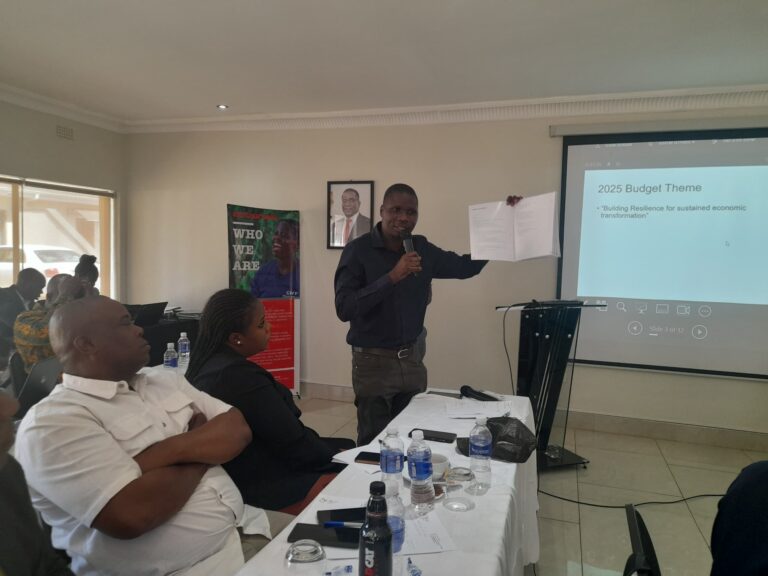
Speaking at a recent Pre-Budget Capacity Building Workshop for the Parliamentary Portfolio Committee on Mines and Mining Development, held at the Bulawayo Rainbow Hotel, Chamber of Mines President Thomas Gono highlighted the sector’s urgent need for solutions.

“Our industry is bearing the brunt of operational difficulties, from high electricity tariffs to extensive power outages, which are impacting productivity,” Gono said.

The workshop, designed to provide insights ahead of the 2025 National Budget Consultation, included an overview of mining performance, a detailed review of the mining fiscal framework, and proposals from the Chamber of Mines for the upcoming budget.

The program covered a range of critical issues, including mineral export performance and policy recommendations to mitigate operational burdens and enhance the mining industry’s economic contributions.

According to Gono, despite the sector’s potential, Zimbabwe’s miners are weighed down by systemic challenges. He expressed the Chamber’s commitment to working with the committee to establish effective solutions.

“Our collaboration here is essential for the development of proactive policies that will enable the mining industry to reach its full potential,” he said.

Despite its importance, the mining industry operates under strenuous conditions, facing significant power shortages and inflated infrastructure costs, particularly for electricity, fuel, and financing. Reflecting on the sector’s first-half performance in 2024, Gono reported declines in output across major minerals, with lithium and diamonds down by 9%, coal by 26%, and gold by 6%. Mineral exports also fell to $2.6 billion from $2.7 billion last year.

Although improvements in the commodity market are anticipated by late 2025, with many companies planning to scale up production, Gono noted that immediate intervention is necessary to address the current challenges. If favorable conditions prevail, mineral exports could reach $6 billion in 2025, generating an additional $1 billion in revenue.

Among the challenges cited by Gono were foreign currency shortages, unfavorable commodity pricing, and high operational costs.

“The difference between the official exchange rate and the black-market rate continues to affect the real value of our exports.” He explained that while miners liquidate proceeds at the official rate, local suppliers often charge at market rates, resulting in significant revenue loss for the industry.

The Chamber has been actively engaging with the government to align currency policies to meet industry needs, especially in light of the high demand for goods and services within the sector.

Gono called for fairer foreign currency allocations, emphasizing the importance of addressing this shortfall to maintain mining productivity and profitability.

High Taxation and Royalties

The industry’s financial burden is compounded by high tax rates, particularly on platinum and diamonds. Gono pointed out the industry’s concern over a retrospective special capital gains tax, which has hindered exploration projects.

“The tax framework needs to be equitable and aligned with best practices if we are to attract investment and foster growth in the mining sector,” he stated.

Power Supply Constraints

Power shortages, exacerbated by reduced hydroelectric generation, have worsened in recent months. Gono highlighted the severe impact on operations, with some mining companies facing outages of up to 14 hours daily. He assured the workshop attendees that the Chamber of Mines is actively working with the government to explore alternative energy solutions.

“Our members need a stable power supply to maintain and increase production. We must look at new energy sources and negotiate for more affordable tariffs,” Gono said.

Gono also highlighted funding issues within the mining sector, citing delays in project completion as companies are often required to use retained earnings for capital projects. He described the challenges in securing offshore funding as “a bottleneck to industry growth and expansion.” These funding constraints hinder the timely execution of capital-intensive projects critical to achieving national production goals.

Legislative and Policy Developments

Progressive legislation remains central to the sector’s growth, with the amendment of the Mines and Minerals Act expected to create a more competitive regulatory environment. Gono called on the government to fast-track the development of a community empowerment framework in line with the Indigenisation and Economic Empowerment Act.

“Investor confidence and increased capital inflows hinge on clear, efficient policies,” he remarked, emphasizing that legislative alignment is vital to attracting greater investment.

ZimAlloys Introduces Third-Party Lumpy Consolidation Program, Aims to Empower Artisanal Miners

0

Kuvimba Mining House (KMH)-owned Zimbabwe Alloys (ZimAlloys) continues to strengthen its position as a key player in the ferrochrome industry by launching a third-party lumpy consolidation program that seeks to integrate and empower small-scale and artisanal miners, Mining Zimbabwe can report.


By Rudairo Mapuranga


ZimAlloys Managing Director, Deric Dube, has emphasized the importance of collaboration with artisanal miners as a critical component of the company’s operations. The third-party lumpy consolidation program is designed to support small-scale miners by ensuring they receive fair returns for their contributions, while also helping ZimAlloys sustain its production targets.


“We actually try to coexist with our artisanal miners. There isn’t a single operation in Zimbabwe, whether in gold, chrome, lithium, or any other mineral, that doesn’t have an artisanal mining footprint. Instead of fighting that community, there is a method to engage them and ensure maximum benefit for both parties,” Dube said.


He further explained that the program allows ZimAlloys to aggregate production from smaller mining operations, consolidating material into larger volumes that contribute significantly to the company’s output.


“One of the initiatives my executive assistant runs is called the third-party lumpy consolidation programme, which supports small-scale miners. It ensures they receive profitable returns for their hard-earned work, allowing them to sustain their livelihoods. The importance of their existence comes from the fact that most of them probably operate on third-party private claims,” Dube added.


The third-party lumpy consolidation program not only fosters cooperation between ZimAlloys and artisanal miners but also helps bridge the gap between large-scale operations and smaller mining ventures. Artisanal miners, according to Dube, play a pivotal role by meeting specific production quotas, contributing approximately 20 percent of ZimAlloys’ monthly production.


“Small-scale miners primarily seek rapid cash flows and immediate payment for their material. Handling 200 to 300 tonnes is already a significant task for them. However, they create the critical mass required for us to maintain our daily operations. By consolidating 15 to 20 of their operations, providing 200 tonnes per month each, we can gather 1,500 to 3,000 tonnes per month, empowering that community to become self-sustaining,” Dube explained.


ZimAlloys’ third-party lumpy consolidation program is expected to strengthen ties with artisanal miners and improve overall production efficiency, making it a key aspect of the company’s long-term strategy in the ferrochrome sector.

Building a Just Framework: Key Lessons for Mining Displacement and Resettlement

0
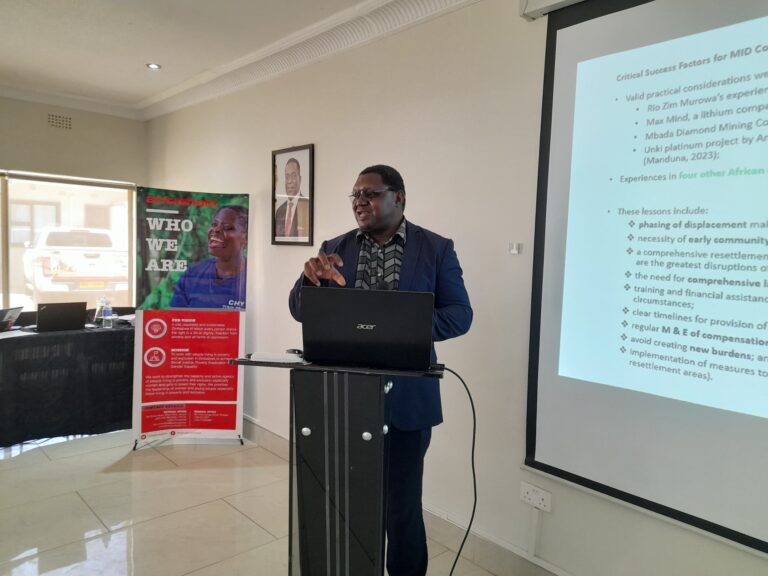
Mining displacement and resettlement are pressing issues within Zimbabwe’s mining sector, affecting the livelihoods and social fabric of communities situated near mining sites, many communities have been impacted by displacements, with the majority expressing dissatisfaction with the way they were relocated, Mining Zimbabwe can report.


By Rudairo Mapuranga


At the recent Civil Society Organisations (CSOs)-Parliament Indaba in Kwekwe—organized by the Zimbabwe Environmental Law Association (ZELA) and ActionAid Zimbabwe—stakeholders from various sectors, including parliamentarians, gathered to discuss establishing equitable practices for displacement and resettlement in mining communities. The gathering highlighted the critical need for a framework that safeguards the rights of displaced communities and promotes sustainable resettlement practices.


In his presentation,  Lyman Mlambo, a mineral economics lecturer at the University of Zimbabwe, emphasized the importance of building a framework that is transparent, fair, and inclusive.


“Communities deserve a voice in shaping their future and determining how their relocation is managed,”  Mlambo stated.


He underscored the need for inclusive consultations with affected communities to ensure their rights and livelihoods are adequately protected during resettlement.


According to  Mlambo, effective displacement strategies should provide more than just basic compensation; they should focus on sustainable livelihood options that enable communities to thrive after relocation.


“For resettlement policies to be meaningful, they must empower people to rebuild their lives, not simply move them from one place to another,” he added, noting the need for a legal framework to hold mining companies accountable and build trust with communities.


Around the world, countries have implemented frameworks that respect the rights of displaced communities while balancing the needs of the mining sector. Such examples offer Zimbabwe valuable lessons as it seeks to improve its own approach. Notably, adopting best practices—including fair compensation, transparent processes, and sustainable livelihood programs—can provide a solid foundation for Zimbabwe’s mining sector.


Mlambo referenced these global models, suggesting that Zimbabwe could similarly benefit from a structured approach to mining-induced displacement.


“Learning from international frameworks, Zimbabwe can develop policies that serve both the interests of affected communities and the economic priorities of the nation,” he explained.


In countries with strong frameworks, mining companies are required to ensure comprehensive support for displaced communities. These policies often include fair compensation, legal recourse, and livelihood restoration, fostering trust and collaboration while reducing conflicts between mining operations and communities.


For Zimbabwe to establish a just and transparent framework, stakeholders from the government, mining companies, and civil society must work together on policy development. Mlambo stressed the need for legislation mandating fair compensation and responsible resettlement practices, advocating for policies that protect communities’ social and economic rights.


Zimbabwean communities affected by mining displacement have historically faced inadequate compensation and relocation arrangements that disrupt their livelihoods. Addressing this,  Mlambo proposed policies that ensure compensation covers not only physical assets but also loss of income and disruption to social networks.


“True compensation should account for all facets of a person’s life—physical, economic, and social—so they can genuinely rebuild,” he stated.


As Zimbabwe develops a framework for mining displacement, prioritizing community involvement and learning from international best practices are essential. This approach could pave the way for a mining sector that values social equity while contributing to sustainable economic development.


MineEntra Propel Technological Advancements in Mining

0

The Zimbabwe International Trade Fair (ZITF) is optimistic that this year’s MineEntra technology showcase and concurrent events will significantly enhance efforts to grow Zimbabwe’s mining industry.


By Ryan Chigoche


The exhibition will feature cutting-edge technologies, including remote sensing, AI-powered geological modeling, automation, and robotics, aimed at improving extraction methods. These innovations are pivotal in revolutionizing the mining sector by increasing precision in resource extraction and optimizing operational workflows. For example, AI-powered geological modeling can analyze vast amounts of geological data quickly, enabling better-informed decisions on where to invest resources for maximum yield.


The mining sector is central to the country’s goal of achieving upper middle-income status by 2030. ZITF Public Relations Manager Doreen Dzamatira emphasized the significance of the technologies to be showcased, stating, “The exhibition will showcase advanced exploration and mineral processing techniques. These innovations can significantly improve decision-making processes in exploration and resource management.”


She added, “Moreover, the exhibition will include conference presentations that facilitate knowledge sharing and networking among industry experts, researchers, and technology providers.” This collaborative environment fosters partnerships that can accelerate the adoption of innovative solutions throughout the mining value chain. Overall, the advancements at Mine Entra 2024 are expected to drive significant improvements in both efficiency and sustainability within the mining industry.


“These innovations aim to boost operational efficiency, reduce costs, and align with Environmental, Social, and Governance (ESG) principles by enhancing safety and minimizing waste.” Such a focus on ESG compliance is increasingly critical in today’s mining operations, where stakeholders demand more sustainable practices.


Advancements such as predictive analytics and Internet of Things (IoT) sensors enable real-time monitoring of equipment and environmental conditions, significantly enhancing maintenance schedules and reducing downtime. For instance, IoT devices can track machinery performance, predicting failures before they occur, which allows for timely interventions that minimize operational interruptions.


Automation in drilling and hauling processes not only increases productivity but also creates safer working environments by reducing human exposure to hazardous conditions. Autonomous vehicles, for example, can operate in high-risk areas, performing tasks like hauling and drilling without putting workers at risk.


The event will officially open tomorrow, inaugurated by President Emmerson Mnangagwa on Thursday. Concurrent events, including the Mining Industry Suppliers Forum, Mine Entra Conference, and ZMF Small-scale and Artisanal Miners Conference, will facilitate insightful discussions among industry stakeholders, including miners and potential investors. These forums will explore how technology can streamline supply chains and enhance collaboration among different players in the sector, with discussions potentially focusing on how digital platforms can connect miners with suppliers to make procurement processes more efficient.


This year’s exhibition operates under the theme: “Unearthing Success: The Mining Value Chains, Innovation, and Industrialisation Nexus,” underscoring the critical interplay between mining, technology, and industrial growth. This theme reflects the need for a holistic approach that integrates technological innovation at every stage of the mining value chain.


With more than 250 exhibitors, including 19 international participants already registered, this year’s event highlights its significance in the region’s mining landscape. This diverse representation underscores global interest in Zimbabwe’s mining potential and the vital role of technology in enhancing its viability.


Mine Entra is Zimbabwe’s premier platform dedicated to the mining sector, bringing together industry stakeholders including mining companies, equipment manufacturers, and service providers to showcase the latest innovations and technologies.


The exhibition aims to facilitate partnerships, promote best practices, and enhance business opportunities in the mining industry. With a focus on value chains and industrialization, Mine Entra plays a vital role in driving the growth and development of Zimbabwe’s mining sector, positioning it as a key player in the regional and global mining landscape.


As technology continues to advance, its integration into the mining sector will not only boost efficiency but also foster a culture of innovation that aligns with global sustainability standards. The upcoming Mine Entra exhibition is poised to be a transformative event for the industry, setting the stage for a future where Zimbabwe’s mining sector can thrive in a competitive global market.


ZELA Designs Toolkit for Parliamentarians

0

The Zimbabwe Environmental Law Association (ZELA) has developed and published a toolkit aimed at equipping lawmakers with resources to pose relevant questions and draft motions in Parliament focused on natural resource governance, Mining Zimbabwe can report.


By Rudairo Mapuranga


ZELA’s toolkit serves as a timely resource to enhance legislative oversight of natural resource management, promoting transparency and accountability in Zimbabwe’s extractive industries.


Speaking on Saturday at the 2024 Civil Society Organisations (CSOs)-Parliament Indaba, organized by ZELA and ActionAid, Chiremba highlighted the event’s theme: “Positioning CSOs’ Submissions into the 2025 National Budget on Domestic Resource Mobilization (DRM) Strategies and Responsible Mining Standards in the Mining Sector.”


Tafara Chiremba, a representative from ZELA, outlined the toolkit’s purpose and scope, stating that it covers issues related to natural resource governance.


“Just to give you an overview, some of the topics we’ve been discussing from day one are actually included in this publication. Additionally, we have provided legal and policy questions that MPs should consider asking in Parliament based on current issues in the natural resource sector. One of the contributors to this toolkit is Dr. Tsabora, our technical advisor, who contributed significantly to this publication,” he said.


Chiremba further elaborated on the toolkit’s sections, noting that it includes essential guidance on motion drafting for issues related to natural resource governance.


“Since raising critical motions in Parliament is one of your areas of focus, we’ve included preliminary guidance on motion drafting, along with principles to help you in raising motions related to natural resource companies,” Chiremba said.


According to Chiremba, the toolkit also provides sample motions addressing various natural resource issues, which MPs can adapt and present in Parliament.


“These examples can be refined with additional information before being presented in Parliament,” he added, emphasizing the toolkit’s utility.


YMF Encourages ASM to Adopt Artificial Intelligent to Improved Workplaces

0

The Youth Mining Foundation (YMF) has urged artisanal and small-scale miners (ASM) in Zimbabwe to adopt the use of artificial intelligence in their operations as a means to improve working conditions and enhance their livelihoods.


By Patricia Rwafa


Speaking at the SMEs International Expo 14th Edition Conference at Monomutapa Crown Hotel on the 4 October, Payne Farai Kupfuwa, CEO of the Young Miners Foundation, argues that scale miners should adopt Artificial intelligence for better lives in Artisanal Mining.


He emphasized that Artificial intelligence is a driving force for innovation in the mining industry. By incorporating automation, artificial intelligence, and information technology, mining operations can reduce costs, increase productivity, and enhance safety.


Additionally, technological solutions can help minimize environmental impacts and optimize resource utilization. AI-powered analytics offer valuable insights to support informed decision-making, further contributing to the overall improvement of the mining sector.


”The self-driving vehicles, robotic drilling, and autonomous maintenance reduce human involvement in hazardous tasks, improving safety. The continuous operations and reduced downtime lead to higher productivity and lower costs”.


”The AI analyzes data to improve decision-making, predict equipment failures, and enhance resource management. Hence AI-powered systems can monitor worker safety and detect potential hazards such as accidents in the artisanal mine sector”.


He added that the Internet of Things (IoT) includes IoT sensors and AI to enable predictive maintenance, reducing downtime and costs. IoT provides real-time data for operational oversight and compliance. These Internet of Things sensors can also help to predict where the gold is in the mine.


” Drones create detailed maps for exploration, planning, and monitoring.

They can also help assess environmental impacts and ensure compliance with regulations and security reasons”.


”The 3D mapping provides better visualization of mining sites, while 3D printing enables on-site parts manufacturing. These 3D technologies streamline processes and allow for customized tools and equipment”, he said.


RBZ implored to shore up gold reserves as the current 2.5 tonnes insufficient to fully back ZWG currency

0

In order to fully support the recently devalued Zimbabwe Gold ( ZWG) currency analysts have implored the authorities to shore up the reserves as the current gold reserves of 2.5 tonnes are not sufficient to fully back the troubled local currency, Mining Zimbabwe can report.


By Ryan Chigoche


In an unsettling turn of events, Zimbabwe’s gold-backed currency, established recently in April, experienced a 44% devaluation last week, amid rising market pressure on the Reserve Bank of Zimbabwe (RBZ) to adopt a more realistic exchange rate. The steep decrease has created severe concerns about the currency’s stability and trustworthiness, particularly when world gold prices have risen significantly.

The Zimbabwe Gold (ZWG) currency has devalued despite rising gold prices the ZIG had plummeted by more than 80% in value on the black market. In contrast, the gold backing this currency has seen significant price increases After hitting a historic high of US$2,480 per ounce in July, gold set a new record at US$2,530 (US$90 per gram) on August 20.


Economists have expressed skepticism, pointing out that while the ZIG was supposed to be gold-backed, its value has fallen even as gold prices rise. This disconnect with gold prices has raised concerns over the actual backing of the currency and whether its promise of stability, tied to gold, can hold up under the current economic conditions.


Commenting on the development investment analyst Takudzwa Kudenga said the reserves are insufficient to support a fully backed gold-backed currency as he edged the authorities to adjust policy surrounding the currency or shore up the gold reserves, although challenging.


”With only 2.5 tonnes of gold and total reserves of US$370 million, Zimbabwe’s current reserves are insufficient to back a fully convertible gold-backed currency in any meaningful way. This would severely limit the country’s monetary flexibility, increase vulnerability to economic shocks, and potentially lead to a crisis of confidence in the currency. To successfully implement a gold-backed currency, Zimbabwe would need to accumulate significantly more reserves or redefine the scope of its gold-backing strategy,”


”Given the limitations of the current gold reserves, Zimbabwe may have to adjust its gold-backed currency policy. This could involve limiting the scope of gold convertibility (e.g., only offering gold-backed digital tokens rather than physical currency convertibility) or pursuing efforts to accumulate more gold reserves, though that would be a significant challenge” Kudenga said.


Renowned economist Gift Mugano commenting on the same development concurred with Kudenga arguing that Zimbabwe lacks the foreign reserves necessary to support a floating exchange rate and the ZWG.


Since late 2022, miners have been required to pay part of their royalties to the state in both commodities and cash to help bolster reserves. Through Statutory Instrument 189 of 2022, the government mandated that mineral royalties, including those from gold, diamonds, and platinum, be paid partly in kind and partly in monetary form.


Amid the currency conundrum Minister of Finance and Investment Promotion Mthuli Ncube this Wednesday addressing journalists in Mt Hampden maintained that the local currency was indeed backed by gold but surprisingly said the currency wasn’t fixed to gold.


However when the currency was introduced was introduced in April 2024, the government touted it as a currency backed by gold reserves, claiming this would make it resistant to exchange rate fluctuations. These recent statements by Ncube have cast doubt on this assertion, echoing past instances where government promises about currency stability have fallen short.


 The Reality of Gold-Backed Currencies

The concept of gold-backed currencies has gained renewed interest in recent years, especially as concerns about inflation and fiat currency stability grow. For a currency to be genuinely considered gold-backed, several key conditions must be met:


Establishment and Maintenance of a Fixed Exchange Rate

A fundamental requirement for a gold-backed currency is the establishment of a fixed exchange rate between the currency and gold. This means that a specific amount of currency is directly tied to a specified weight of gold, creating a stable and predictable value. Maintaining this fixed rate is crucial; any fluctuations can undermine trust in the currency. It necessitates careful management by the issuing authority, which must be prepared to intervene in the market to uphold the peg, especially in times of economic instability or sudden changes in gold prices.


Sufficient Gold Reserves

The issuing authority must possess adequate gold reserves to fully back the currency in circulation. This involves not only having enough physical gold to match the amount of currency issued but also ensuring that these reserves are securely stored and regularly audited. Transparency regarding gold reserves is essential to maintain public confidence. If the public perceives that the gold reserves are insufficient or not properly managed, it can lead to a loss of trust in the currency, potentially resulting in currency devaluation or a run on the currency.


Mechanism for Exchange


A viable gold-backed currency must include a clear mechanism for currency holders to exchange their notes for gold at the established fixed rate. This feature is critical for ensuring liquidity and allowing individuals to convert their currency into a tangible asset. The process should be straightforward and accessible, fostering confidence among users that they can redeem their currency for gold whenever they choose. This might involve designated banks or institutions where exchanges can be made, along with clear regulations governing how the exchange process works.


Market Confidence and Adoption

Ultimately, the success of a gold-backed currency hinges on market confidence and widespread adoption. For individuals and businesses to use such a currency, they must believe in its stability and value. This requires effective communication from the issuing authority about the currency’s backing, its redeemability, and the overall health of the economy. The more trust that users have in the gold-backed currency, the more likely it is to gain traction in everyday transactions.


Zimbabwe boasts over 4,000 recorded gold deposits. More than 90% of gold
deposits are situated within the greenstone belts.  According to the RBZ, Zimbabwe possesses the second-largest gold reserves per square kilometer in the world with 13 million tonnes of confirmed deposits. At least 95% of Zimbabwe’s total gold production has been derived from orogenic lode gold style mineralisation, which occurs within many of the greenstone belts.


According to financial experts to back a currency effectively, the total amount of gold reserves must equal or exceed the value of all currency in circulation. For instance, if a country issues $1 billion in currency and the fixed exchange rate is set at $1 per gram of gold, the country would need at least 1 billion grams (or approximately 32,150 ounces) of gold reserves.