Home Blog Page 175

ZITF Introduces Supplier-Buyer Interactions at Mine Entra 2024

0

The Zimbabwe International Trade Fair (ZITF) is taking significant steps to foster direct engagement between mining service providers and procurement managers by introducing dedicated interaction hours at this year’s Mine Entra, scheduled for October 9-11, 2024, at the Zimbabwe International Exhibition Centre in Bulawayo.

By Rudairo Mapuranga

Mine Entra’s Buyers’ Programme is a new initiative designed to create a streamlined connection between suppliers and key decision-makers from various mining companies.

According to ZITF CEO Dr Nick Ndebele, the initiative is a game-changer for the mining industry, particularly in how it brings buyers and sellers together in one space.

“In the past, suppliers typically had to visit buyers at their workplaces, but this year, we are reversing the process. We are bringing procurement managers and other decision-makers to the suppliers. This initiative ensures that key stakeholders in the mining industry can meet face-to-face, greatly enhancing the chances of forming meaningful business partnerships,” Dr Ndebele said.

The Buyers’ Programme will feature pre-scheduled meetings that suppliers can arrange through a digital platform, ensuring they connect with buyers most relevant to their products or services. Additionally, the event will include speed networking sessions, where suppliers and buyers can briefly introduce themselves and their offerings, potentially leading to more in-depth discussions later.

Dr Ndebele emphasized that direct access to procurement managers and mine officials is crucial for suppliers aiming to grow their businesses.

“This programme is about more than just networking; it’s about creating real opportunities for suppliers to meet those who have the power to make purchasing decisions. We believe this will lead to significant business growth and stronger industry relationships,” he added.

By hosting high-profile procurement officials at Mine Entra, ZITF is ensuring that suppliers have a chance to pitch their services to key industry players conveniently and efficiently. This initiative is set to strengthen Zimbabwe’s mining value chain and contribute to the growth and industrialization of the country’s mining sector.

Mine Entra 2024 is expected to attract over 250 exhibitors, including international participants, offering a unique opportunity for local and global businesses to showcase their innovations in mining technology and services.

US$14M Legal Battle Poses Challenges for Makomo Amid Corporate Rescue Efforts

0

Just over a year since resuming operations, Makomo Resources finds itself embroiled in a US$14 million legal dispute with Barak Fund SPC Limited, which claims Makomo owes this amount following its entry into corporate rescue in 2021.

By Ryan Chigoche

Makomo, once Zimbabwe’s largest coal miner, resumed operations last year after securing a contractor. It currently supplies coal to the Zimbabwe Power Company, positioning itself to regain prominence in the US$12 billion mining industry. However, if Barak Fund’s lawsuit is successful, it could significantly impact the company’s recovery efforts.

The lawsuit alleges that Grant Thornton, the corporate rescue practitioner, failed to conduct a forensic investigation mandated by the court, resulting in a US$13.5 million loss for Barak. Although US$2.8 million has been paid to other creditors, Barak’s claim remains “contingent,” preventing payment. Makomo’s legal team denies these accusations, asserting that the corporate rescue practitioners followed statutory requirements and that Barak’s request to remove Grant Thornton lacks legal merit.

Potential Impacts on Makomo Resources:

If the court rules in favour of Barak, the financial strain on Makomo could be severe, diverting funds away from operations, maintenance, and workforce management—crucial elements during the corporate rescue. The company’s ability to manage existing debts could be compromised, hindering recovery efforts.

The legal costs and financial liabilities may delay important projects and expansion plans, while the lawsuit itself poses reputational risks. Negative perceptions could harm relationships with stakeholders, customers, and potential investors, and might deter new investments critical for the company’s recovery.

Moreover, the legal scrutiny may force Makomo to adjust its operations, leading to increased costs. The focus on legal matters could detract senior management from pursuing long-term goals, and employee morale may suffer due to the ongoing uncertainty.

Additionally, any operational disruptions caused by the lawsuit could affect Makomo’s coal supply to key customers, jeopardizing relationships and impacting pricing strategies.

As the legal battle continues, the outcome will have significant implications for Makomo’s future and its corporate rescue efforts. Meanwhile, the company remains Zimbabwe’s largest privately-owned coal producer, with substantial supply to the country’s power stations and other sectors.

In 2013, Makomo became Zimbabwe’s leading thermal coal producer, surpassing Hwange Colliery Company. It operates on its 7,000-hectare Entuba coalfields in Hwange, with a life span of 30 years and resources for underground operations for over 100 years. Makomo is 60% owned by a group of six indigenous businesspeople, with the remaining shares held by foreign investors.

Junior Chamber Attracts Investors

0

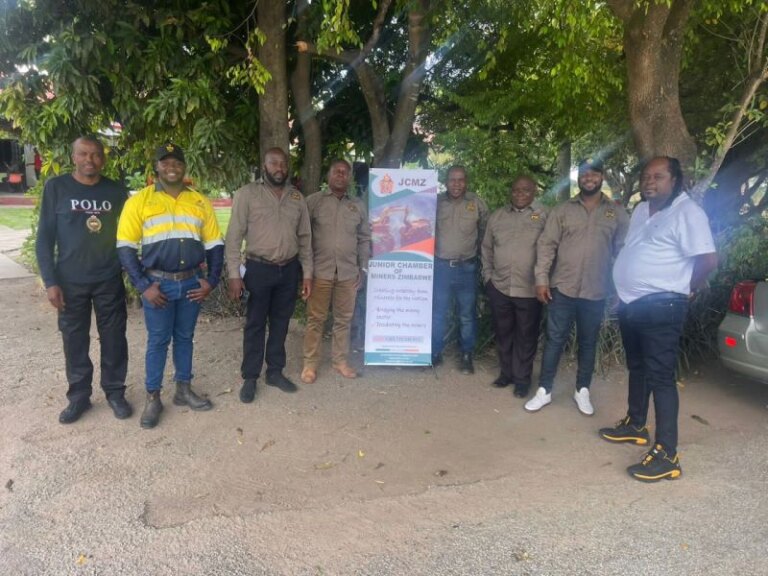
Investment promotion and protection company Taplane Business Solutions Centre is looking to partner with the Junior Chamber of Mines of Zimbabwe (JCMZ) to support small to medium miners in professionalizing their operations to world-class standards and securing funding, Mining Zimbabwe reports.

By Rudairo Mapuranga

Speaking to Mining Zimbabwe, Taplane CEO Alain Diffo said his company has identified significant challenges related to the capitalization of most mines due to difficulties in finding the right partners.

He stated that Taplane is bringing the right investment partners and is looking to JCMZ to organize small to medium-scale mines to elevate them into large-scale operations.

“We are very interested in mining, which is why we are here at the Junior Chamber of Mines. There are significant challenges related to the capitalization of most mines, and we often struggle to find the right partners in countries that can demonstrate their resources backed by financial arrangements. We have access to those arrangements and are looking to the Junior Chamber of Mines to organize small to medium-sized mines, as we aim to elevate them to large-scale operations,” he said.

He added that miners intending to partner with Taplane should have business plans outlining the growth ambitions of their mines.

“For instance, if we find individuals in need of capital, we would require a business plan that outlines the mine’s lifespan. Based on that information, we can pursue foreign direct investment. We hope that Zimbabwe will embrace the opportunities with Taplane Business Centre, as we have established strong relationships with various international organizations that are often hesitant to invest in countries like Zimbabwe due to uncertainty. Our task now is to create a platform that brings Zimbabwean businesses together, showcasing their capacities and selecting a few that can receive sponsorship,” he said.

The government, through its “open for business” mantra, has been encouraging international investors to invest in the country’s mining sector as part of its efforts to contribute significantly to achieving an upper-middle-income economy by 2030.

Zimbabwe’s mining sector has witnessed a surge in investment over the past three years, with several companies investing heavily in exploration, expansion, and plant construction.

A survey by the Chamber of Mines of Zimbabwe (CoMZ), based on insights from mining executives, showed that substantial investments have been made in lithium, gold, Platinum Group Metals (PGMs), and ferrochrome companies.

The mining sector is a major contributor to the economy, accounting for 13 per cent of the gross domestic product and employing over 50,000 people. The sector also generates more than 70 per cent of the country’s exports.

Zimasco Wins US$10 Million Legal Battle Against Zimra

0

In a landmark ruling, Zimasco has emerged victorious in a legal battle against the Zimbabwe Revenue Authority (Zimra), securing a judgment that absolves the company from paying US$10 million in royalties. This decision follows an extensive examination of Zimasco’s tax affairs, particularly concerning the calculation of royalties from 2019 to 2022.

By Ryan Chigoche

The dispute began when Zimra claimed that Zimasco had miscalculated royalties by basing its calculations on an ex-works value that excluded distribution costs. This review was formally communicated in a letter dated December 8, 2022, focusing on the period from January 1, 2019, to September 30, 2022. In response, the High Court ruled in favour of Zimasco, granting the application with costs and marking a significant win for the company.

The court’s ruling included several key orders. It declared that chrome ore concentrates and ferrochrome are classified as mineral-bearing products, meaning that no mining royalties were payable on their disposal during the specified period. Additionally, the court set aside Zimra’s claims issued on March 24, 2023, which sought to recover ZWL881,544,511.00 and USD10,523,347.00 in alleged shortfalls of mining royalties. Furthermore, Zimra was ordered to refund ZWL389,606,502.95 and USD2,485,183.83, along with any additional amounts previously paid by Zimasco regarding these disputed royalties.

Zimasco argued that no royalties applied to mineral-bearing products before the Finance Act 7 of 2021, emphasizing that the legislation did not impose such obligations until it was amended. They contended that chromite ore concentrates and ferrochrome should be classified as mineral-bearing products, which are not subject to royalties. The company highlighted the legislative distinctions between raw minerals and processed products, reinforcing their position. Citing recent developments regarding platinum group metals, Zimasco asserted that there were no defined royalty rates for mineral-bearing products before January 1, 2022. They maintained that this legislative gap supported their claim that royalties were not due during the disputed period. Furthermore, Zimasco emphasized the need for a reasonable interpretation of tax laws, arguing that imposing royalties retroactively would create uncertainty and undermine investor confidence in the mining sector.

In contrast, Zimra contended that royalties should be calculated based on the market value of the minerals sold. They argued that Zimasco’s method of calculating royalties was flawed, as it involved deducting distribution and other costs from the gross selling price, a practice Zimra asserted was not permissible under the existing tax framework. Zimra maintained that ferrochrome is a mineral-bearing product and thus liable for royalties under the applicable laws. They argued that regardless of how Zimasco categorized its products, the regulatory framework clearly stipulated that royalties apply to all mineral-bearing outputs. Zimra also emphasized the importance of protecting public revenue interests, suggesting that allowing Zimasco to evade royalties would set a troubling precedent for the mining industry, undermining the revenue base necessary for national development.

In analyzing the arguments presented, the Honourable Justice Musithu reinforced the distinction between minerals and mineral-bearing products, asserting that the legislative framework supported Zimasco’s interpretation. The ruling emphasized the importance of clear definitions within tax law, concluding that the current legal framework did not impose royalty obligations on mineral-bearing products prior to the specified date. Additionally, the judge considered the intent of the Finance Act, concluding that the absence of specific royalty rates for mineral-bearing products before 2021 bolstered Zimasco’s claims. The ruling noted that legislative changes often require clarity to avoid ambiguity in tax obligations. This case sets a significant precedent for future disputes regarding the calculation of mining royalties in Zimbabwe.

Zimasco’s victory not only alleviates a substantial financial burden but also clarifies the legislative framework surrounding the calculation of mining royalties in Zimbabwe. The court’s ruling reinforces the ongoing complexities in the interpretation of tax laws within the mining sector, emphasizing the importance of clear definitions and compliance in royalty calculations. This case serves as a critical reference point for similar disputes, highlighting the need for miners and tax authorities to navigate these issues with greater clarity and adherence to the law. The ruling ultimately underscores the necessity of stability and predictability in the interpretation of tax laws, which are crucial for attracting foreign investment in Zimbabwe’s mining industry.

Ministry of Mines Receives a Vehicle to Enhance Mine Safety

0

The Ministry of Mines and Mining Development has received a vehicle from the International Labour Organization (ILO) and the African Development Bank (AfDB), a gesture aimed at improving the safety of artisanal miners in their operations, the ILO reported.

By Patricia Rwafa

The vehicle was presented to Minister Winston Chitando at the Ministry’s offices in Harare.

The white Jeep is expected to improve the livelihoods of artisanal miners by providing reliable transportation for equipment and materials to and from mining sites.

Speaking at a press conference in Harare on Wednesday, ILO Director Philile Masuku emphasized the significance of the vehicle for both artisanal miners and the organization.

“Gemstone mining in Hurungwe and Karoi has greatly enhanced the ministry’s capacity to assist artisanal miners in improving their work and livelihoods.

“We’re excited to continue working with the ministry to promote safe, sustainable, and profitable artisanal mining in Zimbabwe. Over 200 artisanal miners will receive training from the ILO on how to make their work safer.”

Masuku added, “The ILO is also assisting the ministry in developing key policies and strategies for Zimbabwe’s mining sector, such as the Minerals Development Policy and the Artisanal Small-Scale Miner Strategy.”

“We are grateful for the leadership and commitment of everyone involved. We would like to thank the AfDB for their generous support, the government of Zimbabwe for its strong partnership, and all the stakeholders who are working to improve the lives of artisanal miners and their communities,” she said.

At the ceremony, Minister Chitando expressed his hope that the organization would explore additional areas of partnership to create jobs, especially for women and young people within the sector.

“This vehicle is a step towards formalizing the sector and empowering our communities, particularly women and youth.

“We are partners in the National Vision to achieve an Upper-Middle-Income Economy by 2030 and in the President’s mantra of leaving no one and no place behind.

“We look forward to your continued support in identifying other areas where jobs, particularly for women and youth, can be created.”

The International Labour Organization is dedicated to promoting social justice and internationally recognized human and labour rights, staying true to its founding mission that labour peace is essential to prosperity.

Miners Accept ZESA Prepaid Plan, Concerned About Economic Tariff

0

The Chamber of Mines of Zimbabwe (CoMZ), representing large-scale miners, has indicated that miners are prepared to adopt the Zimbabwe Electricity Supply Authority’s (ZESA) prepaid electricity system. However, their primary concern is whether ZESA can offer a reliable and affordable electricity supply, reports Mining Zimbabwe.

By Rudairo Mapuranga

Speaking to Mining Zimbabwe, Chamber of Mines of Zimbabwe CEO, Isaac Kwesu, stated that many miners have already been using prepaid power. The main issue is securing power at an economical tariff, not the switch itself.

He explained that discussions between the Chamber and ZESA aim to ensure a smooth transition from postpaid to prepaid, addressing potential concerns such as cost and cash flow.

“It’s not new that ZESA is introducing prepaid metering. Many of our mines are already on that platform. The main concern is securing power at an economical tariff. We are working to ensure a smooth transition without creating issues around cost and cash flow, including addressing deposits and prepayment timelines,” Kwesu said.

ZESA recently announced that all medium and large commercial, industrial, tourism, and mining customers still using postpaid billing must switch to prepaid by October 1, 2024. The utility expects this shift to help address the Zimbabwe Electricity Transmission and Distribution Company’s debt of over ZWG$ 5.7 billion, with the industry and mining sectors contributing significantly to the debt.

Due to this debt, ZESA has struggled to import power, further exacerbating Zimbabwe’s energy challenges, worsened by low water levels at Kariba Dam and limited output from the country’s thermal stations. ZESA believes the prepayment system will improve customer energy management and service delivery.

Blanket Mine Records a Fatality

0

A fatal incident at Blanket Mine claimed the life of an underground employee, Mining Zimbabwe can report.

By Rudairo Mapuranga

On Saturday, an employee was tragically killed by a falling rock while drilling in a development area. The company stated that the individual died instantly from the impact.

“It is with regret that Caledonia Mining Corporation Plc reports that an accident occurred at the Blanket Mine, where an employee was fatally injured due to a fall of rock while drilling. Management is assisting the relevant authorities in their inquiry into this accident. Caledonia extends its condolences to the family and colleagues of the deceased,” the company noted in a press release.

This incident marks the first fatality at Blanket Mine since August of the previous year, when an employee from GMG Mining Machines, a specialist in trackless mining machinery, succumbed to injuries sustained during maintenance.

In 2022, Blanket Mine had recorded over 2.4 million fatality-free shifts since 2018, showcasing the mine’s dedication to the safety and health of its workforce.

“Safety is our first priority at Caledonia, and we are committed to continual improvement in safety performance to achieve a zero-harm working environment for all our employees and contractors. We work diligently to foster a strong safety culture at Blanket Mine, supported by our policies, systems, and regular safety training. Our commitment is further demonstrated through safety targets that qualify for our employee bonus scheme,” the company emphasized.

Official statistics indicate that the mining sector experienced 37 incidents resulting in 33 fatalities and 27 serious injuries in the first two months of 2024. Of these fatalities, 15 were attributed to fall-of-ground incidents, while others stemmed from shaft accidents, sundry incidents, and various other causes, highlighting ongoing safety challenges in the industry.

Geological Society to Host Summer Symposium in Bulawayo

0

The Geological Society of Zimbabwe will host its Annual Symposium at the Natural History Museum in Bulawayo in November 2024, Mining Zimbabwe can report.

By Rudairo Mapuranga

According to the GSZ, on November 1 at the Natural History Museum, industry experts will present a lineup of interesting topics.

The organisation stated that Prof. Macani from the Namibia University of Science and Technology (NUST) will deliver the MacGregor Memorial Lecture.

After the presentation, there will be a networking braai.

On November 2, there will be a field trip to the orbicular granite at Diana’s Pool, led by Dr. Tony Martin, with recreational activities at the Matopos Hills available to all participants after the field trip.

Block Illegal Miners from Mining Disused Underground Shafts – ZELA

0

The Zimbabwe Environmental Law Association (ZELA) has urged authorities to take decisive action against small-scale artisanal miners accessing disused underground shafts, which are encroaching on local communities.

By Ryan Chigoche

The illegal gold mining crisis in Zimbabwe has escalated into a multifaceted issue, posing serious threats to the environment, public safety, and the socio-economic stability of the nation. As individuals resort to illicit mining due to pervasive poverty and unemployment, the repercussions extend beyond the mines, impacting communities, ecosystems, and the economy at large.

An incident at Globe and Phoenix Primary School in Kwekwe, where a classroom block collapsed last year, starkly illustrates the dangers of irresponsible mining practices. This tragedy serves as a reminder that such activities must be curtailed. Reports indicate that a similar situation is developing in Mazowe, where mining activities are increasingly encroaching on human settlements.

Batanai Mutasa, ZELA’s communications officer, emphasized the need for stricter penalties to deter illegal mining, including a ban on mining disused underground shafts of old, no longer operational mines.

“Illegal miners must be actively blocked from using disused underground shafts. The Mines and Minerals Act should incorporate harsher penalties for those who continue illegal activities despite efforts to promote compliance and environmental protection. The government must enforce legal frameworks by enhancing collaboration among state and non-state institutions. The Ministry of Mines and EMA should work with local authorities and traditional leaders to monitor mining activities, even in resource-limited settings,” Mutasa stated.

In line with this, ZELA is actively promoting responsible and sustainable mining practices by advocating for stricter regulations to monitor the environmental and structural impacts of small-scale mining operations. The organization has analyzed the Mines and Minerals Act and key regional and international frameworks, highlighting both advancements and gaps in the proposed Mines and Minerals Amendment Bill, while offering recommendations for improvement.

ZELA is also implementing programs to equip artisanal and small-scale miners (ASMers) with essential knowledge in Safety, Health, and Environment (SHE), along with Disaster Risk Rescue skills. The organization encourages ASMers to regularize their operations and adhere to mining regulations. Furthermore, ZELA addresses children’s rights within mining contexts, providing crucial insights into the vulnerabilities faced by children in mining communities.

As part of Zimbabwe’s macroeconomic roadmap to achieve upper-middle-income status by 2030, the government unveiled plans in October 2019 to revitalize the mining sector and create a $12 billion economy by the end of 2023, with the latest figures from 2022 estimating its value at around $5.6 billion. This initiative focuses primarily on gold mining, Zimbabwe’s largest export, alongside platinum, diamonds, chrome, iron ore, coal, lithium, and other minerals.

However, the environmental toll of illegal gold mining is staggering. Unregulated operations lead to widespread deforestation, soil erosion, and the contamination of water sources with toxic substances such as mercury.

Kuvimba – The Only Hope for BNC’s Revival

0

The future of Bindura Nickel Corporation (BNC) now rests almost entirely on its parent company, Kuvimba Mining House (KMH), as access to capital from other sources appears increasingly difficult.

By Ryan Chigoche

An analyst has said that local shareholders grappling with trust issues stemming from past experiences have grown sceptical of the company’s prospects. This comes as Zimbabwe’s sole primary nickel producer, BNC, faces significant operational challenges that have heightened concerns among investors and stakeholders alike.

BNC is currently in distress, facing significant disruptions that have drawn the attention of investors and stakeholders alike. On May 6, 2024, BNC’s shares were suspended from trading on the Victoria Falls Stock Exchange (VFEX) after a Reconstruction Order was imposed on its major subsidiary, Trojan Nickel Mine Limited. This decision followed severe operational setbacks and a dramatic decline in nickel prices, casting a shadow over the company’s future.

The primary reason companies list on capital markets is to raise capital, making the suspension a major blow to BNC, which has been grappling with challenges such as equipment failures, declining nickel prices, and mounting financial pressures. The broader market downturn has only compounded these troubles, with nickel prices plummeting from record highs in 2022 to levels significantly below historical averages. As Zimbabwe’s only primary nickel producer, the operational issues at Trojan Nickel Mine not only affect BNC but also have broader implications for the national economy and the mining sector.

Speaking to Mining Zimbabwe, Tafara Mtutu, an investment analyst and Head of Research at Morgan and Co, emphasized that BNC must consider a significant capital injection from KMH. He noted that sourcing capital elsewhere will be difficult, especially given the distrust stemming from the 2017/18 incident when investors were repaid in local currency instead of USD.

“And I think it’s time they should consider either getting an injection from their parent company to tap into that resource. If the controlling shareholder isn’t very liquid, they might also need to explore strategic partnerships, ideally with the off-taker of the company’s nickel or other international players willing to invest in Zimbabwe. Another alternative could be listing a bond, but given the current situation, that might be a tough sell,” Mtutu said.

He further remarked, “Raising capital now will not be easy, especially considering the previous experience investors had in 2017 and 2018. The distrust between the company and investors in Zimbabwe is significant, making them unlikely to invest again in the short term. BNC really needs to work on how to raise capital and change that narrative.”

However, Mtutu emphasized that the company’s revival hinges on its ability to secure capital, which is vital for a potential relisting on VFEX. “We can’t just write the company off due to past experiences with similar companies. Their ability to raise capital will be key going forward.”

The Suspension and Its Origins

On May 6, 2024, BNC’s shares were suspended from trading on VFEX after its major operating subsidiary, Trojan Nickel Mine Limited, was placed under a Reconstruction Order due to severe operational and financial difficulties, including equipment failures and falling nickel prices. This suspension complies with Section 8 of the Securities and Exchange Rules, 2020, and the Reconstruction of State-Indebted Insolvent Companies Act [Cap 24:27] (“Reconstruction Act”).

The suspension stemmed from significant operational challenges at Trojan Nickel Mine, including halted production due to equipment failures and low nickel prices. In September 2023, the mine suspended production following a seismic event that damaged critical ore-hoisting equipment. While new gear was installed by April 2024, operations could not resume due to ongoing low nickel prices and high input costs, such as electricity.

Operational and Financial Challenges

Trojan Nickel Mine, 70% government-owned and employing around 1,100 people, has faced severe setbacks. Its nickel concentrate output fell drastically to 1,314 metric tons in the financial year ending March 2024, down from 3,180 metric tons the previous year. This significant reduction reflects both equipment failures and unfavourable market conditions.

Nickel prices have dropped dramatically from record levels above $100,000 per ton in 2022, largely due to geopolitical tensions affecting Russian supply. Currently, prices hover around $19,000 per ton, representing a 25% decrease from the previous year. This decline has strained Trojan Nickel Mine’s profitability and led to global reassessments of nickel operations, such as BHP Group’s review of its nickel business.

Administrative Changes and New Strategic Direction

To navigate these challenges, BNC appointed Mutsa Remba as Administrator in May 2024. Remba’s primary role is to guide BNC through the Reconstruction Act’s requirements, involving a thorough review of the company’s operations and finances to develop a viable recovery strategy.

The administrator’s responsibilities include conducting thorough investigations into the operational and financial challenges facing Bindura Nickel Corporation (BNC), assessing the causes of equipment failures, the impact of falling nickel prices, and the company’s overall financial health. Additionally, the administrator will craft a comprehensive reconstruction plan to address the identified issues, which may involve restructuring debt, upgrading equipment, optimizing processes, and securing additional capital. Effective stakeholder engagement is also crucial, as the administrator will communicate with creditors, shareholders, and other stakeholders through meetings to discuss the proposed reconstruction plan, gather feedback, and ensure transparency throughout the process.

As part of this reconstruction process, BNC requested a waiver to delay the publication of its Financial Year 2024 Audited Financial Statements. The VFEX Listings Committee granted this waiver on July 15, 2024, conditional upon publication by December 31, 2024. This extension is crucial for allowing BNC to complete its investigations and prepare detailed reports.

The Broader Context and Future Prospects

The current global oversupply and low prices for nickel present significant challenges for BNC. However, these market conditions could change, and a potential rebound in prices driven by shifts in global demand or supply constraints might provide opportunities for recovery. Monitoring global market trends will be essential for BNC’s strategy moving forward.

Financial and Operational Revitalization

To revive Trojan Nickel Mine and BNC, a strategic focus on financial and operational revitalization is essential. The company must secure funds for retooling and upgrading equipment, potentially through negotiations with financial institutions, investors, or government bodies. Additionally, addressing inefficiencies and enhancing maintenance protocols will be crucial to stabilizing production.

BNC must also adhere to legal and regulatory requirements throughout the reconstruction process. Compliance with the Reconstruction Act and VFEX Listing Rules will be critical for resuming trading and restoring investor confidence.

Long-Term Strategy and Conclusion

Beyond immediate recovery efforts, BNC should develop a long-term strategy to ensure sustainability and resilience. This may involve diversifying revenue streams, investing in new technologies, and exploring growth opportunities both within and beyond the nickel sector.

Bindura Nickel Corporation’s suspension from VFEX represents a significant obstacle but also a critical opportunity for restructuring and renewal. The appointment of Mutsa Remba as Administrator and adherence to the Reconstruction Act’s requirements are positive steps toward addressing the company’s pressing issues.

While the path to recovery may be complex and uncertain, BNC’s commitment to effective restructuring, stakeholder engagement, and strategic adaptation provides a foundation for potential revitalization. Investors and stakeholders should remain informed and engaged as BNC navigates this complex process, working to restore trust with the hope that these efforts will lead to a successful resumption of trading and a more resilient company.