Home Blog Page 179

Anglo American Offloads $403 Million Stake in Amplats

0

Anglo American has raised R7.2 billion (US$403.21 million) by selling a 5.3% stake in Anglo American Platinum (Amplats) as part of plans to demerge its South African unit next year. The sale of 13.9 million shares at $28.84 per share is aimed at increasing Amplats’ free float and reducing market disruptions during the demerger.

by Rudairo Mapuranga

Amplats CEO Craig Miller also announced a potential secondary listing in London to attract more international investors and improve liquidity.

In Zimbabwe, where Amplats operates Unki Mine, these changes are significant.

Unki is a key producer of platinum, palladium, and rhodium, which are essential for the automotive and green energy sectors. This aligns with Zimbabwe’s goals to boost mineral production and attract foreign investment, positioning the country as a key player in the global PGMs market.

Unki is expected to benefit from rising demand for sustainable energy and electric vehicles.

Zimbabwe gold buying prices per gram 11 September 2024

0

Fidelity Gold Refinery (FGR) official gold buying prices/ gram. See the Zimbabwe gold buying prices per gram today, 11 September 2024.

SG 90% and ABOVE US$76.14/g
SG ABOVE 85% BUT BELOW 90% US$75.34g
SG ABOVE 80% BUT BELOW 85% US$74.53/g
SG ABOVE 75% BUT BELOW 80% US$73.73/g
SAMPLE BELOW 10g BUT ABOVE 5g US$72.53/g

Fire Assay CASH $76.55/g

NB: Fire Assay cash price is for gold above 100gs, no sample is deducted.
For the Fire Assay Transfer price, a sample of not more than 10g is deducted
A 2% royalty is charged on all deposits (Small-scale miners)
A 5% royalty is set for Primary Producers

Cash available. Fidelity Gold Refinery prices will be changing daily to match world market prices.

Chamber of Mines Zimbabwe Engages ZESA Over Power Crisis

0

The Chamber of Mines Zimbabwe (CoMZ) has engaged the Zimbabwe Electricity Supply Authority (ZESA) over the ongoing power crisis, urging the prioritization of the mining sector amid crippling power cuts.

By Ryan Chigoche

As the largest consumer of electricity in the country, the mining sector depends heavily on a stable and reliable power supply to sustain its operations. However, power shortages and frequent outages have disrupted activities, highlighting the urgent need for a dependable energy source.

The power cuts have led to increased production costs for large-scale mining operations, which have had to rely on costly alternative sources like diesel generators.

Facing the power crisis, Thomas Gono, President of the Chamber of Mines Zimbabwe, told Mining Zimbabwe that unscheduled power cuts are negatively impacting operations, adding that they have already engaged the power utility on the issue.

“The mining industry has not been spared from the ongoing power supply constraints, with reports of some unscheduled power outages resulting in production stoppages and output losses. The Chamber of Mines continues to engage ZESA and the Government to prioritize mining companies on the available power while also pursuing alternative power solutions to supplement grid power and meet their energy requirements,” Gono said.

In response to the power crisis, the government has given ferrochrome miners until 2026 to establish their own power generation facilities, anticipating continued economic growth that could push power demand above 3,000 megawatts (MW) within the next two years.

In recent years, Zimbabwe’s economy has seen a significant shift, with the mining sector emerging as a key growth driver. According to the 2024 Chamber of Mines State of Mining Survey report, the sector accounts for 80% of the country’s exports.

Prioritizing power supply to the mining sector is crucial for Zimbabwe’s economic growth due to its significant contribution to the country’s GDP. The mining industry accounts for approximately 8-10% of Zimbabwe’s GDP and is a major driver of export revenue, generating billions of dollars annually from minerals such as platinum, gold, and diamonds. A reliable power supply is essential for maintaining uninterrupted mining operations, directly supporting these revenue streams and helping achieve the government’s growth targets, including increasing mineral exports and boosting overall economic performance.

Currently, ZESA has a generating capacity of 2,000 MW but produces only 1,400 MW due to regular breakdowns at its thermal power stations and ongoing water shortages at its hydroelectric plant.

To address this shortfall, ZESA plans to add 2,300 MW to the grid by 2025, with more than 80% of the new capacity expected to be allocated to the mining sector.

ESG Compliance Crucial to Zimbabwe’s Investment Strategy, Says Senior Official

0

Environmental, Social, and Governance (ESG) compliance is central to Zimbabwe’s foreign direct investment strategy, with all investors required to adhere to ESG principles, according to Mr Willard Manungo, Deputy Chief Secretary to the President and Cabinet.

By Rudairo Mapuranga

Speaking at the Zimbabwe Investment Development Agency (ZIDA) stakeholder engagement forum held at the Rainbow Hotel on Tuesday, Manungo stressed that ESG issues are integral to the government’s efforts to achieve Zimbabwe’s Vision 2030.

“ESG concerns are at the heart of the government’s interventions and initiatives under the National Development Strategy No. 1. It is a requirement that we ensure, as we partner with investors, that the obligations arising from ESG commitments are fully observed. The Office of the President and Cabinet welcomes investor participation in the country,” Manungo stated.

He further emphasized that the government will enforce ESG policies consistently across all investors, regardless of their country of origin.

“We stress to all investors the need to observe labour practices and environmental sustainability. There are no exceptions in enforcing these requirements. If it comes to the government’s attention that these practices are being compromised, we are prepared to hold such investors accountable. Respect for labour laws and environmental sustainability is mandatory,” he said.

Manungo also assured stakeholders of President Mnangagwa’s commitment to ensuring that all foreign investors, including those from friendly nations like China, operate responsibly within Zimbabwe’s regulatory framework.

“President Mnangagwa has made it clear that while we welcome foreign investors, including those from friendly nations like China, they must operate responsibly, adhering to labour, safety, and environmental requirements. This ensures a win-win outcome for both the investors and Zimbabwe, through income generation, export potential, and safe working conditions for workers in line with our labour laws,” Manungo concluded.

ZIDA Advised to Consider Skills Transfer When Issuing Licenses

0

The Zimbabwe Investment Development Agency (ZIDA) has been urged to adopt policies that ensure foreign investors employ 99% of their workforce from the local labour pool, promoting skills transfer and preventing the export of jobs, Mining Zimbabwe can report.

By Rudairo Mapuranga

Speaking to Mining Zimbabwe on the sidelines of the ZIDA stakeholders engagement forum held at Rainbow Hotel on Tuesday, Last Matema, Secretary General of the Indigenous Advisory Practitioners Association of Zimbabwe (IAPAZ), emphasized that most investors entering Zimbabwe are bringing in foreign expertise, which does not benefit the local population.

“We are contributing to ZIDA’s strategy to promote both domestic and foreign investment. However, as IAPAZ, we are advocating for a platform where ZIDA can connect local associations with foreign entities to facilitate knowledge transfer and collaboration. Many of the investors we attract are importing skills. We need initiatives to promote our local talent so they can take advantage of the numerous opportunities in the country,” Matema said.

Also speaking to Mining Zimbabwe at the event, Hazel Karoro, Secretary General of the Association of Junior Mining Professionals of Zimbabwe (AJMPZ), expressed her organization’s readiness to collaborate with institutions like ZIDA and provide a database of skilled Zimbabwean workers to ensure investors do not overspend on finding qualified labor.

“As AJMPZ, we have the skill set within our organization, and the database is available. We are willing to share it free of charge to ensure mining companies acquire the appropriate skills without overspending,” Karoro said.

Local Miners Cry Foul as Zimasco Transfers Claims to Chinese Investors

0

Local chrome miners, who have been operating under agreements with Zimasco since 2008, are protesting after the company backtracked on its commitments, choosing not to renew their contracts and instead transferring the claims to Chinese investors, Mining Zimbabwe can report.

By Ryan Chigoche

Since 2008, the Midlands-based smelting company has subcontracted small-scale miners to extract chrome from its numerous claims. However, Zimasco has recently allowed Chinese miners to take over operations in areas previously worked by local miners.

The abrupt end of agreements with these local miners, who had been subcontracted since 2008, has drawn criticism for the lack of formal communication. The miners allege that they were only informed of the terminations via phone, without any written notice. Zimasco had verbally promised them the opportunity to resume mining by June 2024, but this promise remains unfulfilled.

Zimasco cited power cuts and depressed international chrome prices as reasons for terminating the local miners’ contracts. However, the miners argue that Zimasco’s practices—such as imposing unrealistic production targets and undervaluing their ore—were designed to drive them out of business.

With the export of chrome currently banned, the local miners are sitting on accumulated chrome deposits that they cannot dispose of, as they are unable to sell to Zimasco.

In November 2023, Zimasco shut down small-scale mining operations in several areas, including Mutorashanga, Mhondoro, Lalapanzi, Shurugwi, Mashava, Mberengwa, and Neta. This closure has devastated local miners who had invested significant resources in these sites. They are particularly aggrieved that Chinese miners have taken over these areas and continue to operate.

Chinese miners have long dominated the local chrome industry, controlling both the buying and selling of the metal. Their dominance has allowed them to benefit from the 2022 export ban, despite the significant drop in domestic chrome prices. These miners are also reportedly smuggling chrome to buyers abroad.

Zimbabwe introduced a ban on chrome ore exports in 2022 to boost the domestic mining sector by increasing the capacity of local smelters and maximizing the value of the country’s chrome resources.

However, the ban has worsened the plight of local miners, who continue to be exploited by monopolistic foreign players in the industry. These foreign entities have kept the price of chrome per tonne below US$80, despite ferrochrome prices being strong on the global market, ranging between US$250 and US$350 per tonne.

Currently, the legislation only regulates the export of chrome, with no regulations on domestic dealings. Mining industry research expert Layman Mlambo stated that there is a need for government intervention in terms of policies guiding the chrome sub-sector.

“There is an overarching issue of a policy vacuum at the national minerals development level and within the chrome-specific subsector. Policies should guide legislation and regulations based on clearly articulated objectives that consider the interests of all stakeholders,” Mlambo said.

Zimbabwe holds the second-largest known chrome ore reserves globally, after South Africa. Chrome is a critical industrial commodity, with over 90% of the world’s chrome output used to produce ferrochrome—a blend of chrome and iron ore created through high-temperature smelting. Ferrochrome, with a chrome content ranging from 50% to 70% by weight, is essential for manufacturing stainless steel.

Stainless steel, containing 10% to 30% chrome, is valued for its strength and resistance to corrosion. It is used in a wide range of products, including cutlery, kitchenware, home appliances, medical equipment, construction materials, and components in the automotive and aerospace industries.

International Mine Worker Unions Impressed by ZDAMWU’s Growth

0

The Zimbabwe Diamond and Allied Minerals Workers Union (ZDAMWU) continues to garner international recognition, with several mine worker unions from across Sub-Saharan Africa expressing their admiration for the union’s rapid growth and organizational achievements.

By Rudairo Mapuranga

Representatives from Nigeria, Ghana, and Zambia, who were in Zimbabwe for ZDAMWU’s second elective congress, shared their insights on the union’s progress and its significance within the broader labour movement in the region.

Mr. John Adaji, Co-Chair of IndustriAll, Sub-Saharan Africa, and a representative from Nigeria, expressed his approval of the strides made by ZDAMWU since its inception.

“In terms of organization, they have done wonderfully well,” Adaji remarked.

He noted the excellent coordination observed during the congress, from the participants to the facilitators and the leadership, highlighting the union’s commitment to continuous improvement.

Abdul-Moomin Gbana, General Secretary of the Ghana Mine Workers Union, echoed Adaji’s sentiments, commending ZDAMWU for its well-structured organization and strong democratic processes.

“Being a union that is barely five or six years old, they have made significant strides,” Gbana stated.

He praised the open and participatory nature of the congress, where delegates freely engaged in discussions, a practice he noted is not always prevalent in other jurisdictions.

Gbana also acknowledged the union’s proactive stance on critical issues affecting the mining industry, such as job insecurity, anti-union practices, and challenges associated with foreign investments, particularly from Chinese companies.

He commended ZDAMWU’s commitment to tackling these issues head-on, stating, “They are on the right path, and we can only urge them to do more.”

One of the key takeaways from the congress, according to Gbana, was ZDAMWU’s recognition of its forebears.

“An organization or society that does not recognize its forebears is not worth working for,” he emphasized, lauding the union for acknowledging the individuals who laid the foundation for its current successes.

Gbana also stressed the importance of international collaboration among mine worker unions across Africa.

“Internationalism exposes you to your strengths and weaknesses and gives you the opportunity to leverage the strengths of others.

“The presence of multiple mine worker unions from different African countries at the congress exemplified the spirit of internationalism and underscored the value of shared experiences and mutual support,” he said.

John Silungwe, Deputy General Secretary of the Zambia Mine Workers Union, shared his observations on ZDAMWU’s progress, noting the union’s potential to become a significant force in Zimbabwe’s mining sector.

“Considering how many years they’ve been in the union business, I think they are progressing very well,” he said.

However, Silungwe raised concerns about the lack of government representation at the congress, which he believes could undermine the union’s efforts.

“A congress of this nature is supposed to be supported by the government,” he stated, calling for greater collaboration between ZDAMWU and government officials to ensure the union’s continued growth and influence.

Despite these challenges, Silungwe expressed confidence in ZDAMWU’s ability to manage its affairs and expand its membership base.

He noted that the union’s well-organized approach, particularly during an elective congress, demonstrated its capacity for growth and stability.


Zimbabwe gold buying prices per gram 10 September 2024

0

Fidelity Gold Refinery (FGR) official gold buying prices/ gram. See the Zimbabwe gold buying prices per gram today, 10 September 2024.

SG 90% and ABOVE US$75.94/g
SG ABOVE 85% BUT BELOW 90% US$75.14g
SG ABOVE 80% BUT BELOW 85% US$74.33/g
SG ABOVE 75% BUT BELOW 80% US$73.53/g
SAMPLE BELOW 10g BUT ABOVE 5g US$72.33/g

Fire Assay CASH $76.34/g

NB: Fire Assay cash price is for gold above 100gs, no sample is deducted.
For the Fire Assay Transfer price, a sample of not more than 10g is deducted
A 2% royalty is charged on all deposits (Small-scale miners)
A 5% royalty is set for Primary Producers

Cash available. Fidelity Gold Refinery prices will be changing daily to match world market prices.

Zimbabwe Reviving Freight Rail System to Alleviate Pressure on Roads, Boost Mining Logistics

0

Zimbabwe’s freight transportation sector is undergoing a significant transformation as the government partners with private players, including China Rail International Group and South Africa’s Grindrod, to revitalize the country’s ailing rail network.

By Rudairo Mapuranga

This initiative is set to significantly impact the mining industry. The industry has largely relied on road transport to move key minerals such as chrome, lithium, iron, and coal, placing immense strain on the nation’s roads.

The National Railways of Zimbabwe (NRZ), once a powerhouse hauling 12 million tons of cargo annually in the 1990s, now struggles to move less than three million tons due to decades of underinvestment, deteriorating locomotives, and poorly maintained rail infrastructure. This has left the bulk of Zimbabwe’s mineral output dependent on road transport, with disastrous consequences for the nation’s highways.

The Bulawayo–Victoria Falls road and the Harare–Chirundu road are prime examples of this strain. Both roads are in a poor state, as heavy trucks carrying chrome and coal have turned them into hazard zones. The rapid deterioration of these key routes has increased road maintenance costs and led to frequent accidents.

The Importance of Reviving Rail for Mining

The resurgence of Zimbabwe’s mineral sector, driven by increasing global demand for lithium and chrome, makes restoring the rail network crucial for the mining industry.

Key minerals such as chrome, iron ore, and lithium from companies like Tsingshan Holdings, Sinosteel, Sinomine, Zhejiang Huayou Cobalt, and Chengxin Lithium are currently being exported via road to Mozambique’s ports, a situation that is far from ideal for long-term sustainability.

Without an efficient rail system, Zimbabwe’s roads will continue to suffer from the heavy burden of transporting minerals, potentially hindering growth in the mining sector.

An improved rail network will not only ease pressure on roads but also provide a more cost-effective and efficient means of exporting Zimbabwe’s growing commodity volumes.

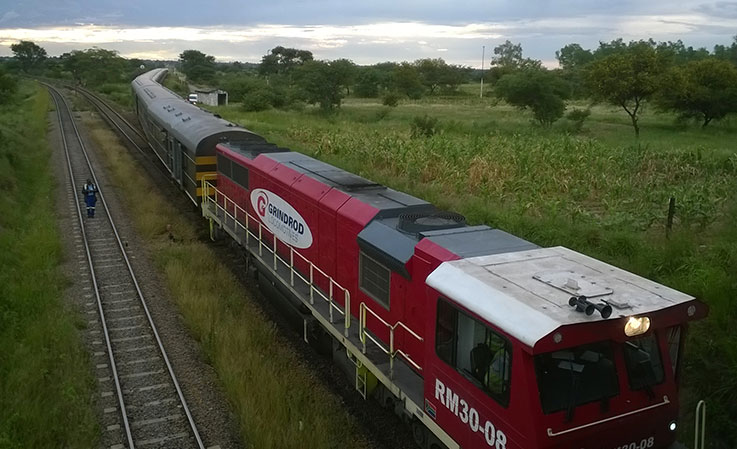
NRZ spokesperson Andrew Kunambura noted that the rail network cannot currently handle the rising demand, moving only 2.8 million tons last year against available business of over 3 million tons. Private companies like Grindrod are now stepping in, deploying locomotives and wagons to boost NRZ’s capacity.

“Last year we moved 2.8 million tons against available business of 3 million tons. So these private companies are coming in with their locomotives and wagons to augment what we have,” Kunambura said.

Grindrod, through its subsidiary Beitbridge Bulawayo Railway, has already deployed three locomotives and 150 wagons since March 2024, forming part of a larger strategy to build freight rail partnerships across Southern Africa.

The company is keen to capitalize on emerging market opportunities, with plans to expand operations to other countries, including the Democratic Republic of Congo and South Africa.

Future Opportunities for Mining Logistics

The revival of Zimbabwe’s rail network presents significant opportunities for the mining industry. With ongoing discussions between President Emmerson Mnangagwa and Chairman Bi Yanchun of China Rail International Group, there is hope for further infrastructure development.

A partnership with China Rail International could dramatically improve the rail system’s capacity, providing a sustainable solution for the country’s growing mineral exports.

As Zimbabwe positions itself as a key player in global mineral supply chains, the restoration of the rail network is essential for maintaining the momentum of its mining sector.

Improved rail capacity will enhance the efficiency of mineral exports, reduce the damage caused to roads, and support the nation’s broader economic development goals.

With private investments and international partnerships in place, Zimbabwe’s rail system is poised to once again become a vital artery for the country’s burgeoning mining industry, ensuring that minerals like chrome, coal, iron, and lithium can be transported efficiently to markets across the globe.

This transformation is not only critical for the mining sector but also for the long-term sustainability of Zimbabwe’s infrastructure and its ability to attract further investment in both mining and logistics.

Garlpex Investments Staff Charged with Selling Company Mining Equipment

0

Two employees of Garlpex Investments Private Limited have appeared in court for the theft of US$194,500 worth of mining equipment, according to the National Prosecuting Authority of Zimbabwe.

By Patricia Rwafa

Fungai Mafundirwa, aged 38, and Kaseba Cosmas Ngwenya, aged 72, a security manager and guard respectively at Garlpex Investments, were arrested and charged with theft of trust property.

The two allegedly conspired to sell company mining equipment without authorization, receiving USD 3,000 in cash from a buyer.

To cover their tracks, the accused reported the equipment as stolen to the police. However, an investigation led to their exposure and arrest. The stolen property was valued at USD 194,500, and none of it was recovered.

According to the National Prosecuting Authority of Zimbabwe, as announced on its X page yesterday, Mafundirwa and Ngwenya were arraigned before the Hwange Magistrates Court on charges of theft of trust property.

“Sometime in July 2024, the two accused persons allegedly instructed two men to find buyers for the sale of mining equipment. The men brought a buyer from Bulawayo, who purchased the equipment for USD 3,000 in cash. The buyer later sold the mining equipment to a Chinese company in Bulawayo.

“The accused then allegedly filed a police report, claiming the mining equipment had been stolen.

“Police investigations, initiated after a tip-off on July 24, 2024, revealed that the mining equipment had been sold.

“Further investigations led the police to the buyer of the mining equipment, who implicated the accused persons, resulting in their arrest. The stolen property was valued at USD 194,500, and nothing was recovered,” read the statement on X.