Home Blog Page 184

AMMZ’s successful Tour of PLZ Fosters Collaboration and Knowledge Sharing

0

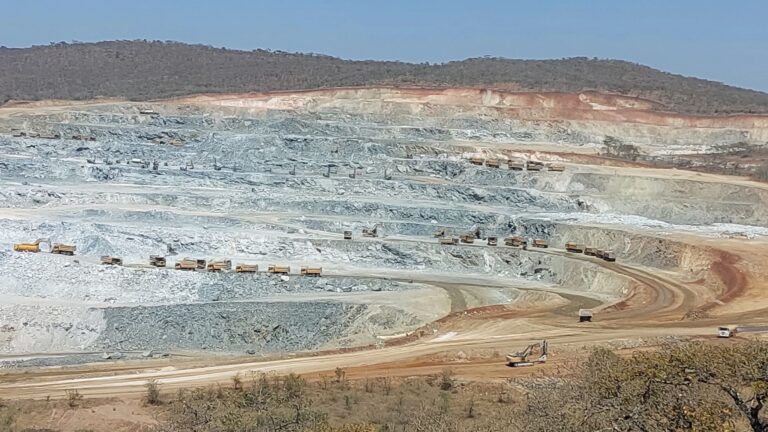
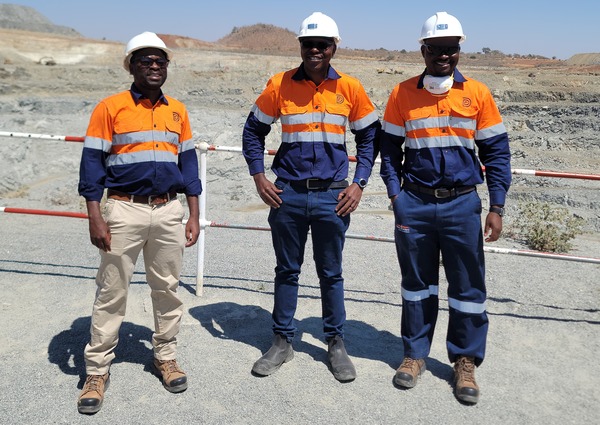
The Association of Mine Managers of Zimbabwe (AMMZ) has made notable strides in fostering knowledge and skills transfer with Chinese mining operations through their recent tour of Prospect Lithium Zimbabwe (PLZ).

By Rudairo Mapuranga

According to AMMZ President Abel Makura, the visit facilitated crucial relationship-building and knowledge exchange.

Makura noted that although the visit had to be conducted with a small group due to the host’s restrictions, the participants gained valuable insights.

“We are very happy that, for the first time, AMMZ has been able to engage with Chinese-owned operations, and they have welcomed us warmly. This is a positive development as it allows us to build bridges and collaborate more effectively, sharing knowledge about the mining environment in our country. It has been a positive experience, even though we had to visit as a small group. The insights gained will be shared with the rest of our members,” said Eng. Makura.

He added that Prospect Lithium Zimbabwe has committed to participating in AMMZ activities, starting with this year’s annual general meeting and conference.

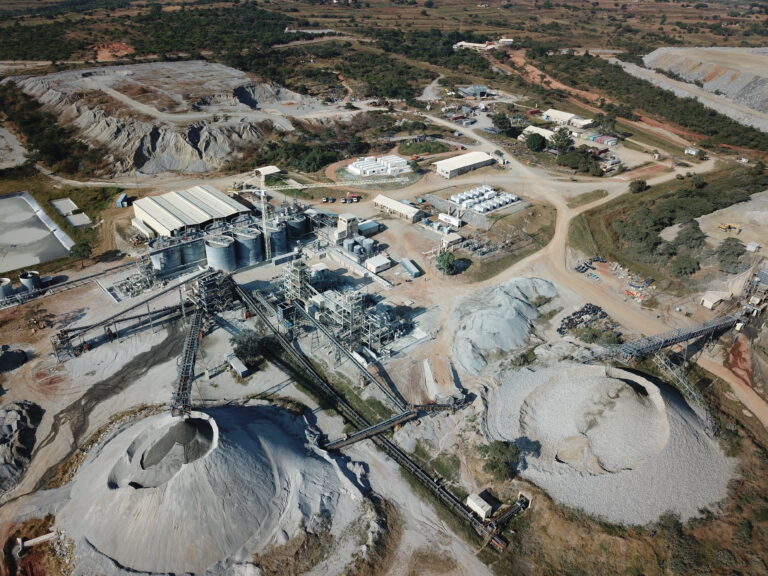
The tour, which covered the entire mining process from crushing to flotation, was deemed a success, with significant learnings reported.

“Prospect Lithium Zimbabwe’s team has pledged to be involved in all Chamber of Mines and AMMZ activities, beginning with this year’s annual general meeting and conference. We observed the entire mining operation and processing plant, and the tour provided numerous valuable insights,” Eng. Makura concluded.

ZMF backs government’s ban on riverbed mining

0

The Zimbabwe Miners Federation (ZMF) has welcomed the government’s decision to ban alluvial, or riverbed, mining, citing its detrimental effects on the environment and the organization’s efforts to promote responsible and sustainable mining practices.

By Rudairo Mapuranga

Speaking to Mining Zimbabwe, ZMF President Ms Henrietta Rushwaya expressed her organization’s support for the government’s move, stating that riverbed mining had a significant negative impact on the country’s ecosystem, thereby undermining ZMF’s commitment to responsible and sustainable mining.

“We are very pleased with this decision. Riverbed mining was hindering our efforts toward sustainable mining due to its adverse effects on the ecosystem,” Rushwaya said.

Earlier this week, authorities ordered an immediate halt to riverbed mining in response to a surge in illegal activities that have heightened the country’s vulnerability to climate change.

The directive, issued by the Cabinet on Tuesday, marks a stronger stance against practices that have severely damaged vital water resources.

Recently, in a bid to promote sustainable and responsible mining within the Artisanal and Small-scale Mining (ASM) sector, ZMF developed an Environmental, Social, and Governance (ESG) strategy specifically tailored for Zimbabwe’s ASM industry.

This initiative aligns with the government’s call and international standards to prioritize responsible mining. The measure respects human rights, ensures safe conditions for workers and communities, and minimizes environmental impacts.

ZMF emphasized that it will adopt a multidisciplinary approach to responsible mining, integrating various disciplines in planning, operations, resource marketing, and mine closure in line with international best practices.

“The ZMF is committed to environmental safety. Therefore, issues such as decarbonization, water stewardship, climate action, energy efficiency, and upholding human dignity in the mining industry will be prioritized.

“Although decarbonization is rarely linked to ASM operations, we believe that incorporating solar energy into ASM practices will significantly contribute to the decarbonization agenda,” Rushwaya said.

Eureka Implements Drone Technology to Mitigate Surveying Risks

0

Eureka Mine, owned by Dallaglio, is enhancing its surveying operations by incorporating drone technology to address significant risks associated with daily surveying, the Association of Mine Surveyors of Zimbabwe (AMSZ) has learnt.

by Ryan Chigoche

A recent technical visit by the AMSZ to Eureka Mine revealed that the mine is taking substantial measures to mitigate hazards faced by its surveyors. One major area of focus is the risk of high wall failure, a critical concern in open-pit mining.

Eureka Mine, an open-cast operation that began in 2021, reaches a depth of 140 meters. Due to the mine’s considerable depth, surveyors are exposed to significant dangers. Hillary Mushonga, a senior member of Eureka’s surveying department, detailed how drone technology is reducing surveyors’ exposure to these hazardous conditions.

“To address the risks associated with high wall failure, we have considerably reduced the time our staff spends near dangerous areas. For instance, drones are now used for mine design surveys, eliminating the need for our assistants to manually pick points along the toes of high walls,” Mushonga said.

He added, “For our mid-month and month-end surveys, we rely entirely on drones, ensuring our staff is not exposed to the dangers of standing near the crest or toes of high walls.”

Despite these advancements, challenges remain, particularly with measuring water levels in the pit. While personal protective equipment (PPE) like life jackets are used, they offer limited protection against drowning risks.

Surveying in mining is inherently hazardous due to the challenging environments in which surveyors operate. Geotechnical hazards, such as slope instability, present constant threats, especially in open-pit mines where landslides or rockfalls can occur suddenly. The integration of drones at Eureka represents a significant advancement in reducing these risks and enhancing the safety of surveying operations.

As they make strides in drone implementation, Eureka is nearing ROC certification with the Civil Aviation Authority of Zimbabwe (CAAZ), which will ensure compliance with regulatory standards.

“We have already paid for our ROC licensing and are working on the necessary documentation. The process is ongoing, and we made the payment about two days ago,” said Collet Nguluve, the head of the Eureka Survey department.

The AMSZ technical visit to Eureka Gold Mine provided members with practical exposure to the complexities of mining and bridged the gap between theoretical knowledge and real-world application.

Speaking at the event, Stewart Gumbi of AMSZ, commended Eureka Mine for its commitment to safety and the knowledge members gained as a result of the technical visit.

“Your willingness to open your doors and share your experience has been invaluable to our members and the broader mining community. The comprehensive tour of your operations, coupled with informative presentations by your team, has provided us with a deeper understanding of the innovations in surveying technologies and techniques that you employ. This knowledge will undoubtedly contribute to the professional development of our members. We also commend Eureka for its commitment to safety, environmental sustainability, and community engagement. Your dedication to responsible mining practices serves as an inspiration to the entire mining industry,” Gumbi said.

The Eureka Gold Mine, located in Guruve, has demonstrated impressive performance in recent years, achieving a 93% gold recovery rate. The mine, which resumed gold production in 2021 after a 20-year hiatus, has seen production increase from 420 kg in 2021 to 1,617 kg in 2023.

Technical visits offer invaluable experiences for surveyors, bridging theoretical knowledge with practical application. By observing surveying techniques and interacting with experienced professionals, surveyors enhance their problem-solving skills and practical expertise. These visits also facilitate networking and collaboration, support professional development, and promote a culture of safety-consciousness by discussing and implementing best practices.

DandeMutande and Oracle Collaborate to Transform Data Management in Zimbabwe’s Mining Sector

0

One of Zimbabwe’s largest internet service providers, DandeMutande, has partnered with Oracle, a leading developer of database software and cloud-engineering systems, to revolutionize data management and security in the mining industry, Mining Zimbabwe reports.

By Rudairo Mapuranga

This collaboration aims to provide reliable and accessible cloud services, enabling continuous, real-time monitoring and management of mining operations across the country.

Speaking to Mining Zimbabwe on the sidelines of the official partnership launch at Cresta Lodge in Msasa, Harare, on Thursday, DandeMutande CEO Never Ncube emphasized that the next-generation cloud infrastructure will significantly enhance data security through advanced encryption services.

“In terms of security, as highlighted during the presentation, data is encrypted both during transfer—from your operation to the cloud—and when stored. This means there is encryption both in transit and at rest, which greatly enhances security. Moreover, the cloud infrastructure comes with built-in security features,” Ncube explained.

Ncube also underscored the role of Artificial Intelligence (AI) integrated into the platform, which enables the system to detect and learn from new threats, providing a reliable solution for mining companies to safeguard their data.

“Thanks to these features, any attacks on your data can be prevented by the system, as it is designed with robust security measures. Additionally, with machine learning and AI, the platform can detect and adapt to new threats, offering protection that on-premise solutions might not provide. You can also automate rules and policies for data access, reducing the need for manual intervention, which is often required in the mining sector,” Ncube added.

Addressing the connectivity challenges in remote mining areas, Ncube noted that the partnership with Oracle will improve the reliability and accessibility of cloud services, ensuring seamless, real-time monitoring and management of mining operations.

“Regarding connectivity, mines are often in remote locations where connectivity can be challenging. However, as DandeMutande, we provide connectivity not only through fibre but also as Zimbabwe’s largest satellite provider. We use geo-satellites like ArcGig, UTILSAT, and ARPANT. Additionally, our partnership with Starlink allows us to offer our mining partners cutting-edge technology to efficiently upload data to the cloud,” Ncube concluded.

Export Receipts Surge Over 9%, Driven by Gold

0

The country’s total foreign currency earnings increased by approximately 9.5% during the first half of 2024 compared to the same period last year, largely driven by growth in export receipts from gold, said the Minister of Finance and Investment Promotion, Prof. Mthuli Ncube.

By Rudairo Mapuranga

According to Prof. Ncube, speaking at the Zimbabwe Economics Society and Friedrich-Ebert Stiftung (ZES/FES) Breakfast Meeting on the 2024 Midterm Budget and Economic Review held on Wednesday at the Hyatt Regency Hotel in Harare, export receipts increased from US$5.6 billion during the first half of 2023 to US$6.2 billion during the same period this year. This growth was also driven by agricultural commodities, manufactured products, and diaspora remittances.

“Total foreign currency receipts increased by 9.5% to US$6.2 billion during the period from January to June 2024, up from US$5.6 billion received during the same period in 2023, largely driven by the growth in export receipts, mainly from gold, agricultural commodities, and manufactured products, as well as diaspora remittances,” Prof. Mthuli Ncube said.

In 2023, the contribution of export proceeds to the country’s foreign currency receipts remained high at 55 per cent, although it was down from 64 per cent in 2022.

Overall, foreign currency receipts in 2023 amounted to US$10.9 billion, down 3.7% compared to 2022.

Mineral exports, which constitute about 80% of the country’s merchandise exports, declined by 7% to US$5.2 billion during the year.

While gold exports benefited from higher global prices amid safe-haven demand in 2023, they were weighed down by a significant volume decline caused by lower production during the year.

Gold deliveries to Fidelity Gold Refinery (FGR) were 30.16 tonnes during 2023, 14.7 per cent lower than the previous year.

The decline in deliveries was due to reduced output caused by power outages and disruptions from heavy rains, which negatively impacted mining operations during the early months of the year, the central bank said.

Gold exports in 2023 were estimated to have declined by about 11% to US$1.8 billion, while lithium exports surged by 854.7% to reach US$674 million.

EMA Pushing for Stiffer Penalties for Irresponsible Mining

0

The Environmental Management Agency (EMA), in its efforts to enforce responsible mining practices, is currently in talks with the government to introduce more punitive penalties for irresponsible miners who are damaging the environment.

By Ryan Chigoche

This development comes at a time when communities in the Great Dyke, Mashonaland West, and Mazowe have raised concerns about mining operations in their areas that are polluting rivers and extensively damaging the environment. According to community leaders, these activities pose a danger to both humans and livestock. The EMA has long highlighted that alluvial mining, particularly for gold, exposes water sources to toxic chemicals that are harmful to both humans and livestock.

In solidarity with the communities, the EMA has, over the years, responded by shutting down some operations and fining offenders. Still, these measures have not been sufficient to stop illegal mining practices. Currently, all miners in Zimbabwe are required to have an Environmental Impact Assessment (EIA). As per the gazetted fines, the maximum fine for violations is Level 14, which amounts to $5,000 USD.

However, communities affected by irresponsible small-scale mining are increasingly vocal about the inadequacy of the fines imposed by the EMA. They argue that the penalties for environmental violations are insufficient relative to the substantial financial gains derived from mining activities. In regions such as the Great Dyke, Mazowe District, Kadoma, and Masvingo, where mining operations have caused significant deforestation, water pollution, and land degradation, the community’s frustration stems from the perception that fines do not effectively deter harmful practices or compensate for the extensive environmental damage.

To address the issue, EMA Publicity Manager Amkela Sidange told Mining Zimbabwe that the agency is pushing for the introduction of more punitive fines for irresponsible miners to deter further environmental degradation and pollution.

“Members of the public need to understand that the fines we can prescribe are set by government regulations. When the public says we are not punishing enough, it often implies that our fines should be higher. In the ongoing review of our Environmental Management Act, which is our primary legislation, we are advocating for more punitive fines to deter further environmental degradation and pollution,” she said.

Last year, the EMA shut down and fined two lithium mines, TN Gold and Shengxiang Mining Investments, in Goromonzi District for allegedly operating without EIA certificates. Since December, Goromonzi District has seen an influx of artisanal miners searching for lithium ore, leading to significant environmental degradation, including massive deforestation and the creation of deep gullies where the mineral is being extracted.

Additionally, the EMA recently averted an environmental disaster in Guruve by clamping down on illegal chrome miners operating on ZIMASCO claims. These miners had shown little regard for environmental preservation. A recent chrome mining rush in the Hangaiwa area of Guruve was halted by a task force comprising the EMA and the police.

A survey conducted by the EMA last year across 49 illegal mining sites revealed that approximately 1,000 hectares had been degraded due to illegal mining. Another survey estimated that 100,000 hectares and 1,555 km of riverine ecosystems had been degraded nationwide due to illegal mining activities.

In response to the extensive land degradation and environmental damage, the government this week instituted an immediate ban on all forms of alluvial or riverbed mining.

Mining activities, particularly gold and diamond mining, have led to the loss of approximately 200,000 hectares of forest cover annually in Zimbabwe, according to a recent report by the Forestry Commission of Zimbabwe.

Zimbabwe, endowed with rich mineral resources, boasts a vibrant small-scale mining sector that significantly contributes to the country’s economy. Small-scale miners, often operating informally or with limited resources, are crucial for local livelihoods and national mineral output. However, many of these operations are conducted with little regard for environmental impacts, leading to severe consequences for Zimbabwe’s ecosystems and communities.

Apart from local artisanal miners, Chinese mining enterprises that have established a significant presence in Zimbabwe as part of China’s global resource acquisition strategy, particularly in Mashonaland West along the Great Dyke, are at the centre of this issue.

The China National Geological and Mining Corporation (CGM) was among the first major Chinese corporations to invest in Zimbabwe’s mining sector in 2004. Since then, Chinese companies have expanded into various mining sub-sectors, including gold, chrome, diamonds, and coal, and have also invested in related industries such as cement manufacturing.

While the China-Zimbabwe relationship remains politically crucial, with Zimbabwe viewing China as a trusted partner, communities living near Chinese mining activities have frequently criticized the environmental impacts of these operations.


Mine Entra 2024 – new dates announced

0

The much-anticipated Mining Engineering and Transport Expo (MineEntra) has been rescheduled to October 9-11 at the Zimbabwe International Exhibition Centre (ZIEC) in Bulawayo, according to Zimbabwe International Trade Fair (ZITF) Chairman, Busisa Moyo.

By Rudairo Mapuranga

Moyo stated that the expo, which will be held under the theme “Unearthing Success: The Mining Value Chains, Innovation, and Industrialisation Nexus,” aims to promote industrialisation in Zimbabwe’s mining sector through value chain development.

“This comes after Zimbabwe successfully hosted the recently concluded SADC Industrialisation Week and the SADC Summit, both of which highlighted the need for all stakeholders to collaborate to make Southern Africa, and Africa in general, a prosperous economic unit. The mining, engineering, and transport sectors all play a crucial role in achieving this continental goal. The event further seeks to foster industrialisation in the mining sector through value chain development. Hence, we invite and urge all players in these and other supporting sectors to take part in Mine Entra 2024 to continue the dialogue and showcase how success can be unearthed through leveraging our vast mineral resources and maximising the latent opportunities existing throughout the mining value chains,” Moyo said.

Mine Entra 2024 will convene local and international industry leaders, investors, and stakeholders to explore advancements, opportunities, and challenges within the mining and related sectors. The three-day event is a testament to high-visibility, high-impact programming and will proceed as follows:

  • Wednesday, October 9: The event will kick off with the Mining Industry Suppliers Forum, organized in partnership with the Chamber of Mines Zimbabwe, and the Mine Entra Buyers Matchmaking Sessions. The day will conclude with the Mine Entra Welcome Cocktail in the evening.
  • Thursday, October 10: The Mine Entra Conference will take center stage, tackling crucial topics such as sustainable mining practices, technological innovations, and unlocking investment opportunities in Africa. The conference will be headlined by the President of the Republic of Zimbabwe, Dr. E.D. Mnangagwa, who will deliver a keynote address and officially open the exhibition.
  • Friday, October 11: The Zimbabwe Miners Federation (ZMF) Small Scale & Artisanal Miners Conference will take place at the ZIEC. Concurrently, the Mine Entra Charity Golf Challenge and Mine Entra Charity Golf Cocktail will be held at the Bulawayo Golf Club.

All registered participants, exhibitors, and sponsors will be directly contacted with the rescheduled dates and event details. The registration process is still open, and aspiring exhibitors, delegates, and visitors are encouraged to register early. Registration can be initiated on the ZITF Company website: www.zitf.co.zw.

“On behalf of the ZITF Company, Board, management, and staff, we appreciate the continued support and understanding of all stakeholders and look forward to welcoming you all to the rescheduled exhibition. We also extend our sincere gratitude to the Mine Entra Working Committee, the Ministry of Mines and Mining Development, and the Chamber of Mines for their invaluable support and endorsement of Mine Entra 2024,” Moyo added.

Simbi Alloys Urges for Beneficiation Amid Concerns Over Unprocessed Copper Exports

0

Simbi Alloys, a leading copper processor in Zimbabwe, has expressed strong concerns about the ongoing export of unprocessed copper ores, calling for a renewed focus on beneficiation to support local industries and reduce the substantial import costs borne by the government.

by Ryan Chigoche

Zimbabwe’s copper sector has historically suffered from a lack of effective beneficiation. Despite having significant copper reserves, the country has primarily exported raw copper, missing out on the potential economic benefits that come from processing and value addition. This practice has led to substantial losses in potential revenue and job creation, as value-added copper products are largely produced abroad.

Patricia Mutombgwera, Chief Executive of Simbi Alloys, emphasized that the massive export of unprocessed copper is detrimental to the economy, calling for increased local beneficiation to boost economic growth and employment. “We have vast, unexplored copper reserves that should be utilized for beneficiation, which would generate employment and revenue. The current practice of exporting unprocessed minerals is unjust to our economy and our future. We can do better,” Mutombgwera stated.

Despite its potential, Zimbabwe’s copper production is relatively modest compared to other countries. The country’s copper resources are concentrated in areas like the Zambezi Valley and around Mhangura. More than 70 known copper deposits exist, with significant resources in the Magondi Basin and Umkondo Basin. Hydrothermal deposits such as Inyathi and Copper Duke also present opportunities.

Historically, copper production ceased after the closure of Mhangura, and the current output is linked with nickel, gold, and PGM operations. The Chamber of Mines notes that exploration spending has been low, leading to a decline in production.

Looking ahead, S&P Global projects a long-term increase in copper prices due to the clean energy transition. The demand for copper is expected to double, reaching 50 million metric tons by 2035, driven by its use in electric vehicles (EVs). For example, a battery electric vehicle (BEV) contains up to 83 kg of copper. The International Energy Agency (IEA) predicts a record 17 million EVs and plug-in hybrids will be sold globally in 2024.

Zimbabwe is urged to accelerate copper exploration to capitalize on this anticipated demand. Despite the current low levels of copper production and exploration, significant potential remains in the country’s untapped resources.

AMSZ to Conduct Q3 Technical Visit at Eureka Gold Mine This Friday

0

The Association of Mine Surveyors of Zimbabwe (AMSZ) will this Friday conduct its third-quarter technical visit at the Dallaglio owned Eureka Gold Mine in Guruve.

According to AMSZ President Gabriel Mwale, the professional body dedicated to promoting excellence in mine surveying practices within Zimbabwe will visit Eureka to gain deeper insights into survey methodologies and technologies, safety protocols and procedures, data management and analysis systems, as well as training and development programs for mine surveyors. This visit is set to offer an excellent opportunity for members to gain firsthand experience and insights into the operations of one of the country’s leading gold mining companies.

“We believe that learning from industry leaders like Eureka Gold Mine is crucial for the continuous development and improvement of our members’ skills and knowledge. During this visit, we are particularly interested in learning about:

  • Survey Methodologies and Technologies
  • Safety Protocols and Procedures
  • Data Management and Analysis Systems
  • Training and Development Programs for Mine Surveyors

This visit will provide an excellent opportunity to gain firsthand experience and insights into the operations of one of the country’s leading gold mining companies, enabling technical engagements among members and other participants,” Mwale said.

Importance of technical Visits

Technical visits offer surveyors practical exposure to the complexities of mining, bridging the gap between theoretical knowledge and real-world application. By witnessing surveying techniques in action and interacting with seasoned professionals, surveyors enhance their problem-solving skills and practical expertise.

The mining industry is constantly evolving, with new technologies and practices emerging to improve efficiency, safety, and sustainability. Technical visits provide a platform for surveyors to stay abreast of these advancements, enabling them to adopt new techniques and remain at the forefront of their field. Furthermore, these visits foster networking and collaboration among surveyors, mining professionals, and industry experts. The exchange of knowledge and experiences during these interactions enriches the surveyors’ understanding of diverse mining operations and best practices.

Technical visits also play a crucial role in the ongoing professional development of surveyors, fulfilling their continuous learning requirements. By expanding their knowledge base and skill set, surveyors enhance their professional competence and career prospects. Safety is paramount in the mining industry, and technical visits often highlight safety protocols and best practices. Observing and discussing safety measures on-site fosters a heightened awareness of potential hazards, enabling surveyors to implement safety-conscious practices in their own work.

Zimbabwe bans riverbed, alluvial mining with immediate effect

0

The government has immediately banned all mining and desiltation activities in riverbeds, citing their lack of tangible benefits to the country and the increasing environmental degradation of rivers, Cabinet announced.

Cabinet stated that pollution, siltation, and degradation were worsening rather than improving.

During a Cabinet briefing on Tuesday, the Minister of Information, Hon. Jenfan Muswere, announced that the commencement of large-scale and mechanical alluvial mining has led to significant destruction of rivers and disruption of riverine ecosystems. As a result, the Cabinet has imposed an immediate ban on riverbed mining.

“Cabinet considered and approved the Report on Alluvial Mining and Rehabilitation of Degraded Rivers, which was presented by the Minister of Lands, Agriculture, Fisheries, Water and Rural Development, Honourable Dr. Anxious Masuka, as Chairperson of the Inter-Ministerial Committee on Mining and Environment.

Cabinet noted that since its commencement in 2011 across the country’s rural provinces, large-scale and mechanical alluvial mining, or riverbed mining, has resulted in water pollution, siltation, degradation of river channels, and disruption of riverine ecosystems. Cabinet directed that riverbed mining be banned with immediate effect,” Muswere said.

The country is facing severe water shortages exacerbated by illegal gold mining activities around its supply dams. These activities pose a serious threat to water supplies, as illegal miners are even digging in the dried-up dams, which is likely to cause heavy siltation and contamination.

Rivers such as the Nyagadzi in Chendambuya, Mazowe, Munyati, Insiza, Save, Mutare, and Angwa have been severely affected by riverbed mining, leading to similar environmental damage and water resource challenges. The Umzingwane Dam, one of the key water sources for Bulawayo, is currently at just two percent capacity and is unlikely to see significant inflows without extreme weather conditions, such as a cyclone, due to the damage caused by illegal mining.