


Home Blog Page 205

Bilboes to Triple Caledonia Production

0

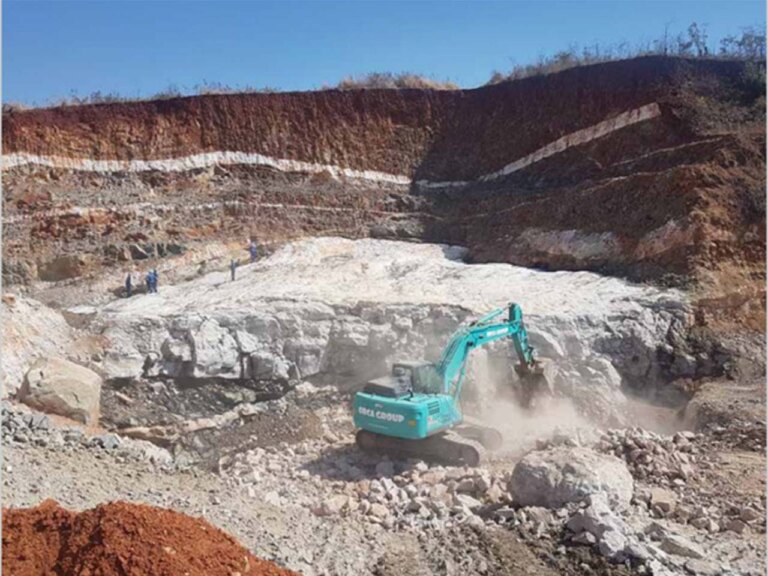
Victoria Falls Stock Exchange-listed gold-focused miner, Caledonia Mining Corporation, will soon file a preliminary economic assessment (PEA) showing that Bilboes can triple Caledonia’s production to over two hundred thousand ounces.

According to Caledonia’s CEO, Mark Learmonth, despite inflationary pressures, the PEA confirms Bilboes as a high-quality asset with the potential to nearly triple Caledonia’s production to over 200,000 ounces annually, alongside Blanket Mine.

He said the $309 million project will be partly debt-funded, and Caledonia plans to re-engage with debt providers to support the new feasibility study.

“The Board’s decision to proceed with the single-phase development option for Bilboes represents a key strategic milestone in our journey to becoming a multi-asset, mid-tier gold producer.

“Notwithstanding the general inflationary increase in operating costs and capital costs over recent years, the PEA re-confirms that Bilboes is a high-quality mid-scale asset that can generate attractive economic returns. The PEA also confirms that Bilboes has an attractive production profile with the potential to almost triple Caledonia’s production capacity to over 200,000 ounces per annum in combination with production from Blanket Mine.

“The peak funding requirement for the project is expected to be approximately $309 million, with a sizable proportion funded through debt. The company and, in the past, Bilboes’ previous owners, have had highly positive engagements with prospective debt providers, and we now propose to re-engage with these providers in parallel with the process of preparing the new feasibility study. To date, 2024 production at Blanket has been robust, and the company remains well-positioned to deliver returns to shareholders while expanding our asset portfolio and growing our production profile.

“I am very excited by the opportunity we have to evolve our business, which we believe will generate significant long-term shareholder value,” Learmonth said.

The publication of the PEA follows the company’s decision to advance the project to the execution stage in a single-phase development instead of multiple phases.

This decision was made after evaluating different development options, revealing that the single-phase approach is expected to yield superior returns. Single-phase development is expected to provide improved cash generation, allowing for a lower cost of capital due to enhanced debt financing capacity compared to phased development alternatives.

The project is expected to yield approximately 1.5 million ounces of gold (based on measured and indicated mineral resources) over an initial 10-year life of mine at an all-in-sustaining cost of $968 per ounce. The payback period is expected to be 1.9 years at a gold price of $1,884 per ounce.

A new single-phase feasibility study (the “New Feasibility Study”) is expected to be delivered during the first half of 2025. Funding solutions are being progressed in tandem with work on the New Feasibility Study.

According to Learmonth, the company incorporated several material revisions to the original single-phase development plan (as set out in the Former Feasibility Study), which include:

– Revised designs for the TSF to incorporate a modular construction approach and reduce upfront capital.
– Revised pit designs to reduce upfront capital.
– A review of the cost of the process plant and infrastructure, particularly sourcing major equipment and steelwork from alternative suppliers to reduce costs.
– Reassessing the phasing of the mine village establishment.
– A review of the operating expenses and general and administrative expenses with the availability of shared resources now that the project is part of the Caledonia group.
Unki Hasn’t Recovered from Productivity Loss – Chibafa

0

The country’s third-largest Platinum Group Metals (PGM) producer, Anglo-American Platinum-owned Unki Mines, has lost almost a quarter of its productivity since COVID-19, according to Unki Finance Director Collin Chibafa.

Speaking at the Chamber of Mines of Zimbabwe Annual Mining Conference held at Elephant Hills Hotel in Victoria Falls last week, Chibafa said when PGMs produced are divided by the number of employees, this loss becomes evident, stating that the company has not yet recovered from the loss in productivity experienced during the COVID-19 pandemic era.

“…and since COVID, we’ve seen losing almost a quarter in terms of productivity if you look at the PGMs that we produce and divide that by the number of employees. So we really haven’t recovered from that loss in productivity,” Chibafa said.

Regarding the state of the PGM sector, the key issues have been the impacts of COVID-19 in 2020, followed by geopolitical issues that led many customers to stock up on PGMs. This caused prices for palladium and rhodium to rise sharply. However, post-2022 and 2023, these prices have reverted. Despite the platinum market being in deficit in 2023, the price did not respond as expected.

According to Chibafa, Unki anticipates that the palladium sector will move into surplus and rhodium into a more balanced state, but significant de-stocking still needs to occur. Increasing penetration of battery electric vehicles, PGM recycling, and the slower-than-expected phase-out of internal combustion engines are influencing the market. Fuel cells and hydrogen technology may improve the PGM sector outlook, but predicting the next phase of the cycle is challenging.

Chibafa also said that Unki Mines is working to reduce operational costs and ensure efficiency improvements. The company has cut jobs from its head office to ensure profitability.

“Our key forecast strategy is to position ourselves to the left of the cost curve, ensuring profitability regardless of price fluctuations. We also aim to find new uses for PGMs to boost demand and positively impact prices.

“From an Anglo-American Platinum perspective, we cut head office costs last year, reducing our head office staff by a quarter. This year, we announced plans to lay off nearly 4,000 employees and 600 contractors, which should help reduce costs and preserve cash,” Chibafa said.

Zimbabwe gold buying prices per gram 3 June 2024

Fidelity Gold Refinery (FGR) official gold buying prices/ gram. See the Zimbabwe gold buying prices per gram today 3 June 2024.

SG 90% AND ABOVE US$71.34/g
SG ABOVE 85% BUT BELOW 90% US$70.59g
SG ABOVE 80% BUT BELOW 85% US$69.83/g
SG ABOVE 75% BUT BELOW 80% US$68.08/g
SAMPLE BELOW 10g BUT ABOVE 5g US$67.94g

Fire Assay CASH $71.72/g

NB: Fire Assay cash price is for gold above 100gs, no sample is deducted.
For the Fire Assay Transfer price, a sample of not more than 10g is deducted
A 2% royalty is charged on all deposits (Small-scale miners)
A 5% royalty is set for Primary Producers

Cash available. Fidelity Gold Refinery prices will be changing daily to match world market prices.

MetalsGrove reports initial results from Zimbabwe lithium projects

0

MetalsGrove Mining Ltd has fielded results from initial geological mapping and surface sampling at the Arcturus Lithium Project (ALP) and Beatrice Lithium Project (BLP) in Zimbabwe.

The consensus is that further investigation is warranted, and the company has scheduled a site visit for June to continue its exploration efforts.

More groundwork needed

The focus will be on conducting more detailed geological mapping and including pathfinder elements in the assay suite to better understand the potential lithium mineralisation.

Managing director Lijun Yang said: “The final report and assay results from the initial surface mapping and sampling program fell short of the company’s expectations.

“Assay results from identified pegmatites within the Arcturus Project are barren in lithium.

“Samples collected from the Beatrice Project showed encouraging lithium grades with lepidolite observed, but only one of these samples, grading 0.88% Li2O, was collected from within MetalsGrove’s granted tenements.

“However, in the absence of detailed geological observations, and with no pathfinder elements such as tantalum, potassium and rubidium included in the assay suite, the company, while disappointed with the initial results, considers that further investigation is warranted.

“The company is planning further work on these projects, including a site visit in June.”

The projects, close to Harare, were acquired on December 11 by the previous management team and encompass six new lithium claims covering 510 hectares, with one claim still in application.

This initial exploration phase aimed to negotiate and acquire tenements while defining pegmatites in the regions.

Less detailed observations

The geological mapping provided less detailed observations and focused primarily on identifying pegmatite zones.

More than a third of the samples were collected from areas outside MetalsGrove’s tenements. Unfortunately, the assay suite did not include pathfinder elements commonly associated with lithium mineralisation, such as tantalum, potassium and rubidium.

The Arcturus region, around 15 kilometres west of the Arcadia Lithium Mine, known as one of the world’s largest hard-rock lithium resources, showed disappointing results.

The 95 samples collected from Arcturas recorded lithium values at trace levels or below detection limits. No lithium-bearing minerals were observed in these samples.

Conversely, the Beatrice region, near the Joyce Gold Mine and within a well-known pegmatite zone mineralised in lithium-caesium-tantalum, yielded more promising results.

Of the nine samples collected, some recorded encouraging lithium grades, with values up to 1.44% lithium oxide.

That said, only one sample, which showed a grade of 0.88% lithium oxide, was collected from within MetalsGrove’s tenements.

Given the initial nature of the work, which included less detailed geological observations, MetalsGrove plans to undertake further exploration at both sites.

Source: Proactive Investors

Zimplats Invests US$1.3 Billion

0

The country’s largest Platinum Group Metal (PGM) producer, Zimplats, has used US$1.3 billion of its US$1.8 billion budgeted expansion program launched in 2020 and now focuses on reducing operating costs while improving production.

by Rudairo Mapuranga

PGM metal prices have declined significantly, in some cases by more than 50%, threatening the financial viability and sustainability of business operations for most PGM producers.

Speaking at the Chamber of Mines Annual General Meeting and Conference held at Elephant Hills Hotel in Victoria Falls last week, company CEO Alex Mhembere said Zimplats has shielded its US$1.8 billion expansion plan in response to the sharp decline in PGM pricing. Zimplats is implementing stringent cost-preservation measures to protect the business from the enormous pressure on profitability and cash flow and preserve, as much as possible, the jobs of more than 8,000 people employed by the company (both permanent and contract).

Under its US$1.8 billion capital expenditure investment, Zimplats’ strategy involves setting up integrated projects, including the development of new mines, expansion of the smelter, construction of an additional concentrator, a base metal refinery, a sulphuric acid plant, and the establishment of a 110-megawatt solar power plant.

Mhembere also said that his company was implementing high-technology mining to improve operational efficiency.

“We have been implementing a number of measures, including labour rationalization. We considered the issue of transference and offered our employees the opportunity to engage in volunteer activities, but there was very little uptake. Consequently, we implemented a different model. Out of our 8,000 employees, only 61 participated, and we have been able to retain them. We believe this is a strategic advantage, as it allows us to maintain our labor strength and be ready when the market recovers.

“Our focus is on improving productivity. We aim to be on the left side of the cost curve, which enables us to continue our work efficiently. This has been our strategic position and remains so. We are rationalizing our cash expenditure. The major growth project announced in November 2020, worth $1.8 billion, has been implemented. We have spent $1.3 billion of that amount and will rationalize the remaining $500 million over the next two to three years by delaying some projects. However, we have completed most of the projects, enhancing our capacity to manage efficiencies better.

“We are also implementing high technology in mining. For depleted mines, we are now using pillar reclamation and remote mining methods. Additionally, we are introducing high-tech mining in our new developments to reduce costs. We have fibre optics underground and our own license to run the technology. Our mining operations are visible from here and from everywhere, which helps improve productivity,” stated Mhembere.

Mimosa to Use Zimplats’ Refinery

0

Mimosa Mining Company has entered into an agreement with the country’s largest platinum group metal (PGM) producer, Zimplats, to use the latter’s Base Metal Refinery (BMR) to ensure the country maximizes benefits from PGMs.

by Rudairo Mapuranga

According to Mimosa Mining Company General Manager Stephen Ndiyamba, the company is unable to set up its own processing facility due to a limited resource base.

Zimplats is currently constructing the BMR, which has the capacity to toll process ores from other PGM producers.

“Regarding beneficiation, Mimosa is unable to set up its own facility due to a limited resource base. However, we can utilize local beneficiation facilities as they become available. Zimplats is currently constructing a facility that can accommodate feed from Mimosa, and an agreement is in place for this arrangement,” stated Ndiyamba.

However, it should be noted that Zimplats has deferred its BMR refurbishment.

The country’s largest PGM producer is postponing the execution of the Selous Base Metal Refinery (BMR).

According to Impala Platinum (Implats), which owns Zimplats, Zimbabwe’s largest PGM producer will also delay other projects in the country, including the 185MW solar plant, due to softening commodity prices which has seen some workers losing their jobs.

Zimbabwe gold buying prices per gram 31 May 2024

Fidelity Gold Refinery (FGR) official gold buying prices/ gram. See the Zimbabwe gold buying prices per gram today 31 May 2024.

SG 90% AND ABOVE US$71.35/g
SG ABOVE 85% BUT BELOW 90% US$70.59g
SG ABOVE 80% BUT BELOW 85% US$69.84/g
SG ABOVE 75% BUT BELOW 80% US$68.08/g
SAMPLE BELOW 10g BUT ABOVE 5g US$67.95g

Fire Assay CASH $71.73/g

NB: Fire Assay cash price is for gold above 100gs, no sample is deducted.
For the Fire Assay Transfer price, a sample of not more than 10g is deducted
A 2% royalty is charged on all deposits (Small-scale miners)
A 5% royalty is set for Primary Producers

Cash available. Fidelity Gold Refinery prices will be changing daily to match world market prices.

Ensure Accountants are Well-Versed in Law to Leverage Tax Incentives – Mnangagwa

0

The Deputy Minister of Finance and Investment Promotion, David Kuda Mnangagwa, emphasized the importance of miners ensuring their accountants are familiar with existing tax laws to fully benefit from the government’s array of tax incentives.

By Rudairo Mapuranga

Speaking at the Chamber of Mines Annual General Meeting and Conference held at Elephant Hills Hotel in Victoria Falls on Thursday, Hon. Mnangagwa said these measures are crucial for minimising operational costs and promoting economic growth within Zimbabwe’s mining sector.

Zimbabwe’s government has instituted several policies to reduce the operational costs of mining, thus enhancing the sector’s productivity and profitability. Mnangagwa highlighted that the Ministry of Finance’s mandate extends beyond mere revenue collection, it encompasses economic development and investment promotion. This comprehensive approach involves crafting policies that foster business growth, create employment, and attract both local and international investors.

“The government has thus put in place a number of tax incentives for the sector in order to minimize costs of production. Part of our discussions, even in the Matete room of the Chamber, when the people in this room congregate and think of the Minister of Finance, the first role or mandate that comes to mind is the Treasury aspect, where, because I’ve travelled with my Commissioner General, Zimra, it would appear that the Minister of Finance is only interested in collecting, collecting, collecting. But, I will say, you should be refreshed to know that we have a mandate for economic development,” Mnangagwa stated.

Tax Incentives for the Mining Sector

Hon. Mnangagwa elaborated on the specific tax incentives available to the mining industry, which include:

1. Allowable Deductions and Expenditure – All capital expenditure on exploration, development, and operations incurred wholly and exclusively for mining operations is fully deductible. This provision allows taxpayers to elect to deduct such expenditure in the year it is incurred or carry it forward to subsequent years.

2. Assessed Losses – There is no restriction on the carryover of tax losses, providing significant relief for companies in their developmental stages or those facing temporary setbacks.

3. Corporate Income Tax Rate – A special reduced corporate income tax rate of 15% applies to holders of special mining leases. However, these holders are also subject to additional profits tax based on a specific profitability formula.

4. Exemptions from Certain Taxes – The Minister of Finance, after consulting with the Minister of Mines, can exempt holders of special mining leases from non-resident shareholder’s tax, non-resident tax on fees, non-resident tax on remittances, and non-resident tax on royalties.

5. VAT Deferment  – To aid with cash flow, the government allows for VAT deferment on capital equipment imports. This deferment, currently with a minimum threshold of $500,000, can be granted for up to 180 days and, under certain conditions, extended to a maximum of three years for long-term projects.

The Finance Deputy Minister stressed the necessity for mining companies to have accountants who are adept at navigating the intricate tax laws to fully exploit these incentives.

“To be able to fully exploit some of these tax incentives, make sure your accountants are familiar with the law and what is afforded to you,” he urged.

Mnangagwa underscored the government’s commitment to transforming Zimbabwe’s economy through value addition and beneficiation of mineral resources. This transformation aims to bolster the secondary sector’s contribution to GDP and increase the value of exports.

“Governments will, therefore, continue to urge all mining and manufacturing industry sector players to participate in the strengthening of existing value chains through value addition and beneficiation of minerals, in the process creating jobs for our people and growing exports,” he said.

This initiative aligns with Zimbabwe’s vision of becoming an upper-middle-income society by 2030.

Addressing Industry Concerns

Hon. Mnangagwa also tackled several issues raised by industry stakeholders, including the contentious special capital gains tax. This tax was introduced to ensure that Zimbabwe benefits from transactions involving local assets sold by foreign entities.

“The intent, again, of taxing the purchaser was that you know, the seller is sold from another country, he’s gotten his money, he’s enjoying his profits, he has no obligation to come back to Zimbabwe and pay that. But the purchaser is still here in Zimbabwe and he’s holding onto the assets,” Mnangagwa explained.

He acknowledged that consultations and policy formulations are ongoing processes aimed at refining these measures to ensure fairness and economic viability.

The Role of Royalties and Beneficiation Taxes

Mnangagwa also touched upon the increase in royalties from 2.5% to 7%, citing the need for accurate reporting from miners to ensure fair taxation. The government seeks to develop iterative models to understand the true costs of mining, thereby facilitating more informed policy decisions.

Additionally, discussions are underway regarding the deferment of beneficiation taxes for companies that are investing in building beneficiation plants. The goal is to balance immediate cash flow needs with long-term economic benefits without creating opportunities for evasion.

As Zimbabwe strives toward its 2030 vision, the collaboration between the government and the mining sector will be pivotal in driving economic growth and achieving sustainable development.

High Electricity Tariffs, Outages Choking Mining Industry, Gono

0

Chamber of Mines President Thomas Gono has said that the mining industry in Zimbabwe is grappling with significant challenges due to high electricity tariffs and frequent outages.

Speaking at the Chamber of Mines Annual Mining Conference 2024 on its third day at Elephant Hills in Victoria Falls, Gono highlighted the impact of electricity tariffs and outages on mining operations. He revealed that the increase in electricity tariffs to USc14.21/kWh in October 2023 had significantly raised production costs.

“Compared to our peers in the region and other major mining jurisdictions, the electricity tariff for Zimbabwean mineral producers is very high,” he said, appealing for a downward review of tariffs.

Power outages have also taken a toll on the industry. Companies not connected to dedicated power lines experience frequent outages, resulting in production losses and equipment damage. Despite the government’s support for ZESA subsidiaries to import critical components duty-free, many mining operations have had to invest in alternative power solutions, such as solar and diesel plants, to mitigate the impact of unreliable grid power.

Gono painted a bleak picture of the current state of the mining industry. He noted that industry growth had declined from 10.5% in 2022 to 4.8% in 2023, with mineral exports falling from US$5.6 billion to US$5.2 billion in the same period. This decline comes amidst a drought that has disrupted the strong economic performance of previous years.

“Our preference is for the mining industry to be resilient in supporting the economy in such difficult times,” Gono emphasized.

Foreign currency shortages have exacerbated the challenges faced by the mining sector. Increased use of the US dollar has put pressure on available retained export earnings, making it difficult for operations to meet their requirements. Gono acknowledged the government’s efforts to build confidence in the ZiG and secure its functional use, but stressed the need for ongoing engagement on foreign exchange management matters.

The mining industry also faces significant capital constraints. Most mining houses struggle to raise offshore funding and rely on internally generated resources, which have become limited due to softening mineral prices. This has led to the postponement of capital projects, negatively impacting the industry’s long-term growth.

“The funding gap to optimize operations and meet output targets remains huge,” Gono said.

Performance of Specific Minerals

Discussing specific mineral performances, Gono highlighted several key points:

– Gold output declined by 14% to 31.965 tons in 2023, attributed to rising costs and power shortages.
– Production of platinum, palladium, and iridium remained at 2022 levels, with declines in rhodium (-4%) and ruthenium (-13%).
– Primary nickel production faced challenges, with only one producer contributing 16% to total nickel production, though overall nickel production grew by 1.4% to 14,465 tons.

Despite these challenges, the mining sector accounted for approximately 78% of national exports in 2023 and contributed around 20% to government revenue. It also provided over 53,000 formal jobs and employed more than 500,000 artisanal and small-scale miners.

Policy and Legislative Matters

Gono expressed concern over the Special Capital Gains Tax on transferring mining title, which he described as a direct tax on the purchase price rather than capital gains.

“Applying the tax retrospectively has severe consequences on investor confidence,” he warned.

He also discussed the high royalties for platinum, diamond, and lithium, which have increased production costs and affected the viability of mining projects. Furthermore, Gono emphasized the need to finalize amendments to the Mines and Minerals Act and regularize the exemption of the mining industry from the Indigenisation and Economic Empowerment Act.

Looking Ahead

In his outlook for 2024, Gono projected a weighted average growth of around 7.6% in mineral output, driven by increased production in gold, ferrochrome, and coal. However, he cautioned that mineral revenues are expected to decline to around US$5 billion due to further softening of commodity prices. “Risks to the mining sector outlook include fragile power supply, capital constraints, foreign currency shortfalls, and high production costs,” he said.

25% Forex Surrender is here to Stay – RBZ Governor

0

Reserve Bank of Zimbabwe (RBZ) Governor Dr John Mushayavanhu has said that the 25% forex surrender requirement imposed on revenue generated from all mineral exports will remain in effect, emphasizing its crucial role in maintaining foreign exchange liquidity in the economy.

by Rudairo Mapuranga

Speaking at the Chamber of Mines Annual Mining Conference 2024 held at Elephant Hills Hotel in Victoria Falls, Dr Mushayavanhu stressed the importance of this policy for Zimbabwe’s financial stability.

“I want the mining sector to appreciate that since they are the major contributor to foreign exchange in this country, they should comply when we say we want the surrender to be 25 per cent. If the producers of 70 per cent of the forex come to us and say they want to surrender zero, where is this country going to get forex?” said Dr Mushayavanhu.

Former Chamber of Mines of Zimbabwe President Collin Chibaya had previously criticized the forex surrender requirement, describing it as an “unannounced tax” due to discrepancies between formal and informal exchange rates. Despite this, Dr Mushayavanhu underscored the necessity of the policy, linking it to the overall economic strategy and the stability of the new Zimbabwe Gold (ZiG) currency.

The governor highlighted that the ZiG currency, introduced as part of a broader monetary reform, has proven to be well-managed and stable.

“The transition from Zimbabwe dollars to ZiG has been smooth. We have maintained that at all times, ZiG is backed by reserves. This stability has resulted in price stability and even a slight deflation in recent months,” he explained.

Mushayavanhu also noted the improvements in the financial sector’s transparency and the introduction of new measures to manage liquidity and maintain a stable exchange rate.

“We have in the central bank introduced what we call the governor’s daily dashboard, which allows us to monitor key economic indicators in real-time,” he added.

The RBZ’s commitment to these policies aims to foster confidence in the local currency and ensure the sustainability of Zimbabwe’s economic growth, particularly in the mining sector, which remains a significant contributor to the nation’s foreign exchange earnings.

“As the country navigates these economic reforms, the central bank’s stance on the forex surrender policy remains firm, aligning with broader efforts to stabilize the financial system and promote a resilient economic environment,” he said.

The 25% requirement excludes artisanal and small-scale gold miners.