Home Blog Page 213

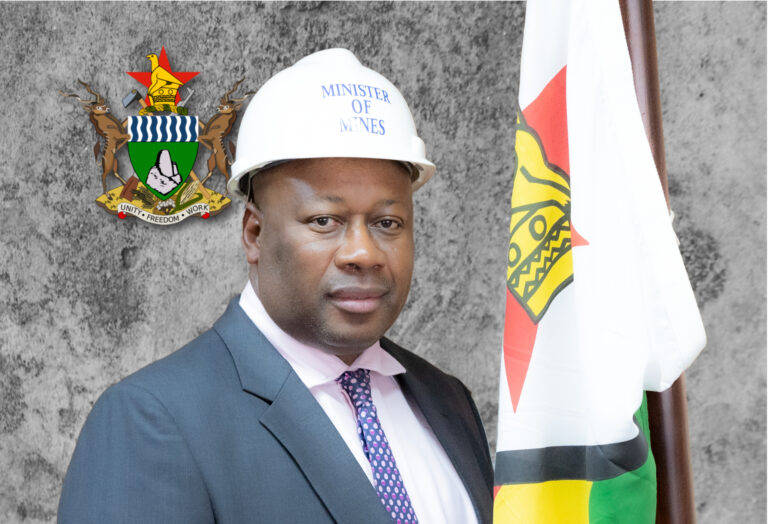
BREAKING: Chitando re-assigned to the position of Minister of Mines

0

Winston Chitando has been reassigned to the position of Minister of Mines and Mining Development.

Chitando replaces Minister Zhemu Soda as announced by Chief Secretary to the President and Cabinet Dr Martin Rushwaya.

Chitando’s experience in the Mining Industry

Winston Chitando served as the Executive Chairman of Mimosa Holdings from April 1, 2013, till his appointment to the position of Minister of Mines. He served as Managing Director of Mimosa Mining Company since October 1, 2007, and Executive Chairman since April 1, 2013.

He joined Hwange Colliery Company in 1985. In 1984, he joined Anglo American Corporation as a graduate trainee based at Hwange Colliery Company, where he rose to the position of Chief Accountant. For a total of 11 years, he worked for the Anglo-American Corporation group. During this period he rose through the ranks to hold various positions and directorships in a number of industrial and mining companies which were part of the Anglo-American group.

He served as Divisional Commercial Manager in the Mining and Industrial Division at Zimasco since 1997. From 1998 to September 2007, he was an Executive Director with responsibility for Finance for both Zimasco (Pvt) Ltd and Mimosa Mining Company. Chitando at various periods also held Executive responsibility in Zimasco for Sales and North Dyke Mining during this time. He served as Commercial Director of Zimasco until September 30, 2007.

Chitando also served as Vice President of the Chamber of Mines of Zimbabwe from 2008 to 2011 and its President from 2011 to 2013. He has been Chairman of Hwange Colliery Company Limited since May 19, 2016. He served as an Executive Director of Mimosa since 2002.

He also served as Chairman of the Platinum Producers Association.

He completed a Bachelor of Accountancy from the University of Zimbabwe in November 1984.

Chitando is also a fabulous marketer as evidenced by his interaction with investors at key investment platforms like Mining Indaba.

The seasoned Minister is a Legislator for Gutu Central Constituency and a seasoned mining expert with over two decades of experience in the industry.

Hon. Soda has been reassigned to the Ministry of National Housing and Social Amenities, while Hon. Daniel Garwe will take over as Minister of Local Governance and Public Works, succeeding Minister Chitando.

These redeployments were conducted in accordance with subsection 1 of section 104 of the Constitution of Zimbabwe.

Zimbabwe gold buying prices/ gram 24 April 2024

Fidelity Gold Refinery (FGR) official gold buying prices/ gram. See the Zimbabwe gold buying prices/ gram today 24 April 2024.

SG 90% AND ABOVE US$70.74/g
SG ABOVE 85% BUT BELOW 90% US$69.99g
SG ABOVE 80% BUT BELOW 85% US$69.24/g
SG ABOVE 75% BUT BELOW 80% US$68.49/g
SAMPLE BELOW 10g BUT ABOVE 5g US$67.37/g

Fire Assay CASH $71.11/g

NB: Fire Assay cash price is for gold above 100gs, no sample is deducted.
For the Fire Assay Transfer price, a sample of not more than 10g is deducted
A 2% royalty is charged on all deposits (Small-scale miners)
A 5% royalty is set for Primary Producers

Cash available. Fidelity Gold Refinery prices will be changing daily to match world market prices.

Drug decriminalisation aimed at reducing accidents in ASM

0

It is important to shift the approach to drug use from a criminalized behaviour to a public health strategy to mitigate drug-related accidents in the mining sector, stated Wilson Box, Director of the Zimbabwe Civil Liberties and Drug Network.

Speaking at a drug awareness workshop held at Cresta Jameson Hotel, Box emphasized the necessity of providing treatment options for drug users rather than resorting to criminalization.

He explained that decriminalization of drugs in the mining sector would ensure that drug users receive treatment instead of facing criminal prosecution, which often leads to issues such as bribery and the emergence of hardened criminals after imprisonment.

“Decriminalization involves transitioning drug use from a criminal offence to a public health approach, focusing on supporting individuals who use drugs rather than targeting those who sell or distribute them,” Box elaborated. “Currently, there are limited dedicated centres for treating drug users. With decriminalization, we envision the establishment of numerous treatment centres where individuals can seek assistance for drug use challenges.”

Box highlighted the potential benefits for artisanal miners, who frequently encounter drug-related accidents due to overdosing or impairment while working underground. “Through decriminalization, artisanal miners can access treatment services, reducing the prevalence of drug use and consequently decreasing the likelihood of accidents,” he emphasized.

By deploying qualified personnel to oversee treatment programs, decriminalization aims to address drug use as a health issue rather than a criminal offence, ultimately contributing to a safer working environment in the artisanal and small-scale mining sector.

Unki production increases by 2%

0

Unki Mines, the country’s third-largest platinum group metals (PGM) producer owned by Anglo American Platinum, experienced a 2 per cent increase in production during the quarter ended March 31, 2024, compared to the previous quarter ending December 31, 2023.

During the quarter ended December 31, 2023, Unki produced 61,800 ounces. This production figure, however, remained stable at 62,800 ounces during the first quarter of 2024 compared to the same quarter in 2023.

Platinum production at Unki increased by approximately 1 per cent to 28,600 ounces in the first quarter of 2024, up from 28,400 ounces produced during the same quarter the previous year, showing a similar 1 per cent increase from the previous quarter ending December 31, 2023, with 28,300 ounces.

Palladium production at Unki Mine also saw a significant increase of approximately 4 per cent to 24,300 ounces during the first quarter of 2024 compared to the previous quarter (Q4 2023) with 23,400 ounces, marking a 1 per cent increase compared with the same quarter of 2023, with 24,100 ounces.

Rhodium production at Unki increased by approximately 4 per cent to 2,800 ounces from both the previous quarter and the same quarter of 2023, where it stood at 2,700 ounces.

However, other PGM production at Unki experienced a decrease of approximately 3 per cent during the first quarter of 2024 to 7,100 ounces from 7,300 ounces produced during the same quarter the previous year. There was also a decrease of approximately 4 per cent compared to the previous quarter (Q4 2023), with 7,400 ounces.

Despite these fluctuations, Unki Mine continues to play a significant role in the country’s PGM production, with promising prospects for further growth and development in the sector.

Dallaglio, Himoinsa sign a 50MW gas to power MoU with Invictus Energy

0

In an endeavour to secure a reliable power supply at Eureka Gold Mine, Victoria Stock Exchange-listed Padenga Holdings’ Dallaglio Investments Pvt Ltd and Himoinsa Southern Africa Proprietary Limited have executed a Memorandum of Understanding (MoU) with Geo Associates (Private) Limited, owned by Australia Stock Exchange-listed oil and gas exploration company, Invictus Energy Limited, for a proposed gas-to-power project.

The proposed power generation plant and equipment will be provided by Himoinsa, with a notional capacity of 12MW and the ability to increase the plant capacity size up to 50MW.

According to Dallaglio CEO James Beare, the MoU will ensure that Eureka Gold Mine production will be on a growth trajectory due to the availability of reliable and affordable energy.

He said the mine’s substitution of coal and diesel-fired power for natural gas supports its goal as a long-term sustainable gold producer and will significantly reduce its emissions profile.

“Power is a critical input for our mining operations in Zimbabwe, and securing reliable and affordable energy is crucial to support our plans to expand production at Eureka.

“Substituting coal and diesel-fired power for natural gas supports our goal as a long-term sustainable gold producer and will significantly reduce our emissions profile.

“We look forward to working with Invictus and Himoinsa to realize this mutually beneficial project for the resources sector in the country,” Beare said.

Invictus CEO Scott McMillan said the MOU provides flexibility to grow the pilot project incrementally through modular expansion as the resource base grows and additional power off-takers are signed up.

“Signing this MOU is a major step forward in our early commercialization strategy and demonstrates the immediate monetization opportunities available to Invictus as we look to progress the Cabora Bassa project following our significant gas discovery at Mukuyu.

“We are pleased to be partnering with one of the largest gold producers in the country in Dallaglio and one of the leading power generation solutions companies in Himoinsa for our planned pilot project.

“Eureka’s close proximity to Mukuyu and available infrastructure make this an ideal pilot project and provide us with line of sight to early first production, revenue generation, and proof of concept for future full-field developments and large-scale gas-to-power projects.

“The high-quality gas composition confirmed from Mukuyu-2 requires minimal surface processing of the gas stream, enabling the implementation of a near-term pilot project utilizing a low-cost production system at the well-site and existing infrastructure to deliver gas and power to end-users.

“We look forward to working closely with Himoinsa and Dallaglio to complete the feasibility study over the coming months in tandem with our high-impact field activity to progress the project into implementation,” MacMillan said.

Himoinsa Southern Africa Director Matthew Bell said his company was pleased to be working with Invictus and expanding its relationship with Dallaglio to potentially provide a cleaner, cost-effective, and reliable source of energy to the Eureka Mine by substituting its diesel power generation with natural gas.

“Himoinsa offers a wide range of generation technologies using diesel, HFO, natural gas, LPG, and lithium-ion batteries. One of the advantages of already being operational onsite at Eureka with a diesel power plant is that we can develop an alternative gas solution to complement or replace the diesel plant without any interruption to the mine’s power security.

“We look forward to working with Invictus and Dallaglio on this pilot, which can be used as a project reference for other mines in Zimbabwe, Africa, and globally,” Bell said.

Power generated would be supplied to Eureka or other private off-takers through the local grid or into the Southern Africa Power Pool (“SAPP”) if excess supply is available.

Following the recent confirmation of the Mukuyu gas-condensate discovery at the Cabora Bassa Project, Invictus is positioning itself to capture early monetization opportunities and accelerate timelines to first production and revenue generation.

High-quality natural gas discovered at Mukuyu-2 contains minimal impurities and allows for a simple early production system at the well-site to produce gas to be used in power generation or compressed natural gas for delivery to onsite power generation at Eureka.

This will minimize the Company’s capital and surface processing infrastructure requirements for the pilot project as well as in the future full-field developments.

The MOU provides flexibility to grow the pilot project incrementally through modular expansion as the resource base grows and additional power off-takers are signed up.

A feasibility study will be undertaken to determine the optimal delivery of power to Eureka – either well-site generation of power and wheeling, utilizing the existing grid infrastructure which is located within 5 kilometres of Mukuyu-2, or onsite generation with natural gas transported via truck between the well-site and the power plant.

Following the completion of the feasibility study, Invictus and Himoinsa intend to execute a binding Gas Sale and Purchase Agreement (GSPA), under which the Company will provide natural gas to Himoinsa, which in turn will provide power generation equipment and supply electricity to Dallaglio at Eureka, under back-to-back GSPA and Power Purchase Agreements (PPAs). Part of the feasibility study involves the Company assessing the use of Mukuyu-2, post-well testing, as a producer in the pilot project.

Expansion of the pilot can be matched to gas deliverability from the Mukuyu Gas Field through Himoinsa’s turnkey power generation systems. Himoinsa currently provides supplementary and backup diesel power generation to Eureka and Dallaglio’s other mining operations in Zimbabwe.

Gas-fired power will provide Eureka with a reliable and cleaner source of energy than the current coal-fired power and backup diesel power generation, which is used during frequent power outages experienced in the country.

The pilot will also gather longer-term production data and dynamic reservoir information to assist in optimizing the full field development planning and determining connected resource volumes and development well locations and sequencing.

Zambian claimants granted appeal in class action against Anglo American

0

The Johannesburg High Court on April 19 granted permission to appeal an earlier ruling denying class action certification for 140 000 women and children in Kabwe, Zambia, who allege they have suffered the effects of lead poisoning as a result of a mine formerly owned by Anglo American in the country.

In granting permission, Justice Leonie Wendell found that an appeal against her earlier judgment had “reasonable prospects of success on at least one ground of appeal” and that there were “compelling reasons to grant the appeal, as class action law is still being developed in South Africa”, and that “there are current matters of law of public importance which directly implicate constitutional rights”.

In a 126-page judgment delivered in late December 2023, Wendell ruled that a claim against Anglo American South Africa (AASA) over widespread lead poisoning across Kabwe, Zambia, could not proceed as a class action.

The class action was filed in South Africa as it would not have been possible for the claimants to obtain access to justice in Zambia, law firm Leigh Day, which is a consultant on the matter, says.

Following the permission to appeal the December decision, the Kabwe claimants will now take their case against AASA before the Supreme Court of Appeal of South Africa later this year.

Leigh Day describes this as a “major step forward” in the longstanding lead poisoning class action claim against AASA, a wholly-owned subsidiary of London-headquartered Anglo American.

“The December judgment effectively blocked access to justice for the people of Kabwe,” it avers.

Kabwe was owned and operated by Anglo American from 1925 to 1974.

Leigh Day emphasises that the evidence submitted to the court by the claimants in support of this claim is clear.

From the early 1970s, reports by the mine doctors showed that several children had died of lead poisoning from the mine, and a high proportion of children in the local communities were suffering from massive blood lead levels, the law firm states.

Experts for the claimants also contend that the stability of lead in the environment was well known by the 1960s and that the risk of lead poisoning to future generations should have been foreseen by Anglo American if the environment was not cleaned up, the firm adds.

The claimants allege that, on economic grounds, Anglo American failed to heed advice from international experts in 1970 that the topsoil should be replaced.

However, Anglo American argues that it adhered to standards that were acceptable in the 1970s, that the risks to future generations were not foreseeable and that the company is therefore not liable to current inhabitants of Kabwe.

Amnesty International and a number of United Nations (UN) agencies intervened at the certification hearing to argue that Anglo American’s opposition to the class action was contrary to the UN Guiding Principles on Business and Human Rights, Anglo American’s own human rights policy and publicly stated human rights commitments.

The Kabwe claimants are represented by law firm Mbuyisa Moleele Attorneys with Leigh Day acting as consultants.

In a separate statement, Anglo-American says it has noted the decision.

“The High Court dismissed the certification application in December 2023 after almost a year of deliberation, clearly highlighting the claim’s multiple legal and factual flaws and deeming it not in the interest of justice for the class action to proceed,” the company states.

It adds that the grant of the right to appeal is simply a recognition by the High Court that an appeal to another Court is a viable option for the claimants to follow in the South African legal process.

Anglo-American posits that this does not undermine the High Court decision that dismissed the application in December 2023.

The company says it will oppose any appeal that may follow.

“As Anglo-American has stated throughout, it has every sympathy for the situation in Kabwe, but is not responsible for it. Anglo-American has stated from the outset that this claim is entirely misconceived,” the company posits.

Source: Mining Weekly

Chrome Production Surges by Over 4 Percent

0

Chrome production in Zimbabwe experienced a notable surge, increasing by 4.37 per cent in 2023 compared to the previous year, as reported by the country’s statistics agency, ZIMSTAT.

By Rudairo Mapuranga

This surge translated to a production of 1,204,755 MT in 2023, compared to 1,154,340 MT in 2022.

Despite facing a 46.62 per cent decline in production during the first quarter of 2023, dropping to 206,354 MT from 386,576 MT in the same period of 2022, the subsequent quarters painted a more optimistic picture.

The second quarter of 2023 witnessed a 14.89 per cent increase in production, with output reaching 274,978 MT, surpassing the 239,333 MT produced during the same quarter in 2022.

Although the third quarter of 2023 saw a decline of 27.88 per cent in production, dropping to 248,176 MT from 344,131 MT in 2022, the final quarter saw an astonishing 158.121 per cent increase. Production skyrocketed to 475,247 MT, a stark comparison to the 184,118 MT produced in the same period of 2022.

Zimbabwe’s chrome industry holds promising prospects, buoyed by several factors. Firstly, the country boasts chrome reserves of significant magnitude, positioning it as a key player in the global chrome market. These reserves provide a solid foundation for sustained production growth and economic development.

Moreover, Zimbabwe’s chrome is renowned for its high grades, boasting purity levels exceeding 46 per cent. This exceptional quality makes Zimbabwean chrome highly sought after on the international stage, attracting interest from various industries worldwide. The premium-grade ensures that Zimbabwe remains a prominent supplier in the competitive global chrome market, fostering economic stability and growth.

The surge in chrome production witnessed in 2023 underscores Zimbabwe’s potential as a major player in the chrome industry. With abundant reserves and top-grade quality, the country is poised to further solidify its position in the global market, driving economic prosperity for years to come.

Lithium Production Increases by Over 760 Percent

0

Lithium production surged by over 760 per cent in 2023, driven by the activation of several mines and lithium processing facilities.

by Rudairo Mapuranga

According to data released by the country’s statistics agency ZIMSTAT, production skyrocketed to 745,455 metric tonnes (MT) in 2023, marking an impressive 763.5 per cent increase from the 86,330 MT produced in 2022.

The first quarter of 2023 witnessed a surge of approximately 130.9 per cent, with production reaching 25,000 MT compared to 10,825 MT in the same quarter of 2022. In the second quarter, production spiked by about 405.8 per cent to 79,689 MT from 15,755 MT in 2022.

During the third quarter of 2023, production soared by approximately 807.5 per cent to 325,479 MT, compared to 35,866 MT in the corresponding quarter of the previous year. Similarly, the fourth quarter saw a substantial increase of approximately 1220.1 per cent, with production reaching 315,287 MT, up from 23,884 MT in 2022.

Looking ahead, projections indicate continued growth in lithium production, solidifying the country’s position as a major player in the global lithium market.

In 2023, according to the Minister of Mines and Mining Development, Hon. Zhemu Soda, lithium exports, despite the US$12 Billion vision by 2023, stimulated the lithium sector to realize US$600 million in exports annually.

“Lithium exports were targeted at half a Billion US dollars, but a total of over USD 600 million was realized from the export of Spodumene, Petalite, and Lepidolite, despite export bans that were effected in 2023, underscoring the importance of these lithium minerals to our economy,” Minister Soda said.

According to Hon. Soda, the Ministry of Mines and Mining Development will continue to work on strategies to help the country realize more gains from its mineral resources. These strategies include coming up with Special Purpose Vehicles for mineral exploration, new mine openings, re-capacitation of dormant mines, expansion of current mining projects, curbing mineral leakages, increased capacity utilization, and ultimately value addition and beneficiation across the whole sector.

Diamond production increases by 5 percent

0

Diamond production in Zimbabwe saw a notable increase of 4.99 per cent in 2023 compared to the previous year, according to statistics provided by ZIMSTAT.

In 2023, the country produced a total of 5,107,931 carats, marking a significant rise from the 4,865,011 carats produced in 2022. This upward trend reflects the ongoing growth and development within Zimbabwe’s diamond mining industry.

During the first quarter of 2023, the country witnessed a remarkable surge in diamond production, totalling 1,637,554 carats. This represented a substantial 54.8 per cent increase from the 1,057,710 carats produced during the same period in 2022. Similarly, the second quarter of 2023 saw a significant uptick in production, with 1,204,805 carats produced, marking a notable 26.8 per cent increase from the comparable quarter in 2022, which recorded 949,921 carats.

However, the third quarter of 2023 experienced a slight decline in production, with a decrease of 22 per cent to 1,035,905 carats compared to the same period in 2022, which saw 1,329,805 carats produced. Likewise, the fourth quarter of 2023 saw a decrease of 19 per cent, with production totalling 1,229,677 carats, down from 1,527,573 carats in the same quarter of 2022.

The history of diamond mining in Zimbabwe dates back to the late 19th century, with the discovery of significant diamond deposits in the country. Over the years, Zimbabwe has become renowned for its rich diamond resources, attracting investment and fostering growth in the sector. As Zimbabwe progresses towards its Vision 2030, which aims for sustainable economic development and prosperity, the diamond mining industry is poised to play a pivotal role. By leveraging its abundant diamond reserves and implementing strategic initiatives, Zimbabwe can further enhance its position as a key player in the global diamond market, contributing to the country’s vision of achieving socio-economic transformation and prosperity for its citizens.

Five Arrested for Stealing US$48,360 Copper Cables at Zimplats

0

Five individuals have been apprehended by the Zimbabwe Republic Police (ZRP) in Kadoma in connection with the theft of copper cables at Zimplats’ Mupfuti Mine in Mhondoro Ngezi.

According to Police Spokesperson Assistant Commissioner Paul Nyathi, the arrests were made following intelligence received regarding the stolen copper cables.

Four of the suspects, Donald Magaya (23), Onismo Magaya (26), Takudzwa Mango (25), and Robson Mandini (23), were intercepted while travelling in two white Toyota GD6 vehicles. Upon search, law enforcement discovered 2.5 tonnes of copper cables valued at US$48,360, while Innocent Chafera (38) was arrested while hiding in a disused mining shaft.

Nyathi emphasized the police’s commitment to apprehending the outstanding suspect, Kudakwashe Mutizira, who fled the scene upon police intervention.

“The Zimbabwe Republic Police (ZRP) confirms the arrest of Donald Magaya (23), Onismo Magaya (26), Takudzwa Mango (25), Rabson Mandini (23), and Innocent Chafera (38) in connection with a case of theft of copper cables which occurred at Ngwarati Mine, Turf, Kadoma on 14th April 2024 at 10:30 am.

“On the 14th of April 2024, police in Kadoma acted on received information and intercepted Donald Magaya, Onismo Magaya, Rabson Mandini, and Takudzwa Mango who were travelling in two white Toyota GD6 motor vehicles registration number AFU 4025 and AGH 4138, near Ngezi Services Garage, Turf Kadoma. On seeing the police, the suspects’ accomplice, Kudakwashe Mutizira, fled from the scene. The police conducted a search and recovered copper cables weighing 2,572 kilograms valued at US$48,360; subsequently, the four suspects were arrested.

“The four suspects were interviewed and implicated Innocent Chafera as their accomplice, who was arrested while hiding in a disused mining shaft.

“The Zimbabwe Republic Police is appealing for information which may lead to the arrest of the outstanding suspect, Kudakwashe Mutizira, who is being sought in connection with this case,” Nyathi said.

Meanwhile, the ZRP is also appealing for information which may lead to the arrest of a foreign national, Francis Chikopa (45), who is being sought in connection with a case of theft of copper which occurred between 30th March 2024 and 31st March.

The suspect was driving a white Howo Sinotruck loaded with 36 tonnes of copper which was in transit from Zambia to Mozambique. He offloaded the copper at an unknown place and later dumped the truck at Macheke Business Centre.

These incidents occur against the backdrop of Zimbabwe’s ongoing electricity challenges, which have prompted increased incidents of copper cable theft. Such criminal activities not only disrupt essential infrastructure but also pose significant safety risks to communities.