


Home Blog Page 215

Imagine the response if RBZ had said “Now we transact in gold”

0

It is a well-known fact that the “Safe Haven” for any wealth for investors is Gold and luckily Zimbabwe has gold, plenty of it. Unlike other volatile minerals, Gold serves as a reliable store of wealth, consistently maintaining its value throughout history.

Unlike paper currencies, which can lose value due to inflation or economic turmoil, gold’s intrinsic worth endures and that has been proven for centuries.

In the case of Zimbabwe, our Motherland, we have our local currencies which haven’t been lucky leading to the transacting public preferring a much more stable currency (the US$).

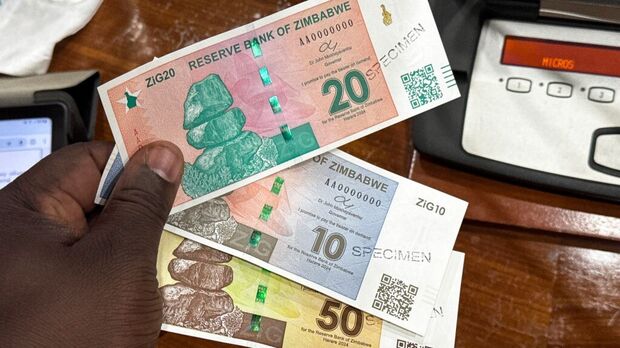
Even after the introduction of the new currency – ZiG, by the Reserve Bank of Zimbabwe (RBZ) Governor, the US$ will likely remain the currency of choice since one still has to sell the new currency to buy the greenback to pay for necessities like fuel. This means the illegal Money-changing business will go on as motorists frequently and quickly need to get USD for travel.

As the ZiG (and or the structured currency) introduction debates rage on what must not be ignored is the fact that people have seen multiple new currency introductions and these have always had the same fate.

Whilst the new governor is doing all he can to instil confidence, the public has been here before so it takes more than just paper money to convince Zimbabweans that the ZiG will work.

Our Paper money and the so-called “transfer” do not have a successful track record therefore the public confidence level may be low. Confidence level however would have been much higher if the country was introduced to something new and solid, GOLD. How, one may ask?

The government can introduce smaller denominated gold coins ranging from 1 cent to 20 dollars which have gold worth the currency displayed. These should be pegged with the going rate of the international market Gold price.

Public reaction to an actual gold currency would have been a lot different if the governor had told the nation “Now we transact in gold”. Such an announcement would have instilled instant and unquestionable confidence – who wouldn’t want to have gold in their possession? Fuel stations would accept the currency because it’s gold! Even Gogo from Chirasavana would love to have coin because “It’s Gold, it’s valuable!

Even the appetite to have the hard US$ currency would likely die down.

Currently, Zimbabwe has higher-denominated gold coins which are minted by Fidelity Gold Refinery (FGR). These have performed extremely well.  Their price is determined by the international market rate for an ounce of gold, plus five per cent for the cost of producing the coin.

However, for the country to have millions of coins containing gold in circulation, we need gold, lots and lots of it. It may take years to achieve such a fit however stability is guaranteed, history proves it.

One may ask what about the ZiG digital tokens and my answer is as long as Mbuya Goto from Makande or Gogo Sithole from Lupane, or Hwindi plying Mbare to Town route have never transacted or used them they have no effect whatsoever on the broader economy of Zimbabwe.

Coins are heavy one may say, BANK them!


This is an opinion piece

Zimplats reducing its workforce by 1%

0

Zimplats is reducing its 8000-strong workforce by 1% as the Platinum miner moves to implement survival tactics as falling PGM prices bite.

Speaking at the 7th edition of the PGMs Industry Day Conference in Johannesburg on Wednesday, ZIMPLATS Chief Executive Officer (CEO) Alex Mhembere said:

“Through these current headwinds, we are only going to reduce our people by 1% of the total labour complement of 8,000 people that we have,” Mhembere announced.

He said ZIMPLATS wants to maintain its yearly output of around 600,000 PGM ounces per year and was targeting improving productivity as a way of containing costs.

He said that Zimplats would reduce spending on its 10-year $1.8 billion expansion project announced in 2021 and adopt a more cost-effective approach in the upcoming financial year, beginning in July.

“We’re going to spend less. We will only be focusing on our replacement capital expenditure, stay-in-business capex and very little on growth capex,” Mhembere said.

Meanwhile, some workers at the Platinum miner have reported to Mining Zimbabwe that salaries were being cut by 10%. The platinum miner is yet to respond to these claims.

Mnangagwa commissions the Pickstone underground project

0

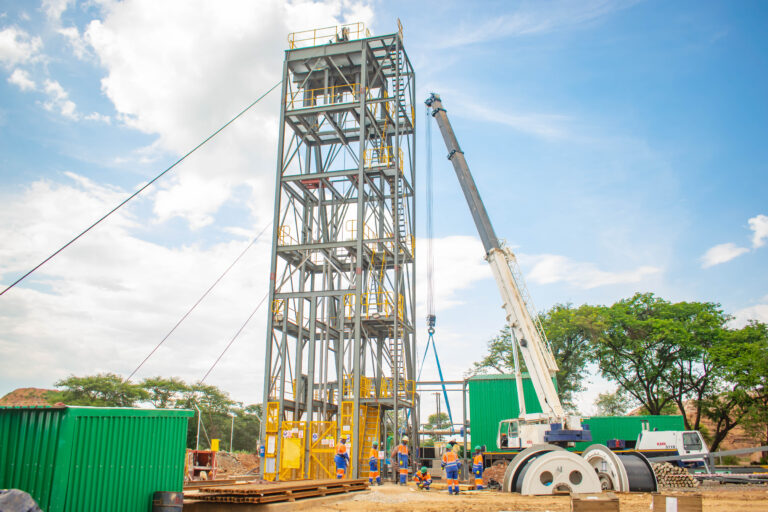
President Emmerson Mnangagwa commissioned the Pickstone Peerless Gold Mine underground project yesterday, which is projected to produce an average of 100 kgs a month, up from the 40 kgs the mine used to produce from its open-pit mine.

The mine’s transition from open-pit mining to underground mining was encouraged by improved grades averaging 3 grams/tonne, up from 1.8 grams/tonne. The mine invested over US$50 million to build the mine to its current state, with a further US$27 million committed towards expanding the project.

The Pickstone underground project has created 550 new jobs with the potential to create a similar number by transitioning its open-pit mine to underground, with feasibility studies currently underway.

Speaking to Mining Zimbabwe on the sidelines of the mine’s official opening, Zimbabwe Miners Federation (ZMF) Mashonaland West Province Chairman Timothy Chizuzu said the resilience shown by Dallaglio, that mines are not found but built, encourages ASM to develop their mines and cease to mine blindly.

Chizuzu said ASM should adopt initiatives for the development and growth of the small-scale and artisanal mining sector through formalization and standardization to maximize production by emulating Dallaglio’s strategies.

“We are here as small-scale miners learning from our big brothers. As small-scale miners, we see the importance of planning and growing our mines to be professional and commercial. We need to upscale our mines by investing in exploration,” Chizuzu said.

The Deputy Minister of Mines and Mining Development, whose mandate is the growth and development of the small-scale mining sector in Zimbabwe, Eng Polite Kambamura, encouraged miners to mine sustainably to enable future generations to benefit.

“The old miners mined this mine sustainably; that is why the current investor was able to resuscitate this mine because it was mined in a sustainable manner.

“So, we urge other miners to mine sustainably so that future generations can also benefit. In the future, a grade of 0.5 grams per tonne might also be sustainable,” Kambamura said.

Blanket Mine’s production increased by 6%, gold sales up 17%

0

Caledonia Mining Corporation, a gold-focused producer listed on the Victoria Falls Stock Exchange, reported that its Blanket Mine in Gwanda recorded a 6% increase in production during the first quarter of 2024 compared to the same quarter in 2023. Gold sales also increased by 17% in the first quarter of 2024 compared to the first quarter of 2023.

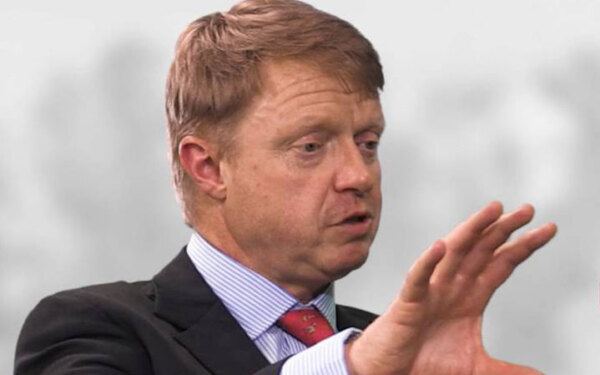
According to Caledonia CEO Mark Learmonth, the increased production was achieved despite 8 fewer production days (a 9.3% reduction) compared to the first quarter of 2023 due to the production cut-off for gold delivery set on March 21, 2024.

Learmonth stated that gold production at Blanket was 17,050 ounces during the first quarter of 2024, representing a 6% increase over the first quarter of 2023. Blanket sold 18,450 ounces during the quarter, a 17% increase from the first quarter of 2023 when 15,797 ounces were sold.

“I am pleased that production at Blanket has started strongly in 2024 with over 17,000 ounces produced in the quarter, despite having 8 fewer production days compared to Q1 2023, which is an excellent result. With current high gold prices, it was good to see our gold sales increase by 17% in Q1 2024 compared to Q1 2023,” said Learmonth.

“Our significant investment in Blanket over the past seven years and completion of the Central Shaft has nearly doubled production, extended the mine life, and allowed the restart of underground exploration in 2023. We continue to see Blanket as a solid foundation for growth as we pursue our strategy to become a multi-asset gold producer,” Learmonth added.

Mapinga Mines to Energy Industrial Park Construction Begins in June

0

In an endeavour to ensure the country benefits from the green revolution by beneficiating and value-adding the country’s minerals, especially lithium, the government has announced that construction for Phase 1 of the Mapinga Mines to Energy Industrial Park will commence in June.

The Mapinga Mines to Energy Park aims to bridge the gap between beneficiation and value addition by creating a manufacturing industry for commodities like lithium batteries, electric vehicles, and others.

This industrial park is a lithium value addition and beneficiation project that will include the construction of a coking plant with a capacity of 1.2 million metric tonnes of coke and 130,000 metric tonnes of lithium salt per annum. Additionally, it will involve the construction of two 300-megawatt power stations, a graphite processing plant, a nickel-chromium alloy smelter, and a nickel sulfate plant, supported by power supply and logistics.

According to Minister of Information, Honorable J. Muswere, Cabinet was briefed by Vice President Retired General Constantine Guvheya Chiwenga, Chairman of the Inter-Ministerial Committee on the Establishment of the Mines to Energy Industrial Park in Mapinga. He stated that the industrial park, spanning over 500 hectares, will be implemented in phases, with Phase 1 set to begin in June 2024. The government will hold a shareholding in the project.

“Honorable C.G.D.N. Chiwenga briefed Cabinet as Chairman of the Inter-Ministerial Committee on the Establishment of the Mines to Energy Industrial Park in Mapinga. The industrial park, covering 500 hectares, will be implemented in phases, with Phase 1 scheduled to commence in June 2024. The government will have a shareholding in this project,” said Hon. Muswere.

Prospect Acquires 85% of the advanced copper-cobalt project in Zambia

0

Prospect Resources Limited has acquired an 85% interest in the Mumbezhi Copper Project in Zambia, solidifying its position in the battery and electrification mineral sector in Africa.

Patricia Rwafa

Managing Director and CEO Sam Hosack highlighted the significance of this acquisition, emphasizing the project’s potential for a world-class, long-life, open-pit copper-cobalt operation.

Under the agreements, Prospect will pay approximately US$5.5 million in cash and US$1 million in scrip to Global Development Cooperation Consulting Zambia Limited (GDC) for the acquisition. Additionally, Prospect will settle approximately $1 million in scrip plus options to Orpheus Uranium Limited (ORP) for select exploration costs on Mumbezhi, aiming to withdraw all legal claims and gain access to historical geological and mining data.

Hosack expressed optimism about the project’s prospects, citing the extensive drilling completed by ORP and the favorable metallurgy in the region. He noted Zambia’s strong history in the resources sector, particularly for copper, highlighting the existing infrastructure and government support.

The Mumbezhi Copper Project is strategically located near established copper mines like Sentinel and Kansanshi, providing Prospect with a well-capitalized opportunity to advance exploration rapidly. Hosack indicated that this acquisition aligns with Prospect’s strategy to diversify its portfolio amid subdued lithium markets, positioning Mumbezhi as a potential flagship project with substantial exploration upside.

Commenting on the development, Prospect’s Managing Director and CEO, Sam Hosack said,

“The purchase agreements we have struck for the highly prospective Mumbezhi Copper Project which includes the Nyungu deposits, represent a significant milestone, which extends our reach into the battery and electrification mineral sector in Africa,”

‘The Nyungu deposits have all the potential ingredients of a world-class, long-life, open pittable, copper-cobalt mining and processing operation, with regionally favourable metallurgy and significant exploration upside. Zambia is also a leading jurisdiction to explore and develop mining operations in sub-Saharan Africa, having a long-standing history in the resources sector, particularly for copper. I personally have spent over five years in this part of Zambia during my career and have firsthand experience of the excellent infrastructure and strong support from both the government and community, with major companies like Barrick Gold, First Quantum Minerals and KoBold Metals already calling it home,”

The Project also offers excellent potential to deliver significant new, high-value copper-cobalt discoveries. Subject to the satisfaction of all relevant conditions precedent, this acquisition is set to deliver a high-quality, advanced copper exploration play into our portfolio – which is an exciting proposition.”

“The timing of this push into copper is ideal as markets for lithium remain subdued. Our current drilling program at Step Aside is nearing completion and the acquisition of 100% of Omaruru gives us much more flexibility with cash spend, allowing a real focus on aggressively drilling Mumbezhi. We remain committed to our strategy and think the long term potential of lithium remains robust but we are excited to add copper to our portfolio as it provides diversification and this new project holds the potential to rapidly develop into the flagship project we have been seeking.”

ZiG gains 0.2% to 13.53 per US dollar

0

Less than a week after its launch, the Zimbabwe Gold (ZiG) has gained against the United States Dollar by 0.2%, making it one of the strongest currencies in Southern Africa.

The ZiG currency is expected to address the country’s currency woes, which have persisted for the past 25 years.

Last week, the country’s central bank introduced the new gold-backed currency in an attempt to tame price gains that reached a seven-month high of 55% in March.

This is the country’s sixth attempt at creating a new currency since 2008. The Zimbabwe dollar — the currency most recently used by the country — has depreciated by 80% this year alone.

There has been so little confidence in Zimbabwe’s local currency that about 80% of the country’s population transacts in the US dollar.

On Thursday, Zimbabwe’s central bank governor, John Mushayavanhu, said the country has real gold and mineral assets to back up the new ZiG currency. Mushayavanhu mentioned that Zimbabwe’s central bank holds 2.1 tons of gold and other assets, including diamonds, equivalent to 0.4 tons of gold.

The ZiG started trading on Monday at an exchange rate of 13.56 to the dollar, set by the central bank. The gain in the ZiG was a result of the increase in gold prices.

Gold deliveries decrease over 2%, LSM overtake ASM

0

Gold deliveries to the country’s sole buyer and exporter, Fidelity Gold Refinery (FGR), decreased by 2.41 per cent during the first quarter of 2024 compared to the same quarter of 2023, due to increasing operational costs.

The deliveries closed the first quarter of 2024 at 6,044 kg, lower than the 6,194 kg in the first quarter of 2023, and significantly below the 7,694 kg delivered in the first quarter of 2022, a record-breaking year.

Large Scale Miners (LSM) delivered 51.995 per cent (3,143.0683 kg) of the total deliveries (6,044.8689 kg), overtaking Artisanal and Small-scale Miners, who delivered 48.004 per cent (2,901.8006 kg).

Deliveries decreased by 24 per cent compared to the record year of 2022 during the same quarter, which saw 7,694 kg delivered. The deliveries also dropped by 27 per cent in March 2024 compared to 1,816 kg from 2,403 kg in March 2022.

The LSM delivered 1,045.5575 kg in March, with the ASM delivering 770.9838 kg, totalling 1,816.5413 kg.

Zimbabwe’s gold deliveries fell by 15% in 2023 as the industry felt the impact of rising costs, power shortages, and the government’s currency policy.

Deliveries to the official gold buyer, Fidelity, ended the year at 30.1 tonnes, down from 35.6 tonnes in 2022. The 2022 haul was a record, driven by new mining projects at larger producers and better payments to small-scale miners, who account for the bulk of Zimbabwe’s gold deliveries. However, sales slowed in 2023.

Gold output has plateaued for large producers. They delivered 11.4 tonnes, showing little growth from the 11.2 tonnes they delivered in 2022, the same amount of gold they delivered in 2021. Small-scale producers delivered just 18.6 tonnes in 2023, a sharp drop of 23% from the 24.1 tonnes they sold in 2022. Deliveries from small miners are now back to where they were in 2021.

Kavango’s Nara tailings dump Maiden 5,860/oz indicated Gold Resource

0

London Stock Exchange-listed Southern Africa-focused metals explorer Kavango Resources plc announced that it received a maiden Resource Estimate of 5,860 ounces for its tailings dump at the Nara Gold Project in Zimbabwe.

The Resource Estimate highlights the potential for the tailings dump to provide Kavango with a significant near-term source of gold production and early, non-dilutive free cash flow.

The Resource Estimate concludes that the two Nara tailings dumps tested together contain an Indicated Mineral Resource of 293,000 tonnes at an average of 0.62 grams per tonne of gold, totalling 5,860 ounces of gold contained, and an inferred resource of 11,900 tonnes at 0.66 g/t gold, totalling 253 ounces of gold contained.

According to Kavango CEO Ben Turney, 96 per cent of the Mineral Resource has been categorized as Indicated, thus placing it into a relatively high resource category for the early stage of the project, demonstrating confidence in the continuity of the material with future extraction costs operational, with no mining required.

Turney said the Mineral Resource Estimate also identified upside potential at the tailings dump, highlighting the opportunity to increase tonnage at as-yet-untested depths.

He said Kavango is now assessing options to commercialize the gold in the Nara tailings dump with the company planning to use free cash flow generated by any tailings production to advance its wider exploration activities targeting large-scale, bulk-mineable metal deposit discoveries in Zimbabwe.

“This Maiden Resource Estimate for gold for the Nara tailings dumps is the first Mineral Resource Estimate Kavango has delivered. It’s a milestone moment for our company and reflects the speed at which we are growing in Zimbabwe.

“Given that this is a tailings dump, all material has already been mined and there are no further mining costs. The Resource Estimate and high resource category achieved underline the commercial potential at Nara. While our primary objective is to discover larger-scale, bulk mineable gold deposits, the 6,000 ounces of gold in the main tailings dump present an early opportunity for commercializing this project.

“The free cash flow we could generate from processing the gold in the Nara tailings can help fund both our development of this project and our wider exploration across Zimbabwe’s highly prospective, under-explored greenstone belts.

“We will now commence metallurgical test work to optimize plant design to enable future gold production,” The Kavango CEO said.

Zimplats Invests Over Half a Million to Preserve Water

0

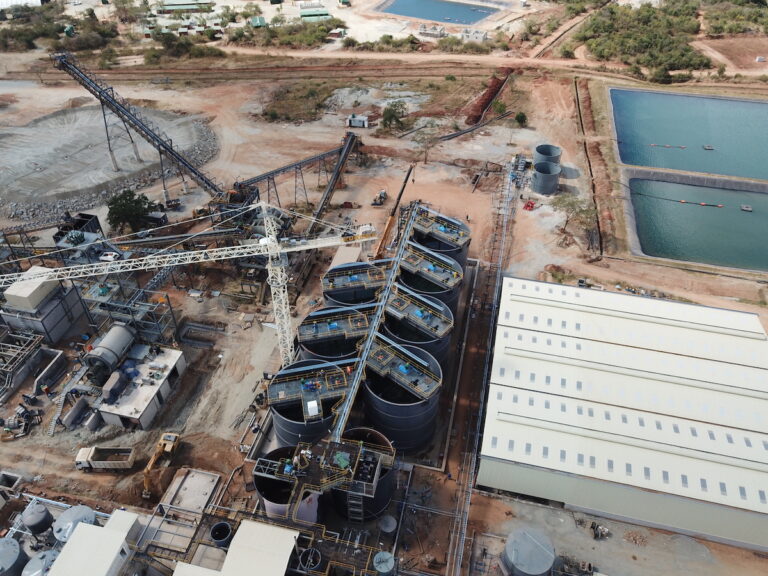
The country’s biggest platinum group metals (PGM) producer, Zimplats, invested US$580,000 to implement water stewardship, reduce freshwater withdrawals, enhance recycling, and continuously improve water use efficiency to prevent pollution.

“Water is a vital resource for our operations and the communities around them. Water management is critical as our Southern African sites are in water-scarce areas.

“We reduce freshwater withdrawals, enhance recycling, continuously improve our water use efficiency, prevent pollution, and support host communities,” Zimplats said in a statement earlier this year.

Through its US$580,000 investment, the group has embarked on the following projects:

  • Extension of the Chitsuwa pipeline to reduce water losses and unauthorized abstraction. The pipeline was commissioned this year.
  • Implementation of the Turf sewage water recycling project, which will avail an additional 2,160 Ml of recycled/reused water and assist Zimplats in reducing freshwater intake.
  • Conducted a catchment area study evaluating potential dam sites based on yield and risk.
  • Continued engagement with stakeholders and advancement of studies into potential water recycling and water efficiency projects.