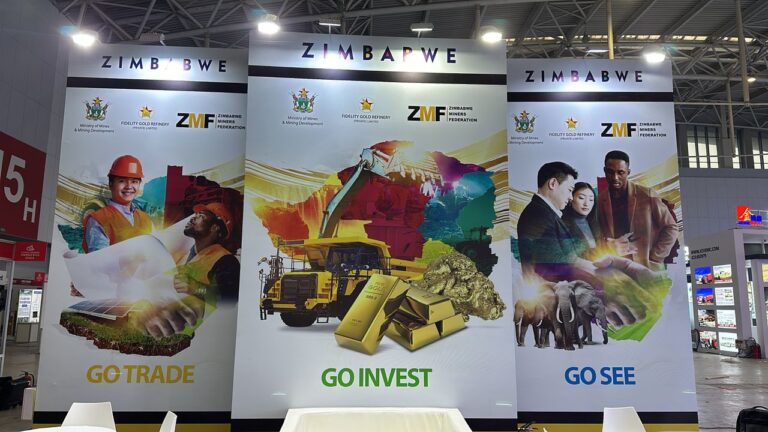
Fidelity Gold Refinery (FGR), Zimbabwe’s sole gold buyer and exporter, has set an ambitious target of 40 tonnes of gold deliveries for 2025. This goal builds on the company’s strong performance in 2024, during which it received 24 tonnes of gold in the first nine months alone.
By Ryan Chigoche
This was revealed by FGR General Manager Peter Magaramombe while speaking at the Zimbabwe Miners Federation (ZMF) Conference at Mine Entra which focused on sustainable and responsible mining as a catalyst for national development.
Fidelity Gold Refinery attributes its success to various factors, including increased mining activities by artisanal and small-scale miners, prompt payments to miners, favourable gold prices, supportive government policies, and effective stakeholder engagement.
To further enhance gold deliveries, the refinery has been implementing strategies such as expanding its network of gold buying centres and implementing a gold traceability system. These initiatives aim to formalize traditional gold trades, promote job creation, and ensure responsible sourcing of gold.
For the remainder of 2024, Fidelity Gold Refinery projects to receive an additional 11 tonnes of gold, bringing the total annual delivery to 35 tonnes. Speaking at the conference Magaramombe said this projection is based on the continued implementation of supportive policies, favourable prices, and enhanced regulatory frameworks.
”Looking ahead to the remainder of 2024, we anticipate sustained growth in gold deliveries if the existing conditions are maintained. Further, ongoing investments in mining infrastructure, increased small-scale mining contributions, and favourable global market trends are expected to drive this growth. This projection is conservative, considering the sector’s current momentum and potential. Several factors underpin our optimism, including the continued implementation of supportive policies, favourable prices, and enhanced regulatory frameworks,” he said.
The ambitious target of 40 tonnes in 2025 reflects Fidelity Gold Refinery’s confidence in the continued growth of the gold sector in Zimbabwe. The company believes that ongoing investments in mining infrastructure, increased small-scale mining contributions, and favourable global market trends will drive this growth.
Achieving this target would have significant economic benefits for Zimbabwe. The gold sector contributes substantially to the country’s export earnings and supports its economic development agenda. Fidelity Gold Refinery’s commitment to sustainable and responsible gold mining practices aligns with the government’s vision for a prosperous and inclusive Zimbabwe.
Victoria Falls Stock Exchange-listed gold miner Caledonia Mining Corporation’s Blanket Minesaw a 6% increase in production during the nine months to September 2024 compared to the same period last year, Mining Zimbabwe reports.
By Rudairo Mapuranga
According to a press release by the company, Blanket Mine in Gwanda produced approximately 1,591 kilograms of gold during this period, up from about 1,562 kilograms in the previous year.
“Gold produced in the nine months to the end of September was 56,815 ounces (2023: 55,244 ounces),” the company stated. “Caledonia reiterates its gold production guidance for 2024 of between 74,000 and 78,000 ounces.”
However, production for the quarter ended September 30, 2024, decreased compared to the same period last year, dropping from approximately 617 kilograms to 539 kilograms, a 13% decline.
“Quarterly gold production of 18,992 ounces (Q3 2023: 21,772 ounces) was a quarterly record for Blanket,” Caledonia said in the press release.
The gold miner also announced that future dividends will be declared alongside the publication of quarterly results (mid-March, May, August, and November). As a result, the Q3 2024 dividend, if approved by the board, will be declared in mid-November rather than at the start of October.
This change in the timing of dividends does not affect the company’s dividend policy. The board will continue to consider dividends as appropriate, in line with other investment opportunities and its prudent approach to risk management.
The specific amount of the dividend will be determined and announced at the time of declaration.
SG 90% and ABOVE US$80.66/g
SG ABOVE 85% BUT BELOW 90% US$79.80g
SG ABOVE 80% BUT BELOW 85% US$78.95/g
SG ABOVE 75% BUT BELOW 80% US$78.10/g
SAMPLE BELOW 10g BUT ABOVE 5g US$76.82/g
Fire Assay CASH $81.08/g
NB: Fire Assay cash price is for gold above 100gs, no sample is deducted.
For the Fire Assay Transfer price, a sample of not more than 10g is deducted
A 2% royalty is charged on all deposits (Small-scale miners)
A 5% royalty is set for Primary Producers
Cash available. Fidelity Gold Refinery prices will be changing daily to match world market prices.
DGC Africa, a proud member of the Dickinson Group of Companies, continues to be at the forefront of driving industrial growth across sub-Saharan Africa. As the demand for sustainable, efficient, and innovative industrial services accelerates, DGC Africa remains a trusted provider, delivering a comprehensive range of specialised solutions designed to meet the evolving needs of the mining, metallurgy, mineral processing, and manufacturing sectors.
With offices strategically positioned in South Africa, Mauritius, Zambia, the Democratic Republic of Congo, Zimbabwe, and Madagascar, DGC Africa leverages its extensive experience and technical expertise to deliver solutions that ensure optimal performance and efficiency. The company’s portfolio of services is tailored to each client’s operational challenges, offering bespoke solutions that align with their industrial requirements.
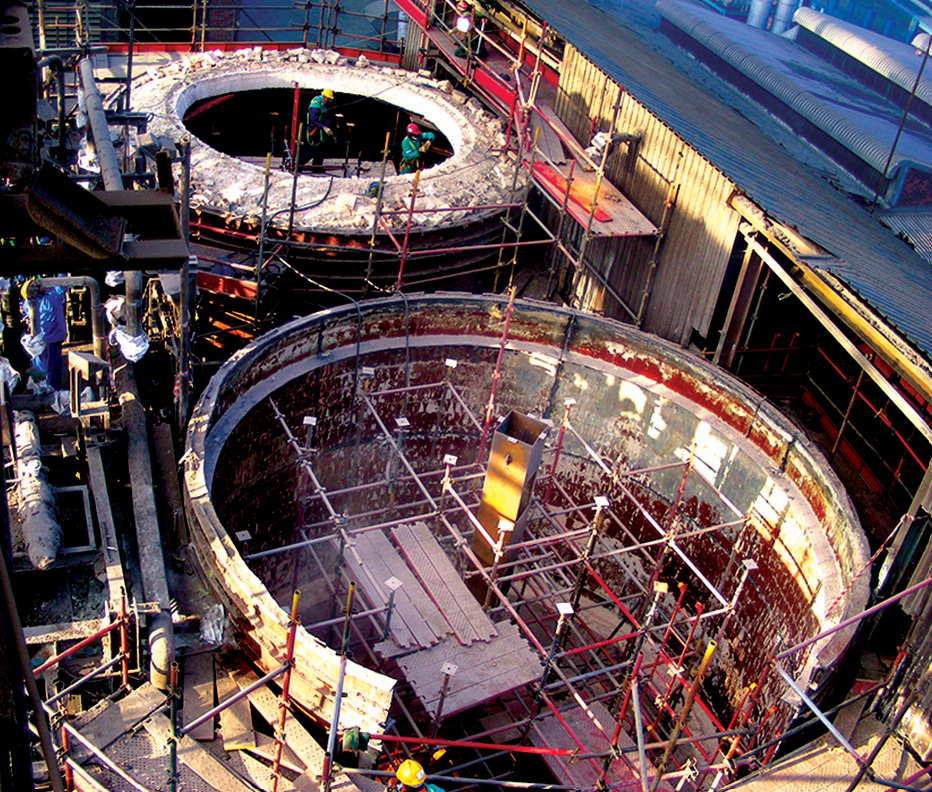
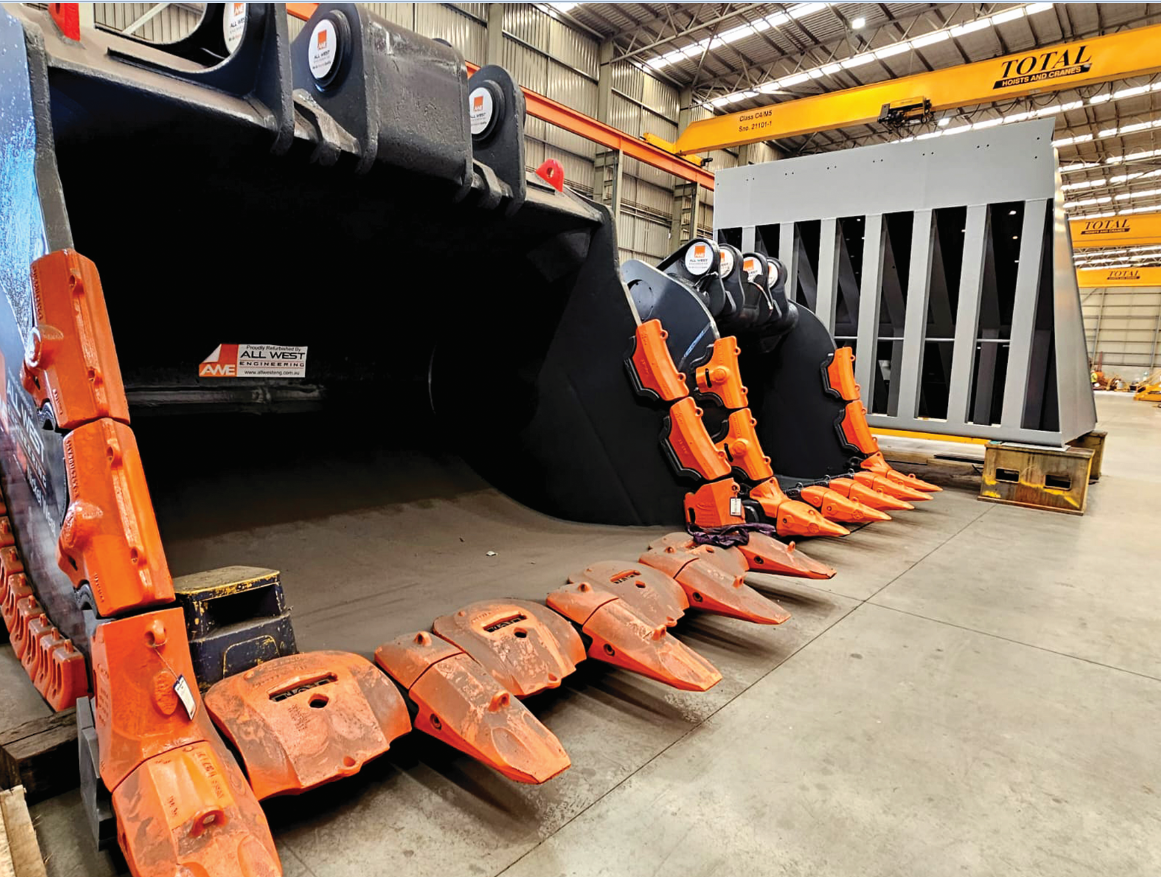
At the heart of DGC Africa’s service offerings are its furnace and smelter services, which play a critical role in maintaining the operational integrity of key assets across various industries. These services include complex furnace rebuilds, detailed inspections, and specialised refractory installations, all aimed at enhancing productivity, reducing downtime, and ensuring safety. By integrating advanced technology with decades of industry knowledge, DGC Africa helps its clients navigate and overcome the operational challenges posed by harsh industrial environments.
Additionally, DGC Africa delivers a broad range of other industrial services, such as industrial linings and mechanical engineering. These services enable companies to protect their assets, streamline operations, and maintain high safety standards, contributing to long-term sustainability and operational excellence.
Empowering Africa’s Workforce: DGC Workforce Solutions and Local Collaboration
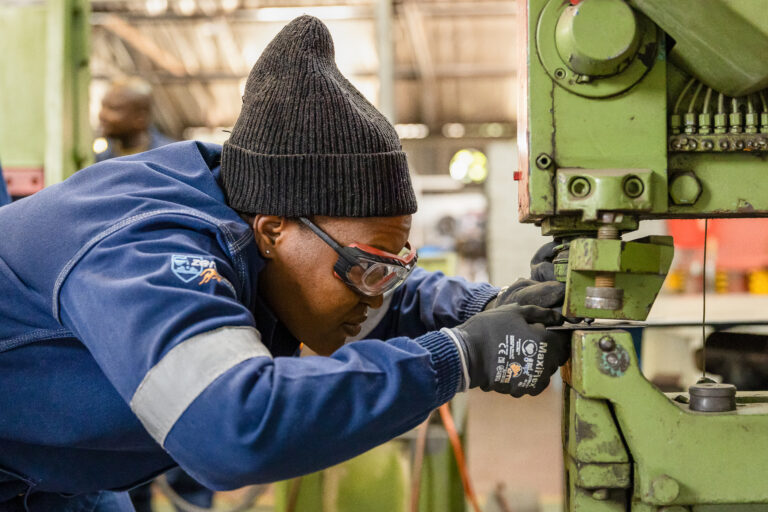
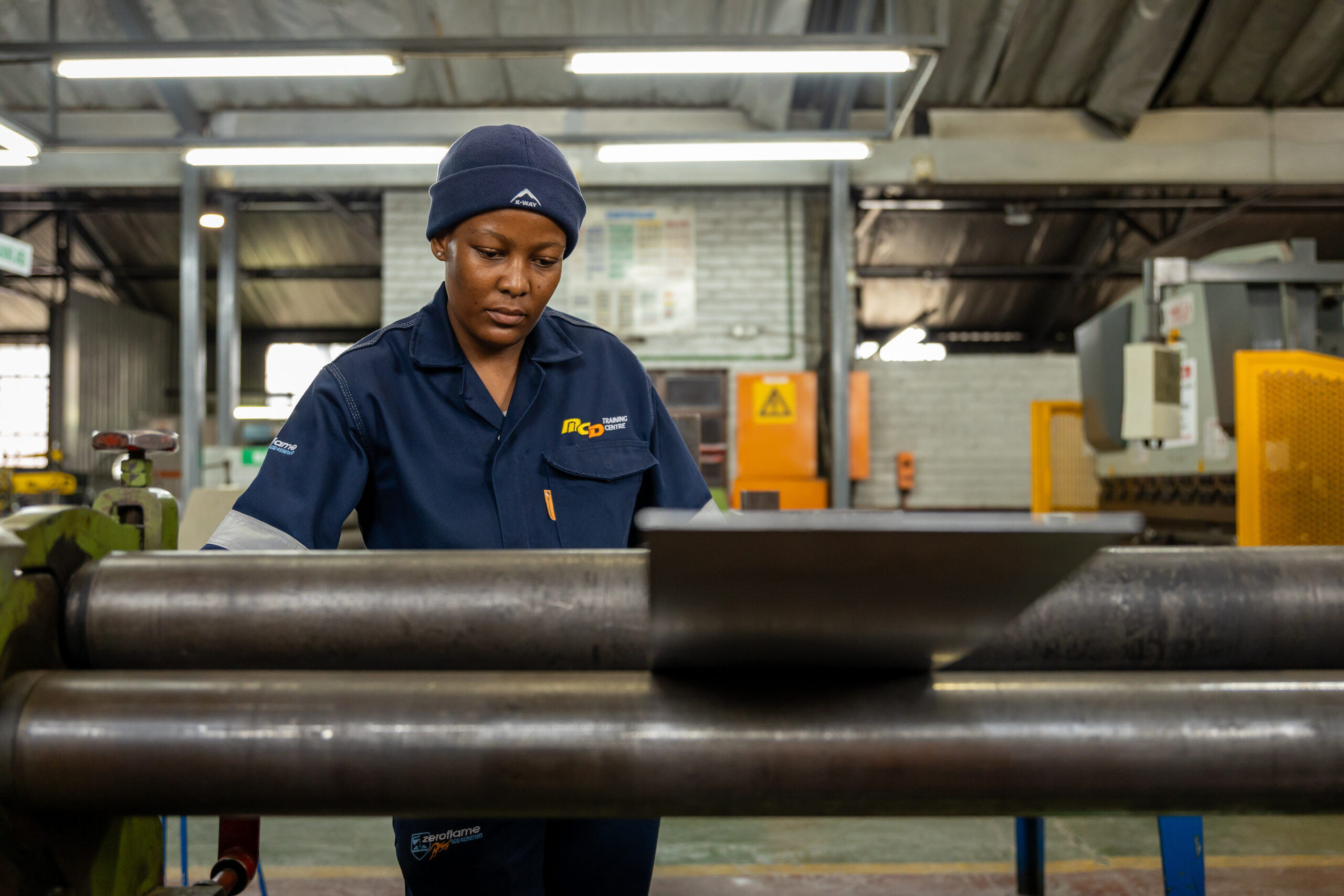
An essential part of DGC Africa’s long-term strategy is its commitment to empowering local communities and developing the continent’s workforce. This commitment is exemplified through DGC Workforce Solutions, a pivotal division of DGC Africa that focuses on addressing the complex and evolving workforce needs of African industries.
With a legacy rooted in over a century of industrial service provision, DGC Workforce Solutions offers a comprehensive range of services that include specialised recruitment, flexible labour hire models, workforce management, and consulting services. By bridging critical skills gaps, fostering local talent, and ensuring regulatory compliance, DGC Workforce Solutions plays a significant role in driving Africa’s industrial development.
A key initiative in this regard is the collaboration with Browhil Trading in Zimbabwe. As DGC Africa continues to expand its footprint in Zimbabwe, DGC Workforce Solutions will partner with Browhil Trading to provide tailored workforce solutions that meet the demands of Zimbabwe’s growing industrial sectors. This collaboration aims to offer artisanal training, skilled labour provision, and workforce compliance services, ensuring that Zimbabwe’s industries have access to a highly skilled, adaptable, and compliant workforce.
In Zimbabwe, DGCA Zimbabwe, a joint venture between DGC Africa and Browhil Trading, already delivers essential services to the mining and metals smelting sectors. The venture provides crucial services, including furnace rebuilds, mechanical engineering projects, and refractory installation, all while fostering community development by training and employing local talent. This partnership exemplifies DGC Africa’s broader strategy of combining global standards with local expertise to boost local employment, enhance industrial capabilities, and contribute to the socio-economic growth of Zimbabwe.
A Vision for Africa’s Industrial Future
As DGC Africa continues to expand its reach across the continent, its focus remains firmly on innovation, sustainability, and community empowerment. The company’s dedication to delivering world-class industrial services, combined with its commitment to local workforce development, positions DGC Africa as a key player in Africa’s industrial evolution.
Whether through furnace and smelter services, mechanical engineering, or the strategic workforce solutions provided by DGC Workforce Solutions, the company remains a trusted partner for businesses seeking to enhance their operational efficiency while contributing to local development. DGC Africa’s ability to merge technical expertise with deep local insights ensures that its clients are well-equipped to meet today’s industrial challenges and take advantage of the opportunities of tomorrow.
As DGC Africa strengthens its presence in countries like Zimbabwe and beyond, the company continues to deliver critical industrial solutions that are driving the future of Africa’s industrial landscape.
Contributors: Justin Nothnagel (Director Business Development, Dickinson Group of Companies) Douglas Mhazo (Managing Director, DGC Zimbabwe)
Premier African Minerals Limited, a London Stock Exchange-listed mining and exploration company, has successfully raised £550,000 through a new share subscription to support ongoing operations and address challenges at its Zulu Lithium and Tantalum Project.
By Patricia Rwafa
In a press statement released on October 3, the company announced a subscription for 1,746,031,746 new ordinary shares to raise approximately £550,000 before expenses, at an issue price of 0.0315 pence per new ordinary share.
Following the announcement of Premier’s Interim Accounts on September 30, 2024, it remains critically important that Premier continues to support all essential operational requirements at both Premier and the Zulu Lithium and Tantalum Project (“Zulu”) while exploring a multi-option approach to advancing the project. This includes the possible sale of Zulu, either in its entirety, partially, or as a joint venture, or the potential installation of an additional spodumene float plant.
Regarding the installed spodumene float plant, it should be noted that one of several solutions under review would require increasing throughput beyond the original design capacity to match the surplus capacity of the cleaner cells.
At the same time, Premier African Minerals is engaged in negotiations that may lead to direct investment in Zulu.
The company is also pleased to report that it is in early discussions regarding payment options with a Chinese Engineering, Procurement, and Construction Management company that could install an additional spodumene float plant at Zulu.
George Roach, CEO, expressed confidence in the company’s progress and anticipated a successful resolution to the remaining challenges.
He stated that production at the desired grade and recovery levels would follow.
Roach further emphasized that ongoing negotiations for alternative solutions were progressing positively and were expected to yield favourable outcomes.
“We are making progress, and I do expect a resolution to this final problem, after which we expect to produce at the desired grade and design recovery. The alternatives mentioned are under active negotiation, and a satisfactory outcome should result,” he said.
The Zimbabwe Investment Development Agency (ZIDA) has enhanced its digital platform to connect small-scale miners with potential investors, providing a significant boost to the growth and development of the mining sector, Mining Zimbabwe reports.
By Rudairo Mapuranga
Speaking at the ZMF Small to Medium-Scale Conference, held last Friday at the Zimbabwe International Exhibition Centre on the sidelines of the Mining Engineering and Transport Expo (Mine Entra) in Bulawayo, ZIDA’s Chief Investment Promotion Officer, Mrs Silibaziso Chizwina, emphasized the platform’s potential to unlock opportunities for small-scale miners.
Previously, small-scale miners were required to pay a fee to be listed on the platform. However, ZIDA has now eliminated this requirement, making the platform free to use to promote small-scale mining and facilitate access to investors.
“This platform is a game-changer for small-scale miners. It provides a direct link to investors who are eager to invest in the mining sector,” said Mrs. Chizwina.
“We believe that this platform will not only help small-scale miners grow but also contribute to the overall development of the mining sector,” she added.
The platform is expected to attract both local and foreign investors seeking to capitalize on Zimbabwe’s rich mineral resources. By facilitating connections between miners and investors, ZIDA aims to promote sustainable mining practices, creating new jobs and economic opportunities.
The ZIDA claim-matching platform allows small-scale miners to showcase their mining claims to potential investors, including financiers, technical partners, and equity partners. This can help miners secure the necessary funding and expertise to expand their operations and increase profitability.
In September last year, ZIDA launched an online platform aimed at linking mining claim holders with potential local and foreign investors to establish partnerships that could address funding gaps.
The platform allows investors to connect with claim holders in Zimbabwe and express their interest in investing. Mining claim holders are expected to gain increased access to potential investors worldwide. The platform profiles mining claims, making them more attractive to investors, and provides a transparent and secure way for claim holders to connect with potential partners.
To access the platform, investors are required to register and submit relevant information, such as contact details, investment objectives, and the type of mining claim they are interested in. Once an investor’s registration has been approved, they will be able to view registered mining claims and express their interest.
Investors are then given further details to contact and negotiate directly with the identified claim holders on a one-on-one basis, subject to claim availability.
According to the State of the Mining Industry Survey, Zimbabwean mining companies anticipate increased revenue in 2025 but remain pessimistic about profitability. Rising costs related to electricity and exchange rate losses are cited as major challenges.
By Ryan Chigoche
The survey data reveals that average mineral revenue is projected to increase by approximately 2% this year. Mining companies expect a further 10% rise in revenue, reaching around US$6 billion in 2025, driven by improved output and recovering commodity prices.
However, despite this optimistic revenue outlook, miners express concerns about the profitability of their operations. Nearly 40% of respondents predict a decline in profits due to escalating costs and uncertain commodity markets.
Electricity costs are expected to rise by an average of 8% next year. The current electricity tariff framework is deemed suboptimal, with many miners highlighting its unaffordability and lack of competitiveness at USc14.21/kWh. Zimbabwe’s electricity tariffs are among the highest in the region, exceeding those of neighbouring countries like Botswana and Zambia.
To address this issue, 93% of mining companies advocate for a tariff reduction to below USc13/kWh. Exchange rate losses also pose a significant threat to profitability, with miners losing nearly half of their mandatory 25% surrender portion of export proceeds due to the discrepancy between the official and parallel exchange rates.
In addition to these challenges, labour costs are expected to increase by 4% in 2025, primarily due to inflationary pressures and wage demands. Miners are also facing pressure from labour unions seeking full US dollar payments, which could further strain their foreign currency reserves.
To mitigate these challenges, mining executives are considering strategies such as deferring capital projects, improving operational efficiency, rationalizing procurement, optimizing labour, freezing hiring, and implementing multitasking where feasible.
The mining industry in Zimbabwe is facing a mounting crisis, with projected losses of US$500 million in 2025 due to worsening power outages. These disruptions are severely impacting production, leading to reduced output and significant revenue losses.
By Ryan Chigoche
Zimbabwe’s power supply has long been fragile, with most mining companies experiencing unscheduled power outages and fluctuating voltage levels.
According to the latest State of Mining Sector Survey Report, 99% of local miners are dealing with crippling unscheduled power outages, averaging around eight hours per day. The report highlights the detrimental effects of these outages, with nearly all respondents indicating production stoppages and output losses.
“Almost all respondents indicated that power outages were resulting in production stoppages and output losses,” the report stated. “About 76% reported losing up to 10% of their production potential, while 24% indicated losses exceeding 10%.” An analysis of the survey data estimates that the mining industry has lost around US$500 million in potential revenue due to output losses arising from power outages.
As the country’s largest energy consumer, the mining sector’s demand for power is projected to increase by 18% to around 700MW in 2025, with diesel usage expected to rise by 12%. The combination of increasing demand and inadequate supply has exacerbated the power crisis, posing a significant threat to the industry’s sustainability.
To address this critical issue, mining companies have called on the Zimbabwe Electricity Supply Authority (ZESA) to implement several measures. Firstly, they advocate for release from long-term power supply contracts, allowing them to source alternative power from private independent producers like the Intensive Energy Users Group. Secondly, they urge ZESA to expedite the licensing of Independent Power Producers (IPPs) to help increase the overall power supply in the country.
Furthermore, mining executives have emphasized the need to prioritize mining companies for available power. By ensuring the mining sector receives a reliable and consistent power supply, the government can mitigate the negative impacts of power outages on production and revenue.
The mining industry’s challenges extend beyond power outages. The sector is also grappling with infrastructure constraints, rising costs, and uncertain commodity prices. These factors, combined with the energy crisis, pose a significant threat to the industry’s long-term viability.
To ensure the sustainability of the mining sector, it is imperative that the government takes decisive action to address these challenges. By implementing reforms, investing in infrastructure, and supporting the growth of renewable energy sources, Zimbabwe can create a more conducive environment for mining operations and unlock the sector’s full potential.
ZMF President Ms Henrietta Rushwaya and her team will play a key role at a major mining seminar in China tomorrow, where they will present and showcase Zimbabwe’s mineral potential.
By Rudairo Mapuranga
Scheduled for the 15th of October and running under the theme “Mining in African Countries,” the event will provide a platform for Rushwaya to showcase Zimbabwe’s lucrative mining opportunities to a global audience.
The ZMF will highlight Zimbabwe’s vast mineral resources and investment potential available in Zimbabwe. Rushwaya’s presentation is expected to attract significant interest from Chinese investors seeking to capitalize on the country’s rich mining reserves.
Joining Rushwaya at the seminar will be a delegation of Zimbabwean mining industry executives from ZMF, including prominent Kadoma miner Johane Sithole aka Mrasta and Timothy Chizuzu, who will provide further insights into the sector.
The event will also feature presentations from representatives of other African nations, fostering valuable knowledge exchange and networking opportunities.
Zimbabwe’s mining industry has long been a cornerstone of its economy, and the government has been actively working to attract foreign investment to revitalize the sector.
ZMF’s participation in the Chinese seminar is a strategic move to position Zimbabwe as a preferred destination for mining ventures.
The Zimbabwe Miners Federation (ZMF) has commended the government’s efforts in supporting the mining sector and has called for continued commitment to sustainable mining practices, Mining Zimbabwe reports.
By Rudairo Mapuranga
Speaking at the ZMF small- to medium-scale conference held last Friday at the Zimbabwe International Exhibition Centre on the sidelines of the Mine Entra Expo in Bulawayo, ZMF President Ms Henrietta Rushwaya praised the sectoral reforms implemented by the government, which have significantly contributed to the country’s GDP growth.
“The country’s policies are moving in the right direction, especially regarding beneficiation.
“We are pleased to see the government’s focus on sustainable mining, which is crucial for the long-term health of our industry,” Rushwaya said.
Ms. Rushwaya emphasized the importance of adhering to government regulations, such as the Zimbabwe Revenue Authority (ZIMRA) Act, the Environmental Management Agency (EMA) Act, the Mines and Minerals Act, and the Immigration Act.
She also stressed the need for zero tolerance toward practices that harm the environment, including deforestation, habitat destruction, pollution, soil erosion, human-wildlife conflict, and loss of biodiversity.
“As small-scale miners, we have a responsibility to operate in a sustainable manner. By following government guidelines and adopting environmentally friendly practices, we can contribute to the sustainable development of our country,” Rushwaya said.
Mining has long been a cornerstone of Zimbabwe’s economy, providing valuable resources, employment opportunities, and economic growth. However, the need for responsible mining practices has become increasingly apparent. Two years ago, the government launched the Responsible Mining Audit Initiative to address this need by holding mining companies accountable for their operations and ensuring they benefit the nation and its people.
One of the primary benefits of the initiative is mitigating the environmental impacts of mining operations. By reducing water and air pollution, protecting biodiversity, and minimizing land degradation, responsible mining practices lead to improved ecological sustainability. This effort ensures the preservation of natural resources, benefiting local communities and future generations.
The initiative also emphasizes the importance of engaging with local communities. Responsible mining companies will implement social programs that contribute to the well-being and development of these communities. Investments in infrastructure, healthcare, education, and the creation of sustainable economic opportunities are expected to improve the quality of life for community members, fostering a stronger bond between mining companies and residents.
To provide the best experiences, we use technologies like cookies to store and/or access device information. Consenting to these technologies will allow us to process data such as browsing behavior or unique IDs on this site. Not consenting or withdrawing consent, may adversely affect certain features and functions.
Functional
Always active
The technical storage or access is strictly necessary for the legitimate purpose of enabling the use of a specific service explicitly requested by the subscriber or user, or for the sole purpose of carrying out the transmission of a communication over an electronic communications network.
Preferences
The technical storage or access is necessary for the legitimate purpose of storing preferences that are not requested by the subscriber or user.
Statistics
The technical storage or access that is used exclusively for statistical purposes.The technical storage or access that is used exclusively for anonymous statistical purposes. Without a subpoena, voluntary compliance on the part of your Internet Service Provider, or additional records from a third party, information stored or retrieved for this purpose alone cannot usually be used to identify you.
Marketing
The technical storage or access is required to create user profiles to send advertising, or to track the user on a website or across several websites for similar marketing purposes.







 Empowering Africa’s Workforce: DGC Workforce Solutions and Local Collaboration