Home Blog Page 22

Karo Mining Cuts FY2025 Loss as Platinum Price Recovery Revives Project Momentum

0

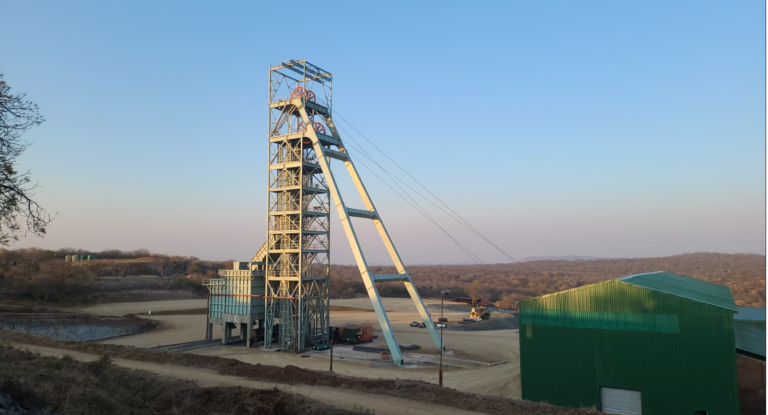
Karo Mining Holdings Plc, the VFEX-listed investment company developing the Karo Platinum Project in the Great Dyke, reduced its consolidated loss in the year ended 30 September 2025, reflecting firmer platinum prices and a stabilisation of activity at a project that has faced years of weak markets and funding delays, Mining Zimbabwe reports.

By Ryan Chigoche

The group reported a loss of US$2.17 million, down from US$2.50 million in the previous year.

Although Karo remains pre-revenue and in a capital-intensive development phase, the improvement points to easing pressure after a prolonged downturn in platinum group metals that had constrained progress.

Karo holds an 85% stake in the project, with the remaining 15% owned by the Government of Zimbabwe through Generation Minerals on a free-carry basis following amendments to the Investment Framework Agreement.

The asset sits on the Great Dyke, one of the world’s most significant platinum-bearing geological formations.

The improvement follows a difficult period for the PGM market. In 2024, the average six-element basket price had fallen to around US$1,302 per ounce, weakening project economics and delaying financial close.

Construction activity was scaled back as funding discussions continued, with the impact visible in ongoing development costs and recurring losses.

Market conditions improved markedly in 2025, with the basket price rising to about US$1,882 per ounce.

The recovery was supported by tighter supply, improved industrial demand, renewed investor interest in precious metals, and persistent production challenges in South Africa.

The firmer price environment improved the project’s funding outlook and allowed construction momentum to stabilise.

This shift is reflected in the financials. Finance income rose to US$815,000 from US$329,000, mainly from interest on funds advanced to the project.

The increase helped offset higher operating expenses linked to ongoing development work and contributed to the narrower loss.

Capital investment continued to rise during the year. Property, plant and equipment increased to US$174.2 million from US$140.9 million, driven largely by capitalised mine development costs.

At the same time, liquidity remained under pressure, with cash and cash equivalents falling to US$5.6 million from US$12.4 million, while net cash used in investing activities approached US$80 million.

Funding continues to rely heavily on shareholder support, led by majority shareholder Tharisa Plc.

Total borrowings stood at about US$38 million at year-end, largely made up of VFEX-listed bonds guaranteed by Tharisa and related-party facilities.

The bonds, originally due to mature in November 2025, were extended to December 2028 following bondholder approval, with the coupon increased to 11%, reflecting tighter credit conditions and the project’s development risk.

Construction at the Karo site began in 2022 after several years of feasibility studies and permitting.

The project is planned as a fully integrated operation, including underground mining, concentrators, smelting, and refining facilities, supported by dedicated power and water infrastructure.

Capital and working capital requirements to first ore in the mill are estimated at US$499 million, making it one of the largest mining investments in Zimbabwe.

With platinum demand increasingly supported by industrial uses and emerging applications such as hydrogen technologies, and with supply constraints persisting in key producing regions, the market backdrop has improved from the 2023–2024 trough.

Karo is targeting financial close in 2026, which would unlock the next phase of construction and keep the first ore in the mill on track for around mid-2027.

While the FY2025 results do not signal a turnaround, the reduced loss suggests the worst of the downcycle may be over for the project. After years of delays driven by weak prices and funding constraints, Karo Platinum is once again moving forward under more supportive market conditions.

Gold buying prices in Zimbabwe per gram/ ounce, 8 January 2026

Gold buying prices in Zimbabwe per gram/ ounce, 8 January 2026, from the official gold buyer and exporter Fidelity Gold Refinery (FGR).

1 oz = 31.1035 g

CategoryPrice ($/g)Price ($/oz)
SG 90% and above134.834,203.69
SG 85% and above but below 90%133.414,149.51
SG 80% and above but below 85%131.984,105.03
SG 75% and above but below 80%130.554,060.56
Sample 5g and above but below 10g128.413,994.00
Fire Assay CASH135.554,216.08


Note: The Fire Assay cash price applies to gold above 100g, with no sample deduction.

A sample of not more than 10g is deducted for the Fire Assay Transfer price.

High Court Dismisses Zdamwu’s Bid To Place Riozim Under Corporate Rescue

0

The High Court has dismissed an application by the Zimbabwe Diamond and Allied Minerals Workers Union (ZDAMWU) and two employees to place mining giant RioZim Limited under corporate rescue, ruling that the union lacked the legal standing to bring the case, Mining Zimbabwe can report.

By Rudairo Mapuranga

In a judgment delivered by Justice Mandaza, the court upheld a preliminary objection by RioZim, finding that ZDAMWU did not qualify as an “affected person” entitled to initiate such proceedings under the Insolvency Act. The decision halts, for now, a high-stakes legal attempt to force the troubled miner into a supervised rescue process. Notably, the court ordered each party to bear its own costs.

What is Corporate Rescue?

Corporate rescue is a legal process introduced in 2018 to replace the older judicial management system. It is designed to rehabilitate a financially distressed company by placing it under the temporary supervision of a practitioner. The goal is to develop and implement a plan to save the business, preserve jobs, and maximise returns for all stakeholders, while imposing a temporary moratorium on claims from creditors.

The Union’s Case and RioZim’s Defence

The applicants, ZDAMWU, an employee from Renco Mine, and a former employee from Kadoma, argued that RioZim was in “financial distress.” They pointed to alleged liabilities exceeding assets, adverse audit opinions, and the tragic death of a major shareholder as factors necessitating rescue to protect jobs and the company’s assets.

RioZim opposed the application vigorously, raising several technical objections. Its most successful argument was that ZDAMWU had no locus standi (legal right to sue). The company contended that while ZDAMWU is a registered trade union in the mining industry, the Insolvency Act specifically requires the applicant to be a union “representing employees of the company.”

The Court’s Reasoning: Why the Union Failed the “Busybody” Test

Justice Mandaza’s judgment centred on this point of standing. The court explained that to have locus standi, a party must show a direct, substantial, and legally recognised interest in the matter. It cited the classic distinction between a person with a genuine stake and a “busybody” who meddles without legitimate concern.

Crucially, the court referred to a Supreme Court precedent (Metallon Gold Zimbabwe v Shatirwa Investments). In that case, it was held that the Act does not provide for “a registered trade union in the industry,” but specifically for one “representing employees of the company.”

The court found that ZDAMWU, registered for the broader diamond and mining industry, did not meet this precise statutory definition for the purposes of an application against RioZim. “The first applicant is just a ‘busybody’ in the strictest sense of the word. It has no direct and substantial interest in the matter,” Justice Mandaza stated.

Consequently, the application was dismissed at this preliminary stage, without the court needing to delve into the detailed merits of RioZim’s financial health or the other technical disputes about board resolutions and affidavits.

Other Legal Arguments Briefly Addressed

The judgment also swiftly disposed of other technical points raised by the applicants:

  • Invalid Board Resolution: The court rejected the claim that RioZim’s board resolution authorising its defence was invalid, finding it met basic legal thresholds.

  • Approbation and Reprobation: The court dismissed the argument that RioZim was trying to “have its cake and eat it” by allegedly approving rescue in one context but opposing it here. The judge found RioZim had consistently opposed being placed under rescue.

  • Statutory Bar: The court clarified that the moratorium on legal proceedings (Section 126 of the Act) only takes effect after a company is placed under rescue, not before. Therefore, RioZim was fully entitled to defend itself against the application.

Outcome and Costs

The application was dismissed. On costs, RioZim had sought punitive costs, but Justice Mandaza ruled that each party should bear its own costs. The court reasoned that the case raised important legal issues and was not frivolous, vexatious, or an abuse of process; it was simply brought by a party without the required legal standing. Costs, the judge noted, should not be a deterrent to accessing justice in such circumstances.

Implications of the Judgment

The ruling reinforces a strict, formal interpretation of who can initiate corporate rescue proceedings. It underscores that a general industry union cannot automatically act for employees of a specific company under the Insolvency Act unless it is formally recognised as representing that company’s workforce. For employees seeking to place their employer under rescue, the path likely requires either a direct application by a sufficient number of them or action through a union specifically mandated for that company.

RioZim, for now, continues to operate outside the court-supervised rescue process. The judgment leaves open the possibility of a future application by a party with clear standing, should the company’s financial situation provoke further legal action.

Gold buying prices in Zimbabwe per gram/ ounce, 7 January 2026

Gold buying prices in Zimbabwe per gram/ ounce, 7 January 2026, from the official gold buyer and exporter Fidelity Gold Refinery (FGR).

1 oz = 31.1035 g

CategoryPrice ($/g)Price ($/oz)
SG 90% and above136.424,242.37
SG 85% and above but below 90%134.984,197.57
SG 80% and above but below 85%133.544,152.78
SG 75% and above but below 80%132.094,107.67
Sample 5g and above but below 10g129.934,040.53
Fire Assay CASH137.144,264.77


Note: The Fire Assay cash price applies to gold above 100g, with no sample deduction.

A sample of not more than 10g is deducted for the Fire Assay Transfer price.

Mining Indaba – Why It Matters to Zimbabwe’s Mining industry

0

Every February, the global mining industry converges in Cape Town for Investing in African Mining Indaba, the continent’s most influential mining investment conference. For Zimbabwe, participation in Mining Indaba is not ceremonial, it is strategic, economic, and increasingly critical to the country’s mining future.

By Keith Sungiso

Mining contributes more than 60% of Zimbabwe’s export earnings and remains the backbone of industrial growth, foreign currency generation, and employment. Mining Indaba offers Zimbabwe a unique, high-impact platform to engage global capital, policymakers, and technical partners in one place, at one time.

A Gateway to Capital in a Competitive Market

Africa is competing aggressively for a limited global share of mining capital. At Mining Indaba, Zimbabwe sits alongside jurisdictions such as the DRC, Zambia, Namibia, Ghana, and Botswana, which are all pitching for investment dollars. The event allows Zimbabwe to present its geological potential, policy reforms, and investment-ready projects directly to institutional investors, mining houses, development finance institutions, and private equity firms.

With capital discipline tightening globally, visibility matters. Mining Indaba allows Zimbabwean projects, particularly in gold, lithium, platinum group metals, chrome, and coal, to move from boardroom concepts to live investment conversations.

Policy Signalling and Investor Confidence

Mining Indaba is also where governments signal intent. For Zimbabwe, ministerial participation offers an opportunity to clarify policy direction, address investor concerns, and demonstrate commitment to stability and reform. Issues such as royalty structures, beneficiation, currency risk, licensing, and security of tenure are not theoretical, they are debated face-to-face with decision-makers who control capital flows.

Clear, consistent messaging at Mining Indaba can shift perceptions faster than policy documents alone. In an industry where confidence is everything, direct engagement helps narrow the trust gap.

Your chance to access high-quality investors

Mining Indaba offers Zimbabwean miners, service providers and mining suppliers a rare opportunity to connect directly with high-quality investors, strategic partners, and off-takers actively seeking viable African projects and service partnerships.

For miners, the platform opens doors to funding discussions with institutional investors, private equity firms, and development financiers looking for scalable, well-structured opportunities. For suppliers and contractors, it creates access to partnerships with major mining houses, EPCs, and technology providers seeking reliable local and regional collaborators. In a capital-constrained environment, Mining Indaba compresses months of outreach into a few days, turning visibility into real conversations that can unlock investment, joint ventures, and long-term commercial relationships.

Critical for Lithium and Energy Transition Minerals

Zimbabwe’s lithium sector has placed the country firmly on the global energy transition map. Mining Indaba is a key venue for battery manufacturers, automakers, and downstream processors seeking secure supply chains. For Zimbabwe, it is an opportunity to position itself not just as a raw material exporter, but as a future hub for value addition, refining, and regional processing.

The same applies to platinum, nickel, rare earths, and graphite minerals that are increasingly shaped by geopolitics and supply security rather than price alone.

Networking Beyond Deals

While investment deals are important, Mining Indaba’s value extends beyond transactions. Zimbabwean miners, suppliers, engineers, consultants, and regulators gain exposure to global best practice in ESG, mine safety, digitisation, financing structures, and community relations. These interactions influence how mines are planned, financed, and operated long after the conference ends.

For local mining companies, it is also a chance to benchmark themselves against continental peers and build partnerships that would be difficult to access from Harare alone.

Reframing Zimbabwe’s Mining Narrative

Perhaps most importantly, Mining Indaba allows Zimbabwe to tell its own story. For years, narratives around risk and policy uncertainty have overshadowed the country’s exceptional mineral endowment. Indaba provides a controlled environment where Zimbabwe can present progress, explain reforms, and highlight success stories directly to the global market.

As competition for capital intensifies and the energy transition accelerates, Zimbabwe cannot afford to be absent from platforms that shape Africa’s mining investment agenda.

For Zimbabwe’s mining industry, Mining Indaba is not just another conference, it is a gateway to capital, credibility, and long-term growth.


Mining Zimbabwe is distributing Edition 85 at Mining Indaba 2025. Get in touch with us for advertising opportunities on +263775523000 or email: [email protected].

Premier Secures Canmax Deadline Extension as Zulu Lithium Faces Creditor and Funding Pressure

0

London Stock Exchange–listed mining and exploration company Premier African Minerals Limited has secured a critical extension to its long stop date under the Restated Offtake and Prepayment Agreement with Canmax Technologies Co., Ltd, offering the company temporary breathing room as financial and legal pressures mount around its flagship Zulu Lithium and Tantalum Project in Fort Rixon, Mining Zimbabwe can report.

By Rudairo Mapuranga

The extension comes days after Premier disclosed enforcement action by JR Goddard Contracting, which has moved to attach movable assets at Zulu Lithium in pursuit of more than US$2.2 million under a High Court writ. Together, the developments underscore the fragile balance Premier is attempting to maintain between creditor management, operational stabilisation, and funding negotiations.

Under the amended agreement, the long stop date has been extended from 31 December 2025 to the earlier of 30 June 2026 or the date on which a reputable buyer acceptable to Canmax enters into a binding agreement to settle or manage Canmax’s prepayment exposure, including accrued interest.

While Premier has welcomed the extension, the revised terms also increase Canmax’s oversight and leverage. Notably, the requirement for Premier to procure a non-binding expression of interest within 30 days has been removed, easing immediate pressure, but this has been replaced by stricter governance and security conditions.

These include a clause preventing current office bearers at both Premier and Zulu Lithium from resigning or being removed without Canmax’s prior written consent during the extension period, effectively giving the offtake partner veto power over leadership changes at a sensitive time.

Premier is also required to maintain the full security package agreed in December 2024, reinforcing Canmax’s position as a secured counterparty.

Managing Director Graham Hill described the extension as providing “welcome clarity,” but for investors, the announcement is a double-edged sword.

On one hand, the agreement reduces the immediate risk of Canmax enforcing its rights under the prepayment structure before the end of 2025, an outcome that could have been devastating for Premier given its current liquidity position.

On the other hand, the conditions highlight the extent to which Premier remains financially constrained and dependent on creditor goodwill, particularly as it seeks to bring the Xinhai flotation plant into operation and demonstrate consistent commercial production at Zulu.

Zulu Lithium remains the linchpin of Premier’s future, yet it is currently:

  • Subject to asset attachment risk from JR Goddard Contracting
  • Dependent on interim equity raises and debt-to-equity conversions
  • Under technical remediation following third-party plant audits
  • Required to meet production milestones to unlock refinancing or offtake restructuring options

Market observers note that while the Canmax extension buys time, it does not resolve the underlying issue: Zulu must deliver stable production quickly, or Premier risks further dilution, enforcement actions, or loss of strategic control.

The coming months will be critical. Failure to meet the conditions of the amended agreement would allow Canmax to immediately exercise its rights, potentially compounding the company’s already complex creditor landscape.

For now, Premier has avoided an immediate escalation with its largest offtake partner, but with enforcement proceedings active elsewhere, investor confidence will hinge on whether the Zulu turnaround can finally translate into sustained output.

Zimbabwe’s Royalty Revision Secures Bilboes Project’s US$484 Million Future

0

Multi-listed, gold-focused miner Caledonia Mining Corporation Plc has confirmed that the enacted Zimbabwe Finance Act of 2025 has formally cemented a favourable revision to the gold royalty regime, providing critical fiscal certainty for its flagship US$484 million Bilboes Gold Project, Mining Zimbabwe can report.

By Rudairo Mapuranga

The new law confirms the withdrawal of earlier, more punitive budget proposals that had threatened the project’s economics.

The key change, now signed into law, is the structure of a sliding-scale royalty for large-scale miners. The 10% top rate will now only apply when the gold price exceeds US$5,000 per ounce, a threshold far above current and historical market levels. This marks a significant retreat from the original 2026 budget statement in late November, which proposed the 10% rate kicking in at a price of just US$2,501 per ounce.

In its announcement, Caledonia stated that “no amendments are therefore required” to the Bilboes Project’s Technical Report Summary, which was published on November 25, 2025. This confirms that the project’s financial model and projected returns remain intact under the new fiscal terms.

“The enacted provisions confirm the position outlined in the announcement of December 19, 2025,” Caledonia stated. “Specifically, the higher royalty rate of 10% will only apply if the gold price exceeds US$5,000 per ounce, and the other proposed changes to the tax and royalty regime that were highlighted in the announcement of December 1, 2025 have been withdrawn.”

This finality removes a major investment risk that had clouded the project since the initial budget announcement.

The government’s policy shift is a direct result of concerted advocacy from the mining industry. The original proposal triggered immediate warnings from the Chamber of Mines and the Zimbabwe Miners Federation (ZMF), who argued it would render large-scale projects marginal and deter future investment.

By raising the 10% threshold to US$5,000—a price gold has never reached—the government has effectively created a royalty system that provides revenue upside only in an extreme bullion scenario, while maintaining a competitive base for investment. The 5% rate for prices between US$1,200 and US$5,000 aligns with regional norms and ensures project viability.

For Bilboes, a project designed to produce over 170,000 ounces of gold annually, the difference between a 10% royalty at US$2,500/oz and at US$5,000/oz is profound. It preserves the projected cash flows that underpin the project’s half-billion-dollar valuation and its potential to become one of Zimbabwe’s largest gold mines.

The swift government response to industry feedback and its decision to enact the more moderate regime is being viewed as a positive signal to foreign investors. It demonstrates a pragmatic approach to resource nationalism, seeking to balance fiscal needs with the capital-intensive nature of major mining projects.

With the fiscal framework now settled, Caledonia can accelerate its funding and development plans for Bilboes, moving the project closer to a construction decision. The project represents one of the single largest potential investments in Zimbabwe’s mining sector and is a cornerstone of the government’s ambition to grow gold output to 100 tonnes annually.

The resolution underscores a fundamental principle in resource economics: stability and competitiveness in fiscal policy are paramount to unlocking long-term, capital-intensive investments that ultimately deliver greater and more sustainable value to both shareholders and the nation.

Gold buying prices in Zimbabwe per gram/ ounce, 5 January 2026

0

Gold buying prices in Zimbabwe per gram/ ounce, 1 January 2026, from the official gold buyer and exporter Fidelity Gold Refinery (FGR).

1 oz = 31.1035 g

CategoryPrice ($/g)Price ($/oz)
SG 90% and above132.254,127.52
SG 85% and above but below 90%130.854,084.09
SG 80% and above but below 85%129.454,040.23
SG 75% and above but below 80%128.053,996.66
Sample 5g and above but below 10g125.953,931.03
Fire Assay CASH132.954,149.30


Note: The Fire Assay cash price applies to gold above 100g, with no sample deduction.

A sample of not more than 10g is deducted for the Fire Assay Transfer price.

Gold buying prices in Zimbabwe per gram/ ounce, 1 January 2026

Gold buying prices in Zimbabwe per gram/ ounce, 1 January 2026, from the official gold buyer and exporter Fidelity Gold Refinery (FGR).

1 oz = 31.1035 g

CategoryPrice ($/g)Price ($/oz)
SG 90% and above132.704,127.52
SG 85% and above but below 90%131.304,084.09
SG 80% and above but below 85%129.894,040.23
SG 75% and above but below 80%128.493,996.66
Sample 5g and above but below 10g126.383,931.03
Fire Assay CASH133.404,149.30


Note: The Fire Assay cash price applies to gold above 100g, with no sample deduction.

A sample of not more than 10g is deducted for the Fire Assay Transfer price.

Zimbabwe Diamond and Allied Minerals Workers Union (ZDAMWU) End-of-Year Press Statement 2025

0

Harare, December 31, 2025 – As the curtain falls on a tumultuous 2025, the Zimbabwe Diamond and Allied Minerals Workers Union (ZDAMWU) reflects on a year of profound struggles and unyielding resilience among mine workers who fuel Zimbabwe’s mining powerhouse.
Despite their tireless labour driving national economic growth, mine workers faced systemic exploitation, hazardous conditions, and policies that eroded their dignity.

Today, we honour their sacrifices and boldly chart a path forward under our rallying theme: Building Union Power, Strengthening Workers’ Voices in Solidarity, and Advancing Justice.

Enduring Challenges of 2025

Mine workers confronted a cascade of hardships that turned prosperity into peril.

Inflation-ravaged wages, already meagre, crumbled under relentless economic pressures, leaving families unable to afford basics like food, healthcare, and education.

Over-taxation compounded this misery, devouring what little remained of low salaries and pushing thousands into debt.

Job insecurity loomed large because of rampant casualisation of labour, where workers are signing short fixed-term contracts, some retrenchments, and months-long salary arrears at operations like RioZim operations, Anjin, and other mines.

Fatal accidents and injuries plagued unsafe workplaces, where inadequate safety gear, poor ventilation, and lack of oversight claimed countless lives, particularly in small-scale operations. In large mines, ventilation challenges are causing chronic health issues such as silicosis and respiratory diseases.

Safety and health in the mining sector remain dire, with absent medical insurance for the majority of mine workers, exposure to toxic chemicals, and no comprehensive occupational health programmes exacerbating worker suffering.

Retired workers, and those retiring, who dedicated decades to the industry faced numerous challenges, including victimisation and harassment, lack of decent pension benefits, and respect—their loyalty repaid with eviction threats and lack of alternative decent homes.

Strikes broke out as workers downed tools in desperation in some mines across the country, exposing gross unfair labour practices perpetrated against workers. Despite mining’s billions in exports, workers reaped poverty, embodying a stark betrayal of their contributions.

Welcoming the Incoming Minister of Mines

ZDAMWU welcomes the statement by the incoming Minister of Mines, Polite Kambamura, who has indicated a commitment to consult all stakeholders in shaping the sector’s future.

This pledge offers a glimmer of hope, and we earnestly urge the Minister to ensure mine workers are not sidelined but given a meaningful chance to be involved. True transformation demands workers’ direct input at the table—our lived experiences of exploitation and resilience must inform policies that deliver justice, not just promises.

Bold Plans for 2026

Building Union Power

Entering 2026, ZDAMWU has ignited an accelerated membership recruitment drive to swell our ranks, making us the indispensable voice for every mine worker in Zimbabwe, including retirees. We aim to unite fragmented forces, transforming isolation into collective might. Central to our agenda are serious reforms in the National Employment Council (NEC).

ZDAMWU wishes to see the creation of sub-sectors within the NEC through targeted amendments to the Collective Bargaining Agreement (CBA), enabling engagement or bargaining at sub-sector level for more favourable outcomes.

We will advocate for the alignment of collective bargaining agreements with current labour laws, and mechanisms to curb over-taxation that strips workers bare. Job security will be non-negotiable: ending casualisation, enforcing permanent contracts, and mandating severance protections against arbitrary layoffs.

Strengthening Voices in Solidarity

Solidarity fuelled our rise in alliances. ZDAMWU will forge alliances across unions and, in the region, amplify advocacy for robust safety and health policies and legislation—including mandatory PPE, regular inclusive inspections, on-site clinics, and compensation for occupational diseases—and launch anti-corruption campaigns exposing exploitative practices.

We will champion protection for retired workers through enforced anti-harassment protocols and benefit safeguards. Our 2026 agenda includes prioritising human rights due diligence across mining operations to uphold international standards and prevent abuses. We commit to deeper engagement with mining communities, building a strong, unified voice that amplifies local concerns alongside worker rights.

We extend our sincere thanks to the NEC administration, which will be opening new offices in Hwange and Mutare, a vital step towards accessibility. We urge them to consider establishing an office in Gweru as well, ensuring all industry stakeholders can access NEC services easily without undue challenges, fostering equitable participation across regions.

We acknowledge the statement from the Chinese Embassy on the urgent need to end all reported and unconfirmed instances of rampant abuse of mine workers by Chinese employers in Zimbabwe. This call for industrial harmony aligns with our vision; we urge immediate action to investigate, address, and eliminate such practices to ensure fair workplaces.

Advancing Justice for All

Justice demands accountability. We call on government, including the new Mines Minister, to ensure worker-friendly policies on safety, health, and retiree rights are enacted, and that laws are enforced to ensure employers honour fair pay and safety standards, as well as that authorities investigate wage theft, fatalities, and retiree victimisation.

No more tolerance for a system where miners’ blood oils the economy while they starve, or veterans are discarded.

To all mine workers: As we close 2025, celebrate the gift of life amidst the trials. End this year with hope in your hearts, praying for a brighter future in our industry where every worker earns a living wage that restores dignity and security. Your resilience inspires us all.

Fellow workers, retirees, employers, and policymakers: Join ZDAMWU in this crusade. In solidarity, we are unbreakable. United, we will build union power, amplify our voices, and deliver justice. The dawn of dignity rises—together, we triumph!

For immediate release.

JUSTICE CHINHEMA
ZDAMWU – General Secretary
0772976261 / 0717803553