

Home Blog Page 223

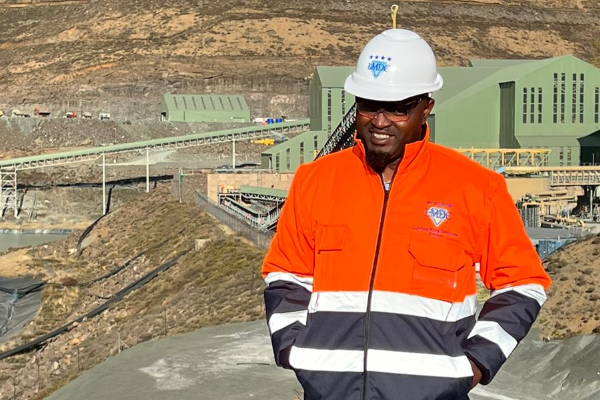
Vere joins a Lesotho diamond mine as Head of operations

0

Engineer Tirivashe Eddington Vere has now taken the position of Head of Mining Operations for Firestone Diamond Pvt Ltd (Liqhobong Mine) which is one of Lesotho’s largest diamond producers by volume.

The Lesotho-based company headhunted the Mining Executive and the offer resonated with his passion for working with diverse people and business turnaround. Joining a diamond operation will rekindle his passion for diamonds, drawing on his extensive experience to guide Lesotho’s mining endeavours.

Diamonds and Rio Tinto’s Murowa Connection

Vere’s journey in the world of diamonds can be traced back to his early experiences with Rio Tinto’s Murowa diamonds, located in Zvishavane. Murowa is now under Rio Zim. This connection laid the foundation for his experience in diamond mining.

Leadership and Industry Experience

Vere is not a newcomer to the realm of mining operations. His track record includes leading several mining operations in Zimbabwe, demonstrating a keen understanding of the complexities involved in this industry. As past President of the Association of Mine Managers of Zimbabwe (AMMZ) and a current council member, Tirivashe led a significant number of large-scale Mine Managers leaving an indelible mark on the Mining industry in Zimbabwe.

Diverse Mineral Commodities Expertise

What sets Vere apart is his diverse expertise across a spectrum of mineral commodities. His experience spans across Asbestos, Diamonds, Nickel, Gold, Cement, and Coal, showcasing a truly exceptional versatility. In his previous role, Vere was the Mine Manager for Kuvimba Mining House’s Energy Cluster division Bindura Nickel Corporation (BNC). BNC is Zimbabwe’s biggest Nickel mine and in 2021 was the world’s 3rd biggest Nickel exporter. Not many can boast such a comprehensive understanding of various minerals, and Tirivashe’s ability to navigate the challenges and intricacies of each speaks volumes about his capabilities.

Mining Zimbabwe wishes him the best in his new role.

Zimbabwe gold buying prices/ gram 1 March 2024

Fidelity Gold Refinery (FGR) official gold buying prices/ gram. See the Zimbabwe gold buying prices/ gram today 1 March 2024.

SG 90% AND ABOVE US$62.22/g
SG ABOVE 85% BUT BELOW 90% US$61.56g
SG ABOVE 80% BUT BELOW 85% US$60.90/g
SG ABOVE 75% BUT BELOW 80% US$60.24/g
SAMPLE BELOW 10g BUT ABOVE 5g US$59.26/g

Fire Assay CASH $62.55/g

NB: Fire Assay cash price is for gold above 100gs, no sample is deducted.
For the Fire Assay Transfer price, a sample of not more than 10g is deducted
A 2% royalty is charged on all deposits (small-scale miners)
A 5% royalty is set for Primary Producers

Cash available. Fidelity Gold Refinery prices will be changing daily to match world market prices.

Galileo Resources Advances Strategic Acquisition in Zimbabwe

0
  • Secures 80% Stake in Lithium & Gold Projects

Galileo Resources plc, has successfully fulfilled all conditions of the acquisition of an additional 51% shareholding in BC Ventures Limited. The announcement comes as a follow-up to the company’s initial declaration on October 3, 2022.

Galileo, which previously held an option to secure a 51% interest by investing $1.5 million in the exploration and evaluation of the Lithium & Gold Projects by July 21, 2024, has now increased its stake to 80% in BC Ventures Limited. This move positions the company strategically in the ownership of BC Ventures Limited, which holds the Kamativi Lithium Project and two gold licenses known as the Bulawayo Gold Project.

BC Ventures Limited, through its wholly-owned Zimbabwe subsidiary Sinamatella Investments (Private) Limited, has recently submitted applications to Zimbabwean authorities for a three-year renewal of all three exploration licenses, extending the validity to March 12, 2027.

Colin Bird, the Executive Chairman of Galileo Resources, expressed his satisfaction, stating, “I am pleased that we completed all the necessary work to finalize our 51% earn-in, and with our existing 29% shareholding, we now have an 80% beneficial shareholding in BC Ventures Ltd.” Bird highlighted the potential of the projects, particularly praising the Kamativi Lithium/Tin project for its significant promise in the discovery of lithium and/or tin. He also noted positive indications for near-surface and deeper gold discoveries in the Bulawayo project, with preliminary findings suggesting the presence of ultramafic formations that may host nickel.

Bird emphasized the company’s commitment to advancing all projects in Zimbabwe, underlining the high prospectivity for new discoveries in various sought-after metals globally. The executive’s optimistic outlook aligns with Galileo Resources’ dedication to exploring and unlocking the mineral potential in Zimbabwe, contributing to the ongoing global demand for new age metals.

Galileo Resources plc remains poised to play a key role in the exploration and development of Zimbabwe’s rich mineral resources, with the successful acquisition strengthening its foothold in the region. The company’s strategic move aligns with its broader vision of contributing to the global supply chain of critical metals, reaffirming its commitment to sustainable resource development.

Major Setback as ZIMPLATS Delays Refinery refurbishment

0

Zimbabwe’s hopes for the establishment of a Platinum Group Metal (PGM) beneficiation plant may be in jeopardy, with the country’s largest PGM producer postponing the refurbishment of the Selous Base Metal Refinery (BMR).

Rudairo Mapuranga

According to Impala Platinum (Implats), which owns Zimplats, the PGM producer will also delay other projects in the country, including the 185MW solar plant, due to softening commodity prices.

Despite posting a 9 per cent increase in 6E production and boosting sales by 10 per cent to 320,196 ounces in the six months to December 2023, softening metal prices have dragged the PGM miner into losses.

In 2021, Zimplats announced a US$1.8 billion expansion plan, the single largest investment commitment into Zimbabwe in years. However, Implats now has to delay some of the projects after falling prices cut group profits by 88% in the December half-year.

“At Zimplats, the implementation of the sulfur-dioxide abatement and smelter expansion project was rationalized to manage cash constraints. The execution of the Selous Base Metal Refinery (BMR) refurbishment was deferred. Further phases of the 185MW solar project have also been postponed.

The sulfur dioxide plant will now only start in 2028. The base metal refinery project, according to Implats, has been ‘deferred outside the five-year planning window.’ A new smelter will be completed at Zimplats in May. After that, the company will slow down spending. ‘Post the new smelter commissioning at Zimplats, plans to slow future growth capital will see the asset revert to free cash flow generation.’

Makura to be a distinguished speaker at DMAFRICA 2024

0

President of the Association of Mine Managers of Zimbabwe (AMMZ), Engineer Abel Makura will be a distinguished speaker at this year’s DIGITALISATION IN MINING AFRICA set to be held from 7-8 May 2024 at The Maslow Hotel in Sandton, South Africa.

Makura will be part of a Panel Discussion on Digitalisation and Labour Productivity Empowering workers to make informed decisions in real time. The panel will focus on

• Minimising the need for workforce downsizing or importing new skills
• Enhancing real-time safety systems for increased worker well-being
• Facilitating instant communication and skill development for personnel

The event aims to galvanize the mining industry in discussions on unlocking the value of digitalisation, exploring a new leadership approach, transforming operations, creating a data-driven culture, and fostering discussion on:

•    Exploring the value of digital transformation in decision-making
      through enhanced visibility and transparency
•    Developing a data-fit organisation 
•    Establishing an end-to-end digitally connected mine for sustainability
•    Embedding innovation in mining for enhanced digital capabilities 
•    Investigating the pivotal role of robotics, AI, sensors, and digital twin 
•    Adopting sustainability leadership in response to ESG requirements 
•    Addressing workforce challenges through preferred technologies
•    Creating an integrated ecosystem for stakeholder collaboration

About Abel Makura

A Mining Engineer with more than 15 years of underground mechanized mining experience in the Platinum Group Metal industry, Makura has a strong bias towards mining production, mine planning and business process improvement. He is currently employed by AngloAmerican Platinum at Unki Mines in Shurugwi as a Business Improvement Manager. He holds a Master of Science in Mining Engineering and a Bachelor of Science Degree in Mining Engineering from the University of Zimbabwe.

Makura is also the President of the AMMZ a technical arm of the Zimbabwe Mining Industry.

RBZ sold digital currency worth 4.8 kgs of pure gold

0

The Reserve Bank of Zimbabwe (RBZ), managed to sell digital currency worth 4.8 kgs of pure gold.

Rudairo Mapuranga

The RBZ on Tuesday received 12 applications to purchase gold-backed digital tokens with an amount of Zwl $5,240,399,573.79 realised by the Central Bank.

Since its inception, the Central Bank has issued 736.52 kgs of gold which is equal to 736,518,865.00 milligrams.

The gold-backed digital tokens, now named Zimbabwe Gold or ZiG, became an approved means of payment for domestic transactions with effect from 05 October 2023 with any transactions going through ZimSwitch and the RTGS system in the same way as Zimbabwe dollars and US dollars being moved between bank accounts, with swipe machines being made available.

The tokens have been available as an investment or store of value for some months, but now if both a buyer and seller have ZiG bank accounts and agree to use the token for payment, they can buy and sell something through those accounts.

Despite an increase in production, Zimplats’ earnings decreased by 105%

0

Despite posting a 9% increase in 6E production and boosting sales by 10% to 320,196 ounces in the six months to December 2023, softening metal prices have dragged the country’s biggest platinum group metal (PGM) producer ZIMPLATS, to losses.

Rudairo Mapuranga

According to Zimplats’ Directors’ Report and Condensed Consolidated Interim Financial Statements (Reviewed) for the half-year ended 31 December 2023, the company made a post-tax loss of US$8.8 million, down from a profit of US$159.6 million, marking a 105% loss in earnings.

Zimplats’ pre-tax profit also decreased by 94% from US$221.5 million to US$14.2 million.

Of the six platinum group minerals that Zimplats produces, the biggest price losses were in palladium, which fell 42%, and rhodium, down 70%. Platinum suffered a 1% decline, while ruthenium decreased by 11%. Gold and Iridium were on the positive side, with Iridium posting a 24% increase, while gold increased by 13%.

Ore mined during the half-year increased by 5% to 4.0 million tonnes from 3.8 million tonnes for the same period last year. This was mainly due to pillar reclamation at Rukodzi Mine in addition to Mupani Mine production output, which increased from 1.1 Mtpa to 1.4 Mtpa.

Tonnes milled, at 3.9 million tonnes, increased by 6.4% compared to the same period last year, mainly due to Third Concentrator Plant mill volume optimization.

The Six Elements (platinum, palladium, rhodium, gold, ruthenium, and iridium) (6E) mill head grade at 3.34g/t was marginally lower compared to 3.39g/t achieved in the same period last year due to an increased contribution of ore from lower-grade mines.

6E production increased by 9% to 327,810 ounces from 300,738 ounces in the same period last year, mainly due to the increase in milled tonnage.

Zulu lithium plant ready to run

0

AIM stock exchange-listed mining and exploration company Premier African Minerals has announced that the Zulu lithium processing plant is scheduled to start operating soon after having run with the primary ore feed.

According to Premier African Minerals CEO George Roach, the plant has now run with the primary ore feed, and the optimization of the new components continues. Roach said over the coming days, plant operations are expected to stabilize as a range of minor issues is resolved by the plant operator and contractor. He said Premier expects the plant to operate continuously, as previously announced, before the end of February 2024.

“Premier is both encouraged and simultaneously frustrated, as much by the fact that the newly installed mill exceeds expectations and by a number of system and control issues that are interrupting operations right now. Premier expects to provide a further update before the end of February 2024,” Roach said.

Premier is under pressure to ensure the plant is running due to the terms of its offtake agreement with Canmax Technologies Co., Ltd, where Canmax purchased in advance US$34,644,385 worth of lithium spodumene concentrate to be sold by Premier (“Advance Purchase Amount”) with the proceeds used to construct and commission the plant at Zulu. The parties agreed to supply the Product for the Advance Purchase Amount plus accrued interest by Canmax following the breach of a first contract agreement by Premier.

Recently, Premier received a notice of election under the Agreement from Canmax Technologies Co., Ltd., following its failure to deliver at least 1,000 tonnes of lithium spodumene per month for the months of November 2023 and December 2023, to have the current outstanding balance owed to Canmax of US$3 million (US$1.5 million per month) of the monthly payment carried forward.

According to Premier CEO George Roach, in accordance with the Agreement, the interest rate for the outstanding balance of the prepayment amount will be increased to 12% per annum with effect from 1 December 2023.

Mine Managers thrilled with Mupani’s automated operations

0

The Association of Mine Managers of Zimbabwe (AMMZ) is enthusiastic about the transformative impact of automation on mining production and safety at Zimplats’ Mupani Mine in Mhondoro Ngezi.

Rudairo Mapuranga

At the first technical visit of 2024 held at Mupani mine on Friday, the AMMZ asserted that technology will revolutionize the mining sector, generating new job opportunities beyond current recognition.

Mupani Mine is the first mine to successfully undertake autonomous mining on a narrow riff pillar in the world, thus giving the AMMZ the reason for information exchange with the mine’s Management.

Speaking to Mining Zimbabwe on the sidelines of the technical visit, AMMZ President Engineer Abel Makura said automation at Mupani Mine would go a long way in helping mitigate the challenge of softening commodity prices through increased production.

“The autonomous dump trucks and the level of technology around them, the operation, and monitoring itself make mining much easier. In terms of technology, it is obvious that when full implementation of all other production units, maximum utilization of available time will be made. And under the current environment of depressed commodity prices, those challenges can be offset by increasing production realized from this noble use of technology.

“Instead of just working hard to produce whatever we have to produce, we are now getting our output from working much smarter, and that is a positive. And we hope that all the learnings that will be gained from the operation of Zimplats can also be put to good use by other operations,” Engineer Makura said.

According to Makura, while there is a widespread belief that automation will lead to job losses and a decrease in employment by mining firms, however automation at Mupani Mine has proven that there is a creation of new roles in mining and automation is increasing jobs than reducing them.

“What I would look at is that jobs are just being transferred. Where the jobs were mainly involving people doing the actual work, the jobs are now transferring to people who are doing the monitoring.

“So it’s work that has been moved from a lower level to a higher level, which is a positive. And for every job that has been replaced by technology, it’s somehow replaced in a different context, and it’s going to assist. Also, look at safety, so it’s not that they are the only providers that are there in terms of providing that LTE technology. It’s an opportunity that would have been created for them. So when they are now involved in that, they also create jobs on the other end. So we wouldn’t say that automation is a threat to jobs. We would take it from the point of view that it’s increasing the number of jobs,” he said.

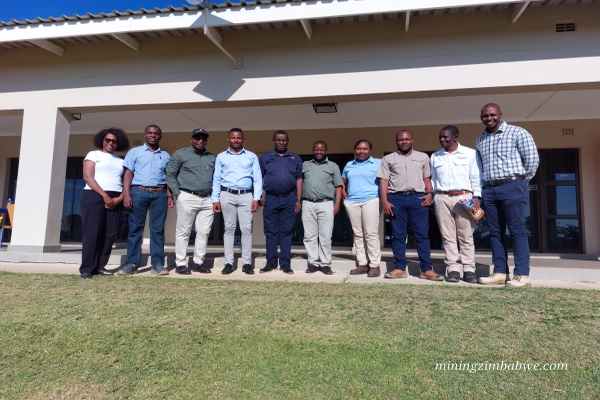
Also, speaking to Mining Zimbabwe, Association of Mine Surveyors of Zimbabwe (AMSZ) Secretary-General Takunda Paul Mubaiwa said there are benefits in adopting automation. He said the technology goes a long way in creating new duties in mining than taking away jobs.

“We came to explore groundbreaking technology being used by Zimplats’ Mupani Mine so that we can learn from it. As surveyors, we participate in automation, we help in the programming and generation of maps, and anything of automation in mining is centred on surveying.

“The advice to other mines is their benefits in adopting automation, people should continue and endeavour to take technology as it comes. It is there to help, it doesn’t necessarily replace the person per se but it advances in roles and duties and working in a safer environment,” Mubaiwa said.

About the AMMZ

Also known as the technical arm of the Zimbabwe mining industry, the AMMZ is a vehicle for information exchange and dissemination of good practices and seeks to promote the study and growth of Mining and allied disciplines in Zimbabwe.

Fiscal incentives or tax policies for Mining investment in Zimbabwe

0

The Zimbabwean tax regulations concerning income tax, allowable deductions, and exemptions are outlined with clarity Minister of Mines and Mining Development Hon Zhemu Soda has said.

According to the Minister, all capital expenditure related to mining operations is deductible, while assessed losses can be carried forward indefinitely.

Soda said Holders of Special Mining Leases are subject to a 15% corporate income tax rate, with additional profit tax triggered upon reaching specified profitability levels. Moreover, exemptions from certain taxes are possible for approved holders of Special Mining Leases.

He explained that in terms of customs duty, rebates are granted for goods used in prospecting, petroleum exploration, and specific mine development operations. Additionally, VAT deferment is available for mining companies on capital imports for a defined period, subject to set conditions.

To address infrastructure challenges like power supply and transportation hindering mining operations and investment, the Minister said the Zimbabwean government is implementing various strategies.

These include the introduction of solar power plants at mining project sites, such as Blanket Mine, which generates a significant portion of its power needs from solar energy. Additionally, plans to invest in coal-bed methane gas projects for power generation are underway. The government has also introduced Third-Party Access to the national grid, allowing investors to produce and sell power using existing infrastructure. Furthermore, Zhemu said mining companies have the option to directly import power from neighboring countries. These initiatives aim to enhance energy reliability and support sustainable mining operations in Zimbabwe.

Responding to mining Zimbabwe’s question “What fiscal incentives or tax policies do we have in place to encourage mining investment and ensure a competitive environment for foreign companies seeking to invest in Zimbabwe?” this is what the Minister of Mines and Mining Development said.

INCOME TAX

Allowable Deductions/ Expenditure

  • All capital expenditure on exploration, development and operations incurred wholly and exclusively for any mining operations is allowed in full for taxation purposes.
  • Expenditure incurred during a year of assessment on surveys, boreholes, trenches, pits and other prospecting and exploratory works undertaken for the purpose of acquiring rights to mine minerals in Zimbabwe or incurred on a mining location in Zimbabwe, together with any other expenditure that is incidental thereto may be allowed in full unless the taxpayer elects to carry the expenditure forward and allowed against income from mining operations in subsequent years.

Assessed Losses

  • There is no restriction on the carryover of tax losses; these can be carried forward for an indefinite period.

Taxable income of a Holder of Special Mining Lease

  • In the case of a holder of a Special Mining Lease, corporate income is taxed at a rate of 15%.
  • However, holders of a Special Mining Lease are liable to Additional Profit Tax. The tax is payable upon attaining a formula-based level of profitability.

Exemption from Certain Taxes

  • After consultation with the Minister responsible for the administration of the Mines and Minerals Act, the Minister of Finance may declare the holder of a Special Mining Lease to be an approved holder of a special mining lease for the purposes of exemption, wholly or partly, from the following taxes:
    • Non-Residents shareholders tax;
    • Non-Residents tax on Fees;
    • Non-Residents tax on Remittances;
    • Non-Residents tax on Royalties.
  1. CUSTOMS DUTY
    • Rebate of duty on goods for prospecting and search for mineral deposits:

Rebate of duty is granted on goods which are imported by a person who has entered into a contract with the Government for the prospecting and search for mineral deposits.

  • Rebate of duty on goods for use in petroleum exploration or production:

Rebate of duty is granted to the grantee of a special grant issued under the Mines and Minerals Act authorizing the exploration or production of petroleum.

  • Rebate of duty on goods imported in terms of an agreement entered into pursuant to a special mining lease:

Rebate of duty is granted on goods which the Secretary for Mines certifies as eligible for a rebate of duty in terms of an agreement in the Special Mining Lease.

  • Suspension of duty on goods imported for specific mine development operations:

A customs duty suspension is granted to a holder of a mining location number importing specified goods during the project’s life cycle for machinery, construction and erection of facilities for the production and conveyance of minerals.

  1. DEFERMENT OF VALUE-ADDED TAX
    • VAT deferment is granted to mining companies on capital imported for a period of 120 days subject to the conditions set by the Commissioner-General.