Home Blog Page 225

Relocation and Compensation Law for Communities embraced

0

Tropical Africa, the new relocation law for mining operations has sparked agreement from both mining companies to support the Zimbabwe Environmental Law Association (ZELA) in the relocation of Mines and Minerals.

Patricia Rwafa

The law has the potential to provide economic opportunities for communities affected by mining, but there are also fears that it could lead to the displacement of people and damage to the environment.

At a workshop held at Cresta Oasis Hotel in Harare on Thursday the 15th of February 2024, which stakeholders attended including CSOs, ZHRC, Rural District Councils, and Community-based organisations, ZELA said it was seeking for the establishment of Mines and Minerals compensation and relocation laws to ensure communities affected by mining are fairly relocated and compensated.

Speaking at the workshop, Dr Grasian Mkodzongi of Tropical Africa said the relocation law has the potential to bring great benefits to the communities affected by mining, but it is important to ensure that these benefits are not at the expense of people’s homes and livelihoods.

“We need to make sure that we are striking the right balance between development and displacement,” he said.

Data manipulation in the context of mining relocations often takes the form of under-reporting the number of people relocated, exaggerating the number of jobs created, and hiding negative environmental impacts. This results in a skewed view of the costs and benefits of mining operations, which can have serious consequences for the affected communities.

Despite claims by mining companies that relocations will lead to increased employment, the reality is often quite different. In many cases, mining companies fail to create the promised jobs, leaving local communities with few economic opportunities and a high level of unemployment. While mining companies often tout the benefits of infrastructure development that accompanies relocations, the reality is that these developments often fall short of expectations.

The promised roads, schools, and hospitals are often not built or are of poor quality, leaving local communities worse off than before.

In addition to the lack of infrastructure development, mining companies often fail to provide adequate support initiatives for communities affected by relocations. These initiatives may include things like education programs, health services, and job training, but are often not implemented effectively. This lack of support can lead to a cycle of poverty and deprivation in affected communities,” he said.

Zimbabwe is on track to achieve the targeted US$12 billion mining sector by this year on the back of increased investments and expansion projects, according to Mines and Mining Development Deputy Minister Polite Kambamura.

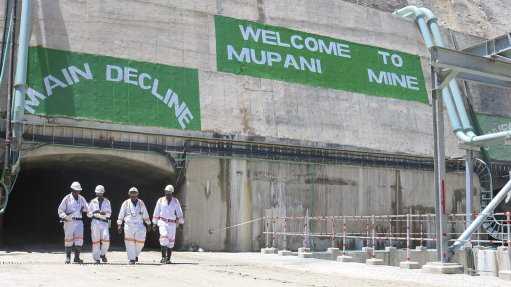
All Roads Lead to Mupani Mine for the AMMZ Q1 Technical Visit

0

The Association of Mine Managers of Zimbabwe (AMMZ) will embark on its Q1 insightful technical visit to Zimplats Mupani Mine on the 23rd of February 2024, marking a significant event on the mining calendar.

With a focus on sharing knowledge, fostering collaboration, and exploring innovations in the mining sector, the visit to Mupani Mine is geared to be both educational and enlightening for all participants.

The AMMZ, widely known as the technical arm of Zimbabwe’s Mining Industry, chose Mupani Mine as the venue for its first-quarter technical visit, recognizing the mine’s reputation for technological advancements, operational efficiency, and commitment to sustainable mining practices.

Located in the heart of renowned Zimbabwe’s Great Dyke geological formation, Mupani Mine stands as a testament to Zimplats’ ongoing efforts to harness the country’s rich mineral resources while minimizing environmental impact and maximizing socio-economic benefits for local communities.

The technical visit will provide visitors with a unique opportunity to gain firsthand insights into the operations of Mupani Mine, from exploration and extraction to processing and rehabilitation. Participants will have the chance to interact with Mine management, large-scale Mine Managers, Engineers, and other key personnel, exchanging ideas and best practices to enhance their operations.

It is also an opportunity for service providers and equipment suppliers to analyse operations and see which solutions they can provide for efficient operations.

One of the key highlights of the visit will be a guided tour of the mine facilities, including the underground workings, processing plant, and environmental management systems. Attendees will be able to witness firsthand the state-of-the-art technology employed by Zimplats to ensure safe and efficient mining operations, as well as the company’s efforts to minimize its environmental footprint through reclamation and rehabilitation initiatives.

In addition to the technical aspects, the visitors will also have networking and collaboration opportunities with industry professionals.

For more information contact Mrs S Chitakunye on +263 773 132 263

Falcon Gold Mine Revokes Free Lease for Youth Mining

0

Mining magnate, Ian Saunders of Falcon Gold has reportedly issued notice to the Shurugwi Empowerment Trust, declaring the cancellation of the free lease granted to youth for mining activities at the Hwandara blocks in the Midlands town.

This decision, attributed to the intention to recommence gold mining operations at the blocks, has sparked a wave of concern and speculation within the local community who were making a living from the claims.

With access to the Hwandara blocks now in jeopardy, reportedly 3000 youths are now faced with the daunting task of finding alternative sources of income to feed their families.

Hwandara was closed to formal mining in the 1990s when Falcon stopped it’s operations.


Interview: Better Brands founder Pedzisai “Scott” Sakupwanya

0

Pedzisai Scott Sakupwanya is a prominent figure in Zimbabwe’s gold mining industry. He has extensive experience and expertise in the gold sector. He not only has extensive experience but also expertise in the gold sector. Throughout his career, he has gained a deep understanding of the intricacies and challenges of the industry.

Which year has been your best year in terms of gold deliveries to Fidelity? How many tonnes did you deliver and how did you manage to deliver so much that year?

In terms of gold deliveries to Fidelity Gold Refinery (FGR), our best year was in 2022 when we delivered 18 tonnes of gold. This exceptional performance can be attributed to the incentives paid on gold deliveries which allowed us to offer a competitive price to ASM (Artisanal and Small-Scale Miners), which encouraged higher gold deliveries.

How many tonnes of gold did you deliver to Fidelity Gold in 2023 and what are your projections for 2024?

In 2023, we delivered 13 tonnes of gold to Fidelity Gold Refinery (FGR). Our projections for the 2024 year, are to deliver 20 tonnes of gold.

What is the biggest advantage of investing in Zimbabwe’s gold sector?

One of the biggest advantages of investing in Zimbabwe’s gold sector is its investor-friendly operating environment. Not only does the government support investment in the sector, but investors also have the opportunity to participate in the entire gold supply value chain, from mining to refining and producing value-added products.

Is it possible for foreign companies to buy gold in Zimbabwe by partnering with you as a top gold trader in the country?

Yes, foreign companies can buy gold in Zimbabwe and partner with Betterbrands Investments. At Better Brands, we facilitate the buying and exporting of gold to foreign destinations through Fidelity Gold Refinery (FGR).

What is your advice to those interested in investing in the country’s gold industry?

My advice to those wanting to invest in Zimbabwe’s gold industry is that now is the right time to do so. The government is supportive of investment in the gold mining industry and associated downstream industries. There are also incentives offered to formal gold producers. These factors create a favourable climate for investment in the sector.

What is the potential of Zimbabwe’s gold industry, in terms of growth? Where do you see it in the next 5 years?

The potential for growth in Zimbabwe’s gold industry is significant, with a projected capacity to produce 65 tonnes of gold per annum in the next 5 years. This highlights the country’s ability to increase production and become a major player in the global gold market.

During the previous term of government, it was projected that the gold industry would reach a US$4 billion milestone annually. Why do you think the vision was not achieved?

The vision of reaching a US$4 billion milestone annually for the gold industry was not achieved due to limited access to fresh capital caused by economic sanctions imposed on the country. These sanctions hindered the investment flow into Zimbabwe, making it a challenge to meet the ambitious target.

Some say Zimbabwe is a bad investment destination. Give us five reasons why this is a misconception.

Contrary to misconceptions, Zimbabwe is not a bad investment destination. There are several reasons supporting this:-

  1. Government policies are supportive of investments in all sectors of the economy.
  2. There is an availability of educated manpower that can easily be trained.
  3. Various incentives are offered by the government to different sectors.
  4. Foreign Direct Investment (FDI) has been reduced due to economic sanctions imposed on the country, but this does not discredit other investment opportunities.
  5. New massive projects are being commissioned in various sectors of the country’s economy.

Can you explain the core business activities of Better Brands Investments?

Better Brands Investments is primarily involved in gold buying and exporting to foreign destinations through Fidelity Gold Refinery (FGR).

What is the company’s strategy for mining and trading in Bullion and other commodities?

Our strategy for mining involves going underground and enhancing assistance to ASM sector players to ensure efficient and effective gold extraction. In terms of trading, we continue to mobilize gold by establishing gold-buying centres accessible to ASMs. We also plan to expand our gold buying footprint by establishing centres in all gold activity areas.

How does Better Brands Investments ensure transparency and accountability to its clients?

Better Brands Investments ensures transparency and accountability to its clients by conducting all activities per regulatory authorities’ requirements. All transactions and documentation are properly approved and documented, creating a transparent and accountable process.

Can you provide examples of the innovative solutions offered by Better Brands Investments?

Some examples of the innovative solutions offered by Better Brands Investments include:

  1. Providing mining inputs such as fuel and chemicals to ASMs.
  2. Offering mining equipment to miners under a loan scheme.
  3. Facilitating the purchase of inputs in local currency to prevent ASMs from engaging in informal markets.

Can you provide examples of the innovative solutions offered by Better Brands Investments?

  • Innovative solutions offered by Better Brands Investments are as follows:
  • Providing ASMs with mining inputs such as fuel and chemicals.
  • Availing mining equipment to miners under a loan scheme.
  • Facilitating the purchase of inputs in local currency, thus ensuring ASMs do not dispose of local currency on the informal market.

Safety has become a concern in the ASM industry lately. What should be done to ensure ASMiners take safety seriously? What should you, as miners, do to guarantee the safety of your workforce?


  • Awareness campaigns on health and safety.
  • Coming up with safety awards given to exemplary ASMs.
  • Regular inspection of the operations of ASMs.
  • Developing smart partnerships between ASMs and Large-scale mines that babysit the ASMs, thus enhancing knowledge and understanding of safety issues.

Most gold buyers fail to have their licenses renewed after failing to meet set targets. Where do you think buyers get it wrong, and how can a new buyer avoid making the same mistake?

Like with any relationship, it is of paramount importance that gold-buying permit holders regularly communicate with Fidelity Gold Refinery about the challenges they would be encountering in buying gold, to avoid last-minute surprises. One must avoid trying to bring forth challenges when it comes time for renewal.

Tadiwanashe wishes to venture into gold buying but has limited capital. What’s your advice to him to make it in the gold-buying industry?

Gold buying is a relational business. Strong relationships with the ASMs are crucial for one to be able to mobilize as much gold.

Funding of Zulu Project and Update

0

The Board of Premier African Minerals Limited is pleased to announce a subscription today to raise £2,475,000 on before expenses at an issue price of 0.275 pence per new ordinary share for the Zulu Lithium and Tantalum Project (“Zulu”).

Highlights:


Ø

Premier now funded until first production at Zulu.

Ø

Ball Mill Power on and test run in situ.

Ø

Commencement of Commercial Production in late February with first shipments expected in March 2024.

Ø

Thickener Plant completion date 19 February 2024.

Ø

Ongoing negotiations with Zimbabwe-based lenders for working capital facilities at Zulu once in production are progressing.


George Roach, CEO, commented, “This placement assures Zulu of plant startup, subject only to suppliers meeting their obligations and undertakings. This has and remains Premier single most important objective at this stage. That is targeted for next week and remains on target at this time. Early indications are that subsequent working capital finance will be available from commercial lenders at Zulu when production is underway as Zulu must begin to fund its operations without the assistance of Premier once commercial production has commenced.

Funds now raised will be used specifically for direct operating expenses at Zulu that includes:-

  • Final payments related to the thickener purchase and installation,
  • Final payments related to the ball mill and associated hydrosizers, transport and installation thereof,
  • Plant operating spares and reagents,
  • Mining costs, and
  • Day-to-day operating expenses including diesel.”

Funding

As announced on 18 January 2024, Premier elected to make a significant expansion in the mining operations to facilitate delivery of ore with less country waste to ensure against any residual issues with the sorters (which continue to be optimised) when plant production recommences at Zulu.

And while the mill has now been delivered and installed at Zulu, there was a delay with the delivery which further constrained Premier’s cash resources.

Premier continues to engage with Zimbabwean-based lenders for working capital facilities at Zulu – these potential lenders need to see production from Zulu and while Premier strongly believes that Zulu will be able to source a working capital facility, this is now largely dependent on Zulu being in production.

Based on the above, Premier believe that securing funding through the above Subscription is the best immediate solution to securing further project funding in order to see Zulu commence production in late February 2024. Once production has commenced, Premier believe that it should see one or more of the alternatives to equity-based funding materialise. On this basis, Premier’s current expectation is that it is now fully funded to the first production at Zulu.


Zim Introduces Capital Gains Tax on Mining Title Transfers

0

Zimbabwe enacted the Finance Act 2024 Act 13 of 2023, introducing a 20% capital gains tax on mining title transfers.

This new tax regime, affects both domestic and international transactions, prompting concerns among stakeholders.

The Finance Act mandates that stakeholders comply with the new tax requirements by April 1, 2024, for transfers conducted before January 1, 2024. Subsequent transactions must adhere to the tax regulations within 30 days of their occurrence.

The introduction of the capital gains tax marks a significant shift in Zimbabwe’s fiscal policy concerning its lucrative mining industry. While the government aims to increase revenue streams and ensure a fair contribution from mining activities, critics argue that the nature of the tax places undue financial burdens on stakeholders and may deter future investments.

Transfer of mining rights

  • No transfer of mining rights shall be approved without payment of capital gains tax and stamp duty or any other tax due on the value of the transaction.
  • Failure to abide by this condition shall render the disposal or lease of mining rights null and void. 20.

Collection of tax on gross proceeds of granite and lithium

  • A 1% levy was introduced on gross proceeds of lithium, black granite and other cut or uncut dimensional stones and quarry stones. This applies on local sales and exports.
  • The funds will be ring-fenced for community development.

Notification of the Intention to Transfer or Lease Mining Rights

All agreements for the transfer or disposal or lease of mining rights be lodged with the State and reviewed and approved before they are implemented.

Collection of mining royalties in kind

  • The Minister may appoint any of the following as agents for the collection of royalties’ payable in kind: a) Minerals Marketing Authority of Zimbabwe. b) Reserve Bank of Zimbabwe. c) Fidelity Printers. d) Any other person as the Minister may designate.

One-on-One with Prospect Resources CEO Sam Hosack

0

In the realm of mining and exploration, Zimbabwe holds vast potential yet struggles with a key obstacle – funding a Mining Executive has said.

However, amidst this challenge, some individuals and companies have managed to build successful ventures that spearhead economic growth within the country. One such remarkable figure is Sam Hosack, the Chief Executive Officer of Prospect Resources. Mining Zimbabwe had the privilege of sitting down with him to delve into the projects his company is currently running and to gain insights into his take on the investment climate in Zimbabwe.

Known for his efficacy as a project builder, Hosack unequivocally believes that Zimbabwe possesses immense opportunities for new ventures and boasts a workforce rich in qualifications and expertise. Let’s get into it!

Can you please tell us about yourself and how you ended up in your position?

I am an Engineer by training who joined Prospect as CEO in 2018.  Before Prospect, I held senior project and operations roles at a leading African and global miner, First Quantum Minerals (FQM) over a 14-year career.  At FQM, I was shaped into a very effective project builder, in charge of driving the design, construction and delivery of major mine and infrastructure facilities across Africa, Europe, Central America and Australia. The depth and breadth of these demanding and challenging experiences shaped me as a professional and as a leader, with skills and experience that I utilise every day at Prospect as we grow the business.

What does it mean to be CEO at Prospect Resources?

It’s a great honour and responsibility to lead an organisation, and every day I spring into action to serve the team. I have really cherished partnering with the smartest and most experienced people in our industry and building a team that has fantastic credentials. The team challenges me, and in turn, I see my role being to ensure the team has the focus and resources they require to achieve our strategic goals. Holding the team and Board in balance is an important daily goal, bringing the best shareholder value from our work.

Prospect Resources has created a strong presence in critical minerals exploration. What do you seek to achieve as a company?

The Company recognises its competitive advantage and has embarked on a strategy of exploring and developing battery mineral commodities, principally in sub-Saharan Africa, applying the cash generated from the sale of our world-class Arcadia Lithium Project in 2022. Prospect is seeking to achieve the development of such projects into productive and economic mining operations, focused on lithium, rare earth minerals and copper. We see all these commodities as particularly important in the electrification transition, as the world seeks to move away from dependence on fossil fuels for its energy needs.

It is public knowledge that your company is currently conducting exploration at a 400-hectare land (Step Aside project) 8km North of the Arcadia lithium mine. Why did you choose this particular place and what was the potential like before you conducted the first phase of exploration?

The Step Aside Project is situated in a comparable geological position to the Arcadia Mine and as such, was always thought to be prospective for its lithium mineral potential. There were small defined pegmatites and anomalous lithium soil geochemistry defined back in 2018, long before the first phase of exploration drilling commenced at Step Aside in October 2022.  What excites us about Step Aside is the high-grade lithium mineralisation, which whilst different to Arcadia has some unique advantages.

Your company has completed two phases of mixed RC and diamond drilling programs at the Step Aside project. How many holes have been drilled at current and what are the results like?

Prospect has now completed three phases of mixed RC and mainly diamond drilling at Step Aside since late 2022 for 17 RC and 76 diamond holes for a total of about 8,400 metres.

We understand that the fourth Phase drilling program is set to commence. How many holes are you targeting to be drilled and what are your plans after the phase 4 drilling program?

Phase 4 is set to commence in late January and will constitute about 2,000m of diamond drilling. A mineral resource estimate could then be estimated for the entire Step Aside Lithium Project.

The nation will be curious about your plans for the Step Aside project after exploration. Do you also intend to dispose of the project after a successful exploration phase as you did with the Arcadia lithium project?

The Prospect team have the credentials to fund and build a mine at Step Aside, however, the decision whilst being so near to Arcadia is whether we can justify a stand-alone mine. Typically in this scenario, the Arcadia mine would process Step Aside ores, in which case we will evaluate the best means to create value from our work.

What is your perspective on the investment climate in Zimbabwe and what policies do you think need to be adjusted for easy flow of mining business?


Get the full interview on the Mining Zimbabwe Mining Indaba Edition HERE

ZELA seeks for the adoption of compensation, relocation law

0

The Zimbabwe Environmental Law Association (ZELA) is seeking for the establishment of  Mines and Minerals compensation and relocation law to ensure communities affected by mining are fairly relocated and compensated.

Rudairo Mapuranga

At a workshop held at Cresta Oasis Hotel in Harare on Thursday where a number of stakeholders attended including Rural District Councils, CSOs and community-based organisations, ZELA led a discussion on how mining companies should compensate communities when affected by mining operations.

ZELA’s proposed regulations seek to ensure that where relocation of communities due to mining activities is found to be necessary, such relocation is carried out fairly and transparently, and that the affected community is adequately compensated and provided with essential services and support.

The regulations also emphasize the importance of minimizing negative impacts on the environment and the health and safety of the community.

Speaking at the workshop Proud Nyakure from Zimbabwe Diamond and Allied Miners Workers Union (ZIDAWU) said it was of importance for companies to engage communities to ensure proper and fair compensation.

She said the government and Mining companies should ensure they adopt the United Nations’ guiding principles on business making while mining could bring economic benefits for the country,  human rights are not affected at the same time.

“The first one is the government and the mining companies should ensure that they adopt the UN guiding principles making sure they enhance the duties to protect and respect human rights and ensure that they is remedy when human rights are being violated.

“It is also important to look at the positives of where people are being relocated to,” She said.

Zephania Nhidza Mutoko Rural District Council Executive Officer Shared Services said it was of important stance by ZELA to draft a law governing compensation and relocation as a result of mining operations.

He said communities were being threatened by supposedly bigger powers to sign documents that they don’t understand ending up not receiving compensation.

He said the law that will provide a free and fair engagement platform was a welcome move to ensure communities benefit.

“We have learnt that it is possible to ensure communities benefit from mining when affected interns of relocation. We have seen that engagements are of importance to ensure the miners and communities benefit. People have been threatened and thereafter the miner would end up compensating a few chosen by other powers involved in the matrix,” he said.

According to Obert Bore from ZELA, every holder of a mining right shall, before the commencement of its mining activities, prepare a comprehensive Social Impact Assessment (SIA) of its approved mining activities in order to assess mining activity feasibility in terms of the possible social impact such mining activities might have on any owner or occupier of land or a community.

Once the Social Impact Assessment has been reviewed and it has been found that relocation or compensation is likely, the holder of a mining right shall inform the public of the intention of such holder of a mining right to carry out mining activities that have the potential to induce displacement of affected persons from their places of occupation and of available opportunities to participate in such decisions.

“The framework will address challenges including the rights of children affected and relocation. Children must also participate and they must be heard,” he said.

UK company completes drilling programme at Dokwe gold

0

Ariana Resources plc, the AIM-listed mineral exploration and development company with gold mining interests in Europe, has provided an update on the due-diligence programme being completed on the 1.3 million oz Dokwe Gold Project in Zimbabwe owned by Rockover Holdings Limited.

Highlights:

  • 1222 m of diamond drilling completed for due diligence purposes, with two holes drilled at Dokwe North and two holes drilled at Dokwe Central.
  • Following a recent site visit, a metallurgical consultant commenced the due diligence assessment of the Dokwe project metallurgy and potential process routes, as defined in a 2022 Pre-Feasibility Study.
  • A structural geological consultant is improving understanding of the controls on gold mineralisation; detailed structural logging of the new core is underway to complement this work.
  • The geochemical characteristics of the mineralisation are being defined through an extensive pXRF programme on old and new drill cores, with over 15,000 m of core analysed to date.
  • Ariana currently holds circa 2.1% of Rockover, and exclusive discussions are ongoing for further collaboration between the companies.

Dr. Kerim Sener, Managing Director, commented:

“We are very pleased to report that our due-diligence drilling programme has now been completed on the feasibility-stage Dokwe Gold Project. The programme was professionally conducted by the Rockover team, who worked collaboratively with our site team in Zimbabwe. Preparation and analysis of the drill core will commence soon, following which these results will be compared to historical project data to confirm our understanding of the grade distribution and controls on gold mineralisation.

“Based on our assessment of the project to date, including recent geological observations from drilling, we are pleased to report that our confidence in the opportunity has only grown. There are very few >1 million oz gold projects globally with straightforward metallurgy, which are at a feasibility stage of development and have more than 95% of their JORC Mineral Resources in the Measured and Indicated categories. It has also been pleasing to note that Zimbabwe is attracting increasing exploration and mining interest. In particular, several foreign-owned AIM/LSE and ASX-listed companies have recently entered the country during the past year alone on a variety of projects, including those focused on gold, nickel, and lithium. Our initial market soundings in the UK and Australia relating to our potential interest in the feasibility-stage development of Dokwe have also been positive.

“Meanwhile, the Rockover and Ariana boards were represented at Indaba 2024 in Cape Town, which coincided with a site visit to Dokwe. During this visit, we discussed our potential future collaboration on the project. We recently introduced Rockover to our operations team and project partners in Türkiye, with a longer-term view that there may be opportunities to collaborate with them specifically on the feasibility-stage development of Dokwe.

“We expect to announce our potential future involvement in Dokwe around the end of 1Q24.”

Illegal miner killed at Fools mine

0

An illegal miner has been killed at the Under Care and Maintenance Fools mine in the Hopefountain area after being involved in ore-grabbing misdeeds.

Rudairo Mapuranga

The illegal miner, identified as Nkosilathi Ngoma, was allegedly thrown into a ventilator shaft at the mine, which is 130 meters deep and is feared dead.

According to Fools Mine Manager Thabani Masuku, this incident happened Tuesday night and was reported to both the mine’s office and the police.

The Police and the Ministry of Mines and Mining Development have confirmed receiving the report.

“The guys fought in the trench, where they found other guys mining, and they wanted to steal from them. The mine is not operating at the moment, so illegal miners took advantage, leading to the scuffle.

The miner ran through a ventilator and is feared dead.

The police have since arrested 4 suspects in connection with the murder case,” Masuku said.

Currently, the police have visited the area and conducted their investigations, but efforts to retrieve the deceased are still fruitless.