Home Blog Page 225

Ten Strategies Employed by the Ministry of Mines to Achieve Vision 2030

0

The Ministry of Mines and Mining Development, in its quest to achieve the targets set under the National Development Strategy-1 (NDS1) and ultimately Vision 2030, has outlined several strategies aimed at elevating Zimbabwe’s mining sector to world-class standards.

By Rudairo Mapuranga

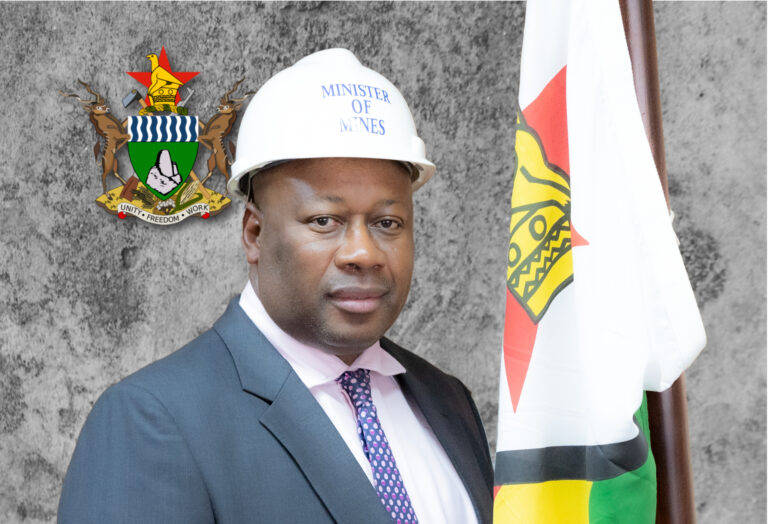
Zimbabwe is confident that, supported by NDS1, it will achieve an upper middle-income economy by 2030, with mining being a top priority. According to the Minister of Mines and Mining Development, Hon. Winston Chitando, the following strategies are key to realizing the mining sector’s outcomes:

1. Amendment of Mining Legislation

The Ministry is amending the Mines and Minerals Act, the Gold Trade Act, and the Precious Stones Trade Act. Following an adverse report from Parliament regarding the Mines and Minerals Bill in 2023, necessary adjustments have been made, and the Bill is now with the Office of the Attorney-General, awaiting gazetting. Further legislative reviews are planned for 2025.

2. Mineral Exploration and Development

The Ministry promotes exploration activities to discover new mineral deposits and expand the country’s mineral resource base through targeted geological surveys, private sector incentives, and a comprehensive geological database. These efforts have led to increased mineral production since 2018. The Mining Promotion Corporation is also being capacitated for exploration and development.

3. Computerised Mining Cadastre Information Management System

The pilot center for the Computerised Mining Cadastre Information Management System in Manicaland is at an advanced stage, with data being uploaded and cleaned in consultation with the contractor, preparing for rollout to all eight mining provinces.

4. Beneficiation and Value Addition

The Ministry is increasing local processing and beneficiation of minerals, implementing value addition policies such as banning the export of chrome ore, concentrates, and lithium ore (Ref: S.I. 213 of 2022, SI 123 of 2023, and SI 57 of 2023). The Gemmology Centre in Manicaland will serve as a training center for the value addition of precious stones and gemstones.

5. ‘Use It or Lose It’ Principle

To optimize mining production and encourage responsible resource management, the Ministry mandates that mining title holders must demonstrate progress and production or risk losing their titles. Provincial Mining Directors update the database on mining title utilization levels.

6. Enhancing Investment in the Mining Value Chain

Since 2018, the Ministry has facilitated new mines, expanded existing projects, and revived closed ones, including Eureka Gold Mine, Kamativi Lithium Mine, Dinson Iron and Steel Company (DISCO) mine, and Mucheso Coal Mine. This aims to make the mining sector a preferred destination for investors, contributing to economic growth, social development, and environmental sustainability.

7. Formulation of Minerals Development Policies

The Ministry is crafting the Minerals Development Policy, Artisanal Small-Scale Gold Mining (ASGM) Strategy, and the Value Addition and Beneficiation Strategy. Stakeholder consultations have been conducted in all provinces, and feedback is being incorporated into draft policies to improve mining sector governance.

8. Capacitation of Small-Scale Miners

The Ministry is establishing Gold Service Centers to offer technical services, milling services, and markets for gold produced by small-scale miners. The Mining Industry Loan Fund (MILF) provides financial assistance and equipment. Additionally, the Ministry conducts Safety, Health, and Environmental (SHE) awareness campaigns and offers technical services. The Zimbabwe School of Mines offers tailored courses for artisanal small-scale miners.

9. Enforcement of Responsible Mining

The Ministry’s Responsible Mining Initiative promotes sustainable and responsible practices. Last year, 422 mines were audited across all eight mining provinces. The second Responsible Mining Audit has been launched with the participation of twelve Ministries, Departments, and Agencies (MDAs).

10. Annual Review of Strategies

The Ministry will continue to review these strategies annually to ensure alignment with the goal of growing the mining industry. Despite challenges such as fluctuating global commodity prices, high operating costs, and a skills shortage, the sector is poised for significant growth, offering opportunities for innovation and sustainable development that can drive inclusive development and poverty alleviation.

Zimplats’ Appeal Against ZIMRA’s 60/40 Apportionment Method Dismissed with Costs

0

The Supreme Court of Zimbabwe has dismissed an appeal by Zimbabwe Platinum Mines (Pvt) Ltd (Zimplats) against the Zimbabwe Revenue Authority (ZIMRA), in which Zimplats sought a declaratory order to validate its method of calculating income tax liabilities. Zimplats contended that its interpretation of Public Notices 36 and 57 of 2021, alongside the Finance and Income Tax Acts, was correct.

By Rudairo Mapuranga

The mining giant aimed to determine its tax liabilities by deducting expenses in the currency they were incurred—USD expenses from USD income, and ZWL expenses from ZWL income.

However, ZIMRA’s interpretation, which was upheld by the High Court and later affirmed by the Supreme Court, required a 60:40 apportionment ratio for splitting foreign and local currency expenses, reflecting the mixed nature of Zimplats’ revenue streams.

Zimplats operates under a General Mining Lease and conducts its business in both USD and ZWL, generating income from exports and local sales. The mining company initially functioned under a Special Mining Lease (SML), which mandated tax payments in USD. The shift to a General Mining Lease subjected Zimplats to the general tax provisions of the Income Tax Act.

Zimplats challenged ZIMRA’s requirement that expenses be apportioned between USD and ZWL in a 60:40 ratio. The company argued that this method was incorrect and that its proposed calculation, which directly matched expenses and income in their respective currencies, should be accepted. ZIMRA, however, maintained that the apportionment was fair and legally sound, as dictated by section 4A (10) of the Finance Act.

The High Court initially dismissed Zimplats’ application, prompting the appeal to the Supreme Court. The appellate court upheld the lower court’s decision, affirming that ZIMRA’s apportionment method complied with the legal requirements. The Supreme Court emphasized the need to match income and expenses in their respective currencies before making deductions, reinforcing the principle established in previous rulings such as Delta Beverages (Pvt) Ltd vs ZIMRA.

The Supreme Court ruled that ZIMRA’s Public Notices have legal force and that the 60:40 ratio for splitting expenses accurately reflected the mixed-currency nature of Zimplats’ operations. The court found no fault in ZIMRA’s interpretation and application of the relevant tax laws, stating that the apportionment method was fair and consistent with the legislative intent.

This decision has significant implications for Zimbabwe’s mining sector, particularly for companies operating in a dual-currency environment. By affirming ZIMRA’s method of apportioning expenses and income, the ruling provides clarity on how taxable income should be computed, ensuring consistency across the industry.

ZINIRE Annual General Meeting (AGM) and Symposium hailed

0

International companies attending the Zimbabwe National Institute of Rock Engineering (ZINIRE) Annual General Meeting (AGM) and Symposium at the School of Mines in Bulawayo on Saturday commended the institute for offering a platform that effectively showcases their products in Zimbabwe.

By Rudairo Mapuranga

Nine international companies attended the ZINIRE AGM and Symposium, making it one of the most significant mining gatherings attended by international companies in Zimbabwe.

The companies also appreciated ZINIRE for highlighting notable solutions needed to ensure the continued growth of the rock mechanical engineering sector.

Speaking to Mining Zimbabwe on the sidelines of the ZINIRE AGM and Symposium, Vincent De Lange from Elbroc Mining Products said the ZINIRE event offers a chance for networking and enables international companies to establish a footprint in Zimbabwe’s rock engineering solutions industry.

“The main benefit for me is meeting old friends from Zimbabwe, including rock engineers, mine managers, and suppliers. In mining, relationships are crucial. Without them, you’ll never survive.

“We need to re-establish our footprint as Elbroc Mining Products in Zimbabwe because we have the best products in the market when it comes to hydraulic props, which we manufacture in South Africa. We belong to the Royal Bafokeng Holdings Group,” Vincent said.

Keagan Carlisle of Groundwork Consulting, also speaking to Mining Zimbabwe, said the AGM has benefited his company by identifying the solutions needed in Zimbabwe’s mining industry and how it can break into the market.

“It gives us a chance to get exposure to what’s happening here in Zimbabwe. It gives us a chance to get a feel for what the mining companies here in Zimbabwe are doing, understanding their needs and wants. So yeah, it is absolutely valuable for us to be here,” he said.

Mr. Frans Cronje, Export Sales Manager for RSC Ekusasa Mining, said the ZINIRE AGM has always been fruitful, and his company has been attending for several years.

“It was a very fruitful meeting in Zimbabwe. I’ve been coming here for many years, and I think suppliers need to support this function and this fraternity. Yes, if I get the opportunity to come again, I will,” he said.

Zimbabwe gold buying prices per gram 22 July 2024

Fidelity Gold Refinery (FGR) official gold buying prices/ gram. See the Zimbabwe gold buying prices per gram today 22 July 2024.

SG 90% and ABOVE US$75.35/g
SG ABOVE 85% BUT BELOW 90% US$74.55g
SG ABOVE 80% BUT BELOW 85% US$73.76/g
SG ABOVE 75% BUT BELOW 80% US$72.96/g
SAMPLE BELOW 10g BUT ABOVE 5g US$71.76g

Fire Assay CASH $75.75/g

NB: Fire Assay cash price is for gold above 100gs, no sample is deducted.
For the Fire Assay Transfer price, a sample of not more than 10g is deducted
A 2% royalty is charged on all deposits (Small-scale miners)
A 5% royalty is set for Primary Producers

Cash available. Fidelity Gold Refinery prices will be changing daily to match world market prices.

Freda Rebecca Gold Mine Expands Exploration to Extend Mine Life

0

Freda Rebecca Gold Mine, the country’s largest gold producer, is undertaking extensive exploration efforts at its Bindura mine to extend its mine life and increase processing capacity.

By Rudairo Mapuranga

Speaking to Mining Zimbabwe, Freda Rebecca Managing Director Patrick Maseva-Shayawabaya emphasized the importance of extending the mine’s operational lifespan beyond the current five years to enable more confident planning.

“Freda currently has a mine life of about five years. We need to extend that beyond five years, which will allow us to plan with much more confidence. The expansion will depend on the results of the ongoing exploration work. Initially, our goal is to extend the life of the mine. However, if the exploration reveals a much larger resource than we currently know, there will be an opportunity to increase the plant’s capacity, enabling us to produce significantly more than we are now,” said Maseva-Shayawabaya.

The Managing Director, who also heads the gold cluster at Kuvimba Mining House (KMH), revealed that the parent company plans to inject US$40 million into its gold operations, which include Freda Rebecca Gold Mine, Shamva Mine, and Jena Mines. This strategic investment aims to ramp up production and optimize efficiency.

“In terms of capital expenditure for the year, for the cluster, we are looking at about US$40 million. That is the plan,” he stated.

“But not all of that capital expenditure is funded as yet. We have not secured the resources that we will need to implement all of those projects. A portion of it, I would say 50% of the capital expenditure, will come from internal cash flows, but we will need to raise the balance so that we can implement those projects.”

For the fiscal year ending March 2024, the group produced 104,000 ounces of gold and expects this figure to increase marginally by 1% to 105,000 ounces in the current year.

BREAKING: Kuvimba Signs Over US$300 Million BOT Agreement with a Chinese Firm

0

Kuvimba Mining House (KMH), owned by the country’s sovereign wealth fund, Mutapa Investment Fund, has entered into a significant Build, Operate, and Transfer (BOT) agreement with a Chinese consortium worth US$310 million for the Sandawana Lithium Project.

By Rudairo Mapuranga

The US$310 million deal, valid for six years, aims to establish a state-of-the-art processing plant with a capacity of 3 million tonnes per year at Sandawana Lithium Mine. This facility is projected to generate an annual revenue of $600 million.

According to KMH Group CEO Trevor Barnard, the plant is expected to be operational within 18 months. Plans for a second plant are also in the pipeline, contingent on the results of ongoing exploration activities.

“The financing for the first plant will be around $310 million, to be disbursed over the next 18 months. The loan will be repaid during the BOT period. We are thrilled to establish these groundbreaking agreements with international entities. Kuvimba Mining House is poised to become a world-class lithium processing company, with a strong competitive edge in marketing high-quality lithium concentrate,” said Barnard.

“The growing trust and confidence in the Zimbabwean minerals sector by a broad spectrum of investors is encouraging. We are committed to a transparent, accountable partnership and efficient management of our local resources,” he concluded.


Zimbabwe gold buying prices per gram 18 July 2024

Fidelity Gold Refinery (FGR) official gold buying prices/ gram. See the Zimbabwe gold buying prices per gram today 18 July 2024.

SG 90% and ABOVE US$75.35/g
SG ABOVE 85% BUT BELOW 90% US$74.55g
SG ABOVE 80% BUT BELOW 85% US$73.76/g
SG ABOVE 75% BUT BELOW 80% US$72.96/g
SAMPLE BELOW 10g BUT ABOVE 5g US$71.76g

Fire Assay CASH $75.75/g

NB: Fire Assay cash price is for gold above 100gs, no sample is deducted.
For the Fire Assay Transfer price, a sample of not more than 10g is deducted
A 2% royalty is charged on all deposits (Small-scale miners)
A 5% royalty is set for Primary Producers

Cash available. Fidelity Gold Refinery prices will be changing daily to match world market prices.

Muzarabani oil and gas exploration license renewed for three years

0

The exploration for oil and gas by Geo Associates, owned by the Australia Stock Exchange-listed company Invictus Energy, has been granted an additional three years by the government of Zimbabwe through the renewal of their Special Grant (SG).

By Rudairo Mapuranga

According to Invictus Energy, the Special Grant 4571 License was renewed for a further three-year term to allow the company to continue its exploration of oil and gas in the Muzarabani area.

The company plans to undertake a comprehensive work program for this third three-year exploration period, including 3D seismic acquisition and additional exploration/appraisal drilling.

“SG 4571 License containing Mukuyu Discovery renewed for a further three-year term. Geo Associates (Pvt) Ltd (Geo Associates), the Company’s 80% owned subsidiary and holder of Special Grant 4571 has received notification that its application to extend the tenure of the SG 4571 License for a further three years has been approved by the Mining Affairs Board.

“This will be followed by publication in the Government Gazette. The exploration license for the third period for SG 4571 runs to June 2027. The Company plans to undertake a comprehensive work program for the third three-year exploration period including 3D seismic acquisition and additional exploration/appraisal drilling.

“The Company is able to apply for a production special grant license at any stage,” Invictus said.

MMCZ generates USD 1.5 Billion in Q1 amid softening commodity prices

0

The Minerals Marketing Corporation of Zimbabwe (MMCZ), the nation’s sole minerals marketing agent excluding gold and silver, sold a total of 1.9 million metric tonnes (mt) of minerals valued at USD 1.5 billion in the first half of 2024, falling short of its revenue and volume projections.

By Rudairo Mapuranga

According to MMCZ Acting General Manager Dr. Nomsa Moyo, the Corporation had aimed to sell 2 million mt of minerals valued at USD 2.03 billion. However, declines in global mineral prices led to a 6% volume miss and a 26% revenue shortfall.

“During the same period last year, the Corporation sold 1,531,149 mt valued at USD 1.689 billion. This points to a 25% year-on-year increase in sales volumes and an 11% slump in value terms,” said Dr. Moyo.

She highlighted that depressed mineral commodity prices for some of Zimbabwe’s top revenue contributors significantly impacted performance in the first half of 2024.

“Lithium was down 72%, nickel 20%, coal 13%, and coke 39%, translating to significant price declines compared to budget forecasts. However, year-over-year price increases were observed for platinum as it firmed 6%, rhodium 6%, copper 16%, fluorite 2%, and chrome concentrates 4%. These were not enough to offset the negative impact on overall revenue,” she said.

The top three contributors in terms of value in the first six months of 2024 were Platinum Group Metals (PGMs) matte, PGM concentrate, and Zimbabwe’s primary lithium export, spodumene.

“Overall, concentrate sales volume grew by 30%, while their value increased by 2%. However, matte sales experienced a 7% volume increase but a 5% decrease in value,” she said, attributing the volume rise across both categories to the stock carried over from the previous period.

Hwange Colliery revitalizes with US$50m coal mine partnership

0

Hwange Colliery Company Limited (HCCL) has teamed up with the Chinese firm Zhong Jiani Investment (ZJI) to launch a new underground coal mine in Hwange, Zimbabwe.

The US$50 million project is expected to produce 80,000 tonnes of coking coal monthly, with a lifespan of 25 years.

HCCL has restructured into seven independent companies, including a joint venture with ZJI. The strategic restructuring aims to boost production and streamline operations. The newly formed entities are Hwange Mining and Processing Company, Hwange Property Company, Hwange Medical Company, Hwange Zambezi Agriculture Company, Hwange Lubimbi Energy Company, Hwange Khula Fund, and the joint venture with ZJI.

Eng Munashe Shava, the administrator overseeing HCCL’s reconstruction, emphasized the importance of this venture in the company’s recovery.

“When we looked at the Hwange business model, it was saddled with a lot of value-eroding activities,” Shava said. “We meticulously formulated a strategy to eliminate these issues, transforming HCCL from a loss-making entity to a revenue-generating company.”