Home Blog Page 229

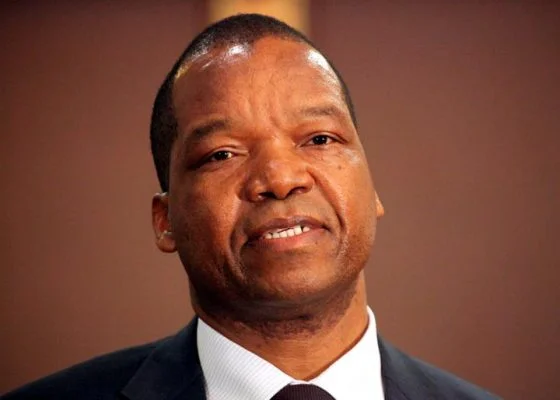
Dallaglio mourns board chairman

0

Dallaglio Investments’ has expressed sadness in the passing of its board chairman Mr Sternford Moyo who passed away in Harare on friday.

In a statement, the gold miner described Moyo’s leadership and dedication as instrumental to the Gold Miner’s growth.

“It is with deep sadness that we extend our condolences on the passing of our esteemed Board Chairman, Mr. Sternford Moyo. Since joining our Board in 2020, Mr. Moyo’s leadership and dedication have been instrumental to Dallaglio Investments growth,” the company said.

“Mr. Moyo’s remarkable career was marked by numerous historic achievements. In January 2021, he became the first African President of the International Bar Association, a significant milestone in his distinguished career. On 28 September 2022, he was honoured as the Freeman of the City of London, a testament to his global influence and exemplary leadership. Mr. Moyo also served on the boards of several prominent companies in Zimbabwe, leaving a lasting impact on each,” the company continued.

The company extended condolences to the Moyo family.

“His legacy will continue to inspire us. We extend our heartfelt condolences to Mr. Moyo’s wife, Mrs. Sarah Moyo, their three children, friends, and colleagues during this difficult time,”


Zimbabwe gold buying prices per gram 5 July 2024

0

Fidelity Gold Refinery (FGR) official gold buying prices/ gram. See the Zimbabwe gold buying prices per gram today 5 July 2024.

SG 90% and ABOVE US$71.66/g
SG ABOVE 85% BUT BELOW 90% US$70.90g
SG ABOVE 80% BUT BELOW 85% US$70.14/g
SG ABOVE 75% BUT BELOW 80% US$69.38/g
SAMPLE BELOW 10g BUT ABOVE 5g US$68.24g

Fire Assay CASH $72.04/g

NB: Fire Assay cash price is for gold above 100gs, no sample is deducted.
For the Fire Assay Transfer price, a sample of not more than 10g is deducted
A 2% royalty is charged on all deposits (Small-scale miners)
A 5% royalty is set for Primary Producers

Cash available. Fidelity Gold Refinery prices will be changing daily to match world market prices.

Ethan Seth Empowers Women with Gemstone Cutting and Polishing Training

0

As part of their strategy to develop and grow the gemstone mining sector in Zimbabwe, Ethan Seth Pvt Ltd has initiated a skills transfer program aimed at empowering women to join the gemstone cutting and polishing industry.

By Rudairo Mapuranga

Speaking to Mining Zimbabwe, Mr Takunda Takaendesa Mamhungo, Ethan Seth’s Operations Manager, said the company will conduct practical lessons on weekends as part of their first training plan.

“We are calling for practical training in gemstone cutting and polishing. Women are critical to this industry because they bring unique perspectives, meticulous attention to detail, and a high level of craftsmanship. Empowering women in this field not only promotes gender equality but also enhances the overall quality and innovation within the gemstone sector. Their involvement can lead to more diverse and inclusive growth, contributing to the sector’s sustainability and success,” Takaendesa Mamhungo said.

The cutting and polishing of gemstones are critical to the country’s beneficiation and value-addition drive. By developing these skills locally, Zimbabwe can retain more value from its raw gemstone resources, reduce dependency on foreign processing, and increase its export earnings. This initiative aligns with the national vision of achieving an upper-middle-income economy by 2030, as it promotes industrialization, job creation, and economic empowerment for communities, particularly for women who are often underrepresented in the mining sector.

Zimbabwe Lithium Mine Set for Expansion Despite Tungsten Mine Impasse

0

Premier African Minerals, a London-listed company, has made significant progress at the Zulu Lithium and Tantalum Project, overcoming obstacles to achieve substantial milestones.

By Patricia Rwafa

Production of saleable spodumene concentrate is underway, with an upcoming upgrade promising even greater efficiency. Confident in meeting ambitious targets, the company aims for a competitive delivery cost for spodumene concentrate to China. Favourable resource estimates indicate a long and productive future at Zulu.

As announced on June 28 in the annual report for the year ended December 2023, high wolframite prices suggest resuming production at the RHA Tungsten Mine could be profitable. However, ongoing discussions about ownership structure with the Zimbabwean government are delaying a decision. To allocate resources for the Zulu project’s expansion, Premier African Minerals might relocate most of the RHA plant by late 2024.

The Zulu Lithium Project overcame initial hurdles in its continuous flotation process and successfully produced saleable spodumene concentrate with a lithium oxide (Li2O) content of up to 6.2%. To further optimize production, an additional conditioning cell will be installed in July 2024, bringing the plant to its designed throughput and enabling the achievement of the original production targets.

The company reports positive developments with a major Chinese miner evaluating their eastern Zimbabwe claims for potential acquisition. While development is on hold due to the focus on Zulu, Premier seeks alternative avenues to unlock the value of its 50% stake in the Turwi Gold Project.

Despite delays at Zulu impacting further development, Premier remains interested in increasing its control in MN Holdings due to the positive outlook for manganese. Financial highlights for MN Holdings’ subsidiary Otjozondu include:

– Revenue of approximately N$76 million ($4.1 million) for the year ended June 30, 2023.
– Operating profit before tax of approximately N$24.1 million ($1.3 million).
– Total assets of approximately N$289 million ($15.6 million) as of June 30, 2023.

While progress has been slow on the Vortex Lithium Project, the company notes an improved situation in Ethiopia. However, frustrations related to cooperative agreements and differing opinions on development continue to hinder progress.

Premier African Minerals raised net proceeds of $17.542 million during the reporting period, up from $14.838 million in 2022.

George Roach, CEO of the Zulu Lithium plant, expressed dissatisfaction with the performance of the original plant and equipment suppliers and intends to seek substantial redress. He acknowledged the support of their offtake and prepayment partner and remains committed to meeting their long-term interests, which focus on the supply of SC6.

The company released updated resource estimates, identifying that the main pegmatite at Zulu is primarily a spodumene-rich ore body. This estimate, coupled with the extent of pegmatites within the EPO, suggests a longer-term life of mine and the potential for increased plant production capacity. An application has been made for the renewal of the EPO, and extensive new mining claims have been registered within the EPO.

Based on internal assessments, the production cost associated with spodumene concentrate supports an internal project of a delivered China port all-in cost of $828 per tonne for the year ending June 2025. The new scrubber unit will be operational by the week of July 10, enabling Zulu to produce and derive revenue from the sale of SC6. The Board believes Zulu is a valuable asset, with an estimated fair value of $200 million by the prepayment and offtake agreement. The group has sufficient share authorities to sustain its reduced holding costs through December 31, 2025.

Disco Establishes Clinic for Its Workers

0

In an endeavor to promote a safe working environment and workers’ health, Dinson Iron and Steel Company (Disco) has built a clinic for its workers in Manhize.

By Rudairo Mapuranga

Speaking to Mining Zimbabwe, an official from Disco said the clinic will serve all workers free of charge to ensure their health is prioritized.

“As Dinson Iron and Steel Company (Disco), we have already built a clinic that will serve all our workers free of charge, without any deductions of any sort. There will be a doctor, two nurses, and up to four nurse aides. We are awaiting approval from the Ministry of Health, but everything is now in place and the clinic will start operating soon,” he said.

The clinic aims to provide comprehensive healthcare services, including regular check-ups, emergency care, and health education programs, ensuring that workers maintain good health and are well-prepared to handle any occupational hazards.

Disco has achieved a historic milestone with the activation of its blast furnace at the Manhize steel plant in June 2024. This landmark event signals the beginning of pig iron production.

This development heralds a new era for the region’s industrial landscape, positioning Zimbabwe as a burgeoning hub in the global steel industry. Pig iron, an essential intermediary in steel manufacturing, is produced by smelting iron ore in a blast furnace, and its local production marks a significant advancement.

The Manhize Plant, nearing full commissioning later this year, is on track to become one of Africa’s largest integrated steelworks. Built by Disco, a subsidiary of China’s Tsingshan Holdings Group Limited, the plant is poised to transform Zimbabwe’s industrial capabilities. Tsingshan also operates Dinson Colliery in Hwange and Afrochine Smelting Limited in Selous.

ASM Gold Deliveries Surge Due to Hammer Mill Regulation, VAT Removal, and FGR’s Strategies: ZMF

0

The Zimbabwe Miners Federation (ZMF), the country’s leading representative of the Artisanal and Small-Scale Mining (ASM) sector, has attributed the 55.6% increase in gold deliveries in the second quarter of 2024 to the government’s relaxed stance on hammer mills, the removal of value-added tax (VAT), and marketing strategies implemented by Fidelity Gold Refinery (FGR).

By Rudairo Mapuranga

Speaking to Mining Zimbabwe, ZMF CEO Mr Wellington Takavarasha stated that the government’s decision to regularize the use of hammer mills by ASM miners, rather than disrupting their operations through arrests, has improved gold production and deliveries to FGR.

“The government has realized the full potential and significance of hammer mills. Together with the Minister of Mines and Mining Development, we have started to regularize the operations of those using hammer mills. This equipment allows small-scale miners to crush as little as 20 kg and quickly realize the benefits,” Takavarasha said.

He added that the removal of the 15% VAT on all gold sales to FGR and the deployment of the gold mobilization team, which educates and encourages miners to deliver the gold to the country’s sole operating gold buyer and exporter, have significantly contributed to increased gold deliveries.

“Recently, the removal of the 15% tax has incentivized gold deliveries to Fidelity Gold Refinery. The gold mobilization team, sent by the Minister of Mines, has been conducting education and awareness campaigns. These efforts have improved relations between miners and the government and encouraged miners to deliver their gold to Fidelity,” he said.

Takavarasha also noted Fidelity’s efforts to enhance its services, including advertising, creating social groups for feedback, and extending operating hours, even on holidays. These measures have removed barriers to gold deliveries during normal times.

“We anticipate a significant increase in gold deliveries from small-scale miners. There is potential for even greater production as we continue to have mutual meetings with the Minister of Mines and develop policies that support the artisanal sector,” Takavarasha concluded.

Gold deliveries to the country’s sole operating gold buyer and exporter increased by over 28% in the second quarter of 2024.

Overall, gold deliveries surged to 7,739.4241 kgs for the second quarter of 2024, marking a significant 28.033% increase from the first quarter’s 6,044.8689 kgs.

Small-scale miners led this surge, delivering 4,515.1660 kgs in the second quarter, representing a substantial 55.5988% increase from their first-quarter deliveries of 2,901.8006 kgs. This notable rise underscores the critical role of artisanal and small-scale miners in the country’s gold production.

Large-scale miners also contributed to the overall increase, albeit to a lesser extent. Their deliveries rose to 3,224.2581 kgs in the second quarter, up by 2.58314% from the 3,143.0683 kgs delivered in the first quarter.

Zimbabwe gold buying prices per gram 4 July 2024

Fidelity Gold Refinery (FGR) official gold buying prices/ gram. See the Zimbabwe gold buying prices per gram today 4 July 2024.

SG 90% and ABOVE US$71.74/g
SG ABOVE 85% BUT BELOW 90% US$70.98g
SG ABOVE 80% BUT BELOW 85% US$70.22/g
SG ABOVE 75% BUT BELOW 80% US$69.46/g
SAMPLE BELOW 10g BUT ABOVE 5g US$68.32g

Fire Assay CASH $72.12/g

NB: Fire Assay cash price is for gold above 100gs, no sample is deducted.
For the Fire Assay Transfer price, a sample of not more than 10g is deducted
A 2% royalty is charged on all deposits (Small-scale miners)
A 5% royalty is set for Primary Producers

Cash available. Fidelity Gold Refinery prices will be changing daily to match world market prices.

Mine Entra postponed to an unconfirmed date 

0

Zimbabwe’s premier Mining Exhibition, The Mining Engineering and Transport Exhibition (Mine Entra), initially set for July 17-19, has been postponed to a yet-to-be-announced date, as revealed by Zimbabwe International Trade Fair Company (ZITF) Board Chairman, Mr. Busisa Moyo.

By Rudairo Mapuranga
According to Moyo the decision to reschedule Mine Entra was made to avoid potential conflicts with the upcoming SADC Industrialisation Week, a significant regional event scheduled for July 28-August 2 in Harare. The SADC Industrialisation Week is expected to attract substantial attention from industry leaders, government officials, and investors across the region.
“The Zimbabwe International Trade Fair Company (ZITF) wishes to inform exhibitors, visitors, buyers, delegates, and all other stakeholders that the 27th edition of the mining, engineering and transport exhibition, Mine Entra, originally scheduled for July 17-19, 2024, in Bulawayo, has been postponed to a date yet to be confirmed,” stated Moyo.
 “Consultations regarding suitable dates are underway at the highest level of government and business leadership. This is to ensure the standard of the show and depth of interactions, discussions, and interventions meet the highest standard possible.”
Moyo said the ZITF Company recognizes the importance of both Mine Entra and the SADC Industrialisation Week. Holding Mine Entra during the same timeframe could lead to divided attendance, potentially diminishing the impact of each event.
Postponing Mine Entra will ensure both events receive the focused participation they deserve, maximizing opportunities for attendees and exhibitors. This approach allows participants to engage fully with each event without scheduling conflicts.
According to Moyo, under the guidance of the Ministry of Mines and Mining Development and in partnership with the Chamber of Mines Zimbabwe, the ZITF Company remains dedicated to delivering a world-class mining exhibition fostering collaboration, innovation, and growth. The rescheduled Mine Entra exhibition will continue under the theme: “Unearthing Success: The Mining Value Chains, Innovation and Industrialisation Nexus.” The event aims to unite local and international industry leaders, investors, and stakeholders to explore advancements and opportunities within the mining sector.
“All registered participants, exhibitors, and sponsors will be directly contacted with the new dates and details. For further information and the rescheduled dates, please visit the ZITF Company website at [www.zitf.co.zw](http://www.zitf.co.zw) or call the Marketing & Communications Department at +263 292 884911-6.
The ZITF Company appreciates the support and understanding of all stakeholders and looks forward to welcoming them to the rescheduled Mine Entra 2024 exhibition,” Moyo said.

Gold Deliveries Increase to 7,739.42kg in Q2

0

Gold deliveries to the country’s sole operating gold buyer and exporter, Fidelity Gold Refinery (FGR), increased by over 28 per cent in the second quarter of 2024, new data from FGR shows.

By Rudairo Mapuranga

Overall gold deliveries surged to 7,739.42kg for the second quarter of 2024, marking a significant 28.033% increase from the first quarter’s 6,044.8689 kg.

Small-scale miners led this surge, delivering 4,515.1660 kg in the second quarter, representing a substantial 55.5988% increase from their first-quarter deliveries of 2,901.8006 kg. This notable rise underscores the critical role of artisanal and small-scale miners in the country’s gold production.

Large-scale miners also contributed to the overall increase, albeit to a lesser extent. Their deliveries rose to 3,224.2581 kg in the second quarter, up by 2.58314% from the 3,143.0683 kg delivered in the first quarter.

However, there was a 4.23346% decrease in overall monthly production from May to June 2024. The total gold delivered in June was 2,618.3844 kg, down from 2,734.1329 kg in May.

The second quarter of 2024 has been marked by a notable increase in gold deliveries, driven largely by the impressive performance of small-scale miners. Despite the slight month-to-month decline in overall production from May to June, the sector remains on an upward trajectory, contributing significantly to the nation’s gold output and economic stability.

Gold deliveries to FGR by the ASM increased by over 37 per cent to 1,678.4475 kg in May 2024 from 1,218.2045 kg in April. However, large-scale gold producers, whose deliveries have been impressive throughout the year, saw their deliveries decline by approximately 36.7% to 1,055.6854 kg in May from 1,668.7922 kg in April.

ASM accounted for approximately 61.4 per cent of the total gold deliveries, returning to their annual average delivery rate from the decline experienced in February and March when large-scale producers dominated.

Total gold deliveries increased by approximately 14.5% to 2,734.1329 kg in May from 2,386.9067 kg in April.

Gold deliveries to FGR surged by approximately 31.4 per cent in April 2024 compared to the previous month, driven by increased contributions from ASM.

April’s gold deliveries reached 2,386.9067 kg, marking a significant increase from the 1,816.5413 kg delivered in March 2024.

ASM deliveries soared by approximately 58 per cent to 1,218.2045 kg in April, compared to 770.9838 kg in March, while deliveries by large-scale gold miners also rose by about 11.78 per cent to 1,168.7022 kg from 1,045.5575 kg in March. For the first time in two months, ASM deliveries surpassed those of large-scale miners, accounting for approximately 51 per cent of the total deliveries in April.

The first quarter of 2024 closed with total deliveries of 6,044 kg, slightly lower than the 6,194 kg recorded in the first quarter of 2023 and significantly below the 7,694 kg delivered in the first quarter of 2022, which was a record-breaking year. Large-scale miners delivered 51.995 per cent (3,143.0683 kg) of the total deliveries in the first quarter of 2024, surpassing ASM, who delivered 48.004 per cent (2,901.8006 kg). Historically, ASM has been the country’s primary gold deliverer to FGR, accounting for over 61 per cent of total gold deliveries.

Compared to the record year of 2022, deliveries during the same quarter decreased by 24 per cent to 7,694 kg. Additionally, deliveries in March 2024 dropped by 27 per cent compared to March 2022, from 2,403 kg to 1,816 kg.

Zimbabwe’s gold deliveries declined by 15 per cent in 2023 due to rising costs, power shortages, and government currency policies. Deliveries to Fidelity totalled 30.1 tonnes in 2023, down from 35.6 tonnes in 2022, which was a record year fueled by new mining projects and improved payments to small-scale miners, who make up the majority of Zimbabwe’s gold deliveries. However, sales slowed in 2023.

Gold output remained stagnant for large producers at 11.4 tonnes in 2023, showing little growth from the 11.2 tonnes delivered in 2022 and 2021. Small-scale producers experienced a sharp drop, delivering just 18.6 tonnes in 2023, a 23 per cent decrease from the 24.1 tonnes sold in 2022, bringing deliveries back to 2021 levels.

Mining Industry Urges Tax Reductions, Lowering of Power Costs in Anticipation of Mid-Term Budget

0

The mining industry is advocating for substantial tax cuts and a reduction in power tariffs to maintain operations and support growth as Finance Minister Mthuli Ncube prepares his upcoming mid-term budget statement.

The mining sector is pushing for significant reforms in government policies to address the economic strain caused by low metal prices.

Revising the Capital Gains Tax

The capital gains tax on the transfer of mining titles, introduced in the 2024 budget, has been a major concern for the mining community. This tax, which imposes a 20% charge on sales of mining projects to foreign investors and is backdated by ten years, has created uncertainty and discouraged investment. The Chamber of Mines is calling for this tax to be reduced to 5% and not applied retroactively, to stabilize the investment climate.

Significant increases in royalties have also placed a heavy burden on miners. Last year, the government increased platinum royalties from 2.5% to 7%, significantly raising costs at a time when metal prices are low. The mining sector suggests a sliding scale for royalties based on metal prices: 3% when platinum prices are under US$1,100 per ounce and 5% when they are above this threshold. Additionally, they propose lowering diamond royalties from 10% to 7% and reducing lithium royalties from 5% to 3% to support the emerging lithium industry.

Removing the Tax on Unrefined Platinum

The 5% tax on platinum exports, intended to incentivize local refining, has been counterproductive, according to the Chamber of Mines. They argue that this tax should be eliminated as the industry has already committed to building a joint refinery. The existing tax has led to delays in projects, such as the Zimplats base metal refinery, which was postponed due to falling prices.

Current regulations require miners to retain only 75% of their earnings in USD, with the remaining 25% converted to local currency. This policy has drastically reduced the foreign exchange available for mining operations, dropping from US$1.7 billion in 2022 to US$1 billion in 2024. The Chamber of Mines recommends that the government collect more taxes in Zimbabwean dollars (ZiG) to ease the forex burden on miners, thereby supporting operational and expansion needs.

Reducing Electricity Tariffs

The cost of electricity is another critical issue, with miners currently paying USc14.21 per kWh. The sector argues that this rate is unsustainable and proposes lowering the tariff to USc10 per kWh. The Chamber of Mines warns that if power costs remain high, platinum group metals (PGMs) producers may be forced to reduce smelting activities, jeopardizing the industry’s future.