

Home Blog Page 241

11 Miners Perish & Dozens Injured in Mine Accident

0

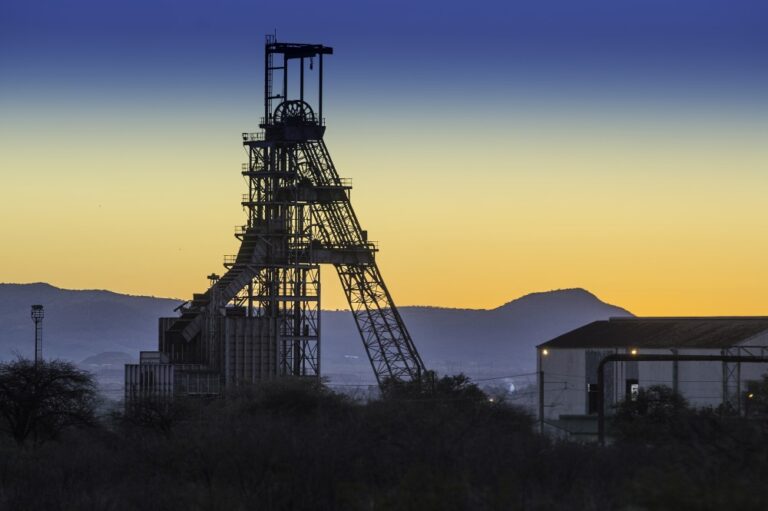
Eleven miners lost their lives and a further 75 were injured in an accident on Monday afternoon at 11 shaft in Impala Platinum’s (Implats’) Rustenburg Mines, Mining MX reported.

Nico Muller, CEO of Implats described the event as “the darkest day” in the history of the company which has been operating for 57 years. “Our hearts are heavy for the lives lost and the individuals affected by this devasting accident,” he said.

The accident occurred after a personnel hoisting conveyance which had been bringing miners to the surface following the end of their shift fell down the 1km shaft unexpectedly for a distance of about 200 metres. Implats said its descent was stopped by the conveyance counterweight becoming trapped. The conveyance was not in free-fall, Implats stressed.

All emergency protocols were observed during the event and paramedics and our proto (search and rescue) teams were immediately mobilised, said Implats. In total 15 proto teams, many of them of other nearby mining companies, were deployed to the shaft. Investigations into the cause of the incident had started, the company added.

Said Muller: “We are deeply shocked and saddened by the loss of our colleagues and are in the process of ensuring all next of kin have been contacted”.

Commenting last night, when the company first gave notice of the incident, it referred to problems with the conveyance’s rope.

The tragedy will come as a massive blow to the South African mining sector’s attempts to improve safety where progress had been registered lately. “It serves as a stark reminder that there can never be any lapse in focus and vigilance regarding safety on mines,” said Japie Fullard chair of the Minerals Council’s ‘CEO Zero Harm Forum’.

Mining fatalities fell to a record low in South Africa last year. The 2022 Mine Health and Safety Statistics reported that 49 mineworkers died on the job in 2022 compared with 74 in 2021 and 60 in 2020. As of November 24, the mining industry had recorded 41 fatalities compared to 44 the same period a year earlier.

November was already proving a difficult month for Implats. It said on November 7 that it was offering voluntary job cuts to workers at some of its shafts in South Africa following a sustained decline in prices.

Shares in Implats fell about 6.5% by mid-morning in Johannesburg as the market absorbed the economic impact of no production from 11 Shaft while an investigation into the accident was underway. Implats said it had no estimate yet on how long the shaft would be closed.

Sibanye-Stillwater, which mines PGMs and gold, has announced potentially heavy restructuring at its South African PGM mines and suggested it would deepen cuts at its North American mine, Stillwater.

Up to 4,095 jobs would be affected by the South African PGM restructuring at its closed two shafts that were economically mined out and looked to lower costs at another.

Last week, Anglo American said it was feeling the strain of low PGM prices but declined to comment on an article by Bloomberg News that it was discussing cutting jobs with the South African government.

Meanwhile The Association of Mine Managers of Zimbabwe (AMMZ) has conveyed its heartfelt condolences following the tragic accident.

“The Association of Mine Managers of Zimbabwe (AMMZ) wishes to extend it’s heartfelt condolences to the families and colleagues of the 11 miners that lost their lives following a serious accident at Impala Rustenburg’s 11 shaft. We also wish the 75 injured and hospitalized miners a speedy recovery.

Mining MX

Zimplats Invests $380,000 to Improve School Infrastructure in Mhondoro

0

Platinum Group Metals (PGM) miner, Zimplats, today handed over two classroom blocks and ablution facilities that were constructed at a cost of about US$380,000 to the authorities at Turf Primary School in Mhondoro Ngezi District as part of its efforts to de-congest the elementary school.

The two (2) classroom blocks have four classes each making a total of eight classes. The mining giant also provided furniture for the classes (chairs, desks, boards and many more) for a total of 320 pupils and their teachers and topped that up with Modern ablution facilities.

The investment, which forms part of Zimplats’ ongoing social performance programme, was officially handed over to the Mhondoro Ngezi Rural District Council (MNRDC), which operates the school, by the Minister of State for Provincial Affairs and Devolution in Mashonaland West Province, Hon Marian Chombo, who was the Guest of Honour.

The school has an enrolment of about 3,000 pupils from the fast-growing Turf Town and its hinterland. Due to inadequate infrastructure, some of the pupils at the school have been learning under harsh conditions, hence the intervention by Zimplats, which has been welcomed by both the school’s authorities and the communities around it.

Zimplats’ Chief Executive Officer, Mr Alex Mhembere, said by investing in the education sector, they were seeking to create conducive conditions for both learners and their teachers, especially in the rural areas where schools are constrained by the unavailability of resources. This is in line with Zimplats’ purpose of creating a better future for all its stakeholders, including communities surrounding its operations in Ngezi and Selous.

At Turf Primary School, he said Zimplats has been upgrading the school through the construction of additional classrooms, staff houses, and ablution facilities, in a bid to decongest the institution.

“The latest project, which falls under Phase 3 of the school’s expansion programme, saw us constructing two classroom blocks and ablution facilities. Each block has four classes, which will take 40 pupils each, thus absorbing 320 learners in total,” said Mr Mhembere.

This will go a long way in improving the teacher-to-student ratio from an average of 1:55 to 1:40, in what could also enhance the learning environment and pass rates.

“Our philosophy is that the greatest form of empowerment that one can ever benefit from is when they free-up their minds through education, which enables them to come up with solutions to life’s challenges,” said Mr Mhembere.

Speaking during the handover of the facilities, Hon Chombo, commended Zimplats for assisting MNRDC in improving the quality of infrastructure at the school and challenged other corporates throughout the country to take a leaf from the PGM miner whose interventions extends beyond education to community wellness, infrastructure development and local enterprise development.

In FY2023, Zimplats spent US$4,7 million in corporate social investment programmes, up from US$3,4m in FY2022.

“They (Zimplats) deserve a pat on the back because they can never be any wiser choice than this in the sense that education is the most powerful investment in our children’s future and that of our nation,” said Hon Chombo.

“The education sector is still suffering from lack of financial resources, inadequate equipment (no libraries, textbooks computers etc.), and poor working conditions for the teachers. Government alone, will not be able to bring up these school to the desired levels without the support from the private sector. This is why the Second Republic is placing so much emphasis on public private sector partnership, popularly known by the acronym PPPs.

“So how can we get more people in school, improve learning skills, and produce graduates who are able to contribute to the growth of our country? We must take a leaf from Zimplats by investing more in education. Concurrent with these efforts, we must invest more effectively in learning, improving learning assessment and being accountable to communities for education results. We must invest more equitably to make sure people who are most in need have access to quality learning,” she said.

Over the years, Zimplats has spent a great deal of resources in schools within its footprint. Last year, it handed over projects that encompassed solar power systems to provide electricity to classrooms and teachers’ houses at Chingondo Secondary School and Tangwena Primary and Secondary Schools in the same district.

The projects also included the sinking of a solar-powered borehole to provide potable water to the schools and their surrounding communities and renovations of administration offices and classrooms. Both Tangwena and Chingondo schools were each equipped with computer laboratories, complete with 20 desktop computers each, two HP Printers each and furniture.

Several other schools in the Mhondoro-Ngezi and Chegutu districts have also been beneficiaries of projects initiated by Zimplats in the past two decades of their existence, and these include St Michaels School; David Guzuzu School; Rutara Primary School; Saruwe Primary School; Marshal Hartley School; Saruwe Secondary School; Wanganui Primary School, and Wanganui Secondary School.

Mr Mhembere said their interventions in education were largely meant to improve the quality of learning in rural schools, and its relevance to the country’s ever-changing needs. In the next five years, emphasis shall be on science, technology, engineering, maths, and computer science to enable our schools to produce students that quickly find their feet as the country moves ahead with its re-industrialisation, to ensure that no one is left behind in line with his Excellency, The President’s vision for the country.

About Zimplats

Zimplats is a member of Impala Platinum Holdings and is located on the Hartley Geological Complex on the Great Dyke, which is south-west of the capital city, Harare. The Company is in the business of producing platinum group and associated metals. It began its operations in 2001 and currently operates five underground mines that supply ore to four concentrator modules (three at Ngezi and the fourth one at Selous). Production from the mining operations is processed by the four concentrators and then further refined at the Selous Metallurgical Complex in Selous where the smelter is located. Zimplats employs over 9000 employees both own employees and contractors.

Getting a Mining Engineering Diploma at the School of Mines

0

Mining Engineering is becoming one of the most popular professions in Zimbabwe due to its high remuneration and perks associated with it.

Obtaining a Mining Engineering diploma in Zimbabwe comes with it numerous benefits and opportunities. Firstly, Zimbabwe is rich in natural resources such as gold, diamonds, platinum, chrome and lately lithium, making it a prime location for mining activities. By pursuing the Mining Engineering diploma, individuals can gain specialized knowledge and skills in the field, enhancing their employability prospects.

Moreover, the mining industry in Zimbabwe is on an upward trajectory seeing significant growth in recent years, leading to a high demand for skilled professionals. With a diploma in Mining Engineering, individuals can secure lucrative job opportunities and potentially contribute to the economic development of the country.

One of the most popular places where you can get a Mining Engineering Diploma is the Zimbabwe School of Mines (ZSM). According to its website, “This is the place where students graduate not only poised for career success—but also ready to make a difference in the industry and their communities”. 

Below is Information on attaining a Mining Engineering diploma from the Zimbabwe School of Mines.

COURSE DESCRIPTION

In this course you will study mining methods, rock mechanics, geology and mine planning. You’ll develop the skills necessary to work with mining engineers in the exploitation of minerals from underground or open-pit mines, safely and economically. Throughout your study here you will be exposed to industry and potential future employers, you’ll also have the opportunity to undertake field trips to gain real-world experience in mining. This course will prepare you for employment with local and international mining companies. You’ll have the opportunity to study at our Zimbabwe  School of Mines, a leader in mining and geosciences education in the SADC region and beyond.

At Zimbabwe School of Mines we produce technically competent, environmental and safety conscious mining technicians who meet mining industry standards and requirements, and provide skills acquisition and development opportunities for the mining personnel. Mining Technicians are hands on practitioners at all stages of a mine project. Before a new site is developed, they assess its viability and assist with planning the mine’s structure. They are responsible for production and development at a mine. Mining Technicians identify and manage resources required to operate at full production at an optimum cost. They are an integral part of the team responsible for mine closure and rehabilitation.

CERTIFICATION

This course meets the education requirements of the HEXCO National Diploma for certification as an underground or open-pit mine supervisor. You will also meet the educational requirements for the National Diploma in Mining.

CAREER INFORMATION

Careers

  • Engineering consultant
  • Mine manager
  • Mining engineer
  • Mining company director

LEARNING OUTCOMES

At the end of the course students should be able to:

  • Develop production processes in both surface and underground operations of various types.
  • Supervise subordinate.
  • Apply environmental issues in the design and location of mine infrastructure.
  • Apply safety legislative requirements in developing and implementing job procedures.
  • Demonstrate an understanding of economic and technical factors which influence viability of a mining project.
  • Apply the knowledge of computers in basic mine planning and design tasks.
  • Compare and contrast various underground mining methods.
  • Compare and contrast various surface mining methods.
  • Select the best mining method and equipment for a given situation.
  • Demonstrate Patriotism.
  • Demonstrate a critical, logical and objective approach to problem solving at the work place and
  • Implement health and safety at the work place

Zimbabwe gold buying prices/ gram 28 November 2023

0

Fidelity Gold Refinery (FGR) official gold buying prices/ gram. See the Zimbabwe gold buying prices/ gram today 28 November 2023.

SG 90% AND ABOVE US$61.18/g
SG ABOVE 85% BUT BELOW 90% US$60.53g
SG ABOVE 80% BUT BELOW 85% US$59.88/g
SG ABOVE 75% BUT BELOW 80% US$59.23/g
SAMPLE BELOW 10g BUT ABOVE 5g US$58.26/g
FIRE ASSAY CASH US$61.50/g

NB: Fire Assay cash price is for gold above 100gs, no sample is deducted.
For the Fire Assay Transfer price, a sample of not more than 10g is deducted
A 2% royalty is charged on all deposits (small-scale miners)
A 5% royalty is set for Primary Producers

Cash available. Fidelity Gold Refinery prices will be changing daily to match world market prices.

Gold submission by ASM declines 18%

0

Gold submission by the Artisanal and Small-scale miners has declined by 18% from 20.1 tonnes to 16.5 tonnes a government official has announced.

In his speech at the Fourth Gold Mobilization Sent-off Workshop on Monday, Minister of Mines and Mining Development Hon. Zhemu Soda, highlighted the ongoing challenges faced by small-scale gold miners which he says contributed to the decrease of gold submissions to the country’s sole gold buyer outlined the government’s efforts to mitigate these obstacles.

Minister Soda attributed this decline to two primary factors: poor mechanization in the artisanal and small-scale mining (ASM) sector and a lack of geological reports to identify and assess available resources. Additionally, access to capital emerged as a major challenge for ASGM, with limited assets available as collateral, Soda alluded.

“Ladies and gentlemen, looking at the current production in 2023, gold producers have delivered a total of 26.2 tonnes of gold to Fidelity Gold Refinery for the period January to October 2023 against a set target of 40 tons. Out of the 26.2 tonnes, small scale miners contributed about 63%. The gold deliveries to Fidelity Gold Refiners by small scale miners have decreased by 18% from 20.1 tonnes to 16.5 tonnes. The decreased gold production from small scale miners, who are the major contributors of gold delivered to Fidelity Gold Refiners, is a result of poor mechanization in the ASM sector and lack of geological reports to assess the resources within mining locations. Access to capital is a major challenge to most ASGM. This is because most small-scale miners have limited assets to use as collateral,” Hon Soda said.

To combat these hurdles, Hon Soda said the Zimbabwe government has taken proactive measures to support small-scale miners. He announced that government has allocated USD5 million for capacity development among small-scale miners. This funding aims to improve mechanization, enhance mining techniques, and foster sustainable practices to increase gold production in the sector.

“As a way to mitigate the challenges, the Government of Zimbabwe has set aside USD5 Million towards capacitation of small-scale miners and another USD 5 Million was channelled into the establishment of 5 gold service centres,” Soda said.

A well known gold service centre is in Bubi, Matabeleland North. The service center provides comprehensive support to small-scale miners by offering specialized training, access to modern mining equipment, as well as assistance with geological assessments and exploration activities.

November 2023 submissions will also likely decline as government had reverted to the 75/25% usd and local currency payment system which they have now reversed.

A qualified Mining Engineer mandatory for all mines including ASM – Minister

0

A qualified Mining Engineer is mandatory for all mines including the Small-scale mining industry, the Minister of Mines and Mining Development Hon Zhemu Soda has said.

Speaking at the send-off of the 2023 Fourth Gold Mobilization Sent-off Workshop Soda said Zimbabwe’s Mines and Mineral Act, a core legislative framework governing the mining industry, has long emphasized that a qualified Mine Engineer is supposed to be employed as a Mine Manager to ensure safe mining practices at all gold mining operations.

This necessary position ensures adherence to robust safety protocols and the implementation of best mining practices.

However, recent findings by the Gold Mobilisation Task Force have revealed a lapse in compliance, as many small-scale miners are operating without essential specialized skills mandated by the Act.

A significant number of mines, known as AGSM (Artisanal and Small-scale Gold Mining), lack the technical expertise necessary to engage in safe mining methods independently, Minister Soda told delegates at the send-off of the Gold Mobilisation Task Force.

“One of the requirements of the Mines and Mineral Act is that mines should employ a Mine Manager who is a qualified Engineer. Most of the AGSM do not have the technical skills to engage in safe mining methods hence they need to source the skills of the Mine Manager, Geologist, Surveyor and a Metallurgist. Most of the mines are operating without these critical specialised skills,” Minister Zhemu Soda said.

Whilst the absence of qualified individuals directly affects the developmental potential of these mines getting a qualified Mining Engineer to head a small-scale mining establishment as a Mine Manager may not be an easy task for low producing mines.

The salary of a Mining Engineer typically ranges from us$7000 +or- us$20 000 a month. This is likely out of reach for majority of small-scale mines. Admittedly, the lack of these professionals poses a direct threat to the overall competitiveness and sustainability of the mining sector, however, fully qualified Mining Engineers usually shun small-scale mines mainly because of safety concerns and way lower remuneration and benefits.

Counterparts in the large-scale miners are well remunerated and have perks that are unlikely to be afforded by small-scale establishments.

Zimbabwe gold buying prices/ gram 27 November 2023

0

Fidelity Gold Refinery (FGR) official gold buying prices/ gram. See the Zimbabwe gold buying prices/ gram today 27 November 2023.

SG 90% AND ABOVE US$60.79/g
SG ABOVE 85% BUT BELOW 90% US$60.14g
SG ABOVE 80% BUT BELOW 85% US$59.50/g
SG ABOVE 75% BUT BELOW 80% US$58.86/g
SAMPLE BELOW 10g BUT ABOVE 5g US$57.89/g
FIRE ASSAY CASH US$61.11/g

NB: Fire Assay cash price is for gold above 100gs, no sample is deducted.
For the Fire Assay Transfer price, a sample of not more than 10g is deducted
A 2% royalty is charged on all deposits (small-scale miners)
A 5% royalty is set for Primary Producers

Cash available. Fidelity Gold Refinery prices will be changing daily to match world market prices.

Breaking Barriers: Encouraging women’s participation in Mining Engineering

0

Mining Engineering is a challenging and fascinating profession that remains largely dominated by men, globally.

The lack of exposure, coupled with perceived safety and “toughness” concerns, are some of the reasons that have seen limited female participation in mining engineering.

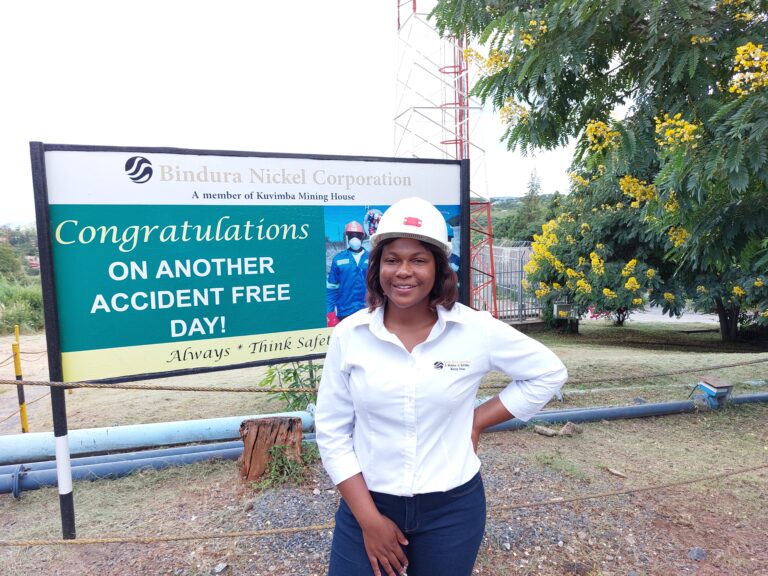
Bindura Nickel Mine (BNC)‘s Mine Captain of Projects Engineer Amanda Tigere emphasizes that one key reason females are hesitant to choose mining engineering as a career path is generally the lack of exposure. Tigere said as children, young girls are more likely to read about traditional professions like pilots or doctors, leaving limited room for learning about mining. The absence of educational resources and children’s books centered around the mining industry reduces awareness and curiosity from a young age.

“Mining is generally a tough environment. So I think for me, there are two aspects as to why females are not forthcoming in terms of selecting mining engineering. The first bit is that it’s something we are not exposed to generally as we’re growing up. Growing up, you read about pilots, you read about doctors, but rarely do you find a child’s book, which is talking about mining. So like from the very onset stage, we are not exposed to that industry at all. If ever you’re lucky to get exposed to that industry at any given time of your journey,” Tigere

Tigere lamented that misconceptions surrounding mining often deter women, further noting that mining is frequently associated with a tough and unsafe work environment. She said these perceptions create a fear factor, making mining engineering appear unappealing to potential female candidates. By addressing these misconceptions and highlighting the diverse opportunities within mining engineering, the industry can work towards fostering a more inclusive environment.

Contrary to popular belief, Mining Engineering offers a wide range of career possibilities. Tigere underscores that there is more to mining than just underground work. The field encompasses various roles, including operational, planning, and project-based positions. By showcasing the diverse opportunities available, women can be encouraged to explore the different aspects of mining engineering.

“The things that you just hear around are just mining is a tough environment. So that puts you off already as a female. So I think for me, it’s an issue of exposure. We are not exposed to this. And I’d like to say mining engineering is a very broad field. It’s a very interesting field anyway. It doesn’t mean you’re just underground there is open pit mining you can be on surface, you can be an operational person, you can be in planning, you can be doing projects like i am so it’s a very broad environment but we as females are not fully exposed to the full spectrum of what constitutes of mining engineering so hence we don’t choose it when when it comes to selecting our career paths. It’s not it’s not the first thing that comes to our mind. We are not exposed to it in any way if ever we’re exposed to it, it’s from a point of fear to say it’s not a safe environment it’s tough,” Tigere said.

Tigere stresses the need for increased exposure to mining engineering for women. By actively promoting the industry and providing educational resources, young girls can gain knowledge and insights into the various career prospects in mining.

Zimbabwe gold buying prices/ gram 24 November 2023

0

Fidelity Gold Refinery (FGR) official gold buying prices/ gram. See the Zimbabwe gold buying prices/ gram today 24 November 2023.

SG 90% AND ABOVE US$60.54/g
SG ABOVE 85% BUT BELOW 90% US$59.90g
SG ABOVE 80% BUT BELOW 85% US$59.26/g
SG ABOVE 75% BUT BELOW 80% US$58.62/g
SAMPLE BELOW 10g BUT ABOVE 5g US$57.66/g
FIRE ASSAY CASH US$60.86/g

NB: Fire Assay cash price is for gold above 100gs, no sample is deducted.
For the Fire Assay Transfer price, a sample of not more than 10g is deducted
A 2% royalty is charged on all deposits (small-scale miners)
A 5% royalty is set for Primary Producers

Cash available. Fidelity Gold Refinery prices will be changing daily to match world market prices.

Zimplats commits over US$362 million on major projects for Q4

0

The country’s biggest platinum group metal (PGM) producer Zimplats has committed a total of US$362.1 million on major projects as at 30 September 2023 as the group is geared to upgrade its operations.

Rudairo Mapuranga

According to Zimplats quarterly report for the period ended 30 September 2023, the group has committed millions of dollars to its major projects which include mine development and upgrade projects at Mupani and Bimha, base metal refinery refurbishment project, among others.

The group said that the mine development and upgrade projects at Mupani and Bimha progressed to plan during the quarter that ended 30 September 2023 with the group spending a total of US$341 million on the projects with an additional US$57 million committed against a budget of US$468 million.

“The mine development and upgrade projects at Mupani and Bimha progressed to plan during the quarter. The projects to develop Mupani Mine and upgrade Bimha Mine will replace Rukodzi Mine, which was depleted in FY2022, and the Ngwarati and Mupfuti mines, which will be depleted in FY2025 and FY2028, respectively Cumulatively, US$341million has been spent on these projects, with an additional US$57 million committed, against a total project budget of US$468 million,” Zimplats said.

According to Zimplats US$158 million was spent on smelter expansion and the SO2 abatement plant project with a further US$256 million committed against a project budget of US$521 million.

The group also said the Base Metal Refinery refurbishment project consumed US$16 million during the quarter with a further US$14.1 million committed against a budget of US$190 million.

“The smelter expansion and the SO2 abatement plant project progressed as planned during the quarter, with US$158 million spent to date and a further US$ 256 million committed against a total project budget of US$ 521 million.

“Implementation of the Base Metal Refinery refurbishment project progressed well during the quarter, with US$16 million spent to date, and a further US$ 14.1 million committed, against a total budget of US$190 million,” the PGM group said.

Zimplats also spent US$1 million for its solar project with US$35 million committed as at 30 September against a budget of US$37 million.

“Implementation of the 35MW solar plant project progressed as planned during the quarter with accumulative US$ 1 million spent on the project to date and US$35 million committed as at 30 September 2023, against a budget of US$37 million. This is the first of the project’s four phases which will be implemented at an estimated total cost of US$2.9million to generate 185MW,” Zimplats said.