

Home Blog Page 264

Unyielding Heroes: BMC Proto Team Defies Challenges To Complete Rescue & Recovery Missions

0

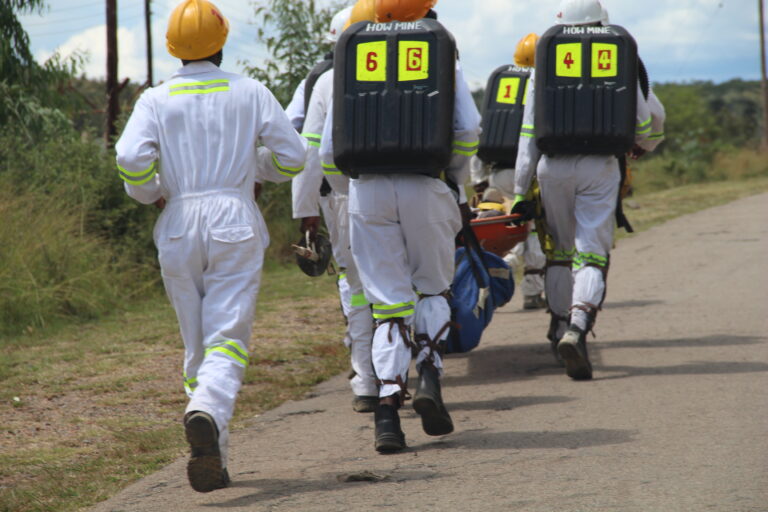
In recent months, the Bulawayo Mining Company (BMC) Proto team has proven themselves as unwavering heroes, dedicated to public safety through two challenging recovery missions. From navigating dangerous terrains to overcoming water-based rescues, the team’s commitment and resourcefulness have been commendable. In this article, we will delve into the details of these two events and highlight the team’s achievements, as well as the challenges they faced.

The first event, known as the Lumene Falls Recovery Mission, took place on April 3, 2023. The BMC Proto team received a call from ZRP Esigodini for a joint recovery operation at Lumene Falls. The mission required collaboration with the Fairbridge Sub-Aqua team and the BMC How Mine Proto team. The objective was to retrieve the body of a man who tragically slipped and fell from a height of approximately 15 meters into a plunge pool.

Despite numerous challenges, the team’s meticulous planning and execution ensured a successful outcome. Before commencing the operation, they arrived at Lumene Falls and conducted a comprehensive risk assessment. The strong water rapids and heavy currents posed additional difficulties, but the team’s safety precautions and determined efforts paid off. After several hours of careful work, the body of the deceased was successfully recovered by 17:00hrs. The joint operation received praise from local authorities, the deceased’s family, and the surrounding community.

The Carry Mine Recovery Mission took place on April 21, 2023. The BMC Proto team was summoned by ZRP Hillside to undertake a recovery mission at Carry Mine after the collapse of a shaft due to illegal mining activities. One man was trapped under a significant amount of ore, approximately 3 meters deep. The team’s objective was to safely retrieve the deceased.

To ensure a successful operation, the BMC How Mine Proto team received a detailed briefing from the Hillside Officer In Charge and conducted a thorough risk assessment. The unconsolidated ground and subsiding conditions complicated the recovery efforts. However, through meticulous planning and adherence to safety protocols, the team successfully recovered the body by 17:19hrs.

The success of these recovery missions can be attributed to the BMC Proto team’s unwavering dedication, collaboration with various agencies, and meticulous planning. The support from BMC How Mine Management in ensuring the welfare of the team is highly appreciated. Their commitment to public safety and their ability to overcome challenges make them an invaluable asset to the community.

In the face of adversity, the BMC Proto team continues to display professionalism and determination, ensuring that every recovery mission is carried out with the utmost care. Their remarkable efforts serve as an inspiration to us all, reminding us of the importance of unity, preparedness, and resilience in the face of challenging circumstances. These unyielding heroes of the BMC Proto team deserve recognition for their bravery and commitment to public safety.

With their dedication, the community can rest assured that they have a reliable and capable team ready to respond to any future challenges that may arise. The BMC Proto team stands as a shining example of heroism and selflessness, and their actions serve as a reminder that in times of difficulty, unity and determination can lead to successful outcomes.

Shamva Mine: Overcoming Challenges to Maintain Consistent Operations

0

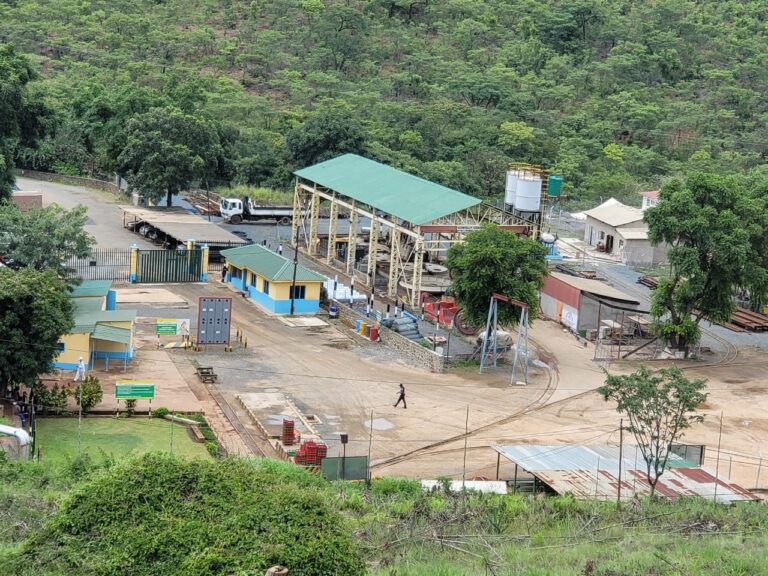
Shamva Mine is currently operating as an underground mine and employs innovative Sublevel Open Stoping mining methods that are tailored to the geometry of the ore body.

Sublevel Open Stoping is a mining method that is known for its efficiency and safety. The method involves mining the ore body in horizontal slices or levels. The levels are drilled and blasted, and then the broken ore is transported to the surface for processing. The approach is especially suited for the extraction of narrow veins and lodes that can be found in underground deposits.

This was said by Shamva Mine General Manager Engineer Gift Mapakame in a technical interview with Mining Zimbabwe at a recent tour of the gold mine by journalists from various Media houses. Eng Mapakame spoke about the challenges and solutions the gold miner goes through to maintain consistent operations.

“Shamva Mine is currently operated as an underground mine which employs Sublevel Open Stoping mining method applied in Longhole Stoping and Underhand Stoping variants. The variants are utilized to respond to the geometry of the ore body. Underhand Stoping is opted when the ore block requires more selective mining particularly in narrow veins to manage dilution whereas long-hole is opted when the block is more regular, broad and more continuous in mineralization. The latter earns itself to massive ore generation whereas the former limits ore generation into smaller drill & blast cycles,” Mapakame said.

To ensure the safety of personnel and protect the environment, Shamva Mine adheres to ISO 45001, 14001, and 9001 standards according to Makapakame. He said the company’s Safety Health Environment and Quality Management system is designed to achieve zero harm and manage risks effectively. The mine continuously improves its systems by learning from unfortunate incidents, aiming for optimal safety and environmental sustainability.

“Shamva Mine has a Safety Health Environment and Quality Management system that conforms to ISO 45001, 14001 & 9001 standards for Occupational Health, Environmental Management and Quality Management. The objective of the system is to achieve zero harm to personnel, the environment and stakeholder ecosystems. The implementation framework ensures that we are able to identify hazards and risks within our siting of works including those arising as a result of our operations and put controls to eradicate them or manage them to acceptable levels. By so doing, we believe we can tackle all potential risks that can affect our employees and environment. Yes, sometimes we have unfortunate incidents, but our spirit is to draw learning points from these unwanted events and ensure that we continuously improve the systems in place,” continued Mapakame.

Power distribution at Shamva Mine is designed per ZESA requirements and standards. However, the mine is exploring technology options to replace pneumatics as it is considered costly to run Mapakame said. Currently, the mine utilizes pneumatic-powered equipment for drilling and portable emulsion pumps for blasting operations.

“Design of Shamva Mines’ electrical power distribution conforms to ZESA requirements and standards. Shamva Mine utilizes pneumatic-powered equipment for drilling. This is inclusive of Underhand stoping and long-hole stoping as well as underground development.  Subsequent blasting operations are carried out with Underground Bulk Emulsions which is handled using portable emulsion pumps. The mine is currently exploring technology options to replace pneumatics as it appears costly to run,” Mapakame opined.

Water for Shamva Mine is sourced from Mazowe River through an abstraction permit issued by ZINWA. The water is distributed to underground operations, where it is utilized and discharged into a drainage system. The mine has implemented settlers to trap suspended solids, allowing clear water to be pumped out for further treatment and recycling. Excess water is discharged into nearby streams according to relevant permits.

“Shamva Mine utilizes water from Mazowe River on an abstraction permit issued by ZINWA. The mine has a pump station located on the river bank 6km from the mine which feeds reservoirs onsite. The water is distributed into underground operations where it is utilized and discharged into cascading drainage and dewatering system. There are drains on each underground level which collect water and channel it down to settler silos which are established at mid-point depth and at the bottom of the mine. The settlers trap suspended solids allowing clear water to be pumped out of the underground operations. The water is received at the reservoirs on the surface where it is further treated for sediment and recycled back into the underground operation. Excess water particularly in the rainy season is discharged into nearby streams through the relevant discharge permit requirements. The water pumped from Mazowe is thus makeup water required to compensate losses in the closed recycling loop,” Mapakame continued.

Shamva Mine has the potential for mechanization and automation, particularly in steep ore bodies. The mine is exploring the use of battery-powered mobile equipment to improve safety and efficiency, as well as to replace traditional and costly pneumatic-powered equipment.

Adherence to legislation and all applicable requirements is important for Shamva Mine. They have a robust Operational Control Framework in place and undergo rigorous internal and external audits to ensure compliance.

“Compliance to legislation and all applicable requirements constitutes our Licence to operate. At baseline survey, the mine has identified the legislative landscape that governs its operations and thus all our activities are structured in an Operational Control Framework which adapts to the legislative requirements as a pre-requisite to help dictate the resource requirements and methodologies applicable.  To ensure adherence, we have a rigorous audit protocol administered internally and externally to assist in identifying gaps in compliance and subsequently closing them out,” Mapakame said.

Despite these efforts, Shamva Mine faces challenges that affect its ability to maintain consistent and predictive operations. One of the major concerns is the availability of power and potential load shedding, which disrupts operations. While the mine has a diesel-powered backup facility, it is not sufficient to sustain the entire operation and is costly to run due to high diesel consumption. Additionally, the pricing model for local supplies creates difficulties in controlling operating costs due to the perceived foreign exchange rate impact.

In conclusion, Shamva Mine strives to overcome challenges and maintain consistent operations while prioritizing safety, environmental sustainability, and compliance with regulations. The mine aims to improve efficiency through mechanization and automation and continues to adapt to the evolving operational landscape.

AMMZ conducts a technical visit at BNC

0

The Association of Mine Managers of Zimbabwe (AMMZ) on the 7th of July 2023 conducted a technical visit at Bindura Nickel Corporation (BNC) in Mashonaland Central where different stakeholders within the mining industry including mine Managers, service providers and students graced the event.

Rudairo Mapuranga

Discussions at the Event were centred on the concerns of service providers and production performance at the Kuvimba Mining House (KMH) owned Nickel producer.

While the visit was an insight to service providers due to exposing situations and challenges in the sector and for them to find opportunities in those challenges, the participation of students at the technical visit was a takeaway for many mine Managers.

Speaking to Mining Zimbabwe on the sidelines of the technical visit AMMZ Vice President Engineer Abel Makura said the participation of students at these events was encouraging as this would empower the students to carry the mining industry to a greater height in future when they become decision makers.

“This technical visit was different because we had an opportunity to see students taking part for the second time. The students are the leaders of tomorrow, these visits will expose them to real industry challenges and how they can come up with solutions way before they become captains of the industry. As an Association, we would be happy if we have students more often on these visits,” Engineer Makura said.

During technical discussions at the event, service providers lamented the situation where mining companies take pride in late payments resulting in the service providers more often suffering losses since prices would be pegged mostly in RTGS which of late has been losing value due to inflation.

Suppliers also raised concerns centred on late payments.

“We have seen that as an industry we are disadvantaging Suppliers at the same time disadvantaging the industry because some of the services we would need might end up becoming expensive. We will find ways to make sure that the challenges facing service providers have been dealt with,” AMMZ Vice President said.

Speaking to Mining Zimbabwe a student from the Midlands State University (MSU) Tawanda Talent Muchena who took part in the technical visit encouraged other students to find time to be part of the visits.

“My advice goes to the rest of the students who are in the mining departments or mining-related programs. AMMZ Technical visits are events where you get to network and rub shoulders with industrial captains, Miners, metallurgists, and geologists, amongst other professions. This is a platform where people get to share ideas, knowledge and synergies. In addition, the AMMZ Technical visits are events where students can get a better understanding of how mining is carried out and be able to differentiate or rather correlate the academic concepts of mining cycles and real word mining cycles hence the need to attend AMMZ Technical visits amongst others,” Muchena said.

He said he had managed to learn a host of ideas including the mining methods used at BNC.

“The AMMZ BNC visit was a well profound and fruitful event. Personally, I learnt a significant number of things notably, the mining method used which is sublevel caving.

“Sublevel caving is an underground mining method in which the ore body is undermined, causing it to cave or collapse under its own weight. This creates a series of interconnected caves or voids, through which the ore can be recovered. The remaining rock is left in place for stability.

“At BNC the ore is mined from top to bottom, the makes it easy to utilise the ore pass. Gravity acts as a force that forces the ore to descent to lower levels, at around level 37 the Electric LOCOs then carry the ore to the crusher where the ore is crushed to the required size before it is transported to the last level where it awaits for hoisting to the stockpile for processing.

“Lastly the issue of ore grade was of interest as the mine now utilises the low-grade high volume method, unlike in the past few years where they used the high-grade low volume method. The shift from high-grade low volume to low-grade high volume has been a result of depletion of High-Grade Deposits amongst other reasons,” he said.

Presenting at the Event BNC Geology Superintendent Renious Tirivabaya who is also ZINIRE President said production performance has been negatively impacted by a decline in the footprint of the high-grade massive resource which necessitated a rapid transition in the mining model from a low-volume, high-grade strategy to a low-grade, high-volume strategy.

“In terms of strategy, we are shifting our strategy from high-grade to low-grade high-volume strategy. On the foot of the main ore body that where your massive is, the in terms of depression of the massive it’s not a physical depression that is visible to the naked eye but if you look at the size of the massive in terms of pursing it, the way we were doing it it’s no longer viable. Previously we would develop a level, and mine it for 3-4 months, now when you develop that short stripe massive you develop for 3 months and stay there for 1 month so it was no longer viable for us hence the need to change the strategy,” Tirivabaya said.


This article first appeared in the Mining Zimbabwe Magazine issue 66. Download HERE

Zimbabwe gold buying prices 27 July 2023

Fidelity Gold Refinery (FGR) official gold buying prices Thursday 27 July 2023. See the Zimbabwe gold buying prices today.

SG 90% AND ABOVE US$59.74/g
SG ABOVE 85% BUT BELOW 90% US$59.10/g
SG ABOVE 80% BUT BELOW 85% US$58.47/g
SG ABOVE 75% BUT BELOW 80% US$57.84/g
SAMPLE BELOW 10g BUT ABOVE 5g US$56.89/g
FIRE ASSAY CASH US$60.05/g

NB: Fire Assay cash price is for gold above 100gs, no sample is deducted.
For the Fire Assay Transfer price, a sample of not more than 10g is deducted
A 2% royalty is charged on all deposits (small-scale miners)
A 5% royalty is set for Primary Producers

Cash available. Fidelity Gold Refinery prices will be changing daily about world market prices.

Anglo American Platinum appoints Craig Miller as CEO

0

PRESS RELEASE – Anglo American plc notes the announcement by Anglo American Platinum Limited released today to the Johannesburg Stock Exchange. The text of the announcement is copied below:

The Board of Anglo American Platinum Limited announces the appointment of Craig Miller as CEO, with effect from 1 October 2023, following Natascha Viljoen’s decision in February to take up the COO role at Newmont Corporation.

Norman Mbazima, Chairman of Anglo American Platinum, said: “I am pleased to extend a warm welcome to Craig Miller in his new role. Throughout the past four years, Craig has been an invaluable member of the leadership team and our Board, leading strategy development and execution and driving successful cost and value optimisation across the business. In his new position, Craig will continue to prioritise safe, stable and capable operations while fostering our high-performance culture, all aimed at delivering sustainable ounces and industry-leading returns through the cycle.”

Craig is currently the finance director of Anglo American Platinum, a role he has held since 2019. With over 23 years of mining industry experience, he is a seasoned senior executive who has worked in South Africa, Brazil, and the UK, with expertise spanning Anglo-American’s PGMs, base metals and bulk commodities businesses.

Added Mbazima: “I also want to thank Natascha for her outstanding contribution to Anglo-American Platinum. Under her leadership, the business achieved new safety milestones, made substantial investments in asset integrity and mine development, and successfully navigated the unprecedented challenges brought on by the pandemic. Moreover, her strategic approach has ensured that the company is well-positioned to unlock further stakeholder value for many decades to come.”

Said Craig Miller: “I am really excited to take on my new role at Anglo American Platinum and look forward to building upon our well-established strategic priorities, which have helped us adapt and thrive through the challenges of the last few years. Against the backdrop of macro-economic uncertainties, including high inflation and lower metal prices, we must remain agile, adapting to market realities while focusing on efficiency and prudent resource management. We have the foundations in place for safe and sustainable operations and continued value delivery, and will continue investing in our growth projects in a disciplined manner.

“Safety will remain our utmost priority, and we will continue to cultivate a diverse, inclusive and high-performance culture, underpinned by our values. Optimising our operations, forging strong partnerships, and seizing opportunities to create additional value for our stakeholders – with the collective support of every Anglo-American Platinum colleague – will be fundamental to our success,” Miller said.

Said Natascha Viljoen: “It has been an incredible honour to lead this exceptional business and its remarkable team. Craig has been an integral member of our leadership team, and will carry forward the important work we have done to put the building blocks in place for long-term success. Our focus on creating physically and psychologically safe workplaces have seen us achieve new safety milestones, improve operational efficiencies, receive international recognition for our environmental, social and governance (ESG) work, and deliver superior returns to shareholders and society at large. I want to thank every colleague and partner for their hard work, dedication, and unwavering support during this leadership transition.”

The recruitment process for Craig’s successor is underway.

Prior to joining Anglo American Platinum in 2019, Craig held numerous roles across Anglo American, including Group financial controller, chief financial officer of the iron ore business in Brazil and coal business in South Africa, and head of the Group CEO’s office. Craig began his career as a trainee accountant at Deloitte in Johannesburg and joined Anglo-American in London as a finance manager in May 2000.

Kuvimba Uncovers Huge Lithium Reserves, Aims for 200M Tonnes

0

Exploration at Sandawana, a mining lease owned by Kuvimba Mining House (KMH), is underway with the objective of determining the total lithium resource and associated minerals such as Tantalite, niobium, emeralds, and beryllium.

Kelvin Sungiso

Speaking about the project at the sideline of the Sandawana mine visit, the General Manager Godwin Gambiza said the exploration program is being conducted in four distinct phases. The first phase, which is nearly concluded, has resulted in the estimation of a lithium oxide resource of 29 million tonnes, with an estimated average grade of 1.42%.

“Exploration at Sandawana is taking place on a 38,8 square kilometre lease owned by Kuvimba Mining House. The exercise is aimed at finding the total lithium resource and associated minerals like Tantalite, niobium, emeralds, and beryllium. The programme is divided into four phases. The first is almost complete and a resource of 29  million tones at an estimated grade of 1.42%  of lithium oxide has been estimated.  This consists of 20 million tonnes of Measured Resource, 2 million tons of Indicated Resource and 7 million tonnes of Inferred Resource,” Gambiza said.

Following the successful completion of the first phase, a second phase has been planned to target an additional 30 million tonnes of lithium oxide. This phase is scheduled to commence in August of 2023.

“A second phase targeting 30 million tonnes of lithium oxide has been planned and will commence end of August 2023. At the end of all phases, it is expected that the mine will achieve 200 million tonnes of Resource,” he said.

Upon the completion of all four phases, it is predicted that the mine will achieve a total resource of 200 million tonnes. These findings highlight the significant potential of Sandawana as a valuable source of lithium and other associated minerals.

The estimation of a lithium oxide resource of 29 million tonnes in the initial phase showcases the substantial reserves present within the mining lease. Lithium, in particular, is a highly sought-after mineral due to its indispensable role in the production of rechargeable batteries used in electric vehicles and portable electronic devices. The increasing demand for lithium underscores the importance of conducting comprehensive exploration programs to identify and assess potential lithium-rich deposits.

It is worth noting that the measured, indicated, and inferred resource categories provide essential information about the level of confidence in the presence and quality of the identified mineral resources. Measured resources represent the highest level of confidence as they are determined with extensive sampling and high-quality data. Indicated resources demonstrate a reasonable level of confidence, while inferred resources rely on limited data and have a lower level of confidence.

Court forces Chinese Miner to Vacate Villages

0

In a significant victory for local villagers in Mutoko, a Magistrates Court has ruled that Chinese miner Labenmon Investments must vacate four villages after it was discovered that the company had started operations without adhering to proper protocols.

The decision came after the villagers, led by headman Mbudzi, sought legal assistance from Zimbabwe Lawyers for Human Rights (ZLHR) to halt Labenmon’s granite prospecting activities. The Chinese firm had claimed ownership of 150 hectares of land in the area.

ZLHR issued a statement declaring, “Chinese miners have been ordered off the villagers’ land by the magistrate at Mutoko Magistrate Court. ZLHR successfully proved that the miners had not followed due process. They did not obtain a valid environment impact assessment certificate.”

According to the statement, Labenmon had failed to conduct the necessary consultations with affected stakeholders, as required by law. The company’s disregard for proper procedures raised concerns among villagers, who subsequently sought legal intervention.

This ruling serves as a reminder that all companies, regardless of nationality, must respect local laws and regulations when conducting business operations. The decision also highlights the importance of acquiring the appropriate environmental impact assessment certificate before commencing any activities that could potentially have significant consequences for the local ecosystem.

The victory for the villagers is seen as a triumph for their rights to their land and environment. It also serves as a reminder to multinational corporations that they must be transparent and inclusive in their dealings with local communities.

This decision will likely encourage local communities to stand up for their rights and seek legal assistance when faced with similar situations.

As the principle of holding corporations accountable gains momentum globally, it is crucial to ensure that local communities are protected and that proper channels for legal recourse are made available to them.

Masisi happy with the Debeers Diamond deal

0

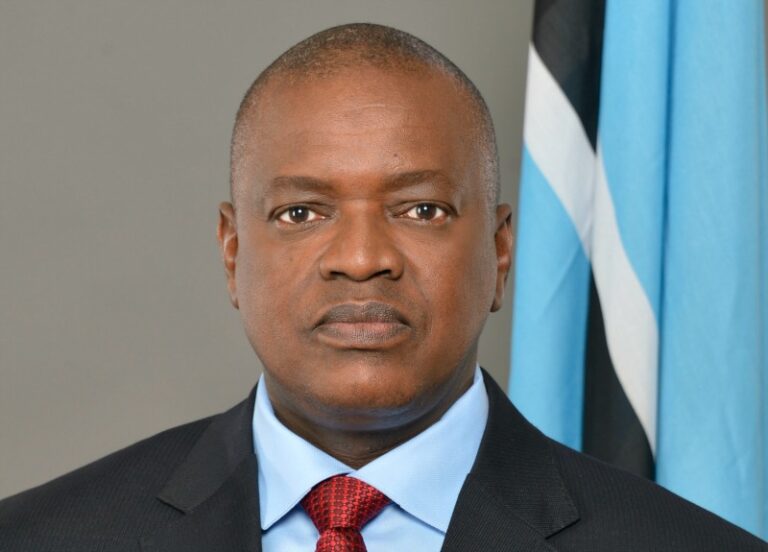
In an interview with Bloomberg TV in Gaborone, Botswana’s capital, quoted by IDEX Online, Botswana’s President Mokgweetsi Masisi said that the newly signed agreement between Botswana and De Beers will greatly benefit the country’s economy.

“We’re very happy with the outcome. It could have been better but you know with a partnership you’ve always got to give as you take,” Masisi said, adding that the deal will give Botswana 10 billion pula ($762 million) to diversify the economy and improve the diamond value chain as well as help impart skills to young people and create jobs.

Under the new agreement, Botswana’s state-owned diamond trader is set to receive a larger portion of the output from Debswana, the De Beers’ unit responsible for approximately two-thirds of the group’s annual production. The revised terms stipulate that the state-owned trader will now be entitled to 30% of Debswana’s output – a significant increase from the previous arrangement. Additionally, the government has announced a tentative agreement that holds the potential for this share to further rise to a maximum of 50% in the future. The deal also includes new 25-year mining licenses for Debswana.

Source: IDI

Zimbabwe gold buying prices 26 July 2023

Fidelity Gold Refinery (FGR) official gold buying prices Wednesday 26 July 2023. See the Zimbabwe gold buying prices today.

SG 90% AND ABOVE US$59.51/g
SG ABOVE 85% BUT BELOW 90% US$58.88/g
SG ABOVE 80% BUT BELOW 85% US$58.25/g
SG ABOVE 75% BUT BELOW 80% US$57.62/g
SAMPLE BELOW 10g BUT ABOVE 5g US$56.67/g
FIRE ASSAY CASH US$59.82/g

NB: Fire Assay cash price is for gold above 100gs, no sample is deducted.
For the Fire Assay Transfer price, a sample of not more than 10g is deducted
A 2% royalty is charged on all deposits (small-scale miners)
A 5% royalty is set for Primary Producers

Cash available. Fidelity Gold Refinery prices will be changing daily about world market prices.

How Zimbabwe Can Capitalize on the Abundance of Lithium Resources

0

Zimbabwe is known for its diverse range of mineral resources, and one such resource that has gained significant attention in recent years is lithium. With an abundance of lithium deposits and home to the world’s largest-known deposit of lithium at approximately 11 million tonnes, Zimbabwe has the potential to become a major player in the global lithium market. In order to achieve this, the country must devise a strategic plan to capitalise on its resources efficiently and effectively.

Lithium is a crucial component in the manufacturing of batteries, particularly for electric vehicles and renewable energy storage. As the world transitions towards cleaner energy sources, the demand for lithium is forecasted to soar.

With an estimated 800 million metric tons of lithium ore deposits, Zimbabwe is sitting on a goldmine of opportunity.

The first step towards capitalizing on these resources is to invest in exploration and mining technologies. Zimbabwe should prioritize funding research and development to better understand the location, quality, and concentration of lithium deposits. This will allow for efficient extraction and minimize environmental impact. Collaborations with global mining companies experienced in lithium extraction could also provide essential expertise and promote technology transfer.

Infrastructure development is crucial to maximizing the potential of lithium resources. As Zimbabwe expands its mining operations, attention must be given to improving road networks, rail lines, and ports. A well-developed infrastructure will facilitate the transportation of lithium ore and the export of finished lithium products. Currently, the country is faced with a tall order of restoring roads after decades of neglect. Key road network to SADC countries such as Zambia, Angola and DRC is in a sorry state. Additionally, investment in power infrastructure is essential to ensure an uninterrupted supply of electricity to mining operations.

Creating an attractive investment environment will also play a significant role in capitalizing on lithium resources. The Zimbabwean government can offer incentives such as tax breaks or streamlined bureaucratic processes to attract foreign direct investment in lithium mining. Strengthening intellectual property regulations will encourage technological innovations within the industry and provide an added incentive for foreign investors to bring their expertise to Zimbabwe.

To further capitalize on the lithium boom, Zimbabwe should also focus on downstream industries. Instead of exporting raw lithium ore, the country can foster the development of local processing plants that convert lithium into battery-grade materials. This will not only add value to Zimbabwe’s lithium resources but also create employment opportunities and stimulate the economy. The government should partner with global battery manufacturers or consider establishing joint ventures to share knowledge and invest in infrastructure.

An essential aspect of capitalizing on lithium resources is sustainable and ethical mining practices. Zimbabwe should ensure that mining operations are carried out responsibly and in compliance with environmental and social regulations. Initiatives should be implemented to mitigate the negative impacts of mining, such as land rehabilitation and community development programs. By demonstrating a commitment to ethical and sustainable practices, Zimbabwe can attract responsible mining companies and international investors interested in supporting socially conscious initiatives.

Finally, Zimbabwe must actively market its lithium resources to attract global attention. Participating in International exhibitions, conferences, and trade fairs related to lithium and battery technology will allow Zimbabwe to showcase its potential. Engaging in strategic partnerships and collaborations with countries already leading in the lithium market, such as Chile and Australia, can provide valuable insights and export opportunities.

In summary, Zimbabwe is in a favourable position to take advantage of its abundant lithium resources. By allocating resources to explore and mine lithium more efficiently, enhancing necessary infrastructure, fostering an enticing investment climate, supporting related industries, implementing sustainable mining practices, and actively promoting its resources, Zimbabwe has the potential to become a major contender in the worldwide lithium market. This versatile element can serve as a catalyst for economic expansion and secure the country’s long-term stability.