

Home Blog Page 269

Law on Emeralds in Zimbabwe: Woman Jailed 5 years for Possession

0

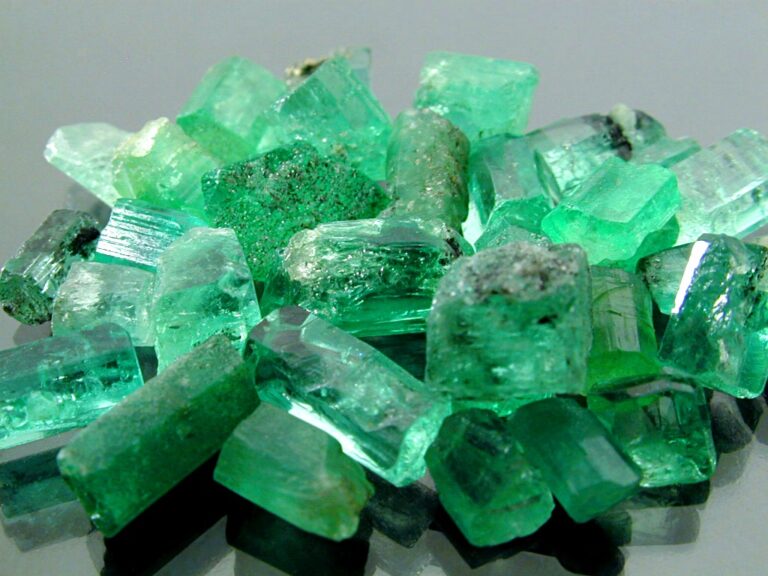
Zimbabwe Miners were shocked when a Harare Magistrate sentenced a 49-year-old Kariba woman to five years in Prison for the illegal possession of emeralds worth US$3 015,60.

Rutendo Moyo was arrested on Saturday last week.

Moyo, who was self-actor, pleaded guilty to the charge and was sentenced to the mandatory five years by Harare magistrate Ruth Moyo.

The court heard that on July 1 this year, detectives from CID Minerals Flora and Fauna Unit in Harare received a tip-off from an unknown person that Moyo was in possession of emeralds.

Moyo was arrested while walking along Samora Michael Avenue after the detectives approached her and asked her to hand over a black satchel and a small dark blue handbag she was carrying.

The court heard that the detectives recovered four pieces of emeralds from her.

Many were not aware of the law that prohibits the possession of Emeralds. Last year the Centre for Natural Resources Governance (CNRG) released a report titled “The Political Economy of the Illicit Coloured Gemstone Industry in Zimbabwe”, supported by the Global Initiative Against Transnational Organised Crime.

The research looked at coloured gemstones, mainly emeralds and “semi-precious” coloured stones like aquamarine, chrysoberyl, tourmaline, alexandrite and euclase.

“A lot of focus has been on diamonds and gold, as precious minerals, while severe illicit trading in and smuggling of coloured gemstones has been going unchecked. Organised crime in the gemstone sector is bleeding the sector of millions of dollars that should support social development in Zimbabwe,” reads the report in part.

The report seemed to indicate that whilst illegal, the mining and smuggling of Emeralds was taking place in the country.

Here is what the law says on the possession of Emeralds in Zimbabwe.

CHAPTER 21:06 PRECIOUS STONES TRADE ACT Acts 8/1978, 1/1982, 22/2001 (s. 4), 10/2007.

The Law on Emerald Possession in Zimbabwe

Zimbabwe in 2007 amended the Mines and Minerals Act to curb the smuggling of precious stones, especially diamonds and emeralds, and plug loopholes in the trade of the stones. The Act imposes custodial sentences for illegally dealing in or possessing precious stones.

Unlawful dealing in or possession of precious stones prohibited

(1) Except as provided in this Act, no person shall deal in or possess precious stones unless he is— (a) a licensed dealer; or

(b) a permit holder; or

(c) the holder of a mining location or a tributor who has lawfully recovered such precious stones in terms of any enactment; or

(d) the employee or agent of any person referred to in paragraph (a), (b) or (c) who is authorized by his employer or principal to deal in or possess on his behalf precious stones; and deals in or possesses the precious stones in accordance with this Act.

(2) Any person who contravenes subsection (1) shall be guilty of an offence and, on conviction, shall be sentenced to imprisonment for a period of not less than five years and, in addition, be liable to a fine of any amount up to or exceeding level fourteen, unless the convicted person satisfies the court that there are special reasons in the particular case, which reasons shall be recorded by the court, why such a sentence should not be imposed, in which event he or she shall be liable to a fine of any amount up to or exceeding level fourteen or imprisonment for a period not exceeding five years or to both such fine and such imprisonment.

[Subsection substituted by section 3of Act No. 10 of 2007]

(3) Notwithstanding anything contained in the Magistrates Court Act [Chapter 7:10] or any other enactment—

(a) a court of a provincial or senior magistrate shall have special jurisdiction, on summary trial or on remittal by the Attorney-General of the case for trial or sentence, to impose imprisonment for a period not exceeding five years and a fine of any amount up to or exceeding any amount up to or exceeding level fourteen;

[Paragraph as amended by section 4 of Act No. 22 of 2001 and section 3 of Act No. 10 of 2007]

(b) a court of a magistrate other than a regional, provincial or senior magistrate shall have special jurisdiction, on summary trial or on remittal by the Attorney-General of the case for trial or sentence, to impose imprisonment for a period not exceeding three years and a fine of any amount up to or exceeding level fourteen; in respect of a contravention of subsection (1).

[Paragraph as amended by section 4 of Act No. 22 of 2001 and section 3 of Act No. 10 of 2007]

(4) Upon the trial of any accused for a contravention of subsection (1), the burden shall lie upon such accused of proving that he falls within one of the exceptions provided in that subsection.

(5) A court sentencing a person to imprisonment under subsection (2) shall not order the suspension of any part of the sentence if the effect of such suspension is that the convicted person will serve a period of less than three years.

5 Conditions on which miners may deal in or possess precious stones

The holder of a mining location or a tributor may only—

(a) possess precious stones which have been lawfully recovered by him or on his behalf from the mining location in respect of which he holds mining rights; or

(b) deal in precious stones referred to in paragraph (a) with a licensed dealer or permit holder and then only to the extent to which such licensed dealer or permit holder is permitted in terms of this Act, any other enactment relating to dealing in precious stones and by the terms of their licenses or permits, as the case may be, to deal in precious stones; or

(c) export precious stones referred to in paragraph (a) subject to any other enactment relating to the export of precious stones.

(2) A permit holder may only—

(a) possess precious stones in accordance with his permit; or

(b) deal in precious stones with a person referred to in section five, a licensed dealer or a permit holder and then only to the extent to which he and such other person are permitted in terms of this Act, any other enactment relating to dealing in precious stones and by the terms of their licences or permits, as the case may be, to deal in precious stones.
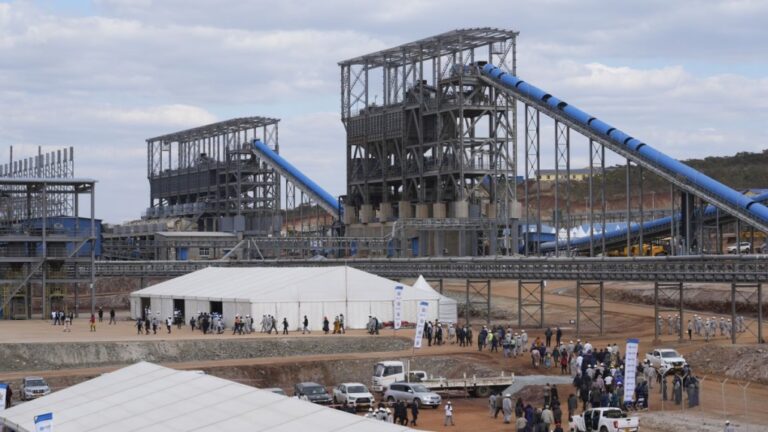
Zimbabwe commissions biggest lithium processing plant in Africa

0

President Emmerson Mnangagwa on Wednesday commissioned the Arcadia Lithium processing plant which is the biggest hard rock lithium processing plant in Africa and sits top three hard rock lithium processing plants in the world.

Rudairo Mapuranga

The Arcadia lithium project in Goromonzi is owned by one of the world’s biggest battery metal producers, Zhejiang Huayou Cobalt’s Prospect Lithium Zimbabwe (PLZ).

The Ministry of Mines and Mining Development set a roadmap to create a US$12 Billion industry by 2023 as a contribution to Vision 2030 with lithium being one of the key minerals to contribute to this growth.

PLZ invested US$300 million on the rapid development of a lithium mine and a process plant at the Arcadia lithium project as it is geared to contribute significantly towards the attainment of the government’s vision to achieve a US$12 billion mining industry by the end of 2023.

Speaking to Mining Zimbabwe on the sidelines of the commissioning of PLZ 4.5 million tonnes per annum processing plant in Goromonzi, PLZ Head of Corporation Social Responsibility (CSR) Mr Paul Chimbodza said the completion of the project is testimony that Zimbabwe is indeed open for business.

“The completion of the PLZ plant is testimony that you can successfully take projects from exploration to production so that talks a lot about the value chain of taking up the curve. It also buttresses the fact that we have got world-class deposits in Zimbabwe. This project here sits as the largest lithium processing plant hard rock in Africa and sits in the top 3 hard rock in the world. The official opening takes to the ease of doing business that you can take project inception to production. Annual throughput of 4.5 million tonnes a year,” Chimbodza said.

In his address at the Event Minister of Mines and Mining Development, Hon Winston Chitando, said the commissioning of the plant was a step in support of the recently gazetted lithium policy which stipulates that no unprocessed lithium leaves the country.

“Your Excellency, my Ministry, together with all stakeholders in the mining sector, worked on a Lithium Policy that was recently effected by the government to provide guidelines on every activity pertaining to lithium mining and processing. I must say the Policy has started bearing fruit with local beneficiation of lithium being supported across the country. Our thrust should therefore be now aimed at ensuring value addition to these minerals once they are beneficiated,” Chitando said.

The President giving his keynote address commended PLZ for the construction of the plant that it was positive towards reducing unemployment.

“Construction of Prospect Lithium Zimbabwe’s processing plant has directly brought about numerous employment opportunities for our people with a total of 3,000 people including contractors having been employed. Nearly 80% of both skilled and unskilled personnel employed by Prospect Lithium Zimbabwe are locals. This will therefore go a long way in reducing unemployment,” President Mnangagwa said.

Caledonia continues to pursue its multi-asset strategy in Zimbabwe

0

Caledonia Mining Corporation Plc is excited about business opportunities in Zimbabwe and will continue to pursue its strategy to become a multi-asset Zimbabwe-focused gold producer, CEO Mark Learmonth said.

Rudairo Mapuranga

The company on Monday announced that the Board of Directors declared a quarterly dividend of 14 United States cents (US$0.14) on each of the company’s shares.

Commenting on the announcement, Learmonth said Caledonia has a reputation for rewarding shareholders through growth and dividends.

“Over the last 10 years, Caledonia has built a strong reputation for delivering on its word and rewarding shareholders through growth and dividends.

“The last 18 months have seen much change in the shape of the business: we have acquired three new gold projects in Zimbabwe and we commissioned the 12MWac solar plant which provides about a quarter of Blanket’s average daily electricity requirements.

“I am very excited with the opportunity that we have to evolve the business as we pursue our strategy to become a multi-asset, Zimbabwe-focused gold producer,” Learmonth said.

Botswana government to get 50% in Debswana

0

The government of Botswana through its Okavango Diamond Co (ODC) has agreed to a new Diamond sales deal with Anglo-American’s De Beers which sees ODC gradually increasing its Diamond share from their joint venture Debswana to 50 per cent over the next decade, it has been revealed.

The Botswana government and De Beers said they had agreed on a 10-year sales deal for Debswana’s rough diamond production through to 2033, and on a 25-year Debswana mining licence valid until 2054.

ODC will receive 30% of produce from Debswana from the start of the new contract and this will be scaled up to 50% in the last year of the pact, De Beers and the government said in a joint statement.

“From the start of the new contract period ODC will receive 30 per cent of Debswana production, progressively increasing to 50 per cent by the final year of the contract, ensuring a sustainable transition path for both partners,” De Beers said in the statement.

The miner will also pump in 1 billion pula ($75 million) towards a diamond fund which would invest in “additional value to the Botswana economy,” the company said, adding the contributions would grow 10 times over the next 10 years.

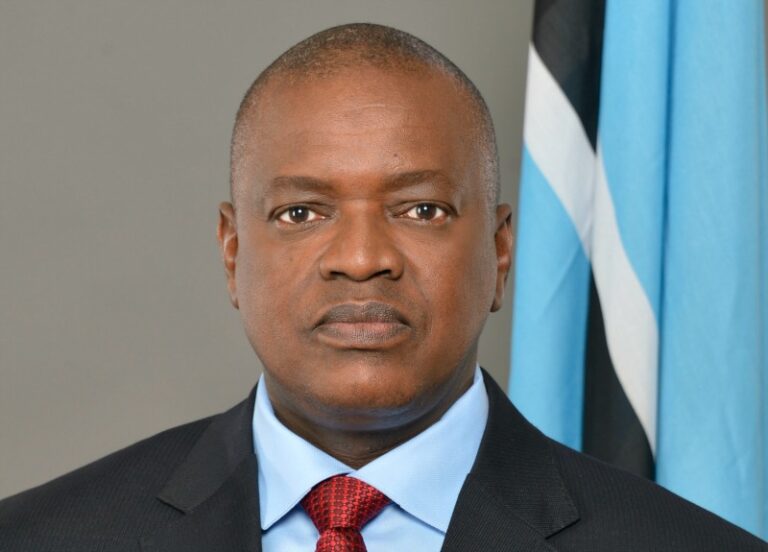
Botswana President Mokgweetsi Masisi, who has been pushing for a bigger share of Debswana’s output, had threatened to sever ties with the mining company if the government’s concerns weren’t reflected in the new deal that has been in negotiation since 2018.

The Botswana-De Beers agreement allows the partners to advance the investment required to secure Debswana’s position as one of the world’s leading gem producers, De Beers said.

Botswana, where De Beers has been present for 50 years, is heavily reliant on diamonds, with two-thirds of its foreign currency receipts coming from mining, sales and ancillary activities linked to the precious stone.

BREAKING: ZMF AGM postponed 

0

The Zimbabwe Miners Federation (ZMF) annual General Conference and Exhibition which was scheduled to take place from the 6th to the 7th of July has been postponed to a date yet to be announced.

Rudairo Mapuranga

An official statement is yet to be published, however, the ZMF President Ms Henrietta Rushwaya has confirmed to Mining Zimbabwe that the AGM will no longer be held on 6-7 July as advertised.

“Please note The ZMF AGM will no longer be held on 6-7 July as planned. It will now be held in September at a date to be announced. Any inconvenience caused is sincerely regretted,” Rushwaya said.

This year’s event was designed to gather artisanal and small-scale miners, large-scale miners, stakeholders, service providers, investors, and policymakers to holistically align the artisanal and small-scale miners in the mainstream economy in the most sustainable and rational manner.

Running under the theme “Responsible Mining: A Catalyst for Sustainable Economic Development.” the event aims to discuss the policy measures affecting ASM operations and assess the implications on the growth of the mining industry.

More to follow…

ZINIRE determined to extend Rock Engineering solutions to ASM

0

As part of its strategy to eliminate disaster in the mining industry in Zimbabwe, the Zimbabwe National Institute of Rock Engineering (ZINIRE) is planning to take rock Engineering solutions to the Artisanal and Small-Scale Mining (ASM) sector.

Rudairo Mapuranga

Zimbabwe has been plagued with mine disasters over the last few months, often resulting in the death of scores of miners. Most of the mine accidents have occurred at illegally and legally run disused mines (by artisanal miners) with a few happening at legally operating small-scale mines.

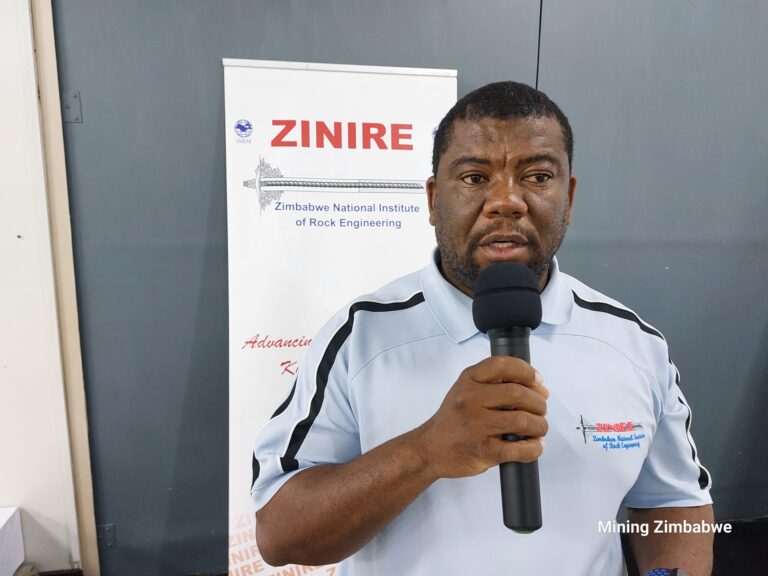
Speaking to Mining Zimbabwe on the sidelines of the ZINIRE Annual General Meeting (AGM) in Bulawayo on Saturday, the institute’s newly appointed President Regious Tirivabaya said his organization was going to lead in terms of awareness and training in rock engineering solutions to avoid disaster.

“There is also a growing sector of small-scale miners which we should not forget most so because we have seen a lot of accidents related to fall of ground in this sector. Our thrust there will be to lead in terms of awareness and training on proper mining methods to avoid these fatal accidents that we have seen over the years,” Tirivabaya said.

Speaking at the event ZINIRE Vice President said Rock Engineers and service providers should come up with solutions for the small-scale industry to avoid disaster and accidents.

“The ASM has come with its challenges particularly fall of ground. I implore this fraternity to broaden its scope to assist the industry. Let us work together to fully integrate rock engineering in the whole mining interests,” Mandingaisa said.

The Zimbabwe School of Mines (ZSM) which is a member of ZINIRE represented by Mrs Ndiweni said it has been offering solutions and training for the ASM and was determined to see other institutes such as ZINIRE taking part at full scale.

“We have seen that technical institutions are mostly focusing on rock engineering solutions on large-scale mining operations but as ZSM we are giving a holistic approach where we also research and overtraining on finding rock engineering solutions for the ASM,” Ndiweni said.

Zimbabwe National Institute of Rock Engineering held its AGM and Annual Symposium in Bulawayo on the first of July 2023.

This is ZINIRE’s annual event which brings all rock mechanics/engineering practitioners under one roof. The event brings together professionals and experts in the field of rock engineering to discuss and deliberate on various issues and advancements in the industry.

The AGM served as a platform for the ZINIRE members to discuss ongoing projects, share experiences, and present their achievements over the past year. It provided an opportunity for members to reflect on the challenges faced and collaborations achieved in the pursuit of promoting rock engineering in Zimbabwe.

Renias Tirivabaya appointed ZINIRE President

0

Bindura Nickel Corporation’s Geology Superintendent Renias Tirivabaya has been appointed Zimbabwe National Institute of Rock Engineering (ZINIRE) President.

Kelvin Sungiso

Tirivabaya was appointed to lead the Rock Engineering organisation at the just-ended ZINIRE AGM and Symposium held last week in Bulawayo.

Tirivabaya will be at the helm of the organisation for a 2-year term.

Tirivabaya will be deputized by Unki’s Omberai Mandingaisa, Zimplats’ Munyaradzi Musembwa as Treasurer, and Mimosa’s Freddy Chikwiri as Secretary. The Vice President (on the previous term) automatically becomes President-elect while the Vice President and Treasurer are elected by the Council which is the highest decision-making body of the Institute. Patrick Mushangwe, David Benson, Rangarirai Mahove, Chanetsa Sibanda, Senzeni Moyo, Nosizo Ncube and Ambition Mubvumbi will serve as Council Members.

Tirivabaya takes over from Adias Mudzovaniwa who has been at the helm of the Institute for the past 2 years.

Rescue teams essential in eliminating fatalities

0

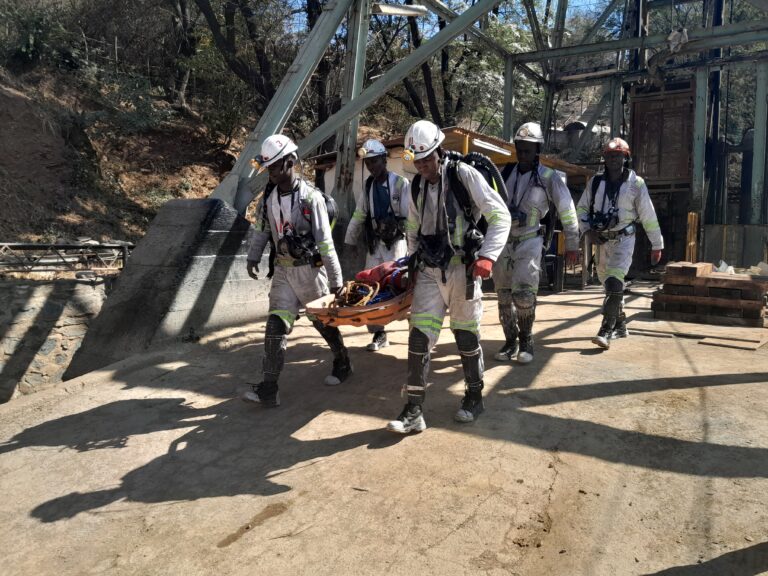
While there is a lot of improvement in terms of innovation and technology to reduce accidents in mines and remarkable progress in safety measures, mine rescue teams remain of paramount importance because accidents cannot be completely avoided.

Rudairo Mapuranga

Speaking at the Mine Rescue Association of Zimbabwe (MRAZ) Westzone Quarterly training exercise held at Metallon Corporation Zimbabwe‘s Bulawayo Mining Company (BMC) on Friday, BMC Mine Manager said Proto teams and fresh air teams remain important in reducing fatalities in mining operations despite improvements in technology and innovation to eliminate disaster.

“In 1972 we unfortunately lost 427 lives of miners but over the years we have seen a lot of advancement protocols, policies, procedures, Technology and innovation in mine safety. Despite remarkable progress in safety measures, mining accidents continue to occur leaving devastating consequences. These incidents serve as a reminder that no matter how advanced our technology or stringent our policies are, the inherent associated with mining cannot be totally eliminated. We can significantly minimise it but we can’t totally eliminate it therefore the importance of Proto teams cannot be overlooked. The team are on the forefront of protecting the lives of miners in times of disaster,” he said.

Speaking to Mining Zimbabwe on the sidelines of the event BMC Underground Manager and Westzone Coordinator Engineer Nobert Ndiweni said rescue teams were of importance in reducing fatalities and his organization was encouraging all Mines to set up rescue teams.

He also said that as part of showing the importance of rescue teams in managing lives, the teams are now inclusive and incorporating female brigades.

“As a strategy, our thrust is to encourage all Mines to have a rescue team. Part of our strategy is We want to be inclusive as BMC HowMine, last year we had one female who was our captain but now two more have been incorporated. As a Zone, if you look at Hwange, four females have been incorporated,” Ndiweni said.

Premier African Minerals urges talks to settle Canmax dispute

0

Premier African Minerals Ltd (AIM: PREM) shares rallied as it reiterated the latest move from partner Canmax in an escalating dispute will have no impact.

Canmax has now served official notice to end an offtake and prepayment agreement for spodumene concentrate produced at the Zulu lithium and tantalum project, Premier said.

This follows a notice of Force Majeure being served on Canmax by Premier at the weekend.

The UK firm said the immediate effect of the Force Majeure is the suspension of Premier’s obligations under the agreement and Canmax’s right to terminate.

Premier added it has been advised that Canmax’s notice of termination, which requires the repayment by Premier of the prepayment amount of approximately US$34.6mln plus interest within 90 days of today’s date, cannot be served at this time.

George Roach, Premier’s chief executive, said: “The company has been advised that this notice of termination has no force or effect.

“Premier has repeatedly extended an invitation to Canmax to attempt to resolve this situation as set out in the agreement, and does so again, now, and publicly”.

Canmax has a 13.1% stake in Premier African Minerals.

Shares in Premier African Minerals rose by 12% to 0.33p.

PAI

10 reasons why Mineral Exploration is essential to Zim economic growth

0

Zimbabwe is a country full of potential when it comes to Mining and Mineral Exploration investment. With a wealth of natural resources ranging from gold, Lithium, diamonds, platinum, chrome and coal among other minerals, there are several reasons why the country needs to invest more in exploration. Here are ten reasons why exploration is essential to Zimbabwe’s economic growth, development and the attainment of the us$12 billion Mining Industry.

  1. Increased Revenue Generation

Exploring new mines and minerals is a sure way of generating revenue for the country. In Zimbabwe, the mining industry accounts for over 60% of the country’s exports. By investing in exploration, Zimbabwe can discover new mineral deposits which can be mined and sold to foreign markets, increasing the country’s revenue generation.

  1. Job Creation

Exploration creates job opportunities for locals. Exploration ventures require personnel in various capacities such as geologists, environmentalists, mining engineers, and support staff. This helps to reduce unemployment rates and boost the country’s economy by providing employment opportunities. Generally, Mine work has higher remuneration and offers better opportunities for advancement compared to other industries.

  1. Encourage Foreign Investment

Investment in exploration projects often attracts foreign investors who are looking to invest in promising projects. This can help to bring in foreign exchange and lead to long-term partnerships between Zimbabwe and foreign investors. Such partnerships can help to transfer skills and knowledge in mining and exploration, thereby improving the country’s capacity in its mining industry.

  1. Diversify the Economy

Mining provides a substantial contribution to Zimbabwe’s economy, but too much reliance on one sector makes the economy vulnerable to fluctuations in commodity prices. By investing in exploration, Zimbabwe can diversify the economy by discovering new minerals to exploit, reducing dependence on a single commodity.

  1. Improved Infrastructure

Investment in exploration can lead to the development of new infrastructure such as roads, railways, and ports, which are essential for the transportation of minerals. This can help to improve Zimbabwe’s transport infrastructure, making it easier to move minerals to the markets. The government however needs to ensure new mines create and maintain roads to their Mines.

  1. Technology transfer

Exploration ventures require the use of modern technologies such as Geological Information Systems (GIS), advanced drilling technologies, and remote sensing mapping. Investing in exploration can help to transfer these modern technologies to Zimbabwe, which can help improve efficiency and productivity in the mining industry.

  1. Social Benefits

Mining investments have direct social benefits for the communities around the mining sites. Developing infrastructure can lead to improved access to clean water, education, healthcare, and other essential services.

  1. Environmental Protection

Exploration projects require environmental impact assessments to be carried out, which can lead to the environmental conservation and protection of the areas being explored. Exploration investments can help to develop sustainable mining practices and protect the environment from pollution.

  1. Knowledge Advancement

Mineral exploration often requires research, and developing the country’s capacity for research can help improve the knowledge base for the country’s mining industry. This can lead to better decision-making processes, improved results, and reduced exploration costs.

  1. National Pride

Mineral exploration can lead to the discovery of rare minerals, which can be a considerable source of national pride and prestige. This can raise Zimbabwe’s international status, attracting investments and partnerships with other countries.

In conclusion, Zimbabwe is a country with a lot of potential in mining and mineral exploration. Investing in exploration can help to create jobs, generate revenue, diversify the economy, improve infrastructure, protect the environment, and bring social benefits. With the right investments, Zimbabwe can fully realize its potential in the mining industry.