

Home Blog Page 270

Bikita Minerals fatal shooting prompts CNRG to call for accountability

0

Mining research and advocacy pressure group, Centre for Natural Resource Governance (CNRG) executive director Farai Maguwu has petitioned Mines and Mining Development Minister Winston Chitando to order a probe into the alleged fatal shooting of a mine worker at Bikita Minerals in Masvingo) early this year Newsday has reported.

In a letter dated June 27, Maguwu called for an inquiry and apprehension of a security guard who fatally shot Darlington Vito at the mine’s dumpsite.

“We are writing to call on the Ministry of Mines to investigate the murder of one Darlington Vito by a security guard employed by Sinomine. The incident in question occurred on the 26th of March 2023 at a rubble site on the outskirts of Bikita Minerals where the security guard is employed to provide security services,” wroteMaguwu.

He added: “This is a serious matter that requires immediate attention and investigation from your ministry. It is important that the investigation is conducted in a fair and transparent manner to ensure justice is served for the victim and their family.

“Section 48 of the constitution of Zimbabwe guarantees the right to life. This right supersedes the right to protect property. We urge the Ministry of Mines to take appropriate action in this matter and ensure that the security guard and Sinomine are held accountable for the murder of Darlington Vito.”

National police spokesperson Assistant Commissioner Paul Nyathi referred questions to Masvingo provincial spokesperson Inspector Kudakwashe Dhewa who initially professed ignorance of the matter but later said he would investigate and give an update. He had not done so by end of business on Thursday.

Newsday

Premier receives Notice of Termination from Canmax

0

Premier African Minerals reports that it has received a notice of termination from Canmax, following Premier’s service of a Notice of Force Majeure on Canmax on June 25, 2023. The Notice of Force Majeure suspended Premier’s obligations under the agreement and Canmax’s right to terminate.

While Canmax may dispute the grounds for the declaration of Force Majeure, they have yet to formally communicate their position. As a result, Premier has been advised that the Notice of Termination, which requires the repayment of approximately US$34.6m (plus interest) within 90 days, cannot be served at this time.

This development adds another layer of complexity to the ongoing situation between Premier and Canmax. The Notice of Termination is currently on hold, pending further communication and resolution of the Force Majeure dispute.

As shareholders absorb this news, they should be prepared for potential delays or disruptions in the spodumene concentrate production and sales from the Zulu project. The resolution of the Force Majeure dispute will be crucial in determining the future of the agreement and the financial implications for Premier.

Investors will be closely monitoring any further updates from both Premier and Canmax regarding the termination notice and the disputed Force Majeure. The timely resolution of this issue will be instrumental in maintaining investor confidence and ensuring the stability of Premier’s operations and financial position.

George Roach, CEO commented, “The Company has been advised that this notice of termination has no force or effect. Premier has repeatedly extended an invitation to Canmax to attempt to resolve this situation as set out in the Agreement, and does so again, now, and publicly”.

As Canmax is interested in 13.14 per cent. of the Company’s issued share capital and therefore a related party under the AIM Rules, any amendments to the Agreement will be dealt with by AIM Rule 13.

Miners tell Mnangagwa to scrap EPOs

0
  • Small-Scale Miners Urge Government to Scrap Mining Law Hindering Prospect for Gold
  • Miners blame elites for monopolising EPOs, holding large areas of land up to 35,000 hectares
  • President Mnangagwa pledges to address concerns and promote peaceful mining operations

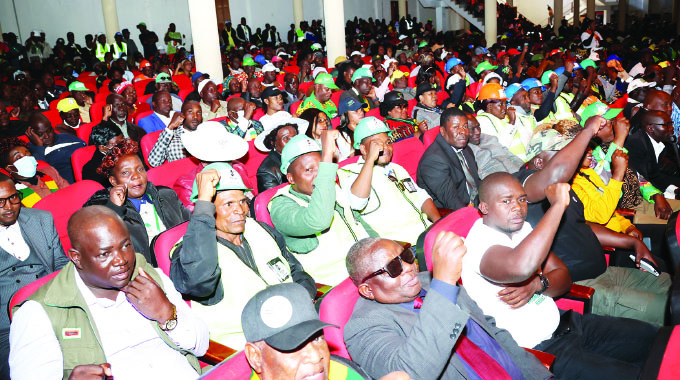
Gweru, Zimbabwe – Small to Medium-scale miners have called on the Government to repeal a mining law granting exclusive rights to individuals possessing extensive tracts of land under an exclusive prospecting order (EPO). The law has resulted in a scarcity of available claims for prospective miners, hindering the growth of the mining sector.

In a meeting with small to medium-scale miners from across the country, under the banner of Miners for ED, the national coordinator, Mr. Rodrick Mumbire, highlighted that a few elites monopolised EPOs, holding large areas of land up to 35,000 hectares. As a result, most prospective miners are left with limited options for finding new gold deposits.

“Your Excellency, we now have a problem in the mining sector which is affecting your vision of achieving a US$12 billion mining economy.

Addressing the miner’s concerns, President Mnangagwa assured that the Government will look into these issues and rectify the anomalies within the mining sector. He emphasized the importance of engaging stakeholders on the ground, stating that decisions should be informed by the miners themselves as they have firsthand experience and knowledge of the industry.

President Mnangagwa acknowledged the significant contribution of small to medium-scale miners, who account for 60 per cent of the total gold output in Zimbabwe. He reiterated his commitment to achieving a $12 billion mining economy, which relies heavily on the growth and success of these miners.

“We have heard of your concerns and I will ask the Ministry of Mines and Mining Development to look into the matter. I think they are already aware of what you have just said. You are the ones on the ground so you are the most affected so we take decisions informed by you as miners,” said President Mnangagwa.

Promoting peaceful and harmonious mining operations, the President expressed satisfaction with the declining incidents of violence perpetrated by machete gangs among artisanal miners. Under his administration, known as the Second Republic, a zero-tolerance policy has been adopted towards violence in the mining sector. Miners were urged to respect the rights of one another and avoid illegal mining practices.

“Under the Second Republic, we have said no to violence in the mining sector. We must mine in harmony. If there is a gold rush at (Minister Oppah) Muchinguri’s mine claim we don’t want issues where you go there wrestle her out of her mine and start mining yourself; this should not be tolerated and we want respect. We must mine in peace and harmony,” President Mnangagwa said.

The Government also emphasized its support for women in mining, recognizing their vital role in the industry’s development. Efforts will be made to provide equal opportunities and ensure that women have access to necessary resources and support networks.

As the mining sector plays a pivotal role in the country’s economic growth, the Government’s commitment to addressing the concerns of small to medium-scale miners and promoting peaceful coexistence within the industry demonstrates its dedication to achieving a robust and sustainable mining economy.

BlackRock acquires over 3% stake in Caledonia, triggers notification threshold

0

Caledonia Mining Corporation Plc, has announced that as of June 23, 2023, BlackRock now holds an ownership stake that exceeds 3% of Caledonia’s issued share capital.

This news has caught the attention of industry experts and investors alike, as BlackRock, Inc. is a prominent global investment management corporation. Its interest in Caledonia Mining Corporation Plc signifies a vote of confidence in the mining company’s potential and performance.

Caledonia Mining Corporation Plc operates Blanket Mine in Gwanda and recently took over Bilboes Gold Limited for a total consideration of 5,123,044 Caledonia shares representing approximately 28.5 per cent of Caledonia’s fully diluted equity, and a 1 per cent net smelter royalty the Project’s revenues in January of this year.

The Mark Learmonth-led company has built a strong reputation in the industry, consistently delivering positive results and demonstrating resilience in challenging market conditions. With its expertise and commitment to responsible mining practices, Caledonia has become a trusted name in the sector.

BlackRock’s decision to exceed the 3% threshold is indicative of its belief in Caledonia’s growth prospects and long-term value. The investment giant manages a significant portfolio of assets and has a proven track record of identifying promising investment opportunities. As such, its increased interest in Caledonia Mining Corporation Plc is seen as a positive development for the company.

WEMZ to host Women in Mining awards

0

In celebration of the international day of Women in Mining which take place every 15th of June, Women Empowerment in Mining Zimbabwe (WEMZ) in conjunction with the Zimbabwe Association of Women in Mining Associations (ZAWIMA) will host Women in Mining awards on the 28th of July in Harare.

Rudairo Mapuranga

Speaking to Mining Zimbabwe WEMZ Chairperson Ms Chiedza Chipangura said her organisation is planning to celebrate the achievements of women in mining every year as women have been making positive strides for the growth and development of the mining industry.

She said nominations were recognising women in the whole mining value chain, from consultancy, prospecting, exploration, extraction, processing, service supplies, Human and equipment management to mention a few.

“Let’s celebrate the women who have in the past and presently made an impact in our mining industry. Choose the woman of influence, nominate her and share her profile with us so that we all acknowledge and celebrate her in commemorating the International Day for Women in Mining.

“It’s time to celebrate those of us who have made footprints in the mining industry of this country.

“Some have died (may their souls rest in peace), we need to honour them posthumously.

“Those who are still living must be appreciated and celebrated.

“Just nominate that woman who has contributed meaningfully in the Zimbabwe mining value chain. If it is you, what are you waiting for?

“Just send us information on the journey walked and the difference made to +263776048389,” Chipangura said.

Company reported for dismissing workers who protested over poor wages

0

A MATOBO gold mining company has been taken to the National Employment Council (Nec) for the mining industry for dismissing seven workers who had protested over poor wages.

Nkomazana Syndicate trading as Power Play Mine is also accused of underpaying its workers, non-payment of gratuity, leave days and overtime amounting to US$39 000.

The mine dismissed Army Muzamba, Givemore Ngwenya, Qhelani Ngwenya, Qaphelisani Maphosa, Pinos Muchimba, Stephen Mugande and Takawira Dube for demanding fair labour practices.

The workers have engaged the Professional and General Mine Workers Union of Zimbabwe (PGMWUZ) as they seek reinstatement.

“The seven were employed on different dates and unfairly dismissed on April 7, 2023. They were underpaid from date of employment (US$110), had non-payment of gratuity for the period worked, non-payment of leave days, and non-payment of overtime,” read a letter dated April 13, signed by PGMWUZ president, Abraham Kavalanjila and addressed to the Nec.

“The remedy in this matter is to reinstate or pay damages, allowances and underpayments within seven days from finalisation of this matter.”

In their application to Nec’s mining tribunal seeking a default judgment, the workers cited Power Play Mine as the respondent.

“Applicants were employed by the respondent in January 2023 as general workers. Their contracts of employment were unfairly terminated on April 7, 2023, reason being that they joined the trade union. It is hereby submitted that the respondent underpaid the applicants their salaries backdated January 2023 to April 2023 (US$205 less),” they submitted.

 “It hereby submitted that applicants worked 12 hours everyday including Sundays and holidays. It is humbly submitted that the respondent dismissed the applicants without following laid down procedures in the Code of Conduct Statutory Instrument 165 of 1992 as read in the Labour Act [Chapter 28:01] section 12B (1),” they said.

“It is humbly submitted that section 13 of the Labour Act was violated by the respondent. It is also submitted that the respondent pays six months damages for unfair termination of contracts. All in all we pray that the respondent pays the applicants as per the quantification attached and should pay within seven days from the determination date.”

Mine manager Ramone Cecil Davids could not be reached for comment on his mobile phone.

Newsday

Zimbabwe gold buying prices 27 June 2023

Fidelity Gold Refinery (FGR) official gold buying prices Tuesday 27 June 2023. See the Zimbabwe gold buying prices today.

SG 90% AND ABOVE US$58.42/g
SG ABOVE 85% BUT BELOW 90% US$57.80/g
SG ABOVE 80% BUT BELOW 85% US$57.18/g
SG ABOVE 75% BUT BELOW 80% US$56.56/g
SAMPLE BELOW 10g BUT ABOVE 5g US$55.64/g
FIRE ASSAY CASH US$58.73/g

NB: Fire Assay cash price is for gold above 100gs and no sample is deducted.
For the Fire Assay Transfer price, a sample of not more than 10g is deducted
A 2% royalty is charged on all deposits (small-scale miners)
A 5% royalty is charged to Primary Producers

Cash available. Fidelity Gold Refinery prices will be changing daily in relation to world market prices.

Premier African Minerals shares plunge 40%

0

Shares in Premier African Minerals plunged 40% on Monday after the company declared force majeure at its Zimbabwe lithium mine, citing a defect at its processing plant.

A Premier statement said the plant could not produce sufficient spodumene concentrate to meet the conditions of its offtake agreement with China’s Canmax Technologies.

Chinese lithium battery company Canmax last year provided $35 million for the construction of a pilot plant at Premier’s Zulu lithium project in exchange for the annual supply of up to 50,000 metric tons of spodumene concentrate.

Premier said it issued a force majeure notice to Canmax on June 25 because milling problems at its recently completed plant had affected production plans. The plant contractor was working to resolve the problem, it added.

“The company is unable to deliver product within the stipulated dates as set out in the agreement,” Premier said.

Triggering a force majeure clause in contracts allows certain terms of an otherwise legally binding agreement to be ignored because of unavoidable circumstances.

The two parties are negotiating possible changes to the current agreement, Premier said, adding that Canmax has proposed to convert its $35 million cash injection into debt or shares. Canmax is also a 13.38% shareholder in Premier.

A Canmax representative was not immediately available for comment.

Hinting at a growing rift between the companies, Premier said it was reconsidering its exclusive relationship with Canmax, having received approaches from competing lithium processors in China and Europe.

“To date, Premier has resisted serious review of any of these approaches in the light of the agreement with Canmax. However, in the context of the current stage of discussions with Canmax in respect of the amended agreement, Premier will now engage with these other interested parties,” it said.

Premier African Minerals Limited

Premier African Minerals Limited is currently developing a portfolio of strategic metals and mineral projects located across Africa.

Premier is an emerging tungsten producer from the RHA Tungsten Mine and is advancing the sizeable Zulu Lithium and Tantalum Project in Zimbabwe. In addition, the Company has an interest in MN Holdings Limited, the owner and operator of the Otjozondu Manganese Mining Project in Namibia.

The Company has accepted a share offer by Vortex Limited (“Vortex”) for the exchange of Premier’s entire 4.8% interest in Circum Minerals Limited (“Circum”), the owners of the Danakil Potash Project in Ethiopia, for a 13.1% interest in the enlarged share capital of Vortex. Vortex has an interest of 36.7% in Circum.

Premier has a long history of project discovery, acquisition and development across Africa and the Company is managed by a dedicated team of professionals which have a strong track record is project development and value creation.

London company secures a 2-year option on Gold project in Matabeleland

0

Kavango Resources, a London-based metals exploration company with a focus on Southern Africa, has announced its acquisition of an exclusive two-year option for a gold exploration project in Matabeleland, Zimbabwe.

The Nara project is comprised of 45 contiguous gold claims which Kavango believes can potentially host a bulk mineable gold deposit.

The project area has held historic high-grade underground mining and continuous surface small-scale mining and custom milling over the last three decades. From this, there have been approximately 150,000 to 250,000 metric tonnes of tailings generated. This presents a separate opportunity for potential near-term revenue generation as well. Kavango will have full access to the project area to conduct field due diligence including but not limited to surface mapping and geochemistry, geophysics, surface drill testing, underground sampling, underground drill testing, and assessing the commercial potential for processing the tailings through a comprehensive exploration program. Before deciding to exercise the option to acquire the Nara project, Kavango will complete its exploration programme.

“The greenstone belts in Zimbabwe host prospective rocks for bulk-mineable gold deposits, according to Kavango’s internal review and analysis. Many of these belts share notable similarities with some of Australia’s most prolific gold-producing regions.

“Zimbabwe has a strong tradition of mining. However, exploration and investment have been severely limited over recent decades. In 1980, Zimbabwe produced more gold than Australia, but the country has yet to experience the bulk-mining boom Australia did midway through that decade.

“We believe this presents a significant opportunity for Kavango and a commercial discovery,” comments CEO Ben Turney.

Nara Project Option Terms

Kavango has entered a 2-year exclusive binding option to buy outright 45 gold claims in Matabeleland, Zimbabwe (the “Nara Project”). The 2-year option period will allow Kavango to perform an appropriate exploration program to assess the Nara Project’s potential.

To exercise the Option, Kavango has agreed to pay the holder of the current claim (the “Vendor”) US$ 4 million cash (the “Acquisition Price”).

Kavango has agreed to pay an option fee to the Vendor of up to US$220,000 over the 2-year option period, split into 4 individual payments of US$55,000 each payable at the start of each half-year of the option period (the “Option Payments”).

In the event Kavango exercises the Option, any Option Payments paid to the Vendor will be deducted from the Acquisition Price.

Kavango will commit to spending US$ 1 million on exploration at the Nara Project over the 2-year option period, with a minimum exploration spend of US$500,000 in the first year. Should Kavango not exercise the Option, Kavango will turn over all exploration data to the current operator of the stamp milling operation at the Claims (the “Current Operator”), together with recommendations (where possible) on future development.

Kavango has the right to exercise the Option at its sole discretion, subject to the Company being up to date with the Option Payments and spending commitments. Kavango has the right to cancel the Option at any point during the option period and to exercise the Option at any time during the option period.

Govt taking measures to support iron and steel industry

0

Zimbabwe’s government is actively supporting the iron and steel industry to boost local production, scrap metal processing, and infrastructure development at lower costs, Chief Director in the Ministry of Industry and Commerce Dr Douglas Runyowa has said.

Rudairo Mapuranga

Speaking at the inaugural ceremony of the Strategic Leadership Association for Zimbabwe Engineering Iron and Steel industry (Slazeisi) Dr Runyowa said the government is working on the achievement of higher levels of economic productivity through diversification, technological upgrading and innovation, with a focus on high value-added and labour-intensive sectors.

“In order to achieve the targets set out in NDS1, the Government is working on the achievement of higher levels of economic productivity through diversification, technological upgrading and innovation, with a focus on high value-added and labour-intensive sectors; and The process of rebalancing the economy and reverse the structural regression is central to stimulating inclusive and sustained growth pattern that enables more people to benefit from higher productivity levels in more advanced segments of the economy.

“Government is taking deliberate efforts to support the Iron and Steel and General Engineering Industry in order to achieve the following:-

  1. Increased availability of locally produced iron and steel products; and
  2. Increased processing of scrap metal,” Dr Runyowa said.

He said that the government has created strategies to resuscitate the iron and steel industry through His Excellency Emmerson Mnangagwa’s open-for-business mantra.

“The following strategies are being implemented in order to resuscitate the  iron and steel and general engineering industry:-

  1. Secure investors in the iron and steel industry
  2. Resuscitate steel foundries and use of modern technologies in the sector;
  3. Process scrap metals into new steel products;
  4. Strictly controlling scrap metal exports to ensure adequate throughput to domestic foundries;
  5. Promotion of manufacturing of steel billets from scrap metal;
  6. Facilitate the increased supply of coal and electricity to the iron and steel industry;
  7. Enhance coke production for local foundries; and
  8. Resuscitate the machine tools and accessories manufacturing subsector” he said.

Speaking at the same event SLAZEISI Chairperson Canaan Dube said his Association was taking measures to create a vibrant, dynamic and competitive sector anchored on smart and strategic value chain linkages that fully embrace adaptive and smart technologies to the local industry so as to produce world-class iron and steel products.

He said Slazeisi was going to fetch an annual revenue of over USD6 billion annually by 2026 and the same time directly employ 50 000 people by the same year.

“Our vision is to be a vibrant, dynamic and competitive sector anchored on smart and strategic value chain linkages that fully embrace adaptive and smart technologies to locally and sustainably produce world-class value-added engineering, iron and steel products and services, thereby generating USD 6 Billion annually and employing 50,000 people by “2026” and to be the preferred provider of high quality and globally competitive value-added engineering, iron and steel products and services for the domestic and regional market through the use of smart, sustainable and locally adapted technologies to create employment for the nation and improve the country’s Gross Domestic Product,” Dube said.

Key pillars for success

  1. A strong primary and secondary steel production cluster with adequate capacity to supply globally competitive products to supply the down-stream industry
  2. Use of locally adaptive but globally competitive technologies for value addition throughout the value chain
  3. Identification of attractive and strategic value chains with great impact at the sectorial level and the creation of dynamic and functional value chain linkages to produce globally competitive value-added engineering, iron and steel products.
  4. Securing viable funding for value chains with strong business cases and establishing innovative and dynamic ways of minimizing risk and exposure of investment funders and businesses by creating and guaranteeing a business-friendly environment –ENABLING ENVIRONMENT
  5. A strong and dynamic human capital base to produce competent and adequate skills for the strategic value chains of the sector
  6. Strong and dynamic sector representation and support pillars for advocacy, marketing, business support network and benchmarking
  7. Establishment of a dynamic, inclusive and effective implementation strategy with the participation of key stakeholders like firms, professional bodies, sector representative bodies, MSMEs, R&D, Academia, Energy and Power Suppliers, Technology Suppliers, Government Departments; Funding Institutions, etc. The Result Oriented Implementation Strategy shall be underwritten by Sector Strategy Implementation Coalition Agreements.
  8. A Business-Friendly Operating Environment Based on Business-Friendly Policies
  9. Monitoring, Evaluation and Review of Sector Strategy Implementation

Strategies to meet the targets

  1. Establish stable and sufficient primary steel and other basic materials production capacity to meet the present and future needs of the sector –To address the SCARCE RAW MATERIALS & FOREX NEEDS FOR IMPORTING THE SAME
  1. Establish a well-defined, transparent and Local Scrap Value Chain that ensures maximum utilisation of local scrap for the local industry to increase capacity utilization of subsectors such as primary steel production and foundries. SCRAP EXPORTS A HOT ISSUE
  2. Import Substitution and Exports promotion for engineering, iron and steel products and services: LOW EXPORTS & HUGE INFLUX OF IMPORTS –EXPORT CONSTRAINTS A HOT ISSUE
  3. Strengthening and Capacitation of Industry representing institutions for advocacy work; performance monitoring and review: ENABLE GOOD GOVERNANCE AND SYNERGIES
  4. Establish robust and inclusive funding facilities for CAPEX and Working Capita for the attractive and strategic local engineering, iron and steel value chains: OBSOLETE TECHNOLOGY AND LACK OF WORKING CAPITAL THROTTLING COMPETITIVENESS AND CAPACITY UTILISATION
  5. Human capital development through synergies with training institutions and technology suppliers to enhance competitiveness: LACK OF INNOVATION; R&D AND COLLABORATION BETWEEN INDUSTRY AND TRAINING AND ACADEMIC INSTITUTIONS
  6. Inclusion of MSMEs and Formalization of the EIS Informal Sector: