Home Blog Page 271

Zimbabwe gold buying prices 26 June 2023

Fidelity Gold Refinery (FGR) official gold buying prices Monday 26 June 2023. See the Zimbabwe gold buying prices today.

SG 90% AND ABOVE US$58.65/g
SG ABOVE 85% BUT BELOW 90% US$58.03/g
SG ABOVE 80% BUT BELOW 85% US$57.41/g
SG ABOVE 75% BUT BELOW 80% US$56.79/g
SAMPLE BELOW 10g BUT ABOVE 5g US$55.86/g
FIRE ASSAY CASH US$58.96/g

NB: Fire Assay cash price is for gold above 100gs and no sample is deducted.
For the Fire Assay Transfer price, a sample of not more than 10g is deducted
A 2% royalty is charged on all deposits (small-scale miners)
A 5% royalty is charged to Primary Producers

Cash available. Fidelity Gold Refinery prices will be changing daily in relation to world market prices.

Shamva Mine Explores New Technology Options to Cut Costs

0

Shamva Mine utilises pneumatic powered equipment for drilling, including various techniques like Underhand stoping and long-hole stoping as well as underground development General Manager Gift Mapakame told journalists at a Media Tour held at the gold mine recently.

The Kuvimba Mining House (KMH) owned mine also handles subsequent blasting operations with Underground Bulk Emulsions, which are handled using portable emulsion pumps.

However, according to Mapakame, Shamva Mine is currently exploring technology options to replace pneumatics as it appears costly to run. The decision to explore new technologies is supported by statistics that show an increasing cost of operations due to the use of pneumatics.

“Shamva Mine utilizes pneumatic powered equipment for drilling. This is inclusive of Underhand stoping and long-hole stoping as well as underground development.  Subsequent blasting operations are carried out with Underground Bulk Emulsions which are handled using portable emulsion pumps. The mine is currently exploring technology options to replace pneumatics as it appears costly to run” Mapakame said.

Shamva Mine’s decision to explore new technologies is strategic, considering the current economic climate in Zimbabwe.

Moreover, the mining company’s decision is also a reflection of the global trend towards sustainability. Industries worldwide are moving towards more environmentally-friendly options, and Shamva Mine’s decision aligns with this trend. The move away from pneumatic-powered equipment is likely to reduce the environmental impact of mining operations and contribute to the global effort to reduce carbon emissions.

As Zimbabwe’s economy struggles, the move to cut costs is a strategic one to stay viable in the long run.

Manhize a complete mining value chain project, Chitando

0

The Minister of Mines and Mining Development Hon Winston Chitando has labelled the Dinson Iron and Steel project in Manhize as a complete mining and comprehensive value addition project which is in line with the US$12 billion mining industry.

Rudairo Mapuranga

Speaking at the handover ceremony of a mining lease to Dinson Iron Steel Company at Zimbabwe Mining Development Corporation (ZMDC) on last week Chitando said the project is almost a whole mining ecosystem on its own.

“The Dinson project is really a typical example of a mining and a comprehensive value addition project which is almost an ecosystem on its own. If you look at the minerals involved, the value chain from coal up to coke, the value chain of iron ore, limestone, and ferrochrome it is really a typical example of a Consolidated value addition program which is in line with our US$12 billion target,” Hon Chitando said.

The Dinson Iron and Steel Company (DISCO) Steel Plant is one of the Tsingshan Group of China’s mining projects in Zimbabwe. Tsingshan Group is one of Zimbabwe’s most prominent mining investors with various other projects such as Afrochine Smelting (Pvt) Ltd in Selous, Mashonaland West which is into chrome smelting and Dinson Colliery (Pvt) Ltd in Hwange, Matabeleland which is into coke production. All these projects are interlinked as both ferrochrome and coke are required in steel production.

The coming of Disco has been dubbed as an accomplishment of another milestone towards the successful development of the mining sector and the national economy at large. According to the Minister of Mines and Mining Development, Hon Winston Chitando, “This is another step forward as we work towards the achievement of a USD12 billion mining industry by 2023 and ultimately feed into the national vision of Zimbabwe becoming an Upper-Middle Income Economy by the year 2030.”

About Dinson Iron and Steel project

The investment span of the project is from exploration to mining, beneficiation, and value addition. Therefore, covering the entire iron and steel value chain which will result in the creation of jobs, infrastructure development of participating provinces, generation of foreign currency and eventually contributing to the economy of Zimbabwe.

DISCO (Pvt) Ltd was granted a Mining Special Grant Certificate (SG7126) in March 2021 which gave them the permission to explore and mine iron ore along the Mwanesi Range.

DISCO Pvt Ltd Company is going to invest a total of US$ 1 billion for the whole project. This amount will be invested for a period of 5 to 7 years. However, this amount can be doubled depending on other emerging business opportunities. On the other hand, DISCO is going to attract other supporting partners within the zone which will see an escalation of the envisaged investment.

This integrated Iron and Steel manufacturing plant will be designed to manufacture carbon steel by the chemical reduction of iron ore using an integrated manufacturing process. The iron from the blast furnaces is converted to steel in a Basic Oxygen Furnace (BOF) as well as in Electric Arch Furnaces (EAF).

The Basic Oxygen Furnace will be utilized for high tonnage production of carbon steel while the Electric Arch Furnace will be targeted for low tonnage speciality steel. In the Basic Oxygen Furnace process, coke-making and iron-making will precede steelmaking as the main feedstock for the furnaces.

Platinum exports expected to decrease 37%

0

Revenue from Zimbabwe’s platinum exports is expected to plummet by 37% to US$413,1 million this year as a result of falling commodity prices and power issues that have disrupted production in the mining sector, a government official has said.

The Southern African nation has been battling a serious power crisis, which worsened after output at the hydroelectric power station was rattled by low water levels on Lake Kariba.

As a result, power outages have over the past months been grounding industries for up to 18 hours a day, triggering extensive production costs.

However, electricity supply is expected to improve drastically in the third quarter as Hwange Unit 7 was successfully synchronised with the national grid last month, while Unit 8 is currently undergoing test runs, which have seen a reduction in power outages in the past weeks.

These two units have a combined 600 megawatts installed capacity.

“Our projections to 2030 also reflect that trend where platinum production will be declining in the near future,” Mines and Mining Development permanent secretary Pfungwa Kunaka told the Zimbabwe Independent this week.

“Challenges such as electricity shortage and fall in commodity prices appear to be the factors that will negatively impact on production and lead to lower output.

“This notwithstanding in terms of platinum reserves and output, Zimbabwe is a force to reckon with, standing at number three behind South Africa and Russia. Our export revenues reached US$660,9 million in 2022 and (are seen declining) to US$413,1 million in 2023.”

According to the Chamber of Mines of Zimbabwe 2022 annual report, platinum output is expected to increase to 16 000 kilogrammes this year, while palladium is seen reaching the 13 600kg mark.

“The anticipated increases are expected to emanate from ongoing capital projects across active players while in the medium to long term, new projects including Karo Resources, Todal and GDI (Great Dyke Investments) are expected to boost PGMs (platinum group metals) production,” it said.

The three PGM operations of Zimplats, Mimosa Mining Company and Unki Mines continued to operate at (near) full capacity utilisation in 2022.

Karo Resources officially commenced construction operations during the year, while Todal advanced the development of the project in the same period.

PGMs production for 2022 increased across most of the metals in the basket. Platinum achieved 15 480kg, palladium (12 927kg), rhodium (1 366kg) and ruthenium (1 362kg).

Key matters for the PGMs industry included upward review in royalty for platinum from 2,5%, to 7% and export tax on unbeneficiated PGMs.

The developments also came as Zimbabwe is expected to be the biggest beneficiary of platinum shortages later this year, with the global market projected to suffer a short supply of 983 000 ounces, the largest deficit since the 1970s, according to the World Platinum Investment Council (WIPC).

Analysts see the supply deficit as a way to shore up prices, a development that could work in favour of Zimbabwe, the world’s third-largest producer after Russia and South Africa, which anticipates increased output this year.

The price of platinum on the international markets continues to rebound, as traders worry about the projected deficit in the second half of this year.

WIPC has cited a number of market developments during the first quarter of 2023, which in aggregate, the council contends will have a significant negative impact on market balances, hence its deficit outlook for the year.

The government has been encouraging foreign investment in the mining industry to boost production and generate much-needed forex revenue for the country.

Zim Independent
Two bodies retrieved at Ran Mine

0

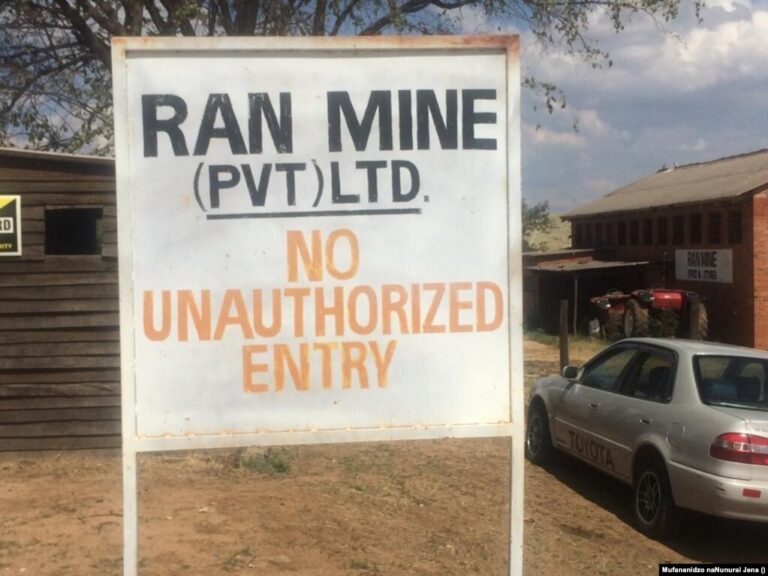
The Zimbabwe Republic Police (ZRP) has said that two bodies have been retrieved following the mine collapse incident at Ran Mine in Bindura on Thursday.

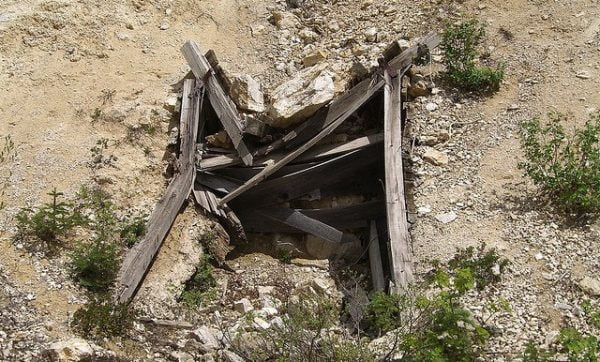
Updating the nation on the incident that happened on June 24th 2023, Police said the rescue team successfully retrieved the bodies of two artisanal miners who were trapped in the collapsed shaft. However, it is now being suspected that five other miners remain trapped, with the rescue team working to access the area where they are presumed to be.

“Update on mine trapping incident at Ran Mine, Bindura. On 24/06/23, two bodies of the trapped artisanal miners were retrieved. It is being suspected that five other artisanal miners remain trapped in the mine,” the Police said on its Twitter page.

According to Zimbabwe Miners Federation (ZMF) Mashonaland Central Chairperson, Christina Munyoro, the trapped individuals might have dug through supporting pillars, leading to the fall of ground.

Ran Mine was closed 13 years ago and retrenched workers remained behind to informally mine for residual gold.

In 2020 Dozens of informal miners were trapped underground after blasting some of the pillars which led to the collapse of the disused gold mine.

The Ran Mine tragedy is not an isolated incident, as mine accidents in Zimbabwe have been on the rise with the country recording 125 accidents and 139 fatalities during the first three quarters of 2022. The figures are of great concern to the government, which has been working to establish more stringent penalties for mines that fail to uphold safety and health standards.

In 2019 Zimbabwe recorded a total of 116 accidents with these resulting in 182 fatalities, recording an increase in accidents in 2020 recording 158 accidents however with a visible decrease in fatalities recording 169 fatalities. In 2021, the country recorded a decrease in both accidents and fatalities as compared to the previous year with 121 accidents and 139 fatalities. As at 30 September 2022, the country recorded 125 accidents and 139 fatalities.

6 trapped at Ran Mine, rescue team unable to access the area

0

Between four to six illegal miners are feared dead after a shaft they were working in collapsed at Ran Mine in Bindura on Thursday with the rescue team unable to access the area where the miners are trapped, it has been revealed.

Rudairo Mapuranga

Speaking to Mining Zimbabwe, Zimbabwe Miners Federation (ZMF) Mashonaland Central Chairperson Ms Christina Munyoro said the illegal miners might have dug through supporting pillars leading to the fall of ground.

“The information we have gathered so far points that 4-6 people are trapped underground. The rescue team seem not to find a way to go to the area where these people are trapped. We will continue to pray that a miracle happens but at the same time accept that the unthinkable might have happened,” Ms Munyoro said.

In 2020 about 40 illegal miners were trapped at Ran Mine after a disused mine shaft collapsed.

Mine accidents in Zimbabwe have been on the rise with the country recording 125 accidents and 139 fatalities during the first 3 quarters of 2022, a government official said.

Speaking at the National Mine Rescue competition at Jena Mine in Silobela last year, Deputy Chief Government Mining Engineer said the Mine Rescue Association should up its sleeves to help the Artisanal and Small scale miners who have contributed to the majority of the fatalities.

He also said that the office of the Chief Government Engineer was also taking the responsibility of reaching the zero harm squarely and would work closely with the Mine Rescue Association.

In 2019 Zimbabwe recorded a total of 116 accidents with these resulting in 182 fatalities, recording an increase in accidents in 2020 recording 158 accidents however with a visible decrease in fatalities recording 169 fatalities. In 2021, the country recorded a decrease in both accidents and fatalities as compared to the previous year with 121 accidents and 139 fatalities. As at 30 September 2022, the country has recorded 125 accidents and 139 fatalities.

“I note with great concern that the years 2019 to date, witnessed some serious increase in mine accidents and fatalities.

“These figures are unacceptable with an expectation of a vision of establishing a zero accident potential for all mines of Zimbabwe. Mine safety must be treated as a top priority by the entire workforce.

“In Zimbabwe, nearly one miner dies every week on an average over the last five years, 139 killed over the last nine months of 2022 indicates the disturbing trend,” He said.

The Deputy Chief Government Mining Engineer said the government was working to establish very deterrent penalties on mines that do not uphold safety and health standards.

“I understand your association has noted the adverse impacts of these losses whilst you will be taking the responsibility squarely on your shoulders, the Chief Government Mining Engineer is in the process of putting in place deterrent penalties to make compliance a better option.

“We must not allow situations of this nature where occurrences of mine accidents take one life and cause loss of millions of dollars.

“My office has been running around the country to do awareness campaigns with small-scale miners and believe the message has sunk in the small-scale mining sector. They have since taken it upon themselves to try and copy you the big brother with the assistance of the Zimbabwe School of Mines,” he said.

Zimbabwe has been plagued with mine disasters over the last few months, often resulting in the death of scores of miners. Most of the mine accidents have occurred at illegally run disused mines, with a few happening at legally-run small scale mines.

Women participation, professionalism highlighted Young Miners yield day in Mberengwa

0

In an endeavour to ensure that Young Miners contribute significantly to the US$12 billion mining industry, the participation of women together with formalisation and professionalisation of the small-scale and artisanal mining industry were key takeaways at Young Miners Forum (YMF) 13 Anniversary, Awards and Field day held at Clifton 15 Gold Mine in Mberengwa last week.

Rudairo Mapuranga

Speakers at the Event highlighted the importance of professionalising the ASM sector at the same time including female participation to build a world-class ASM industry which would lead to the attainment of the US$12 billion industry.

Speaking to Mining Zimbabwe on the sidelines of the field day YMF CEO Payne Farai Kupfuwa said his organization was continuing to rewrite and redefine the ASM to a professional industry that has government confidence in economic resuscitation.

“The idea behind the Young Miners field day was inspired by Agriculture field day where we identify a successful young miner and invite other young miners to learn how to run a successful mining venture. We are continuing with rewriting and redefining the small-scale mining narrative as we continue to advance and upscale youth entrepreneurship in the small-scale mining industry by formalising and professionalising the sector. We are moving in line with the attainment of the US$12 billion mining economy, we also have young miners who are focusing on the value chain, beneficiation and equipment supply,” Kupfuwa said.

YMF patron Ms Mupawaenda speaking at the event said her organisation was determined to empower women in the whole mining value chain as this would bring sustainable growth and development of the industry.

“As YMF we are pledging not to leave anyone behind especially young women by having promotional workshops to inspire and encourage them to consider mining as a career, to give them support as they enter into the sector, to find ways to encourage those who are already involved to get formalised by registering their companies, to buy claims, EPOs, to support each other and for the male young miners to work together with the female young miners in order to achieve our 2023 sustainable mining economy valued at 4US$12 Billion,” she said.

Mr Ronald Mugangavari, Director and CEO of Clifton 15 Gold Mine, served a speech to aspiring mining entrepreneurs on the aspect of formalization and growing big in the sector. He applauded the YMF CEO, Mr Payne Kupfuwa, for facilitating a platform that improves and helps the young miners achieve their dream.

Zimbabwe Women in Mining Association (ZAWIMA), was represented by Mrs Kundai Chikonzo Midzi, who applauded the female award winners for a job well-done in their endeavours in the mining industry, urging the participation of more women in the sector and their astonishing role in value addition.

Zimbabwe gold buying prices 23 June 2023

Fidelity Gold Refinery (FGR) official gold buying prices Friday 23 June 2023. See the Zimbabwe gold buying prices today.

SG 90% AND ABOVE US$58.33/g
SG ABOVE 85% BUT BELOW 90% US$57.71/g
SG ABOVE 80% BUT BELOW 85% US$57.10/g
SG ABOVE 75% BUT BELOW 80% US$56.48/g
SAMPLE BELOW 10g BUT ABOVE 5g US$55.55/g
FIRE ASSAY CASH US$58.64/g

NB: Fire Assay cash price is for gold above 100gs and no sample is deducted.
For the Fire Assay Transfer price, a sample of not more than 10g is deducted
A 2% royalty is charged on all deposits (small-scale miners)
A 5% royalty is charged to Primary Producers

Cash available. Fidelity Gold Refinery prices will be changing daily in relation to world market prices.

Zimbabwe Lithium output jumps to 169,5%

0

Zimbabwe has seen a significant increase in lithium production in the first quarter of 2023, as reported by the Zimbabwe National Statistics Agency (Zimstat).

Zimbabwe’s lithium output has increased steadily in recent years, producing 1,200 metric tonnes in 2021. This increase in production comes as the country seeks to exploit one of the world’s most sought-after commodities and develop its entire lithium value chain.

The country’s lithium production index for the first quarter of 2023 was 184.2%, depicting a year-on-year increase of 169.5% from 68.4% recorded in the first quarter of 2022. The quarter-on-quarter percentage increase in output was also 22.2%. The white gold has been perceived as Zimbabwe’s ‘sanctions busting’ card, with authorities setting a US$10 billion revenue target and promising jobs through the mineral’s value addition.

The increase in lithium production comes on the back of plans by the government, through the Ministry of Mines and Mining Development, to maximize the commodity’s value by 300% after beneficiation. The government recently banned the export of any mineral ore containing lithium, with untapped resources and growing global demand making it well on its way to becoming a global lithium hub.

In addition to lithium, the Index of Mineral Production for Zimbabwe was 138.9% during the first quarter period, reflecting a year-on-year percentage increase of 16.8% when compared to 118.9% recorded in the first quarter of 2022. However, the quarter-on-quarter comparison shows a 6.98% decrease in the index from 149.3% recorded in the fourth quarter of 2022 to 138.9% in the first quarter of 2023.

The output index for gold showed a decrease from 117.2% in the first quarter of 2022 to 110.7% in the first quarter of 2023. Platinum increased by 34.6% from 103.3% in the first quarter of 2022, while diamond recorded an annual output increase of 55% with a quarter-on-quarter percentage change of 7.2%.

The Ministry of Mines and Mining Development and the Minerals Marketing Corporation of Zimbabwe list Areas of verified Lithium deposits in Zimbabwe as Goromonzi, Mudzi, Buhera, Bikita, Chegutu, Hwange, Harare, Insiza, Rushinga, Mutoko, Mutare and Hwange. However, Lithium continues to be discovered in various areas across the country. So far the mineral has been discovered in areas such as Mberengwa, Bindura, and Kadoma.

Mnangagwa to visit Lubu Coal project

0

Contango Holdings Plc has advised President Emmerson Mnangagwa, will be visiting the company’s flagship Lubu Coal Project on 21 July 2023.

He will be joined by a number of senior Ministers, Zimbabwean officials, domestic and international press, Contango’s existing and potential partners, as well as members of the Contango Board.

This will mark the formal opening of the Lubu Coal Project, following the commencement of the first washed coal last month.

Carl Esprey, CEO of Contango, comments:

“We are honoured that his Excellency Dr Emmerson Mnangagwa, President of Zimbabwe, will provide a formal ceremonial opening of Lubu next month. We have a world-class resource, in excess of 2 billion t of coal, which is now in production. It is our intention, along with our partners, to establish a fully integrated operation, with a number of different revenue streams.

“Investors that wish to visit the site are encouraged to get in touch so that we can share our developments and demonstrate the significant potential offered by the Lubu Coal Project. An updated corporate presentation will be released in advance.”