

Home Blog Page 275

Gold submission by ASM declines 18%

0

Gold submission by the Artisanal and Small-scale miners has declined by 18% from 20.1 tonnes to 16.5 tonnes a government official has announced.

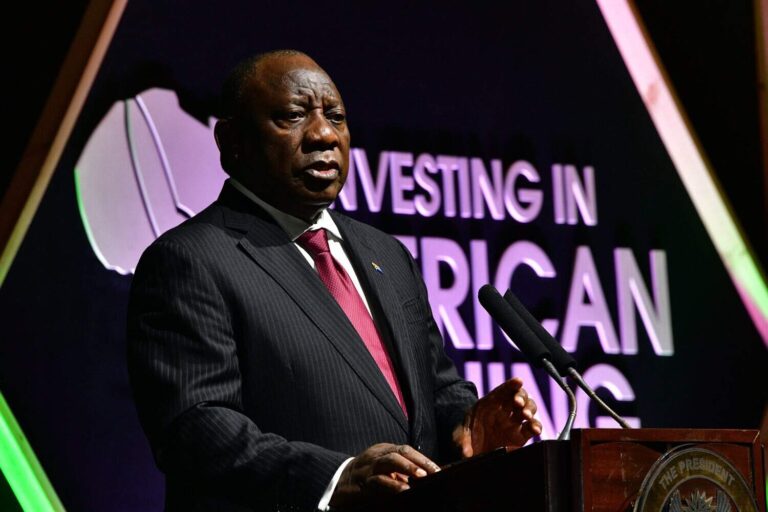
In his speech at the Fourth Gold Mobilization Sent-off Workshop on Monday, Minister of Mines and Mining Development Hon. Zhemu Soda, highlighted the ongoing challenges faced by small-scale gold miners which he says contributed to the decrease of gold submissions to the country’s sole gold buyer outlined the government’s efforts to mitigate these obstacles.

Minister Soda attributed this decline to two primary factors: poor mechanization in the artisanal and small-scale mining (ASM) sector and a lack of geological reports to identify and assess available resources. Additionally, access to capital emerged as a major challenge for ASGM, with limited assets available as collateral, Soda alluded.

“Ladies and gentlemen, looking at the current production in 2023, gold producers have delivered a total of 26.2 tonnes of gold to Fidelity Gold Refinery for the period January to October 2023 against a set target of 40 tons. Out of the 26.2 tonnes, small scale miners contributed about 63%. The gold deliveries to Fidelity Gold Refiners by small scale miners have decreased by 18% from 20.1 tonnes to 16.5 tonnes. The decreased gold production from small scale miners, who are the major contributors of gold delivered to Fidelity Gold Refiners, is a result of poor mechanization in the ASM sector and lack of geological reports to assess the resources within mining locations. Access to capital is a major challenge to most ASGM. This is because most small-scale miners have limited assets to use as collateral,” Hon Soda said.

To combat these hurdles, Hon Soda said the Zimbabwe government has taken proactive measures to support small-scale miners. He announced that government has allocated USD5 million for capacity development among small-scale miners. This funding aims to improve mechanization, enhance mining techniques, and foster sustainable practices to increase gold production in the sector.

“As a way to mitigate the challenges, the Government of Zimbabwe has set aside USD5 Million towards capacitation of small-scale miners and another USD 5 Million was channelled into the establishment of 5 gold service centres,” Soda said.

A well known gold service centre is in Bubi, Matabeleland North. The service center provides comprehensive support to small-scale miners by offering specialized training, access to modern mining equipment, as well as assistance with geological assessments and exploration activities.

November 2023 submissions will also likely decline as government had reverted to the 75/25% usd and local currency payment system which they have now reversed.

A qualified Mining Engineer mandatory for all mines including ASM – Minister

0

A qualified Mining Engineer is mandatory for all mines including the Small-scale mining industry, the Minister of Mines and Mining Development Hon Zhemu Soda has said.

Speaking at the send-off of the 2023 Fourth Gold Mobilization Sent-off Workshop Soda said Zimbabwe’s Mines and Mineral Act, a core legislative framework governing the mining industry, has long emphasized that a qualified Mine Engineer is supposed to be employed as a Mine Manager to ensure safe mining practices at all gold mining operations.

This necessary position ensures adherence to robust safety protocols and the implementation of best mining practices.

However, recent findings by the Gold Mobilisation Task Force have revealed a lapse in compliance, as many small-scale miners are operating without essential specialized skills mandated by the Act.

A significant number of mines, known as AGSM (Artisanal and Small-scale Gold Mining), lack the technical expertise necessary to engage in safe mining methods independently, Minister Soda told delegates at the send-off of the Gold Mobilisation Task Force.

“One of the requirements of the Mines and Mineral Act is that mines should employ a Mine Manager who is a qualified Engineer. Most of the AGSM do not have the technical skills to engage in safe mining methods hence they need to source the skills of the Mine Manager, Geologist, Surveyor and a Metallurgist. Most of the mines are operating without these critical specialised skills,” Minister Zhemu Soda said.

Whilst the absence of qualified individuals directly affects the developmental potential of these mines getting a qualified Mining Engineer to head a small-scale mining establishment as a Mine Manager may not be an easy task for low producing mines.

The salary of a Mining Engineer typically ranges from us$7000 +or- us$20 000 a month. This is likely out of reach for majority of small-scale mines. Admittedly, the lack of these professionals poses a direct threat to the overall competitiveness and sustainability of the mining sector, however, fully qualified Mining Engineers usually shun small-scale mines mainly because of safety concerns and way lower remuneration and benefits.

Counterparts in the large-scale miners are well remunerated and have perks that are unlikely to be afforded by small-scale establishments.

Zimbabwe gold buying prices/ gram 27 November 2023

0

Fidelity Gold Refinery (FGR) official gold buying prices/ gram. See the Zimbabwe gold buying prices/ gram today 27 November 2023.

SG 90% AND ABOVE US$60.79/g
SG ABOVE 85% BUT BELOW 90% US$60.14g
SG ABOVE 80% BUT BELOW 85% US$59.50/g
SG ABOVE 75% BUT BELOW 80% US$58.86/g
SAMPLE BELOW 10g BUT ABOVE 5g US$57.89/g
FIRE ASSAY CASH US$61.11/g

NB: Fire Assay cash price is for gold above 100gs, no sample is deducted.
For the Fire Assay Transfer price, a sample of not more than 10g is deducted
A 2% royalty is charged on all deposits (small-scale miners)
A 5% royalty is set for Primary Producers

Cash available. Fidelity Gold Refinery prices will be changing daily to match world market prices.

Breaking Barriers: Encouraging women’s participation in Mining Engineering

0

Mining Engineering is a challenging and fascinating profession that remains largely dominated by men, globally.

The lack of exposure, coupled with perceived safety and “toughness” concerns, are some of the reasons that have seen limited female participation in mining engineering.

Bindura Nickel Mine (BNC)‘s Mine Captain of Projects Engineer Amanda Tigere emphasizes that one key reason females are hesitant to choose mining engineering as a career path is generally the lack of exposure. Tigere said as children, young girls are more likely to read about traditional professions like pilots or doctors, leaving limited room for learning about mining. The absence of educational resources and children’s books centered around the mining industry reduces awareness and curiosity from a young age.

“Mining is generally a tough environment. So I think for me, there are two aspects as to why females are not forthcoming in terms of selecting mining engineering. The first bit is that it’s something we are not exposed to generally as we’re growing up. Growing up, you read about pilots, you read about doctors, but rarely do you find a child’s book, which is talking about mining. So like from the very onset stage, we are not exposed to that industry at all. If ever you’re lucky to get exposed to that industry at any given time of your journey,” Tigere

Tigere lamented that misconceptions surrounding mining often deter women, further noting that mining is frequently associated with a tough and unsafe work environment. She said these perceptions create a fear factor, making mining engineering appear unappealing to potential female candidates. By addressing these misconceptions and highlighting the diverse opportunities within mining engineering, the industry can work towards fostering a more inclusive environment.

Contrary to popular belief, Mining Engineering offers a wide range of career possibilities. Tigere underscores that there is more to mining than just underground work. The field encompasses various roles, including operational, planning, and project-based positions. By showcasing the diverse opportunities available, women can be encouraged to explore the different aspects of mining engineering.

“The things that you just hear around are just mining is a tough environment. So that puts you off already as a female. So I think for me, it’s an issue of exposure. We are not exposed to this. And I’d like to say mining engineering is a very broad field. It’s a very interesting field anyway. It doesn’t mean you’re just underground there is open pit mining you can be on surface, you can be an operational person, you can be in planning, you can be doing projects like i am so it’s a very broad environment but we as females are not fully exposed to the full spectrum of what constitutes of mining engineering so hence we don’t choose it when when it comes to selecting our career paths. It’s not it’s not the first thing that comes to our mind. We are not exposed to it in any way if ever we’re exposed to it, it’s from a point of fear to say it’s not a safe environment it’s tough,” Tigere said.

Tigere stresses the need for increased exposure to mining engineering for women. By actively promoting the industry and providing educational resources, young girls can gain knowledge and insights into the various career prospects in mining.

Zimbabwe gold buying prices/ gram 24 November 2023

0

Fidelity Gold Refinery (FGR) official gold buying prices/ gram. See the Zimbabwe gold buying prices/ gram today 24 November 2023.

SG 90% AND ABOVE US$60.54/g
SG ABOVE 85% BUT BELOW 90% US$59.90g
SG ABOVE 80% BUT BELOW 85% US$59.26/g
SG ABOVE 75% BUT BELOW 80% US$58.62/g
SAMPLE BELOW 10g BUT ABOVE 5g US$57.66/g
FIRE ASSAY CASH US$60.86/g

NB: Fire Assay cash price is for gold above 100gs, no sample is deducted.
For the Fire Assay Transfer price, a sample of not more than 10g is deducted
A 2% royalty is charged on all deposits (small-scale miners)
A 5% royalty is set for Primary Producers

Cash available. Fidelity Gold Refinery prices will be changing daily to match world market prices.

Zimplats commits over US$362 million on major projects for Q4

0

The country’s biggest platinum group metal (PGM) producer Zimplats has committed a total of US$362.1 million on major projects as at 30 September 2023 as the group is geared to upgrade its operations.

Rudairo Mapuranga

According to Zimplats quarterly report for the period ended 30 September 2023, the group has committed millions of dollars to its major projects which include mine development and upgrade projects at Mupani and Bimha, base metal refinery refurbishment project, among others.

The group said that the mine development and upgrade projects at Mupani and Bimha progressed to plan during the quarter that ended 30 September 2023 with the group spending a total of US$341 million on the projects with an additional US$57 million committed against a budget of US$468 million.

“The mine development and upgrade projects at Mupani and Bimha progressed to plan during the quarter. The projects to develop Mupani Mine and upgrade Bimha Mine will replace Rukodzi Mine, which was depleted in FY2022, and the Ngwarati and Mupfuti mines, which will be depleted in FY2025 and FY2028, respectively Cumulatively, US$341million has been spent on these projects, with an additional US$57 million committed, against a total project budget of US$468 million,” Zimplats said.

According to Zimplats US$158 million was spent on smelter expansion and the SO2 abatement plant project with a further US$256 million committed against a project budget of US$521 million.

The group also said the Base Metal Refinery refurbishment project consumed US$16 million during the quarter with a further US$14.1 million committed against a budget of US$190 million.

“The smelter expansion and the SO2 abatement plant project progressed as planned during the quarter, with US$158 million spent to date and a further US$ 256 million committed against a total project budget of US$ 521 million.

“Implementation of the Base Metal Refinery refurbishment project progressed well during the quarter, with US$16 million spent to date, and a further US$ 14.1 million committed, against a total budget of US$190 million,” the PGM group said.

Zimplats also spent US$1 million for its solar project with US$35 million committed as at 30 September against a budget of US$37 million.

“Implementation of the 35MW solar plant project progressed as planned during the quarter with accumulative US$ 1 million spent on the project to date and US$35 million committed as at 30 September 2023, against a budget of US$37 million. This is the first of the project’s four phases which will be implemented at an estimated total cost of US$2.9million to generate 185MW,” Zimplats said.

Premier suspends pilot plant operations at Zulu

0

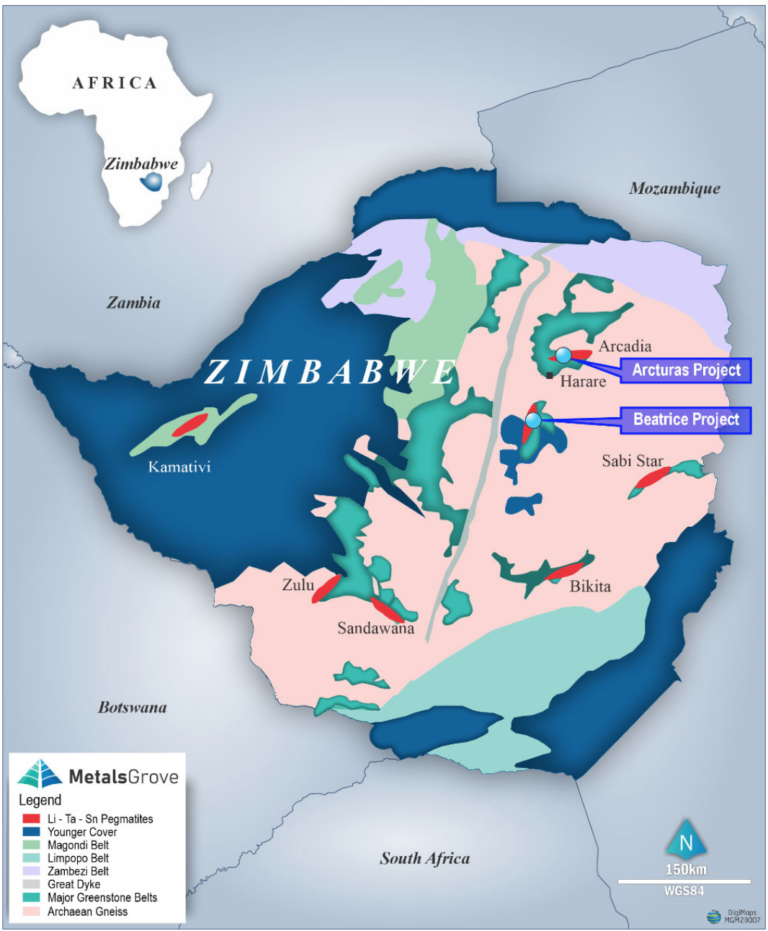
London Stock Exchange-listed mining and exploration junior Premier African Minerals has partially suspended pilot plant operations at the Zulu Lithium and Tantalum project to allow preparation for the installation of a 55 tons per hour ball mill.

Rudairo Mapuranga

While mining operations are going to continue the company intends to test for the spodumene concentrates currently on the ground and decision regarding possible reprocessing of the concentrates that carry excessive contamination from country rock.

“Premier confirms that current plant operations have been partially suspended to allow for civil construction to commence in preparation for the installation of the 55 tons per hour ball mill and other associated structures. Those aspects of the plant that will continue to run include the X-ray transmission (“XRT”) and Ultraviolet (“UV”) sorters (collectively the “Ore Sorters”) that have not been fully commissioned and optimised at this time.

“At the same time, the plant will be prepared to recommence production at the original design capacity and compromises needed for the lower tonnages fed to date will be removed. All instrumentation will be inspected and repaired as needed during this temporary shutdown period of the plant.

“Mining operations will continue, intended to enlarge the pit envelope and allow for better selective mining and the avoidance of waste rock contaminating the ore feed to the plant.

“Tests will be conducted, and a decision will be taken regarding possible reprocessing of concentrates produced that carry excessive contamination from country rock and gangue material that should have been eliminated to a far greater extent than has occurred.

“Premier continues to see grades of spodumene produced in its onsite laboratory from Run of Mine (“ROM”) ore when the contaminants not associated with pegmatite material are removed that meet the Offtake and Prepayment Partner requirements. Optimisation of the Ore Sorters and the pit development both noted above, should largely eliminate this problem when plant operations are recommissioned.

“Premier continues to update its Offtake and Prepayment Partner and sincerely appreciates the support it continues to receive,” the Company said.

Three Miners struck by lightning

0

Yesterday, a tragic incident unfolded at the Tix Gold Mine, in Pingo, where three individuals fell victim to a lightning strike.

The details are still emerging, but it has been reported that a group of 15 Makorokozas located at a gold processing base near the Muzvezve River, heading towards the west side, when the unfortunate incident occurred.

Although the severity scale of the lightning strike is still unknown, three individuals were struck and subsequently hospitalized.

“Three were struck by lightning and hospitalised. We will revert with more information,” ZMF chairman for Mashonaland West  Mr Timothy Chizuzu told Mining Zimbabwe.

This is a developing story…

ZIMASCO shuts down operations

0

Zimbabwe Mining and Smelting Company (ZIMASCO), the country’s biggest producer of ferrochrome, has shut down operations as a result of excessive electricity bills and the decline in prices on the international market, a local publication revealed.

In an interview with Business Times yesterday, Namatai Mapfumo, the company’s chief operations officer, confirmed the development and said that the company had been forced to take drastic measures due to the decline in global market prices and high electricity bills.

He said ZIMASCO is currently in negotiations with ZESA.

“Current market dynamics, where global ferrochrome markets have taken a downturn, coupled with the recent increased cost of power,  means it makes sense for us to temporarily halt production from our older less efficient furnaces and take the opportunity to carry out essential maintenance on them while negotiations continue towards a more favourable   power tariff,” Mapfumo told Business Times.

He added: “In the meantime we are running our two upgraded furnaces that came online earlier this year, which are more power efficient and environmentally friendly in line with our continued thrust to move towards our ESG goals,” he said.

In addition, Mapfumo said the company will continue with the expansion project of constructing two modern fully closed furnaces.

“Furthermore, and in line with our long term strategy of continued responsible value addition, our expansion project of the construction of two modern fully closed 19.8MVA furnaces remains on course with the first new furnace expected to be completed at the end of next month, while the second furnace should be completed at the end of January 2024,” he said.

According to Mapfumo, the completion of the ongoing power tariff negotiations and the state of the global market will determine when these furnaces are commissioned and turned on.

“However, given the current power cost, coupled with a depressed global market, the switching on and commissioning of these furnaces is subject to finalisation of the ongoing power tariff negotiations,” he said.

The majority of businesses  across the country have been struggling with the rise in power tariffs because they are unable to continue operating at such exorbitant prices.

Business Times

New platinum group metals demand may be on way in energy generation and storage

0

New demand for platinum group metals (PGMs) may be created in the energy generation and storage field, Toronto- and New York-listed Platinum Group Metals (PTM) stated on Wednesday.

The unique properties of PGMs as powerful catalysts are being applied to various technologies as possible solutions for more efficient energy generation and storage, PTM, headed by CEO Frank Hallam, stated in a release to Mining Weekly.

Highlighted in the 2023 annual results document was PTM’s battery technology initiative, which has reached an advanced stage in partnership with the Johannesburg Stock Exchange-listed Anglo American Platinum (Amplats).

Lion Battery Technologies has engaged the Battery Innovation Center in the US to help drive commercialisation of its next generation platinum- and palladium-based battery chemistries.

Lion is advancing both proprietary lithium-sulphur and enhanced lithium-ion, or NMC, technology using the catalytic properties of platinum and palladium.

The Lion battery technology initiative with partner Amplats involves a potential entry of PGMs into the high-profile lithium battery research and innovation field.

Lion’s target is to develop batteries with specific energies that are 20% to 100% higher than current technologies while meeting or exceeding their present cycle lives.

The investment in Lion creates a potential vertical integration with a broader industrial market development strategy to bring new technologies to market which use palladium and platinum.

Research and development efforts by Florida International University on behalf of Lion are ongoing. Technical results from Lion’s research may have application to most lithium-ion battery chemistries and the scope of Lion’s research work is being expanded.

Independent small- and large-scale trials to validate Lion’s proprietary platinum- and palladium-based electrode composition, slurry, and films in both lithium-sulphur and lithium-ion coin and pouch cells are being conducted.

WATERBERG PROJECT

PTM is focussed on advancing the Waterberg project, located on the northern limb of South Africa’s Bushveld Complex.

The near-term objectives of the Waterberg project, planned as a mechanised, shallow, decline access palladium, platinum, gold and rhodium mine, are to take a development and construction decision, along with construction financing and concentrate offtake agreements.

As of November 21, the directors, and shareholders of Waterberg JV Resources have been in the process of approving a Stage 3 budget of $1.62-million for continued work on the Waterberg project.

The Stage 3 budget – from September 1, 2023, to February 29, 2024 – is a subcomponent of the $21-million work programme approved in principle last year.

PTM has reported the closing of a non-brokered private placement of common shares at a price of $1.18 a share. An aggregate of 2 118 645 common shares were issued to existing major beneficial shareholder, South Africa’s Hosken Consolidated Investments, through its subsidiary Deepkloof Limited, resulting in gross proceeds to the company of $2.5-million.

Closing of the private placement allowed Hosken, headed by CEO Johnny Copelyn, to return to a near 27% interest in PTM.

Japan Organisation for Metals and Energy Security, known as Jogmec, and Hanwa have established a special purpose company to hold and fund their future equity interests in the Waterberg project.

The combined interests of Jogmec (12.195%) and Hanwa (9.755%) were consolidated into a 21.95% interest going forward.

Many exploration boreholes sunk have intercepted PGMs mineralisation consistent as part of the Waterberg project, which is being jointly developed with the Johannesburg Stock Exchange-listed Impala Platinum together with Mnombo, Jogmec and Hanwa.