Home Blog Page 290

ZELA dissects the Mines and Minerals Bill

0

The Mines and Minerals Amendment Bill currently before Parliament has been criticised for failing to include clauses that will effectively regulate mining activities.

In a statement, the Zimbabwe Environmental Law Association (ZELA) said there is need for the inclusion of the property rights regime in the Bill and to ensure that the country implements development-centred investments in the extractive sector.

The proposed amendments to the Mines and Minerals Act have roundly been criticised for failing to incorporate community representation, which has led to unsustainable mining practices.

The archaic 1961 legislation is being revised because it has no provisions to handle disputes over mining titles, corruption in the mining sector, environmental degradation, human rights violations and revenue leakages in the sector.

In a consolidated Analysis titled: Analysis of the Mines and Mineral Bill HB10 2022, Zela said a comprehensive, regulatory, administrative and institutional mining framework was crucial to creating a competitive investment environment for Zimbabwe’s mining sector.

“The mining sector presents the potential to catalyse economic growth and promote sustainable development. The problem is not in the extraction of mineral resources as the benefit of such extraction is without a doubt. The problem lies in the impact of the extraction owing to the legal and socio-economic framework within which the extraction takes place.”

Zela said the Bill should ensure that mining rights are conferred on applicants who have met set standards.

“The principles of contract transparency, environmental protection, community participation, community benefit and administrative justice should be paramount in the law governing Zimbabwe’s mining sector.

“Participation of rights holders in decision-making in the mining sector is vital for good governance. This has also been identified as one of the ways to address corruption in the sector. The current Mines and Minerals Act does not provide for community participation,” Zela said.

Newsday

Africa should build battery metals value chain to capitalise on its mineral resources

0

The world must decarbonise its growth models and shift to renewable energy sources to meet the goals of the Paris Climate Agreement, the United Nations’ (UN’s) Sustainable Development Goals and Africa’s Agenda 2063, UN Economic Commission for Africa (UNECA) acting executive secretary Antonio Pedro has said.

Speaking during a panel discussion on ‘Building a regional battery mineral value chain in Africa’ earlier this week, he said the shift to renewable energy sources was a resource-intensive path that required greater production of a variety of minerals – many of which are found in Africa – that are central to decarbonisation efforts.

The Democratic Republic of Congo (DRC), for example, produces over 70% of the world’s cobalt, while the DRC and Zambia together supply 10% of the world’s copper. Mozambique and South Africa hold significant reserves of graphite, platinum group metals, lithium and others.

“We have clear opportunities not only from the global green mineral boom, but also from our domestic achievements, such as the African Continental Free Trade Area to facilitate the development of regional value chains for these green economy products,” said Pedro.

He also noted that several innovative financing mechanisms had been developed to support initiatives such as the battery and electric vehicles (EVs) value chains.

The session was jointly organised by UNECA and Afreximbank. The organisers wanted to present the specifics of the lithium-ion battery initiative to a wider audience.

In the past two decades, Pedro said, the world had seen that, without the right enabling policies and incentives, commodity supercycles come and go, leaving countries dependent on resource extraction.

He deplored the fact that about 70% of Africa’s exports were unprocessed commodities, a situation that could change with the right policies that prioritise industrialisation and value-addition in mining and other resource sectors.

Afreximbank export development director Oluranti Doherty said it was disappointing that, despite Africa being endowed with an array of minerals, from copper and magnesium to nickel and cobalt, the continent had not been able to efficiently transition to greener forms of energy.

Underlining Afreximbank’s commitment to promoting an inclusive battery and electric vehicle value chain, she said the bank was promoting industrialisation on the continent and was facilitating the emergence and expansion of industrial parks and special economic zones (SEZs) in Zambia and the DRC.

“We are working on a framework agreement for SEZs for the production of batteries, electric vehicles and accessories and we will facilitate the commencement of studies to facilitate the development of this facility,” said Doherty.

According to a BloombergNEF study, the DRC is a favourable location for producing sustainable battery materials for high-nickel batteries owing to the country’s abundant cobalt resources and access to hydroelectric power.

The study, which was supported by UNECA, Afreximbank, the African Development Bank, the Africa Finance Corporation, the Arab Bank for Economic Development in Africa, the African Legal Support Facility, and the UN Global Compact, suggests that battery precursors produced in the DRC would be cheaper, environmentally sustainable and more competitive than material produced in China, the US and elsewhere.

The report estimates the global market opportunity for EVs at $7-trillion by 2030 and $46-trillion by 2050.

Jean-Marie Kanda from the University of Lubumbashi highlighted that African countries needed to own such projects and commit investment and appropriate funding for research on the battery technology.

“Africa needs to develop standards as far as batteries are concerned. We need to focus on the assembly of these batteries and focus on mineral exploitation as well as on recycling,” he said.

UNECA senior economist Jean Luc Matsaki Namegabe told participants that the DRC presented an opportunity in the development of electric batteries and vehicles not to be missed because it would move Africa up the value addition ladder as Africa was the only region that did not manufacture electric batteries.

Abdou Moumouni University West African science service centre in climate change and adapted land use director Rabani Adamou said that, by promoting the development of mineral value chains, African countries must invest in research and development to understand the exploitable quantity of the minerals.

African Minerals Development Center interim director Marit Kitaw said the battery and EV initiative was a huge opportunity for Africa, which had triggered a huge surge of investment coming into Africa for green minerals.

She added that the centre was in the process of developing a mineral strategy for Africa and called for the institutionalisation of the initiative as well as harnessing of innovative financing for its realisation.

Pedro described the initiative as one of the most transformative projects for Africa, noting that it has received wide publicity and interest.

He also called for the development of an ecosystem that taps capacities, expertise and partnerships that exist in Africa.

Women demand all Mines to employ Zimplats’ LED Initiative

0

Women stakeholders in the mining industry are demanding large-scale mining companies adopt Zimplats’ Local Enterprise Development (LED) Initiative to create opportunities for women in mining communities.

Rudairo Mapuranga

Speaking to Mining Zimbabwe Gem cutter and Polisher Muuya Tendani said companies operating in mining communities should empower Women for life after the life of mine, therefore, supporting local companies was a virtue.

“Women are the backbone of any society due to their role in procreation, especially in this day and age of technology. It is therefore important for them to be at the forefront in benefiting from the resources being mined in their communities. Mining companies should therefore support all women-led businesses in the areas they are extracting resources.

“Adopting the local enterprise development is actually a good idea for women’s empowerment and growth,” she said.

Female mine worker Sharon Tsuro speaking to this publication said to ensure women benefit from its mineral resource, mining companies should promote local women-owned small businesses to world-class companies as this will ensure the creation of world-class service even after the life of mine.

“As women stakeholders in the mining industry, we want mining firms to support women-owned businesses to grow. We want to see world-class companies owned by women in mining communities, this can only be done if large-scale mining firms take a leading role in promoting local enterprises,” she said.

Musodzi Chimunda Turf Brick Moulding Managing Director commended Zimplats for supporting women by creating a brick moulding company for them which is now a million-dollar company. She said that before the company was established, the women who form part of the Directors of the company were struggling to send their children to school but now they have even managed to build houses all thanks to the help of Zimplats.

“We thank Zimplats for helping us, we were a people that did not have a means to look after our family. Zimplats managed to create a company for us and now we are a big company employing over 100 people, we are generating a net profit of over US$1 million annually. We manufacture over 12 million products a year. We were also able to buy loaders and trucks through the help of Zimplats,” she said.

In its quest to ensure that companies in Zimbabwe produce world-class services for world-class mining firms like Zimplats, the company has been promoting local small businesses to become world-class companies.

According to Zimplats, through its Local Enterprise Development Initiative, the company has created opportunities that give business enterprises a chance to grow and make a difference in the economy.

“The Group is committed to developing local enterprises as a way of building the capacity of local communities to provide the company with goods and services. Zimplats has established local enterprise development (LEDs) programmes in an effort to promote business linkages with local entrepreneurs, both men and women, who now form part of our supply chain. We have local businesses that manufacture and supply engineering spares, pinch bars and personal protective equipment. In support of small-scale miners, we are developing two local enterprises that mine and supply silica to Zimplats. To date, the company has provided both technical and financial support for the establishment of local enterprises,” Zimplats said through its Corporate Affairs Manage Busi Chindowe.

Caledonia sees a large increase in short interest

0

Caledonia Mining Co. Plc (NYSEAMERICAN: CMCL) was the target of a large increase in short interest in the month of February. As of February 15th, there was short interest totalling 41,300 shares, an increase of 16.7% from the January 31st total of 35,400 shares. Based on an average daily trading volume, of 42,200 shares, the short-interest ratio is presently 1.0 days. Approximately 0.9% of the shares of the company are short-sold.

Institutional Trading of Caledonia Mining

A number of hedge funds have recently bought and sold shares of the stock. Private Trust Co. NA acquired a new position in shares of Caledonia Mining in the 2nd quarter valued at $47,000. LSV Asset Management acquired a new stake in shares of Caledonia Mining during the 1st quarter worth about $57,000. Morgan Stanley increased its position in shares of Caledonia Mining by 11.3% during the 4th quarter. Morgan Stanley now owns 9,527 shares of the company’s stock worth $118,000 after purchasing an additional 964 shares in the last quarter. Advisor Group Holdings Inc. increased its position in shares of Caledonia Mining by 72.3% during the 1st quarter. Advisor Group Holdings Inc. now owns 9,053 shares of the company’s stock worth $138,000 after purchasing an additional 3,800 shares in the last quarter. Finally, Goldman Sachs Group Inc. acquired a new stake in shares of Caledonia Mining during the 2nd quarter worth about $139,000. 6.38% of the stock is owned by institutional investors.

Caledonia Mining Stock Down 3.7 %

Shares of Caledonia Mining stock opened at $13.64 on Friday. Caledonia Mining has a fifty-two week low of $8.75 and a fifty-two-week high of $18.23. The firm has a market capitalization of $175.00 million, a price-to-earnings ratio of 5.93 and a beta of 0.78.

Caledonia Mining Announces Dividend

The business also recently declared a quarterly dividend, which was paid on Friday, January 27th. Shareholders of record on Friday, January 13th were issued a $0.14 dividend. This represents a $0.56 dividend on an annualized basis and a yield of 4.11%. The ex-dividend date of this dividend was Thursday, January 12th. Caledonia Mining’s dividend payout ratio (DPR) is presently 24.35%.


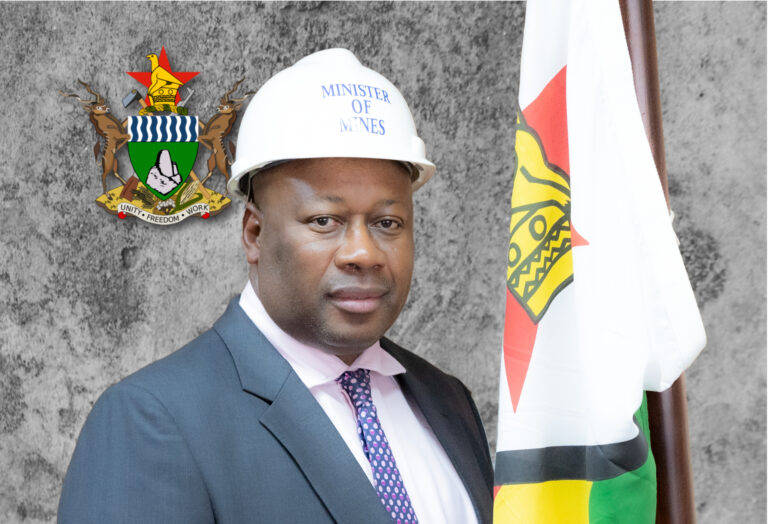
Interview: Winston Chitando Minister of Mines and Mining Development

0

Fresh lithium discoveries and the establishment of new lithium mines by conglomerates have of late brought attention to Zimbabwe. This has sparked investor interest with many curious about how they can venture into mining in Zimbabwe. We spoke to Zimbabwe’s Minister of Mines and Mining Development Honourable Winston Chitando (WC) on a variety of investment-related topics in the Zimbabwe mining sector and this is how our interaction went.

Why should an investor invest in the Zimbabwe Mining Industry?

WC: Zimbabwe’s mining sector presents many competitive opportunities to different needs of diverse investors as a result of:

  • The abundance of mineral resources;
  • Availability of a highly skilled labour force that is willing to work;
  • Attractive Investment Incentives;
  • Functional systems:
    • Investor-friendly Mines and Minerals Act – currently being amended to make it more competitive;
    • Effective and efficient minerals marketing system;
    • Responsive relevant Government Ministries and institutions;
    • Progressive policies e.g. Ease of Doing Business and Rapid Results Initiative;
    • Availability of good basic infrastructure – power, water, rail and road network.

KS Can a foreign investor own 100% of a mine in Zimbabwe?

WC: Foreign Investors are allowed to own 100% shareholding for mining operations in all minerals except Diamonds. Investors in diamond mining shall approach any one of the four approved companies for joint venture arrangements.

KS: How much lithium do we have in Zimbabwe and are there still more opportunities for investors interested in lithium mining?

WC: Zimbabwe has world-class lithium pegmatite deposits at Bikita, Kamativi, Sandawana, Beryl Rose, Benson, Goromonzi and Bepe. With a reserve of 12 million tonnes, Bikita is the largest petalite deposit in the world. There are a lot of opportunities for Investors interested in lithium mining.

KS: What are the procedures for parties interested in importing lithium (processed or otherwise) from Zimbabwe?

WC: The importation of processed lithium can only be done under a relevant export permit or licence which is issued by the Ministry of Mines and Mining Development. The export of unbeneficiated lithium from Zimbabwe to another country is banned.

KS: Zimbabwe has the largest resource of lithium in Africa and the has the fifth largest in the world. What measures is the country taking to promote investment in this sector, especially in light of the green transition?

WC:

  • The government of Zimbabwe facilitates investment in mineral beneficiation for the processing of manganese, lithium, nickel, cobalt, and graphite to produce battery-graded material for the manufacturing of cell components.
  • In December 2022, Zimbabwe banned raw lithium ore exports to minimise the economic potential of artisanal mining and encourage investments in state-approved production facilities.
  • The government of Zimbabwe is amending the regulatory framework that is the Amendment of the Mines and Minerals Act and crafting of the Minerals Development Policy. This helps create an enabling environment for investment in green minerals.

KS: What other clean energy minerals is the country seeking to develop?

WC: Zimbabwe is seeking to develop other clean energy minerals such as oil, coal bed methane and natural gas.

KS: In light of all this, what is the Ministry’s position on fossil fuel resources (hydrocarbons), which the country is still having in great abundance?

WC: Fossil fuels are open for investment in accordance with part XX of the Mines and Minerals Act of Zimbabwe. Potential Investors interested in a prospective area as long as it is open to pegging can make an application to the Mining Affairs Board. Investors must show proof of Value Addition Plans.

KS: What is the country’s general policy on engagement with foreign investors (international relations) in the energy sector?

WC: Zimbabwe is open for business in the energy sector. Potential Investors must go through ZIDA for licensing and guidance on further processes.

KS: Zimbabwe has just assumed the Chairmanship of the KPCS for 2023. How would you characterize the level of readiness of the country to discharge its leadership mandate successfully during its tenure?

WC: Zimbabwe is ready to lead the KPCS and we have taken steps to ensure the success of the chairmanship. Zimbabwe conducted bilateral meetings with all the KP working groups and Committee Chairs as well as the World Diamond Council and Civil Society Coalition. This was done as a way to share ideas on challenges and opportunities for the Kimberley Process during the year 2023. As the KP Chair, Zimbabwe called for a KP Chairs Strategic Meeting from the 11th to the 13th of January 2023 to formulate work plans for the year ahead. This was conducted successfully and well attended by all Working groups and Committee Chairs. Additionally, the Kimberley Process Administrative Unit was established at the Ministry of Mines and Mining Development to focus on the Kimberley Process Chairmanship of Zimbabwe to ensure the mandate is successfully carried out.

KS: What opportunities does this chance offer Zimbabwe to develop its diamond mining industry framework and performance?

WC: The KPCS is a global body created under the United Nations General Assembly Resolution 55/56. It is responsible for the eradication of conflict diamonds from the global trade in diamonds. The assumption of the KP Chairmanship is a positive step and a vote of confidence in the Zimbabwe mining industry. The diamond market is sensitive to the perceptions of the origins of the mineral and as such Zimbabwe will benefit in a positive market perception of our diamonds. Leading the KPCS presents an opportunity for the country to have an impact on the global diamond market.

The diamond sector in Zimbabwe will grow significantly from the opportunities that the Chairmanship of the KPCS will present to the country. The attainment of a USD 1 Billion diamond sector economy is well on course with the KP Chairmanship definitely going to help in the attainment of the target.

KS: For the last two years, there has been increased interest in Zimbabwean resources from the international community. Why has this been so?

WC: The coming in of the 2nd Republic has seen the Mining Sector grow significantly. Zimbabwe was nominated for improved mining jurisdiction by the Mines and Money London Outstanding Awards in 2022. This recognition buttresses Zimbabwe as one of the best mining investment destinations in the world.

KS: The government seems to have taken a path of prioritising mineral beneficiation. Is this only open to Mineral producers (miners) only?

WC: Mineral Value Addition and Beneficiation is expected to play a key part in the Mining Sector’s role in driving economic recovery and transformation in the implementation of the National Development Strategy 1 (NDS1) and attainment of the country’s Vision of an Upper Middle-Income Economy by 2030. Value Addition is not only restricted to miners, Investors are welcome to set up value addition and beneficiation facilities in Zimbabwe.

KS: The work to produce a national development policy has been long drawn, with the first draft produced in 2013. Investors are keen to see this document finalized. What progress has the Ministry made in finalizing this important document?

WC: The Draft Minerals Development is now in place. The next stage is stakeholder consultations. This is in line with the mantra of the 2nd Republic of leaving no place and no one behind.

KS: What are some of the progressive provisions we are likely to see in this document which will enhance the country’s attractiveness as a destination for mining investment capital?

WC: Some of the Provisions in the Policy include:

  • Responsible Mining Initiative
  • Mining Title System and Administration
  • Mineral Resource Governance
  • Sustainable Investment
  • Gender, Youth in Mining and People with Disabilities Environmental
  • Stewardship And Social Responsibility

KS: How soon could we see the Mines and Minerals Amendment Bill become law? What will be the positive impacts of such a development on the investment environment in the mining sector?

WC: The Mines and Minerals Amendment Bill is now awaiting gazetting. The remaining processes are expected to be finalized in the first half of 2023.

KS: The ASGM sector in 2022 did exceptionally well despite challenges in accessing loans to boost production from financial institutions. Why is this so and what can be done to increase confidence in the Small-scale industry?

WC: The ASGM Sector is performing very well due to growing linkages with the Government. The following strategies can be done to increase confidence in the small-scale industry:

  • Provision of the legal and institutional framework for the ASGM sector.
  • Increase gold deliveries to Fidelity Gold Refinery (Pvt) Ltd through timely payment for gold deliveries.
  • Reduction in mine-related accidents in the ASGM sector through extension service, inspection and training.
  • Reduction in usage of mercury and mercury emissions through the use of mercury-free technologies.
  • Capacitation of Special Interest Groups through the provision of mining sites, equipment and funding.

KS: Is there any expo or conference that’s held in Zimbabwe to promote the mineral resources Zimbabwe has to offer?

WC: A number of conferences are scheduled to take place in 2023 to promote the mineral resources in Zimbabwe.

  1. Inaugural Africa Mining Summit: 20 March 2023

The Inaugural Africa Mining Summit will be held focusing on the theme of sustainable mining. The Summit will be conducted in a hybrid mode in Victoria Falls, Zimbabwe.

  1. Mineral Value Addition and Beneficiation Conference: 21 May 2023

The major goals of the conference are to exchange experiences and techniques in mining and related fields and discuss methods to attract investment in the mining sector downstream and value-addition processes. The Conference will be held in Victoria Falls, Zimbabwe.

  • Africa- Middle East – Asia (AFMEA) Conference: 12-16 June 2023

The AFMEA Conference is an international mining conference for both international and domestic investors. The conference’s goal is to create a global dialogue about mining sector development potential. The conference is set to be held in Victoria Falls with mining industry stakeholders from Africa, the Middle East and Asia.

  1. Zimbabwe Mining Indaba: 5 November 2023

The main objective of the Indaba is to bring together players in the mineral business to discuss potential investors’ expectations as well as methods to invest in and develop the mineral sector in order to harness its economic potential with particular attention to the national legislation.

KS: What progress has been made with the Mining Cadastre and has this improved our title management system significantly?

WC: The Mining Cadastre Information Management System commenced with a pilot phase in Manicaland Province which saw the completion of system designs and configurations of the prototype system. The application has been developed and currently undergoing testing. The Mining Cadastre Information Management System is expected to be operational by Quarter 1 2023.

There are so many misconceptions about Zimbabwe as an investment destination. Which one would you say is the most misleading or disappointing?

The misconceptions about Zimbabwe as an investment destination are misleading to potential investors. Zimbabwe is one of the leading investment destinations in the world. Zimbabwe is open for business for all Investors.

KS: Due to the abundance of mineral resources across Zimbabwe more and more Zimbabweans are developing an interest in mining what are your thoughts on introducing mining as a subject from the primary school level?

Mining is one of the pillars of the economy of Zimbabwe. In my view, mining studies must be introduced at primary school level. It is very important to teach mining at this stage in other to catch them young and lay a solid foundation to inculcate in the pupils’ emerging skills.

KS: Some small-scale miners feel side-lined in the lithium revolution. Are they being side-lined?

The small-scale miners are not being sidelined in the lithium revolution. They have proved to be an asset in other sectors of the mining industry and they can prove their worth in lithium.

KS: The USD12 billion mining industry by 31 Dec 2023 deadline is less than a year away. Will Zimbabwe achieve this momentous target?

The Mining Industry remains on course towards the attainment of a USD12 billion Mining Industry by 2023.  A number of key projects are expected to come on stream in 2023 including Tsingshan Consolidated Mining and Value Addition Project, Sabi Star Lithium Mine, and Arcadia Lithium Mine, amongst others. These will contribute immensely to the target.

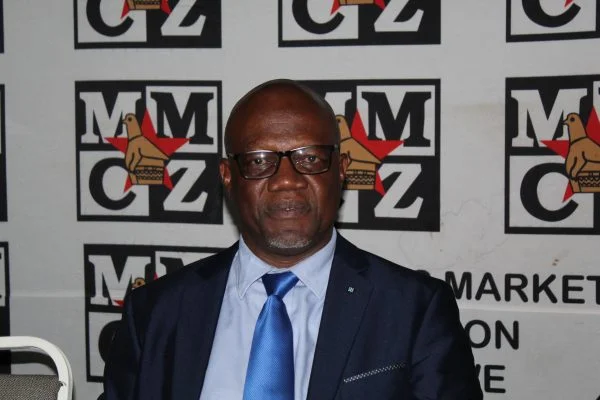
Interview: Tongai Muzenda MMCZ General Manager

0

Minerals Marketing Corporation of Zimbabwe (MMCZ) General Manager Mr Tongai Mzenda interview.

Can you please tell us about yourself and as the person at the helm of the Minerals Marketing Corporation of Zimbabwe (MMCZ) what does your position entail?

My name is Tongai Matthew Muzenda, the General Manager of the Minerals Marketing Corporation of Zimbabwe (MMCZ).  I joined MMCZ in February 2019. I am a holder of a Masters of Business Leadership degree from the University of South Africa and BSc Honours in Economics from the University of Zimbabwe. Having over 30 years of experience l can say I am a seasoned business and marketing leader who has gained knowledge across several sectors including Mining, Agriculture and Public Sector Services. I have worked for Anglo American Corporation Services Limited in different managerial capacities as well as Marketing and Commercial Director and Chief Executive Officer of Zimbabwe Alloys Limited, a company involved in the production of low & high carbon ferrochrome and ferrosilicon chrome.  I was also a Member of Parliament for Gutu West, Masvingo for five years and served as a Deputy Minister of Public Service, Labour and Social Welfare for two years. I have had various directorships in Government entities and private organisations.

What does your position entail

As MMCZ our operations are guided by the MMCZ Act Chapter 24:04 and the roles that are attached to my position are clearly outlined in the MMCZ board charter. These roles include but are not limited to; ensuring that the Corporation is run efficiently and effectively in accordance with the functions of the MMCZ as enunciated in the MMCZ Act, chapter 21:04 and the strategic decision of the board, ensuring that performance objectives, goals, and targets are met.

Furthermore, I am responsible for establishing effective management structures as well as ensuring that there are effective internal operations and implementing governance measures.

Why should a foreign investor invest in Zimbabwe?

The most common response is that Zimbabwe has vast mineral resources, making it a remarkable resource centre that is appealing to investors. However, as a nation, we are moving away from being known as a resource centre by encouraging investors to come in and set up value-added plants in Zimbabwe, ensuring that the nation receives more value from its exports rather than simply being known as a resource centre.

Aside from direct mining investment, there is a significant opportunity to provide heavy underground mining machinery and other supplies, as well as transportation infrastructure and materials, including railways. The country is also building related and supporting industry infrastructure, such as roads and weighbridges. The government’s renewed interest in increasing domestic production of value-added mineral products will necessitate greater capital investments in the mining sector than the current business model, which is based on exporting unprocessed or semi-processed natural resources.

Another factor that favours investors is political stability, and this ensures that their investments are not affected by civil wars or other forms of violence. Zimbabwe is also rich in human capital and is an open economy.

What does Zimbabwe have to offer better than any other African country?

Zimbabwe has among the greatest deposits for PGMs, gold and base metals – the Great dyke, second only to South Africa’s Bushveld complex and very privileged that its resources are still virgin, only slightly exploited; great Li and rare earth elements – bearing pegmatite deposits, which explains the current rush on lithium, hosts some of the rare carbonatite ring complex deposits for vermiculite for which we are one of the few suppliers from the African continent outside South Africa. Zimbabwe has a diversified mineral resource base spanning across all mineral groups – energy minerals ( coal, gas, Uranium and Thorium), metallic nonferrous minerals (base metals – copper (cu), lead (Pb), tin (Sn), nickel (Ni), aluminium (Al), zinc (Zn), etc), metallic ferrous minerals (Iron ores, chrome ores, manganese, nickel ores, cobalt ores, steel, etc), metallic precious metals (PGMs – platinum (Pt), iridium (Ir), palladium (Pd), rhodium (Rh), ruthenium (Ru); gold (Au), silver (Ag)), nonmetallic minerals (dimension stones – granite and slates; industrial minerals – graphite mica, limestone, dolomite, silica (quartz), kyanite, etc), and gemstones (various coloured gemstones (emerald, aquamarine, other beryls, garnets, tourmalines, chrysoberyls, amethyst, etc and diamond). The country is not fully explored but has a fairly good road and communication network to access the whole country thus offering tremendous opportunities for exploration and new mineral discoveries. In addition, Zimbabwe has the human capital, be it in exploration or value addition or logistics and is centrally positioned in Southern Africa to be a centre of mineral exchanges.

What activities has the MMCZ carried out to market the country’s diverse geological mineral resources to potential investors inside and outside the country under your motto “Revealing Zimbabwe’s Mineral Wealth & Heritage”?

MMCZ participates in both local and international exhibitions to search for lucrative markets and market the vast minerals produced in Zimbabwe except silver and gold.

What are your main marketing platforms and to what extent have you taken advantage of digital technology to enhance your marketing efforts?

MMCZ is a brand on its own, known locally and internationally as the sole exporting authority for all minerals except gold and silver. We receive a number of enquiries from international customers who want to buy minerals and those who want to invest in the mining industry, and from locals who seek partners from abroad. We are also actively pursuing digital marketing through the following platforms: online diamond tenders platforms, e-commerce in process, website and social media.

We have the deadline approaching (end of the year) for the achievement of the USD12 billion Mining Industry target. What are you doing, as a key entity in the supply chain, to ensure this target is achieved?

To ensure that the vast minerals produced in Zimbabwe are sold at competitive prices MMCZ benchmarks prices against lucrative international markets.  Through the bans on exporting unbeneficiated mineral ores, the nation continues to push increased sales of value-added minerals like granite, chrome, lithium and gemstones. At the same time, the Corporation has embarked on a market development exercise to prepare markets for the beneficiated minerals.

To promote the value addition of gemstones, the Corporation together with relevant authorities is setting up a gemstone lapidary. The Lapidary will be offering cutting and polishing facilities and training services on cutting and polishing, gemstone grading and evaluation.

To ensure that all the gemstones exported from the country are accounted for the Corporation appointed subagents. The appointment of sub-agents is expected to bring about higher volumes of gemstones and information on gemstone occurrences in Zimbabwe.  The Corporation confirmed the appointment of eight (8) coloured gemstone sub-agents. The Corporation is still taking applications from individuals and companies who are interested in becoming gemstone sub-agents.

Through the trainings we conduct around Zimbabwe annually, the Corporation continuously encourages small-scale miners to formalize as a way of doing away with leakages.

What are the mineral marketing opportunities that are found in Zimbabwe and what is the position of MMCZ in attracting new markets for our minerals?

The country has a large mineral resource base in demand across the globe, these minerals can be legally extracted by small, medium and large-scale miners. Some of these minerals can be sold to local industries to produce value-added products.

Other numerous mineral marketing opportunities in Zimbabwe include the fact that miners can sell their products to their own customers, after approval by the Corporation. The Corporation through its brand name attracts a number of customers, who are referred to suppliers of the minerals. The Corporation actively participates in shows, fairs and exhibitions to market Zimbabwe’s minerals to international and local customers. We participate in Mine Entra and ZITF, platforms that expose our services to both local and international customers; Mine Indaba in RSA where we meet with international clients and a number of other Fairs and Exhibitions in Dubai and Asia. Polished gemstones, be they diamond or coloured gemstones can be bought by any Zimbabwean for their use or further selling to those niche markets that we may not be aware of. This presents an opportunity for every Zimbabwean as a marketer. Critical is to ensure that as they sell the stones outside Zimbabwe, they do so through the Corporation.

Which minerals currently you would say need more buyers from across the world due to a shortage of Markets in Zimbabwe?

We need more buyers for all minerals that we sell locally or export. Market diversification is always good. When one segment of the market is not doing well, maybe the other could be doing fine. That ensures we get maximum value for our minerals as our mission states.

How much did the country fetch from mineral exports other than gold and silver in 2022?

As of December 2022 the cumulative total of sales was at US$3.176 billion.

Lithium has been popular worldwide due to the green revolution, how much raw lithium was exported from Zimbabwe in 2022?

There is a misconception on the market when we talk of the market for lithium. Lithium is a very light metal, number 3 on the periodic table, and very unstable and reactive in air, so are a number of its compounds such as lithium carbonate – the intermediary product to battery manufacturing. More stable are its minerals – spodumene, pollucite, lepidolite, amblygonite, etc. We export these as mineral concentrates, i.e concentration of each of these lithium minerals is achieved by crushing the ores (rocks containing any of these lithium minerals in quantities that make them economic to extract) to liberate these minerals and picking them to form concentrates through a number of extractive metallurgical processes. We, thus, export lithium mineral concentrates – spodumene, pollucite, amblygonite, lepidolite, etc. Cumulative to date, a total of 86,759.25 mt of these mineral concentrates valued at US$70.595 million were sold in the year 2022 compared to 33,314.18 mt valued at USD 11.13 million sold in 2021.

In the gemstone sector, what opportunities are there for investors in terms of buying and exporting all gemstones including diamonds?

You may be aware that we introduced an SI 256 of 2019, called the Gemstones Subagents Regulations. This was to ensure the inclusivity of all miners and those not able to mine but have a passion for buying and selling coloured gemstones in the value chain of these minerals to create value with what they know best. Miners would mine while subagents would offer alternative markets to miners, sidelining illegal traders all to the benefit of our miners through competitive pricing by the Corporation and Subagents. This created a business opportunity for those with a passion for buying and selling gemstones. We hope to create new gemstone trading businesses and maximize prices achieved by small-scale miners on their production. So investors can actually finance the Gemstones Subagents, creating a cycle of revenue creation in the value chain to the benefit of the citizens and the nation at large. Investors can also come in to set up value-adding and cutting and polishing factories for gemstones in Zimbabwe since the main objective for the mining sector is to push for value addition before our mineral resources are exported in a raw state.

Diamonds are classified as strategic minerals. As such, there is a government policy on who mines, export or value add this mineral. Miners are any of the four – ZCDC, Anjin Investments (Pvt) Ltd – a joint venture between Zimbabwe and China, Murowa and Alrosa Zimbabwe (a joint venture between Zimbabwe and Russia). Cutting and polishing are however open to any investor local or international. SI 157 of 2010 and SI 79 of 2014 regulate the sales and cutting and polishing of diamonds, while the Finance Act gave price discount incentives to local diamond cutting and polishing entities. All being done to attract more investors.

The government recently banned the export of raw minerals, as the organization which markets minerals in Zimbabwe how are you going to ensure that mines that were exporting raw minerals find a market within the country?

We are encouraging investors to come and invest –foreign direct investment such as green field `

What are other measures that you’re currently undertaking to ensure value addition and beneficiation of the country’s minerals?

We are offering advisory services to producers in terms of markets and prices for beneficiated and value-added products, government through the MMMD has put in place restrictive measures on raw mineral exports through legal instruments while at the same encouraging investors to come and invest in beneficiation and value-addition. This has been done for granite, chrome, diamonds, and lithium minerals.

What range of business opportunities are available in the marketing sphere for other players to participate in collaboration with MMCZ as the sole marketing agent for all minerals except gold and silver?

MMCZ has appointed Subagents to participate in the mine-to-market value chain for gemstones, the MMCZ has also entered into strategic partnerships with some diamond cutting and polishing factories for beneficiation of rough diamonds for sale to strategic markets. The Corporation also buys minerals on its own account thereby encouraging small to medium-scale miners to participate in the mine-to-market value chain.

In cutting and polishing of coloured gemstones diamonds and granite slabs, marketing opportunities are open to all individuals – both citizens and aliens as they can all freely buy and export any of these minerals through the Corporation.

Are there any plans for a central market where semi-precious mineral buyers can just jet into the country, get into the market, look for the stones they desire to buy and leave without travelling across the country?

Yes, of course. We have a model that has the supply side and the demand side of semi-precious mineral marketing. SI 256 of 2019 addressed the supply side of that model, modelled along the Mbare-Musika Marketing Model. The demand side is addressed by marketing our semi-precious stones to various markets through Fairs/Shows/Exhibitions and the various digital marketing platforms we are using. The next stage will be addressing the turn-around time for export documentation clearance to be done instantly once payment for the minerals has been done. We will be engaging stakeholders in the export documentation processing chain for a one-stop-shop concept to actualize instant export documentation processing in the marketing model. We believe this can be done under one roof, where Evaluations and Sales can take place instantly, while the same will be extended to online digital platforms for virtual transactions.

Trading centres have many advantages including access to gemstones by buyers and local factories, access to local and international markets, competitive prices are achieved and very effective in terms of gathering and sharing information with our clients and obtaining documentation. It is very necessary for the Corporation and key stakeholders to come up with a trade centre and boost gemstone sales. MMCZ has facilities that are used for precious stones sales that can also be utilized for sell of coloured gemstones

You have done exceptionally well in training people across the country. Is this opportunity open to foreign students interested in this initiative?

The trainings are meant to capacitate small-scale miners including special groups as a way of encouraging formalization, growth and boosting of efficiency gains in small-scale mining operations towards reaching the 12 billion mining economy by 2023.

Research is the mainstay of any marketing agency. What marketing studies or research have you carried out or commissioned to understand the short-term and long-term dynamics in the global market for the various mineral products that the country is producing and exporting, beyond establishing databases of producers and buyers?

MMCZ visits many mineral markets around the globe through indabas (Mining Indaba, RSA), Africa Down Under, mineral conferences and exhibitions where both short and long-term mineral and market trends are discussed. In this way, the Corporation keeps abreast of global market developments. In addition to these platforms, MMCZ makes direct visits to end-user factories where mineral products performance is assessed through a firsthand information-gathering process.

Research has mainly centred on primary data analysis on exports in the different global market segments. We know where most of our mineral products are going, how they move – the logistical challenges and capacities required and what these minerals are used for and our vision, mission and marketing strategy are anchored on such statistical analysis.

The Main Components of Electric Vehicle Batteries are Lithium, Manganese, Cobalt, Graphite, Steel and Nickel. Are there any open opportunities for these other 5 minerals other than Lithium?

Of course yes. I alluded to exploration opportunities earlier to open more deposits. There are opportunities to work on the brown field and greenfield deposits of manganese, graphite and nickel while a number of companies are investing in steel manufacturing.

The country is endowed with manganese, graphite, nickel and copper deposits. Investors and locals are welcome and encouraged to invest in mining, beneficiation and value addition of these minerals. Battery minerals present good investment opportunities for both local and foreign investors. Demand for these minerals is expected to increase in tandem with demand for EVs and clean solar energy.


This interview first appeared in the February 2023 issue of Mining Zimbabwe Magazine

Gold buying prices Friday 3 March 2023

Fidelity Gold Refinery (FGR) official gold buying prices Friday 3 March 2023.

SG 90% AND ABOVE US$56.08/g
SG ABOVE 85% BUT BELOW 90% US$55.19/g
SG ABOVE 80% BUT BELOW 85% US$54.60/g
SG ABOVE 75% BUT BELOW 80% US$54.01/g
SAMPLE BELOW 10g BUT ABOVE 5g US$53.13/g
FIRE ASSAY CASH US$56.08/g

NB: Fire Assay cash price is for gold above 100gs and no sample is deducted.
For the Fire Assay Transfer price, a sample of not more than 10g is deducted
A 2% royalty is charged on all deposits (small-scale miners)
A 5% royalty is charged to Primary Producers

Cash available. Fidelity Gold Refinery prices will be changing daily in relation to world market prices.

Marange Resources efforts to evade US$234k security services debt flop

0

Efforts to evade a US$234 500 debt by Marange Resources Pvt Ltd flopped after the High Court said the company cannot be excluded from the claim given existing facts.

The company has not yet been ordered to pay the amount but High court judge Justice Bongani Ndlovu ruled that it must explain its defence against the evidence of the complainant Brandon Bowen.

Bowen issued a summons in his individual capacity in 2016 claiming payment of US$234 500 plus costs of suit from Marange Resources.

The claim was for unpaid security services Bowen had allegedly rendered to the mining company.

Defendant defended the action.

Bowen told the court that he was contracted by Marange Resources’ predecessor, Canadel (Pvt) Ltd sometime in 2009 to provide men on horses security services in the mining fields of Marange.

When Canadel left the mining fields Marange Resources took over, and the contract which was predominantly oral, tacitly relocated to the company in that Bowen continued providing the security services and continued engaging the Accounts Department personnel of the company who coincidentally had been with Canadel previously, regarding payment of the outstanding bill.

The communication was through emails.

In some instances, Marange Resources personnel negotiated varying amounts for the security services and even paid him for the service.

For Marange Resources’ audit purposes, Bowen was classified by the company as its creditor.

The money paid to him was deposited into Two Mile Trading (Pvt) Ltd /Two Mile] bank account.

Bowen is one of the directors in the company.

On one occasion a payment was made into Bowen’s father’s bank account.

The court heard these payments to third parties were done with the knowledge and consent of the company because Bowen did not have a personal bank account.

The amount claimed was not disputed as well as the engagements between the parties.

However, in its plea Marange Resources denied entering into an agreement with Bowen.

It stated that Bowen was wrong in his view that Canadel “turned into” Marange Resources.

The company said Bowen must direct his claim to Canadel.

Marange Resources also denied ever making any clear or unequivocal acknowledgement of debt with respect to Bowen’s claim.

The company said Bowen entered into a contract for the provision of security services with an entity called Two Mile which is not a party to these proceedings and wanted his application trashed.

The judge however ruled otherwise.

“In this matter having considered the pleadings filed of record, the evidence adduced by the plaintiff, and the cross-examination that ensued, I find that this is not a case fit for absolution from the instance.

“Plaintiff has tried to explain why the payments made to him by Defendant were made into third parties’ bank accounts.

“Whether or not that explanation sustains his claim is not to be decided at this stage of the trial.

The judge said Marange Resources has to explain its defence against the evidence of the plaintiff and pleadings filed.

“It is trite that only when both parties have testified can a court decide on issues of fact in a matter.

“Accordingly, I find that Plaintiff has managed to establish a prima facie case upon which a reasonable court might find for the plaintiff,” said the judge.

He ruled, “It is therefore ordered as follows; The application by the defendant for absolution from the instance after the closure of the plaintiff’s case is dismissed.”

New Zimbabwe

Coburn Katanda appointed Eureka Mine Manager

0

Coburn Katanda has been appointed Dallaglio Investments’ Eureka gold Mine Manager.

The former Association of Mine Managers of Zimbabwe (AMMZ) President announced the news of his LinkedIn Account.

According to Engineer Katanda a Mine Manager is responsible for the overall performance of a mining company.

“Generically, duties include occupational health and safety management, monitoring and evaluation of production targets, budgeting and cost optimisation, human resources and industrial relations management, asset management, stakeholder and environmental management and project management. As Mine Managers, our major responsibility is to manage mines so that they perform as designed with respect to all operational and strategic aspects. To that end, we routinely equip our members through on-the-job training and development, and exchange of proven practices through structured technical visits or technical papers amongst other initiatives,” Katanda told Mining Zimbabwe in an interview in 2021.

We at Mining Zimbabwe wish him the best in his new role.

Zimbabwe, a country with plenteousness of minerals

0

ZIMBABWE is home to 60 different types of minerals, 40 of which have been traditionally exploited to varying degrees.

Platinum group metals (PGMs), chrome, gold, coal, and diamonds are the main minerals. Other minerals found in the country include gemstones, granite, manganese, lithium, asbestos, iron ore, copper, nickel, cobalt, limestone, coal-bed methane (CBM) and rare earth minerals.

With over 2,8 billion tons of PGM and 10 billion tonnes of chromium ore, the nation has the second-largest platinum deposit and high-grade chromium ores in the world. Approximately 12% of the nation’s gross domestic product is made up by this sector (GDP).

The government estimates that by 2023, the industry will have the capacity to produce US$12 billion annually. However, analysts have cautioned that this is anticipated to occur if only the government addresses issues including ongoing power outages, a lack of foreign currency, and policy uncertainty.

Low foreign exchange retention requirements have presented difficulties for mineral exporters, especially when the black-market exchange rate significantly deviated from the official rate and encouraged smuggling.

According to Mthuli Ncube, Minister of Finance and Economic Development, the mining industry was predicted to grow by 10% in 2022, up from the mid-year prediction of 9,5%. This is primarily caused by the anticipated rise in the production of coal, PGMs, chrome, nickel, diamond, and gold, which is supported by record-high global commodity prices and increased investments in the industry.

The prognosis predicts that the mining industry would expand by 10,4% in 2023, supported by expected high worldwide mineral prices and an increase in investments, particularly in exploration, mine development, and mechanization.

Due to new mining activities that are currently being explored, the sector is anticipated to continue growing in the medium term, until 2025.

Gold, PGMs, chromium, coal, diamonds, lithium, nickel, black granite, copper, silver, and asbestos are the most mined minerals in Zimbabwe.

Below, we briefly examine them.

Gold

One of the most mined minerals in Zimbabwe is gold. According to the Ministry of Mines and Mining Development, gold has been mined and explored in Zimbabwe since ancient times. From the seventh century until the introduction of mechanized mining techniques with the arrival of Europeans about a century ago, it is estimated that a third (or about 700 tonnes) of all historical gold production was mined locally.

According to the Ministry, there are more than 4000 documented gold deposits, almost all of which are situated on historic workings.

Due to new mining ventures, prompt payments, and incentives for miners, Zimbabwe’s gold output increased to a new record high of 35,38 tonnes in 2022.

Statistics from Fidelity Gold Refinery, the only buyer of gold in the nation, show that the output increased by 19,5% from the previous year.

According to the Reserve Bank of Zimbabwe, the country in southern Africa possesses the second-largest gold reserves per square kilometre in the world, with 13 million tonnes of confirmed deposits, only 580 tonnes of which have been used since 1980.

Top gold producers in Zimbabwe include Freda Rebecca, which is near Bindura’s Trojan Nickel mine, Blanket Mine in the province of Matabeleland South, Rio Zimbabwe, Metallon Corporation, Sabi gold Mine, Falcon Gold, Pickstone Peerless, Duration Gold Mine, Bilboes Holdings, and Eureka Gold Mine.

Small-scale producers currently lead the sector.

Platinum Group Elements

Due to their numerous industrial applications, PGMs, which include platinum, palladium, rhodium, ruthenium, iridium, and osmium, are in high demand all over the world. The second-largest platinum reserves in the world are found in Zimbabwe’s Great Dyke, a linear early Proterozoic layered mafic-ultramafic intrusion trending over 550 km with a maximum width of roughly 11 km.

According to the Ministry of Mines, the Dyke is home to an estimated 2,8 billion tonnes of PGM ore grading 4g per tonne. Notably, only in the South African Bushveld and along the Zimbabwean Great Dyke are PGMs exploited as primary metals.

PGM mineralization was discovered in the Great Dyke in the early 1920s.

Between 1925 and 1926, there was a surge in PGM prospecting as a result of these documentations and the discovery of PGMs in the Merensky Reef of the South African Bushveld Complex, leading to the discovery of the Wedza Mine. Numerous businesses have engaged in exploration since the 1950s. Global Platinum Resources and CAMEC (Todal Mining) are now conducting platinum exploration on the Great Dyke in the Bougai region of Shurugwi and Chegutu, respectively.

The Mimosa, Ngezi, and Unki Platinum Mines are currently operating as mines. Exploration and assessment of Zimbabwe’s platinum deposits have increased due to the demand for PGMs.

Diamonds

In Chiadzwa, Mutare West, Zimbabwe, there is extensive small-scale diamond production in the Marange diamond resources. According to the Ministry of Mines, more than 120 kimberlites have been found, but only two deposits—the River Ranch and the Murowa Diamond Mines—had economically significant grades.

According to the Ministry of Mines, evaluation is now being done on a number of kimberlites in the country’s southern region, however, some were discovered to be non-commercial. Recently, many diamond mines in the Chiadzwa region have opened as a result of the finding of diamondiferous Proterozoic conglomerates in the Umkondo basin, including Mbada, Marange Resources, and Anjin.

According to the Chamber of Mines, the production of diamonds was predicted to increase by 19% last year to five million carats from the 4,2 million produced in 2021. As part of an ambitious goal to enhance mining output and bring in US$12 billion annually, Zimbabwe anticipates increasing diamond production to 11 million carats by 2023.

Chrome

In addition to diamonds, platinum group metals, and gold, chrome is one of Zimbabwe’s principal exports. With deposits of roughly 10 billion tonnes, the nation contains the second-largest high-grade chromium ores in the world, behind South Africa. Chrome is primarily mined from the seam and stratiform deposits along Zimbabwe’s Great Dyke. It can be found as serpentinites with podiform structures in greenstone belts away from the dyke, such as in the Zimasco mine on Shurugwi Mashava.

In Mashava, south of Mberengwa in the Limpopo mobile belt, chromium is discovered in the remains of greenstone. In the greenstone zones, chrome can be found as alluvial deposits as well. Chrome is primarily utilized in the manufacture of stainless steel, as a metal coat, in the chemical sector, and metallurgical procedures.

Coal

Zimbabwe began producing coal in the early 1900s and is thought to have 25 billion tons of coal reserves. Large amounts of high-grade coal that have been fossilized can be found throughout the nation. Lower Karoo sediments contain it. About 12 billion tonnes of high-quality coal are found in the middle Zambezi basin in the north and the Save Limpopo basin in the south of the nation.

In the province of Matabeleland North, where businesses like Hwange Colliery, Makomo Resources, and Zambezi Gas are active, Zimbabwe can boast of enormous coal resources. The amount of coal produced this year is predicted to increase to 15 million tons as new producers come online and older ones increase their output. Chilota Colliery, Western Coal, and Liberation Mining are the newest miners.

Nickel

According to the Minerals Marketing Corporation of Zimbabwe, nickel is only processed at Bindura, where the Trojan mine is located and is currently produced commercially at two mines, Shangani and Trojan. Less than 8 kilometres to the south of the Bindura town centre is where you’ll find the Bindura Smelting and Refinery.

Nickel is found in Zimbabwe’s Archean craton in komatiitic-composed rocks, such as those found at Trojan Mine. For Empress, Madziwa Great Dyke, it also seems to be stacked or unlayered mafic-ultramafic intrusive bodies. It can also be found in nickel laterite deposits, such as those in the northern Great Dyke hydrothermal shear zone.

Around the nation, there are nickel deposits in a number of serpentinite regions in greenstone belts with igneous complexes. The country has got huge potential in komatiite and laterite and more than 30 nickel deposits are known.

Asbestos 

Chrysotile is one kind of asbestos. It can be found in enormous serpentinites, slip fibre zones, and ultramafic complexes that are packed with matted fibres in the Great Dyke, such as the Mashava Igneous Complex and the Ethel mine. 60 deposits have been worked on for chrysotile and are dispersed throughout the Masvingo, Insiza, Gwanda, Mberengwa, and Shurugwi.

Prior to the demand reduction, Zimbabwe was the third-largest producer of asbestos in the world. Asbestos used to be the second-largest revenue generator in the mining industry, behind gold. Gaths Mine and Shabani Mine were closed, which put an end to production.

One of the largest asbestos miners, Shabanie-Mashava Mines (SMM), has made repeated failed attempts to restart operations. Even now, the mine’s production hasn’t been started, despite plans to do so in September 2019 when the dewatering of flooded shafts was finished. SMM is thought to possess asbestos reserves worth more than US$1 billion, and if the company’s mines are reopened, they will generate roughly 75,000 tonnes of high-grade fibre, largely for export. 

Copper

In Zimbabwe, there are more than 70 copper deposits that have generated copper as a primary or secondary product. The Magondi Basin, which spans more than 150 kilometres, has been the primary producing region. Similar copper resources can be discovered in the Umkondo Basin in the southeast of the nation. Numerous copper possibilities can also be found in hydrothermal formations in granite and Archaean Greenstone Belts, such as Inyathi and Copper Duke. After Mhangura was shut down, primary copper production all but halted. Current PGM, gold, and nickel operations are connected to copper production. There is still a huge amount of exploratory potential, it is thought.

Copper production has been declining in recent years because of the depletion of known reserves and low exploration expenditure levels, according to the Chamber of Mines of Zimbabwe.

Black granite

An estimated 150 000 tonnes of granite are produced in Zimbabwe each year, with the Mutoko district producing roughly 75% of the total amount of black granite. Ilford Red, Natural Stone, CRG, Zimbabwe International Quarry, and the province of Mashonaland East’s Mutoko Granite Mining Company are a few of the businesses that mine granite there.

Silver

Silver is the other resource that has primarily been mined in Zimbabwe. According to the Mines Ministry, silver is found naturally in combination with other minerals including gold, copper, and lead. It is classified as a by-product of the mining of platinum, gold, and copper, with the exception of the Osage Mine in Zimbabwe. The highest silver-to-gold ratios can be found in the gold deposits of the Odzi greenstone belt. The locations of the mineral are mostly Makoni, Makonde, and Kwekwe. 

Lithium

Zimbabwe is the sixth-biggest producer of lithium in the world and is thought to have the greatest untapped resource in Africa. The greatest lithium mines in the nation are found at the Bikita mine, which is 308 kilometres south of Harare, the capital.

Other lithium mines include Kamativi Lithium Mine, Sabi Star Lithium Mine, MIRRORPLEX Lithium Project, Zulu Lithium and Tantalum Project, Step Aside Lithium Project, Kamativi Lithium Project, and Arcadia Lithium Mine, which is expected to produce 2,5 million tonnes of lithium ore per year.

According to the Ministry of Mines and Mining Development and the Minerals Marketing Corporation of Zimbabwe, the areas with confirmed lithium deposits in Zimbabwe are Goromonzi, Mudzi, Buhera, Bikita, Chegutu, Hwange, Harare, Insiza, Rushinga, Mutoko, Mutare, and Hwange. However, lithium is still being found in numerous locations all around the nation. The mineral has so far been found in locations including Mberengwa, Shamva, Bindura, and Kadoma.

Due to its high electrochemical potential, lithium has emerged as a crucial component in the production of high energy-density rechargeable batteries as the world moves toward clean energy, particularly electric mobility.

Since lithium-ion batteries are now 30 times less expensive than when they initially entered the market in the early 1990s, battery manufacturers believe that they will continue to dominate the sector.


This issue first appeared in the Mining Indaba issue of the Mining Zimbabwe magazine.