

Home Blog Page 319

Small-scale mining sector records 100 deaths

0

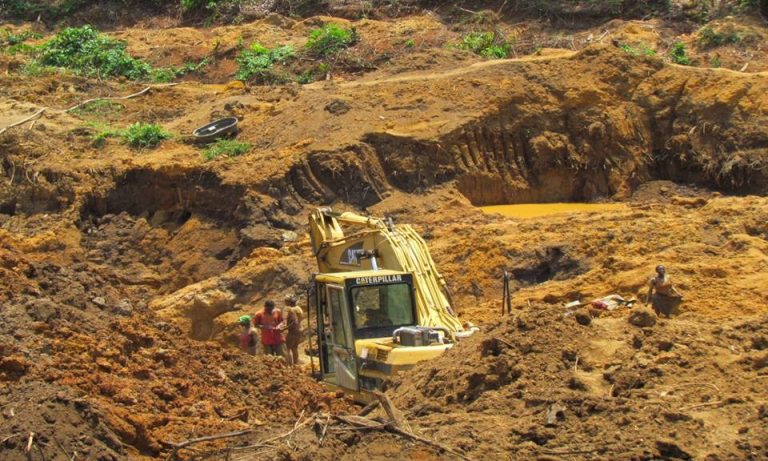
MORE than 100 people died in mining accidents recorded across the country in the smallscale mining sector since January this year.

The figure excludes accidents that happened at big mines.

Addressing safety and health officers attending the ongoing Safety and Health at Work (SHAW) 2022 conference in Victoria Falls, Mr Winston Maenzanise, a director in the Ministry of Mines and Mining Development, said there has been a sharp increase in mine fatalities in the last five years.

He said the major causes of the accidents, especially in the informal mining sector, include improper mining methods, lack of defined mining methods, use of improper equipment and operating machinery under the influence of alcohol.

“More than 75 percent of the accidents recorded involve illegal miners who are usually nomads in nature as they move from one place to another at a very alarming rate,” said Mr Maenzanise.

He said in 2020 there were 84 accidents and 93 deaths.

In 2021, 68 people were killed in 51 accidents and 47 of the deaths were a result of collapse of ground while nine died from inhaling gas and 12 from shaft accidents.

This year, nine fatal accidents have been recorded in illegal mines and 18 in registered mines, causing 107 deaths.

Some of the accidents were attributed to disregard of regulations and use of improper equipment.

“Illegal miners lack competence levels and have no safe mining methods training. They also do not hold blasting licences. Some of the accidents across board were a result of lack of proper and defined mining methods,” said Mr Maenzanise.

He said some operations use windlasses beyond 30 metres despite the law stipulating that they should be used only up to 30 metres.

They also use nylon ropes which usually snap while others rely on human effort on windlasses that usually have no locking mechanism and have poor mine support.

“Some, especially illegal miners, have shafts too close to each other while also working on back filled areas and also use explosives without knowledge,” said Mr Maenzanise.

He said there is a need for miners to acquire skills and knowledge through training.

“Winches and hoists should be used for shafts deeper than 30 metres and these should be fitted with a locking mechanism and using steel rope instead of nylon ropes with proper mine support. Shafts should be at least 40 metres apart, avoid pillar robbing and avoid working in back filled areas,” said Mr Maenzanise.

He said mining areas should also be well ventilated and miners should invest in gas monitors while adhering to four-hour re-entry periods.

Some of the fatalities were recorded in Mzingwane River in Matabeleland South and Battlefields in Mashonaland West where illegal miners carry out operations on rivers.


The Chronicle

Caledonia to restart key Bilboes operation

0

VICTORIA Falls (VFEX) and New York (NYSE) stock exchange-listed resources firm, Caledonia Mining Corporation said it has plans to restart an oxides operation at Bilboes Gold near Bulawayo.

Caledonia recently took over Bilboes Gold in a multimillion-dollar deal.

In a market update, Caledonia said the plan was to create a cash-generating operation within a period of six months.

Under the Bilboes takeover deal inked in July, the parties agreed on US$53,3 million.

Bilboes will be the second gold asset to be operated by Caledonia in Zimbabwe.

The firm already controls Blanket Mine in Gwanda, which is presently the country’s biggest gold producer.

Bilboes is the holding company for a large, high-grade, open-puttable gold resource in Zimbabwe.

“The completion of the transaction is subject to several conditions, which we are currently working on, but once achieved we can prepare a feasibility study to identify the most judicious way to commercialise the project with regard to the availability of funding on acceptable terms.”

Formerly owned by Anglo American Corporation, Bilboes is a large, high-grade gold deposit located about 75km north of Bulawayo.

Bilboes Gold is owned by Toziyana Resources which controls 50% shareholding, Baker Steel Resources Trust (24%) and Infinite Treasure with 26% stake.

Upon successful completion of the transaction, Victor Gapare, a prominent Zimbabwean mining entrepreneur, who controls Toziyana Resources, will be appointed executive director of Caledonia.


Newsday

RioZim burns $13 billion

0

CURRENT liabilities at the listed multi-asset resource outfit, RioZim, barrelled over current assets by $13 billion during the half-year to June 30, 2022, financial statements showed, as terrified authorities feared the firm could collapse.

Firms sitting on higher current liabilities than assets sweat over working capital – the liquidity that managers require to fund day-to-day operations.


Negative working capital profiles represent the most elaborate signs that things might be spiralling out of control, and executives always work round the clock to avoid liquidity strife.

The results, published yesterday, confirmed fears of a drastic deterioration of operations at RioZim which saw a trade union file a plea with multiple regulators to tie the miner under administration before troubles escalate.

The Zimbabwe Diamond Mineral and Allied Workers Union (Zdamwu), complained that for too long, RioZim workers had lived on a promise that their plight would be addressed, but it appeared the firm was sinking deeper into abyss.


But it is exactly a decade after RioZim slipped into far more problems, highlighted by high gearing.

It was eventually rescued by the Reserve Bank of Zimbabwe, which established Zimbabwe Asset Management Corporation to mop up toxic debts across industries and save troubled firms.

Yesterday, RioZim chairperson Saleem Rashid BeebeeJaun said they moved to shut down an old gold mine that had been bleeding for ages and suspended operations at another, as it reported plummeting output across its gold and diamond assets. He tried to give an optimistic outlook even as losses hit $5,4 billion.

“As at the reporting date, the group’s current liabilities exceeded current assets by $13,1 billion,” BeebeeJaun said, noting that this figure was $2,7 billion six months earlier.

“The group reported a net loss for the period of $5,4 billion (June 2021 $1,5 billion). The group’s gold production for the period was subdued as operations were significantly impacted by suspension of operations at Dalny Mine and One Step operations which negatively affected production volumes at Dalny and Cam & Motor Mine respectively,” he said.

“These factors ordinarily indicate the existence of a material uncertainty on the group’s ability to continue as a going concern and that it may be unable to realise its assets and discharge its liabilities in the normal course of business.”

Production at Renco Mine fell by 37% due to severe power challenges during the quarter.

At Dalny Mine, operations were suspended for a six-month period, hitting at gold output, while at Cam & Motor Mine, RioZim focused on resumption of mining.

Mining activities at One Step mine were suspended during the period.

In its demand last week, (Zdamwu) said after watching operations at RioZim deteriorate, it had been left with no option but to invoke relevant legislation in order to save workers.

It said RioZim was in financial dire straits, and unable to meet its obligations.

Corporate rescue involves facilitating the rehabilitation of a company that would have hit crisis point.

RioZim controls some of the country’s best-known mines, including Cam & Motor Mine, Renco Mine, Empress Nickel Refinery, Murowa Diamonds and Dalny Mine.

“Our members have reached a stage where they are initiating a process of applying for the placement of RioZim and all its subsidiaries under corporate rescue in terms of the Insolvency Act,” the letter read in part.

“It has become very clear to the affected workers and other stakeholders’ including the union that the organisation is in financial distress. Workers for two years were made to understand that the Biox plant is going to be a  game-changer for everyone. Months down the line after the commissioning of the Biox plant, things have gone from bad to worse.”

“Lower level workers have lost employment and the community of Chakari where Dalny Mine was operating is now in darkness because Zesa switched off the whole community. The situation in the RioZim group points to lack of strategic direction,” the union said.

It added that RioZim workers and other stakeholders shared the same view.

“There is great variance on workers welfare and the extravagance on the part of the shareholders. We have lost confidence in the shareholders of the company and its management,” the workers’ representatives wrote.

“Workers have been living in abject poverty and facing hardships under the watch of the current management who have failed to find lasting solutions to all the problems that affect parties to an employment contract.”


NewsDay

How Mine loses 11,9kg of gold to armed robbers

0

Sources report that How Mine has lost 11,9kgs to an armed robbery that to place 10km from the Mine in the morning today.

In a leaked statement, the company advised that an attack on the security transit vehicles resulted in the theft of gold that was being transported to the country’s sole buyer and exporter, Fidelity Gold Refiners (FGR).

“Bulawayo Mining Company advises that on the morning of October 4, 2022, an armed attack on security transit vehicles resulted in the theft of gold that was being transported from How Mine to Fidelity Printers and Refiners”. the statement read.

Police have attended the scene and have begun investigations with the full cooperation of Bulawayo Mining Company.

A local daily the chronicle earlier reported that the robbers ambushed the CIT vehicle by blocking the road with a Toyota GD6, a Nissan Mach and a Nissan Hardbody single CAB.

ZRP attended the scene and calls to National police spokesperson Assistant Commissioner Paul Nyathi were not going through.

More to follow…

ZIMPLATS or ‘ZIMPalladium’ as Pd continues to top earnings

0

Despite its annual revenue from minerals declining by over 8 per cent, Palladium continues to be Zimplats’ biggest annual earner, fetching nearly US$0.5 billion during the financial year ended 30 June 2022.

Rudairo Mapuranga

According to figures from Zimplats’ 2022 Annual Financial Statement, although palladium continues to be the group’s biggest mineral earner, its revenue declined by 9.4 per cent to US$451 929 000 from US$498 851 000 generated by palladium the previous year. The overall group’s revenue declined by 8.17 per cent to US$1 243 140  000 in 2022 from US$1 353 792  000 generated the previous year.

The group’s Annual Financial Statement shows that Rhodium despite its revenue declining by 29.13 per cent to US$312 045 000 in 2022 from US$440 305 000 in 2021, is Zimplats’ second biggest earner.

The third revenue earner for the group during the Financial Year ended 30 June 2022 was Platinum with its revenue increasing by 1.1 per cent to US$ 248 799 000 from US$246 057 000 earned by the metal the previous year.

Nickel, the group’s fourth biggest mineral revenue earner, increased its portfolio by 74.5 per cent during the financial year ended 30 June 2022 to US$ 110 974 000 from US$ 63 587 000 earned by the metal in 2021.

Gold revenue for the Platinum Group Metal producer increased by 15.6 per cent to US$57 660 000 in 2022 from US$49 889 fetched the previous year. Gold is Zimplats’ fifth biggest mineral revenue generator.

The group’s sixth biggest earner during the Financial Year ended 30 June 2022 was copper which increased its contribution by 28.9 per cent to US$30 180 000 from US$23 419 000 in 2021. In 2021 copper’s revenue was behind Iridium which fetched US$25 000 000 however, its contribution this year declined by 7.5 per cent to US$23 135 000.

Ruthenium revenue increased by 23.3 per cent during the Financial year ended June 2022 to US$7 337 000 from US$5 949 000 earned the previous year, Zimplats’ financial report shows.

Silver contribution during the Financial year ended 30 June 2022 according to the Financial report decreased by 9.2 per cent to US$374 000 from US$412 000 earned the previous year. Cobalt revenue increased by 118.9 per cent to US$707 000 during the Financial year ended 30 June 2022 from US$323 000 fetched the previous year.

About ZIMPLATS

Zimplats is the leading mining company in Zimbabwe specializing in platinum group metals such as platinum, palladium, rhodium, iridium, ruthenium & osmium.

Gold buying prices Tuesday 4 October 2022

Fidelity Gold Refinery (FGR) official gold buying prices Tuesday 4 October 2022.

SG 90% AND ABOVE US$50.95/g
SG ABOVE 85% BUT BELOW 90% US$50.15/g
SG ABOVE 80% BUT BELOW 85% US$49.61/g
SG ABOVE 75% BUT BELOW 80% US$49.08/g
SAMPLE BELOW 10g BUT ABOVE 5g US$48.27/g
FIRE ASSAY CASH US$50.95/g

NB: Fire Assay cash price is for gold above 100gs and no sample is deducted.
For FireAssay Transfer price, a sample of not more than 10g is deducted
2% royalty is charged on all deposits (Small-scale Miners)
5% royalty is charged on Primary Producers

Cash available. Fidelity Gold Refinery prices will be changing daily in relation to world market prices.

$9 billion worth of gold coins sold

0

As the uptake of gold coins after their introduction midyear increases significantly, 35 per cent of the coins have been bought by individuals while 65 per cent have been bought by corporates including asset management and insurance entities.

Rudairo Mapuranga

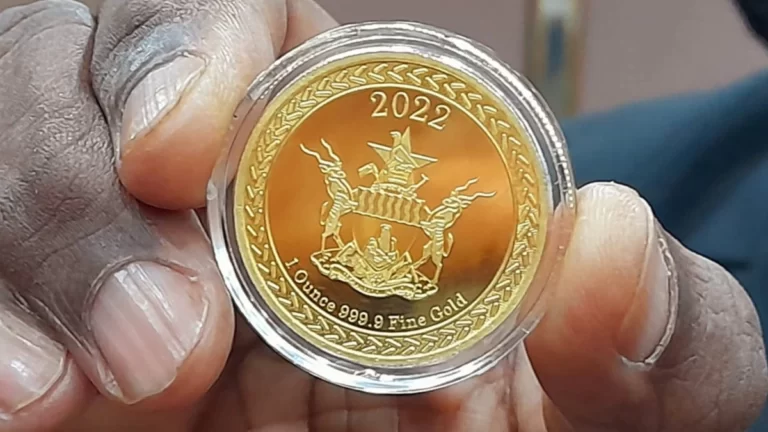
Through a press statement on the resolution of the Monetary Policy Committee meeting held on 23 September, the Reserve Bank of Zimbabwe (RBZ) said a total of 9516 Mosi-Oa-Tunya gold coins valued at $9 billion had been sold as of 23 September 2022.

The central Bank was happy with the uptake of gold coins which contributed to curbing inflation.

“The Committee noted, with satisfaction, the improved market confidence and uptake of gold coins as an alternative investment product to holding US$. A total of 9516 gold coins valued at ZW$9 billion had been sold as at 23 September 2022, with 35% having been sold to individuals and 65% to corporates, including asset management and insurance entities,” The RBZ Governor Dr John Mangudya said through the press statement.

In August Dr Mangudya announced that smaller Zimbabwean gold coins, as small as a tenth of an ounce, are expected to go on sale in November from the Reserve Bank of Zimbabwe.

According to Mangudya, the smallest coin containing just over 3.11g of gold, will, according to the current gold coin price, cost US$188.48, or local currency equivalent at the interbank rate.

“Following the successful launch of the gold coins on 25 July 2022 and in response to public demand, the Bank shall introduce and release into the market gold coins in smaller units of a tenth ounce, quarter ounce and half ounce for sale with effect from mid-November 2022. The features, characteristics and the sale terms and conditions shall remain the same as the current trading arrangements of the gold coins in circulation,” Dr Mangudya said.

The RBZ last month introduced gold coins, known as Mosi-oa-Tunya, onto the market as a store of value.

The gold coin, weighing one troy ounce or 31,1 grammes, with a purity of 22 carats, is available for sale in both local and foreign currencies at a price based on the prevailing international price of gold and the cost of production.

The gold coin, which is sold with an accompanying bearer certificate, has characteristics which include, Liquid Asset Status; Prescribed Asset Status; Can be used as collateral; is Tradable, and Can be bought back (after 180 days) at the instance of the holder.

The price of the gold coins is determined by the London Bullion Market Association (LBMA) PM to Fix the gold price plus a margin of 5% to cover the production and distribution costs. The price of the gold coin on the date of the initial release, 25 July 2022, was US$1,823.80 or ZW$805,745.35 in local currency. Fluctuations will be experienced on the US$ and ZW$ prices as a result of the movement in the international price of gold and the exchange rate.

Zim to tap into uranium deposits

0

Zimbabwe is finalising drafting a policy that will guide the exploitation of uranium for peaceful purposes, the Government has said.

Mines and Mining Development Deputy Minister Polite Kambamura told The Sunday Mail that the policy will govern prospecting, title acquisition, exploration, development, production, processing and beneficiation.

President Mnangagwa recently told an investors’ meeting in New York, United States, that geopolitical concerns had previously forestalled exploitation of the mineral.

Zimbabwe is considered to have uranium deposits in the Zambezi River valley, north of the country.

According to Deputy Minister Kambamura, uranium mining could give impetus to plans to exponentially grow the mining sector. Presently, he said, the Government was undertaking an exercise to quantify the uranium deposits.

He said the country will invest in local value addition and was keen on partnering foreign investors.
“Government has already signed some memoranda of understanding (MoU) with its partners, and implementation  the agreements will commence once the uranium policy has been finalised,” he said.

“Last year, Cabinet approved an MoU between Zimbabwe and the Russian State Atomic Energy Corporation to facilitate higher-level cooperation in the use of nuclear energy,” added Deputy Minister Kambamura.

Energy and Power Development Permanent Secretary Engineer Gloria Magombo said the authorities are exploring ways the country can harness uranium for power generation. The Ministry of Higher and Tertiary Education, Innovation, Science and Technology is considered a key partner in facilitating exploitation of the resource Uranium is a heavy radioactive metal and is the principal fuel for nuclear reactors.

Countries like the United States are heavily reliant on uranium-powered nuclear plants.

In 2019, nuclear reactors at the US’ 93 nuclear plants accounted for 19 percent of the country’s electricity output.


The Sunday Mail

Caledonia maintains US$0.14 quarterly dividend

0

New York Stock Exchange and Victoria Falls Stock Exchange listed gold-focused miner, Caledonia Mining Corporation has declared a quarterly dividend of 14 United States cents (US$0.14) on each of the Company’s shares.

Rudairo Mapuranga

The mining company for the last three quarters has been maintaining the dividend having been known for increasing its dividend.

According to Caledonia Chief Executive Officer Mr Mark Learmonth, for the past three years, the company was paying less than half of the current dividend. He said the company was always thriving to grow and develop as dividend is the central part of the company’s strategy.

“Three years ago the Company was paying less than half the current quarterly dividend and at the current share price, the annualised dividend equates to a yield of approximately 6%. The dividend continues to be a central part of our strategy, as we continue to manage returning money to shareholders with production growth and de-risking the business from being a single asset producer.

“I would like to thank the team for their continued hard work; this is an exciting time for the business as we pivot the Company towards our long-term vision of becoming a multi asset gold producer,” He said.

He said that the Company is on track to hit the target production of 73,000 to 80,000 ounces of gold in 2022.

Learmonth said, on 21 July 2022, Caledonia announced that it had signed an agreement to purchase Bilboes Gold Limited. Caledonia will restart the oxides operation at Bilboes under the terms of a tribute arrangement with a view to creating a cash-generative operation within approximately six months.

“Gold production so far this year has been strong, exceeding our expectations, and we are on track to hit the top end of our guidance range of 73,000 to 80,000 ounces.

“In July, Caledonia announced that it had signed an agreement to purchase Bilboes Gold Limited, which is the holding company for a large, high-grade, open-pittable gold resource. The completion of the transaction is subject to several conditions, which we are currently working on, but once achieved we can prepare a feasibility study to identify the most judicious way to commercialise the project with regard to the availability of funding on acceptable terms,” the Caledonia CEO said.

BMC seeks to expand mining life

0

BULAWAYO Mining Company (BMC) wants to conduct fresh exploration on its claims around Bulawayo to extend mining life and enhance increased gold output.

The company has since engaged BUMIRA Environmental Consultants to gather views from various stakeholders who might be affected by the proposed project as well as from those interested in the project’s activities.

In a statement the consulting company said the new exploration and mining projects will be conducted on claims in Umzingwane District, Matabeleland South and Umguza District, Matabeleland North.

“Bulawayo Mining Company intends to undertake exploration and mining on its Happy Valley (Hope Fountain) and Bulawayo South claims, namely Lone Trail, Vale and Redbank claims, which are 35km South-East of the city of Bulawayo via Old Gwanda Road while the Happy Valley are 20km East of the city of Bulawayo via Hope Fountain Road,” said the company.

“The scope of exploration activities includes traverse cutting, soil sampling, trenching and pitting, access road preparation, RC drilling, core drilling and continued reconnaissance ofall the claims while the mining method may include surface open cast mining and eventual migration to underground mining.”

BUMIRA Environmental Consultants said as part of the consultation and exploration process, protection of the environment, human health and well-being, mitigation of climate change and conversation of nature would be prioritised in line with sustainability best practice.

“In accordance with this commitment the organisation has a proactive practice on conducting environmental and social impact assessment (ESIA), which take into account compliance obligations…,” said BUMIRA.

It said the purpose of the stakeholder consultation is to ascertain on the immediate, short to long-term direct and indirect impacts of the project on the surrounding communities and other stakeholders.

The Chronicle