Home Blog Page 35

Gold buying prices in Zimbabwe per gram/ ounce, 18 November 2025

0

Gold buying prices in Zimbabwe per gram/ ounce, 18 November 2025, from the official gold buyer and exporter Fidelity Gold Refinery (FGR).

1 oz = 31.1035 g

CategoryPrice ($/g)Price ($/oz)
SG 90% and ABOVE123.733848.42
SG 85% and above but below 90%122.423807.69
SG 80% and above but below 85%121.113766.94
SG 75% and above but below 80%119.803726.19
Sample 5g and above but below 10g117.843665.22
Fire Assay CASH124.383868.65


Note: The Fire Assay cash price applies to gold above 100g, with no sample deduction.

A sample of not more than 10g is deducted for the Fire Assay Transfer price.

Green Light for Karo’s US$50m Debt Restructuring: Bondholders Endorse Extended Tenor and Higher Yield

0

The country’s emerging platinum group metals (PGM) producer, Karo Mining Holdings plc, has successfully secured the necessary bondholder approval to restructure its VFEX-listed US$50 million bond for the US$4.2 billion Karo platinum project in Mhondoro-Ngezi, Mining Zimbabwe can report.

By Rudairo Mapuranga

At an Extraordinary General Meeting (EGM) held on Friday, 07 November 2025, bondholders unanimously voted to approve all six Extraordinary Resolutions, giving management the flexibility needed to align the financing structure with the massive scale and development timeline of the PGM project.

The vote confirms strong investor confidence in the long-term viability of the company’s ambitious plans.

The comprehensive debt restructuring package, which the Cyprus-registered mining firm had been seeking, successfully passed, fundamentally amending the terms of the bond listed on the Victoria Falls Stock Exchange (VFEX).

The approved resolutions deliver crucial changes to the bond’s terms, centred on providing a longer development runway and enhancing investor yield:

Tenor Extension: The maturity date of the VFEX-listed bond has been formally extended by three years, shifting the final maturity to 07 November 2028.

Interest Rate Hike: The annual interest rate on the bond has been significantly increased from 7.0% to 10.0%, boosting the overall yield for bondholders.

New Guarantee Fee: A 1.0% annual guarantee fee has been introduced, payable to the Guarantor between December 2025 and December 2028, further securing the debt.

Early Redemption Clarification: Amendments were passed to clarify the early redemption provisions, removing the issuer’s obligation to pay interest until the original maturity date in the event of an early call. The issuer will now redeem at US$100 plus accrued interest up to the fixed early redemption date.

The extension is a critical step in the financing strategy for Karo’s US$4.2 billion PGM mining and processing project in the Great Dyke region. Management had previously indicated that the restructuring was necessary to properly bridge the development and funding phase of the vast project.

By successfully extending the bond’s tenor and increasing the yield, Karo ensures the financing remains stable and attractive throughout the crucial early years of project development, which involves significant capital expenditure and infrastructure buildout before commercial production begins.

The decision reflects the company’s prudent approach to debt management and its commitment to ensuring its financial instruments are aligned with the project’s complex timeline.

The successful EGM vote builds on the already strong performance of the US$50 million bond on the VFEX, where it has seen high demand since its listing.

This initial debt issuance was always positioned as a strategic first step toward establishing the company’s presence in the country’s offshore financial hub.

With the bond’s tenor now secured and offering an enhanced return, Karo Mining Holdings remains on track to continue its trajectory toward its stated long-term goal: pursuing a full equity listing on the VFEX in due course, capitalising on the growing investor interest in Zimbabwe’s mining sector and the country’s strategic position in the global PGM supply chain.

Zimbabwe Lithium Volumes Surge but Earnings Dip 11% as Prices Remain Weak

0

According to the Minerals Marketing Corporation of Zimbabwe (MMCZ), lithium export revenues fell 11% between January and September 2025, despite a 27% increase in production volumes — a trend attributed to global market oversupply, Mining Zimbabwe can report.

By Ryan Chigoche

During the period under review, lithium exports generated US$386.9 million, marking an 11% annual decline from last year. MMCZ says the drop in export earnings stems from prolonged price weakness, even as export volumes rose sharply over the same period.

“Despite the increase in tonnage, the value of exports decreased by 11%, from US$432.4 million in 2024 to US$386.9 million in 2025, mainly due to a fall in international spodumene prices,” MMCZ says.

The downturn comes amid a sustained glut in the China-dominated lithium supply chain, which has kept prices depressed for more than a year.

Global lithium prices shed 80% between March 2023 and 2024 and have yet to show meaningful signs of recovery, worsening the revenue squeeze for exporting countries like Zimbabwe.

For local producers, the earnings slump adds pressure at a time when companies have been pleading with the government to defer tax on lithium concentrates until the end of 2026.

Producers argue that the extension is necessary to allow them to raise capital for processing plants, which are required to meet beneficiation targets.

Currently, Zimbabwe levies a 5% VAT on lithium concentrates unless they are beneficiated to a specified level. Given depressed global prices, miners contend that a temporary tax moratorium would ease financial strain and give them room to invest in downstream capacity.

The government, however, has already announced plans to ban lithium concentrate exports from 2027, a policy designed to force companies to build in-country processing operations.

Despite the earnings decline, investor interest in Zimbabwe’s lithium sector remains strong. Kuvimba Mining House, for example, is advancing plans to develop a new mine at Sandawana by 2027, while Chinese-led investments continue to dominate the sector. The surge in investment, however, is unfolding against a backdrop of persistently low prices that continue to weigh on export revenues.

Zimbabwe has also solidified its position as a crucial supplier of lithium concentrate to Chinese refineries, following billions of dollars in investments by companies such as Chengxin Lithium Group and Zhejiang Huayou Cobalt.

Bikita Minerals, owned by Sinomine Resources Group, and Arcadia Lithium are both establishing processing facilities to produce higher-value lithium sulphate, marking a shift toward deeper beneficiation.

Meanwhile, the International Energy Agency (IEA) notes that the world will require roughly 55 additional lithium mines by 2035 to meet demand linked to the energy transition, underscoring the long-term importance of the battery mineral despite current market turbulence.


Hwange Refurbishment Awaits Final Cabinet Nod: US$455 Million Project Key to Easing Mining Sector Power Crisis

0

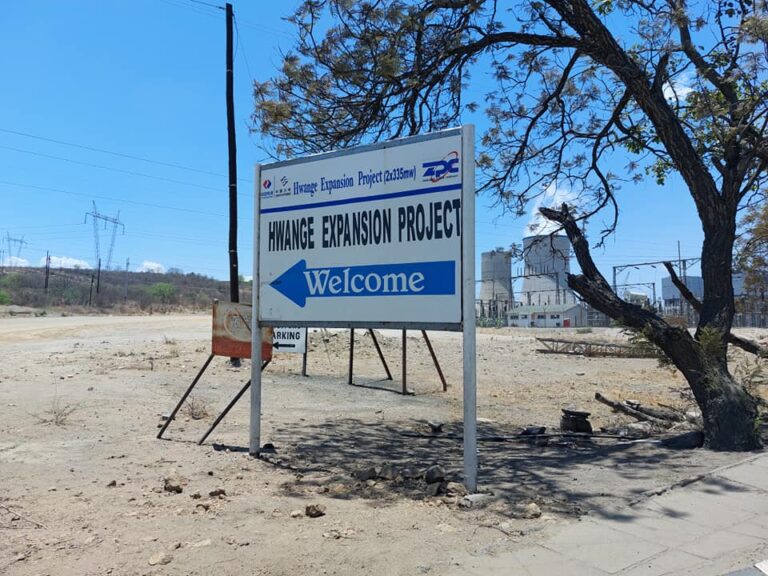
In a move closely watched by the energy-intensive mining sector, ZESA Holdings confirmed it is awaiting final Cabinet approval for a proposed US$455 million partnership with Indian firm Jindal to refurbish Hwange Power Station’s Units 1 to 6, Mining Zimbabwe can report.

By Rudairo Mapuranga

The deal, structured under a 15-year Rehabilitate, Operate, and Transfer (ROT) arrangement, is designed to bolster the country’s electricity generation capacity at a time when the mining industry is grappling with persistent load-shedding that stifles production and expansion.

Speaking on the proposed agreement, ZESA Group Acting Chief Executive Officer, Engineer Cleopas Nyachowe, said the refurbishment will restore the six units to a combined capacity of 920 megawatts, raising the station’s total output to 1,500 megawatts.

“They have the right to refurbish the asset, operate it, and then we share the revenues; we are sharing revenues, not profit, so this is where we are reducing our risk,” Eng. Nyachowe said. “They are taking over all the operational expenses that are going to happen for that period, and then at the end of the period, hand back the asset and staff.”

He acknowledged that the final decision rests with the highest level of government. “It has been very tough negotiations… Obviously, the last view comes from Cabinet, they will have to give us a go-ahead,” he stated, adding that fine-tuning of the revenue-sharing model to ensure the country benefits more is part of the ongoing discussions.

For Zimbabwe’s mining sector, the single largest foreign currency earner, a reliable power supply is non-negotiable. Operations from platinum and gold processing to chrome smelting are heavily dependent on consistent electricity. The current power deficit has forced many mines to rely on expensive diesel generators, significantly driving up operational costs and cutting into profit margins.

The successful refurbishment of Hwange would provide a direct and substantial boost to the national grid, alleviating the load-shedding that currently hampers mining output. The project is a cornerstone of broader efforts by the Second Republic to modernise the country’s energy infrastructure and secure grid reliability, which is a fundamental prerequisite for attracting investment in the mining sector.

Once approved, the project will see units taken out of service one by one for refurbishment over a 48-month period. “They could do it faster, but the limitation is that you can only be given one machine at a time. If we were able to give two machines, then we would actually cut down the period,” Eng. Nyachowe noted.

The mining industry will be watching closely for the Cabinet’s decision, which would signal the start of a critical project to power Zimbabwe’s economic growth.

Mimosa, ZRP Forge Strategic Partnership to Combat 20% Crime Surge in Zvishavane

0

Mimosa Mining Company, has entered a strategic tripartite partnership with the Zimbabwe Republic Police (ZRP) and traditional leaders in Zvishavane, Mining Zimbabwe can report.

By Rudairo Mapuranga

The landmark collaboration was brought to the fore during the highly anticipated annual Cop of the Year awards ceremony, an event that fittingly coincided with Mimosa’s centenary celebrations, marking one hundred years of its operational presence in the Zimbabwean mining industry.

The partnership is a direct and timely response to recent crime statistics. An official crime analysis for the Zvishavane district presented at the event revealed a concerning 20 per cent increase in the general crime rate during the period from January to October 2025, compared to the same period last year. The data indicated that over 9,000 cases were received by October 31, 2025, a significant jump from approximately 8,000 cases recorded in the analogous period in 2024. This quantitative evidence underscored the urgent need for a collaborative intervention.

Acting Officer Commanding Midlands Province, Assistant Commissioner Martin Matambo, addressed the gathering, emphatically stating that crime prevention is a collective responsibility that transcends the mandate of the police alone.

“This is not just about the police, it is about all of us. Stay vigilant, report suspicious people or vehicles, and work closely with your local leaders. Together, we can make this community a safer place,” Assistant Commissioner Matambo said. “I urge everyone who is here to play his or her part in thwarting crimes. Our President says Nyika Inovakwa Nevene Vayo (a country is built by its own people), and let’s embrace that.”

This initiative is a tangible manifestation of Mimosa’s much-praised Environmental, Social, and Governance (ESG) strategy, which has previously been hailed for its strong governance structures and profound community engagement. The company’s approach to CSR extends beyond infrastructure and philanthropy, delving into core issues that affect the daily lives and security of its host communities. By aligning with the ZRP and traditional leadership, Mimosa is leveraging its position to foster a coordinated, multi-faceted response to a critical social challenge.

The partnership between Mimosa Mines and the ZRP was described as a symbol of resilience and shared purpose in the relentless fight against crime. A central pillar of this collaboration is the Cop of the Year award, sponsored by Mimosa, which serves to recognise and reward outstanding service within the police force.

Mimosa Mines Managing Director, Mr Fungai Makoni, elaborated on the significance of the award, noting, “The Cop of the Year award, by its very nature, serves as a powerful motivation and incentive for our officers, encouraging innovation and dedication in the execution of their duties. It is through such recognition that we aim to inspire continued excellence and uphold the highest standards of service for our communities.”

Mr. Makoni further emphasised that the company’s centenary is not just a milestone of longevity, but a reminder of its deep-rooted commitment to the socio-economic fabric of the Midlands Province. This security partnership, therefore, is viewed as a critical investment in social stability, which is a fundamental prerequisite for sustainable development and shared prosperity. The move demonstrates that for Mimosa, effective corporate citizenship involves actively co-creating solutions to pressing community issues, thereby building a safer, more secure environment for all stakeholders.

Namib Minerals set to Launch New Initiative Aimed at Leveraging Firm Bullion Prices

0

Nasdaq-listed miner Namib Minerals has announced a “strategic” partnership with Bitumen World Mining (BW Mining) for the retreatment of sands at How Mine, as the company moves to take advantage of bullish bullion prices in the market, Mining Zimbabwe can report.

By Ryan Chigoche

The initiative is expected to boost overall EBITDA and unlock additional value from existing resources, positioning the company to deliver stronger returns to shareholders.

The project centres on the recovery of residual gold contained in historic tailings deposited over decades of underground mining at How Mine. These surface sands, which were previously considered uneconomic to process, have become increasingly attractive as gold prices strengthen and as processing technologies improve.

However, this upside remains subject to the successful completion of the testing phase and several assumptions, risks, and market-driven uncertainties—many of which lie beyond the company’s control.

In a statement, Namib said BW Mining has already set up equipment on site and is preparing to begin testing the sands imminently, a move aligned with the ongoing strength in the yellow metal market.

“How Mine holds a surface sands resource of 213 Koz of gold in the Inferred Resource category, as set out in the company’s SK-1300 Report. BW Mining has mobilized equipment on site and commenced preparatory work to begin the initial phase of testing the sands,” the company said.

“Upon successful completion of testing, the company expects to capitalize on firm gold prices, leveraging the proven competencies and operational capacity of BW Mining to efficiently extract gold from the How Mine sands,” the statement added.

By partnering with BW Mining, Namib Minerals aims to re-evaluate and commercially exploit this secondary resource, turning legacy waste material into an additional revenue stream while maximising the overall life-of-mine value.

The project also dovetails with Namib Minerals’ broader US$300 million capital programme, which is focused on developing higher-return opportunities and enhancing long-term portfolio value.

Meanwhile, for the 2025 financial year, the Nasdaq-listed miner announced that output from How Mine is expected to fall to 24,000–25,000 ounces—down roughly 32–34% from the 36,600 ounces produced in 2024. Adjusted EBITDA is projected at US$22–26 million.

Namib Minerals said the lower guidance reflects a deliberate strategic pullback aimed at stabilising ore quality and improving processing efficiency, rather than any sign of operational weakness.

Gold buying prices in Zimbabwe per gram/ ounce, 17 November 2025

0

Gold buying prices in Zimbabwe per gram/ ounce, 17 November 2025, from the official gold buyer and exporter Fidelity Gold Refinery (FGR).

1 oz = 31.1035 g

CategoryPrice ($/g)Price ($/oz)
SG 90% and ABOVE123.683,846.88
SG 85% and above but below 90%122.383,806.45
SG 80% and above but below 85%121.073,765.70
SG 75% and above but below 80%119.763,724.96
Sample 5g and above but below 10g117.793,663.68
Fire Assay CASH124.343,867.41


Note: The Fire Assay cash price applies to gold above 100g, with no sample deduction.

A sample of not more than 10g is deducted for the Fire Assay Transfer price.

Hwange Coal Miners Heed Govt Call to Rehabilitate NRZ Infrastructure

0

Hwange coal producers have moved to act on a government directive to revitalise the National Railways of Zimbabwe (NRZ) infrastructure, with plans now underway to refurbish the critical railway line linking the Hwange coalfields to domestic and regional markets, Mining Zimbabwe can report.

By Ryan Chigoche

This latest development comes barely a month after Vice President Dr Constantino Chiwenga, while officiating at the Mine Entra Conference in Bulawayo, called on all coal producers to work collectively towards the rehabilitation of railway infrastructure to enhance coal movement efficiency and reduce transport costs.

During his recent visit to Hwange, the Vice President confirmed that coal miners in the region had heeded the call and were now finalising a joint proposal to implement the project. The document, he said, will soon be submitted to the Office of the President and Cabinet (OPC) for consideration.

“One of the enablers for Hwange coal business is to have an efficient transport system, and the only efficient transport system is the railway,” said VP Chiwenga during the tour.

“They are drafting their paper, which they told me is almost done, which will come to the Office of the President and Cabinet… that they, with the other companies here, can refurbish the railway line, which will then take the products to the various markets.”

VP Chiwenga said the government fully supports the private-sector-driven initiative, noting that it aligns with Zimbabwe’s broader industrialisation and logistics modernisation agenda.

Hwange Colliery Company, the country’s largest coal producer, is expected to take a coordinating role in the project, alongside other major players including Makomo Resources, Zambezi Gas Zimbabwe, Chilota Collieries, and Chaba Mines.

Industry stakeholders have welcomed the move, saying the rehabilitation of the Hwange–Bulawayo–Gweru railway corridor will significantly cut transport costs, improve delivery times, and reduce the strain on national highways currently burdened by heavy coal haulage trucks.

According to the Minerals Marketing Corporation of Zimbabwe (MMCZ), coal exports in the first eight months of 2025 more than doubled to 337,586 tonnes compared to 166,713 tonnes during the same period last year, with export earnings rising to US$14.4 million.

Analysts say the improved railway network could unlock further growth, positioning Hwange as a regional energy hub.

Coal remains a strategic pillar of Zimbabwe’s energy mix and industrial development.

With the planned railway rehabilitation now on the horizon, the Hwange coalfields are poised for renewed momentum, paving the way for increased output, export competitiveness, and sustained economic contribution.

Zim’s Top Gold Producers Go Head-to-Head at Capital Markets Awards

0

Zimbabwe’s gold sector is set for a high-stakes showdown as two of the country’s top bullion producers, Caledonia Mining Corporation Plc and Padenga Holdings Limited, the parent company of Dallaglio Investments, go head-to-head at the upcoming Financial Markets Indaba Capital Markets Awards, Mining Zimbabwe can report.

By Ryan Chigoche

The awards, scheduled for 11 December in Harare, will see the gold miners (both listed on the Victoria Falls Stock Exchange) compete for the coveted “Best Performing Listed Company of the Year,” with emerging real estate giant Tigere Property Fund also in the mix for the top award.

According to African Financials, Caledonia shares as of 14 November 2025 were listed at 3,300 cents (US$33.00), with a 52-week range of 1,595 to 3,300 cents and a 12-month increase of 106.25 per cent. Padenga, meanwhile, was quoted at 58.77 cents (US $0.5877), with a 52-week range of 18.00 to 58.77 cents and a 12-month gain of 217.68 per cent.

These numbers underscore the investor confidence both companies have garnered this year, making them strong contenders for the awards.

However, it is important to note that the wide gap in share prices reflects the different number of shares each company has issued, rather than their relative size or value. Caledonia has a smaller number of shares, so each one carries a higher price, while Padenga has a larger share base, which keeps individual share prices low.

Operationally, both companies have delivered robust results up to the third quarter. Caledonia produced 58,846 ounces of gold at its flagship Blanket Mine, while Padenga’s Dallaglio operations produced 1,909 kg, equivalent to 61,382 ounces. The global rally in gold prices has further amplified their market performance, boosting revenues and keeping investor attention firmly on Zimbabwean gold counters.

Global gold prices have provided a timely boost. The 2025 rally has lifted bullion to levels unseen in years, providing both companies with stronger revenue streams and improved cash flows. For investors on the VFEX, the surge has made Caledonia and Padenga particularly attractive, reinforcing their positions as market favourites.

As the December awards draw closer, the spotlight will be on which company can combine strong production, market confidence, and operational excellence to claim the top honour.

For Padenga, it is a chance to showcase its rapid growth; for Caledonia, it is a test of its ability to deliver steady returns while navigating a volatile market.

In a year defined by soaring gold prices and renewed investor interest, the battle for the Capital Markets Awards promises to be as glittering as the precious metal that drives it.

Zimbabwe’s Coke Exports Fuel Growth with 15% Volume Surge

0
Robust Regional Steel Demand and Operational Gains Drive Solid Earnings for the Coke Sector
Zimbabwe’s coke sector has emerged as a consistent performer in the nation’s mineral export portfolio, with export volumes jumping 15% to 764,868 metric tonnes in the first nine months of 2025, Mining Zimbabwe can report.
By Rudairo Mapuranga 
The solid growth, fueled by stable demand from regional steel markets and improved operational consistency, generated US$142.6 million in revenue, underscoring the sector’s critical role in supporting the country’s industrial and economic expansion.
The latest performance figures highlight a period of significant growth for the coke segment. Compared to the 663,562 metric tonnes exported in the same period in 2024, the increase to 764,868 metric tonnes represents a substantial ramp-up in production and delivery capability. In value terms, earnings saw a 12% rise, growing from US$127.1 million in 2024 to US$142.6 million in 2025.
This positive trajectory is not an isolated event but the result of strategic investments and operational overhauls within the industry. The growth in export volumes and earnings can be directly linked to strategic capital investment and enhanced production fundamentals. The sector’s improved operational consistency has been bolstered by significant internal investment. For instance, the Zimbabwe International Coking Corporation’s allocation of over US$20 million for a new coke oven battery is a prime example of projects aimed at modernising infrastructure and boosting production efficiency. Such investments are crucial for enhancing output to meet growing demand.
Furthermore, the broader coal industry, which supplies the essential raw material for coke production, is also showing renewed strength. Operational performances, such as the 31% production surge reported by Hwange Colliery, indicate a strengthening of the entire value chain. This reliable domestic supply of coal is a fundamental prerequisite for the consistent production and export of coke.
Zimbabwe’s coke sector is demonstrating its mettle as a reliable and growing source of export revenue. The double-digit growth in both volume and value during the first nine months of 2025 signals a healthy alignment of market demand and operational execution. With continued strategic investment in production capacity and a stable demand outlook from the industrial sector, coke is solidifying its position as a key contributor to Zimbabwe’s mining economy.