

Home Blog Page 35

BREAKING: Kambamura Gives Mine Inspectors Full Power to Shut Unsafe Mines

0
  • Kambamura Declares Zero Tolerance on Unsafe Mines

Minister of Mines Hon. Dr Polite Kambamura has given inspectors an unprecedented assurance: any suspension or closure order issued by a Government Mining Engineer will not be reversed by political or corporate interference, Mining Zimbabwe can report.

By Rudairo Mapuranga

“If an inspector closes a mine, it should be so. No one should overturn that order until the inspector is satisfied,” the Minister declared at the national Inspectors of Mines Workshop. He added that this backing comes directly from the highest office: “If I support you, it means the President supports you as well.”

The pledge aims to end the long-standing frustration where unsafe mines remain operational after making a few phone calls. Dr. Kambamura reminded inspectors that they are “the eyes of the Government,” and that blurred vision, due to intimidation or bribery, costs lives.

“You now have teeth to bite,” he said. “Mine managers must be accountable. When you find chaos – riverbed mining, undermining infrastructure, operating without title – exercise the full statutory authority of the Mines and Minerals Act [Chapter 21:05].”

In a related move, the Ministry is establishing confidential whistleblowing channels to protect honest inspectors who face political attacks or corporate retaliation. “We will protect you,” the Minister promised. “But you must act.”

One-on-One with Sandvik Auto Electrician Progress Marikano

0

Rebuilding heavy mining equipment requires precision, technical skill, and deep mechanical understanding. Since joining Sandvik as an apprentice in 2012 and qualifying as a Class 1 Millwright in 2016, this specialised auto-electrician has built a career restoring complex machines such as load haul dumpers (LHDs), dump trucks, and drill rigs at the company’s Harare workshop.

In this interview, Progress Marikano shares insights into the process of rebuilding mining machinery and reflects on her journey in the trades while balancing a demanding technical career with family life as a wife and mother.

Progress, your journey from a 2012 apprentice to a specialised auto-electrician is impressive. What made you choose a trade like this, and what was the most important lesson you learned during those four years of training that still guides your work today?

I have always been fascinated by how complex systems work together to form a unit. Before my apprenticeship, I was a medical student, but when I could not finish the course, I saw being a millwright as very similar to medicine. Both investigate symptoms, run tests, rule out possibilities, and identify root causes. They both rely on observation, logic, and experience. You take something broken and make it whole again. They are different trades, yet almost identical.

A millwright is a jack of all trades. During training, you gain skills in automotive engineering, electrical, mechanical fitting, welding, hydraulics, and fitting and turning. The most important lesson I learnt is to look at a machine as a whole. The electrical does not work separately, and the hydraulic does not work separately. They work together towards a common cause; it is electro-hydraulic.

You are a qualified Class 1 Millwright and a specialised auto-electrician. That combination is powerful but rare. How did you decide to layer the electrical specialisation on top of your mechanical foundation, and where do you see the biggest overlap or conflict between the two in your daily work?

It was actually by default. Back then, Sandvik only trained millwrights, and after qualifying, the ladies would automatically work as auto-electricians, whilst the men became diesel plant fitters.

The biggest overlap is in the fact that our machines are not purely electrical or hydraulic. They are electro-hydraulically controlled. The mechanical and electrical systems are completely intertwined.

I would say the biggest conflict is that the mechanical side is mostly about power and heavy lifting, and it is mostly dirty, whereas the electrical side is mostly about precision, cleanliness, and is delicate. The challenge becomes managing the two so that they can co-exist in a machine regardless of their differences.

You describe your work as a “transformation process”, taking an ageing, stripped machine and bringing it back to life. Can you walk me through the most critical moment in that process? Is it the first start-up, or is there another step earlier on where your expertise truly determines whether the rebuild will be a success or failure?

The most critical moment is the routing of cables and the wiring of electrical components. If a cable is laid down too close to a heat source or wired incorrectly, that machine is a walking failure. It might fail to start, or if it does, it will fail within a short period of time in the mines.

When you strip a machine down to the bare frame and begin rebuilding, you’re essentially working with a blank canvas, but the machine’s history is still there. How do you identify and address the hidden issues, the lingering electrical or hydraulic problems that plagued the machine before it was stripped— that aren’t visible on a parts list or a schematic?

The condition of the frame itself, hydraulic hoses, electrical cables, and panels does tell a story even after having been stripped off a machine. Burnt or partly burnt cables reflect overheating due to nearby heat sources or high currents being drawn. Corroded or sulphated cable terminations in electrical panels show that water was able to enter the panels, either due to worn-out seals or panel covers left incompletely closed.

Worn-out cables or hoses with rub marks may indicate that they were not properly secured. All these cannot be identified by checking parts manuals or schematic diagrams, but by visual inspections. They can be rectified during the rebuild process and through notifying those at the mines what to be on the lookout for.

Your role requires you to troubleshoot complex issues where electrical, hydraulic, and mechanical systems intersect. Describe a recent, particularly stubborn fault you encountered. Where did the problem manifest, and how did you trace it back to its root cause?

A drill rig’s power pack that was working perfectly suddenly began tripping when attempting to start it up. There were one or two hydraulic valves whose pressure settings had been recently adjusted. Initially, we thought that was the cause and reduced the pressures. We were able to start the motor and attempted to return the valve settings to where they were initially, but during the process, the power pack would just cut off by itself.

We tested the control circuit, and it was working perfectly. After several tests and troubleshooting, we later identified an intermittent contact failure. The power circuit would only complete about half the time the contactor was pulled in.

After a rebuild, you conduct exhaustive functional testing to ensure a machine is “site ready.” What is the one test you personally never skip or delegate, and what is the worst thing that can happen if a machine goes to the site before that test is done perfectly?

The one test I usually do personally is the dead short check done before the initial start-up of the machine. A direct short results in high currents being drawn that can melt cables, cause battery terminal welding, battery explosions, or fires.

Beyond rebuilding, you’re also responsible for the workshop’s electrical maintenance and safety. How does your perspective as someone who rebuilds machines change how you approach maintaining the facility that supports that work?

The workshop should be treated as the ultimate machine. A clean, electrically stable, and organised facility is the foundation of a world-class rebuild. If the workshop is running perfectly, the machine leaving it will too.

You work with machines that are constantly evolving with new technology. How do you stay ahead of the curve, and what is the biggest challenge you face in troubleshooting a brand-new system versus one from ten years ago?

In a company like Sandvik, technology moves very fast, and I treat a new machine’s manual as a textbook. Sandvik offers internal technical training and digital diagnostic platforms, which keep us ahead. Older machine troubleshooting was straightforward, physical, and predictable.

However, new systems are not so straightforward because they are software-driven through the use of PLCs, electrical modules, and CAN bus systems. Ten years ago, machines were fixed with our hands, and today we fix them with our minds.

You are a wife and a mother working in a highly technical, demanding trade. What has that journey been like, and what advice would you give to a young woman today who is considering a career in the trades but might be unsure if she fits the mould?

My journey has been one of constant evolution. Beginning as a young woman, often the only female in the room, I had to deal with the absence of female facilities like change houses and PPE not designed for women. The industry was not properly equipped to accommodate females back then, but it has gradually evolved, and more women are entering the industry and are now better catered for.

I have realised that working in a demanding trade and building a family is a double shift—from a busy, demanding day to being a present and loving wife and mother. However, in all this, my kids grow to see a mother who does not just have a job but who builds and breathes life into giant machines.

I would say to the young woman considering a career in the trades that machines don’t care about your gender. Focus on becoming so technically sound that your work speaks louder than any stereotype. If you have the curiosity to understand how things work and the perseverance to see a project through, then the industry needs you.

Silobela MP Charts Roadmap for Responsible Small-Scale Mining

0
  • Nyevera calls for silicosis research, constituency awareness campaign on safety and ESG

Small-scale miners in Silobela are set to benefit from a comprehensive health, safety, and environmental blueprint, with the area’s legislator, Hon. Jona Nyevera, spearheading initiatives to tackle silicosis and entrench responsible mining practices in line with President Mnangagwa’s vision, Mining Zimbabwe can report.

By Rudairo Mapuranga

Hon. Nyevera, who is also a member of the Parliamentary Portfolio Committee on Mines and Mining Development, has announced plans to engage local hospitals to conduct research on silicosis, a debilitating lung disease caused by prolonged inhalation of silica dust, which has silently afflicted countless artisanal and small-scale miners across the country.

In an interview, the Silobela MP said the research would form the foundation of a specialised health intervention tailored to the unique conditions of small-scale gold mining operations.

“Our miners are dying slowly from the dust they breathe every day. We cannot keep pretending the problem does not exist,” Hon. Nyevera said. “We will work with our hospital in Silobela and other health institutions to conduct proper research on silicosis among small-scale miners. The findings will guide us on how to protect our people.”

Constituency Awareness Campaign

Hon. Nyevera further revealed that a constituency-wide awareness campaign is scheduled for mid-June to early July, focusing on silicosis prevention, occupational safety, health standards, and environmental management, starting in Silobela before being rolled out nationally.

“We are going to take the message directly to the miners in Silobela, in their language, in their workplaces,” he said. “Safety, Health, and Environment (SHE) issues have been treated as an afterthought for too long. That ends now, starting here.”

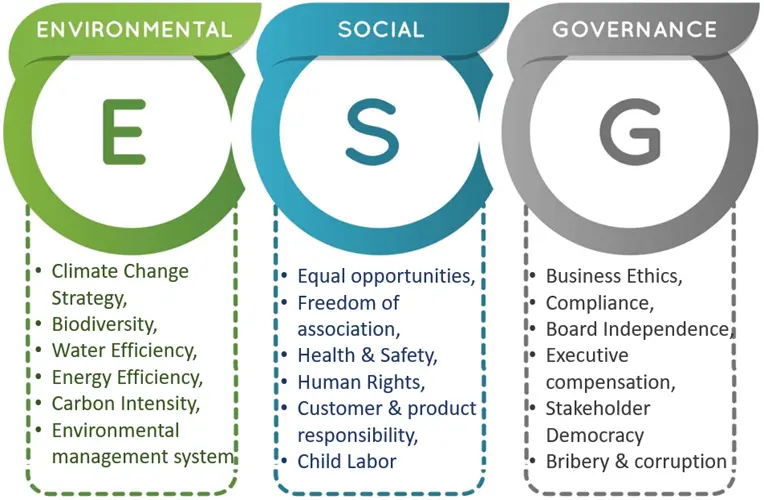
The campaign will also incorporate Environmental, Social, and Governance (ESG) principles, which Hon. Nyevera said are essential for Zimbabwean small-scale miners to access international markets and premium prices for their gold.

“ESG is not just for large mines. Our small-scale miners must also meet global standards if we want to sell our gold at fair value and attract responsible investors,” he added.

Silobela as a National Model

Hon. Nyevera declared that Silobela would lead the charge in demonstrating how small-scale miners can become champions of responsible mining under President Mnangagwa’s mantra, “Nyika inovakwa nevene vayo” (“Ilizwe lakhiwa ngabanikazi balo”).

“We want to create a blueprint — a practical, homegrown blueprint — that shows how small-scale miners can operate safely, healthily, and sustainably,” he said. “Silobela will be that example. From here, the model will spread to every gold-producing area in Zimbabwe.”

Hon. Nyevera noted that the recent government policy reserving the small-scale gold sector for Zimbabwean citizens had created the enabling environment. The next step, he said, is for miners to take responsibility for their own well-being and for the development of their communities.

“The President has given us the space. Now we must show that we can be responsible stewards of our mineral wealth. That means protecting our health, protecting our environment, and protecting our workers,” he said.

Hon. Nyevera outlined that the blueprint would include:

· Regular health screenings and silicosis monitoring for miners
· Mandatory safety training and provision of protective equipment
· Environmental impact awareness and rehabilitation of mined-out areas
· Governance structures that promote transparency and community accountability

“We are not reinventing the wheel. We are adapting best practices to our reality,” he said. “Small-scale miners are the backbone of our gold sector. It is time we treated them like the professionals they are.”

The MP called on the Ministry of Mines and Mining Development, the Ministry of Health, and local authorities to support the initiative.

Hon. Nyevera urged miners in Silobela and across the country to embrace the awareness campaigns and to participate actively in designing the responsible mining blueprint.

“Do not wait for someone to save you. Save yourselves. Organise. Learn. Invest in your own safety. That is what Nyika inovakwa nevene vayo truly means,” he said.

The first awareness clinics are expected to be rolled out in Silobela during the third week of June, with mobile teams visiting mining sites to conduct on-the-spot safety audits and health checks.

“We have the policy. We have the political will. Now we need the miners to lead, starting right here in Silobela,” Hon. Nyevera said.

Artisanal Miner Dies After Boulder Collapse in Norton

0

An artisanal miner died on Friday following a rockfall at an illegal mining site on Drummond Farm in Norton, local authorities have confirmed; Mining Zimbabwe can report.

By Rudairo Mapuranga

Councillor Charles Mugwagwa, speaking to Mining Zimbabwe, said that a boulder collapsed onto the miner while he was working in a shaft, killing him instantly. A second miner sustained a leg injury in the incident.

“Indeed, an artisanal miner died at a site here in Norton,” Mugwagwa said. “I’m told a boulder collapsed on the miner while working in a shaft, and he died instantly, while the other sustained a leg injury.”

The deceased has been identified locally as Joseph, who reportedly lived with his parents at Drummond Farm.

Councillor Mugwagwa has appealed for community support, urging those who are able to come together following this tragic incident.

More details are expected to emerge as investigations continue, and further information becomes available.

Zimplats Seeks Clarity on Zimbabwe’s New Critical Minerals Policy

0

The country’s largest platinum miner, Zimplats Holdings Ltd, said it is seeking clarity from the government on a newly announced critical minerals policy framework that lacks detailed implementing regulations, Mining Zimbabwe can report.

By Rudairo Mapuranga

In an ASX statement released on Monday, the company said it “notes” the government’s 22 May announcement classifying 14 minerals, including platinum group metals (PGMs), as critical.

“Zimplats expects the Zimbabwean government to provide further details on this policy framework in due course and will provide further updates as required,” the company said.

The miner, which is one of the largest contributors to Zimbabwe’s economy through foreign currency generation, employment and taxes, said it is “actively engaging with authorities to understand the full implications.”

Despite the absence of specific rules, including minimum state shareholding percentages, beneficiation classification tables or transitional export plans, Zimplats struck a constructive note.

“Zimplats fully recognises and supports the Zimbabwean government’s objective of ensuring that the country derives sustainable value from its mineral resources,” the company said.

The miner also acknowledged the strategic importance of PGMs in the global energy transition and their potential to drive inclusive economic growth and industrialisation in Zimbabwe.

Zimplats said it remains one of the country’s largest investors, having made significant long-term investments in local beneficiation, including the development and expansion of processing capacity.

“Over the years, the company has made significant long-term investments in local beneficiation, including the development and expansion of processing capacity, in line with national priorities to move up the value chain,” the statement said.

Ongoing projects, Zimplats added, reflect its commitment to deepening in-country value addition and supporting downstream industries.

The miner said it values the strong and constructive relationship it has built with the Zimbabwean government and other key stakeholders.

“Zimplats remains committed to working in partnership with the Zimbabwean government to support responsible resource management and shared value creation for the benefit of all stakeholders,” the company said.

Industry observers expect the government to release implementing regulations in the coming months, which will provide the clarity that miners like Zimplats are seeking.

ZCDC names Mtombeni CEO as Zimbango steps down

0

Zimbabwe Consolidated Diamond Co. (Private) Ltd. named Dennis Mtombeni as chief executive officer, succeeding Douglas Zimbango, who will step down at the end of June, Mining Zimbabwe can report.

By Rudairo Mapuranga

Mtombeni, a mining veteran with more than 20 years of experience, will become CEO-designate on June 1 and assume full responsibilities on July 1, the state-owned diamond company said in a statement dated May 28. He has been acting chief operating officer since 2024 and previously served as mine manager and general manager of operations at ZCDC.

Zimbango, who joined the company as a non-executive director in 2022 before being seconded to lead the executive team in January 2024, will leave on June 30. The board cited a “particularly challenging time for the diamond industry” during his tenure.

Chairman Onesimo Mazai Moyo expressed confidence that Mtombeni’s deep understanding of the company and operational track record, including managing River Ranch Diamonds and Pickstone-Peerless Gold Mine, positions him well for the next phase of growth.

ZCDC, the country’s largest diamond producer, said the leadership transition will not disrupt operations or strategic direction.


Fake Respirators Flood Industry

0

As the government announces a renewed clampdown on counterfeit goods under the National Development Strategy 2 (NDS2), a Mining Zimbabwe investigation reveals a deadly and deeply entrenched parallel market that is potentially poisoning the nation’s number one employee: the mine worker.

By Rudairo Mapuranga

Substandard, fake safety respirators, primarily mimicking the global 3M brand, are being funnelled into the mining sector, compromising worker health on an industrial scale, defrauding the fiscus, and setting up mining companies for historic legal liability reminiscent of the Wenela-era compensation scandals.

This investigation, based on technical audits, supply chain analysis, and insider accounts, uncovers a grim reality where life-saving Personal Protective Equipment (PPE) has become a vector of profit and corruption. While the government vows to “double down on counterfeits,” as outlined in its National Development Strategy 2 (NDS2), the evidence on the ground suggests that the enforcement mechanisms are catastrophically failing in the very sector where the stakes are human lives.

The Second Republic has rightly identified illicit trade as a critical threat to national development. The NDS2 framework explicitly targets the proliferation of counterfeit products, recognising their damage to industry, revenue, and consumer safety. However, this investigation finds that in the mining sector, the engine of the national economy, this strategy is being neutralised by a sophisticated and brazen syndicate.

Authorised distributors of certified respiratory equipment are being systematically undercut and sidelined by a flood of counterfeits. The investigation shows that authentic, life-saving products are available, but they are not receiving sales. The main reason is the pressure on procurement officers to reduce costs, coupled with either wilful blindness or active complicity. This has created a market where the lowest price is the only determinant, even for equipment that stands between a worker and a fatal lung disease.

The counterfeit respirators, overwhelmingly sourced from the Far East, are a masterclass in deceptive packaging and lethal shortcuts. A detailed forensic comparison reveals:

Filtration Fraud: Genuine N95 masks use proprietary electrostatic filter media to capture fine, lung-destroying silica dust. The fakes use ordinary, non-woven fabric with zero filtering efficacy for fine particulates. Once inhaled, this dust causes irreversible silicosis.

Certification Forgery: The counterfeits bear expertly forged NIOSH, SABS, or EN certification marks, providing a false paper trail that shields mine management from immediate legal scrutiny but offers no protection underground.

Catastrophic Design Flaws: In a critical cost-cutting measure, fakes employ flimsy ear loops instead of the dual-headband system required for a proper seal. This guarantees leakage, rendering the mask useless.

“To the untrained eye in a procurement office, they look similar. To a miner in a dusty shaft, the difference is between breath and suffocation,” explained a certified safety officer.

The economic driver is stark. The price differential between a genuine respirator and a fake creates a slush fund running into tens of thousands of dollars per quarter for large mines. This “saving” is a mirage that transforms into human suffering and future financial catastrophe.

“This isn’t just about bribes or kickbacks, though that is endemic,” an industry insider revealed. “It’s about bonuses tied to cost-cutting and a culture that views PPE as a commodity, not a critical safety system. The miner is given a defective shield, and the company is storing up a liability that will dwarf any phantom savings.”

The National Social Security Authority (NSSA) is the designated regulator for occupational health and safety. Yet its capacity to enforce standards and police this specific, technical market is described by sources as “severely lacking.” The laws are not stringent enough, and penalties are not a deterrent.

This failure has a dual national impact:

  1. A Public Health Time Bomb: Zimbabwe is actively creating a cohort of miners destined for debilitating illness, placing a future burden on a healthcare system already under strain.
  2. Direct Fiscal Sabotage: The counterfeit supply chain operates through smuggling and invoice-less transactions to avoid Bureau Veritas (BV) inspection and VAT. This not only flouts the NDS2’s principles of formalisation and revenue collection but actively steals from the national purse. “Every fake mask sold is a double theft: it steals a miner’s health, and it steals revenue from the Treasury meant for national development,” a tax compliance expert stated.

The historical parallel is profound. The Wenela system in South Africa left a legacy of chronic illness among migrant miners, leading to decades-long, multi-billion-dollar class-action lawsuits against mining houses. Zimbabwean companies are now replicating the conditions for a similar catastrophe.

Legal analysts warn that the ultimate cost will be borne by shareholders. “When the epidemic of silicosis from this period manifests, the courts will dissect procurement records,” said a commercial lawyer specialising in corporate liability. “If evidence emerges that companies knowingly procured uncertified PPE to cut costs, directors could face charges of criminal negligence. The civil claims for compensation could be existential for mining firms. NDS2 aims for a prosperous, healthy nation; this practice is directly engineering its opposite.”

The government’s commitment under NDS2 to fight counterfeits must now be translated into urgent, sector-specific action:

For the Ministry of Mines & NSSA: Launch an immediate, uncompromising joint blitz, inspecting the procurement logs and warehouse stocks of all major mines. Enforce a mandatory, publicly accessible certification register for all PPE suppliers.

For the Zimbabwe Revenue Authority (ZIMRA) & BV: Tighten the net at ports of entry, specifically targeting declared PPE. Share data with NSSA to blacklist importers of fake safety goods.

For Mining Company Boards & Shareholders: Demand independent, forensic audits of PPE supply chains. Make ‘Zero Harm’ a procurement metric, not just a slogan. Recognise that ethical sourcing is the only defence against future ruinous litigation.

For Industry Bodies like the Chamber of Mines: Establish a collective, verified approved-supplier list and enforce a blacklist for those caught dealing in fakes. Peer accountability is crucial.

The NDS2 presents a blueprint for a legitimate, thriving economy. The rampant trade in counterfeit respirators is a direct assault on that vision, sacrificing the nation’s most valuable asset, its people, for illicit gain. To double down on counterfeits, as the policy pledges, the authorities must first look down into the mines, where the very breath of workers is being stolen. The time for decisive action is now, before the true cost is measured not only in lost revenue but in a generation of lives lost to breathlessness.

Dallaglio Banks on ASM Joint Venture, Exploration Push to Lift Output After 3% Production Dip

0

Dallaglio Investments, the mining unit of Padenga Holdings, is counting on a new artisanal mining joint venture, expanded underground operations, and an aggressive drilling campaign to revive production growth after gold output fell 3% in the year to December 2025, Mining Zimbabwe can report.

By Ryan Chigoche

The group produced 2,564 kilogrammes of gold during the year, down from 2,638 kilogrammes in 2024, after weaker output at Pickstone Peerless Mine offset strong gains at flagship Eureka Mine.

The decline was largely tied to Pickstone’s transition from open-pit mining to a fully underground operation, a shift that temporarily disrupted production as the company repositioned the mine for longer-term growth.

As part of the restructuring, Pickstone, through Dallaglio’s Cordillera subsidiary, entered into a joint venture with an artisanal mining and processing company. Ore mined at the operation will now be sold to the Cordillera joint venture, while the mine itself focuses entirely on underground extraction.

Management expects the arrangement to improve efficiencies and profitability as underground production ramps up.

The transition is already being backed by deeper capital investment. Dallaglio commissioned Phase 3 of Pickstone’s underground project in December, enabling ore mined between Levels 7 and 10 to be hoisted from the 10.5 Level loading station while also opening new drilling access for deeper exploration of the ore body.

The company plans to invest a further US$18 million into the underground operation in 2026 as it targets higher production volumes from the asset.

The underground push has also translated into reserve growth. Planned ore reserves at Pickstone increased from 105,000 ounces to 123,000 ounces during the year following refinement of the ore body, strengthening confidence in the mine’s long-term economics.

At the same time, Dallaglio is accelerating exploration spending across its portfolio, budgeting US$17 million in 2026 to expand mineral resources and improve reserve confidence at both Pickstone and Eureka.

The company said it has strengthened its geological team and plans significantly more drilling this year, targeting previously unmined areas at Pickstone, including deeper sections of the Peerless ore body. Development work for mining below Level 10 is already underway.

While Pickstone underwent restructuring, Eureka delivered one of the strongest performances in the group. Gold production at the mine rose 9% to 1,969 kilogrammes from 1,811 kilogrammes in 2024, supported by higher throughput, improved feed grade, and stronger recovery rates.

Dallaglio also extended Eureka’s mine life to 2039 following a pit redesign based on updated geotechnical data, reinforcing the asset’s position as the group’s production anchor.

Further upside could come from exploration. The company completed its 2025 drilling campaign at Eureka in December, with results expected to be incorporated into the resource model this year, while investigations into underground mining beneath the planned open pit are also underway.

Alongside mine development, Dallaglio is advancing energy and processing projects aimed at improving efficiencies and lowering operating costs.

A 4.9MW solar plant at Pickstone and a 5MW solar project at Eureka are both expected to deliver first power in the first quarter of 2026, while a gravity circuit upgrade at Eureka is scheduled for commissioning in the second quarter and is expected to improve plant recoveries.

After a year shaped largely by restructuring, Dallaglio is entering 2026 with a strategy centred on underground expansion, reserve growth, and operational upgrades as it seeks to restore production momentum.

Zimbabwe Orders Mines to Appoint 98% Local Management

0
  • Govt Orders 98% Local Management, Mines to Stop Hoarding Top Jobs

In a bold and unapologetic crackdown on foreign dominance in the mining sector, the Zimbabwean government has issued a firm directive that 98 per cent of all senior and middle management positions at mines, including the fast-growing lithium subsector, must be held by Zimbabwean citizens with immediate effect, Mining Zimbabwe can report.

By Rudairo Mapuranga

Minister of Mines and Mining Development Dr Polite Kambamura delivered the ultimatum, warning that foreign-owned mining companies, particularly Chinese lithium operators notorious for running all-expatriate management structures, must comply or face the consequences.

“To ensure compliance with the Mines and Minerals Act [Chapter 21:05] and the Mining Management and Safety Regulations of 1990 (Statutory Instrument 109 of 1990), senior and middle management staff of gold mines and all other mines must be constituted of 98% Zimbabweans,” said Dr Kambamura. “We expect immediate compliance with this call.”

While the directive applies to all mining operations, the government’s toughest message is aimed squarely at Chinese-owned mines, which have been accused of sidelining Zimbabwean professionals and filling every key decision-making role, from Mine Managers, chief engineers, safety officers, and financial controllers, with Chinese nationals.

Industry observers say some Chinese mines operate with almost no Zimbabweans in senior positions, reducing local staff to manual labourers and low-level supervisors. This practice, the government argues, violates both the spirit and the letter of Zimbabwe’s mining laws.

“The days of seeing a foreigner as a general manager, another foreigner as the chief safety officer, another as the HR director, and Zimbabweans only carrying picks and shovels are over,” a senior ministry official told our newsroom on condition of anonymity. “Lithium is ours. The jobs must go to our people.”

Immediate Compliance Required

Mining houses have been given no grace period. The minister said all mines must restructure their management teams with immediate effect. Companies found in breach risk fines, suspension of operating licences, or even revocation of mining claims.

The directive is backed by the Mines and Minerals Act and the 1990 Safety Regulations, which give the state sweeping powers to regulate mine management composition.

The government also confirmed that foreign-owned gold mining assets held idle for speculation will be repossessed, and all small-scale foreign mining operators must transition to large-scale status by 1 January 2027—or exit the sector altogether.

Speaking at a separate miners’ graduation event in Chegutu, Dr Kambamura did not mince his words. He accused some foreign investors of treating Zimbabwe as a “resource colony” where locals are denied decision-making power.

“You cannot come and mine our lithium, our gold, our diamonds, and then bring your own drivers, your own secretaries, your own mine captains, and your own accountants from your country,” he said. “That is not investment. That is exploitation. Our people are qualified. Our people are competent. And now, the law will protect them.”

The Zimbabwe Miners Federation (ZMF) has applauded the move, saying it will end the systemic exclusion of Zimbabwean professionals from their own country’s mining sector.

What This Means for Foreign Investors

The government has made it clear that it remains open to responsible foreign direct investment—but on new terms. Foreign capital and technology are welcome, but management must be local. Expatriates may only occupy a maximum of 2 per cent of senior and middle management roles, and only where proven local skills gaps exist.

For Chinese lithium giants like Zhejiang Huayou Cobalt, Sinomine, and others operating in Kamativi, Bikita, and Goromonzi, the directive forces an immediate overhaul of their staffing policies.

“Compliance is not optional,” the minister stressed. “We will be going on the ground to check. No foreigner will run a mine in this country while Zimbabweans watch from the gate.”

Gold buying prices in Zimbabwe per gram/ ounce, 28 May 2026

Gold buying prices in Zimbabwe per gram/ ounce, 28 May 2026, from the official gold buyer and exporter Fidelity Gold Refinery (FGR).

1 oz = 31.1035 g

CategoryPrice ($/g)Price ($/oz)
SG 90% and above131.314,084.20
SG 85% but less than 90%129.924,040.96
SG 80% but less than 85%128.533,997.72
SG 75% but less than 80%127.143,954.48
Sample (5–10g)125.063,889.78
Fire Assay CASH132.014,105.97


Note: The Fire Assay cash price applies to gold above 100g, with no sample deduction.

A sample of not more than 10g is deducted for the Fire Assay Transfer price.


#GoldPrices #GoldBuying #GoldMarket #GoldTrading #GoldRate #GoldPriceToday #GoldNews #PreciousMetals #GoldIndustry #GoldEconomy #FidelityGoldRefinery