Home Blog Page 40

Gold buying prices in Zimbabwe per gram/ ounce, 6 November 2025

Gold buying prices in Zimbabwe per gram/ ounce, 6 November 2025, from the official gold buyer and exporter Fidelity Gold Refinery (FGR).

1 oz = 31.1035 g

CategoryPrice ($/g)Price ($/oz)
SG 90% and ABOVE120.563,749.11
SG 85% and above but below 90%119.283,709.79
SG 80% and above but below 85%118.013,670.84
SG 75% and above but below 80%116.733,631.15
Sample 5g and above but below 10g114.823,571.28
Fire Assay CASH121.203,771.75


Note: The Fire Assay cash price applies to gold above 100g, with no sample deduction.

A sample of not more than 10g is deducted for the Fire Assay Transfer price.

Dangote’s US$1 Billion Investment Set to Reshape Limestone Mining in Zimbabwe

0

The landscape of Zimbabwe’s mining and industrial sector is on the verge of a major transformation, directly tied to its vast limestone deposits. Africa’s richest man, Aliko Dangote, is finalizing plans for a US$1 billion industrial complex in the country—a project that promises to reshape the nation’s limestone mining and cement production, marking a potential watershed moment for the economy, Mining Zimbabwe can report.

By Rudairo Mapuranga

This venture, which integrates cement manufacturing, coal mining, and power generation, could become one of the largest privately led investments in Zimbabwe in over a decade. For a country with a history of stalled foreign investments, Dangote’s return signifies a renewed confidence that could recalibrate the entire regional market.

Dangote’s interest in Zimbabwe is not new. The Dangote Group initially explored opportunities in 2015 and 2018, with discussions around a cement plant and other investments. Those early efforts, however, did not come to fruition.

Reports from that period highlight challenges, including bureaucratic hurdles such as the denial of visas for Dangote’s technical team and alleged demands for bribes by political bigwigs, which stifled the progress of the investment.

The current push gained momentum after discussions during the Afreximbank Annual Meetings in Abuja in June. Paul Tungwarara, President Emmerson Mnangagwa’s investment adviser, confirmed that “The richest man in Africa is coming to Zimbabwe at the invitation of President Mnangagwa,” and that logistical preparations for the visit are underway. The government appears keen to ensure this visit concludes with a solid investment, determined to avoid the outcome of the 2015 visit, when Dangote “came but did not return.”

The planned US$1 billion investment is not a single factory but a comprehensive, vertically integrated industrial complex. This strategic approach is designed to control costs and ensure efficiency across the production chain, with the limestone quarry at its core. The components will likely include:

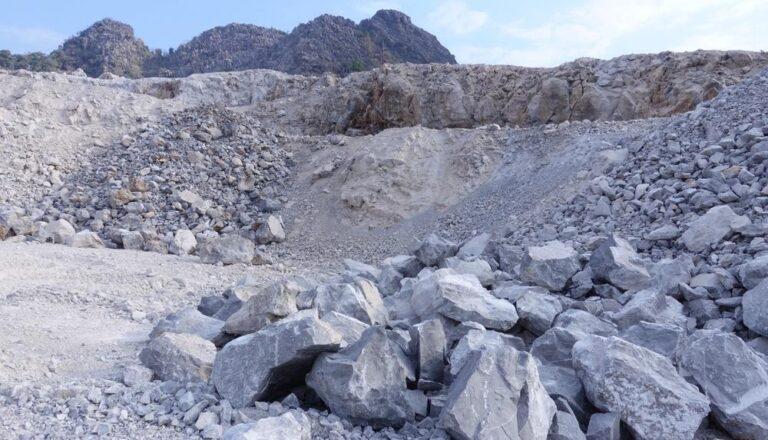
Cement Factory and Limestone Quarry: A major cement production plant, fundamentally supported by its own large-scale limestone quarry and grinding plant. This will move Zimbabwe’s limestone mining from primarily local supply to a major industrial export orientation.

Coal Mine: A dedicated coal mine to supply energy for the cement manufacturing process.

Power Station: An integrated power generation facility to guarantee a stable and cost-effective energy supply for the entire complex.

This model of vertical integration has been a hallmark of Dangote’s success across Africa, reducing operational costs and securing the entire production chain from raw material to finished product.

The arrival of the Dangote Group represents more than just a financial injection; it is a strategic overhaul of a key mineral sector.

Economic Revitalization: The project is expected to create numerous jobs, drive industrial growth, and bolster Zimbabwe’s standing as a destination for high-value foreign direct investment. A success could reposition the country as a regional supplier of construction materials and energy.

A Pan-African Industrial Strategy: For the Dangote Group, which operates in 17 African countries, this move is a strategic step in building a pan-African industrial network. Zimbabwe offers a strategic location near South Africa—a major market where Dangote currently has no active industrial presence. The busy Beitbridge border crossing between the two countries would facilitate regional trade.

Proven Track Record: Dangote’s operations in countries such as Ethiopia, Senegal, and Zambia have already disrupted markets, stabilized local supply chains, and reduced construction costs. The group’s landmark US$20 billion refinery in Nigeria further demonstrates its capacity to undertake transformative, continent-shaping projects.

As Dangote prepares to meet with President Mnangagwa and senior officials to discuss mining concessions for limestone and coal, tax incentives, and investment security, the world is watching. This US$1 billion venture is more than an investment; it is a test of Zimbabwe’s reformed business climate and its ability to secure and nurture large-scale, job-creating foreign investments.

If successful, the clinker from its kilns will do more than produce cement—it will lay the foundation for a new era of industrial ambition in Zimbabwe, firmly built upon its limestone bedrock.


Gold buying prices in Zimbabwe per gram/ounce, 5 November 2025

0

Gold buying prices in Zimbabwe per gram/ ounce, 5 November 2025, from the official gold buyer and exporter Fidelity Gold Refinery (FGR).

1 oz = 31.1035 g

CategoryPrice ($/g)Price ($/oz)
SG 90% and ABOVE120.043,736.99
SG 85% and above but below 90%118.773,697.23
SG 80% and above but below 85%117.503,657.48
SG 75% and above but below 80%116.233,617.73
Sample 5g and above but below 10g114.323,558.25
Fire Assay CASH120.673,756.57

Note: The Fire Assay cash price applies to gold above 100g, with no sample deduction.

A sample of not more than 10g is deducted for the Fire Assay Transfer price.

Jena Mines Gold Production Increases 25%

0

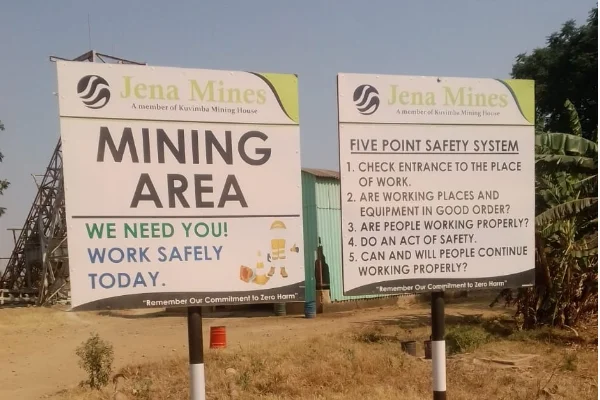
Kuvimba Mining House (KMH)-owned Jena Mines has demonstrated a robust operational recovery, reporting a significant 25 percent surge in gold production for the quarter ended 30 September 2025. The impressive quarterly performance signals a positive turnaround after a slower previous period, though a half-year comparison reveals the challenges the operation has faced over the broader period, Mining Zimbabwe can report.

By Rudairo Mapuranga

The latest production figures, seen by Mining Zimbabwe, show output rose to 3,086 ounces in the three months to September — a substantial increase from the 2,476 ounces produced in the quarter ended 30 June 2025. This quarter-on-quarter growth of 24.6 percent underscores a successful ramp-up in operational activity. The combined output for the half-year ended 30 September 2025 reached 5,562 ounces.

However, when viewed against the previous year’s performance, the data tells a more complex story. The half-year total of 5,562 ounces represents a decrease of 14.4 percent compared to the 6,494 ounces achieved in the equivalent half-year period ended 30 September 2024. This year-on-year dip highlights the impact of the mine’s slower start to the calendar year. The recent strong quarterly growth, however, suggests that management’s interventions are effectively steering the operation back on track. This performance follows a particularly productive first half of the 2025 calendar year, when Jena Mines reported a production of 11,092 ounces for the period ended 31 March.

Industry analysts suggest this volatile production profile is not uncommon for mining operations navigating issues such as fluctuating ore grades and plant availability. The decisive quarter-on-quarter rebound at Jena is being viewed as a positive indicator of resolving such temporary setbacks. This performance aligns with the wider strategic narrative communicated by Kuvimba Mining House, which has publicly emphasized a focus on optimizing existing assets through improved plant recovery rates and processing efficiencies rather than immediate large-scale capital expansion.

A company statement from KMH earlier in the year alluded to this strategy, noting that “overall gold production is expected to remain stable, with potential increases driven by enhanced processing efficiency.” The 25 percent production jump at Jena Mines in the last quarter appears to be a direct reflection of this focused operational approach, possibly through the beneficiation of higher-grade ore sections or completed minor plant upgrades.

The performance of Jena Mines contributes to the broader picture of Zimbabwe’s gold sector — a critical anchor for the national economy. The sector has been on a general upward trajectory, with the country having surpassed its 2024 production target after a record delivery from both large-scale and artisanal miners. As one of the significant operations in the Midlands Province, Jena’s return to strong quarterly growth under the KMH umbrella will be a key metric watched by investors and industry stakeholders alike, who will be keen to see if this momentum can be sustained through the remainder of the financial year.

Gold buying prices in Zimbabwe per gram/ ounce, 4 November 2025

Gold buying prices in Zimbabwe per gram/ ounce, 4 November 2025, from the official gold buyer and exporter Fidelity Gold Refinery (FGR).

1 oz = 31.1035 g

CategoryPrice ($/g)Price ($/oz)
SG 90% and ABOVE122.293803.64
SG 85% and above but below 90%121.003763.05
SG 80% and above but below 85%119.703722.46
SG 75% and above but below 80%118.413682.06
Sample 5g and above but below 10g116.473621.08
Fire Assay CASH122.943820.04

Note: The Fire Assay cash price applies to gold above 100g, with no sample deduction.

A sample of not more than 10g is deducted for the Fire Assay Transfer price.

Zimplats Expands Solar Footprint with New US$54 Million Power Plant

0

Platinum producer Zimplats has commenced construction of its US$54 million Phase 2A solar power plant, marking another major step in its journey toward energy self-sufficiency and reduced dependence on the national grid, Mining Zimbabwe reports.

By Ryan Chigoche

According to the company’s quarterly report for the period ending September 30, 2025, Zimplats invested US$12 million in the project during the quarter, with an additional US$36 million already committed. The 45MW Phase 2A plant is expected to be completed in the first half of 2027, bringing the miner’s total installed solar capacity to 80MW once operational.

This follows the successful commissioning of the 35MW Phase 1A solar plant in August 2024—a key milestone in the company’s broader renewable energy strategy aimed at stabilising power supply and cutting carbon emissions.

“Following the successful commissioning of the Phase 1A 35MW solar plant in August 2024, the company commenced implementation of the Phase 2A 45MW solar plant in the quarter. The project is expected to be completed in the first half of 2027 at a total project cost of US$54 million and will increase total solar power generation to 80MW. A total of US$12 million had been spent and a further US$36 million committed as of 30 September 2025,” Zimplats said in the quarterly report.

The new solar development forms part of Zimplats’ multi-phase renewable energy rollout, which aligns with Zimbabwe’s national energy policy to diversify the country’s power mix through sustainable energy investments.

The initiative is expected not only to strengthen energy security for Zimplats’ mining and smelting operations but also to contribute surplus power to the national grid in the long term.

Industry observers say Zimplats’ solar investments could set a new benchmark for other large-scale miners seeking to cushion their operations from ongoing power supply challenges.

Across Zimbabwe, several mining firms are increasingly turning to renewable energy to stabilise production and ease pressure on the struggling national grid. Caledonia Mining’s Blanket Mine, for instance, commissioned a 12.2MW solar plant in 2023 at a cost of around US$14 million. Similarly, Turk Mine in the Bubi District has rolled out a 4.4MW solar farm, while Prospect Lithium Zimbabwe (PLZ) has started developing a 70MW power station to support its lithium operations.

In the cement sector, PPC Zimbabwe has announced plans to establish two solar plants worth US$40 million, with a combined capacity of 30MW—20MW in Colleen Bawn and 10MW in Bulawayo.

Meanwhile, Zimplats continues to progress with its Mupani Mine development, which will replace the depleted Rukodzi and Ngwarati mines. The project targets full-scale production of 3.6 million tonnes per annum by the 2029 financial year. As of September 30, 2025, the company had spent US$352 million out of a US$386 million project budget.

During the quarter under review, mined volumes dipped 1% from the previous quarter but remained steady year-on-year. A decline in high-grade ore from Rukodzi Mine and increased production from lower-grade ore at South Pit contributed to a 2% decrease in 6E head grade compared to the same period last year, while higher development tonnage from Bimha and Mupani mines led to a 1% quarterly decline.

Zimplats’ continued investments in renewable energy and mine development underscore its long-term commitment to sustainable production and energy resilience in Zimbabwe’s mining industry.

Premier Completes Technical Audit at Zulu Lithium Project

0

Premier African Minerals Limited has announced the completion of an on-site technical audit at its Zulu Lithium and Tantalum Project in Fort Rixon, Matabeleland South—a key step towards achieving stable and sustained production, Mining Zimbabwe can report.

By Ryan Chigoche

The comprehensive audit, conducted by an engineering team, assessed pumping and pipeline performance, as well as water and mass balance systems across the processing plant.

The Zulu Lithium operation remains one of the most advanced lithium projects in Zimbabwe and a central component of Premier’s investment strategy.

In a statement, the company said, “An engineering audit team have just completed their work on-site, conducting a comprehensive technical audit focused on pumping and pipeline performance as well as water and mass balance assessments.”

The audit team will deliver a preliminary report in the coming days and a complete engineering audit report within the next week.

According to Premier, this will provide a detailed evaluation of the processing plant, including infrastructure that could be used for the planned secondary flotation facility. The document will also outline findings, observations, and recommendations aimed at optimising plant performance.

The company noted that the results of the audit, combined with ongoing commercial discussions with its prepayment and offtake partner, will be instrumental in determining the flotation plant’s readiness for full operations.

It said the review will help assess whether the plant can meet short-term targets for sustainable commercial production at the required grade and tonnage.

Premier expressed confidence that, given sufficient time and resources, the flotation plant would reach its intended design capacity.

Managing Director Graham Hill said the audit was intended to ensure all systems within the plant are balanced and function efficiently.

“We have recently reported on the engineering audit that is currently ongoing. The intention of the audit is to look into all those parts of the process plant that connect all of the major plant equipment,” he said.

“My conviction has been that in order to achieve stable and consistent operations, all parts of the plant need to be balanced in terms of mass and water flows. This is true for the existing flotation plant as well as for the Secondary Flotation Plant. The audit will also be making suggestions and comments as far as the existing flotation plant is concerned. Current comments discussed show that the audit team are coming up with practical suggestions based on professional engineering assessments.”

Hill expressed optimism that the outcomes of the audit, combined with recent plant adjustments, would position the company for improved performance and near-term production readiness.

“With that in mind, the Secondary Flotation Plant installation and commissioning would be supplementary, but it is felt that being able to quickly bring the Secondary Flotation Plant to pre-production readiness provides the best opportunity for making the existing plant fully production-ready and able to provide production benefits,” he said.

Meanwhile, the company’s General Meeting, which was adjourned last Thursday, will reconvene on 7 November.

The adjournment will allow for further discussions with Premier’s principal shareholder on resolutions, including the proposed disapplication of pre-emption rights in the company’s Articles of Association.

Premier warned that failure to pass the proposed resolutions could have a material effect on shareholders and the company’s assets.

Renco Mine Reopens, Saving Over 1,000 Jobs

0

In a significant turnaround for a struggling mining operation, Renco Mine has been successfully reopened, securing the employment of more than 1,000 workers — marking a critical first step in parent company RioZim Limited’s broader recovery plan after a period of severe operational and financial distress, Mining Zimbabwe can report.

By Rudairo Mapuranga

The mine’s revival follows a comprehensive restructuring by RioZim, which included the appointment of a new board in July 2025 and the installation of Caleb Dengu as Chairman. Announcing the reviewed group interim financial results for the half year ended 30 June 2025, Dengu confirmed the development, stating this “strategic shift has already yielded tangible results. Notably, Renco Mine was successfully reopened, and the jobs of more than 1,000 workers have been secured.”

The first half of 2025 had proven exceptionally difficult. Dengu described it as a “particularly challenging period for the Group, marked by significantly reduced production across our mining operations.” He attributed these “operational difficulties” to “persistent undercapitalisation over the past three years, which severely constrained our ability to sustain production and invest in necessary infrastructure.”

However, the tide appears to be turning. Beyond Renco, Dengu confirmed that “plans to fully restart operations at Cam & Motor Mine are well underway, with full production expected before year-end.”

The operational improvements come amid a favourable gold market that saw prices surge 24% to close at US$3,302/oz. Despite this, Dengu noted that “the Group was unable to capitalise on this price surge due to limited production volumes during the period under review.”

He also pointed to a brighter macroeconomic backdrop, stating that despite the difficult environment, “we observed early signs of macroeconomic stability.” He credited the Government’s ongoing reforms aimed at creating a “more business-friendly climate,” which contributed to a “relatively stable local currency (ZWG), [and] helped mitigate inflationary pressures on local inputs and improved cost control.”

The reopening of Renco Mine stands as the first tangible result of the new board’s strategy to steer the Group back to operational and financial health.

Caution: Scam from +27672133253 targeting miners

0

A South African number +27672133253 is targeting the mining community, with the scammer pretending to be prominent mining executive Ben Magara.

Claiming to be Magara, the scammer contacted Mining Zimbabwe on WhatsApp to ask for the contact details of a high-level Mining official. After that, the scammer proceeded to narrate the ordeal of his son, who is supposed to be flying to Egypt but is unreachable as he had gone to deep rural Gokwe for research. He asked Mining Zimbabwe to try contacting the son for him, saying that should the son be stuck, he would need to send Money so that he can make his flight the next day.

We contacted the so-called number, and the son said their vehicle had broken down he needed us$240 for repairs. After smelling the scam, we contacted Mr Magara, who dismissed it as a scam and asked people to be vigilant.

“It’s definitely not me, and I am so glad you suspected a scam! That’s right, a true scam, and I hear a lot of people being scammed the same way. Thanks very much for letting me know. Please remain vigilant,” Magara said.

Please remain vigilant, +27672133253 or 0672133253 is a SCAM number!

Gold buying prices in Zimbabwe per gram/ ounce, 3 November 2025

Gold buying prices in Zimbabwe per gram/ ounce, 3 November 2025, from the official gold buyer and exporter Fidelity Gold Refinery (FGR).

1 oz = 31.1035 g

CategoryPrice ($/g)Price ($/oz)
SG 90% and ABOVE121.873,792.79
SG 85%–<90%120.583,754.03
SG 80%–<85%119.293,715.26
SG 75%–<80%118.003,676.61
Sample 5g–<10g116.073,617.37
Fire Assay CASH122.523,810.59


Note: The Fire Assay cash price applies to gold above 100g, with no sample deduction.

A sample of not more than 10g is deducted for the Fire Assay Transfer price.