Home Blog Page 42

MVSZ Urges Members to Bring Ventilation Expertise to ASM to Enhance Safety

0

With the artisanal and small-scale mining (ASM) sector bearing the heaviest burden of gassing-related incidents, the Mine Ventilation Society of Zimbabwe (MVSZ) says it is its moral obligation to extend its expertise to the sector, given the critical role ASM plays in Zimbabwe’s economic growth, Mining Zimbabwe can report.

By Ryan Chigoche

This commitment was highlighted at the ongoing MVSZ AGM and Symposium, running under the theme “Optimising Ventilation Systems for Operational Excellence.”

The event brought together mining professionals, regulators, and academics to discuss strategies for improving underground ventilation across both large-scale and artisanal operations.

Gassing incidents remain a serious threat, underscoring the need for effective ventilation systems. In 2022, the Chamber of Mines reported 24 fatal mining accidents due to gassing. In 2024, 11 gas accidents resulted in 12 fatalities, with the ASM sector bearing the greatest burden. The first half of 2025 has already recorded a fatal incident, highlighting the persistent risk.

In his address, MVSZ President Dr Tonderai Chikande said it is the society’s duty to support ASM miners and called for an all-stakeholder approach to achieve this goal:

“Artisanal mining is the double-edged sword of Zimbabwe’s mining economy. On one hand, ASM sustains livelihoods. On the other, it is a silent crisis of exposure — no ventilation planning, no dust control, no health surveillance,” he said.

“Our colleagues are inhaling silica dust without warning, exposed to heat stress, toxic gases, and even oxygen-depleted zones. As a society, we have a moral obligation to extend our expertise and influence into the informal mining sector, and I am calling on all stakeholders today — government, private sector, and academia — to build bridges with the ASM community,” Chikande added.

This call comes at a time when ASM has become an integral part of Zimbabwe’s economy, delivering 23.7 tonnes of gold in 2024 and 17.76 tonnes in the first half of 2025 to Fidelity Gold Refinery, accounting for a significant share of the country’s gold output.

These statistics underline why ventilation practitioners must extend their expertise to ASM operations.

Improving air quality and safety in these mines not only protects thousands of underground workers but also safeguards a sector that is crucial to Zimbabwe’s economy. Enhancing safety in ASM mines ensures that this vital contribution can continue sustainably and productively.

Boardroom Role for Ventilation Experts and Regulatory Reform Spotlighted at MVSZ Symposium

0

The Mine Ventilation Society of Zimbabwe (MVSZ) has called for the active involvement of ventilation practitioners in mine decision-making and the modernisation of occupational hygiene and ventilation regulations — actions seen as critical to addressing the real risks miners face today, Mining Zimbabwe can report.

By Ryan Chigoche

This call was made by MVSZ President Dr. Tonderai Chikande at the highly subscribed Annual General Meeting and Symposium, where industry experts gathered not only to learn but also to propose and lobby for solutions to the sector’s pressing challenges.

A central issue highlighted at the event is the limited role ventilation practitioners currently play in mine planning and policy decisions.

Unlike in countries such as South Africa, where these experts routinely sit on decision-making boards, Zimbabwe often consults them only after mine designs are finalised — a reactive approach that can leave miners exposed to hazards such as high dust levels, heat stress, poor airflow, and diesel particulate matter (DPM).

Faced with this challenge, Dr. Chikande said it is time to change the narrative and ensure ventilation practitioners are represented at board level.

“Ventilation practitioners are often seen as problem-solvers at the tail end of a crisis. But we must change that narrative. We need to be in the boardroom, not just in the shaft bottom. We must be heard before projects are designed, not after. Our science must influence mine planning, not just audits,” he said.

Legislative reform was also a critical focus of the symposium, which emphasised the need to modernise Zimbabwe’s occupational hygiene and ventilation regulations — many of which were drafted decades ago, long before diesel-powered fleets, digital monitoring technologies, and the rapid growth of artisanal and small-scale mining.

As a result, key occupational stressors, including DPM, silica and respirable crystalline quartz, thermal stress, noise and vibration, and radon in underground mines, remain under-recognised and under-reported.

In a plea to the Ministry of Mines and Mining Development, Dr. Chikande said there is an urgent need to modernise legislation so that it addresses those challenges and the “real risks” mine ventilation faces today.

“The message is clear: regulatory reform is not merely a bureaucratic exercise — it is central to protecting miners’ health while supporting sustainable and efficient mining,” Dr. Chikande said. “Our plea today is simple: let us modernise our legal framework so it reflects the real risks miners face in Zimbabwe today. Let us move from minimum compliance to proactive enforcement. Good regulation does not stifle industry — it strengthens it. It creates consistency, predictability, and a level playing field where safety is never compromised for profit.”

Proposed reforms to address these gaps include:

  • Reviewing exposure thresholds for DPM, silica, and respirable dust to reflect modern mining realities.

  • Integrating advanced monitoring technologies into the regulatory framework for proactive detection and prevention.

  • Strengthening ventilation design codes for both small-scale and underground operations.

  • Making the involvement of ventilation practitioners mandatory in mine planning and compliance audits.

The MVSZ reiterated its commitment to partnering with government regulators, mining companies, and other stakeholders to ensure ventilation expertise is integrated into early-stage planning and boardroom decisions. Doing so, the society argued, will better safeguard miners, improve operational efficiency, and align Zimbabwe with international best practices in mine safety.

All set for the 2025 Chamber of Mines Mine Rescue National Competition

0

All is set for the 2025 Mine Rescue Association of Zimbabwe (MRAZ) National Mine Rescue Competition, taking place tomorrow, October 31, at How Mine in Matabeleland South. The highly anticipated event will see Zimbabwe’s leading mining companies compete in rigorous rescue simulations designed to test their emergency preparedness, teamwork, and safety excellence.

According to the official programme, proceedings will begin in the early hours of Friday morning. Teams will arrive at 0200 hours, followed by security protocols, inductions, medical check-ups, and breakfast facilitated by the SHEQ, Wellness Centre, and Club Controller teams.

By 0330 hours, both surface and underground rescue teams are expected to report for control, with the first team descending underground at 0400 hours and the last team at 0845 hours.

While underground rescue simulations take place, partners and sponsors will showcase their latest safety and rescue products at the LDV Club from 0900 hours, creating an interactive platform for industry collaboration and innovation.

At 1000 hours, teas will be served ahead of the official ceremony, which begins at 1200 hours.

How Mine Manager, Mr. O. Gwede, will deliver the welcome address, followed by remarks from Mr. David Matyanga of the Chamber of Mines Secretariat. The Senior Judge will then provide comments on the competition’s standards and performance before the Keynote Address is delivered by the Guest of Honour.

The Vote of Thanks will be given by Dr Chinyere, the President of MRAZ and Chairperson of the Chamber of Mines SHE Committee, before the much-anticipated presentation of prizes at 1310 hours, to be officiated by representatives from the Chamber of Mines and the Guest of Honour.

The event will conclude with a networking lunch at 1400 hours, allowing participants, stakeholders, and safety professionals to interact and share experiences.

This year’s competition will feature some of the country’s leading mines competing in both Donning and Non-Donning categories.

Participating Teams:

  • Donning: Blanket Mine, How Mine, Hwange Colliery Company Ltd, Mimosa Mining Company Ltd, Redwing Mine, Unki Mine, Zimplats Mine

  • Non-Donning: Blanket Mine, Freda Rebecca Mine, Jena Mines, Pan African, Shamva Gold Mine, Zimplats SMC

The MRAZ National Mine Rescue Competition is a flagship event in Zimbabwe’s mining calendar, promoting safety preparedness, technical competence, and teamwork across the mining sector. It also serves as a platform for continuous improvement in emergency response standards, ensuring that Zimbabwe’s mines remain among the safest in the region.

Gold buying prices in Zimbabwe per gram/ ounce, 30 October 2025

Gold buying prices in Zimbabwe per gram/ ounce, 30 October 2025, from the official gold buyer and exporter Fidelity Gold Refinery (FGR).

1 oz = 31.1035 g

CategoryPrice ($/g)Price ($/oz)
SG 90% and ABOVE121.733,787.19
SG 85% and above but below 90%120.443,747.00
SG 80% and above but below 85%119.153,706.80
SG 75% and above but below 80%117.863,666.61
Sample 5g and above but below 10g115.933,607.20
Fire Assay CASH122.373,806.18


Note: The Fire Assay cash price applies to gold above 100g, with no sample deduction.

A sample of not more than 10g is deducted for the Fire Assay Transfer price.

Not Just Mining: Zimbabwe Urges Global Investors to Manufacture and Industrialise

0

Zimbabwe has issued a bold invitation to the global mining industry, urging investors to move beyond the extraction of raw minerals and establish manufacturing plants and industries within the country—a move set to transform the nation’s economic landscape, Mining Zimbabwe can report.

By Rudairo Mapuranga

The call was made by the Minister of Mines and Mining Development, Honourable Winston Chitando, during his keynote address at the prestigious China Mining Conference and Exhibition.

Under the theme “Zimbabwe: Africa’s Premier Mining Investment Destination – Partnership, Growth and Beneficiation,” Minister Chitando outlined a visionary path that positions Zimbabwe as a future hub for value-added production.

“We invite you to not just mine in Zimbabwe, but to manufacture and industrialise with us,” Minister Chitando declared, delivering the core message from His Excellency President Dr. E.D. Mnangagwa.

He stated that the government would no longer be content with being a mere exporter of raw materials, emphasising that the future of mining in Africa lies in moving down the value chain.

“This is where our partnership reaches its highest potential,” he said. “By investing in beneficiation, you secure a strategic advantage: access to raw materials at the source, transformed into high-value products for the global market. You are not just extracting value; you are creating it within Zimbabwe, creating jobs, and building an industrial legacy.”

The Minister pointed to the successful and thriving operations of major Chinese companies like Huayou Cobalt at Arcadia, Sinomine at Bikita Minerals, and Chengxin at the Sabi Star project as “the most powerful testimony” that Zimbabwe’s partnership model works.

He assured investors of a secure and profitable environment, highlighting the government’s efforts in streamlining licensing, strengthening legal frameworks, and maintaining a stable policy under the Second Republic.

The beneficiation strategy, he detailed, includes establishing lithium processing plants and battery material production facilities to power the global energy transition, expanding ferrochrome smelting capacity, and building value-added industries for platinum group metals (PGMs), gold, and diamonds.

Minister Chitando stated that Zimbabwe possesses the proven partnership model, the vast resources, and the political will to succeed. He invited potential investors to visit the Zimbabwe pavilion at the conference to examine a curated portfolio of bankable projects and to plan a visit to see the opportunities firsthand.

“The narrative is changing. The evidence is on the ground,” he said. “Join us, and together, let us build a legacy of partnership, growth, and industrialisation.”

Sibanye-Stillwater to Source 30% of Power from Renewables by 2027

0

Sibanye-Stillwater, a company with a significant shareholding in the local Mimosa Mining Company, has unveiled a 600 MW pipeline of solar and wind projects that will supply 30% of its South African electricity demand with low-cost renewable energy by 2027.

By Ryan Chigoche

The Johannesburg- and New York-listed miner, a major producer of platinum group metals (PGMs) and gold, has already made strides through the Castle Wind Farm in the Northern Cape, which entered commercial operation at the end of March. By June 30, Castle had generated 56 GWh of clean energy, avoided 57,000 t of CO₂e emissions, and saved the company R22 million in power costs.

Castle, the largest private-offtake wind farm currently in operation in South Africa, comprises 16 turbines, each capable of producing 6 MW. Located near De Aar, it supplies electricity to Sibanye-Stillwater’s operations through a wheeling agreement with Eskom. The consortium developing the project, led by Anthem and Reatile Renewables, has also committed 0.6% of revenue to local community programmes in education, health, and skills development.

The company’s renewable rollout includes three wind farms – Castle (89 MW), Witberg (103 MW), and Umsinde (140 MW) – along with the 75 MW Springbok solar PV project. Together, the four projects will contribute 407 MW by the end of 2026, cutting Sibanye-Stillwater’s annual emissions by an estimated 1.5 million tonnes of CO₂e.

Renewable energy is expected to cost 15%–30% less than Eskom tariffs, offering both environmental and financial benefits.

Outgoing CEO Neal Froneman, who steps down today after more than 12 years at the helm, said the renewable programme underscores the group’s commitment to sustainability:

“Through large-scale solar and wind projects and innovative energy solutions, we are actively reducing our energy costs, reducing our emissions, and strengthening energy security for the South African region.”

Richard Stewart, currently Chief Regional Officer for Southern Africa, succeeds Froneman as CEO.

Sibanye-Stillwater has grown beyond gold into PGMs, battery metals, tailings reprocessing, and recycling under Froneman’s leadership, positioning itself as both a global mining powerhouse and a contributor to climate change mitigation.

Former Zimbabwean Mineworkers to Access Silicosis and TB Compensation Locally

0

Former Zimbabwean mineworkers who developed permanent lung damage from silicosis or work-related tuberculosis (TB) after working in South African gold mines are now set to access compensation locally, following the official launch of Tshiamiso Trust services in Zimbabwe, Mining Zimbabwe can report.

By Ryan Chigoche

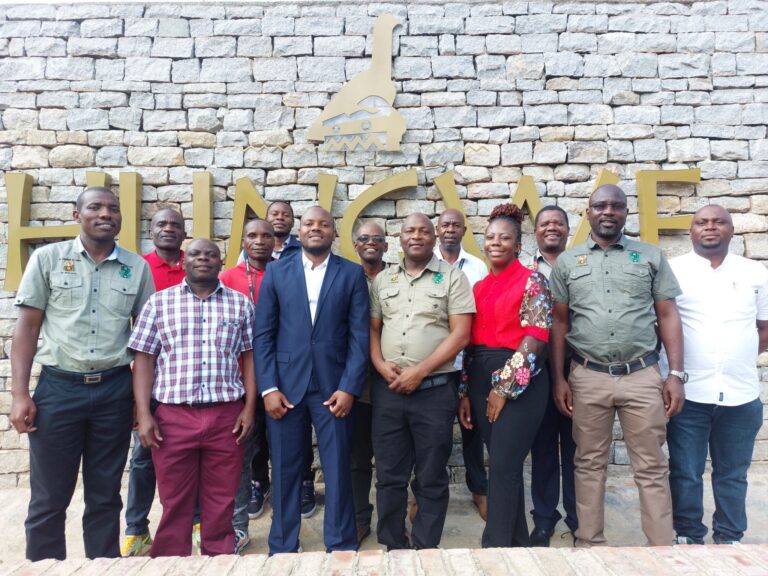
The announcement coincided with the signing of a Memorandum of Understanding (MOU) between the Tshiamiso Trust, the National Social Security Authority (NSSA), and the Government of Zimbabwe in Harare on Tuesday.

The agreement formalises cooperation to ensure that eligible former mineworkers and their dependents can access compensation they may qualify for.

The Tshiamiso Trust was established in South Africa to compensate former mineworkers across Southern Africa who contracted silicosis or TB while working in qualifying gold mines between 12 March 1965 and 10 December 2019.

The mines covered under the settlement include operations formerly owned by African Rainbow Minerals, Anglo American South Africa, AngloGold Ashanti, Gold Fields, Harmony Gold, and Sibanye-Stillwater.

Following a competitive Request for Proposals process, Baines Occupational Health Services was appointed in November 2024 as the accredited service provider to handle both lodgement and Benefit Medical Examination (BME) services in Zimbabwe.

From November 2025, Baines clinics in Harare, Gweru, and Bulawayo will begin assisting claimants.

Tshiamiso Trust Chief Executive Officer, Dr Munyadziwa Kwinda, said the launch of these services in Zimbabwe represents a key milestone in the Trust’s regional mission to reach all eligible claimants.

“We are honoured to mark this moment in partnership with the Government of Zimbabwe and NSSA. Thousands of Zimbabwean ex-mineworkers have been waiting for Tshiamiso Trust services to commence so that they can access compensation that they may qualify for. Today’s agreement means they can now lodge their claims and complete the medical assessments required to determine their eligibility for compensation. This is about restoring dignity and delivering on the promise made to the men and families who built the mining industry,” said Dr Kwinda.

NSSA Chief Executive Officer, Dr Charles Shava, welcomed the partnership, describing it as an important step in extending social protection to former mineworkers and their families.

“Zimbabwe is home to many who spent their working lives in South Africa’s mines and returned home with illnesses that changed their futures. Through this collaboration, we are ensuring that those who qualify can now access the compensation due to them, closer to where they live. NSSA remains committed to working with regional partners like Tshiamiso Trust to expand social security and strengthen cross-border protection for our workers,” said Dr Shava.


How to Lodge a Claim

From November 2025, eligible claimants will be able to lodge new claims and complete BMEs at Baines Occupational Health Services clinics in Harare, Gweru, and Bulawayo. They can also update contact details or confirm eligibility status via the Tshiamiso Trust call centre or WhatsApp service.

To qualify, former mineworkers must have carried out risk work at one of the qualifying South African gold mines during the qualifying periods between 12 March 1965 and 10 December 2019, as outlined in Schedule F of the Trust Deed.

Living mineworkers must have permanent lung impairment from silicosis or TB contracted while doing risk work at these mines.

Those who completed less than five years of qualifying risk work will be required to pay R1,900 for the Benefit Medical Examination (BME), which will be reimbursed if they are found to have an eligible claim. Mineworkers who worked for more than five years in risk areas will receive a free BME.

For deceased mineworkers, claims can be made if there is evidence that they died from work-related TB within a year of leaving the mine, or that they had silicosis if they died between 1 January 2008 and 10 December 2019.

“These are the broad eligibility criteria. Claims are assessed thoroughly, following what is prescribed by the Trust Deed, and specific criteria apply to each of the ten categories available for compensation,” explained Dr. Kwinda.


One-Time Compensation and Caution on Fraud

The Trust has clarified that compensation is a one-time payment. Once eligible claimants receive their payout, they cannot make further claims even if their condition worsens. However, if a claimant is initially deemed ineligible but later develops silicosis symptoms, they are allowed to lodge one further claim.

The Tshiamiso Trust has also warned claimants to be cautious of individuals impersonating its officials or promising to expedite payments. It emphasised that only the Tshiamiso Trust can process claims and that the service is free, apart from the refundable BME fee applicable in some cases.


Quick Guide: How to Make a Claim

  1. Check if you qualify:

  • You must have worked in a qualifying South African gold mine between 12 March 1965 and 10 December 2019.
  • You must have developed silicosis or work-related TB from exposure while performing risk work.
  1. Gather supporting documents:

  • Proof of employment (industry number, service record, or payslips if available).
  • Medical or death records showing lung disease caused by mining work.
  1. Book an appointment:

    • Visit a Baines Occupational Health Services clinic in Harare, Bulawayo, or Gweru for your Benefit Medical Examination (BME).

  2. Pay or confirm BME fees:

  • R1,900 applies if you worked less than five years in risk work (refundable if eligible).
  • Free if you worked more than five years.
  1. Submit your claim:

    • Lodge through the clinic or contact Tshiamiso Trust directly via call, WhatsApp, or email.

  2. Await assessment:

    • Claims are reviewed under the Trust Deed, with compensation awarded based on the specific eligibility category.

  3. Beware of fraudsters:

    • Tshiamiso Trust services are free of charge. Only contact official numbers or verified platforms listed above.

Unki Mine Records 8% Dip in Quarterly PGM Production

0

Valterra Platinum-owned Unki Mine in Shurugwi has reported an 8% year-on-year decline in total platinum group metals (PGM) production for the third quarter of 2025, according to the company’s latest operational update, Mining Zimbabwe can report.

By Rudairo Mapuranga

The mine produced 57,500 ounces of PGMs in Q3 2025, down from 62,500 ounces in the same period last year. The company attributed the decrease primarily to an expected lower ore grade in the current mining area, a common challenge in the lifecycle of a mining operation.

The production figures, detailed in the report, show a broad-based decline across all key metals. Underpinning this drop was a 5% reduction in tonnes of ore milled, which fell to 653,000 tonnes from 687,000 tonnes in Q3 2024. Furthermore, the crucial 4E built-up head grade—a measure of the concentration of platinum, palladium, rhodium, and gold in the ore—slipped marginally by 1% to 3.28 grams per tonne.

A detailed breakdown of the production highlights the following declines:

  • Platinum (Pt): Output decreased by 5% to 26,600 ounces.
  • Palladium (Pd): Saw a significant 10% drop to 21,700 ounces.
  • Rhodium (Rh): Also fell by 10% to 2,500 ounces.
  • Other PGMs: Production was down 8% to 6,700 ounces.

Despite the weaker quarterly performance, Unki Mine continues to be recognized for its operational stability and efficiency. The challenges faced are presented as largely geological—a natural result of the ore body’s characteristics—rather than stemming from operational failures or external disruptions. This contrasts with some PGM operations in South Africa, which have recently grappled with severe issues such as load-shedding and community unrest.

As a key asset within the Valterra Platinum portfolio and a major contributor to Zimbabwe’s foreign exchange earnings, Unki’s consistent performance remains vital. The mine’s ability to navigate geological variations demonstrates strong management and technical planning. This operational resilience is crucial as the global PGM market adapts to evolving demand dynamics, particularly the long-term transition towards electric vehicles, which impacts the traditional autocatalyst sector.

Unki’s output continues to anchor the Zimbabwean mining sector, reinforcing the country’s position as a significant player in the global platinum market.

All Is Set for MVSZ Symposium with Focus on Optimising Mine Ventilation

0

All is set for the Mine Ventilation Society of Zimbabwe (MVSZ) Annual General Meeting and Symposium, which kicks off tomorrow, October 30, in Bulawayo, Mining Zimbabwe can report.

By Ryan Chigoche

The two-day event will bring together mining professionals, regulators, engineers, suppliers, and academics to discuss the latest developments in underground mine ventilation and worker safety.

The symposium, running under the theme “Optimising Ventilation Systems for Operational Excellence,” aims to provide a practical and forward-looking platform for sharing knowledge, showcasing innovations, and discussing strategies to improve air quality and operational efficiency in Zimbabwe’s increasingly mechanised and deeper mining operations.

MVSZ President Dr. Tonderai Chikande told Mining Zimbabwe that delegates can expect a comprehensive programme that reflects the evolving complexity of mine ventilation.

“Delegates can expect case studies on airflow modelling and hybrid ventilation systems, strategies for controlling diesel particulate matter, silica exposure mitigation, thermal stress management, and discussions on regulatory reform and occupational hygiene. Beyond the technical insights, the conference promotes collaboration across regulators, engineers, suppliers, and academia,” he said.

Ventilation is no longer just a compliance requirement. As mines go deeper and adopt more mechanised operations, effective air management has become a critical enabler of safety, productivity, and sustainability. The symposium will explore how intelligent ventilation planning, real-time monitoring, and energy-efficient systems can be integrated into mine design from the outset, ensuring that workers remain safe and operations run efficiently.

The event will also provide an opportunity to benchmark Zimbabwean practices against regional and global standards. Lessons from countries like South Africa, which regularly update their ventilation frameworks to keep pace with modern mining technology, will be highlighted, providing delegates with actionable insights to improve local operations.

With delegates from across the sector, the MVSZ AGM and Symposium is set to be a landmark event for Zimbabwe’s mining industry. Participants will leave with practical solutions, stronger collaborative networks, and strategies to implement advanced ventilation systems that elevate safety and operational performance across the board.

By combining innovation, knowledge sharing, and collaboration, the symposium underscores the Mine Ventilation Society’s commitment to making ventilation a cornerstone of modern, safe, and sustainable mining in Zimbabwe.

How Mine Achieves Over 1 Million Fatality-Free Shifts

0

Nasdaq-listed mining company Namib Minerals’ How Mine in Bulawayo achieved a significant operational milestone this week, surpassing 1 million fatality-free shifts, Mining Zimbabwe can report.

By Rudairo Mapuranga

The landmark achievement provides a strong indicator of the company’s commitment to safety standards at its flagship Zimbabwean gold operation—a critical factor for investors focused on environmental, social, and governance (ESG) performance.

The milestone comes just months after Namib Minerals (NAMM) completed its business combination with a Special Purpose Acquisition Company (SPAC) and listed on the Nasdaq in June 2025, positioning itself as a leading African gold producer. Maintaining an exemplary safety record is paramount as the company navigates the complexities of global capital markets and executes its expansion plans.

Safety performance, often measured by metrics like the Total Recordable Injury Frequency Rate (TRIFR) and fatality-free shifts, directly influences operational efficiency and investor confidence. The success at How Mine, which has produced approximately 1.82 million ounces of gold since 1941, highlights the successful implementation of rigorous safety protocols and management oversight.

While celebrating the safety achievement, Namib Minerals is simultaneously advancing its growth strategy. The company is currently progressing comprehensive feasibility studies for its Redwing and Mazowe gold assets in Zimbabwe, aiming to bring these properties into production.

Maintaining high safety standards while accelerating development is essential for Namib as it seeks to meet production targets and deliver shareholder value in a robust global gold market.

The emphasis on “Zero Harm” is a key part of the company’s narrative as it seeks to attract long-term investment into its Southern African portfolio.