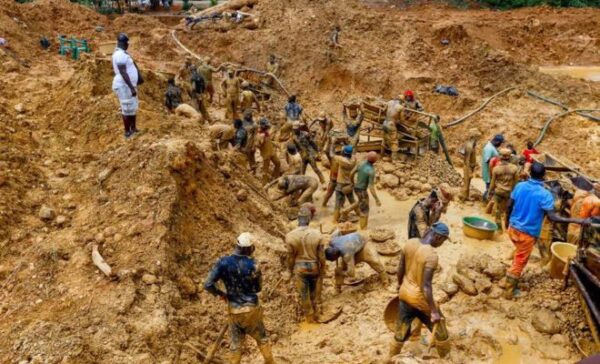
ENVIRONMENT watchdog, Zimbabwe Environmental Law Association, says school children were now increasingly participating in artisanal gold mining activities owing to inactivity and rising poverty levels worsened by a prolonged Covid-19 lockdown.
Speaking to this publication on Tuesday, the environment watchdog’s deputy director, Shamiso Mtisi said a number of Zimbabwe children were now risking young lives through taking part in the illicit practice.
“An increasing number of children in Arda Transau along Odzi River, Penhalonga, Mudzi, Mazoe, among other areas are involved in gold mining.
“Some of these children are being forced to accompany their parents while others are in paid work,” he said.
Mtisi said the current child rights programme being run by ZELA was overwhelmed and could not effectively reach out to all areas where the activities were taking place.
“Preliminary information gathered indicates that there are a lot of child-headed households in need to generate income especially in the Arda Transau area.
“Parents do not have jobs and since schools are closed due to Covid-19, gold mining has become an option for the children,” Mtisi said.
He said the involvement of children was exposing them to other immoral activities such as drug abuse and prostitution.
Zimbabwe Miners Federation president Henrietta Rushwaya both confirmed and condemned such practices describing them as “immoral and illegal”.
“We have zero tolerance to use of minors in the industry. Child Labour is a big NO in the Zimbabwe Artisanal Small-Scale Mining Sector,” she said.
The reports come shortly after an incident where 14-year-old Wisk Peter Chimwayi, a Grade 7 pupil at Rukanda Primary School in Mutoko, suffered spinal cord damage during a mine shaft collapse in Mutoko.
The boy is now paralysed and in need of financial help for advanced treatment.
Zimbabwe has ratified all key international conventions concerning child labour.
These include the International Labour Organisation’s Conventions 138 on the minimum wage and 182 on the worst forms of Child Labour.
The Children’s Act (Chapter 5:06) also exists to protect the rights of children from typical forms of abuse.
Caledonia Mining says it has raised US$13 million from a share sale on the New York Stock Exchange to fund a 20MW solar plant at its Blanket Mine.
The company agreed with Cantor Fitzgerald & Co for the sales agent to sell 597,963 shares US$13 million worth of shares in Caledonia Mining on the New York Stock Exchange. Caledonia applied to London Stock Exchange’s AIM market for a block admission of up to 800,000 new depositary interests, which represent the same number of shares in the company.
“As previously mentioned, Caledonia expects to use the amount of net proceeds from the sales for investment in the construction of a solar power plant to supply electricity to Blanket Mine in Zimbabwe,” Caledonia said in a statement Friday.
Caledonia is one of a growing number of miners in Zimbabwe that are investing in solar to offset erratic power supply from ZESA.
In 2019, Caledonia invited bids for an engineering, procurement and construction contract for the solar project. The company has received a generating licence and the necessary approvals from the Zimbabwe investment authorities and has shortlisted contractors for the solar project.
Power phases
Blanket plans to build the solar power facility in three 6.55-MW phases.
The first phase of is meant to meet Blanket’s consumption, with no excess power dispatched the grid; phase two comprises a further 6.55MW to meet peak demand, with excess power offloaded to the grid; while the third phase will see construction of the remaining 6.55MW to meet the maximum power allowed at the point of interaction with the ZESA grid.
Excess power generated by the solar plant is planned to be fed into the grid under an agreement with the local utility.
Blanket has already installed 18.4MW of diesel backup, but a move to solar will save costs, Caledonia said last year.
“Given the escalating cost of diesel and the problems related with obtaining a secured supply, a solar PV plant with integrated storage is proposed to mitigate the impact of Grid instability as well as to reduce the reliance on diesel power generation,” Caledonia said when it floated the tender.
Blanket Mine is close to completing a five-year US$44 million expansion project, comprising mainly the deepening of the central shaft to approximately 1,200 meters. Central shaft is expected to be commissioned in mid-2020, which will increase the mine’s annual output to 80,000 ounces from the current approximate 50,000oz.
Roughly two weeks ago, I received a WhatsApp message from the Zimbabwe Consolidated Diamond Company (ZCDC)’s Head of Public Relations and Community Development. “True to your advice, we have put annual reports and other documents on website for transparency. You can check.”
By Mukasiri Sibanda
Firmly, this conversation is rooted in my previous work with the Zimbabwe Environmental Law Association (ZELA), where we sought to strengthen transparency and accountability in the governance of the mines and minerals sector in Zimbabwe. Given that opacity is almost synonymous with Marange diamond mining operations, relentlessly, ZELA engaged with ZCDC, Minerals Marketing Corporation of Zimbabwe (MMCZ), government and Parliament to improve transparency in the diamond sector.
ZCDC is a State-Owned Enterprise (SOE), wholly owned by the government of Zimbabwe through the Zimbabwe Mining and Development Corporation (ZMDC). Formed in March 2015, the government’s main drive for establishing ZCDC “was to ensure that there would be transparency, accountability and optimal commercial exploitation and marketing of Zimbabwe’s diamonds that would benefit ordinary Zimbabweans.” An objective that jibes with the African Mining Vision (AMV) which envisages “Transparent, equitable and optimal exploitation of mineral resources to underpin broad-based sustainable growth and socio-economic development”
Why disclosure is key
According to Natural Resource Governance Institute (NRGI)’s Guide to Extractive Sector State-Owned Enterprises Disclosures, “transparency, driven by enhanced disclosures, constitutes a major component of an SOE’s accountability to shareholders, potential investors and business partners, and an increasingly engaged civil society.”
At the behest of the International Monitoring Fund (IMF)’s Staff Monitored Programme, the only audited annual reports which extensively covered the diamond sector were publicly released in 2013, comprising of 2011 and 2012 annual reports. So, considering the seven-year information drought on audited annual reports, the disclosure by ZCDC in 2020 comes as a huge relief. Also important to note is that, this time around, it was civil society organisations (CSOs) that influenced ZCDC to disclose and not IMF.
Perhaps this is indicative of the fact that local CSOs are quite relevant to the agenda of strengthening transparency and accountability of Zimbabwe’s extractive sector.
The term “extractive sector” is used generally to refer to oil, gas and mineral sector. Using narrative reports generated by OAG, CSOs like ZELA, in previous years, had lambasted ZCDC for failing a transparency test.
As the government stumbles on adoption and implementation of the Extractive Industries Transparency Initiative (EITI), a globally recognized standard on promoting openness and accountability in the extractive sector, it is crucial, therefore, for CSOs to unbundle the push for transparency. Small victories such as this one on disclosure of annual reports by ZCDC are needed energizes the struggle for transparency. It must be noted though, the Office of the Auditor General (OAG) had been consistently sharing only narrative reports on governance challenges besetting State participation in the diamond sector.
Whilst the disclosure by ZCDC is laudable, it must be highlighted, ZCDC’s peer, MMCZ publicly releases its audited annual reports on regular basis. Equally so, OAG had been consistently sharing information on state participation in the diamond sector.
This evinces, therefore, that ZCDC had been lagging compared to its peers on transparency. Considering that ZCDC is owned by ZMDC, a SOE which lacks a culture of disclosure, will the entity breakaway from opaqueness and consistently disclose publicly its annual reports.
Tiffany’s is growing its Africa presence, but Zimbabwe not on its map over transparency concerns (pic: Getty Images)
After complying with IMF’s SMP in 2013, ZCDC ceased to disclose publicly its annual reports in the preceding years. Now that ZCDC has heeded that call by CSOs to disclose, will this be part of the new culture by ZCDC. Only time will tell, however. But what is clear is that CSOs must no rest in their laurels, constant pressure is needed to ensure that mining SOEs like ZCDC embrace a culture of disclosure.
Another huge minus on ZCDC’s disclosure is that the information is stale. Only audited annual reports for 2016, 2017 and 2018 were released. Up to date information on ZCDC’s 2019 audited annual reports is still not publicly available. Clearly, ZCDC is flouting the constitutional basic values and principles governing public administration, particularly, Section 194 (1) (h), which says “transparency must be fostered by providing the public with timely, accessible and accurate information.”
Revealed: Revenue leakages and illicit financial flows
Claims of US$15 billion missing from Marange diamond mining operations, made by the former and late President Robert Mugabe, the diamond sector is a harbinger for corruption and illicit financial flows (IFFs) prejudicing resources for investment in essential services and infrastructure. IFFs are defined as money that is illegally earned, transferred and spent by the Global Financial Integrity.
The Report of the High Level Panel on IFFs from Africa cautioned that African countries that heavily depend on extraction of natural resources for their exports and tax revenue, as the case with Zimbabwe, are prone to IFFs. Such IFFs occur through “transfer mispricing, secret and poorly negotiated contracts, overly generous tax incentives and under-invoicing.”
The report’s findings chimes with highlights from ZCDC’s annual reports on sources and enablers for diamond revenue leakages such as “Lack of adequate skills and capacity in sorting and valuation also contributed to loss of value through undervaluation. An inadequate marketing framework further exacerbated the value loss as it failed to attract a diversified pool of international buyers to participate at local diamond auctions. Resultantly the country was losing significant value due to inefficiencies in cleaning, sorting, valuation and marketing of diamonds.”
To help curb diamond revenue leakages and IFFs, “ZCDC acquired a Diamond Processing and Deep boiling facility with modern technology and appropriate intellectual property to facilitate the cleaning of Zimbabwean diamonds which had been undervalued due to poor cleaning.”
Zimbabwe diamond production since 2010 – Bloomberg
To back this assertion, a comparative analysis of the average rough diamond price per carat for annual diamond sales conducted by ZCDC shot to US$62.27 in 2018 from US$49.69 earned in 2017, a 25.33% increase in value. It is important though to note that, according to Kimberly Process (KP)’s public statistics, average price of rough diamonds per carat rose from US$110.13 in 2017 to US$116.78 in 2018, a 6.04% increase in value.
At a minimum, this helps to show that ZCDC’s interventions have improved the average price of rough diamond sales.
Is ZCDC fulfilling its mandate?
There are five anchors of ZCDC’s mandate that consists of; (i) to enhance adequate investment in diamond mining beyond alluvial, (ii) to explore for kimberlitic resources and build bankable mining reserves, (iii) to enhance contribution to the fiscus and community development (iv) to enable Government to more efficiently manage operations and exploitation of the country’s diamond resources; (v) to achieve better accountability and transparency.
A quick evaluation of how ZCDC has fulfilled its own mandate a fundamental exercise of stimulating citizen participation and accountability in the diamond sector. Notably, CSOs working with Community Based Organisations, mining companies and relevant government institutions organized multi-stakeholder engagement platforms branded as alternative mining indabas (AMIs) at district, provincial and national levels.
For Mutare district AMI, community evaluation of ZCDC’s mandate, fundamentally, must be one of the topical issues for engagement.
“ANJIN’S RETURN POINTS TO ZCDC’S FAILURE TO ATTRACT RESPONSIBLE INVESTMENT”
Beyond alluvial
In its annual reports, ZCDC reveals that the company has managed to successfully transition from alluvial diamond mining to conglomerate diamond mining. Diamonds are expected to contribute at least US$1 billion annually by 2023, according to government’s target of annual earnings of US$12 billion by 2023.
Although not included in the annual reports, Anjin Investments and Alrosa have come in “to work with ZCDC to boost diamond exploration and production.” In 2018, ZCDC produced 2,766,576 carats, a far cry from 12,060,162.7 produced in 2012 earning $740,998,085.16 according to KP’s rough diamond pubic statics.
“ZCDC MUST DISCLOSE CONTRACTS WITH ANJIN AND ALROSA FOR PUBLIC SCRUTINY”
This was the peak period of Zimbabwe’s rough diamond production. ZCDC’s 2018 rough diamond production figures show that the entity has a mountain to climb if it is to help with the attainment of the US$1 billion annual earnings from diamonds by 2023.
The return of Anjin Investments, partly owned by the Chinese and the military, points to a failure by ZCDC to attract responsible investment in the diamond sector. Along with the other seven companies that were mining diamonds in Marange, Anjin Investment was given the boot in 2016 for being part of the opaque management of diamonds and huge revenue leakages.
Considering that ZELA was on the ground in March 2018, where it witnessed that Anjin Investment was active, it is amiss that ZCDC in its 2018 annual report failed to report on Anjin Investment’s activities. To gain more insights on Anjin Investment’s rogue past in Marange, read Mukasiri Sibanda’s opinion piece, The return of Anjin to Marange, the blindside of “Zimbabwe is open for business” agenda, published by newZWire on 10 February, 2019.
It is pertinent for ZCDC to disclose contracts the company entered into with Anjin as well as Alrosa for publicly scrutiny if ZCDC is to fulfill its mandate on delivering better transparency and accountability in the diamond sector.
Contribution to Treasury and community
There was no disclosure of various payments made to the government by ZCDC. It is important for ZCDC to publicly disclose payments of taxes, charges and levies paid like royalties, local taxes to Mutare RDC, and levies paid to Ministry of Mines and Mining Development (MMMD), for example. Such levels of transparency are quite critical given the legacy issues around failure by the previous miners to pay a fair share of taxes to government.
ZCDC’s 2017 annual reported noted that “the known rich alluvial deposits had been mined out and the remaining alluvial deposits were largely uneconomic for mechanised mining”, according to its former CEO M Mpofu.
There is an opportunity for ZCDC to allow artisanal diamond mining in Marange as encouraged by AMV and the Kimberly Process through the Washington Declaration on Integrating Development of Artisanal and Small Scale Diamond Mining with Kimberly Process Implementation. Artisanal mining is hymned by the AMV because of its ability to create employment since it is lowly mechanised and highly labour intensive. If well managed artisanal diamond mining can balloon the community spend, enhance community enterprise development, and mitigate violent conflicts which tarnish Zimbabwe’s diamonds on the international market. If ZCDC seriously seeks to enhance community development, artisanal diamond mining must be a top agenda item.
Whilst it commendable that unlike its predecessors, ZCDC paid “US$5 million” to Marange-Zimunya Community Share Ownership Trust (CSOT), the net effect is that ZCDC acted no differently from its duplicitous predecessors who failed to honour their commitments on community development. Due to the country’s currency woes, the payment was accounted for as local currency and this heavily eroded the value of the fund.
Disclosures good, but not enough
ZCDC must be commended for releasing its annual reports for publicly scrutiny which augurs well with its mandate to deliver better transparency and accountability in the diamond sector. Similarly, efforts by ZCDC to curb diamond revenue leakages through improved sorting and valuation of diamonds are quite commendable. Average rough diamond price per carat rose by 25.33% in 2018 compared to 2017, all thanks to efforts made by ZCDC.
However, there are areas for improvement.
ZCDC must ensure to share timely, accessible and accurate information as required by the Constitution. From its peers like MMCZ, ZCDC must take a leaf and consistently share publicly its annual reports.
Government might be stumbling on joining EITI, however, CSOs must take heart that there are important small victories that are needed to improve the mining transparency landscape. To move the needle on delivering transparency in the diamond sector, ZCDC must disclose joint venture contracts with Anjin Investment and Alrosa.
On community development, it is vital for ZCDC to support artisanal diamond mining. This will also go a long way to remove the bad publicity around Marange diamonds because of recurring violent conflicts between the company’s security and artisanal miners.
South African business tycoon, Martin Simmons claims that he has been shut down from Kenako Diamond Processing a company in which he is the major shareholder.
Simmons claimed he had a 70% stake in the firm which he single-handedly funded while fellow shareholders Barbara Mutambanengwe and lawyer Munyaradzi Nzarayapenga had 25% and 5% shares, respectively.
The seed capital, Simmons said, was disbursed through Dube-Banda and Nzarayapenga’s law firm. He told NewsDay Weekender that the two were now plotting to elbow him out of the company by holding on to his share certificate and denying him access to the firm’s financial records and premises.
“I first released US$400 000 and later US$200 000 — funds I disbursed through Dube-Banda Nzarayapenga Attorney’s trust account and have documents to prove that. The money paid in 2015 was a loan to Ke Nako meant to be paid back to me,” said Simmons, adding he was yet to receive the refund.
He said he formed the company on the advice of his long-time friend and lawyer Nzarayapenga who had now allegedly ganged up with Mutambanengwe to push him out by blackmailing and denying him access to the firm.
“I am in the dark and don’t know what is happening. I have a right to be informed of the developments, the performance of the company but I have been shut out and even banned from the company premises,” said Simmons.
“It has been a nightmare to imagine you invested over US $600 000 and for five years you receive nothing for your investment. It is like flushing money down the drain. What makes it worse is the fact that Ke Nako is currently trading and being paid in US dollars for cleaning diamonds, but is unable to repay even one cent of the money I invested.”
A source at the Minerals Marketing Authority of Zimbabwe confirmed Ke Nako was engaged by the government to clean diamonds and has been receiving its payment for the services in US dollars.
Simmons’ accountant, Barry Knight said proper corporate governance had not been observed at Ke Nako.
“Statutory meetings were not held and little to no financial reporting was made to Mr. Simmons. It appeared that Mr. Simmons’ rights as a majority shareholder were completely ignored by Nzarayapenga and Mutambanengwe who ran the company as their personal property,” said Knight.
Simmons said his new lawyers at Mutuso, Taruvinga and Mhiribidi’s efforts to organise an urgent shareholders’ meeting was being resisted by his partners who also allegedly refused to release his share certificate.
But in separate interviews, Nzarayapenga and Mutambanengwe accused Simmons of pushing to “take over” their firm. Nzarayapenga claimed Simmons had opted out of the company and offered his shares for US$200 000, although he admitted they had not paid him.
Nzarayapenga later went ballistic, accusing NewsDay Weekender of seeking to tarnish his image.
“I think you are trying too hard to please your master Simmons, you are now seeing shadows everywhere. You are hell-bent on tarnishing my name, you are willing to lie about my alleged communication with Rebecca Siziba. For the record, I have never spoken with her at all. You are just slandering me,” Nzarayapenga said.
Quizzed on why he held on to Simmons’ share certificate, Nzarayapenga said: “Again this amply demonstrates that you are out to please your paymaster Simmons at the expense of the truth.”
Mutambanengwe said Simmons was being misled by conmen.
“All I can tell you now is, Martin is a liar, he will not take away my company like he has done to at least four other women,” she said.
“He comes in sheep’s clothing like he is giving someone a loan, then turns around and steals from that person. I am a woman yes and I will fight for what I know belongs to me,” she said.
Mutambanengwe further accused Simmons of seeking to drive her into illegal diamond deals.
Asked to explain how they had used the US$600 000 loan received from Simmons, she said: “Nzarayapenga was supposed to give you the breakdown because he and Barry (Knight) managed it. We bought equipment, renovated the Ke Nako laboratory, travelled to India, sought and furnished offices, salaries etcetera. The amount of diamonds we then received was far less than the projected numbers.”_NewsDay
ZIMBABWE is losing at least US$100 million worth of gold every month, which is being smuggled out of the country through porous borders with Government now in the process of rolling out measures to plug the leakages.
Gold is the country’s biggest foreign currency earner. Last year, the country earned US$946m from US$1,3bn in 2018 from exports of the metal.
Some of the measures that Government is working on to plug the leakages include installing a sophisticated computerised system at the country’s border posts and airports which will be able to detect illegal activities.
Treasury also intends to procure 500 police vehicles as part of raft of measures to help fight crime and improve efficiency in terms of policing and fighting corruption among other illegal activities.
Speaking during a familiarisation tour of selected police stations in Bulawayo on Friday, Home Affairs and Cultural Heritage Minister Kazembe Kazembe said Government was concerned about the leakages of gold, among other precious stones, which prejudices the country of US$100 million every month.
Minister Kazembe said as part of a raft of measures to fight smuggling among other criminal activities, his ministry is in the process of equipping the Zimbabwe Republic Police (ZRP) with modern technology and channelling more resources towards the fight against crime.
“We are losing close to US$100 million worth of gold every month which is being smuggled out of the country through our borders. Criminality has become complex and sophisticated given that perpetrators are harnessing technological advancement to enhance their criminal activities,” he said.
“In fact, it’s common knowledge that emerging crimes such as cybercrimes are redefining the policing terrain. There is therefore, the need to capacitate ZRP with technologically aided crime prevention, investigation and detection equipment in order for the organisation to keep abreast of criminal sophistry. Smart policing is, indeed, the way to go.”
Minister Kazembe said Treasury is in the process of procuring 500 cars for use by police in combating crime. Already, drones for use in patrolling borders, have been acquired.
“The Ministry of Finance and Economic Development is in the process of procuring 500 more vehicles for police although they may not be enough. This is a process and going forward more resources would be availed to address the challenges faced by police in the fight against crime,” he said.
Minister Kazembe said they are working on a roadmap to harmonically computerise all the departments in his ministry since they work hand in hand.
“We want a situation where if somebody is coming into our country and upon presenting their passports, the immigration officer can tell that this person is on the police wanted list. The same should also apply with police that if there is someone who has just come into the country, they should be able to tell that the culprit has just entered our borders,” he said.
“This is already happening in other countries and our technical team is working tirelessly towards achieving that goal and they already have the matrix and the scope of work has been done.
“We are installing a sophisticated system in our borders and airports that will be able to automatically identify culprits without them even knowing.”
Minister Kazembe urged police to shun corruption and assured them that Government was seized with measures to improve their welfare.
“Shun corruption and fingers are being pointed at the police that they are corrupt. We may have bad apples, but nonetheless we have a duty to perform and mandate to maintain peace and security. Generally, police are doing a good job and they should also play a leading role in curbing corruption and leakages of minerals, especially gold which is finding its way out of our borders,” he said.
“We will never lose sight of the fact that effective policing is a very expensive exercise though it comes along with invaluable rewards in the form of peace, stability and investment attraction. A safer and secure environment remains a critical enabler in attaining an upper-middle-income economy in 2030 as espoused by His Excellency, President Mnangagwa in Vision 2030.”
Minister Kazembe also commended police for remaining steadfast in maintaining law and order and professionally discharging their duties by thwarting planned demonstrations by anti-Government elements pushing the illegal regime change. “Zimbabwe is a peace-loving nation and the people will never be hoodwinked into blindly serving interests of a few misguided elements at the expense of the common good.
Furthermore, the security architecture of the country, including ZRP, is very much prepared to continue ring-fencing the tenets that define us as a people, that is peace and stability,” he said.
The minister also lashed out at the opposition for peddling falsehoods on social media claiming that there was gross violation of human rights in the country.
Stakeholders in the mining sector have urged the government to revive its legacy efforts of formalizing artisanal mining to curb crime, black-market trading and Illicit financial flows IFFs.
Speaking during a virtual discussion organized by the Zimbabwe Allied Diamond Workers Union (ZIDAWU) Proud Nyakunu, ZIDAWU legal officer, called for the revival of formalization efforts and support for the policy to formalize artisanal and small-scale miners.
Nyakunu said, then, the government used a combination of district and nationally administered licensing and capacity-building measures to formalize until political will dwindled, with it so were financial resources.
She said despite the failure of “decentralization” efforts in the 1990s and early 2000s, hampered by insufficient resources and power transfers, the government should revive the model seen as a source of optimism.
“In 1991, the government of Zimbabwe enacted statutory instrument 275 of 1991, the Mining (Alluvial Gold) (Public Streams) Regulations in order to recognize the artisanal and small scale mining sector thereby incorporating the sector into the national developmental plans.
“The regulatory instrument allowed local authorities particularly rural district councils to allocate mining blocks to organized ASM in consultation with the Mining Commissioner.
“These initiatives combined the goals of promoting safer environmental management and developing policies for ASM legalization, focusing on two types of gold mining alluvial gold panning in riverbeds and small-scale primary ore extraction on land,” said Nyakunu.
Nyakunu said these arrangements were discarded in the post-2000 hyper-inflationary period when government agencies centralized authority over the mining sector and implemented heavy-handed crackdowns targeting ASM.
The statutory instrument was repealed as the government responded to increases in case of illegal trade in gold in 2014, alluvial mining was effectively banned through Environmental Management Regulations (EMR) (2014).
At the time through the Reserve Bank of Zimbabwe, the state argued, that artisanal mining caused chaos, environmental degradation, smuggling of minerals and illicit financial flows.
To address this it introduced (2014) the Artisanal Mining Permits (AMPs), issued at gold service centres, FPR sites, and licensed millers’ offices, aimed at easing gold trade with Fidelity Printers
and Refineries.
“The greatest reason behind reluctance on part of the government to formalize Artisanal mining is that most political heavyweights are allegedly involved in the artisanal mining, for example, the Redwing mine in Penhalonga.
Most of the people carrying mining activities in the area are alleged to be backed by senior government officials.
“It is clear that artisanal mining causes leakages of minerals, illicit financial flows and there is need for formalization to curb this, however, the government is using this and its previous attempt to defend reluctance on formalization,” said Nyakunu.
Shamiso Mutisi Zimbabwe Environmental Law Association (ZELA) deputy director concurs that there are tangible benefits that can accrue both to the state and the generality of Zimbabweans through formalization.
Mutisi said formalization can effectively cut o illicit gold trade, which in itself is mainly influenced by corruption instigated by the elite capture of natural resources, who benet amidst this chaos, “The public can benet from ASM in different ways including employment, incomes for households involved, contribution to national fiscus and even the local economy at ASM mining sites miners also buy other goods and services for their operations and this benefits other businesses and the public
“However the problem is that in a situation where minerals are sold outside the formal market or on the black market the fiscus then receives less income from the ASM sector.
“The elite can capture the mining and trade of minerals of existing policies and laws are not adequate to promote transparency and accountability and in curbing corruption. Lack of enforcement of laws and monitoring may also lead to elite capture of the benefits. “So fighting corruption remains key,” said Mutisi.
Mutisi said it was imperative that the government formalizes ASM as the current context in the gold sector favoured this sector, which is more agile to respond to the prevailing political environment, than large scale miners.
He said formalization will further stimulate production in the ASM sector by setting predictable and consistent gold trading policies and practices.
“Given the number of ASM miners in Zimbabwe and the increasing number of people going into ASM, the sector can even surpass the current levels of gold production and contribution to the economy. The numbers can also increase if leakages of gold for example into the black is curbed through the adoption and implementation of predictable and consistent gold trading policies
“The large scale miners are affected by the current economic and political environment and most of the companies have closed or are on care and maintenance and this makes it difficult for them to produce.
“The ASM sector is more agile and adaptive to the prevailing difficult political and economic environment than large scale miners,” said Mutisi.
As part of ongoing work in the sector, ZELA says legal and policy formalization will bring legitimacy, ensure compliance to laws by artisanal miners and promote better working practices as well reducing negative environmental impacts of mining activities.
Nobuhle Mabhikwa of ZELA says lack of legal recognition of artisanal miners as formal players regardless is in spite of significant contribution to the national fiscus.
The formalization will prevent and help to better manage conflict associated with the encroachment of miners and operations onto large-scale mining concessions said Mabhikwa.
She said while it has been a viable livelihood option for many rural populations, the rampant criminality that is prevalent results from the unregulated operating environment in the sector
Mabhikwa said responsible development of gold resources both through large-scale mining (LSM) and artisanal mining, especially when coupled with sound governance, has the potential to deliver broad social and economic benefits to individuals, communities and countries.
“It has been evident that, for the past 3 years, the artisanal (and small-scale) miners have been producing and more gold to the FPR, (increased revenue inflow to the national fiscus), it becomes imperative that the sector should be formalized.
“It is increasingly becoming evident that artisanal and small-scale mining is. The government should respond by formalizing, just in the same rationale it is asking informal traders to come forward and register in order to start operating under the eased lockdown.
“Therefore, it becomes imperative for host governments to consider how best to ensure the optimum model to develop frameworks, to support sustained social and economic development for the local community and nation at large,” said Mabhikwa.
COMPANIES flocking into the energy and mining sectors in Hwange have been urged to invest in social amenities such as housing, schools, clinics and roads to assist in the growth of the town.
Of late the coal mining town has experienced an increase in the number of companies venturing into mining and processing of coal.
However, this has not translated into infrastructure development of the town as most have been relying on Hwange Colliery Company to accommodate their workers.
Addressing officials from various local authorities and various stakeholders in Hwange on Thursday, Minister of National Housing and Social Amenities, Daniel Garwe implored the companies to partner with councils in ensuring the development of social amenities.
“We are aware that about a month ago the President was here commissioning several mining companies that have come to invest in Hwange resulting in growth. That growth trajectory in terms of mining needs to be supported by adequate, modern and sustainable human settlement. We are basically here to ensure that no employee must be homeless during and after employment in a company. We are aware of the disaster that has been created in certain areas where we have mining villages that were created and the mines have closed and the people are still there but there are no social amenities.”
He said there was a need to modernise and urbanise mining areas to ensure they speak to the President’s vision that Zimbabwe attains an upper middle-income economy status by 2030. He said in order for Hwange to be turned into a town or city local authorities and the private sector needed to work together to push the agenda.
Hwange is run by four quasi authorities namely Hwange Local Board (HLB), Hwange Colliery Company, Zimbabwe Power Company and National Railways of Zimbabwe. He said there was a need to revise most by-laws which were developed during the colonial period around 1943 while imploring for the championing of modern standards and climate resistant structures.
The minister later toured housing projects that included Don Bosco, Empumalanga Phase 4 and West under HLB.
THE Government is working tirelessly to expedite the return of expatriates contracted under its power generation projects most of whom are still locked up in their countries due to the outbreak of Covid-19.
The Government is also struggling to import equipment most of which is sourced in countries that were hard hit by Covid-19 especially China. In an effort to boost power generation the country through Zimbabwe Power Company (ZPC) embarked on the stage 7 and 8 expansion project at cost of US$1.2 billion.
The project is expected to contribute an additional 600MW into the national grid when completed in 2021. Power supplies have over the past weeks been depressed owing to outages at Hwange Power Station as a result of breakdowns being experienced on other existing units. Out of the six units only three are operational churning out a combined 290MW resulting in the load shedding currently taking place in the country.
However, with the outbreak of Covid-19 pandemic work on stage 7 and 8 as well at the existing units stalled. Speaking in an interview at the sidelines of a tour of Hwange Power Station and the expansion project, Energy and Power Development Minister, Soda Zhemu said the Government was working on expediting the return of expatriates.
“What we did from morning was to understand the operations that are being done here at Hwange Power Station and toured the 7 and 8 project. We have taken note that the projects are progressing save for few hitches, which we had as a result of Covid 19 induced lockdowns. Some experts have been demobilised they had to go back to their countries especially China and some efforts are actually underway to have them come back. Yes, there will be some rescheduling in terms of the completion dates all that we have taken note of,” said Minister Zhemu.
He said his ministry was also engaging the Finance and Economic Development ministry to resolve the issue of delays in payments were underway.
“Issues to do with funding some arrangements, which were initially done through the China Exim Bank, have to be resuscitated. The Ministry of Finance (and Economic Development) has to do something in order to ensure that payments are expedited and remitted to the banks so that they continue to honour the initial arrangements. We also had a tour of the existing plants where three units are on service and doing 270MW which are actually inadequate considering the power requirements in the country. Yes we have also taken note of the challenges that the power utility is facing in terms of the breakdowns that are there. Units 3 and 6 are not on the grid because of the annual overhaul maintenance, which was supposed to have been done and have since been stalled by Covid-19 since some experts have to be coming from South Africa and Italy work on the units.”
Briefing the minister, Stage 7 and 8 Expansion Project site manager Engineer Forbes Chanakira said the project was being affected by Covid-19.
“There is a likelihood that we might fail to meet initial project completion of October 2021 for unit 7 as current delays puts the completion date at February 2022. As a result of the pandemic there have been delays in manufacturing and shipping of equipment which is primarily coming from China. We are also experiencing failure for manpower skills for installation and construction to mobilise to site contractor a requested waiver to allow a total of 324 employees to be mobilised. A total of 187 are expected before the end of September while awaiting approval for the remaining 137,” said Eng Chanakira.
He said delays in IPC payments was also contributing to the stalling of the projects.
“We are experiencing delays in IPC payments as a result failure by ZPC to maintain an Escrow Account for foreign payments which is a condition for the disbursement of the loan by China Exim Bank. The outstanding amount is US$122,944.08 as at 3 September 2020. The effects of the delays in payment have been failure to meet project completion date. Project cost increases as a result of penalties for late payment. The interest due to IPCs claims by the contractor is US$4,169 million as of 3 September 2020. The contractor has notified ZPC on intention to demobilise as they have no funds to continue the project.”
Eng Chanakira said as part of proposed control measures a savings bond be issued in favour of China Exim Bank as collateral security of the Escrow Account while amending the agreement to reflect the developments. The project which is now at around 60 percent completion has undergone Unit 7 and 8 boiler steel structure installations and transmission tower foundation construction. A boiler, turbine and generator has been manufactured and delivered while Sherwood B site levelling is still underway.
The US$1.4 billion project which is being implemented by Sinohydro with funding coming from China Exim Bank is part of Government’s efforts to ensure power availability as an economic enabler_The Sunday News
Prophetic Healing and Deliverance (PHD) Ministries founder and leader Walter Magaya’s appetite for free money has manifested when he invaded a mine belonging to Zimbabwe Miners Federation (ZMF) Women in Mining member and a representative of regional women in mining Ms. Blessing Hungwe.
Magaya allegedly invaded the mine with the help of a former farmer of the land and a local legislator who both were given shares of the mine by Hungwe.
It is believed that Magaya knew that the mine belonged to Hungwe but wanted these two to push Hungwe out so that he would take full control of the mine, Hungwe is the major shareholder and the holder of the mining certificate of the mine.
When Hungwe spoke to Mining Zimbabwe she said that she had never met Magaya before and only knew him as a popular televangelist.
“I have never met Magaya, I only knew him as a prophet, not as a mine grabber,” Hungwe said.
According to reports received by Mining Zimbabwe, the PHD leader is in the habit of taking over mines owned by women under the pretense of investment. He is reportedly working with a popular small scale miner and pegger who is based in Mazoe.
Zimbabwe Miners Federation ZMF through their President Ms. Henrietta Rushwaya said they were following and monitoring the events closely, and promised to protect Hungwe from any invasion since she is the owner of the miner according to the law.
“We are closely following and monitoring the events as they unfold. As always, we shall safeguard and protect the interests of our ZMF members and in this case, it is Blessing Hungwe who is the holder of the mining certificate.” Rushwaya said.
Mining Zimbabwe’s effort to get a comment from the PHD founder were fruitless as his mobile phone went unanswered.
Prophetic Healing and Deliverances Ministries founder Walter Magaya has reportedly invaded a mine owned by a member of the Zimbabwe Miners Federation (ZMF) women in Mining, Blessing Hungwe.
Magaya reportedly came with mining equipment and strategically put the equipment including generators in a bid to mine without Hungwe’s consent.
To provide the best experiences, we use technologies like cookies to store and/or access device information. Consenting to these technologies will allow us to process data such as browsing behavior or unique IDs on this site. Not consenting or withdrawing consent, may adversely affect certain features and functions.
Functional
Always active
The technical storage or access is strictly necessary for the legitimate purpose of enabling the use of a specific service explicitly requested by the subscriber or user, or for the sole purpose of carrying out the transmission of a communication over an electronic communications network.
Preferences
The technical storage or access is necessary for the legitimate purpose of storing preferences that are not requested by the subscriber or user.
Statistics
The technical storage or access that is used exclusively for statistical purposes.The technical storage or access that is used exclusively for anonymous statistical purposes. Without a subpoena, voluntary compliance on the part of your Internet Service Provider, or additional records from a third party, information stored or retrieved for this purpose alone cannot usually be used to identify you.
Marketing
The technical storage or access is required to create user profiles to send advertising, or to track the user on a website or across several websites for similar marketing purposes.