Home Blog Page 58

Mine Entra 2025 to Focus on Measurable Business Outcomes Amid Sector Challenges

0

The Zimbabwe International Trade Fair, organisers of the country’s premier Mining, Engineering and Transport Expo (Mine Entra), say this year’s event will put measurable business outcomes at the heart of its agenda, Mining Zimbabwe can report.

By Ryan Chigoche

The 28th edition comes at a challenging time for Zimbabwe’s mining sector, which is navigating subdued production levels, volatile commodity prices, and increasing calls for sustainable practices.

Nick Ndebele, CEO of the Zimbabwe International Trade Fair Company (ZITF), told Mining Zimbabwe that lessons from last year’s edition have informed a sharper, more results-focused approach for the upcoming expo.

“…Learning from last year, it also became clear that technology and sustainability are no longer peripheral issues; they are now central to the sector’s future. Equally, the market reminded us to stay closely attuned to prevailing realities. Low output levels, fluctuating commodity prices, and shifting priorities underscore the need for an event that delivers measurable business outcomes,” Ndebele said.

Meanwhile, preparations for the 2025 Mine Entra are already well underway, following an aggressive marketing and promotional campaign that has generated an enthusiastic response from stakeholders.

Organisers say the strong uptake confirms the event’s standing as the go-to marketplace for mining industry players seeking tangible value.

This year’s edition will run under the theme “Beyond Extraction: Sustaining the Future of Mining,” which places stronger emphasis on sustainability, innovation, and community impact.

Exhibits and discussions will highlight green technologies, the energy transition, ESG principles, digital transformation, automation, and policy and regulatory innovation — all designed to provide actionable insights for the sector.

By focusing on measurable outcomes and aligning with the industry’s shift toward responsible, future-focused mining, the 28th edition of Mine Entra aims to move beyond being a traditional trade fair and become a strategic forum where stakeholders can build partnerships, strike deals, and shape the direction of Zimbabwe’s mining sector.

The event is shaping up to be larger and more internationally connected than ever before, building on last year’s strong performance. Mine Entra 2024 attracted 289 exhibitors — a 41 per cent increase from 2023 — including 23 international companies from four countries.

This 91 per cent jump in foreign participation highlighted the exhibition’s growing reputation as a hub for mining investment and cross-border engagement. The numbers suggest that this year could see even broader international involvement, reflecting Zimbabwe’s rising profile in regional and global mining markets.
FIU Calls for Mines Ministry Capacitation to Plug Gold Leakages and Tighten Oversight

0

The Financial Intelligence Unit (FIU) of Zimbabwe has called for greater capacitation of the Ministry of Mines and Mining Development to help curb rampant gold smuggling and strengthen enforcement of Anti-Money Laundering and Countering the Financing of Terrorism (AML/CFT) rules, Mining Zimbabwe can report.

By Ryan Chigoche

This follows findings from the FIU’s 2024 National Money Laundering Risk Assessment: Summary of Findings, which rated money laundering risks in the precious metals and stones sector as “medium-high,” with both threat and vulnerability levels assessed similarly.

The report revealed that gold smuggling remained high between 2019 and 2023, exposing the sector to funds from illicit sources, while awareness of AML/CFT obligations among sector players was found to be relatively low.

Zimbabwe faces significant challenges with mineral smuggling, particularly involving gold and lithium, which drain substantial state revenue. Gold smuggling alone is estimated to cost the country at least US$200 million annually, driven by organized syndicates and weak enforcement.

The FIU has highlighted the mining sector’s low AML/CFT awareness, prompting recommendations to capacitate the Ministry of Mines, strengthen controls, tighten border security, and enhance collaborative enforcement to curb illicit mineral trade and protect national resources.

With smuggling rife and the ministry struggling to enforce regulations, the FIU in its recommendations laid out clear steps for Zimbabwe to tighten oversight and plug the leaks in the mining sector:

“We recommend capacitating the Ministry of Mines and Mining Development, as the licensing authority for gold dealers, to enable it to effectively carry out its AML/CFT supervisory responsibilities. Controls should be strengthened to prevent gold leakages in the sector, and gold should be traded only through licensed and regulated dealers. We further recommend tightening controls at ports of entry, exit, and along border lines, and enhancing enforcement of sanctions for AML/CFT breaches through close collaboration between the FIU, the Ministry of Mines, and the ZRP Criminal Investigations Department (CID) Minerals Flora and Fauna Unit (MFFU),” the FIU said.

However, the ministry’s ability to act on these recommendations could be hampered by limited resources.

For the 2025 fiscal year, it was allocated approximately ZWL664.8 million (about US$22.16 million), representing just 0.3% of the national budget.

This modest allocation restricts essential activities such as inspections, audits, and the development of critical infrastructure, including metallurgical laboratories, limiting the ministry’s effectiveness in regulating the sector and curbing mineral smuggling.

In a rapidly evolving global financial landscape, combating money laundering and terrorist financing remains a critical priority.

“The assessment provides a comprehensive evaluation of the money laundering threats facing the country as well as identifying the vulnerabilities in the AML/CFT system that can be exploited by criminals to launder ill-gotten wealth. The results of the assessment will inform the crafting and adoption of the country’s AML/CFT Strategy for 2025–2029 on the policies and measures needed to mitigate the identified risks,” commented FIU Director General, Oliver Chiperesa.

This is Zimbabwe’s third NRA, following previous assessments conducted in 2014–2015 and 2019–2020. The FIU noted that the 2024 assessment demonstrates the country’s continued alignment with international standards and its commitment to safeguarding the financial system.

DRC Considers Future of Cobalt Export Ban as September Deadline Approaches

0

The Democratic Republic of Congo (DRC) is expected to announce by September 21, 2025, whether it will continue, revise, or lift its ongoing ban on cobalt exports, a decision that could significantly influence global markets.

By Ryan Chigoche

The restriction, introduced on February 22, 2025, by the Regulatory and Control Authority for Strategic Mineral Substances Markets (ARECOMS), initially halted exports of cobalt hydroxides, carbonates, white alloys, and copper-cobalt concentrates for four months.

The suspension applied to all operators—industrial, semi-industrial, and artisanal—and was later extended by three months due to large global stockpiles.

Signed by ARECOMS Director General Patrick Mpoyi Luabeya, the measure aimed to curb excess supply and stabilize cobalt prices, which had fallen to record lows of US$21,000–US$22,000 per tonne.

A commission under ARECOMS is currently reviewing the ban’s impact to determine whether it should be maintained, modified, or lifted.

Meanwhile, the suspension has caused disruptions across the Congolese mining sector. Glencore, one of the country’s major producers, has warned of potentially significant unsold stockpiles by year-end as production continues to accumulate domestically. While prior inventories offer some financial cushioning, operators are facing heightened regulatory uncertainty.

Proposals to replace the ban with export quotas have also sparked debate. Questions about fair allocation, enforcement, and operational transparency have emerged, highlighting the challenge of balancing domestic interests with international demand.

Initially, the ban caused a temporary spike in cobalt prices, especially in China. However, global reserves, estimated by Benchmark Mineral Intelligence to cover eight to ten months of consumption, have largely absorbed the supply shock, tempering market reactions.

The policy has divided major producers. Glencore supports a quota system, while CMOC, the world’s largest cobalt producer, favors a full lifting of the ban.

The DRC holds approximately 70% of the world’s cobalt reserves, underscoring its strategic importance in the global market. Decisions made by Congolese authorities regarding export policy will therefore have far-reaching implications for international supply chains and the transition to low-carbon technologies.

HIT to Establish Lithium Processing Plant, Positioning Nation as Key Player in Global Battery Value Chain

0

The Harare Institute of Technology (HIT) is moving to establish a lithium processing plant, a strategic initiative designed to position Zimbabwe as a central hub in the global battery value chain, drive domestic value addition, and accelerate industrialisation in line with the country’s National Development Strategy 1 (NDS1).

By Rudairo Mapuranga

The announcement was made on Friday by HIT’s Vice Chancellor, Dr. Engineer Quinton Kanhukamwe, during the launch of a seminal book on Technical and Vocational Education and Training (TVET) authored by Dr. Washington Mbizvo. Dr. Kanhukamwe framed the project as a critical step toward harnessing Zimbabwe’s vast lithium reserves—among the largest in the world—to capture more value domestically rather than exporting raw ore.

“This initiative will unlock vast opportunities for value addition and industrialisation,” Dr. Kanhukamwe stated. “It will not only strengthen Zimbabwe’s beneficiation agenda but also anchor the country’s participation in the fast-growing green energy economy.” He emphatically declared lithium “the oil of the future,” adding that “Zimbabwe must be at the centre of that future. This plant at HIT is a step towards making our nation a global hub for energy storage technologies.”

The project arrives at a pivotal moment. Global demand for lithium, a fundamental component in lithium-ion batteries used in electric vehicles (EVs) and renewable energy storage systems, is soaring. By moving into processing, Zimbabwe aims to transition from being a mere exporter of raw lithium concentrate to a producer of higher-value battery-grade materials, thereby capturing a more significant segment of the lucrative international market.

This ambition is already being mirrored by private industry. The recent commissioning of a $300 million lithium processing plant in Goromonzi by Prospect Lithium Zimbabwe (PLZ), an arm of Chinese battery materials giant Zhejiang Huayou Cobalt, underscores the sector’s rapid development. That facility alone has the capacity to process 4.5 million metric tons of hard rock lithium into concentrate for export annually. The HIT plant, while distinct as an institutionally driven project, signifies a parallel and reinforcing national strategy to build indigenous capacity and expertise in this critical sector.

The economic implications are substantial. By processing lithium locally, Zimbabwe can create higher-skilled jobs, increase tax revenues, reduce the costs associated with exporting unprocessed bulk materials, and foster a supportive ecosystem of downstream industries. This aligns perfectly with the government’s beneficiation agenda, which seeks to ensure that the nation’s mineral wealth translates into broader and more sustainable economic development. “It will cement Zimbabwe’s role as an emerging economic powerhouse in the field of battery development,” Dr. Kanhukamwe affirmed.

Crucially, the success of such high-tech industrial projects is inextricably linked to skills development. During the book launch, Dr. Kanhukamwe highlighted this symbiotic relationship, praising Dr. Mbizvo’s work, A Policy and Institutional Framework for TVET in Zimbabwe, as an essential blueprint. He described it as “a beacon of scholarly excellence” that provides much-needed guidance for policymakers and institutional leaders.

“The book is not merely an academic contribution,” he noted, “but a policy and institutional blueprint aligned with Zimbabwe’s national development vision.” This emphasis on TVET is critical. Establishing and operating a modern lithium processing plant requires a highly skilled workforce of engineers, chemists, metallurgists, and technicians. HIT, as a premier technology institution, is poised to become a central pipeline for this talent, ensuring that the human capital required for this industrial leap is developed domestically.

Zimbabwe’s foray into lithium processing is a testament to a broader vision of economic transformation. With global markets increasingly prioritising sustainable and ethically sourced supply chains for critical minerals, Zimbabwe has a unique opportunity to leverage its mineral wealth for structural economic change. The country is already a significant lithium producer, with projects like the Bikita Minerals mine and the Zulu Lithium and Tantalum project contributing to its output.

The HIT initiative represents a significant investment in national capability. It signals a shift from reliance on foreign expertise and capital for complex processing to building homegrown institutional knowledge. This empowers local engineers and scientists and ensures that the intellectual property and technical know-how remain within the country, fostering long-term innovation and self-reliance.

Looking ahead, the prospects for Zimbabwe’s lithium sector are exceptionally bright. The relentless global push for decarbonization and the rapid adoption of electric vehicles guarantee sustained long-term demand for lithium. By establishing processing infrastructure and investing in the necessary human capital today, Zimbabwe is positioning itself to become a major and indispensable player in the global lithium supply chain of tomorrow.

This project, therefore, is more than just a single plant; it is a statement of intent. It represents a concerted effort to move beyond resource extraction to technological mastery and industrial participation. By integrating industrial policy with education reform, as exemplified by the focus on TVET, Zimbabwe is laying a foundation for economic growth that is both sustainable and inclusive, ensuring that the benefits of its mineral endowment are felt across its economy and society for generations to come.

Ariana Resources Lists on ASX to Advance Tsholotsho’s Dokwe Gold Project

0

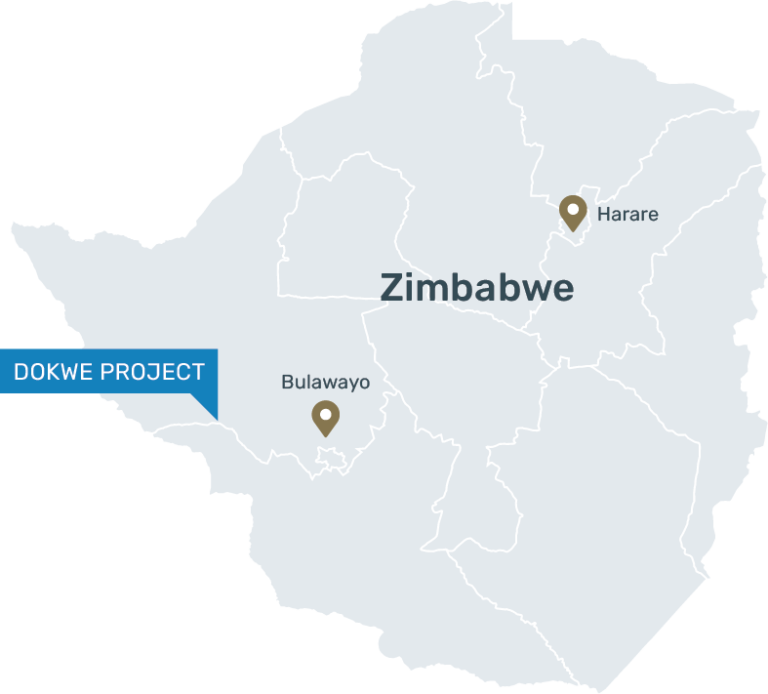
Mining and exploration junior, Ariana Resources PLC, has raised A$11 million (US$7.3 million) through its official listing on the Australian Securities Exchange, a move the company says will elevate the profile of its flagship Dokwe gold project in Tsholotsho, Mining Zimbabwe can report.

By Rudairo Mapuranga

The London-based, AIM-listed miner issued approximately 39.2 million Chess Depositary Interests (CDIs), each representing ten underlying shares, at a price of A$0.28 per CDI. The dual-listing is intended to broaden the shareholder base and enhance liquidity, providing a platform to showcase the high-value Dokwe asset to a market receptive to gold developers.

Managing Director Dr. Kerim Sener stated the ASX listing positions the company to achieve a “more attractive valuation” for the Dokwe project, which is among Zimbabwe’s largest undeveloped gold deposits with an estimated resource exceeding one million ounces.

A pre-feasibility study for Dokwe, located 110 km west of Bulawayo, outlines a potential open-pit operation producing 65,000 ounces of gold annually over a 13-year mine life. The study, based solely on the Dokwe North deposit, projects a post-tax NPV (10%) of $354 million and an IRR of 75%, using a gold price of $2,750/oz. The all-in sustaining cost is estimated at $1,144/oz, with a capital cost of $82 million and a payback period of 1.8 years.

Ariana is now advancing a definitive feasibility study targeting an expanded production profile of 100,000 ounces per year for at least a decade. Beyond Dokwe, Ariana also holds gold-silver projects in Turkey and exploration interests in Cyprus and Kosovo.

Namibia Boosts Acid Output to Support Growing Critical Minerals Industry

0

Namibia is intensifying its sulphuric acid production to meet the growing demands of its burgeoning critical minerals sector. This move comes as the country positions itself as a pivotal player in the global green energy transition.

By Ryan Chigoche

Sulphuric acid is integral to the extraction processes of these metals, which are crucial for clean energy technologies. Currently, Namibia imports a significant portion of its sulphuric acid, a situation that is expected to change with the new initiatives.

In that drive, Green Metals Refining and Vedanta have unveiled plans to establish and revive production facilities, respectively, to support the increasing output of essential minerals like uranium, copper, and manganese.

Green Metals Refining, based in London, has announced an initial investment of US$59 million for the first phase of a sulphuric acid plant in Walvis Bay.

The facility is projected to produce 175,000 metric tons annually, with plans to scale up to 720,000 tons. This plant will be part of a larger manganese refinery and aims to supply domestic uranium and copper mines.

“As Namibia is a net importer of sulphuric acid with a large pipeline of acid-consuming projects, we have established a compelling business case that can benefit local third-party metals projects,” said Derk Hartman, CEO of Green Metals Refining.

Meanwhile, Vedanta plans to recommission its sulphuric acid plant at the Skorpion zinc operations within the next four to six months. The facility, which has been idle since 2020, is expected to produce approximately 1,000 tons per day.

Namibia, the world’s third-largest producer of uranium, is rapidly expanding its critical minerals sector. The country is home to several significant mining projects, including the Lofdal heavy rare earths project, which is one of the largest deposits of dysprosium and terbium outside China.

These elements are essential for high-temperature permanent magnets used in defense and advanced technology applications.

The government’s strategic focus on developing a green hydrogen and ammonia industry, leveraging its coastal location and renewable energy potential, further underscores Namibia’s commitment to becoming a leading hub for green energy minerals.

With these developments, Namibia is not only addressing its domestic sulphuric acid needs but also strengthening its position in the global supply chains for critical minerals.

Zambia Backs Chinese Miner’s Internal Report After Acid Spill, Dismissing Independent Concerns

0

The Zambian government has thrown its support behind a Chinese mining company following a major acid spill, endorsing the miner’s internal environmental assessment that claimed minimal damage, a move that directly contradicts preliminary findings from independent monitors.

By Rudairo Mapuranga

The spill, which originated from a tailings storage facility (TSF) operated by a subsidiary of China Nonferrous Metal Mining (Group) Co. Ltd. (CNMC), leaked sulphuric acid and other chemical processing agents into the Kafue River. The river is a vital water artery for communities, agriculture, and ecosystems in the region.

In an official statement, Zambia’s Ministry of Green Economy and Environment characterised the company’s response as “satisfactory” and its conclusion that the impact was “successfully contained” as accurate. This official backing comes despite a wave of community outrage and a starkly different assessment from independent observers.

The Bench Marks Foundation, an independent non-profit organisation renowned for monitoring multinational corporate conduct in Africa, had previously flagged critical lapses in environmental safety protocols at CNMC’s Zambian operations. In their earlier reports, the foundation had warned of inadequate risk mitigation and community engagement strategies.

While a full independent hydrological report on this specific incident is still pending, Bench Marks Foundation officials have already publicly questioned the credibility of the miner’s internal assessment. “Corporate self-reporting, especially in the immediate aftermath of a disaster, is inherently conflicted,” a foundation representative stated. “The history of mining incidents shows us that the true extent of ecological damage and the long-term impact on water tables and soil health often only emerges months or years later.”

The government’s position has ignited fierce criticism from civil society groups, who accuse authorities of prioritising a crucial foreign investment relationship over regulatory rigour and public welfare.

“By accepting the company’s report at face value, the government is relinquishing its duty to be an impartial regulator,” said a spokesperson for the Zambia Institute of Environmental Management. “An independent, state-led investigation is the only way to ensure accountability and restore public trust. The people of Zambia deserve transparency, not a corporate whitewash.”

The incident has intensified the ongoing debate over environmental oversight of international mining operations in Africa and the pressure on resource-rich nations to balance economic interests with ecological and community safety.

Kavango Raises $3 Million for Gold Mine Push in Zimbabwe

0
London and Victoria Falls Stock Exchange-listed mining and exploration junior, Kavango Resources Plc raised approximately US$2.97 million in a share sale to accelerate gold mining developments in Zimbabwe as it seeks to prove the African nation is open to foreign investment, Mining Zimbabwe can report.
By Rudairo Mapuranga
The company issued 227.8 million new shares at 1 pence each, it said in a statement. Its largest shareholder, Purebond Ltd., subscribed for more than 111 million shares. Chairman Peter Wynter Bee purchased 10 million shares.
Proceeds will fund the construction of a 250-ton-per-day processing plant at the Hillside project and drilling to define mineable reserves at the Bill’s Luck mine, both located in the Filabusi Greenstone Belt. The capital will also be used for a carbon-in-leach plant and general working capital.
“We are now entering the crucial phase of Kavango’s plan in Zimbabwe,” Chief Executive Officer Ben Turney said. “This pilot-scale production will allow us to clearly and decisively prove to the international market that Zimbabwe is a mining-friendly jurisdiction.”
The new shares are expected to begin trading on the London Stock Exchange on or around Sept. 15. Following the issue, Kavango’s total issued share capital will stand at 3.61 billion ordinary shares.
The company also secured a secondary listing on the Victoria Falls Stock Exchange last week, though its primary listing remains in London. Kavango said it raised $4.5 million during that subscription period.

Anglo American & Teck Announce US$50 Billion Merger in Mining’s Biggest Deal of the Decade

0

Anglo American, which previously owned Zimbabwe’s Unki platinum mine (now operated by independent company Valterra Platinum), is set to acquire Teck Resources, Canada’s largest diversified mining company, in a US$50-billion all-share merger.

By Ryan Chigoche

If approved by regulators in Canada, the United States, and China, the deal will create the world’s fifth-largest copper producer.

Under the terms of the merger, Anglo American will exchange 1.3301 of its shares for each Teck share. While officially described as a “zero-premium” merger, the exchange ratio reflects a 17% premium on Teck’s closing price on Monday.

Anglo plans to offset this with a US$4.5-billion special dividend to its investors, bringing the effective premium down to just 1%.

Upon completion, Anglo shareholders will hold 62.4% of the combined entity, to be named Anglo Teck, while Teck shareholders will own 37.6%.

Duncan Wanblad, CEO of Anglo American, will lead the merged company, with Teck CEO Jonathan Price serving as deputy CEO. Headquarters will be located in Vancouver, with Anglo’s London office to be streamlined. Secondary listings are planned in Toronto and Johannesburg, alongside a New York listing via American Depository Receipts.

The merger strengthens Anglo’s access to Teck’s copper assets amid rising global demand for the metal, essential for electrification and renewable energy.

A centrepiece of the deal is Teck’s Quebrada Blanca (QB) mine in Chile, which has faced operational and cost challenges.

Both companies have been reshaping portfolios to focus on critical minerals. Teck sold most of its coal operations to Glencore, while Anglo has divested coal, platinum, and diamond assets. Teck recently launched a major operational review, scheduled for completion in October, prioritising improvements at QB.

Analysts are of the view that the merged company will emerge as a leading copper producer with a diversified portfolio, including six copper production sites, as well as iron ore and zinc operations, offering significant growth potential.

Teck has been exploring operational synergies between QB and Collahuasi, a nearby copper mine in northern Chile co-owned by Anglo and Glencore. The companies anticipate annual pretax synergies of US$800 million, with potential EBITDA gains of up to US$1.4 billion through shared procurement and operational efficiencies.

Industry observers note the operational logic of transferring high-grade ore from Collahuasi to the QB plant to optimise production. While Glencore was not consulted, it has previously advocated for combining the two Chilean mines to reduce costs.

Analysts See a Major Win for Anglo

Experts consider the merger a major strategic gain for Anglo, as it secures high-quality copper assets that are in high demand globally.

At the same time, regulatory approval in Canada will be required under the Investment Canada Act to ensure the deal provides a net benefit to the country, a process that could take up to 18 months.

Analysts also suggest that the Canadian review process may deter potential rival bids, as competitors would need to offer attractive incentives or relocate management to Canada.

The deal could trigger interest from other global miners, including Freeport McMoRan and Agnico Eagle Mines, potentially sparking a competitive environment for acquiring copper resources.

The merger follows a broader wave of consolidation in the copper sector, with companies seeking to secure critical raw materials. Anglo had previously fended off a US$49-billion offer from BHP, while Glencore’s 2023 bid for Teck fell through.

Following the announcement, Anglo shares rose nearly 10% in London to 2,498p, giving it a market value of £29.4 billion (US$40 billion). Teck stock climbed 17% in New York pre-market trading to US$40.95, valuing the company at US$17.2 billion.

New ZCDC Board Chair Ushers in Era of Strategic Continuity

0

In a move signaling strategic continuity and a deep familiarity with the sector, Mr. Onesimo Mazai Moyo has officially commenced his tenure as the Board Chairman of the Zimbabwe Consolidated Diamond Company (ZCDC) with a comprehensive familiarisation tour of the company’s flagship Chiadzwa Mine operations, Mining Zimbabwe can report.

By Rudairo Mapuranga

The tour, conducted yesterday, marks one of Mr. Moyo’s first official duties since his appointment. He was accompanied by the full ZCDC executive leadership team, including Chief Executive Officer Dr. Douglas Zimbango, Chief Finance Officer Mr. Alex Mutendera, Acting Chief Operating Officer Mr. Dennis Mtombeni, and Company Secretary Ms. Dumisani Mashingaidze.

Mr. Moyo’s appointment is widely viewed as a strategic masterstroke for the state-owned diamond miner. He brings to the role a wealth of institutional knowledge and a proven track record, having previously served as the Permanent Secretary for the Ministry of Mines and Mining Development. This experience provides him with an unparalleled understanding of the national mining policy framework, regulatory environment, and the government’s strategic vision for the sector.

Furthermore, his current position as the Board Chairman of Defold Mine, a key shareholder in ZCDC, offers a unique dual perspective. It equips him with intimate knowledge of shareholder expectations and commercial imperatives, while his new role focuses on steering the corporate strategy and governance of ZCDC itself. This blend of public sector acumen and shareholder insight positions him ideally to align ZCDC’s operations with both national interests and commercial profitability.

Mr. Moyo succeeds Mr. Munashe Shava, whose term concluded at the end of June. The leadership transition comes at a critical time for ZCDC as it continues to pursue its mandate of driving sustainable growth, enhancing operational efficiency, and increasing diamond production in the Chiadzwa fields.

The familiarisation tour underscores the new Chairman’s hands-on approach and his commitment to grounding his leadership in a firsthand assessment of the mine’s operations, challenges, and opportunities. Engaging with senior managers on site, the board and executive teams discussed key operational metrics, safety protocols, and strategic initiatives aimed at consolidating ZCDC’s position as a major player in the global diamond industry.

Industry observers anticipate that Mr. Moyo’s leadership will bring stability and a renewed focus on leveraging his extensive networks and experience to unlock value, foster partnerships, and navigate the complex dynamics of the international diamond market for the benefit of Zimbabwe.