Home Blog Page 584

Tagwirei eyes State gold mines

0

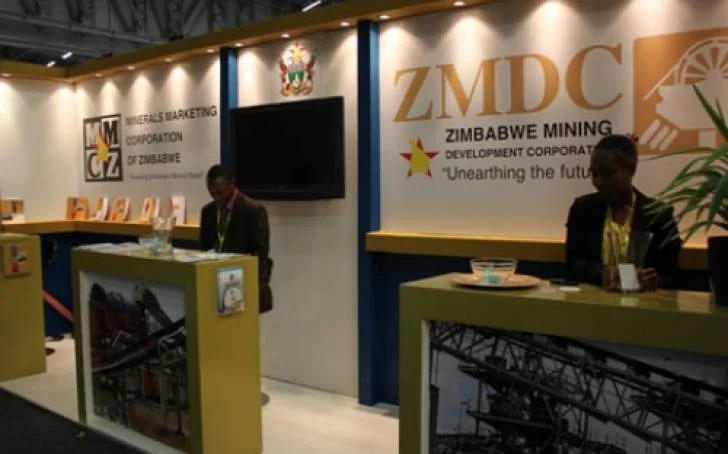
Investment vehicles, reportedly linked to a prominent Harare businessman with interests in mining and oil, Kudakwashe Tagwirei, are angling to buy four gold mines owned by the Government of Zimbabwe.

Well-placed sources with knowledge of the ongoing negotiations, revealed the investor was targeting gold mines owned by the State through the Zimbabwe Mining Development Corporation (ZMDC).

The assets comprise Jena Gold Mines, Golden Kopje, Elvington and Sabi. Some of the gold mines, chocked by debts have for years, been struggling while efforts to secure investors had been futile.

The Government is keen to see the mines fully operational in line with its thrust to achieve a US$12 billion industry by 2023.

Sources indicated that Landela Mining Venture, reportedly linked to Tagwirei, is one of the vehicles that have shown interests in buying and resuscitating the gold mines through fresh capital injection.

Landela recently acquired significant shareholding in Great Dyke Investments, a multimillion dollar platinum project in Darwerdnale, Mashonaland West Province, which it jointly owns with Afromet JSC of Russia.

Another vehicle Sotic, also linked to Tagwirei, snatched a 74 percent shareholding in the country’s largest nickel operation, Bindura Nickel Corporation recently.

Landela is also reported to be in the process of acquiring a stake in Zimbabwe Alloys, an integrated ferrochrome mining company

following the cancellation of US$90 million deal in which Indian firm Balasore, wanted to buy 70 percent stake in ZimAlloys.

However, contacted this week, Tagwirei said he is “neither a director nor a shareholder of Landela Mining”, without disclosing more detail.

But highly placed source that cannot be named for professional reasons said; “He is a cash rich investor who in the recent past has been buying some mining assets; platinum, nickel and chrome and now eyes gold assets. You cannot really doubt the capacity given his financial muscle.” Another source said the investor and the Government “have in principle agreed” and negotiations are already underway.

“It is an issue that is now under discussion. The Government wants to see things moving especially the resuscitation of the closed mines…it is hoped negotiations would be concluded soon,” said the source.

Permanent Secretary in the Ministry of Mines and Mining Development Onesimo Moyo, confirmed to Business Weekly that negotiations were underway for disposal of the said mines.

“We haven’t singed yet…but we are currently in discussions with an investor who wants to capitalise all (our) gold assets and we hope discussions will be finalised soon,” he said.

“The recapitalisation of the mines will also put the country on course to meet the US$12 billion mining (industry) by 2023. In October, Zimbabwe unveiled a strategic roadmap to propel the country’s mining sector to US$12 billion industry by 2023”.

Already, the mining sector is the largest foreign currency earner, accounting for 70 percent of export receipts. Under the US$12 billion mining roadmap, gold is expected to contribute US$4 billion, platinum US$3 billion while chrome, iron, steel, diamonds and coal will contribute US$1 billion. Lithium is expected to contribute about US$500 million while other minerals will contribute US$1,5 billion.

Sabi Mine in Zvishavane’s claims were first pegged in the 1890 with the first recorded production in 1909. It was acquired by ZMDC in 1984 which owns 100 percent.

The mine used to employ about 450 employees. Jena Mines, also 100 percent owned by ZMDC was acquired in 1984. It employed about 600 people and operated a multi-shaft system. Elvington Gold Mine suspended operations in 2003 due to the collapse of one of its main shafts and was placed on care and maintenance.

At some point, the mines were involved in dump retreatment in preparation for resuscitation of underground operations. Elvington used to produce 45kgs of gold per month.

The Government acquired Golden Kopje in 2007 from the late businessman McDonald Chapfika.

Business Weekly

Chiwenga warns MaShurugwi

0

Zimbabwe Deputy-President Constantino Chiwenga has warned machete-wielding artisanal miners who are terrorising communities and other miners that they will face the full wrath of the law.

Addressing a handful of people at the International Day of Co-operatives in Bindura yesterday, the Vice-President said he was back and healthy and would ensure that machete-wielding illegal miners were brought to book.

“I would like to thank you all for praying for me during my sickness. Let me assure you that I am back and very much healthy,” Chiwenga said.

“As government, we are saying no to machete-wielding miners, hatidi mabhemba (we don’t want machetes)! Let me repeat, no to machete-wielding miners. The law will descend heavily on (the rogue) artisanal miners. We cannot afford to have illegal miners wreaking havoc in the country,” Chiwenga said.

He urged illegal miners to join co-operatives and regularise their operations in a bid to develop the nation.

“The government recognises the existence of artisanal miners and we are urging them to join co-operatives so that the country moves forward in the mining sector,” Chiwenga added.

The VP also told the gathering that hunger is stalking the nation due to a poor harvest and Mashonaland Central province, formerly the bread basket of the country, has not been spared.

“I was briefed by the Minister of State for Mashonaland Central (Monica Mavhunga) that hunger has tormented the province. Yes, we know hunger is there and as the government, we have formed a committee being spearheaded by Minister of Foreign Affairs, Sibusiso Moyo, Minister of Agriculture, Perrance Shiri and Minister of Finance, Mthuli Ncube, who are busy sourcing for food aid and weekly, the country is receiving food,” he said.

“Let me also assure you that no one will starve under the new dispensation. The government is working flat out to see to it that everyone is fed.”

Chiwenga also said: “We were also told that many schools in Mt Darwin, Muzarabani and Mbire are like fowl runs and should be prioritised because education is key, that is where our future leaders are learning. The government has taken note of that.”

NEWSDAY

Zim Gold: Resource Curse Or Bad Policy?

0

When the European settlers in Zimbabwe dreamt of Eldorado (overflowing gold) in the 1890s, not many were disappointed. Now more than a century after the settlers arrived, the yellow metal remains one of the pillars of economic transformation, albeit at a slow pace.

Despite being endowed with more than 40 base minerals, Zimbabwe continues to be classified as a poor country and questions have been asked on whether or not the country has the right policy to add a sparkle to the capital-intensive extractive sector.

Since time immemorial, issues around gold mining such as looting, the criminalisation of artisanal mining, under-declaration, and smuggling have been topical. Given tonnes of gold that are produced and smuggled into other countries, it tells a lot about the amount of gold that the country has.

Experts say tonnes of gold were produced annually since 2010 with less than 30 tonnes sold through the sole buyer of gold, Fidelity Printers and Refiners (FPR), with the rest being smuggled into other countries.

From that tonnage, Zimbabwe was supposed to earn over US$3.2bn yearly from gold against the current earnings of US$1.6bn. Economic analysts suggest that if well managed, gold will be able to transform the country’s fortunes to become a stable economy.

The monetary authorities and various government officials know about the gold smuggling cartels, but do not act upon that information because they are closely linked to them or they are their bosses.

It is believed that there are various cartels which are led by Russians, Indians and locals, who serve ministers and former cabinet ministers. This is not helping the ordinary Zimbabwean as the cost of living has skyrocketed to over ZWL$4,200 a month for the majority of the formally employed populace, who incidentally are earning less than ZWL$2,000 a month.

Henrietta Rushwaya, the president of the Zimbabwe Mining Federation, has said at various forums that gold production has gone up significantly but formal gold deliveries are going down due to unfavourable mining polices. According to her, formal gold deliveries will continue going down unless there is a quick change in policies, such as the forex retention issue which currently stands at 55%, down from 70% last year.

This has caused outrage among gold players.

It is not surprising that gold deliveries dipped 23% to 23.03 tonnes during the first 10 months of 2019, from 30.13 tonnes last year. It has been over a month now since miners requested for a meeting with the RBZ on the retention level issue, but the meeting has so far failed to materialise.

This means gold deliveries and export earnings will end on a low note given the monetary authorities’ reluctance to deal with the matter.

“We have been trying to reach out to the miners to discuss various issues affecting the gold sector with forex retention being one of the key issues but unfortunately I have been busy with the IMF and various businesses outside the country,” said the RBZ governor John Mangudya.

“We will still meet and discuss the issues as was before.”

From the body language and expressions, the central bank chief seems to be waiting for the signal from his bosses to change the forex retention level. The government offered to raise it to 60% in November during the ZMF annual general meeting in Gweru, but the miners rejected it outright.

Instead they want 80%, a figure Mangudya says is not viable given the lack of forex in the country. According to him, earnings from gold will help to procure fuel, medicine, grain and fertiliser among other critical raw materials.

The development comes at a time when the country is experiencing rampant inflation, subdued production across most sectors, crippling power outages, and serious shortages in many areas, leaving Zimbabwe on the edge of total economic implosion.

Gold contributes 38% of the country’s total earnings and more than 60% of the mining sector’s revenue. Tobacco which was a dominant force before last year, has had its problems as exports have gone down due to the forex retention level, poor payment methods, and surplus tobacco in China (which is Zimbabwean tobacco’s biggest buyer).

Analysts believe that 2020 will be a very difficult year given the poor performances from the two most important economic drivers. The economist Persistence Gwanyanya said: “There is the need for the country to diversify its economy so that it can have multiple export earnings’ platforms.

Over-reliance on the homogeneous factors is not good as world commodity prices are prone to shakeups time and again.”

As tobacco is no longer earning as much as it used to do, analysts say more needs to be done to improve gold production. It takes less than a week to process gold sales into hard cash, while other minerals like platinum take close to a month to liquidate.

Surprisingly, the authorities have turned a blind eye to such critical issues.

Even Finance and Economic Development Minister Mthuli Ncube believes that close to 34 tonnes of gold were smuggled out of the country in the first 10 months of 2019 and nothing concrete was done to stop it.

Meanwhile, Irvine Chinyenze, the chief executive of the Gold Miners Association of Zimbabwe, has said the fact that the authorities maintain the forex retention levels means there is some kind of war going on.

“Gold is one issue that the authorities should have dealt with a long time ago, but the maintenance of the 55% tells a lot about the struggles going on behind the scenes with gold being the battlefield,” Chinyeze said.

Some miners, especially large-scale, are believed to be selling their gold to suspected smugglers to get more forex for their operations. Zimbabwe is targeting 100 tonnes of gold per year by 2023, a figure which is expected to help the sector to earn US$12bn yearly.

Analysts believe that gold can earn over US$4bn before 2023 if the authorities are quick to resolve the current problems_Business Times

Zim’s US$12bn Mining Industry Fallacy

0

Zimbabwe’s target to hit US$12bn a year from mining revenues, starting 2023, appears a mere pipe dream if the sectors’ performance this year is anything to go by. In the absence of a miracle which turns around the extractive industry’s fortunes, not much hope can be invested in the US$12bn goal.

While official statistics of revenue earnings have been kept under wraps in the past month, indications are that the extractive industry has raked in over US$2bn in the first 10 months of the year, led by gold which last year accounted for 65% of the sector’s earnings.

The US$2bn, which could amount to US$3bn at the end of the year, is a paltry 25% of the US$12bn. This gives Zimbabwe two years to quadruple annual mining revenues. The US$12bn target is anchored on gold and chrome, with an ambitious plan to grow gold production from the 33 tonnes last year to 100 tonnes.

This comes as the sector suffers immensely from leakages as producers sell the yellow metal in neighbouring South Africa for cash given that the government’s sole gold buyer, Fidelity Printers and Refiners, is paying 55% hard cash and the balance in local dollars.

This is prompting smuggling, with some foreign buyers said to be setting up their base locally to mop up the gold. As of October, gold production stood at 24.5kg, which is 10 000kg below the 35 tonnes target for this year. Last year deliveries closed at 33.28 tonnes, a figure which failed to meet the revised 2018 target of 34 tonnes.

Last year, gold contributed over 65% of the country’s mineral export earnings leaving the mineral as the highest forex earner ahead of tobacco. Chrome also stood at 1.35kmt against an annual target of 1.9kmt this year.

Meanwhile, chrome ore production is certain to miss the annual 1.9kmt target in 2019 as production stood at 1.35mt at the end of October, as low commodity prices on the global market, foreign currency shortages and massive power cuts threaten contribution of the extractive sector to the economy.

Zimbabwe’s chrome miners could be losing up to US$70 per tonne in potential chrome due to huge disparities between domestic and export pricing of the mineral as cartels cash in on the distortions, the Zimbabwe Miners Federation (ZMF) has said.

Predatory buying is rampant across the mineral-rich Great Dyke, leaving producers at the mercy of buying cartels who are taking advantage of infrastructure and marketing challenges besetting the economy, ZMF has said.

Zimbabwe accounts for 12% of the world’s chrome ore deposits; only second to South Africa, but the value is far greater than 12%. The chrome reserves have only been exploited to the extent of 5%. The country plans to more than double chrome ore and high carbon ferrochrome production between now and 2022 to 3.1kmt and 950mt respectively.

Diamond production was 1,755,538 carats for the 10 months, below 2.2m carats that had been produced by August 2018. A mega deal that will bring Alrosa and other partners on board in the country’s diamond mining is yet to bear fruit. Other major deals in platinum and gold are also at formative stages_Business Times

$255m ZimCoke deal still on: Govt u-turns

0

GOVERNMENT has said that the $255 million ZimCoke deal is still on as it has not yet received any formal communication from the Zimbabwe Iron and Steel Company (Ziscosteel) board requesting for the termination of the agreement.

Contrary to recent media reports, which claimed the deal between the defunct steel giant and ZimCoke has been cancelled, Industry and Commerce Permanent Secretary, Dr Mavis Sibanda, said as far as Government is concerned the Zimcoke deal was well on course. Under the deal ZimCoke is set to take over the Ziscosteel coke ovens. “I just heard about it, I have not yet read about it, I think there are some overzealous people who are behind that. From our end as Government we are yet to get any report of that nature,” said Dr Sibanda in an interview.

“I cannot comment on things that we are yet to receive any formal report on. We can only comment on issues that would have come to us through formal channels.

“Everything we do is for national interest not for individual glory, people should focus on national development and stop spreading falsehoods.” 

ZimCoke board member and chief advisor, Eddie Cross, also maintained that the deal was still on. “I contacted the ministry and they said they we not aware of such a development. We are on and I don’t know who is behind this. We are also yet to receive any formal communication to that effect and as far as we are concerned the deal is on,” said Mr Cross.

 Ziscosteel board chair Dr Gift Mugano maintained that they had written to Government requesting that the deal be cancelled.

“As you know, this is a long procedure that will require the request to be looked at by the ministry before it is tabled before the Cabinet for approval. But as it stands, we have requested for the deal to be terminated,” said Dr Mugano.

He could not be drawn into commenting further into the contents of the written communication saying it would be premature to do so. 

Meanwhile, ZimCoke is moving ahead with preparations to take over the coke ovens with prospects that they will start production early 2020. The company has set structures and has since appointed a new nine-member board as well as a chief executive officer.

More members are expected to be crafted into the board early next year. The board will be chaired by Mr Nick Ncube while Dereck Scott who also sits on the board, has been appointed chief executive officer of the coke making firm. Other members of the board include Philemon Nhachi, Mrs Emma Fundira, Eddie Cross, Michael Moore, Ms Lillian Mbaiwa, Gerald Mlotshwa and Valentine Mushayakarara. In a statement, the company said the board is expected to oversee the rehabilitation of the plant before the commencement of production.

“ZimCoke, the recently formed company responsible for production of coke and related products in Zimbabwe, has announced the establishment of board of directors. The board is tasked to represent prominent Zimbabweans and also include the depth and breadth of expertise necessary to help guide and advise the company as it conducts operations necessary to bring back into production the 160 coke ovens that formerly comprised the Ziscosteel Coke division,” read part of the statement.


The Chronicle

Palladium on the verge

0

Palladium prices are within a whisker of breaking above $2 000 an ounce for the first time, with a gaping supply deficit fuelling a remarkable run that has seen the autocatalyst metal more than quadruple in value since 2016.

Once the cheapest of the major precious metals, palladium, used chiefly in engine exhausts to reduce harmful emissions, is now more than twice as expensive as platinum and $500 an ounce more than gold.

Prices have surged almost 60percent this year, reaching $1,998.43 an ounce on Tuesday, before slipping back to around $1,950. In January 2016, an ounce cost as little as $449.55. Prices may pull back briefly, but auto makers have pushed prices higher again and again this year,” — Bloomberg.

Gold prices gain

0

Gold prices inched up yesterday after the US House of Representatives voted to impeach President Donald Trump on articles of abuse of power and obstruction of Congress.

Spot gold was up 0,1percent at $1,477.15 per ounce, as of 0152 GMT. US gold futures were up 0,2percent at $1,481.30 per ounce.

Trump became the third US president to be impeached as the House formally charged him with abuse of power and obstruction of Congress in a historic step that will inflame partisan tensions across a deeply divided America.  The House action sets the stage for a trial next month in the Republican-controlled Senate on whether to convict him and remove him from office. — Reuters.

Oil hovers near peak

0

Oil prices hovered near three-month peaks yesterday, buoyed by falling US crude inventories and thawing trade relations between the United States and China. Brent crude futures were down 7 cents at $66.10 a barrel at 1321 GMT, after five straight days of gains. US West Texas Intermediate (WTI) crude fell 1 cent to $60,83 a barrel. The contract for January delivery expires today. Trading volume was thin before the Christmas holiday with news of President Donald Trump’s impeachment by the US House of Representatives failing to stir the oil market.

“A resilient performance in the coming two weeks will flip the monthly technical picture unreservedly positive for next year,” PVM oil market analysts said — Reuters.

Zim faces mining-asset seizure over canceled joint ventures

0
Zimbabwe, faces having the assets of the state mining company seized after a final appeal of a 2014 arbitration ruling failed.
Companies linked to British Virgin Islands-based Amari Holdings Ltd. won the right to seize assets worth $65.9 million in compensation for Zimbabwe Mining Development Corp.’s cancellation of nickel and platinum ventures formed in 2007 and 2008. The ruling by the International Court of Arbitration was made after a hearing in Lusaka, Zambia.
 
The development comes at a difficult time for Zimbabwe, with the government forecasting the economy will contract 6.5% this year because of crippling foreign-currency, fuel, wheat and power shortages. The state is seeking to convince investors from Cyprus, South Africa, Russia and Nigeria to spend billions of dollars developing its platinum reserves, the world’s third-largest. It’s also rich in gold, chrome and iron ore.
 
“We are by law entitled to attach any asset belonging to the ZMDC or their 100% shareholder, the Zimbabwean government,” Ian Small-Smith, a lawyer acting for Amari, said Monday. “They seemingly still don’t appreciate how adversely this will impact the credibility of Zimbabwe as an investment destination.”

Nickel, Platinum

The dispute arose over plans Amari had to develop mines in Zimbabwe. The company formed platinum and nickel ventures with ZMDC that were 50% and 45% owned by the state company respectively.
Zimbabwe’s assertion that the deals weren’t appropriately approved by ZMDC officials and the nation’s mines minister were rejected by the court.
Amari will seek to seize fixed assets owned by Zimbabwe and ZMDC both in the country and elsewhere and may also target shipments of diamonds and tobacco, Small-Smith said.
“The Ministry of Mines is aware of this development and the matter is under control through a number of stakeholder engagement processes,” Zimbabwean Secretary for Mines Mazai Moyo said.
Amari has been approached by Benedict Peters, a Nigerian billionaire who was awarded the platinum prospect initially held by Amari, Small-Smith said. Peters had been seeking a settlement with Amari, he said.

Mine Concession

This was denied by a representative of Peters’ Bravura Holdings.
“There is no truth that any entity or party has been approached by it to settle any such disputes,” said Lionel Mahlanga, Bravura’s representative in Zimbabwe.
“Bravura holds legal and rightful titles to exploit some platinum claims in Zimbabwe awarded to it after interests ostensibly held by the previous owners were forfeited by the Ministry of Mines as a result of their non-performance of key statutory and commercial obligations,” he said.
Amari was founded by Mike Nunn, the South African mining entrepreneur who established Tanzanite One Ltd. to exploit the blue precious stone found only in Tanzania.
BLOOMBERG

Miners challenged to hit 100 tonnes

0

GOVERNMENT has challenged the gold mining sector to ramp up production and achieve 100 tonnes annually as part of efforts to attain the US$12 billion earnings from the mining sector alone by 2023.

The ambitious target is inspired by President Mnangagwa’s vision of an upper-middle-income economy by 2030. Speaking during a Matabeleland South Provincial Mining Conference in Gwanda on Tuesday, chief director technical services under the Ministry of Mines and Mining Development, Engineer Charles Tawha, said a supporting policy framework has been put in place to ensure increased mining output countrywide.

“Our target is to reach 100 tonnes yearly gold production by 2023, which will be a combination of artisanal and small-scale producers, medium to large scale and the large-scale mines,” he said.

“Strategies attached to this include rolling out of service centres nationwide, increasing capacity on existing mines and re-opening of closed gold mines. 

“As the ministry, we’ve set a vision to have a US$12 billion mining industry by 2023. To realise this vision six mineral commodities are anticipated to anchor this achievement.”

Gold mining is expected to yield US$4 billion, platinum US$3 billion, chrome and steel US$1 billion, coal and hydrocarbons US$1 billion, diamonds US$1 billion, lithium US$500 million and other minerals US$1,5 billion. “This will be achieved by enhanced exploration, enhanced investment and capacity building, increased productivity and employment creation, greater value addition, increased exports and corporate social responsibility initiatives,” said Eng Tawha.

Matabeleland South Province is producing about 300kgs of gold per month while the scope is wider for exploitation of other minerals across the country’s districts. Government is already seized with reviewing policy with a view of unlocking more opportunity in the gold, diamonds, chrome and lithium sectors, in particular. The ministry is restructuring to be more responsive and efficient to the needs of miners. A process has also begun to set up a hotline to assist in curbing corruption.

Eng Tawha also said mining fees were being reviewed to curb speculative behaviour on mining titles as part of ease of doing business initiatives while also pushing the use-it or lose-it policy. Government, through Fidelity Printers and Refiners, has been capacitating small scale miners under the Gold Development Initiative, which is funded to the tune of $200 million. Eng Tawha said to date $174 million has been disbursed to 302 miners.

Matabeleland South Provincial Affairs Minister, Abedinico Ncube, said the conference offered a platform to deliberate on key issues affecting the mining sector. He said this was a building block in the development of the province’s economy. Minister Ncube said full exploitation of mineral wealth would unlock more revenues and boost economic growth.

“There are more minerals yet to be exploited in Matabeleland South. Most of our mining activities are done on small scale basis with basic tools, which leads to low productivity,” he said.

Minister Ncube said there was a need to invest in modern technology to improve competitiveness and value addition.

Zimbabwe Miners’ Federation secretary general, Mr Philemon Mokwele, implored Government to decentralise mining services to districts.

“Miners don’t know the purpose and benefits of EPOs yet 95 percent of mining land in Matabeleland South Province is under EPOs. Could the ministry educate miners on this. Local authorities should also engage miners in the budget formulation process and allocate a certain percentage of business land to miners as they also pay tax.

“There is a need for loans that cater for miners without collateral. The 55-45 percent ratio is forcing miners to sell their gold on the black market and this has to be reviewed,” he said. 

The mining conference was held under the theme “Unlocking and Escalating Mining for Matabeleland South Through Sustainable Investment towards an industrialised national US$12 billion Mining Economy by 2023_The Chronicle