Home Blog Page 604

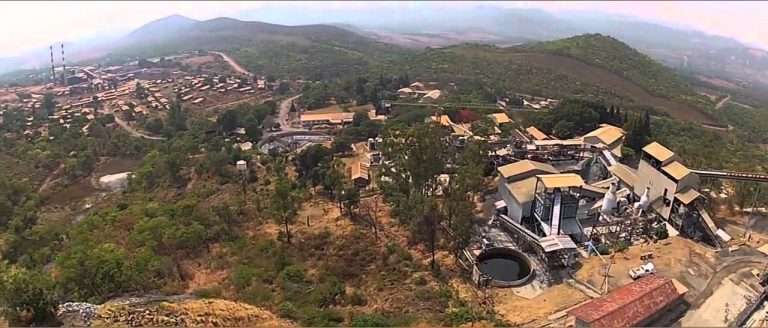
Gaika Mine eyes 5kg gold output

0

KWEKWE Gold Mine, a subsidiary of Duration Gold Limited, has set a short-term plan of producing at least five kilogrammes of gold per month when it resumes production.

The mine commonly known as Gaika Mines which has been lying idle for close to 20 years, was invaded by youths and illegal gold panners last year before security forces stepped in to restore order. 

Following a massive rehabilitation programme rolled out by the management team, the mine is set to commence production anytime soon.

The Midlands Provincial Joint Operation Command (JOC) team led by Minister of State for Midlands Provincial Affairs, Larry Mavima visited the mine to get its plan of action. Duration Gold acting country projects manager Mr Allen Mashingaidze told the JOC that the mine would soon resume operations once it lays down a proper security team.

“We are putting down a plan where we intend to set up a strong security that will assume security of the mine. Currently we have hired the services of a security company that has ensured us security at the mine. We are also going to back that up with Closed Circuit Television (CCTV) and double-fenced electric fence,” he said.

Mr Mashingaidze said they have an immediate plan of producing 160 tonnes gold ore a day and five kilogrammes of gold per month.

“That is our short-term plan with the hope of increasing output to about 150 to 200kgs per month in the long run. In the second phase we are targeting to increase production to about 300 tonnes producing 15,5kgs and the bigger plan is to produce 150kgs per month,” he said.

He said to ensure that targeted output is achieved, the company was in the process of replacing hammer mills with more efficient ball mills, a project that requires US$860 000. Mr Mashingaidze said the mine employs a total of about 106 workers.

Minister Mavima expressed dismay over delays by Duration Gold to commence production at the mine, urging the responsible authorities to either shape up or ship out.

“I am concerned by the delays you guys are taking. I wonder what is stopping you from coming up with a proper strategy that has a security plan and production plan. Government is not there to provide security to independent companies, you are wasting State resources by so doing. You better come up with a plan quickly,” he said.

He said the mine played a crucial role in the economy and its continued closure was crippling the economy.

“Local people are supposed to be benefiting from the mine which is a major tool in the devolution process. Your continued closure and delays in opening are causing a lot of problems to the Government. You have to act fast and start production,” said Minister Mavima.

Source: Sunday News

Zimplats in relative performance

0

Zimbabwe’s major platinum producer, Zimplats Holdings Limited made commendable strides with regard to production volumes for the quarter ended 30 September 2019 on the back of fleet productivity and contribution from Mupani mine which is still under development.

Main indicators include mined and milled tonnage.
Mined tonnage soared by 10 percent to 1,796 tonnes from 1,673 tonnes achieved in the preceding quarter to June 30, 2019. The gain also represents a 10 percent increase from 1,629 that was achieved in comparable quarter to September 30, 2018.
“This was mainly due to improved fleet productivity and additional tonnage from Mupani Mine, which is still under development,” said the platinum miner in a statement.

Tonnes milled went up by 9 percent to 1,705 from 1,570 achieved in the immediate quarter to June 30, 2019.
Again the figure represented an increase by 2 percent from 1,677 that was achieved in comparable quarter to September 30, 2018.

According to the miner, increase in milled tonnes was attributable to “an increase in mill running time.” The last quarter’s tonnage was reportedly affected by “planned shut downs for mill relines at both concentrators.”

Combined, 6E metal in matte production increased by 3 percent to 151 458 ounces from 147 136 ounces for the preceding quarter to June 2019. The increase was also a 2 percent upward movement from 148 500 ounces recorded in the quarter ended September 30, 2018.

Of all the 6E, platinum contributed the highest amount in ounces to the tune of 70 000, which was a 3 percent increase from 67 978 ounces recorded in the immediate quarter to June 30, 2019.

Next in contribution was palladium with 59 795 ounces, a figure that represented a 4 percent change from 57 258 ounces in the preceding quarter to June 2019, and as well a 5 percent change from 56 727 ounces recorded in the comparative quarter to September 30, 2018.

Negatives were, however, noticed in the performance among the 6E gold, Rhodium and Iridium whose figures for the period under review represented a loss by 10, 20 and 15 percent respectively in comparison to the prior period to September 30, 2018.
The positives in 6E volumes were attributable to “higher mill volumes.”

6E production in the quarter to June 30, 2019 included 3 036 ounces recovered from the furnace during the rebuild which commenced on June 10, 2019.

In terms of financial performance, total operating cash costs increased by 15 percent to $88, 487 million from $77, 076 million posted in the quarter ended June 30, 2019 “due to the increase in mined and milled tonnage.”

This was reportedly further impacted by higher selling expenses on the back of a boost in concentrate exported during the period of the furnace rebuild.

Consequentially, operating cash cost per platinum ounce increased by 2 percent to $1,236 million from $1,209 million in the previous quarter to June 30, 2019. This also represented a 3 percent change from $1,275 million recorded in the prior quarter ended September 30, 2018.

Meanwhile, the miner achieved the safety milestone of one million fatality free shifts worked during the quarter after recording a single lost-time injury. Exploration drilling is expected to commence in the quarter ended December 31, 2019 after nothing was done in the quarter under review.

Business weekly

Zim de-miners keep the Falklands safe

0

Thirty-seven years ago, Argentine soldiers invaded the Malvinas (Falkland) Islands, planting thousands of mines.

British troops liberated the locals then – and a few dozen Zimbabweans keep them safe now.

“There are over 100 minefields flung all across the Falkland Islands from Fox Bay, Port Howard, Goose Green, Fizroy, Stanley area, Longden, all over the place,” said John Hare, the technical director of SafeLane Global, which has been contracted by the British Foreign and Commonwealth Office to clear the mines.

The Argentine army laid around 25 000 mines during its 74-day occupation of the remote British overseas territory in the South Atlantic.

For the past decade, expert Zimbabwean de-miners have been charged with clearing the fields. When the war ended in 1982, the Argentines handed over their records.

Since then, de-mining teams have undertaken the painstaking process of trawling through the documents, sourcing background information from locals and probing into minefields for evidence of potential explosives.  Only once that was done did the de-miners start clearing the explosive devices.

“The Zimbabwean de-miners are experts in this job. We’ve been doing this for quite a long time, most of us are in our 21st year doing this job,” Michael Madziva, the site supervisor, told AFP about his 100-person-strong team.

Back in 1999 a company called Bactec, which was one of several to later merge into SafeLane Global, was contracted to clear two million mines along the border between Zimbabwe and Mozambique.

Local Zimbabweans were recruited and trained, and they have since become world-renowned for their expertise. “Since 2015, I’ve had basically the same group of deminers,” said Hare, who used to be a bomb disposal expert with the Royal Engineers.  “They’re… a really great group of guys to work with.” The Zimbabwean experts have been deployed all over the world – including to Afghanistan, Iraq, South Sudan, Eritrea, Croatia and Lebanon – to clear mines following devastating conflicts.  “What made them good de-miners is they love their job,” added Madziva.

There were originally 122 areas to clear on the islands, but there are only 11 to 12 left. The project, which began in 2009, is expected to finish by the end of next year, according to Guy Marot, who heads the Falkland Islands De-mining Service Program.

The group is currently working on a beach close to the capital Stanley, where Argentina expected British troops to land.

Instead, they arrived on the other side of the East Falkland island at San Carlos.

Once located by a huge digger that sifts through the sand, the mines are either disarmed on the spot and then transferred to a quarry to be burnt, or those that are too dangerous to move are destroyed on the spot by explosives. Thrilled to see snow Even though it’s a long way from home, some de-miners went on to settle in the Malvinas.  Jonas Muza (41) quit demining and moved to the islands in 2015. His wife Anna joined him a year later, and he’s expecting to bring his three daughters over next year.  “I liked it before even I came here. I liked the place because of the weather,” Muza told AFP. “I was thrilled to see snow for the first time.”  Anna, who works as a kitchen assistant in the de-miners’ group accommodation, wasn’t quite so enamoured.  “It’s very cold here,” she said, smiling. “I was shocked.”

De-miners work on the islands from September to June, but Muza wanted employment all year round, so he found work fitting tires instead.

“In demining, when the contract finishes, it’s obvious you are unemployed until another job comes your way. I didn’t like that. I wanted constant income so I can sustain my family,” said Muza.

Although his children – Nathalie (17), Keisha (11) and five-year-old Kiara – have been enrolled in school for the next year, Muza doesn’t see the Malvinas as a permanent home.

He’s building a nine-room house in Zimbabwe. “I will go back some point in the future,” he said. “Like they say, home calls you. East, west, south: home is home.” — AFP.

Tagwirei rumoured new owner of BNC

0

Asa Resources has concluded the sale of its controlling interest in Bindura Nickel Corporation (BNC), the country’s largest nickel producer said in a statement Tuesday.

BNC said the buyer of Asa’s controlling 74.13% stake is “a Zimbabwean based mining entity with interests in the mining and production of ferrous metals, non-ferrous metals and precious metals”.

While BNC does not disclose the buyer, reports have suggested that one of the leading bidders was Sotic International, a company linked to businessman Kuda Tagwireyi, who already holds interests in Africa Chrome Fields and has been involved in bids for ferrochrome producer Zimbabwe Alloys.

“Shareholders are referred to the Cautionary statement published on 1 October 2019 advising that the ultimate holding company of BNC, Asa Resource Group plc (currently under administration), has entered into a sale and purchase agreement with a third party in relation to the 74.73% shareholding in BNC,” BNC said in a cautionary.

“Shareholders are hereby informed that the transaction involving the sale of 74.73% of BNC’s issued shares to the above-mentioned third party has been successfully concluded.”

Landela Mining Venture, another subsidiary of Sotic International, has recently emerged as the local joint venture partner in Great Dyke Investment, the Russia-Zimbabwe platinum project being developed near Darwendale_NewZwire

Gold Trade Act of Zimbabwe

0

The Gold Trade Act of Zimbabwe.

GOLD_TRADE_ACT_21_03

Build a structure to symbolise black granite – MNCDT

0

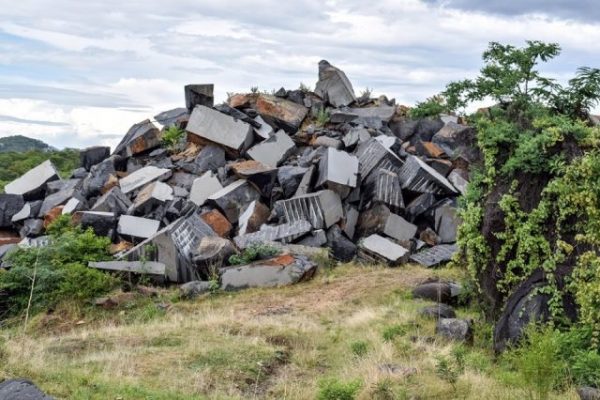
Mutoko North Community development Trust (MNCDT) on behalf of the entire community has raised a concern that investment within their community must lead to the construction of a granite building in Mutoko centre acting as a symbol for community prosperity and heritage purposes.

Mirirai Melissa Ngoya

Speaking to Mining Zimbabwe Eveline Kutyauripo from the MNCDT had this to say: “ I grew up whilst mining operations were already in existence in the Mutoko area. Surprisingly from 1972 up to date, there is no structure that symbolizes our black granite mineral in the Mutoko area.”

“As investment is coming our way we look forward to the government to first invest the mineral in the community for the benefit of the upcoming generations so that we will have a symbol to point out to them since the mountains are being cut and vanishing bit by bit. It is precarious to come up with such artefacts so that it will be easy to tell the forthcoming generations looking on the walls and learn history from our specific minerals”.

Eveline continued on saying “It is a sad note that we see other countries developing big and beautiful buildings whilst here where the mineral is located there is nothing tangible on the ground.”

Adding on Peter Sigauke, Chief Executive Officer of the Mutoko Rural District Council said “We don’t see economic and social benefits. Black granite has been mined since 1972, and the mining companies are not building any infrastructure.”

As mining activities are continuing within the Mutoko communities and mountains being razed down, it is of great importance that the government of Zimbabwe together with the Ministry of Mines and Mining Development join hands and come up with methods and means of coming up with a historical infrastructure constructed with black granite stones which will act as a historical symbol for future purposes as well as an income generator for the community as this if done right may create a tourist attraction.

Accreditation of ASM has “stopped violence” in Norton

0

The call by Zimbabwe Miners Federation (ZMF) and Norton Miners Association to accredit small scale and artisanal miners, the initiative which was pioneered in Norton and is expected to soon spread to other Associations in the country has stopped machete-wielding criminals’ pouncing of mines on nearly daily basis through the “know your miner” operation in which no one not is allowed to dig without carrying the miners accreditation.

Rudairo Dickson Mapuranga

According to Privelage Moyo, the Norton Miners Association Chairperson, since all miners were issued with the accreditation, there has been no record of violence in the sector the positive development which is ascribed to the issue of accreditation.

“We have miners now working in an orderly manner as compared to the past…” said Moyo.

According to Privalage Moyo, the Norton miners Association is now using the slogan “know your miner” in which anyone who is found without an accreditation regardless of the fact that they have mining licences are not allowed to mine in the area as a way to restore sanity in the mining sector.

“In light of restoring order in the ASM sector as Norton miners association, we have found it fit to use the concept we now call “know your miner” which is by way of identity cards. We need to fight these machete gangs who are destroying the backbone of our mining industry which is the hard workers, the miners” said Moyo.

Moyo also said that Norton Miners were very proud to contribute to the nation’s fiscus and work tirelessly in order to disinfect the sector from the violence which people has associated it with.

“Every miner is proud of what he does honestly and with clean hands. We wish to set a standard in the mining sector. ASM sector is contributing immensely to our economy hence the need to be proud of who we are. In addition, we call upon legislators and our president that we are geared up for the 2023 12 billion dollars revenue in the mining sector” Moyo.

The Norton Miners Chairperson also said that the mining sector has the capacity to contribute to the economy of Zimbabwe by tripling the growth of the sector provided that, the government supports artisanal and small scale miners financially and through healthy policies, rules and regulations.

Moyo also blasted a selfishness seed that has been planted in the sector saying that it harms the growth of the sector. Moyo encouraged unity in the sector as a factor that is lacking for the transformation of the industry.

“All we seek and ask is just a handful of things, support financially, technical, machinery, protective policy and insurance, simplified mining rules and regulations. We are able to increase our economic contributions more than three times. We in the ASM sector we have seen the light that no one is coming from outside our borders to help us but ourselves to transform our nation into a once vibrant economy of Africa. We call upon all those still roaming the streets in search of jobs, please let’s join hands and be productive in the mining sector. Once we do it in unit and togetherness we will archive the best for this nation. What we need to fight against, is the selfish mentality of trying to kill your fellow black brothers so that you may individually benefit” Moyo said.

The small scale and artisanal sector’s contribution to the country’s fiscus has been of magnificent impact to the country, with the sector accounting for over 60 per cent of the gold produced in the first half of 2019. The sector has been tarnished by criminal activities that target small-scale miners under the pretence of being miners. The issue of accreditation will quickly help in identifying criminals in the sector as has happened in Norton.

Mimosa employees and management defraud the miner of over USD700000

0

Mimosa Mine might have lost millions of USD for the last 7 years through management and employees who were forging allowance forms, however, investigations by the company have only revealed that USD 709 000 was lost over the period.

Rudairo Dickson Mapuranga

According to sources who spoke to Mining Zimbabwe, for the past seven years, the management and employees of Mimosa mine have been involved in salary fixing,  where they would claim allowances of over 70 employees, each employee getting salaries of up to USD300  which never went to the workers but into the pockets of the said management and employees.

“Since 2012 these individuals bypassed the payroll and salary department to get allowances for every employee of the Mine as they saw a loophole through complicity,” said our source.

According to our sources, one employee is understood to have brought back about USD 40 thousand which he had been keeping in his house before the scandal came to light.

“One employee from our department brought 40k USD to the management, the amount he said has been paid for the duration of the scam saying that he kept it because he knew this would be brought to light,” said our source.

According to our sources, although some individuals from the management were involved in the scam, no one has been suspended because the Mining firm wants to cover up the scandal.

“The alleged employees have been suspended and have handed over properties and other items to the company’s prior investigation from the CID, no management personnel has been suspended yet, but investigations have commenced and Mimosa wants to cover up,” our source said.

However, according to the company through one of its Executive Mr Fungai Makoni, the allegation of amounts going over a million is an exaggerated figure, the company did uncover the scam which started in 2015 and not in 2012 which involved 37 employees who stole over $700 000 over the period.

According to Makoni all the employees who were involved were dismissed and they agreed to return the money they stole.

“We uncovered a fraud involving employees who were forging acting allowance forms. The scam started in 2015 and involved 37 employees. The total amount involved is USD 709,000 over the period. A formal investigation was conducted which led to all 37 being dismissed in terms of our code of conduct. All those involved have agreed to reimburse the ill-gotten proceeds” said Makoni.

Makoni also said that the investigations carried by the company did not unearth the claims that senior management were involved in the scam.

“Our investigation did not reveal the involvement of senior managers. If it had, we certainly would have taken appropriate action” Makoni said.

Gold deliveries drop 19pc

0

Zimbabwe’s gold deliveries dropped by 19 percent to 2.80 tonnes during the month of September from 3.47 tonnes during the same period last year due to crippling power outages, inefficient mining and processing technologies in use, foreign currency shortages and suspected smuggling.

Cumulatively, gold deliveries decreased 26 percent to 20.63 tonnes during the first nine months of 2019 from 28.09 tonnes during the comparative period last year due to inappropriate ore hoisting machinery from the deep mine shafts.

Gold is now the highest single foreign currency earner ahead of tobacco as the country’s highest forex earner but its subdued performance continues to shatter the country’s hope of turning around the economy.

The yellow metal contributes 38 percent of the country’s total earnings and more than 60 percent to the mining sector which happen to be the highest forex earning sector in the country. Independent estimates show that over 20 tonnes of gold were smuggled out of the country due to unfavourable pricing regime of offering miners 55 percent forex retention threshold against 90 percent forex retention offered by side marketers.

This has created arbitrage opportunities in the gold sector and this will have a negative impact to the already fragile economy as gold is the most liquid commodity in the world as countries earn their forex within a fortnight.

Fidelity Printers and Refiners general manager Fradreck Kunaka told Business Times that the country is now pinning hopes on new gold centres and the small scale facility to increase production.

“In September gold deliveries went down 19 percent to 2.804 tonnes from 3.475 tonnes delivered during the same period last year due to forex currency shortages which should buy equipment and consumables together with serious power shortages which mainly affected primary gold producers.”

“Of the 2.80 tonnes extracted in September, 1.964 tonnes came from small scale miners while 0.84 tonnes came from primary producers. Meanwhile, during the same period last year small scale produced 2.72 tonnes against 0.755 tonnes,” said Kunaka.

On the 40 tonne target, Kunaka said the country might fail to reach the target because as it stands, by end of September deliveries still stand at 20.6 tonnes, which is almost half of what the country wants to achieve in the next three months.

He said the sharp decline in gold deliveries during the second quarter acted as a stumbling block in attaining the set target.

“The decline was mainly because of power outages which intensified during the month of June, inefficient mining and processing technologies in use, inappropriate mining methodologies especially at a time when most mines have deepened beyond 30 metres and inappropriate ore hoisting machinery from the deep mine shafts.”

“However, even if we fail to meet the set target, we project an increase in deliveries in the fourth quarter as artisanal and small scale miners are capacitated under the Gold Development Initiative Fund,” Kunaka said.

He said the Fund which aims at assisting miners in acquiring the appropriate mining equipment to enhance their gold production thus increase deliveries to FPR.

Gold Miners Association of Zimbabwe (GMAZ) chief executive Irvine Chinyenze said monetary authorities should increase forex retention to encourage deliveries to Fidelity.

“The fact that monetary authorities have reduced forex retention to 55 percent, gold miners don’t have appetite to sell their gold to Fidelity Printers and Refiners as they are better offers somewhere.

The trick is that they should have raised forex retention to above 80 percent to woo miners,” said Chinyenze.

Zimbabwe is targeting 100 tonnes of gold per year by 2023, a figure which is expected to help the sector to earn US$12 billion yearly and only if forex retention threshold, fundamentals and funding issues are addressed_Business Times

PGMs sparkle as mineral output drops

0

Zimbabwe registered declines in most minerals in the second quarter of this year on the back of worsening power outages, against the backdrop of persistent fuel challenges, foreign currency shortages, and rising inflation, among other factors.

However, the latest statistics from the Reserve Bank of Zimbabwe (RBZ), show that platinum group metals (PGMs), which mineral-rich Zimbabwe is believed to have the world’s second-biggest known deposits after South Africa, offset some of the declines.

Most key minerals underperformed in the second quarter of 2019, compared to the same period in 2018. Declines were recorded for gold (39,6 percent), coal (36,2 percent), diamond (33,9 percent), black granite (30,5 percent), and chrome ore (26,8 percent).

But major PGM minerals namely; platinum and palladium debunked the downward trend after registering growths, during the second quarter of 2019.

Gold output stood at 6 261 kg in the second quarter of 2019, about 40 percent lower than 10 373 kg produced in the same quarter in 2018. This was also 10 percent below the bullion output achieved in the first quarter of this year.

The decline in gold output was exacerbated by power outages, due to the extremely low dam water levels in Kariba Dam, despite the firming international prices.

“Electricity output for the second quarter of 2019 stood at 2 256,4 gigawatt-hours, 8 percent down from the 2 494,60 GWh produced in the first quarter of 2019.

“The decline in electricity output was largely due to lower output at Kariba (Dam), attributed to water rationing, as lake levels decline,” the RBZ noted.

Platinum output, at 3 695kg in the second quarter 2019, was 8,2 percent above the output for the first quarter of 2019 and exceeded output in the second quarter of 2018 by 7,5 percent.

Similarly, palladium output stood at 3 085kg in the second quarter of 2019, about 9,2 percent more than the first quarter of 2019 output and 9,6 percent above output realised in the same quarter in 2018.

“Gold output has also been weighed down by foreign currency challenges, fuel shortages as well as escalating production costs. Gold deliveries to Fidelity Printers and Refiners (FPR) also declined as a result of increased smuggling and diversion of gold to the parallel market,” RBZ said in its quarterly report.

Diamond output increased by 33,7 percent, from 461 348 carats in the first quarter of 2019  to 617 044 carats in the second quarter of 2019, but went down  34 percent compared to output achieved in the same period in 2018.

“The decline was mainly due to reduced throughput at ZCDC, where output declined by 42 percent, compared to the same period in 2018. The ZCDC was adversely affected by working capital challenges, during the period under review.”

Chrome output stood at 0,367 million tonnes in the second quarter of 2019, about 26,8 percent lower than output produced in the same period in 2018.

The output of chrome during the second quarter of 2019, at 0,367 million tonnes, was 12,4 percent below the 0,419 million tonnes produced during the first quarter of 2019.

The central bank said the chrome production continued to mimic developments in the international prices of both chrome ore and high carbon ferrochrome (HCF).

Coal output stood at 0,62 million tonnes in the second quarter of 2019, about 36 percent below the output produced in the same period in 2018. The second quarter of 2019 coal output, however, surpassed the 0,305 million tonnes produced during the first quarter of 2019.

“Prices of coal that prevailed during the second quarter of 2019, were below the cost of production, thus, effectively discouraging production,” the RBZ said.

Nickel output stood at 4 524 tonnes in the second quarter of 2019, up from 3 816 tonnes in the first quarter of 2019. Output during the second quarter of 2019 was higher by12,6 percent, compared to the same quarter in 2018, largely driven by increased production from both the primary and secondary producers.


Business Weekly