Home Blog Page 625

MMCZ and ZIMRA to partner to ease exporting license headaches

0

The distant relationship between the Zimbabwe Revenue Authority (ZIMRA) and the Minerals Marketing Corporation of Zimbabwe (MMCZ) has become a major stumbling block for the chrome miners in attaining their exporting license.

By Mirirai Ngoya

This was said at the Meeting between the MMCZ and Chrome miners held at the Crown Plaza Monomotapa Hotel last week.

Small-scale Chrome miners are complaining as they are facing difficulties in attaining exporting licenses as such there is a need for ZIMRA and MMCZ to revise their mode of operation in a way to create favourable working conditions to the miners.

Mr. Matamba a Chrome miner said, “These two organisations must work hand in glove to make work easy for us small-scale miners in receiving our exporting licenses. Paperwork must be done together to avoid unnecessary delays since they cripple production”.

“As MMCZ and ZIMRA you have the power to take initiatives in making easy ways for miners to get their license which then makes work easy,” he added.

Exporting license in the chrome mining industry is very critical, it is the one that gives miners permission to carry further work thus MMCZ and ZIMRA needs to assist miners with immediate effect.

More so, lack of empowerment and mechanisation is crippling the chrome production as such there is the need for MMCZ and ZIMRA to work hand in glove to create a conducive and reliable working condition for the chrome miners.

Glitter stones adding value in the construction industry

0

Glitter stones are minerals located in Zimbabwe which can add value in the construction industry adding beauty to the country’s buildings and creating employment for the citizens.

By Mirirai Ngoya

Glitter stone mining is popularly done in the Kariba area which if promoted can add value and create export opportunities leading to foreign currency income for the nation.

In the construction industry, these stones can be used for flooring, tilling and walling. Talking to Mining Zimbabwe, Chiedza Chipangura said “I am into glitter stone mining in Kariba. The stone is a strategic mineral for developing the country in as far as construction is concerned”

The mineral can benefit the nation in a way that “Zimbabwe can save over $50 million USD that is used for importing ceramic tiles” she added on.

This is the time that the nation, must maximise the value of its minerals by fully utilising them and making its communities benefit from the minerals located in their areas.

Chiedza added on saying “Using glitter stones is good since they aid durability to the walls and floors that (they do not easily crack), they are easy to maintain and the final finish is not slippery but natural and strong.”

If fully utilised there is a significant reduction of importation of wall and floor tilling equipment.

Value addition to our own minerals is a major advantage since importing building materials is just promoting and creating jobs for other countries economies.

ZMDC withdraws partnership tenders

0

THE Zimbabwe Mining Development Corporation (ZMDC) has withdrawn tenders for joint venture partnerships it sought to resuscitate its defunct mines as some of the creditors were attaching assets of the said mines.

In July last year, ZMDC announced that it had shortlisted Canadian and South African investors for joint venture partnerships to resuscitate its gold and graphite mines dotted across the country.

Responding to questions in Parliament last Wednesday, Mines and Mining Development Deputy Minister Engineer Polite Kambamura said: “ZMDC mines were at one point put on tender but the tender was withdrawn due to other activities which are happening. There were creditors who were going on the ground to attach properties of the said mines.”

Some of the mines that ZMDC sought to revive include Sandawana, Elvington and Lynx.

Eng Kambamura said consequently there is an inter-ministerial team which was set up so that it could come up with modalities on how best to conduct the tenders to revive the mines. 

“I think by end of July, the inter-ministerial team would have come up with a way forward which will enable the mines to be operational,” he said.

The joint venture partnerships are expected to go a long way in ensuring ZMDC fully exploits its potential and contribute to the growth of the economy by tapping into various resources found across its concessions. For example, if recapitalised, the parastatal would be able to tap into minerals such as gold, emeralds, tantalite, iron ore, and lithium deposits at Sandawana Mine in Mberengwa. ZMDC re-opened Sabi Gold Mine in Zvishavane following a joint venture partnership with a local investor, Chandiwana Mines IN 2017. _The Chronicle

Zim discovers rare minerals

0

Zimbabwe sits on bountiful and lucrative deposits of minerals known as rare-earth elements (REE), some of which sell for more than US$1 000 for a single kilogram and where investors are seeking alternative sources to China, which dominates production.

The 17 rare earth elements  are used in the manufacture of glasses, electronics, hybrid vehicles, wind turbines, microphones and speakers, among other multiple uses, raising expectations exploitation of Zimbabwean reservs  could add oomph to Government’s plan to use minerals resources to drive economic growth.

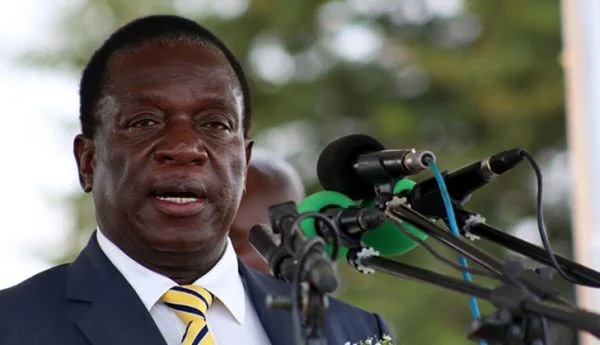
President Mnangagwa told Bloomberg on the sidelines of the 12th US-Africa Business Summit, which ended on Friday, that the discovery of the deposits – which could be the second largest after China – was still early “as far as we are concerned at Government level and policy level”.

“Recently, I have been  happily surprised. I was talking to some of the American businesspeople who are at this conference (12th US-Africa Business Summit) who were saying, look, besides China, I think Zimbabwe is second in having what they call rare-earth minerals, and they say these are very valuable, but we have been sleeping on them; we didn’t know that they were useful,” said the President.

Some REEs are used in the production of LCD and plasma screens, fibre optics, lasers as well as medical imaging.

They can also be used in fertilizers and water treatment chemicals.

In addition to being used to increase plant growth and productivity, the minerals have often been used as feed additives for livestock production.

Currently, the major reserves are in China, the US, India, Brazil and Australia.

Notably, China holds about 30 percent of the world’s deposits.

Government, however, believes that it might need the skills and expertise to exploit the mineral.

President Mnangagwa said: “Anyway, this is an early discovery as far as we are concerned at Government level and policy level, but I am informed that this is a very lucrative discovery and we should begin to look at how we can exploit (them) because; one, we don’t have the technology; two, we don’t have the skills; three, we don’t even know what we have, except what we were told by other people that we have, so it is quite pleasant that we have that . . .”

Zimbabwe, he added, has huge deposits of various mineral resources.

“Fortunately Zimbabwe is endowed with huge minerals of various types. I think it is easier to ask our people what minerals we don’t have . . . Whatever you mention in terms of minerals, we have.”

Although it could not be ascertained where the REE had been discovered, geologists believe that there are some deposits in Mashonaland Central at Gungwa, Mutondongwe and Nanuta.

“These elements that make it possible for the high-tech world we live in today have been found to occur in restricted environments, including carbonites.

“Mashonaland Central province is known to host three carbonites at Gungwa, Mutondongwe, and Nanuta.

“While there has not been exploration for REE at these complexes, Gungwa is known to be enriched in lanthanum and cerium,” said the Ministry of Mines and Mining Development on its website.

Premier African Minerals, which is listed on the Alternative Investment Market of the London Stock Exchange, is also prospecting for rare-earth elements in Matabeleland North, near the Zambian border.

The 17 rare-earth elements are cerium (Ce), dysprosium (Dy), erbium (Er), europium (Eu), gadolinium (Gd), holmium (Ho), lanthanum (La), lutetium (Lu), neodymium (Nd), praseodymium (Pr), promethium (Pm), samarium (Sm), scandium (Sc), terbium (Tb), thulium (Tm), ytterbium (Yb), and yttrium (Y).

China supplies more than 80 percent of world production and more of the heavy elements in the series.

Government believes that it can leverage on the country’s mineral resources to achieve Vision 2030.

Since the advent of the new political administration, investors have been lining up to make investments in the mining sector.

Karo Resources, which has committed to invest US$4,2 billion in its local mining operations, has made considerable progress in developing its platinum mine in Mhondoro-Ngezi (Mashonaland West).

Russia is also investing US$400 million in the Darwendale platinum project as well.

Government recently sold off Zimbabwe Defence Industries’ 50 percent stake in the venture to a private company.

“They have since moved out. We have removed the Zimbabwe Defence Forces. It’s now owned by a private company. We moved out the army, which had initially been part of the shareholders. So its now 50-50: fifty percent is now owned by the Russian company and then (the other 50 percent) by a local company which bought out the army . . . I think we consummated this a few weeks ago . . .” said President Mnangagwa._The Sunday Mail


BREAKING: Fatal accident at How Mine

0

A REPORT coming in says there has been a fatal accident at How Mine.

According to the person reporting at the scene, Shaft maintenance was in progress and at around 20 levels, a boulder fell hitting and crushing four people. One died, one is in critical condition and the others are reportedly safe.

Efforts to get a comment from Metalon PR were fruitless as her mobile number went unanswered.

This is a developing story

SA losing over R14billion to illegal gold trade

0

SOUTH AFRICA – A new report on illegal mining suggests that South Africa is losing upwards of R14 billion a year to the illicit gold trade. This is substantially more than previous estimates of about R7 billion.

Speaking at the launch of the report at the Institute for Security Studies in Pretoria yesterday, author and investigative researcher Alan Martin said one way to track SA’s illicit gold trade is to look at shipment data from the United Arab Emirates (UAE), where most illegal gold ends up because of the UAE’s lax import controls.

Most of this illegal gold is exported in the form of doré bars, which are a semi-pure alloy of gold and silver. SA reported no doré exports between 2007 and 2017, yet UAE data shows more than 34 tonnes arrived between 2012 and 2016. This does not count illegal exports through neighbouring countries, which would substantially increase this figure. The market value of a 1kg doré bar is estimated at between R51 000 and R54 000.

Lax controls

“UAE’s hand-carry gold policy allows couriers to sell their merchandise directly to gold traders in the Dubai souk without demonstrating provenance, export taxes or documentation,” says the report, entitled Uncovered – The Dark World of the Zama Zamas.

The unfolding economic crisis in Zimbabwe is adding to the illicit trade. Police report that around 500 000kg of gold is being smuggled into SA each week from Zimbabwe due to the inability to fetch fair market prices in that country. The gold is then laundered through buyers in SA for eventual export to Dubai.

Martin says these illegal gold exports probably left through the legal system – being processed at one of about 100 illegal refineries in Gauteng and given legal export papers by the SA Diamonds and Precious Metals Regulator (SADPMR), which has been in disarray for years. Given that Rand Refinery exports the entire industrial production of South Africa to countries other than Dubai, these figures give a more accurate picture of the scale of the illegal trade.

An estimated 70% of zama zamas (or illegal miners/ Makorokoza) are undocumented migrants. Some are operating in abandoned mines in the Johannesburg area, while others in the Free State manage to infiltrate operating mines by bribing security officials.

Illegal mining is gang-controlled, with zama zamas at the bottom of the food chain. They complain of having to bribe police to avoid having their gold or equipment confiscated and facilitated by bulk buyers such as licensed jewellers or scrap metal dealers, who can easily side-step the requirement to carefully document any gold purchases. They are able to disguise the origins of the gold by mixing it with alloys. The gold is then laundered and exported by companies to international intermediaries.

The detrimental effects of illegal mining on SA’s economy spread far further than the problems of lost gold and government royalties.

Sibanye-Stillwater has reportedly spent close to R600 million in recent years to counter the zama zama intrusion at its mines.

James Wellsted, head of investor relations at Sibanye-Stillwater, says the group still has issues with zama zamas. “It is an ongoing problem,” he says, although the incursion has been drastically reduced in recent years.

Illegal mining also represents a huge cost to the City of Johannesburg, which has incurred massive expenses caused by poor mining practices, vandalism and theft.

The biggest problem for the city is the use of explosives, which have compromised support pillars in decommissioned mines and resulted in tremors, which put the structural integrity of roads, adjacent residential communities and businesses at risk. It also poses a significant public safety threat as some of the blasting has taken place close to pipelines carrying gas and fuel. A spark could start a fire capable of incinerating property within a radius of up to 300m2, according to the report.

Johannesburg’s Infrastructure Protection Unit head Conel Mackay earlier told Moneyweb that illegal miners came within centimetres of blowing up a fuel pipeline running underneath the FNB Stadium in Soweto. The miners were advised of the catastrophic danger of their mining practices, and have since moved to other, less dangerous areas.

‘Easy deflection’ from uncomfortable truths

The criminalising of illegal mining in SA is having no effect, and is “an easy deflection away from more difficult discussions of uncomfortable truths about the persistent poverty, poor service delivery in marginalised areas and political instability in neighbouring countries that contribute to men becoming zama zamas in the first place.”

One of the obvious causes of the zama zama problem is the South African government’s neglect of the political crisis in Zimbabwe and its tolerance for what has been described as the repeated theft of elections by Zanu-PF. The resultant economic crisis north of our border resulted in a mass exodus to SA. A high percentage of illegal miners in SA are from Zimbabwe.

One solution to the illegal mining problem is a change to the Mineral Petrol Resource Development Act (MPRDA) to better align the licensing process to the realities of artisanal mining. The current act mandates the SADPMR to license, monitor and investigate mining permit holders, tasks critics claim it is not equipped to carry out. An amended act should enable this role to either be shared with or returned to the exclusive control of the SA Police Service (Saps), says the report.

The Saps and SADPMR should also cooperate in monitoring permit holders and their operations. Any legislative amendments should tighten the licensing requirements for scrap metal dealers and gold export permit holders, and mandate the Department of Mineral Resources to publish their corporate details. CITIZEN

Use it or lose it Mash central warned

0

Government to soon evoke section 400 of the Mines and Minerals Act.

The Ministry of Mines and Mining Development will soon evoke section 400 of the Mines and Minerals Act which compels owners of closed mines to either give valid reasons why they are not mining or to surrender their mining rights to Government, Deputy Minister of Mines and Mining Development Polite Kambamura said.

He told delegates attending the Mazowe Rural District Council’s investment conference and expo at Mazowe Hotel yesterday that several companies are holding on to claims for speculative purposes and  Mines and Mining Development Minister Winston Chitando will soon implement the use it or loss it policy

“Soon the Minister of Mines and Mining Development will issue a statement on the use it of loss it policy. There are several companies and organisation who own several claims that have been idle for years, they keep paying inspection fees,” said Dep Min Kambamura.

“Zimbabwe is open for business and we need to open the resource to our investors. We need to see production at those claims.

“The companies that are not doing anything on their claims will be called to come forward and explain why they are not mining or give us their mining plans within the shortest possible timelines failure of which they will be asked to surrender their mining title to the Government.

“As you are aware all mining rights are vested in the President of the country. The ministry is also coming up with a cadastral system to computerise mining title.

‘‘There has been a lot of issues with regards to the manual system which is subject to abuse by some people and the ministry is well aware of that.”

Dep Min Kambamura added that despite Mazowe district having over 40 minerals, it has a number of mines that are lying idle while some have closed and these need to be revived in line with the Transitional Stabilisation Programme.

“Mashonaland Central has the potential to become one of the big contributors to the economy.

‘‘We need to open all close mine and new ones, to valuate and beneficiate our minerals before export,” he said.

“Iron Duke Mine which mined pyrites is closed, Jumbo Mine is under care and maintenance since 2017, Early Worm Mine, which mined limestone and Christmas Mine is also closed.”

Mazowe RDC chief executive Mr Liberty Mufandaedza said there were vast opportunities in Mazowe in the mining, agriculture, real estate, tourism and industrial development sectors.

“Mazowe is the gateway to Mash Central with a population of around 250 000. Gold, platinum, chrome, lime granite are among 42 minerals found in Mazowe and we want to enter into partnerships with artisanal miners and other interested investors to exploit these,” he said.

“We are promoting the ease of doing business and we are processing application letter within six working days.

‘‘We have incentives for investors and we are open to investment along the lines of build operate and transfer.”

Government open to assist Small-scale Chrome miners

0

The government is open to assist chrome small scale miners in order to fully benefit from chrome mining leading to the potential economic growth by 2030. This was indicated at the chrome Stakeholders consultative meeting held at Monomutapa hotel yesterday.

By Mirirai Ngoya

Small scale Chrome miners have indicated to MMCZ that chrome is the key mineral taking into consideration that Zimbabwe has the second largest chrome reserves, and the major players in chrome mining are Small scale and Artisanal miners.

“We have the best grades of chrome here in the nation and we are looking forward to implementing a chrome policy to bring sanity in terms of transparency and value addition,” said Mr. P Kambamure

“Chrome is also a key mineral to see Zimbabwe attaining its upper middle class by 2030 and also produce a 12 billion dollars by 2023” he added. As such MMCZ is there to assist small scale Chrome miners in order to attain the country’s economic vision by 2030.

MMCZ General manager Mr. T M Muzenda said: “MMCZ together with other departments in the mining industry are going to make sure that they establish good infrastructure development, affordable logistics and to gain reliability from their chrome major suppliers (small scale miners).”

He added on, saying “ MMCZ will revise the mode of Chrome purchasing price which is becoming a stumbling block for the artisanal and small scale miner together with the government to fully benefit from chrome production.”

The current President of the Zimbabwe Miners Federation, Ms Henrietta Rushwaya also added on saying “For chrome production to fully benefit the miners and the country, there is need of market price regulation which will, in turn, increase foreign currency revenue and help ease foreign currency shortages.”

And as such MMCZ has pledged to improve in order to attain a billion dollar from chrome production.

350,000 tonnes coal deal near Zim border

0

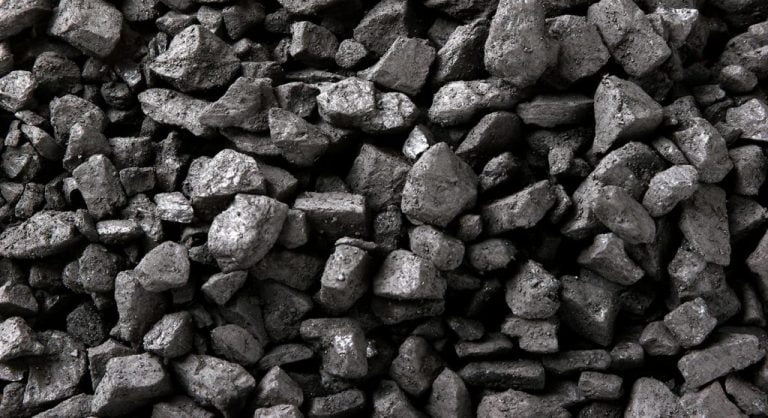
MC Mining Ltd (LON:MCM) chief executive David Brown described as a “massively positive step” the signing of an offtake deal to supply one of the world’s largest steelmakers with its hard coking coal.

The agreement with ArcelorMittal South Africa is for a minimum of 350,000 tonnes of output from the Makhado operation, near the border with Zimbabwe and Botswana.

Completion of the offtake lends funding discussion further “traction”, MC said.

“The long-term viability of Makhado’s hard coking coal is supported by global steel demand that is expected to grow over the next ten years, with economic development and urbanisation driving increases in per capita steel usage,” said CEO Brown

In early yesterday afternoon trade, MC Mining shares were changing hands for 45p, up 2.2%.

Vast ready to hit the ground running on Diamond mining

0

VAST Resources said it has established a road map for moving forward with a plan to mine the Heritage concession following meetings with local community leaders in Zimbabwe and the Zimbabwean parastatal Zimbabwe Consolidated Diamond Company (ZCDC).

The agreements concerning the Heritage Diamond Concession will now be directly between the Vast and the ZCDC rather than the local community, but the local community will continue to be a beneficial recipient of shared profits, as per the original agreement.

Vast said it expects to begin mining at Heritage before the end of the year and has everything in place to “hit the ground running” once it finalises contractual terms.

The group raised £900,000 through an equity sale in May following a £600,000 fundraise a month earlier to help fund its operations at the Baita Plai metal mine in Romania and the Heritage diamond mine in Zimbabwe.

A separate financing process is ongoing – a draft term sheet was previously received from a Swiss Bank for a US$10mln loan – and due diligence is being conducted.

Vast intends to bring forward some of the necessary pre-production expenditure for the Baita Plai project, which is expected to cut lead times to the start of production.

This work will include the start of installation work for a seven-kilometre tailings pipe to the tailings dam and the installation of new and independent electricity supply.


Andrew Prelea the CEO said:

Following the meeting with local community leaders in Zimbabwe and ZDCD, chief executive Andrew Prelea said: “I plan to return to Zimbabwe shortly for what I hope will be the finalisation of the contractual terms and also to establish the commencement of the project.

“This amendment to the structure of the arrangement should not only accelerate the process to commencement but should also provide the company with further opportunities to work with the ZCDC.”

On the group’s financing requirements, he said: “We are confident on all fronts that we will be fully funded very shortly.” – Proactive Investors