Home Blog Page 627

Kariba water not the cause of unstable power supply

0

For the past two months, Zimbabwe has been experiencing severe unstable power supply. This came after South Africa’s Eskom experienced massive problems in relations to finances which led it to implement massive power cuts for the first time since 1994.

Zimbabwe Electricity supply authority (ZESA) Holdings reportedly owed South Africa power utility, Eskom and Mozambican Power Company an estimate of US$100 million debt for power imports, with Eskom struggling to survive amidst its huge debt, the power utility can’t afford to give ZESA electricity on credit.

Zimbabwe has a daily peak demand of 1 400MW of which currently the country is producing 800 MW from a supposed 930 MW. This is, therefore, a direct indication that despite low water levels in the Kariba dam, the country doesn’t meet the country’s electricity demand.

Zimbabwe can access up to 450MW from both South Africa and Mozambique if the two regional power utilities are paid off their monies which amounts to an estimated US$100 million. If the country is able to import from its regional countries unstable electricity supply in the country will eventually cease.

ZESA is also failing to supply electricity enough for the country because it is selling its electricity at very low prices. ZESA currently charges $0, 0986 per kilowatt hour nearly $0,025 when using the inter-bank rate and about $0, 015 when using the parallel market rate while it costs about $0, 11 per kWh to produce electricity locally. Thus, ZESA is operating at a loss, therefore, a clear indication of why the country is experiencing these extraordinary power cuts.

Zambia which shares hydropower project with Zimbabwe at Kariba dam reportedly has surplus electricity production which is expected to power the SADC. Zambia generates practically all its energy production from its own primary resources. These resources include biomass, coal and hydroelectricity.

Recently the minister of Energy Fortune Chasi reportedly said that water levels in Lake Kariba were so low that current supplies will not be able to generate power that is sufficient for the country.
Thus, according to a statement released by Zimbabwe Power Company (ZPC) in early May this year, electricity generation at Kariba Power Company was reduced to an average of 358 MW from the planned 542 MW as a result of water allocation reduction.

Hwange power station which reportedly being under construction has a capacity of producing 930MW but is currently generating less than 400MW, however, upon its completion, the power station will generate 1200 MW.


ZMF, Fidelity partner to enhance gold mobilisation, production and delivery

0

In an effort to eradicate gold leakage in Zimbabwe, yesterday Fidelity Printers and Refiners (FPR) got into a mutual strategic partnership with Zimbabwe’s biggest association in the Mining industry, the Zimbabwe Miners Federation.

By Dickson Rudairo Mapuranga

Fidelity Printers and Refiners General Manager Fradreck Kunaka said that the essence of the partnership between the two parties is to enhance gold mobilisation, production and delivery to FPR.

Small scale miners are the biggest producers of gold in Zimbabwe. Last year Zimbabwe achieved a record gold production of 33,28 tonnes up from 24, 8 tonnes in 2017. Small scale miners’ production was at 21,7 tonnes, while primary producers accounted for the remaining 11, 5 tonnes.

According to Kunaka the spirit behind the partnership between FPR as the sole gold buyer and exporter and ZMF as the largest body that regulates and controls the activities of small scale miners in Zimbabwe, is to remove the current opinion that Fidelity Printers and Refiners is milking miners of their hard-earned foreign currency.

“We need to come together and map up a way forward in terms of enhancing production for the benefit of the nation and remove the perception that there are bad boys and girls,” said Kunaka.

Kunaka also said that the partnership between FPR and ZMF will help the two to come up with policies that regulate the small mining sector in order to make the operation of the sector friendlier.

“We are able to come up with strategies that will ensure that there is a regulation of the sector given that it’s a sector where more players don’t have enough equipment,” he said.

Zimbabwe Miners Federation President Henrietta Rushwaya added saying that the quintessence of the partnership is to make the two parties resume duties that they were defaulting to other parties who do not have direct communication with the producers on the ground, as a result, there was a lot of gold leakages.

The ZMF boss also said that the Federation and Fidelity have to come up with strategies to register unregistered gold buyers and producers in order to minimise leakages that the country is experiencing.

“It is high time we don’t renege our roles, take upon what is supposed to be done by us, ensure whoever seems to be producing and buying gold out there is registered so that we come up with a register for producers and a register for buyers,” she said.

Rushwaya led executive pushes ZMF to another level

0

Zimbabwe Miners Federation which last week announced a deal with Glow Petroleum to ease fuel problems for the miner, has once again announced a partnership with the country’s sole gold buyer and exporter, Fidelity Printers and Refiners (FPR), to ensure that miners realise the true value of their gold production, at a meeting held yesterday at the Rainbow Towers in Harare.

Rudairo Dickson Mapuranga

Gold producers have been advocating for 90 to 100 per cent foreign currency retention threshold from Fidelity Printers and Refiners since the 55 per cent they are receiving currently is not viable for production.

However, the partnership between ZMF and FPR will benefit gold producers as the two parties will ensure according to both ZMF president Henrietta Rushwaya and FPR General Manager Fradreck Kunaka that the miners realise the true value of their gold production.

According to the Fidelity Printers and Refiners General Manager, the two parties will set up a committee to set up the right price that will be viable for the miners, the committee according to Mr Kunaka will also look at the operation cost of the small scale miners so as to come up with prices that are viable for them.
Mr Kunaka also added saying that the partnership between FPR and ZMF will ensure that miners realise the true value of their production.

“What is important is that the miner feels the value of the commodity which they would have delivered to Fidelity,” he said.

Henrietta Rushwaya added saying that the Federation will continue to engage the government with regard to 55 per cent forex retention, however also taking cognisant of the challenges that the government is experiencing concerning the issues of foreign currency.

“If we properly come up with a sound request, the government will reconsider its position, but it’s not a question of just going to the government to say we want 80, 90 foreign currency retention,” she said.

The Zimbabwe Miners Federation is the brainchild of the Ministry of Mines and Mining Development whose birth was marked to represent and contribute to the development and growth of small scale miners.

Zimbabwean miner murdered in SA

0

A South African popular news website reported that Zimbabwean national Frank Joe Moyo, who was allegedly linked to illegal mining, was murdered on Tuesday evening in Limpopo in South Africa.

Police spokesperson Col Moatshe Ngoepe said Moyo was shot dead at about 7.30pm in Letsitele, outside Tzaneen.

“It is alleged that a 41-year-old man [Moyo], was coming from the Carnival City in Gauteng and arrived at a house in Zanghoma village to pay his ‘illegal mining employee’,” Ngoepe said.

“Moyo was outside the house talking to some of the employees when an unknown assailant entered the yard, shot him and fled on foot with his cellphone and an undisclosed amount of money.”

Moyo was certified dead at the scene.

Around 52 people are murdered in South Africa every day. The murder rate increased rapidly in the late-1980s and early-1990s. Between 1994 -2009, the murder rate halved from 67 to 34 murders per 100,000 people.

ZRP Officer arrested for gold ore heist

0

The incident reportedly took place on Saturday night in Colleen Bawn, about 20km outside Gwanda.

A Zimbabwe Republic Police Officer, who allegedly led a heist at former Gwanda mayor, Knowledge Ndlovu’s Ettrick Mine and allegedly stole gold ore worth thousands of United States dollars, was reportedly arrested after a high-speed chase.

Reports say the cop, Bhekimpilo Moyo, who is stationed at Gwanda Police Station, and his accomplices went to the mine when Ndlovu was milling some gold ore.

The gang came across the former mayor’s employees guarding some gold ore, which was waiting to be ferried to the stamp mill, and they attacked them.

Fearing for their lives, the employees reportedly fled from the mine, leaving Moyo and his gang behind. It is alleged that the gang then loaded the gold ore into their truck and left
the scene.

The workers phoned their employer, Ndlovu, who rushed to the mine and intercepted the gang as they were leaving the mine.

The cop and some of his accomplices were apprehended after a 10km high-speed chase.

They were handed over to the police.

Contacted for comment, Ndlovu said he could not comment because it was now in the hands of the police.

“The matter is in the hands of the police. I can’t comment on the issue. It could jeopardise investigations,” he said.

Matabeleland South police spokesperson Chief Inspector Philisani Ndebele yesterday also declined to comment on the matter.

Last month, another police officer appeared in court accused of illegal gold panning and stealing gold ore from Gaika Mine in Kwekwe.

Donemore Nyashanu (33), of Mazvikite village under Chief Mposi in Mberengwa, a Support Unit operative, connived with five other members of the joint taskforce, who were tasked with guarding Gaika Mine, to conduct illegal mining activities and steal gold ore. Source – NEWSDAY

Gold mine workers take Chinese employer to NEC

0

At least 34 employees, who are being represented by the Zimbabwe Diamond and Allied Minerals Workers’ Union (Zdamwu), are claiming that the Chinese company owes them over $154 000 in underpayment of wages and gratuities.

WORKERS at a Bubi-based Chinese gold mining company, Ming Chang Sino Africa Mining Investments (Pvt) Ltd, have taken their employer to the national employment council (Nec) for the mining industry over underpayment of wages.

However, on April 12 this year, Ming Chang, which operates a lime factory in Bubi district, approached the labour court seeking an urgent application for a show cause and disposal order against its 34 workers.

It argued that the employees had engaged in an unlawful collective job action without cause.

The mining company claimed workers were demanding back-pay, salary increments, transport allowances and company provided accommodation.

“…respondents (workers) and any other employee who was involved in the unlawful strike at Ming Chang Sino Africa Investments (Pvt) Ltd, Bulawayo Lime Factory and Bubi district, Bulawayo, be and are hereby dismissed from employment,” the application read.

But workers dismissed the allegations, arguing they did not embark on a strike, but were locked out of the premises by the employer.

Zdamwu general-secretary Justice Chinhema accused Chinese companies of violating local labour laws.

“We have said if the Chinese are genuine investors, they must come here and comply with the laws of Zimbabwe. They must comply with our labour laws, not what is happening now. That protection that they have claimed to have, we have found out it is not there,” he said.

“There is no that super protection that they allege. Yes, we have got corrupt elements within the government and within the political set up who protect these people, which is corruption. This must also stop,” Chinhema said._NewsDay

State Minister takes ZCDC to task over Chimanimani relocations

0

Minister of State for Manicaland Dr Ellen Gwaradzimba says the Zimbabwe Consolidated Diamond Company should implement a sustainable relocation model for families in Chimanimani where the State miner began operations last year.

Dr Gwaradzimba said her office was concerned with the way the villagers in Arda Transau had been relocated and said she would engage ZCDC to ensure a different model was used in Chimanimani.

Hundreds of families were relocated to the farm from Chiadzwa to pave way for mining activities.

The seven diamond mining companies licensed to mine diamonds in Chiadzwa then – Mbada Diamonds, Marange Resources, Anjin Investments, Diamond Mining Company (DMC), Jinan, Kusena and GyeNyame – operated as joint ventures with the Zimbabwe Mining Development Corporation, when mining activities started in 2006.

All diamond mining activities have since been consolidated under the Zimbabwe Consolidated Diamond Company.

Minister Gwaradzimba said relocation of people should be done in a sustainable manner to ensure that the livelihoods of the villagers are not disrupted.

“One issue that I am concerned about is the issue of relocation of families in Chimanimani. We need to come up with a model that will allow our people to become self-sustainable. They should not be moved from their communities and thrown in areas where they cannot continue fending for themselves and they are forced to survive on handouts,” she said.

She said the diamond miner should build self-contained communities when relocating people to allow them to carry out projects that bring income and development.

“When they build homes for these people, we want irrigation schemes, to enable the people to venture into horticulture, aqua-culture and other projects. We want enough social amenities and roads among others to make the villages self-contained,” said Dr Gwaradzimba.

She said although she understood the economic challenges pertaining in the country, ZCDC could enter into partnerships with capacitated organisations for such projects to ensure that they do not strain their cash flows.

Dr Gwaradzimba said this would minimise conflict between the company and villagers in future.

More than two decades after villagers were moved from Chiadzwa, ZCDC is still battling with legacy issues emanating from promises made tocommunities by the seven companies that were operating in the area when diamonds were discovered._Manica Post

RBZ rejects gold miners’ demand

0

ZIMBABWE is not in a position to liberalise domestic gold marketing and buying as this will negatively affect the flow of foreign currency into the economy, Reserve Bank of Zimbabwe (RBZ) deputy governor Dr Kupukile Mlambo has said.

He was responding to calls by the Zimbabwe Miners Federation (ZMF) at the recent annual mining indaba who demanded an end to the monopoly of Fidelity Printers and Refiners.

Fidelity is an RBZ subsidiary and sole gold buyer in the country. 

Miners contend that the centralised gold buying system does not give them fair value for earnings and want Fidelity to compete with other players.

They also claim the monopoly is to blame for the sprouting of illicit gold trading on the parallel market and smuggling. 

In an interview on the sidelines of a Sadc-Development Finance Institutions (Sadc-DFIs) forum hosted by the Sadc-Development Resource Centre, which ended here last Friday, Dr Mlambo said the call to liberalise the sector was not new.

“This is not the first time the call has come. An attempt to liberalise selling of gold was made between 2009 and 2013 but we realised that in terms of mobilisation of foreign currency, it was difficult because all sectors are supported by the mineral sector especially gold,” he said.

“In my view, I think it is premature now to start thinking that we can liberalise the sector. What is important for me is that we ensure that the small-scale gold miners are paid a fair price, which is as close to the international price as possible and that they get other support, which we are giving them under the small-scale gold miners’ facility.”

ZMF president Ms Henrietta Rushwaya had said the monopoly by Fidelity Printers was opening up the gold mining sector to exploitation of players hence the need to formalise the small-scale mining sector. 

She said the country has about 30 000 registered players and more than 1,5 million unregistered small-scale miners. 

Stakeholders have also stressed the need to regularise and speedily formalise the small-scale gold mining sector to harness all the output into mainstream production.

Gold mining contributes significantly to the economy in terms of export receipts and jobs.

The gold mining industry targets to produce 100 tonnes per year by 2023 to contribute to the envisaged $12 billion mining sector earnings by 2030. 

Meanwhile, Sadc-DFIs conference ended on a high note here amid calls for respective countries to capacitate development finance institutions to collectively address climate change risks.

All Sadc countries were represented at the forum held under the banner of the Sadc Development Finance Resource Centre (Sadc-DFRC). The common message was anchored on the need to come up with strategies to encourage every institution’s participation in green financing to address climate change related calamities such as cyclones and disasters.

Sadc-DFRC chief executive Mr Stuart Kufeni said the gathering recommended that every member state should address policy issues to create a conducive environment for finance institutions to embrace green financing.

“This is a forum to share experiences and discuss these issues as they cut across sectors from SMEs to big institutions. What came out is that there are parameters that we need to address if we are to effectively harness and be able to move on to green financing.

“There are issues of regulation and policy environment to ensure that we have a conducive environment so that we can green our economies. The DFIs from different countries have to take these recommendations home and be in a position to also implement in their own countries,” said Mr Kufeni.

Dr Mlambo officially opened the conference where he said Zimbabwe was working on a framework that will guide the country’s financial sector to adopt sustainable green financing principles.

The Sadc-DFRC has 41 certified DFIs.

Membership of the DFIs network is as prescribed by a Sadc protocol structure made up of Ministers of Finance and Investment and is confined to those that are Government owned and established through a policy targeted at developing specific sectors of the economy._The Chronicle

Is Chrome our hope to lift the Economy?

0

Zimbabwe has a significant resource in the chromium sector, with the world’s second largest reserve of chrome and as such the reserves are to be utilized to help in reviving the country’s economy.

By Mirirai Ngoya

Zimbabwe is playing an important role in the chromium industry and will provide an opportunity to promote Zimbabwe’s rich mineral resources and also an opportunity for development and an attraction to many investors in Zimbabwe’s Mining sector. Minister of mines and mining development indicated that “Zimbabwe holds the world’s second largest chrome ore resource of 900 million tonnes at approximately 12 per cent with South Africa leading the pack. Global resources are estimated at 7, 5 billion tonnes. However, more exploration is required to upgrade the resource.”

“Based on 2018 statistics, Zimbabwe produced an estimated 1,358 million tonnes of ore, against the world total of 33, 7 million tonnes. From those figures, you can see that we accounted for 4 per cent of global output.”

Despite being a significant holder of global chromite resources, Zimbabwe’s contribution to total global production of chromite ore has been at best 5 per cent which shows its greatest impact on the world’s production.

Besides being a major player in the world’s chrome production, “since 2001, Zimbabwean chrome ore output had been decreasing in line with decreasing output of ferrochrome.” Said Mr Chitando.

But however, “Following the lifting of the ban on the export of chrome ore by the Government, chrome ore output, has increased exponentially from the all-time low figure of 186 000 tonnes in 2015 to approximately 1,358 million tonnes in 2018. Total exports of chrome ore during 2018 are estimated at 739 000 tonnes.”

That is from this we are looking forward towards achieving great deals to benefit the country.

There is huge potential for the country to increase its Ferrochrome production as over the last few years the nation has been witnessing decreasing ferrochrome production.
However, “2018 production was around 350 000 tonnes, which shows the country’s new capacity being commissioned and led to a 20 per cent increase of Ferrochrome production capacity to 418 000 tonnes in 2019.”

Most of the smelting technology in the country is old and there is a need to invest in new technology, especially technology that can process fines.

Some of the producers have plans to install fines agglomeration technology so that they can take advantage of the chromite fine resource, which accounts for approximately 40 per cent of the country’s chromite ore resource. New technology will also improve smelting efficiencies, thereby, improve the viability of the industry.

Further expansions will see a Zimbabwe ferrochrome capacity increase to at least 956 000 tonnes by 2022. Therefore, there is a need for significant investment in developing the mining capacity of the country from exploration through to production.

In line with Government’s vision for the country to achieve middle-class status by 2030, Zimbabwe has a clear vision of seeing at least 2 million tonnes of carbon and stainless steel, of which one of the key ingredients is ferrochrome, being produced in the country within the next few years.

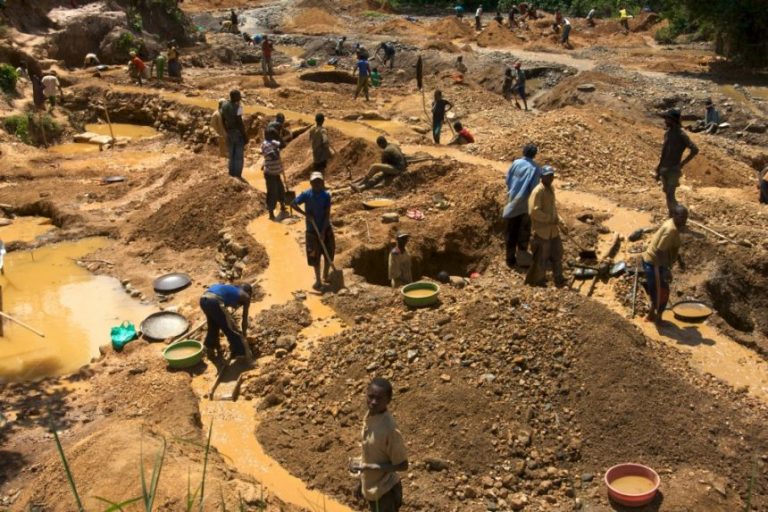
Chiadzwa illegal diamond miner finally buried

0


A SOMBRE atmosphere engulfed Jori village in Buhera on Sunday during the burial of Terrence Masendeke, who was shot dead while allegedly panning for diamonds in a protected area at Chiadzwa last month.

In an interview with NewsDay yesterday, the deceased’s uncle Richard Masendeke said they avoided body viewing as the body was now in an advanced state of decomposition.

“He was finally buried on Sunday in Buhera. We financed the funeral, but police helped by transporting the body from Harare,” he said “

Masendeke said his family was worried that no officials from the Zimbabwe Consolidated Diamond Company were present, neither did they send a condolence message.

The family recently took Home Affairs minister Cain Mathema and Commissioner-General of Police Godwin Matanga to the High Court, demanding an urgent autopsy and release of the body for burial.

Police had reportedly earlier indicated that the post-mortem would only be conducted on June 25 due to the shortage of pathologists in the country.

The family expressed fears that further delays in carrying out the post-mortem would compromise evidence.

According to the court papers, Masendeke was fatally shot on May 15 by ex-policeman Dulula Chinamano in full view of his colleagues._NewsDay