Home Blog Page 637

Minerals growth output seen suffering minus 40 % decline by year end

0

MINERAL production in Zimbabwe will decline to around minus 40 % by year end owing to a host of challenges confronting the mining sector, the State of the Mining Industry 2019 survey reports.

The report, released recently and compiled by the Chamber of Mines, established that key minerals were expected to record declines in output growth.

“Mineral output prospects survey findings show that key minerals are expected to record declines for selected key minerals ranging as follows; gold  between -5% to -35% ; platinum 0% to -7%; diamond  -30% to -40%; chrome -10% to -20%; nickel -2% to -10%) and coal -10% to -40% ,” said the document.

However, the annual report observes, in 2020, key minerals like gold are expected to register growth between 5 % to 40 %, ferrochrome 5% to 20 %, diamond 10%, to 20% and coal (5% to 15%.

The majority of respondents constituting 90 % indicated that they signed contracts with the Zimbabwe Electricity Supply Authority for dedicated power and committed to pay a revised foreign currency tariff in advance but were not receiving the energy.

Turning on to government’s vision for achieving the US$ 12 billion industry by 2023 , players in the mining industry raised concern over the need to avail adequate capital for expansion of current production, need to reopen closed mines and development of new mines; need for adequate infrastructure and competitively priced electricity, rail, water, roads and Information Communication Technologies.

“Realisation of the above vision requires adequate and accurate information for the crafting of optimal policies that supports rapid growth and development of the mining sector,” said Chamber of Mines president, Elizabeth Nerwande.

The study also called on the need to attract and retaining critical skills to match the rapid expansion of the mining industry; aligning the fiscal and monetary frameworks to the new growth targets through optimal tax and foreign exchange framework that sustain mining operations.

Said the survey, “Key legislative and policy matters raised by mining executives include the following: energy and infrastructure policy, foreign exchange policy; macroeconomic policy; fiscal policy; Minerals Development Policy, environmental management policy and Mines and Minerals Act.”

Almost all respondents 100 % indicated that the current foreign exchange retention thresholds are inadequate, citing high imports of critical materials for production; emerging demands on mining for payment of electricity bills, royalty, fuel in forex.

Notably, 100 % of respondents indicated that their cost of production had increased by more than 20% in 2019, compared to 2018 arguing that the surrendered portion to the central bank liquidated at the interbank rate at a time local inputs are priced at a factor which is around twice the interbank rate_New Zimbabwe

Mimosa in talks to buy rival Amplats land

0

IMPALA Platinum Holdings Limited is in talks to buy land in Zimbabwe from rival Anglo-American Platinum Limited as the world’s second-biggest producer of the precious metal seeks to boost output from the southern African country, according to people familiar with the negotiations.

The purchase of the claims by the Mimosa mine, which is jointly owned by Impala and Sibanye Gold Limited could be finalised by the end of the year, according to sources who asked not to be identified because the discussions are not public.

Impala and Amplats mine most of their platinum group metals in neighbouring South Africa, which has the world’s biggest reserves of platinum. But Zimbabwe’s deposits, second only to South Africa’s, are shallower and therefore cheaper to mine. Amplats’ Unki mine has two properties adjacent to Mimosa. 

“We are considering various options with regards to the mining of these claims,” Colin Chibafa, Unki’s chief financial officer, said in a written response to questions. 

“A decision in this regard is expected soon.”

Fungai Makoni, the managing director of Mimosa, confirmed Impala was negotiating with “another entity,” but declined to give further details. “Due to contractual obligations we can’t disclose the terms and the entity at this stage until we have finalised with them,” he said in an interview.

Impala, which operates Mimosa, and Sibanye in July said they were undertaking a feasibility study at Zimbabwe’s oldest platinum mine to assess the best way to develop the remaining resource, according to general manager Alex Mushonhiwa.

“Mimosa has largely mined out many of the areas near the present mining infrastructure and has advanced work to potentially access some neighbouring areas across the mine boundary,” Impala spokesman Johan Theron said in an e-mailed response to queries. 

“The most obvious way to do this would be to agree a royalty payment with the neighbouring permit holder.”

A deal made commercial sense because the land was not being mined at present, one of the sources said. President Emmerson Mnangagwa in March this year said Government would enforce its policy of confiscating mining companies’ unused permits under a ‘use it or lose it’ clause, as the country seeks to boost mining and stimulate economic expansion. — Bloomberg

South Africa is one step closer to processed titanium alloys

0

William Gregor, an amateur mineralogist and chemist, first discovered ilmenite – some black sand containing one of the world’s lightest metals – in the UK in 1791. Four years later, this light metal was isolated and named “titanium” by a German chemist Martin Heinrich Klaproth.

Titanium has comparable strength to steel, the world’s most used metal, but is about 56% as dense and 45% lighter. Pure titanium is very difficult to extract from ilmenite and so it took about 145 years before the metal became generally useful.

Titanium alloys are made when controlled amounts of other elements – such as chromium, iron, vanadium, aluminium, nitrogen, niobium, molybdenum, ruthenium – are added to titanium.

Adding other elements to titanium can make it stronger or more resistant to corrosion. This, alongside other qualities, makes titanium alloys sought after in the aerospace, automotive, chemical, jewellery, biomedical, construction and other industries.

But titanium and its alloys are very expensive. Because titanium is difficult to extract from its ore, creating finished products involves many complex steps which demand a lot of energy and generate a lot of waste. For instance in the aerospace industry, where it is most commonly used, 11kg of titanium only makes 1kg of a finished product.

My colleagues and I are looking into how we can develop new low-cost titanium alloys in South Africa that could be used in non-aerospace sectors. Research like this is happening elsewhere in the world as scientists work to reduce the cost of titanium alloys.

If our work is successful, to my knowledge, these may be the first locally designed low-cost titanium alloys in South Africa. Low-cost alloys would pave the way for affordable fuel-efficient cars and affordable medical implants and prosthetics. The industry would also create job opportunities and generate revenue from sales.

Types of alloy

Titanium alloys can exist in three basic forms – alpha, beta and a combination of alpha and beta – depending on the amount and type of metal that is added.

Alpha titanium alloys are created when elements like aluminium, tin, oxygen and nitrogen are added to titanium. This allows the alloy to keep its structure in temperatures of up to 882°C and improves its strength. It’s also resistant to corrosion and creep – meaning it’s slow to deform over a long period of exposure to high levels of stress.

But alpha titanium alloys are more difficult to form into shapes and, compared to other alloys, don’t improve when heated or cooled. They are typically used for aerospace structures, engines and vessels that have to endure pressure.

Beta titanium alloys are made when large amounts of elements – like iron, vanadium, chromium and molybdenum – are added. The room temperature strength of this alloy is high, while its high temperature strength is poor. These alloys can easily be formed into shapes, even at room temperatures, making them an attractive material for orthopaedic implants.

The third type of alloy combines alpha and beta. This means considerable amounts of both alpha and beta stabilising elements – like iron and aluminium – are added. This gives the alloys a good combination of strength and ductility. They are by far the most developed and most utilised alloy. They are suitable for a wide range of applications from aerospace to automotive and biomedical industries.

Cheaper alloys

Our focus is on making a cheaper type of the third alloy: combination of alpha and beta.

We are doing this by changing the amounts of elements that are in the commercial alloy, known as Ti-6Al-4V. For instance, we replace most of the vanadium with iron, because vanadium is rare and expensive, about 150 times more expensive than iron. We have to be careful in our proportions because, for instance, iron could could segregate during melting and form different compounds.

We also reduced the amount of aluminium in the alloy. This is because previous studies reported that titanium alloys containing aluminium were difficult to form, and so resulted in the wear and tear of tools.

The next step was to reduce waste material when the alloys are being formed into shapes. Forming titanium alloys into different shapes usually accounts for 30% of the total cost of producing titanium products, and up to 20% waste generated.

To do this we looked at how far microstructures (internal structure than can only be seen with microscopes) can be manipulated to get the desired properties in the alloys. This would reduce the cost during commercial production because we know how far we can stretch or press the alloy without it breaking.

Producing alloys

We produced the alloys by a conventional technique called vacuum arc melting. The vacuum arc melting furnace is located at Mintek – South Africa’s national research and development organisation.

The limitation with this is that only button-sized samples were produced. So we could not make samples for a wide variety of tests.

We compared the hardness of the alloys and found that the newly-made alloys had higher hardness values compared to commercial alpha and beta alloys. In some cases they were comparable.

We also examined how the newly-made alloys corrode in salt and acid solutions and found they had better corrosion resistance in both solutions.

We were able to test samples of the alloys at different temperatures and forming speed to find the best combination for forming the alloys into shapes without defects. We saw that the alloys had a wide processing window. Only a small set of temperatures and deformation speeds had to be avoided.

More to be done

There’s more to be done. We couldn’t measure the room temperature strength of these alloys because we needed bigger samples.

We have also not studied the weldability of these alloys or how easy it is to machine cut them into different shapes and sizes. Machining of titanium alloys accounts for about 30%-40% of the total cost of making them.

Through the support of a postdoctoral fellowship programme of the African Academy of Sciences, we received funding to continue our studies on the newly developed alloys. We are now able to produce bigger samples using the vacuum induction melting furnace at the Council for Scientific and Industrial Research.

The major challenge when making bigger alloys is that we had to improvise. We used a vacuum melting furnace that is not designed for making new alloys. The correct furnace is available in South Africa, but needs repair.

However, our results so far are encouraging– The Conversation Africa

Sino Africa sues mining firm over ‘death trap’ operations

0

SINO Africa Huijin Holdings (Private) Limited has dragged Yibang Investments Private Limited to court on allegations of encroaching into its mining claim while posing life threatening dangers to their workers and general public due to dangerous mining methods.

Also cited as a respondent in the urgent chamber application is Minister of Mines Winstone Chitando.

An affidavit by Mark Rujuwa from Mtetwa and Nyambirai Legal Practitioners who is representing Sino Africa said if not stopped, the dispute will cause serious problems.

“The dispute between the parties is historical and if this court folds its hands, it will result in anarchy, despondency and brutality especially if one takes into account how there is rampant bloodshed in various gold fields surrounding the country,” he said.

“The parties all have some paperwork from the Ministry of Mines and their dispute is pending in respect of Yibang Investments claims Lawley 105 and 107 which encroach onto the applicant’s gold claim Lawley 95.

“Taking into account that the present ruling from the ministry favours the applicant, it will only be logical and reasonable to allow stay of any mining activities or investment thereof by Yibang Investment until the Supreme Court makes a ruling under SC 374/19 as well as after the resolution of the dispute by the minister,” Rujuwa said.

Rujuwa said it is compelling to have this matter done on an urgent basis because the applicant was aware of the return of Yibang Investments on the disputed claim around the 22nd of October 2019 when the fencing commenced.

“As an officer of the court, I am also persuaded that this matter is urgent since the first respondent seeks to benefit from wrongful and illegal acts which goes down to undermine the superiority the Supreme Court and general public policy considerations.

“The behaviour of the first is unwarranted, illegal and barbaric, hence they should be stopped to interfere with the operations at the applicant’s claims pending the finalisation of due process,” he said.

Sino Africa managing director, Huan Jiansheng said, “The first respondent has begun a robust project of fencing off a significant portion of their mining claim on the basis of a fraudulent illegal court order.

“This will cause harm and commercial urgency cannot be disputed. It is critical to note that the mining activities come in different types and allowing the respondent to use its methods which include deep shafts will jeopardise the land and the plans Sino Zimbabwe has.”

The case is pending.New Zimbabwe

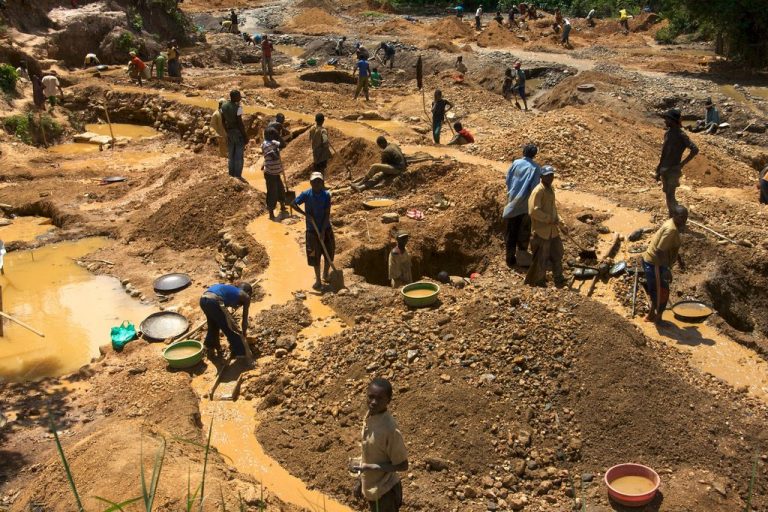
Mudzi gold panner shot for demanding beer money back

0

A Mudzi gold panner is battling for life in hospital after he was shot on the shoulder by a fellow panner for demanding back his $50 he had lent the gunman to buy beer.

The shooter is now facing attempted murder charges and is on the run after police launched a manhunt for him.

Mashonaland East provincial police spokesperson, Tendai Mwanza confirmed the incident.

He said the incident happened when the suspect, Forbes Mungazi was recently drinking beer with Washington Renzva at the gold-rich Nyamuzizi Business Centre in Mudzi.

As the two continued imbibing, Mungazi reportedly ran out of cash leading to his borrowing $50 from Renzva on the promise that he would repay him later in the day.

However, an hour later, Renzva demanded his money back from Mungazi who then indicated that he was going to pay him with cash he left at his home.

The pair proceeded to Mungazi’s home where, on arrival, Renzva remained outside, whilst his colleague entered a bedroom under the pretext of collecting the money.

Instead, it is further said, Mungazi emerged armed with a pistol he used to shoot at Renzva once on the right shoulder.

Mungazi immediately fled the scene while Renzva was rushed to Makosa clinic where he was later transferred to Kotwa hospital.

A crime report was made at Makosa Police Station and the manhunt for Mungazi continues.

Meanwhile, a Dema man in Seke district has also been hospitalised after three unknown gunmen recently broke into his home at night and shot him.

Mwanza confirmed the incident and said the gunshot victim, Passmore Kusvakusva of Dema Phase 3 in Seke, was asleep when he heard some noise from people who were breaking into his home.

He woke up and rushed towards the direction of the noise to be confronted by the suspects.

One of the intruders drew a pistol and fired at him once.

Kusvakusva was hit on the left side of the chest and fell down. The trio fled the scene with nothing stolen.

A neighbour who had heard the gunshots rushed to the scene to find Kusvakusva bleeding and lying helplessly on the floor.

He was later rushed to Chitungwiza hospital before a police report was made.

Mwanza said no arrests has been made yet_New Zimbabwe

Malicious reports affect diamond sales: ZCDC

0

BASELESS and negative reports on the goings-on in the Chiadzwa diamond operations result in the precious gems fetching so little on the international market, Zimbabwe Consolidated Diamond Company (ZCDC) board chairperson has said.

Only recently, the United States barred Zimbabwe’s diamonds from entering Washington after claims that they were produced with forced labour. Apparently, forced labour has never been an issue at Chiadzwa and other diamond mining areas around the country.

In his opening remarks during an all stakeholders diamond indaba held in Mutare on Wednesday, ZCDC board chairperson Mr Killian Ukama said negative reports gave the impression that the country was desperate for diamond buyers and ended up getting low prices for the precious gems.

“It is important that we remind each other that all the lies that are peddled on international communication channels result in our produce fetching less on the international market.

“We are in this together and if we cannot be responsible in the way we disseminate information at least let us be patriotic. The situation that obtains because of negative publicity is that buyers get the impression that Zimbabwe is desperate for market and in the end they negotiate to the last price,” he said.

In an effort aimed at sourcing lucrative markets for the precious gems, ZCDC last year launched an online bidding platform to allow potential international buyers to buy Zimbabwe’s gems.

The ZCDC upped its efforts to market its produce since last year when it launched an online platform that is meant to perform better than manual diamond bidding.

At its inception, Mr Ukama said the platform allowed the country’s diamond sector to follow international best practices.

“It allows us to connect with many more buyers who can register from anywhere in the world. The system allows comprehensive data analytics regarding the buyers and their preferences. ZCDC will also invest in exploration and evaluation to establish resource confidence.”_The Manica Post

3 259 illegal diamond miners arrested

0

STATE-owned Zimbabwe Consolidated Diamond Company (ZCDC) has arrested 3 259 illegal diamond panners in Chiadzwa in the past year, a security official with the state-owned mining firm has said.

In a security update presented to the all stakeholders diamond indaba at a Mutare hotel on Wednesday this week, ZCDC chief security officer Mr. Elias Mvere said the illegal panners continue to be a threat to the national economy.

“Illegal diamond panners commonly referred to as gwejas remain a cause for concern to the operations of the ZCDC and continue being a threat to the national economy. The panners are operating from all bases on the mountains and some are offered rented accommodation by local villagers and shop owners.

“The intelligence we have suggests that the panners are being sponsored by illegal buyers and syndicate managers. In the last indaba, the security department noted that it had effected a total of 1 375 arrests. Notably, only 30 percent of those arrests were of individuals from Manicaland. Since then, the department has made a total of 3 259 arrests. Twenty-one percent of the arrests were illegal panners from outside Manicaland.

“This represents an increase in illegal panners arrest from the province. This highlights the need to further engage the local leadership so that cases of illegal panners can be eliminated. In spite of this, we greatly applaud the role that the kraalheads, headmen, and chiefs have played in fostering dialogue between ZCDC and the local community,” he said.

Mr. Mvere thanked members of the community around the mining area for assisting ZCDC in curbing illegal mining activities.

“We would like to applaud the community for their continued support which has helped us to thwart illegal panner intrusions through reliable and accurate information. Diamond ore areas identified with codes like RBZ and Ushonje raised a lot of interest from illegal panners. However, more often than not, the security reactions were able to counter these intrusions with the help of community members,” he added.

Issues relating to illegal diamond panners have been a borne of contention for mining companies in Marange since the discovery of the precious gems_The Manica Post

Zesa reverts to Stage 2 load shedding

0

ZESA Holdings yesterday said it is implementing prolonged load shedding following a technical fault at Hwange Power Station.

The power utility said it was moving to Stage 2 load shedding that has previously seen customers going for up to 18 hours per day without electricity. 

Before the latest technical fault at Hwange Power Station, power generated locally and imports from South Africa and Mozambique saw customers enjoying longer hours with power.

In a statement yesterday, the power utility said increased load shedding would persist until the fault is rectified. 

“Zesa Holdings would like to advise its valued customers countrywide that there was a technical fault at Hwange Power Station this afternoon Monday 11 November 2019, resulting in an increase in load shedding outside the publicised schedule. 

“Load shedding is now being implemented at Stage 2 until the fault at Hwange has been rectified,” reads the statement.

According to Zesa, Stage 1 load shedding happens to the first group of customers as listed on its schedule and these are switched off as the power shortfall will be within planned limits.

In the event that the power shortfall increases beyond the planned limits, load shedding will move to Stage 2. 

Zesa said while it is importing electricity to augment national supplies, power would remain constrained. 

“While all efforts are being made to improve the power supply availability through imports, the supply situation remains fragile. 

“Customers are advised to use the available power very sparingly and will be updated as the situation improves. The inconvenience caused is sincerely regretted,” it said.

The Hwange Power Station has outlived its lifespan resulting in it having consistent breakdowns.

The country’s power shortage is worsened by subdued electricity generation at the Kariba Hydro Power Station due to poor rains in the 2018/19 rainy season.

The Government is importing power from South Africa and Mozambique to address the suppressed electricity generation. 

The Government has also poured resources for the rehabilitation of Hwange unit 7 and 8 as it strives to improve the country’s electricity generation which is key in its bid to attain an upper-middle-income status by 2030_The Chronicle

Weak demand, forex shortage frustrates PPC

0

CEMENT producer PPC’s shares slumped more than a fifth in early trade last Thursday after the company said interim earnings could fall more than 80% because of low demand for its products in SA and shortage of foreign currency in Zimbabwe.

This shines the spotlight on the challenges that PPC’s new CEO Roland van Wijnen, who took over six weeks ago, will grapple with in turning around SA’s largest cement maker.

PPC’s shares hit a 53-week low after falling 21.28% in early trade. But the stock recovered to close 12.31% down at R3.42, the largest one-day decline since March 2002. Since the beginning of 2019 the stock has shed more than 42% of its value.

The company’s disappointing performance comes amid a surge in imports, lack of infrastructure investment, mooted price increases in Southern Africa and weak consumer demand. PPC must also make provision for carbon tax, which came into effect on June 1 2019. PPC has said that the effect of carbon tax would be R100m-R120m for cement and lime per year. PPC partially attributed the expected fall in earnings to inflation in Zimbabwe exceeding 150% in the six months to end September.

Mish-al Emeran, an equity analyst at Electus Fund Managers said though PPC had said that the Zimbabwe operation was self-funding, PPC Zimbabwe’s US$21m (R310m) debt due to PPC SA posed a balance-sheet risk.

PPC owns 70% of PPC Zimbabwe, which includes a clinker manufacturing operation at Colleen Bawn and two milling plans in Bulawayo.

PPC Zimbabwe is that country’s largest cement manufacturer. The Zimbabwean operations have a total capacity of 1.4-million tons a year. PPC said in a trading statement that earnings before interest, tax, depreciation and amortisation (ebitda) in Zimbabwe was expected to fall by 40%-45% from the prior period’s R352m. “PPC has been closely monitoring the economic situation in Zimbabwe and though the business is self-sufficient, the Zimbabwe Public Accountants and Auditors Board (PAAB) announced that Zimbabwe is a hyperinflation economy,” PPC said in a trading statement.

It said the rapid increase in inflation to more than 150% at the end of September and lack of access to foreign currency supported PAAB’s assertion about hyperinflation. PPC said other than the hyperinflation in Zimbabwe, other drivers of the decline in ebitda were the “difficult trading conditions” in SA and one-off restructuring costs amounting to R85m.

PPC has a presence in SA, Botswana, Democratic Republic of Congo, Ethiopia, Rwanda and Zimbabwe.

PPC said the group’s ebitda was expected to fall by 15%-20%, compared to the ebitda of R1.03bn in the six months to September 2018. Headline earnings per share were expected to decrease by  65%-85% from the prior period’s 21c.   Business Day

Embrace small-scale mining, women urged

0

WOMEN have been urged to be more knowledgeable about mining rights and improve their participation in the sector.

Speaking at a women’s mining symposium held recently at a local hotel, Manicaland provincial mining director Mr. Omen Dube, whose speech was read by Mr. Innocent Mapara, said unawareness was the major hindrance to women’s participation in the mining sector.

The symposium was co-hosted by Action Aid and Zimbabwe Diamonds and Allied Minerals Workers’ Union under the theme “Empowering women in the extractive industry to eradicate poverty, inequality, and abuse”.

Mr. Mapara said there was a need to increase women’s participation in the mining sector as part of measures to bridge gender inequality and achieve sustainable economic development.

He said the main reason why women’s participation was low in the mining sector was because of ignorance of the legal requirements for one to enter the sector.

“We want to empower young w to break the glass ceiling in entering the mining sector. We are doing this by sensitising them on access to mining rights and also the importance of this sector. To solve this, we are trying to mainstream women by participating at workshops and conferences and teach them on the legal requirements for one to be part of the mining sector,” he said.

Mr. Mapara also urged women to work closely with the Ministry of Women Affairs, Gender, and Community Development to ensure that they get entitlement for mining claims that would benefit them.

“The major challenges for women are labour, occupational segregation and lack of access to capital. The Ministry of Women Affairs, Gender, and Community Development will advocate and lobby for you and assist you in acquiring mining claims as has been evidenced by the few women that have claims as we speak,” said Mr. Mapara.

In an interview, ZIDAWU’s chairman, Mr. Cosmas Sunguro, said there was a need for gender quality in the mining sector as small-scale artisanal mining was male-dominated.

“There is a need to focus on gender issues in the extractive industry in Manicaland as the mining sector is vast in the province.  Women need to venture into that sector and play a critical role. Our aim is to sensitise women in Manicaland province about the importance of the mining industry in the socio-economic development of the country,” he said.

The symposium brought together communities affected by mining activities, mining workers, civil society organisations, faith-based organisations, and relevant Government ministries_The Manica Post