

Home Blog Page 643

Nigeria in bid to get oil refineries working

0

Africa’s biggest oil producer is trying to get its refineries working in an attempt to wean itself off imported fuel. Yet again.

Over the past 12 years, Nigeria tried and failed four times to crank up its aging and unprofitable crude-processing plants. Now the state-run energy company is giving it another shot — a move that, if successful, could end the nation’s reliance on fuel imports. However, the country’s recent track record means there’s skepticism about the latest effort.

“For our refineries that have not been properly maintained for years, it might be easier to build a new one,” said Cheta Nwanze, head of research at SBM Intelligence, a Lagos-based risk advisory.

The West African country of about 200 million people imports more than 90% of products like gasoline and diesel, swapping its prized export — crude — for petroleum products that people need in their everyday lives.

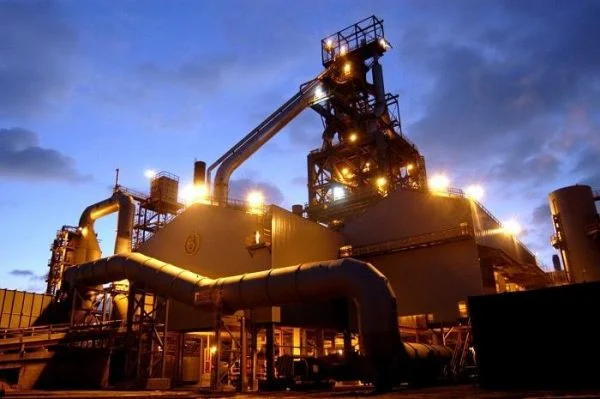
The Nigerian National Petroleum Corporation, or NNPC as the state energy company is known, operates four refineries that have long run at a fraction of their capacity.

The newest is almost four decades old. By successfully making its own fuels, Nigeria would stop being reliant on traders bringing supplies on tankers from thousands of miles away — with all the extra costs that entails.

Truly committed Mele Kyari, the newly appointed group managing director of NNPC, says this time will be different.

He’s made fixing the plants a crucial part of his agenda since taking the helm of the company in July, and says President Muhammadu Buhari is the country’s first leader in years to be committed to the revamp.

Kyari has revived a target to upgrade the plants and end fuel imports by 2023 after the company missed a previous goal for the end of this year.

Minister of State for Petroleum Resources Timipre Sylva said in an interview in London this month that the overhaul should be successful this time because Nigeria is asking the owners of the refinery technology to get more involved in the work.

Once the plants are operational, they will be run by external people, which will also help, he said.

The work is scheduled to begin in earnest in January, first on the Port Harcourt complex, a two-refinery facility with the capacity to process 210 000 barrels of crude a day. Repairs will then move to the smaller refineries.

Dangote boosts Some of Nigeria’s challenges to become more self-sufficient in fuel may soon be alleviated for another reason. In the next few years, a new, privately owned 650 000 barrel-a-day refinery is due to come online. In theory, it could meet all of the country’s fuel needs and have enough left over for exports.

The plant, being built by Africa’s richest man Aliko Dangote, is not owned by the Nigerian state though.

That means that the country would have to pay market prices — similar to those charged by traders — for the fuel the refinery churns out.

There would be little reason for Dangote to subsidise Nigeria’s domestic fuel prices if it were more profitable for the refinery to sell elsewhere.

The skepticism that state-run plants can return to full operation stems from NNPC’s previous attempts.

Efforts to overhaul its refining industry — in 2007, 2010, 2012 and 2016 — all failed to work out. The state energy company has to compete with other domestic demands for funding, such as health care, education and other social services.

Three years ago, Nigeria sought external financing for its refineries following a plunge in crude prices, oil theft and attacks on its pipelines by militants and other saboteurs.

That effort crumbled after it failed to convince investors of the viability of the venture.

NNPC is talking to the African Export-Import Bank and other financial institutions to fund the revamp.

“The money to comprehensively fix the refineries is simply not there,” said Ayodele Oni, chair of the energy and natural resources practice at Bloomfield Law in Lagos.

“It is a difficult task to attract any significant funding required for their repairs in their present state.” — Bloomberg.

Hwange station needs complete overhaul

0

SUBDUED power generation at Hwange Power Station is contributing to prolonged load shedding as only four units out of six are operating, general manager for the plant, Engineer Arnold Chivurayise, has said.

He told Energy and Power Development Minister Fortune Chasi during a tour of the expansion project for units 7 and 8 that operations were hampered by incessant breakdowns due to ageing equipment and a shortage of foreign currency to purchase spare parts. 

The giant station is operating below capacity with other remaining units also not working efficiently.

“The equipment here is over 30 years old and yet design lifespan of a power plant is 25 years. We have to refurbish some of the units thereby extending the life span.

“Although this has helped in the short term it has not solved our problem as we have continued to have challenges with breakdowns of other units,” said Eng Chivurayise. 

“This has been exacerbated by the fact that some of the units have gone beyond their statutory servicing due to financial constraints. There is a need to overhaul all the units and replace old equipment to ensure improved efficiency.

“Unit 5 and 6 are off grid undergoing maintenance after going through some breakdowns. However, regarding unit five we are waiting for diesel after going through an overdue statutory outage to repairs tube leaks.”

He said the other unit had a damaged generator rotor and was awaiting installation by an Italian company following purchase of spare parts. 

“We need to do a complete overhaul of all the units and replace old equipment to get efficiency. Financial resources are not availed in good time leading to delays and this has also contributed to us not running efficiently,” Eng Chivurayise.

He said close to 424 000 euro was needed to complete the repairs on unit 6 with 1 664.7 gigawatts having been lost from January to September 2019. 

The power utility is facing a plethora of challenges that include procurement limitations, shortage or inadequate foreign currency allocation by RBZ for spares and running costs that exceed collected revenue.

Zimbabwe Power Company (ZPC) head of operations, Engineer Kenneth Maswera, said the company was looking at other ways of reducing the cost of running the plant such as introducing plasma technology to replace diesel and Coke Oven Gas (COG). 

Although the station uses coal as its primary fuel with diesel as secondary for its boilers it requires up to two million litres per month, which translates to US$20m. 

“In order to cut on our use of diesel to fire up our boilers we want to use the plasma technology to replace diesel thereby reducing consumption of the fossil fuel by 90 percent through the technology. 

“We also have an opportunity to use COG, which we used to get from Hwange Colliery around 1994,” he said. 

“We have companies that have expressed interest to supply, which might mean that we might totally run on COG. So, a team was set to do due diligence.”

Minister Chasi said Government would do its best to support ZPC in ensuring that it worked efficiently in generating electricity for the country.

“The primary purpose of increasing the tariff and making it cost reflective is to say that we want a solvent Zesa that is able to interact with other players in the region and world to get financing. 

“The new cash flows or inflows that will be coming in arising out of this tariff will be applied towards generation of power first and foremost,” he said.

The Minister said he was pleased with progress being made on the expansion project for units 7 and 8_The Chronicle

Coal output projected at 15m tonnes

0

COAL production in Zimbabwe is anticipated to leap to 15 million tons next year as new producers come on stream while existing ones are also expected to raise their output, a Cabinet Minister has said.

Zimbabwe boasts of huge coal deposits in Matabeleland North province where companies such as Hwange Colliery and Makomo Resources are active. Mines and Mining Development Minister Winston Chitando said production was expected to rise as several new coal mining projects were lined up.

“Traditionally we produce about three million tons of coal per annum. This year we expect that we will produce just about four million tons, but the installed capacity for coal production by next year will be 15 million tons per annum,” he said.

“We have Liberation Mining around the Gwayi area, they already have the full equipment, which has been installed (but) there have been a few administrative issues relating to their production but they will begin production in the new year.”

Minister Chitando said Government was working on developing a coal export corridor running from Matabeleland North as part of efforts to develop the coal sector.

“Initiatives for the establishment of a coal corridor and a port for exports will be intensified working together with the Ministry of Transport,” he said.

The minister said the agreement signed with Dubai-based company Victoria Consultant, would assist in boosting production and to secure coal export markets.

“The agreement with Victoria Consultant provides for it to source markets as well as capital for the expansion of coal (projects),” he said.

Zimbabwe, which started coal production in the early 1900s, has an estimated 25 billion tons of coal reserves. The country, which says its abundant mineral resources include more than 40 exploitable minerals, is seeking to maximise mineral exploitation to reboot its economy. 

Meanwhile, Zimbabwe expects to start producing sufficient electricity for domestic use and surplus for export by 2024 through the exploitation of its huge and untapped Coal Bed Methane (CBM) deposits as well as investment in new thermal power stations.

Zimbabwe has one of the highest measured CBM resources in Southern Africa and is believed to be sitting on an estimated 765 billion cubic metres in the Hwange/Lupane basins. In early 2012, Mozambique discovered CBM in areas that border Zimbabwe’s Manicaland province into which it is believed the gas also flows. 

Coal bed methane offers a cleaner alternative source of power compared to coal and the scope is even greater for its exploitation considering that Zimbabwe is battling a severe power crisis due to over-reliance on hydro power, which is affected by seasonal rainfall. 

It can also be converted into diesel, petrol, ethanol, fertilisers, aviation fuel and other products including specialist lubricants and waxes. 

Minister Chitando has said the country expects to generate electricity from CBM within the next two years while five investors, including Afrochine, Jinan and Karo Resources were also at various stages of setting up thermal power stations.

Analysts contend that CBM exploitation presents an opportunity for Zimbabwe to lessen its dependence on imported petroleum and electricity while also providing an alternative means to produce cleaner energy from coal. — New Ziana

Fuel prices remain unchanged

0

THE Zimbabwe Energy Regulatory Authority (Zera) said on Saturday that the country’s fuel prices remain unchanged for this week, much to the relief of motorists used to weekly price increases.

This is the second week in a roll that the energy regulator had kept fuel prices unchanged. From August, Zera had been increasing fuel prices weekly in tandem with the floating exchange rate, much to the chagrin of motorists.

But in spite of the price increase, the commodity has remained scarce, with long winding queues a common feature at all fuel stations. 

In a statement, Zera said fuel prices remained unchanged at $14.97 per litre of petrol and $15.64 for diesel.

“Please be advised that the fuel prices effective Monday 21 October 2019 are as follows: $15.64 per litre for diesel and $14.97 for petrol.

“Accordingly, prices have therefore not changed for both diesel and blend. 

“Operators may however sell at prices below the cap depending on their trading advantages,” said Zera.

While the regulator encourages fuel companies to sell at below the set prices depending on their trading advantages, the operators hardly do that. Instead, many actually charge above the set thresholds. —  New Ziana

500MW solar project for Zhombe

0

A 500 megawatt solar project will soon be established in the Zhombe area in the Midlands province at a cost of $200 million, an official has said. 

Core Zimbabwe Mining Private Limited, one of the three companies working with Zibagwe Rural District Council to erect a number of solar plants in the area, expects to finalise legal processes by the end of this year with construction set for first quarter 2020.

Zibagwe RDC chief executive officer, Mr Farayi Machaya, said the contractor has acquired land for the $200 million investment.

“We are quite pleased with the progress made thus far by Core Zimbabwe. So far, they have managed to secure a 300 hectare piece of land, which is very crucial in this project. 

“They have managed to get the lease agreement after completion of all the necessary paperwork and procedures,” said Mr Machaya.

“I am reliably informed they have since acquired a power generation licence from relevant authorities. They have the lease agreement from the Ministry of Lands and they have also acquired a grid connection licence. 

“So, in terms of paperwork, they have covered much ground and I am sure they are now left with acquiring the power generation licence from Zera, which I am sure they will get by end of year.” 

Mr Machaya said once they get the Environment Impact Assessment (EIA) done by end of the year, construction would commence.

“We are hopeful that all the necessary legal processes will be done by the first quarter of 2020 and we start construction,” he said. 

The project is expected to create about 300 jobs.

“This is in line with Vision 2030’s focus on poverty eradication and that of creating employment for our local people as envisaged by President Emmerson Mnangagwa,” said Mr Machaya.

He said the project will immensely benefit the community by supplying power to areas like Kwekwe, Gweru, Kadoma, Gokwe and Nkayi, among others_The Chronicle

Gold prices fall

0

Gold prices dipped on Friday as investors booked profit after the European Union forged a new Brexit deal with Britain, though a floor was kept under prices by uncertainties over trade negotiations and the global economy.

Spot gold edged down by 0,1 percent to $1 490,05 an ounce at 0722 GMT. US gold futures fell 0,4 percent to $1 493.

“Considering the present uncertainties around the US-China trade war and other geopolitical risks, gold still has potential upside,” said Hareesh V, head of commodity research at Geojit Financial Services, attributing the slight price dip to profit-taking.

The European Union-backed a new Brexit deal with Britain yesterday, prompting an uptick in Asian shares in early trade. 

However, gains were capped by disappointing economic growth data from China.  Reuters.

Fidelity must set up trust funds for small scale gold miner retirees

0

In any field of business, it is a prerequisite to have the substantial financial security that will cater to the needs of an individual in retirement, accident or death.

By Charmaine Kambale

However, small scale miners are being excluded in such services, thereafter causing financial distress when they retire. Small scale mining stands firm in Zimbabwe’s mining sector, hence the miners must be recognised for their significant efforts that are targeted towards capacitating Zimbabwe’s economy. Therefore, it is essential for Fidelity to set up trust funds (benefits) that will financially assist small scale miners in retirement.

Small scale mining can significantly contribute to poverty alleviation, providing meaningful opportunities for various individuals involved in the sector. Small scale mining includes poor informal individual miners aspiring to eke out in order to sustain a living.

When people come to retire, they will experience an excruciating reduction in income hence pension funds will mitigate this loss of income in retirement. It has been noticed that small scale miners have inadequate financial upkeep when they retire, there are a few organisations if any in Zimbabwe that oversees the lives of small scale miners post-operations.

To overcome this problem, Fidelity must set up trust funds of some sort that will subsidise small scale miners when they come to retire. It is actually commendable for Fidelity to take cognizance of small scale miners providing trust funds that will assist them when they retire.

These trust funds could emerge in the form of monthly payments made by miners to Fidelity such that when the miner retires, he or she will get a certain figure from their savings until the savings are finished. In addition to the preceding advantages, these trust funds will be sufficient, to a certain extent in providing a basic level of income for the miners when they retire.

Speaking to Mining Zimbabwe, Eng Chris Murove indicated that in most cases, small scale mining operations are not registered with NSSA hence this automatically concludes that they do not have any benefits when they retire and this is one area that requires immediate attention by the authorities.

‘’Workers would only get something at the end of their working lives when they retire if they are registered with NSSA and in more cases than not, small scale mining operations are not registered with NSSA. This is, therefore, one area where attention needs to be applied by the authorities.’’

Following the remarks opined by Eng Chris Murove, one can actually posit that Fidelity needs to consider the implementation of financial securing policies that will benefit small scale miners and artisanal miners on their own such that they will receive worthwhile benefits in retirement.

Mining Zimbabwe enquired with Fidelity to find out if there are any related funds that are meant to assist small scale miners post- operations and their response was given as follows,

‘’ As the Gold Development Initiative Fund, we are mandated to capacitate all small scale gold miners with bankable projects despite their age, current income levels or otherwise. Each project is reviewed on its own merits with emphasis placed on bankability and ability to repay the loan and increase gold production .‘’

Credit must be given to Fidelity for providing such provisions to small scale miners nevertheless, the GDIF is a loan facility that is supposed to paid back to the loaner in a specified time and it will not financially secure the miner when he or she stops operations. Thus, Fidelity must go an extra mile in setting up trust funds that could serve as benefits for small scale miners retirees.


This article first appeared in the September 2019 Issue of the Mining Zimbabwe Magazine.

Digitalisation & how it can be harnessed in the Zimbabwean Mining Industry

0

We are in a period of global digitalisation in which the industry is in the throes of digital transformation that is mainly accelerated by the exponential growth of smart technologies.

By Canaan Joseph Saurombe

This has and will continue to increase global competitiveness particularly in the production industry. It is obvious that our Zimbabwean mining industry has been in the bottom quartile of global cost competitiveness. Thus, there is a need to adopt systems that will allow an increase in profitability, reduction in costs, control of operations, optimize and enhance effective processing strategies.

The industry is welcoming the inception of the “fourth industrial revolution” which produces with the help of smart
technologies, smart machines, smart products and services as well as new interaction models among other things. This exceeds beyond simply automating production. The revolution has come along with a lot of digital technologies to assist miners in their work. For instance, fully and semi-autonomous robots, increased use of artificial intelligence, drones, digital twins, 3-D and 4-D printing, augmented and mixed reality virtual. This has collectively given the mining industry about 5 major aspects/ pillars which are believed to be very effective to the development of the Zimbabwean mining industry through their effectiveness from mine exploration and valuation, through mining ore processing and metals production and downstream sales and distribution.

Visualisation and Alerts;

This is one of the five major components brought about by digital technology. Mining companies can increase productivity, reduce costs and improve production and safety quickly and effectively through the visualisation of data across the entire value chain. It helps to create a connected mine in which there is the enablement of visualization of data from mine to market. Data can also be tapped to allow mine managers, operators and head office to have clear real-time visibility into their entire production without having to be on the field. This will improve plant visibility for operators, whereas their fast access to relevant information in real-time will have a direct impact on uptime, production output, quality and safety.

Analytics and dynamic scheduling enable mining companies to quickly resolve and predict unwanted situations using advanced algorithms, modelling and remote expert assistance. Digital technology has opened room for the invention of machine learning algorithms. Through these, miners can feed algorithm or basically commands on a
machine using real-time data and analysing historical data, which allows miners to derive future insights into performance, health and safety, and mineral characteristics. When this information is combined with dynamic scheduling solution it becomes proactively feasible to;

•Control mineral characteristics through drill and blast enhancement and improved blending to meet the required output with the specified grade.

•Enhance asset health through predictive assets maintenance

•Improve the safety of workers, mine equipment and the environment through fatigue monitoring as well as people and asset tracking.

Digital Twin.

It has always been difficult to align strategic and real-time plans and schedules in mining companies due to various factors which include differences in methodologies, processes and technologies used. Digital twins offer an immersive virtual environment that merges short, medium and long term planning horizons to help miners make value-driven decisions across a range of operations from boardroom to mine site. Virtual makes it possible to run several test works in process sections such as crushing and conveying without affecting the already running production process. With the use of virtual and augmented reality, mining companies can create environments that can perfectly mimic physical running locations. Imagine having to train employees in virtual space about what they will experience in real space. This will allow an effective practical training of employees in an environment that is exact to the one they will be expected to make effective decisions, except, it won’t be as dangerous and risky as the physical space.

Integrated automation across the value chain will enable mining companies to solve a variety of critical business issues even faster and more intelligently. Analytical models based on real-time are developed which produces reliable results that miners can use to validate and automate decision in the next process. This brings about a
system known as “virtual handshake” in which information from one process is automatically transferred to the next, fanning out to fine-tune processes based upon the earlier automated decision making. Generally, this system bypasses the risk of human error recurring upstream in a continuous process, which might cost the company a loss.

An environment that merges short, medium and long term planning horizons to help miners make value-driven decisions across a range of operations from boardroom to mine site. Virtual makes it possible to run several test works in process sections such as crushing and conveying without affecting the already running production process. With the use of virtual and augmented reality, mining companies can create environments that can perfectly mimic physical running locations. Imagine having to train employees in virtual space about what they will experience in real space. This will allow an effective practical training of employees in an environment that is exact to the one they will be expected to make effective decisions, except, it won’t be as dangerous and risky as the physical space.

Integrated automation across the value chain will enable mining companies to solve a variety of critical business issues even faster and more intelligently. Analytical models based on real-time are developed which produces reliable results that miners can use to validate and automate decision in the next process. This brings about a
system known as “virtual handshake” in which information from one process is automatically transferred to the next, fanning out to fine-tune processes based upon the earlier automated decision making. Generally, this system bypasses the risk of human error recurring upstream in a continuous process, which might cost the company a loss.

Cognitive Network; this is probably the next generation of technology. It comes as an initiative of artificial intelligence which will provide people with a way to interact with technology and create an environment that is self-improving, self-learning and self-controlling. This will drive true transformation across the mining value chain.

It has been estimated through the world economic forum that mine digitalisation could channel a saving of $373billion by 2025 through raising productivity, reducing waste and keeping our mines. This means, since we have our mandate as Zimbabwe mining industry reach a $13billion industry by 2030, then we have some digital
harnessing to do because an increase in productivity is certainly what we need.

However, in order for us to effectively harness digitalization in our mining environment and nation at large we need to include collaboration between government, public-private sectors, education sector, banks and other various stakeholders. For example, companies can invite stakeholders to create joint digital-mining innovation hubs and incubators and codevelop infrastructure and technology to lower capital costs and reduce investment risk.

It is a well -known fact that there is a great need to create employment in our nation, this somehow conflicts with the need to become relevant to the global economy. This is the reason why most African governments, Zimbabwe included have been sceptical about digitalisation. There is a huge outcry that digitalisation is here to replace people however, this is not the case, digitalisation but it requires a various set of skills to operate equipment and optimise
industrial processes.

The young generation depends on technology, it is not even surprising to see a child operating a mobile phone, tablet and computer thus, this natural skill can be upgraded by introducing and building learning around digital technologies from an early age into school curriculums. It entails a review and updating of the education curricula at primary, secondary and tertiary levels. This will create a responsive education system which is what we need to be able to catch up with digitalisation. We can draw a lesson from Kenya which restructured it’s learning curricula and introduced Secondary School Practical Open-Source Curriculum (SPOC) which is training school students to code. Currently, in Zimbabwe, there are many training schools but less of them focus on entrepreneurship. The upcoming generation needs to be adaptable and have an open mind-set. If the government embraces technological developments and encourage the engagement of the youth with the mining sector there is an assurance of a bright future of our mining industry. However, more needs to be done especially at the regulatory level to increase affordable internet access so that more people can participate in the economy of information.

If we embrace technology-enabled mining, we will realise major improvements in productivity, workers’ wellbeing—and revitalise the industry as an engine of value-creation, employment and growth. The time has come for the Zimbabwean mining industry to create change by combining operational excellence with innovation, grow trust, take risks, think big and move fast.


Canaan Joseph Saurombe is the founding chairperson of Core Miners Association he writes in his own capacity,
[email protected]
Cell: +263 779 721 076

The Case For Rough Diamond Marketing

0

I find that Rough Diamond procurement is not evolving with times and the main cause why the Diamond industry is stalled and not moving forward.

C Sithole – Gemmologist/ Mineral Evaluator (MMCZ)

It seems that Rough Diamond procurement techniques are just not keeping with times.Instead of naturally evolving forward, I find it is getting more and more complicated for the small to medium-size manufacturers to get the actual products they require.

Today a Diamond cutter has basically two conventional options:

1) Purchasing through second and third-hand dealers while paying premiums on the already hefty costs originating from long term (overly financed) client contracts.

2) Participating in the plentiful rough

Diamond tenders (auctions) where the highest bid wins (usually).

In both cases, the downside is a tremendous burden on Diamond manufacturers and in turn hurt the downstream sectors as well.

Instead of adapting to current industry requirements with the ability to service the special needs of cutters, major rough producers (including Zimbabwe) choose the comfort zone of supplying huge (and few) conglomerates with massive quantities of rough materials.

I believe in today’s world, a cutting facility should have the ability to acquire the exact material requirements for their business. In turn, these cutting facilities will need to evolve and bring innovative & added-value products in order to compete with mass-market manufacturers (introducing variety – fancy cuts, etc)

What we have instead is a constant oversupply of mass-produced generic cuts (round brilliants and a few other fancy cuts) which flood the markets with Diamonds competing to be sold at higher discounts as best scenario or worse to be consigned (memo) to jewellers and will sit on shelves waiting to be purchased.

Such old-world thinking and habits! It might help some companies, but bottom line, it is hurting business in general, it stalls innovation, advancement and mostly it keeps the industry awareness in the sleeping mode.


C Sithole – Gemmologist/ Mineral Evaluator (MMCZ)Associate Member, Accredited Gemologists Association, CA, USA

Student Member, American Society of Appraisers, NY, USA
GIA Alumni – GD, AJP

Zimbabwe Institution of Engineers – Technologist Member


This article first appeared in the September 2019 of the Mining Zimbabwe Magazine.

The political economy of the mining sector

0

The impact of the mining sector on Zimbabwe’s economy is very modest. Despite the fact that the country sits on one of the richest mineral deposits in the world, Zimbabwe has not succeeded in translating its mineral wealth into overall economic development. The government has recognised that fact, however, they are optimistic that the sector is the leading horse towards Zimbabwe’s economic revival.

Rudairo Dickson Mapuranga

The environmental consequences of mining especially in the old mines are fairly large. Whilst it is true that people are anticipating a positive outcome in the sector that will necessitate economic revival, the sector at the moment seems to lack the stamina to solely reinvigorate the economy considering the prevailing political-economic situation Zimbabwe is experiencing right now.

Zimbabwe’s constitution has been hailed as a very immodest and a democratic mechanism that dictates transparency of decision-making processes and it is rich in determining the degree to which politicians are held accountable. However, the majority of Zimbabweans feel that the constitution is being largely neglected for the benefit of a few oligarchs. For example, recently Mutumwa Mawere through his Twitter handle accused the government of abusing the constitution and laws of the land to suit their gains.

Despite making progress in democratic consolidation and well organised 2018 elections, the challenges Zimbabwe is facing right now seem to be coming from a democratic point of view. Many people who were supporting the current regime turned back due to different reasons including renowned journalist Hopewell Chin’ono who accuses the government of its continual disrespectful of human rights. Perhaps some sector challenges are arising due to the remaining democratic weaknesses of the political field.

Zimbabwe has not developed a culture of community engagement—especially on resource issues, recently traditional leaders (Chief and Tenzi Nehoreka) met in Norton where they were advocating for their inclusion in national development together with the consultation of citizens (community) when granting mining concessions.

The mining sector in Zimbabwe is dominated by people who are politically connected which is a direct blow to the constitution of Zimbabwe. Large scale mines are not timely given their mine on mine finances after selling their minerals to the state and despite serious complains from the miners the government has not done much to address this critical issue. This has resulted in some mines closing down operations for some time for
example Metallon gold has put some of its mines under care and maintenance.

Despite fairly complex political and institutional challenges, there are a number of opportunities that may
facilitate an improvement in the governance of the mining sector, they may include among others,

(i) The shift – in power after these largely disputed 2018 elections to political dialogue between the two main actors, which may allow the government to explore practical ways of implementing its election manifesto and improving the economy through the mining sector;

(ii) Engaging large scale miners to review terms of their investment agreements and pay them on time;

(iii) The constructive initiatives from the Ministry of Mines and Mining Development, Chamber of Mines and Zimbabwe Miners Federation to initiate a dialogue and move towards development-friendly solutions.

The performance of the mining sector on economic improvement will be prospectively boosted by Zimbabwe’s introduction of appropriate reforms in the government. It is therefore of paramount importance that a greater awareness of incentive problems be set up at a political level and their possible implications for the mining sector’s
performance and the economy at large.

The set of checks and balances, as stipulated by the Constitution, have to be reinforced. More so, capacity building at different levels and institutions are needed and should be combined with efforts to enhance incentives for institutional performance.

This article first appeared in the September 2019 Issue of the Mining Zimbabwe Magazine.