

Home Blog Page 648

More than a third of gold mines in Congo exposed to Ebola

0

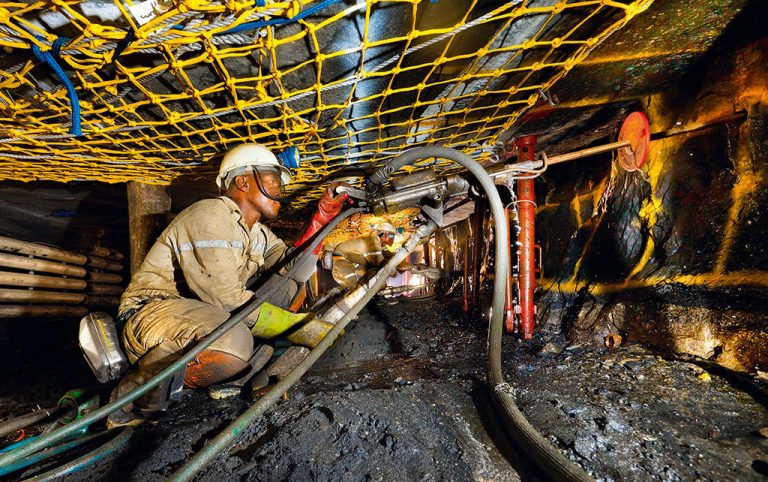
More than 35% of the gold mines in the Democratic Republic of Congo (DRC) are at risk of being directly or indirectly affected by the ongoing Ebola outbreak in the country, the world’s top cobalt miner and a significant copper and gold producer, a study shows.

Barrick’s Kibali and Vector Resources’ Adidi-Kanga gold mines are now threatened as the Ebola-infected areas grow, potentially jeopardizing output, says Verisk Maplecroft.

The number of people infected with the often fatal virus has now exceeded 1,000 cases, the World Health Organization confirmed, making it the second-worst outbreak in history, with daily rates on the rise as response workers continue to face violence.

Together with the obvious risks for those working in the country’s gold mines, companies are now facing delays in their exports, as part of Ebola prevention methods being implemented at border checkpoints, Indigo Ellis, Verisk Maplecroft’s lead DRC Analyst warns.

The effect on gold producers depends on whether mines are industrial or artisanal, and on how close they are to known cases, the expert says. In Ellis’ view, there are two major issues the gold mining industry has to urgently deal with.

One, is the risk to mine staff. “Larger industrial mining companies will need to enact strict protocols to reduce the risk of transmission to their sites, which will likely slow down ore extraction and construction efforts,” the analyst says.

The other is related to shipments disruptions. “Ebola prevention methods at border checkpoints will almost certainly slow gold exports as the Ugandan government and World Health Organization (WHO) introduce measures to limit the spread,” Ellis says. “A combination of lengthier processes, such as heat signature mapping, and less time-consuming methods, such as hand washing, will result in tailbacks at border crossings.”

In its current form, the epidemic won’t impact cobalt production in the DRC, responsible for more than 60% of the world’s total.

Verisk Maplecroft has detected a growing threat to industrial mines such as Barrick’s Kibali and Vector Resources’ Adidi-Kanga, which increases the likelihood of gold production being affected, especially after the recent confirmation of cases in Bunia, a city of close to 1 million people, closer to the Ugandan border than previous outbreaks.

High tech companies, including Apple and US consumer products manufacturer Richline Group, may soon be affected as well, the global risk consultancy says, as they source artisanal gold from the affected areas.

The risk assessment specialist notes that, in its current form, the Ebola epidemic won’t impact the nation’s cobalt production, as the distance from the Katanga region largely prevents its spread. Ellis bases his predictions on the DRC’s low-risk score achieved in Verisk Maplecroft’s Pandemic Transmission Index, which measures the likelihood of pandemic spread relative to connectivity, including travel infrastructure.

The DRC generates more than 60% of the world’s cobalt, a key material for making the batteries that power electric cars.

Worse before it gets better

The consultancy’s outlook is not encouraging as it expects health workers to continue to struggle to track contacts with Ebola patients, which makes it hard to stop the virus from spreading across the eastern provinces.

Violence in the DRC has forced Ebola treatment facilities to shut. Five Ebola centres have been attacked since last month, sometimes by armed assailants. The violence led French medical charity Doctors Without Borders to suspend its activities at the epicentre of the outbreak on Feb. 28.

This past week saw 58 new cases, the highest number in a week this, according to the International Rescue Committee (IRC).

“We are already almost seven months into this outbreak and at this stage we should be seeing the case rate declining, not on the rise,” Tariq Riebl, IRC’s Emergency Response Director in the DRC, told Times Magazine.

“With an optimistic outlook this outbreak is predicted to last another six months — but realistically we could be looking towards another year of fighting this disease,” Riebl said._Mining.com

Morocco to host largest mining convention

0


Under the high patronage of His Majesty King Mohammed VI of Morocco

The Inaugural Marrakech Mining Convention (MMC 2019)

“The new meeting place for the world’s mining industry”

Marrakech, Morocco-March 29, 2019: Under the high patronage of His Majesty King Mohammed
VI of Morocco, Marrakech Mining Convention (MMC-2019), the most awaited mining event in
Morocco will take place from 17- 19 April 2019 at Movenpick Hotel, Marrakech.

Hosted by the Ministry of Energy, Mines & Sustainable Development and Organised by Valiant
Business Media, UK, the Inaugural Marrakech Mining Convention is anticipated to be Morocco’s
largest mining event that will provide an opportunity for exhibitors to showcase their products &
services ensuring their brands are seen by the influential stakeholders. With the exemplary
support from our strategic partner, OCP Group, this event is dedicated to expanding the country’s
mining sector, providing unparalleled knowledge into Morocco ’s new mining code, development
plans and standout investment climate.

The 3-day exhibition & conference will bring the mining spectrum in its entire breadth and depth
including mining ministries, international & national companies, mining bigwigs, investors, key
industry professionals etc. to explore opportunities on the international level.

This flagship event will witness the presence of 10+ influential mining ministries including Ministry of Energy, Mines and Sustainable Development, Kingdom of Morocco; Ministry of Infrastructure and Energy,
Republic of Albania; Ministry of Mines and Steel Development, Nigeria; Ministry of Petroleum and
Minerals, The Republic of Sudan ; Ministry of Energy and Natural Resources, Republic of Turkey;
Ministry of Mines and Mineral Resources, Sierra Leone; The Ministry of Mines, Industrial
Development, Trade and Private Sector Promotion, Chad; The Minerals Commission, Ghana; The
Geological Department, Gambia, Topnotch mining companies like Managem; BKT; Jacobs
Engineering S.A. (JESA); VIST Group; Maya Gold & Silver; Aramine along with other 50+
companies, key global decision makers, mining executives, investors, policy makers, think tanks
from different countries to converge from 17-19 April for three days of learning and networking.

“If you are planning to attend one mining event in 2019, make it the Marrakech Mining Convention”

Media contact:
Tahir Zubair
Partnership Specialist
[email protected]
+91 9906894555

Flaws in South Africa’s mining royalties system brought to spotlight

0

Today Corruption Watch (CW) launched its 2018 Mining Royalties Research Report, highlighting the complexities and challenges in the management and distribution of mining royalties to people living in mine-affected communities, the majority of whom remain without any tangible benefits.

Since 2004, South African law has decreed that mineral and petroleum resources belong to the people of South Africa, and the state must act as a custodian of these resources. In partnership with the Open Society Foundation, CW embarked on a project to examine the history and evolution of South Africa’s mining royalties system, with the aim of facilitating and improving transparency and accountability in the distribution of these funds to communities.

The CW team conducted research into two unique systems of community royalties administration, the Lebowa Trust in Limpopo province, and the development accounts in the North West by the Bakwena ba Mogopa community. Although both systems of administration have been largely discontinued, it was important to study those systems and their evolution into an equity sharing form of revenue, in order to understand how and why the problems occur in revenue management, with a particular focus on corruption vulnerabilities and key risk areas.

The plunder of mining royalties may be the most appalling tale of corruption and maladministration in a country where such tales aboundThe key risks identified include lack of adequate community engagement, the involvement of traditional leadership, mining companies entering into revenue-sharing agreements with select members of the community, and the role of provincial government. The research involved interviews and engagements with community members – CW also documented specific case studies which brought to light some of the widespread abuse, corruption and unethical practices that have filtered into the mining royalties system over the years. Findings showed that in both Limpopo and North West communities, the normal course of administration had been compromised from the outset.

David Lewis, executive director of Corruption Watch, commented: “The plunder of mining royalties may be the most appalling tale of corruption and maladministration in a country where such tales abound. It involves huge sums of money stolen from some of the most poverty-stricken communities in the country. And unlike the stories we read about and hear about every day, it is largely happening under the radar precisely because the affected communities have no voice.”

The report also reviews existing legislative and policy frameworks intended to manage and administer payment of royalties to communities where mining operations are taking place on community-owned land. These involve the mining companies operating within traditional community boundaries, provincial government, the royal family and the traditional council, all of whom play a key role in ensuring that communities are properly compensated.

While the findings in the report paint a depressing picture of misappropriation and maladministration of mining royalties in mining-affected communities, the challenges for these communities are real and in need of urgent resolution. It will require a multi-pronged approach to start overhauling the sector to ensure that impoverished communities finally benefit from the investment that is rightfully theirs.

Corruption Watch provides a range of recommendations that could start to address the gaps in the system that make widespread looting and corruption possible, including the establishment of mechanisms to address those gaps and create a platform for communities to finally benefit from mining on their land.

As recent resistance in mining-affected communities demonstrates, these communities are beginning to make their voices heardAmong the recommendations are: the adoption of a mining royalties best practice guide, a proper monitoring and evaluation system that penalises transgressors, support for communities to strengthen their negotiating position, and greater collaboration with civil society to help build capacity. In addition, CW calls for better consultation strategies, mechanisms requiring audited statements from traditional councils, community trusts and mining houses, changes to the governance and composition of traditional councils, greater access to and transparency regarding financial documents, and mechanisms to limit political interference.

It is imperative that all stakeholders, including the communities themselves, take greater responsibility for addressing the needs of mine-affected communities, in the quest to support the development of impoverished communities living on land containing vast reserves of mineral wealth.

As recent resistance in mining-affected communities demonstrates, Lewis added, these communities are beginning to make their voices heard. “Our hope is that this report will help amplify their courageous efforts to right some of the most appalling wrongs that we have encountered.”Corruption Watch

Learmonth ups Caledonia stake

0

Caledonia Mining Corporation Plc (Caledonia) director MARK Learmonth has upped his stake in the
AIM-listed resources outfit after over 53 000 performance securities were offered to him early this
week.

The Zimbabwe-focused gold miner said this development followed maturity of a long-term
incentive plan award to Learmonth, who is also the group’s chief financial officer.

“The company has made a new long-term incentive plan award to him. The securities have been
issued in the form of depository interests representing shares in the company. Learmonth now holds
149 775 depositary interests which represents an interest in approximately 1,39 percent of the share
capital of the company,” Caledonia said in a note.

Caledonia — which booked US$21,5 million in gross profits for 2018 — said the award, which comes
in the form of performance units, was part of a new long term incentive plan award set to leave
Learmonth with a grant value of US$170 000.

Caledonia has since applied for the admission of the depositary interests to trading onto the AIM and it
is anticipated that trading in such securities will commence today.

“Following issue of the shares underlying the depositary interests, the company has a total number of
shares in issue of 10,7 million common shares of no par value each.

“Caledonia has no shares in treasury; therefore, this figure may be used by holders of securities in the
Company as the denominator for the calculations by which they determine if they are required to notify
their interest in, or a change to their interest in, the company,” the group said.

Meanwhile, Caledonia last week reported that it had produced 54 511 ounces of gold from its Blanket
mine during the 12 months to December 2018, down slightly on the 56 133 ounces produced in 2017,
as grades recorded in the period proved weaker.

The group’s all-in sustaining costs were significantly better at US$802 per ounce against US$847 in
2017 as the benefits of the now-discontinued Export Credit Incentive kicked in, consequently leading
to a reduction in gross profits to US$21,5 million from US$26 million in 2017.

Net cash at year-end was just over US$11 million, as spending continued on a mine expansion
programme designed to take yearly production over the 80 000 ounces mark.

Caledonia is also scouting for brownfield investments in Zimbabwe to grow its asset base, with
Learmonth saying much of the planned investment will come on stream from 2021.

Just last year, Caledonia — which agreed to buy an additional stake in Blanket Gold Mine through a
$6,6 million deal — said it was not prepared to spend above $3 million in expanding its Zimbabwean
resource base over the next two years.

The transaction spurred Caledonia’s stake in the mine to 64 percent._Daily News

NMWUZ), NEC in salary fight

0

WORKERS under the National Mine Workers’ Union of Zimbabwe (NMWUZ) have accused the mining sector’s National Employment Council (NEC) of not timeously processing cases of underpayment and non-payment.

NMWUZ members besieged NewsDay offices in Bulawayo yesterday, accusing the NEC of failing to effectively discharge its mandate.

“We have a challenge with NEC mining which is failing to discharge its duty effectively. They are failing to release draft rulings on time. For instance, some of us have cases backdated 2010 that are yet to be processed. Surely, how can we work? We approached our union leaders and they told us that NEC was delaying everything..,” a worker, who requested anonymity, said.

Workers said cases which the NEC was struggling to process included underpayment and non-payment.

“Workers are suffering yet NEC is dillydallying. Some of them have died without getting their dues. Surprisingly, workers belonging to the Associated Mineworkers’ Union of Zimbabwe (AMWUZ) are getting their papers processed on time,” said another worker.

NMWUZ regional manager Abraham Kavalanjila confirmed that NEC mining was failing to discharge its duties effectively.

“We have a challenge now with our membership due to NEC mining’s failure to execute its duties on time. Workers are accusing us of not doing our job, yet it’s the NEC. We have tried to engage them on several occasions to no avail,” he said.

Another NMWUZ official, Shadreck Pelewelo, said justice delayed was justice denied.

“NEC was put in place to do cases expeditiously. It should not delay justice. Some people have died without getting justice. Some of the cases are small like non-payment and underpayment. Remember, justice delayed is justice denied,” he said.

Contacted for comment, NEC mining sector senior designated agent Jeffrey Dube said workers needed to be specific on which cases they were referring to.

“They need to be specific not be general so that we refer the case to the secretary general who is responsible for the Press. We also don’t know about favouritism they are talking about,” he said.

Acting NEC secretary-general for the mining sector, Archibald Tahwa, was said to be in a meeting when NewsDay sought a comment from him._NewsDay

ZMF engages Government over gold millers’ debt

0

THE Zimbabwe Miners’ Federation (ZMF) is in discussion with the Government over the $500 million the gold millers owe the State. 

In a recent interview with Sunday Business, Mines and Mining Development Deputy Minister Engineer Polite Kambamura said the Government was soon to close the majority of gold milling centres which owed the State monies amounting to $500 million after suspicions of underhand dealings and failure to account for the yellow metal processed at their plants.

ZMF spokesperson Mr Dosman Mangisi told Business Chronicle yesterday that his organisation has engaged the Government and gold millers over the outstanding $500 million.

“ZMF is currently in talks with both Government and the millers. We are hoping that the talks will yield favourable conditions for both parties,” he said.

“We are hoping for a positive outcome. Millers will own up and pay averting closure.”

The Ministry of Mines and Mining Development suspects that the country was producing close to 100 tonnes of gold, but the bulk of it was being lost to the black market as small-scale miners, who are producing the bulk of the mineral, were shunning official channels.

Last year deliveries to the sole buyer of gold, Fidelity Printers and Refinery (FPR), amounted to 33, 4 tonnes.

Mr Mangisi said it was disturbing that the country was losing a lot of gold which was needed for the country to attain foreign currency.

“Gold is one of the country’s main earners of foreign currency and it is very disturbing that a huge chunk is going unaccounted for and as ZMF we are trying to work out a strategy for miners to account for their gold,” he said. 

The gold sector is one of Zimbabwe’s foreign currency generators among other commodities such as tobacco and platinum._The Chronicle

Gold gains on soft equities

0

Gold inched up on Wednesday, after falling the most in nearly two weeks in the previous session, as share markets retreated on worries about a possible U.S. recession and weak data added to concerns about the economy.

Spot gold was up 0.1 percent at $1,317.14 per ounce as of 0126 GMT, after registering its biggest one-day percentage decline since March 14 in the previous session.

U.S. gold futures were also up about 0.1 percent at $1,316.80 an ounce.

Asian shares slipped on Wednesday, giving up their small gains made in the previous day, as investors tried to come to terms with a sharp shift in U.S. bond markets and the implications for the world’s top economy.

Though benchmark 10-year note yields were steady above their lowest level since December 2017, the yield curve was inverted by around four basis points. If it persists the inversion is seen as an indicator that a recession is likely in one to two years.

U.S. homebuilding fell more than expected in February as construction of single-family homes dropped to near a two-year low, while consumer confidence ebbed in March, offering more evidence of a sharp slowdown in economic activity early in the year.

Germany’s 10-year bond yields held below zero percent, just above 2-1/2-year lows, on Tuesday, weighed down by fears of global economic slowdown and uncertainty about the impact of a potentially chaotic Brexit on the euro zone.

President Donald Trump’s expected nominee for the Federal Reserve Board of Governors, Stephen Moore, said the U.S. central bank should immediately cut interest rates by half a percentage point, according to an interview with the New York Times on Tuesday.

The U.S. House of Representatives on Tuesday failed to override Trump’s first veto, leaving in place the “national emergency” he declared last month to build a U.S.-Mexico border wall that Congress has not funded.

British Prime Minister Theresa May will address her Conservative lawmakers on Wednesday, possibly to set out a timetable for her departure in a last throw of the dice to win support for her twice-rejected Brexit deal in parliament.

 China’s net gold imports in February via main conduit Hong Kong fell 13.6 percent from the previous month, as economic woes dented appetite in the world’s top bullion consumer.

SPDR Gold Trust, the world’s largest gold-backed exchange-traded fund, said its holdings rose 0.4 percent on Tuesday._Reuters

Oil rises

0

Oil rose to around $68 a barrel yesterday as OPEC supply cuts and expectations of lower US inventories outweighed concern about weaker demand due to an economic slowdown.

The price of global benchmark Brent crude has risen by more than 25 percent in 2019, supported by supply curbs by the Organisation of the Petroleum Exporting Countries plus allies, and losses due to US sanctions on Iran and Venezuela.

Brent was up 92 cents at $68,13 a barrel at 1334 GMT, not far from its 2019 high of $68,69 reached on March 21. US crude added $1,28 to $60,10.

“It appears that concerns about demand have taken something of a back seat,” Commerzbank analyst Carsten Fritsch said.

“Instead, market participants are focusing on the tight supply situation again.”

Expectations of a further drop in US inventories also supported prices, suggesting the OPEC-led curbs were helping to avert a build-up of excess supplies.

The first of this week’s supply reports, from the American Petroleum Institute, is due at 2030 GMT. US crude inventories are forecast to have fallen by 2,4 million barrels in what would be a third straight weekly decline.

Further price support came from another power cut in Venezuela, the second to hit the OPEC nation this month, raising concern about the country’s oil exports. Worries about demand have limited oil’s rally as manufacturing data from Asia, Europe and the United States pointed to an economic slowdown, although bullish bets by some investors are rising. — Reuters.

Eskom price hikes to cost over 90 000 miners jobs

0

South Africa’s gold and platinum mines will shed around 90,000 jobs in the next three years as above-inflation electricity price increases by power utility Eskom add to already soaring operating costs, an industry body said on Monday.

“In total, as many as 90,222 jobs would be at risk solely as a result of the MYPD4 tariff increases granted by Eskom,” the Minerals Council South Africa said in a presentation.

Job cuts are politically sensitive in Africa’s most industrialized economy where a quarter of the labor force is unemployed, while power outages and steep price increases by Eskom are set to hurt an already fragile growth outlook.

In February, miner Sibanye-Stillwater said it planned to cut nearly 6,000 jobs in a restructuring of its gold mining operations, while Gold Fields said last year it could slash 1,100 jobs, and Impala Platinum plans to cut its workforce by a third.

Labor unions have threatened strikes over the job cuts at mining firms as well planned reductions at a numerous state-owned companies.

Energy regulator Nersa said in early March Eskom could hike tariffs by 9.41 percent in the 2019, 8.10 percent in 2020 and 5.2 percent in 2021, far less than Eskom’s request for increases above 15 percent in each of the three years.

The industry body said in its presentation that 71 percent of all gold mines and 65 percent of platinum mines were “loss-making or marginal” by the end of 2018, adding the power price hike would make the situation even worse.

Once the largest contributor to South Africa’s gross domestic product, mining has shrunk steadily over the last decade with hard-to-reach deposits, high wage settlements and uncertainty over ownership laws deterring investors against a backdrop of slack global demand.

Last week, Statistics South Africa data showed gold production contracted for the 15th month in a row, shrinking by 22.5 percent in January, while platinum output was up 8.8 percent in the same period.

“We see the Eskom crisis as not just a crisis but a potential disaster,” said Minerals Council chief executive Roger Baxter._Reuters

Government considering bringing fuel by road

0

GOVERNMENT is considering bringing in fuel by road after Cyclone Idai flattened Mozambique’s port city of Beira linking the country’s fuel pipeline.

The port, which houses the control room which pumps fuel into the pipeline, was the worst affected with reports suggesting that more than 90% of the city had been destroyed when the tropical storm made landfall on March 14.

As a result, fuel supplies to Zimbabwe via the pipeline have been suspended causing supply gaps and long queues at service stations.

Cyclone Idai left a trail of destruction and killed hundreds of people in Zimbabwe, Mozambique and Malawi.

“The pipeline has not been affected, it is intact. The pipeline itself has not been affected. What has been affected on the Beira side is the pump station to pump the fuel into the pipeline, which is why I am saying they are now working on something there. But, we as government we are not just sitting…” Ministry of Energy and Power Development acting permanent secretary Benson Munyaradzi told NewsDay, at the weekend.

“. . . but in case the damage was very severe and at this moment they (Companhiado De Pipeline Mozambique-Zimbabwe (CPMZ)) are still analysing, we are already working on other means of bringing in fuel. For example, you know that you can bring in fuel by road?”

Mozambique operates the CPMZ pipeline from the coastal town of Beira to Feruka in Mutare while the National Oil and Infrastructure Company operates the Feruka Pipeline from Mutare to Mabvuku or Msasa depots in Harare.

“We, as ministry, are in constant contact with CPMZ, who are managing the pipeline from Mozambique to Zimbabwe as well as the pumping station from Beira. The pump station was affected, but I think it was only the control room that was affected a bit, but within the next week they (CPMZ) would have resumed pumping,” he said.

Despite the apparent shortages, authorities in Zimbabwe still insist that the country has enough fuel stocks._NewsDay

error: Content is protected !!