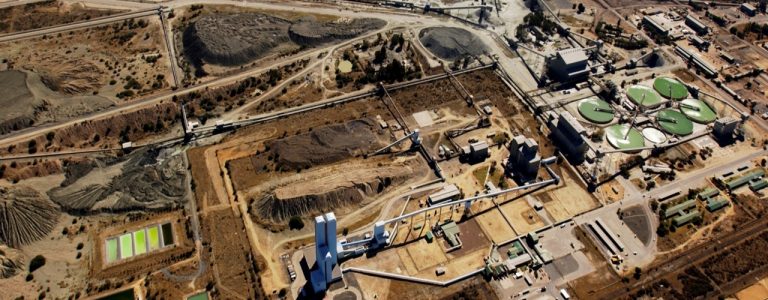
De Beers and Vast Resources will be allowed to explore for diamonds in Zimbabwe, which would make them the first listed companies to mine there in that sector for two years, Mining Minister Winston Chitando said.
A spokesman for De Beers, an Anglo American unit, said in an email it was not mining in Zimbabwe and did not intend to. Vast Resources said it could not comment.
The Mnangagwa administration has been working to rebuild investor confidence since long-term leader Robert Mugabe was ousted in late 2017.
This month its mining ministry said it would let in two new companies but did not name them.
On Wednesday, Chitando told Reuters De Beers and Vast Resources would be allowed to mine, but could not comment on any changes to ownership rules. “Those are the details that have to be thrashed out,” he said.
Vast Resources signed a memorandum of understanding with Botswana Diamonds in May to form a special purpose vehicle majority-owned by Vast to develop resources in Zimbabwe.
In November, Chitando said Zimbabwe did not plan to change radically its ownership laws for platinum and diamonds.
Few miners doubt the potential of Zimbabwe’s mineral resources and it is among the world’s leading diamond-producing countries. But some investors are concerned about how much money companies can take out because of dollar shortages.
Mugabe accused De Beers of looting the largest diamond fields in Marange in eastern Zimbabwe, where production is dominated by state-owned Zimbabwe Consolidated Diamond Company. De Beers denied the charge.
Zimbabwe Consolidated Diamond Company is one of two firms currently allowed to mine diamonds there. The other, Murowa Diamonds, majority-owned by Rio Tinto until June 2015, is the only private company mining diamonds in south central Zimbabwe.
In early 2016, Mugabe’s government evicted all diamond miners from Marange, saying their licences had expired after they declined to merge under the state-owned mining firm.
As part of its quest to attract foreign investment, Zimbabwe’s new government has liberalised indigenisation laws for many minerals but still limits foreign ownership of platinum and diamond projects to a minority, with the state holding 51 percent. Mining Weekly
Now the wait for the announcement of a legitimate Zimbabwean leader is over after Emmerson Mnangagwa was announced as the victor in the just ended harmonised elections , bagging a fresh five year mandate.
A lot of expectations for the new leader are in the air after he managed ganner a majority vote of 50.8% percent against his fore, Nelson Chamisa who was not so far, gunning 44%.
Mnangagwa took over from Robert Mugabe in November following a bloodless military intervention which ensued after the nonegarian (Mugabe) had ruled the Southern African country for more than 35 years.
A lot of changes are being anticipated in all the crucial sectors of the economy and according to analysts, Mnangagwa is likely the man to transform the Zimbabwean mining landscape.
The ascendance of Mnangagwa following the exit of Robert Mugabe through a military intervention came with it massive changes within the mining landscape, key to it being a change in policies.
Keen to revive the mining sector after years of reticence by foreign investors during Robert Mugabe’s rule, President Mnangagwa has managed to turn the country’s investment environment into a darling for many.
His summit to power has seen the country amassing a great deal of investments and other tangible commitments coming from hostile countries as far as United States of America.
The takeover of Mnangagwa saw Zimbabwe amending its Indigenisation and Economic Empowerment legislation to limit majority ownership by state entities to only diamond and platinum mines and not the entire mining sector as espoused in the previous legislation.
The indigenisation legislation introduced during the tenure of Mugabe was designed to increase black Zimbabweans’ participation in the mining sector but were open to abuse.
The legislation had become an elephant in the room for Mugabe’s Government and it also became a major hindrance to attraction of tangible and clean investments in the mining sector.
The amendments were included in the Finance Act, which covers the 2018 budget and were signed into law. According to the new amendments, only state-owned mining entities will hold majority shares in diamond and platinum companies.
What Mnangagwa has done far has seen a lot mining houses jumping to the conclusion the Mnangagwa’s fresh mandate as the President of Zimbabwe might be the best thing ever to happen to the country’s mining sector.
What has been achieved so far?
Cypriot investor Karo Resources has since signed a $4.2 billion deal with Government of Zimbabwe under Mnangagwa’s watch.
The integrated project located in the Mhondoro-Ngezi platinum belt, west of Harare, where Impala Platinum Holdings has operations will include a coal mine and power station to produce electricity for the smelter, and should employ 15,000 people when fully implemented.
Keen to revive the mining sector after years of reticence by foreign investors during Robert Mugabe’s rule, Mnangagwa is of the opinion that the deal has capacity to catapult Zimbabwe to greater heights.
The project was first mooted six years ago but had been held back by government red tape and “other unnamed vested interests, which were corrupt.
Government following Mnangagwa’s victory is likely going to continue reforming the investment climate by putting in place investor friendly policies as efforts to attract foreign direct investment intensify.
Mnangagwa has already placed economic development on top of its agenda, with various reforms being put in place to lure investors.
An example is the scrapping of the indigenisation law, making it only applicable to investments in diamond and platinum mining.
The renewed emphasis on the economy has resulted in an influx of investors expressing interest to invest in Zimbabwe from across the globe, including from countries that were previously hostile.
Since November last year more than $15 billion worth of investment commitments have been registered in a show of faith in the new administration and its ideas.
Again in a show of faith, a large business delegation from the Chinese province of Zhejiang is in the country to scout for business opportunities following President Mnangagwa’s visit to that province in April this year.
Zhejiang is one of China’s richest provinces whose main manufacturing sectors include electromechanical industries, textiles, chemical industries, food, and construction materials.
As of 2016, Zhejiang’s nominal GDP was $711 billion, about 6.35 percent of China’s GDP.
The focus shown by Mnangagwa during his eight months stay in power is likely going to continue going into his fresh mandate. He might be the best thing to have ever happened in the Zimbabwe mining sector in the past two decades.
Addressing delegates attending the Mine Entra conference in Bulawayo last week, Mines and Mining Development deputy minister Polite Kambamura said in order to support and facilitate envisaged sustainable mineral development, government, through his ministry, was in the process of crafting various mineral specific policies.
GOVERNMENT is in the process of crafting mineral specific policies for chromium, diamond and gold, among others, in order to support and facilitate envisaged sustainable mineral development.
Addressing delegates attending the Mine Entra conference in Bulawayo last week, Mines and Mining Development deputy minister Polite Kambamura said in order to support and facilitate envisaged sustainable mineral development, government, through his ministry, was in the process of crafting various mineral specific policies.
These include diamond, chromium development, gold development and coal development policies.
Diamond policy has already been firmed and approved by Cabinet, he said.
“I can assure all here present that there is political will, at the highest level, to ensure sustainable development in the mining sector and the national economy for the mutual benefit between the Zimbabwean citizenry and investors,” Kambamura said.
He said Zimbabwe was under-explored and has not been subjected to modern exploration techniques for new discoveries.
In that regard, government, through the ministry, was now actively processing Exclusive Prospecting Orders (EPOs) applications to facilitate exploration activities in the country.
“These exploration initiatives will assist in the opening of new mines, expansion of existing operations and resuscitation of old mines, leading to increased production, creation of employment and the general improvement of living standards of communities and the nation at large,” Kambamura said.
He also said Zimbabwe was a competitive mining economy from a geology and mineral potential perspective, but weak from a technology, production cost and capacity point of view.
“In this regard, government is promoting this initiative, including the facilitation of competent investment such as the Karo Platinum project and various joint venture partnerships with leading global mining companies such as Alrosa of Russia in the case of diamonds,” he said.
Damned if you do, damned if you don’t, that’s just how Zimbabwe has been grappling with the dilemma of whether its own money should return earlier or not. Or rather be shelved for much longer, until such time that it would be ripe to bring back the local dollar.
By Justice Zhou
The subject has for long been a burning issue. In recent weeks, it has been trending amid swirling rumours that the country was on the verge of reintroducing its own currency, backed by gold this time, nearly a decade after it switched to the US dollar in order to rein in galloping inflation. However, it is not clear if authorities were already in the process of stockpiling reserves of the yellow metal to back the proposed money. The political stakes are high as the country heads for crucial national elections slated for the end of next month.
It obviously has been tempting for all the presidential hopefuls, particularly the frontrunners, to see the cash crisis as a key in the race for the top job. By the same token, the mining industry players, some of the hardest hit by the crisis, will find any developments that bring about sufficient liquidity to be a welcome relief.
Coupled with forex shortages, the absence of the local currency remains a major concern for miners whose operations have been thrown into disarray, as they struggle to secure equipment and spare parts, while experiencing delays in paying suppliers. It would be rather interesting to find that the sector actually takes the lead in digging its way out of the cash problems, supplying the gold that will be required to support the new currency.
Up until the greenback began to disappear early 2013, it looked as though the solution to the endless liquidity problems has been found, but alas. The bond notes, introduced in 2016, have not been helpful either. But the more things seem to change, the more they remain the same in Zimbabwe. But can gold provide the ultimate answer to the endless cash crunch?
“We are headed towards a catastrophe if the powers that be are not careful. I have warned before about the dangers of printing money and the bond note,” renowned journalist Hopewell Chin’ono said.
“The government is talking about bringing back the Zimbabwe Dollar to alleviate the cash crisis. It won’t alleviate anything! Your own currency is useless if you are not producing anything meaningful for export.
Ironically, the world completely abandoned the so-called gold standard way back in the 1970s, immediately switching to the US dollar as the newfound alternative reserve currency upon which countries would measure the strength of their own currencies.
Experts say some of the major benefits derived from this monetary system are that a valuable and fixed asset would back the money & its worth. That, in essence, provides a stabilising and self-regulating effect on the economy, as the government & its ability to print money would be limited only to certain quantities of gold. Eventually, it follows that with money printing only depended on the amount of bullion reserves, runaway inflation will thus be kept under control.
Nevertheless, conspiracy theory has it that the economic powerhouse now abuses its greenback as a tool to manipulate the global economy in its favour, whereas influencing political events in weaker nations for its geopolitical gains. For example, Zimbabwe has coincidentally been cited by critics as a case in point. They argue that the initial abundance of the US dollar during the tenure of the ZanuPF/MDC unity government between 2009 and 2013, and its sudden disappearance thereafter as proof that the country was being punished for former President Robert Mugabe’s anti-western rhetoric.
The mainstream opposition coalition has argued it was still too early to reintroduce the local dollar, saying the preliminary solution to the cash shortages alternatively lies in neighbouring South Africa’s rand. Former economic development minister Tapiwa Mashakada says joining the Rand Monetary Union would be a moot point.
“In any case our central bank is not using monetary policy instruments due to the dollarization of the economy. The use of the rand will vaccinate the central bank against quasi-fiscal operations which are harmful to the stability of the economy,” Mashakada said.
“At the end of the day, the MDC Alliance would want to see to it that banks have cash and that ATMs dispense cash. Banking queues will be a thing of the past. In summary the MDC Alliance will take Zimbabwe to the Rand Monetary Union, decommission bond notes, and address all the macroeconomic fundamentals inhibiting the re-introduction of the Zimbabwe dollar. This is our solution to the liquidity crisis playing out as cash shortages.”
Zimbabwe’s gold mining and trade legacy traces its history back to medieval times, with the ancient Munhumutapa Empire alleged to have boasted roughly 4 000 gold mines across the country. The empire’s mining activities saw tons of bullion ore being purified and later cast into jewellery and means by which to trade with Portuguese and Arabic explorers and other fortune hunters. Legend also has it that the southern African country was the biblical Ophir, in which King Solomon’s mines were domiciled. Today, the yellow metal still holds its place as one of the main contributors to Zimbabwe’s economy.
For the time being, the mining sector will be kept guessing as to whether the new currency is really on the way perhaps until after the elections. The Reserve Bank of Zimbabwe has pledged to abide by its duty to ensure timeous payments to miners from which it buys gold. It currently is supposed to have been paying 70 per cent that it owes partly in US and the remainder in local bond notes as bank transfer.It has since emerged, however, that the central bank is defaulting on early payments due to the worsening forex and bond notes crunch. Still, is gold the answer? That is the big question.
It’s quite clear that the soft, silvery-white metal credited for playing a crucial role as a key element in electric cars and other clean tech gadgets, is currently enjoying its best “celebrity” moment. But such moments for raw minerals including lithium often come and go, leaving a trail of destruction in the mining industry and commodities markets.
By Justice Zhou
Spare a thought for Zimbabwe, which reportedly has the potential to supply roughly 20 per cent of global lithium compounds, yet little effort has been made towards venturing in the making of environmentally-friendly lithium-ion batteries for electric cars and various other electronic components. Beware, just in case we could be floating in what will later turn out to be a bubble that will finally burst, and that is if fears by analysts are anything to go by.
As witnessed recently, global commodities are prone to price shocks. For example, commodity prices such as those raw minerals spiralled to historically high levels in the run-up to the Great Recession in 2008, before plummeting as the global economy collapsed. Thereafter, prices subsequently rebounded with the global economic recovery but, more recently, commodity prices appear to be hitting the skids once more.
Such booms and busts in the prices of commodity prices serve as a reminder to many countries that have for many years relied upon the extractive industry, like Zimbabwe, that there is a need to counter losses brought about by such economic eventualities by shifting towards beneficiation or adding value to their minerals.
For the most part, the country’s over-reliance on the extractive industry and its low manufacturing base, have kept the age-old “resource curse” theory, also known as the “paradox of plenty”, rearing its ugly head on export revenues. The theory of the resources curse implies that countries with an abundance of natural resources, like minerals, tend to have less economic growth, less democracy, and worse development outcomes than countries with fewer natural resources.
The ministry of mines says processing minerals before export is just one of the four key pillars of the country’s goal to create value, jobs and fast-track industrial development from its mineral resources under a five-year economic blueprint, the Zimbabwe Agenda for Sustainable Socio-Economic Transformation, otherwise known as Zim Asset.
Zimbabwe is considered to hold the largest lithium deposits, including at Kamativi and Bikita mines, as well as the Zulu and Arcadia Lithium projects. The country also has some lithium deposits in Mberengwa, Mutoko and other areas around Harare. But the advent of the idea of electric vehicles being the solution to the quest for a cleaner environment has gone haywire, triggering a surge in demand for lithium-ion batteries, while prompting a global rush to ramp up the supply of lithium compounds and driving their prices higher in the process.
For example, Tesla Inc, the US-based electric car maker, which has vowed to take a lead in the world’s
transition to green and sustainable energy solutions, emerged as the pioneer and trendsetter in the lithium revolution after it launched its Tesla Roadster in 2018, the first vehicle to use lithium-ion battery cells. Since then, giant global automakers from Toyota to Nissan to BMW have followed suit, as they battle it out to secure a share of the expected future boom in the electric vehicles market.
In the middle of this whole global technological mêlée and hype, the question that lingers in the back of most Zimbabweans’ minds is, perhaps, around where the country lies, or what its role is and what it stands to gain or lose. How about setting up electric car manufacturing plants and making smartphone components? After all, Zimbabwe has since the appointment of President Emmerson Mnangagwa seen a dramatic increase in investment commitments into the mining sector, including lithium miners taking advantage of friendlier laws and rising confidence in the new government.
However, there’s a catch. Some analysts are not convinced of the idea of a win-win situation between investors and the country is guaranteed. In an interview with Mining Zimbabwe, Patrick Bond, a renowned professor of political economy at the University of Witwatersrand, Johannesburg, warned about the dangers of counting chickens before they are hatched. He highlighted especially the track record of multinational companies’ sometimes opaque operations in Africa.
“If in any case, the economy is now built upon an extremely unsound foundation—multinational corporations and local elites, neither of whom show any inclination to reinvestment—then it doesn’t really matter, does it?” Professor Bond said.
“A return to a golden era of localised economic development based on large manufacturing industry is desperately needed, such as the 1980s era in which 5 percent annual GDP growth was often achieved, prior to the destruction of ESAP (Economic Structural Adjustment Programme).”
The World Bank says Zimbabwe’s mining sector has the potential to generate over $11 billion in revenues and S$10 billion in export receipts and contribute $1,7 billion to the fiscus by 2018, provided there is a conducive climate for investment. This means if efforts are made to move away from raw exports, to value-addition or manufacturing, there are chances of even much better and increased streams of revenue to ramp up government coffers, create jobs and boost tech innovations.
It remains to be seen if the new government will buck the trend, being able to rein in miners who might refuse to comply with the country’s beneficiation policy. On that score, however, the mines ministry is reportedly engaging with lithium investors on the possibility of getting into value addition, including setting up lithium battery manufacturing plants. In addition, finance minister Patrick Chinamasa has proposed a 5 per cent tax on exports of unprocessed lithium beginning January next year.
Lithium-ion batteries offer a cleaner and better alternative to conventional lead-acid car batteries which are heavier and are major pollutants, as steps to curb emissions and reduce vehicle weight for the so-called green economy intensify. However, their use in the automotive industry is still restricted by car batteries’ problems when it comes to the ability to withstand engine-room high temperatures and the likelihood of being damaged in the event of a collision.
Electric cars and lithium-ion batteries are not without their disadvantages, and among them is their rate of self-discharge being much lower than that of other rechargeable cells. However, a report released this month by Research and Markets projects the lithium-ion battery market to cross the figure of $40 Billion by the end of 2024. It also says a lot of research and development is being done by the battery manufacturing companies to reduce the size and weight as well as cost of the batteries to enhance safety and power output.
In a 2015 report by Johannesburg-based advisory firm Eunomix Research, the Zimbabwe government’s plans to embark on a policy shift from dependence on raw materials to the export of finished products is laid bare by its authors such as economist and the managing director Claude Baissac.
According to the report, Zimbabwe was rolling out an ambitious policy to transform the mining sector. This policy entailed the adoption of beneficiation, a strategy which saw it gain broad support in regional initiatives like the African Union’s African Mining Vision (AMV). At some point, the government went as far as taking bold steps to minimise the export of raw chrome by slapping a ban on it, just to make its intentions to encourage manufacturing clear, although the policy was later scrapped in favour of cordial negotiations with miners, amid fears investors will rush for the exits.
“The government has formulated a coherent and rational beneficiation policy that takes into account several mitigating factors and produces concrete initiatives to address some of those constraints,” according to Eunomix.
“However, at the end of the day, Zimbabwe is a small country that must rely on external sources of investment and expertise and must export to the global market. This is a constraint that it cannot escape. The policies it develops must, therefore, be sufficiently pragmatic to allow economic operators to derive reasonable returns.”
Several findings by global development bodies suggest countries such as Zimbabwe stand to gain more from beneficiation and industrialisation through terms of trade, than exporting raw materials. A new World Bank study, titled The Changing Wealth of Nations 2018, outlines how the rampant looting of minerals and other natural resources by big corporates has impoverished, rather than benefit Africa, while in February, the Organisation for Economic Co-operation and Development (OECD) published a damning report stating that Africa loses an average of $50 billion every year through illicit trade.
In his 2018 budget statement, then-Finance Minister Patrick Chinamasa lamented the fact that lithium was being carted away to foreign destinations with minimal value addition, depriving the country of forex earnings and job creation opportunities. As a measure to curb the export of unprocessed lithium ore, he proposed to impose an export tax of 5 per cent on the gross value of the exported metal.
Most of all, Zimbabwe needs to do more to demonstrate it really is serious about ensuring that it reaps more revenue and other benefits from its lithium wealth, by generally being candid to potential investors that their policy in the sector goes beyond the mantra of “Zimbabwe is open for business.” As it stands, it doesn’t appear the new government, perhaps out of desperation for investment, is more vocal and will stamp enough authority to see through its side of the beneficiation bargain with prospective investors in the lithium sector, but it must.
The Minerals Marketing Corporation of Zimbabwe (MMCZ), is charged under the Minerals Marketing Corporation of Zimbabwe Act, Chapter 21:04 (1983) with the duty and function to act as the sole marketing and selling agent of all minerals produced in Zimbabwe.
The Act enjoins any person who wishes to export any mineral to do so through or with the approval of MMCZ and shall advise the Corporation in writing with –
Particulars of the quantity, type, grade and location of the mineral concerned; and
Details of his proposal, if any, for the sale or export of the mineral, including the terms and conditions of any proposed contract or arrangements relating to the sale or export, as the case may be; and
Such other particulars and documents as may be prescribed or as the Corporation may in any particular case require.
On receipt of above advice, the Corporation may in its discretion do any of the following things:-
With all due expedition endeavour to negotiate on behalf of the seller the sale of the mineral concerned, so far as possible in accordance with any proposal submitted by the seller; or
Purchase the mineral concerned from the seller, on such terms and conditions as may be agreed between the Corporation and the seller; or
Authorize the seller to sell the mineral concerned, subject to such terms and conditions as the Corporation may impose; or
Authorize the export of the mineral concerned, subject to such terms and conditions as the Corporation may impose.
PROCEDURAL REQUIREMENTS
A quality certificate/assay certificate indicating quality of material either mechanical or chemical specifications or both.
Claim certificates
Proof of Incorporation under the Companies Act of Zimbabwe for each respective company including but not limited to memorandum and articles of association, cr14 and company profile
Proposed Terms and conditions of the sale i.e customer details, quality, price, basis of sale, payment terms etc have to be agreed upon and approved by MMCZ prior to processing of the export.
An agreement of sale is then prepared by MMCZ in consultation with the both parties that is Producer and the Customer whereupon terms and conditions of sale are to be agreed.
Once the contract is signed, the Producer is to apply for an Export License obtainable from the Ministry of Mines/ Department of Metallurgy valid for a specified period. Each consignment should be inspected and approved by the Ministry of Mines/MMCZ.
Export documents are done and prepared by MMCZ for and on behalf of the Producer i.e, commercial invoice, CD1 application as well as Zimra asycuda registration.
The sales proceeds will be deposited directly to the Producer’s bank account until further notice. The same bank shall be instructed by the Producer (and proof of the instruction submitted to the selling agent) to deduct any sums to which the Selling Agent is entitled which includes 0.875% statutory commission levied on gross invoice value, plus 14.5% VAT on commission and government royalties in terms of Statutory Instrument General Notice No.381 of 2003.
Producer to open a Bill of Entry account with Zimra (quoting their individual BP account number)
To provide the best experiences, we use technologies like cookies to store and/or access device information. Consenting to these technologies will allow us to process data such as browsing behavior or unique IDs on this site. Not consenting or withdrawing consent, may adversely affect certain features and functions.
Functional
Always active
The technical storage or access is strictly necessary for the legitimate purpose of enabling the use of a specific service explicitly requested by the subscriber or user, or for the sole purpose of carrying out the transmission of a communication over an electronic communications network.
Preferences
The technical storage or access is necessary for the legitimate purpose of storing preferences that are not requested by the subscriber or user.
Statistics
The technical storage or access that is used exclusively for statistical purposes.The technical storage or access that is used exclusively for anonymous statistical purposes. Without a subpoena, voluntary compliance on the part of your Internet Service Provider, or additional records from a third party, information stored or retrieved for this purpose alone cannot usually be used to identify you.
Marketing
The technical storage or access is required to create user profiles to send advertising, or to track the user on a website or across several websites for similar marketing purposes.