Home Blog Page 666

SA coal mine explosion death toll rises to six

0

The number of people killed by a gas explosion in an unused coal mine in South Africa’s eastern province of Mpumalanga has risen to six, and several others remain trapped, an official at the mine said on Thursday. The representative of the creditor protection team at the mine, Michael Elliot, said more than 20 people were still stuck underground at the mine in Middelburg and are presumed dead.

“As I’ve been informed, there are six deceased people in this point in time that have been taken to the mortuary,” Elliot told Reuters over the phone.

Rescue efforts were hampered by dangerously high levels of toxic gas underground, Elliot said.Several people had entered the mine on Wednesday afternoon to steal copper wires that supply electricity for lighting and ventilation when a gas pipe exploded

“We first have to restore power to the mine and we have to restore the ventilation to make it safe and once it’s safe… then we will go and recover these people that are missing,” he said.

The mine is owned by Tegeta Resources and Exploration, which is undergoing creditor protection after its owners, the Gupta brothers, found it difficult to continue doing business in South Africa following corruption allegations against them.

Several people had entered the mine on Wednesday afternoon to steal copper wires that supply electricity for lighting and ventilation when a gas pipe exploded, police spokesman Leonard Hlati said.

“The mine is wired with copper. They were going for copper,” Hlati said.

Copper is often stolen from disused mines in South Africa and sold for scrap.

The Gupta brothers, their lawyers and officials from their firms and family representatives could not be reached for comment about the mine incident.

The brothers – who headed what was one of the country’s biggest conglomerates – were accused of unduly influencing former president Jacob Zuma over political appointments and winning contracts.

Zuma and the Guptas deny any wrongdoing.

Reuters

Oil demand to hit zero in 2030

0

By 2030, oil demand could hit a peak and then enter decline, according to a new report.

For the next decade or so, oil demand should continue to grow, although at a slower and slower rate. According to Bank of America Merrill Lynch, the annual increase in global oil consumption slows dramatically in the years ahead. By 2024, demand growth halves, falling to just 0.6 million barrels per day (mb/d), down from 1.2 mb/d this year.

But by 2030, demand growth zeros out as consumption hits a permanent peak, before falling at a relatively rapid rate thereafter.

I fully anticipate we’re going to keep a lot of pressure on that cobalt production, today it looks feasible but it’s a scenario we’re going to have to watch

The main driver of the destruction in demand is the proliferation of electric vehicles.

Bank of America did offer a few caveats and uncertainties. The growth of EVs hinges on a handful of key metals. Lithium, for instance, is mined and produced in large concentrations in a few Latin American countries.

But cobalt looms as a larger concern for some automakers. Roughly 62 percent global cobalt output is found in the Democratic Republic of Congo. An executive from Ford said recently that automakers might feel compelled to invest directly in cobalt production over fears of securing adequate supply. “I fully anticipate we’re going to keep a lot of pressure on that cobalt production,” Ted Miller, head of energy storage strategy and research at Ford, said at a mining event in South Africa. “Today it looks feasible but it’s a scenario we’re going to have to watch.”

The DRC just held a divisive election, and although the transfer of power has been mostly peaceful, the country has historically suffered from political instability. “Any major disruption to cobalt today would likely curb EV proliferation in the early 2020s, in turn supporting long dated crude oil prices,” Bank of America Merrill Lynch warned.

There are alternatives to cobalt, but that would merely put pressure on other materials. “Car producers may gradually substitute from cobalt to nickel over the next two decades. In turn, this shift may lead to soaring demand for nickel, creating another supply squeeze as mine expansion plans are limited,” BofAML analysts wrote in their report.

There are a long list of other uncertainties that complicate such medium- and long-term forecasting. A brewing economic downturn, which may or may not hit in the next year or next few years, could linger into the 2020s. That would alter oil demand forecasts, but in complicated ways. Slower economic growth would put a dent in oil prices via lower demand, but a lower price itself could keep consumers hooked.

The EV market is also rife with uncertainty. EV sales are growing quickly, with the number of EVs on the roads picking up pace. Automakers are set to roll out dozens of new models, which will expand choice and awareness, while also making progress on price, range, and performance. Bank of America Merrill Lynch sees EVs having a “meaningful negative impact” on oil demand from 2021 onwards.

Then, of course, there is the small matter of policy, which can cut both ways. Bank of America said that “the US’s feeble commitments to climate action, fuel efficiency standards, and sulphur-limit reductions in shipping (IMO),” could slow EV adoption. But the next administration could also reverse course and step up climate ambition.

Even when breaking down oil demand into various segments, there is a lot of change going on. “EVs are shifting demand away from gasoline, IMO causes switching into diesel, and strong petchems demand growth is shifting demand toward the light part of the barrel, including NGLs in particular,” BofAML wrote. “We are at the beginning of a new age of uncertainty for oil producers, refiners and miners alike.”

Nevertheless, despite all of those uncertainties, the outlines of the trajectory are clear. Oil demand in the developed world saw a temporary boost over the last four years or so because of the collapse of oil prices. That has mostly run its course. Demand “should return to outright declines as the price effect wears off and efficiency takes over,” BofAML wrote.

Emerging market demand should continue to grow as more people acquire cars. China, however, has made a major EV push and its demand growth is already starting to slow.

“The major driver of structural change in oil demand trends in the next five years and beyond is expected to be electric vehicles,” BofAML said. By 2020, EVs will capture 5 percent of global vehicle sales, which will balloon to 40 percent by 2030, before rising to 95 percent by 2050.

All of that implies a peak in oil demand by 2030, a little over a decade from now. We are in the midst of the “biggest structural shift in demand growth since the proliferation of the car began in the early 1900s,” BofAML concluded.

Reuters

SA gvt to ensure mining industry remains vibrant

0

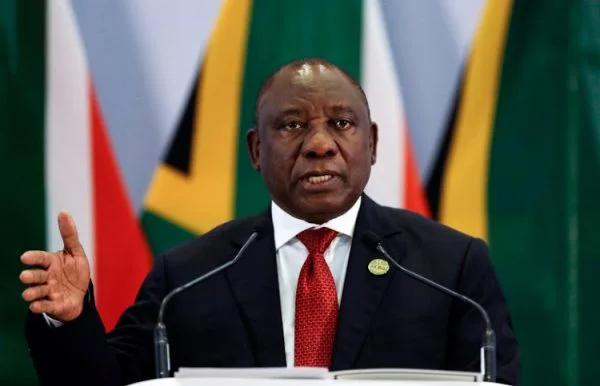
President Cyril Ramaphosa told delegates at the 25th Investing in African Mining Indaba in Cape Town that government would introduce a range of reforms in legislation and state-owned entities to ensure that the local mining industry remained in its ‘‘sunrise days’’.

Among the interventions listed were ‘‘structural reforms’’ to Eskom, certainty in legislation, attracting billions in investment and transformation of the formal economy. Ramaphosa said South Africa was a fifth of the way towards collecting the $100bn in investments that he pledged to collect last year.

Ramaphosa said the fact that mining companies continued with investment commitments in South Africa was proof that mining remained “a sunrise industry” in the country.

‘‘Many say that the sun is setting on the South African mining industry after years of leading the economy. We are firm believers that South Africa’s mining industry is still in its sunrise days, and long will those days last,’’ said Ramaphosa.

Eskom changes coming soon

Ramaphosa told delegates that mining investors needed to be reassured South Africa could provide secure and cost-effective energy. However, he said Eskom’s precarious position undermined South Africa’s ability to commit to this.

‘‘We have been giving detailed attention to the crisis and challenge Eskom is facing. It faces significant operational, financial problems. Eskom is just too important and too big to be made to fail. We will not allow Eskom to fail. Restoring the energy security of this country is an absolute imperative. Rest assured we are going to address this problem,’’ said Ramaphosa.

He said ‘‘in a few days’’ government would announce measures aimed at improving Eskom’s financial and structural stability because the utility was ‘‘too important to be allowed to fail’’.

Policy certainty

Ramaphosa also praised Minister of Mineral Resource Gwede Mantashe, calling him an experienced authority on mining who ‘‘knows the industry in and out’’. He said Mantashe’s arrival at the department came with policy certainty for investors.

Mining Online

Policy changes show Zim is open for business

0

Zimbabwe wants to emphasise that it is open for business, with several policy interventions to underline its intentions, according to Winston Chitando, the country’s Minister of Mines and Mining Development.

Chitando was a guest speaker at a panel discussion on mining in Zimbabwe hosted by law firm Webber Wentzel at Mining Indaba 2019 currently underway in Cape Town South Africa.

‘‘We are very clear as the Zimbabwean government that to have and attract the required investment in mining policy, what is needed from our side is clarity and constancy,” said Chitando.

‘‘We have already made a few policy interventions over the last few months. For instance, we now limit indigenisation requirements only to diamonds and platinum.”

In 2018, Zimbabwe changed its empowerment law to limit majority ownership by state entities to only diamond and platinum mines, as opposed to the entire mining sector as in previous legislation.

Private sector must recommend policies

Chitando said the Zimbabwean government was also coming up with development policies specific to minerals, to regulate how players in a particular mining sector will operate. This is already taking place in the lithium and platinum sectors.

‘‘We have encouraged the private sector to recommend policies in this regard. Government will not necessarily accept all of these recommendations, but we will ensure that there will be a framework that will ensure that we attract investment,” said Chitando.

New currency?

Regarding the issue of foreign currency in Zimbabwe, he said the finance minister had hinted at the possibility of the introduction of a new currency. We realise that foreign currency is an issue, but this is being addressed as we want to ensure the mining industry continues to grow,” he said.

Privatisation ‘in due course’

Furthermore, the new Zimbabwean government has already identified six state-owned assets for privatisation.

‘‘Some of the bids we received on these were not good enough, mainly because some of the assets do not have any data, but there will be a formal announcement on the privatisations in due course,’’ he said.

‘‘We are very serious to work with current and prospective investors to ensure a win-win situation. At the end of the day it is about balancing the needs of Zimbabwe and the needs of investors.’’

During the panel discussion, Chitando was told that talks of nationalisation in some African countries concerned investors, because investors are seeking consistency of regulation so that they can plan ahead.

Access to foreign currency earned is another concern for prospective investors in Zimbabwe.

To this Chitando responded that property rights are important.

Sheila Khama, lead mining specialist at the World Bank, said as part of the panel that the Zimbabwean government must be clear on what privatisation means from an investment point of view and what the role of the Zimbabwean government will be in the process.

She further emphasised that it is very important for the Zimbabwean government to make it clear to the Zimbabwean citizens what they realistically can expect from the country’s mining industry.

‘‘We have no doubt that Zimbabwe is serious and should be taken seriously. Of course there is always a level of sovereign risk, but we are confident that investors are able to manage such risk,’’ she said.

Fin24

Gold trades one-week low

0

Gold was trading close to a more than one-week low yesterday weighed by a stronger dollar but uncertainties around the Sino-US trade spat and concerns about slowing global growth supported the metal above the key $1,300 level.

Spot gold was up 0.07 percent at $1,306.76 per ounce by 7:42 a.m. ET, after touching its lowest since January 29 at $1,302.11. Prices fell 0,7 percent in the previous session in their biggest one-day drop since January 18.

US gold futures were down 0,29 percent at $1,310.60.

“Despite concerns of a slowing global economic growth, it seems the dollar is providing some headwinds for gold at this stage,” said Ross Norman, chief executive at Sharps Pixley.

“Effectively this type of correction is not a bad thing but broadly speaking, the bull run is very much in place.”

The extent of the current slowdown in the global economy was illustrated as India unexpectedly cut its interest rates and data showed Germany’s economy slowed in December, underscoring fears about a broader slump in Europe.

CNBC

DRC copper production rises 12.9%

0

Copper production in Democratic Republic of Congo, Africa’s top producer, rose 12.9 percent in 2018 to 1.2 million tonnes, the Chamber of Commerce said in a presentation on Wednesday.

Output of cobalt, a key component of electric car batteries, rose 43.8 percent to 106,439 tonnes, while gold production increased by 22.6 percent to 28,539 kg.

Reuters

Zambia holds firm on tax regime

0

Zambia, Africa’s second-largest copper producer, sees recent changes to its mining royalties regime as fair and won’t consider a review despite warnings from the industry that it could deter investment and result in job losses, Finance Minister Margaret Mwanakatwe said.

“There is no renegotiation taking place because a law has been passed in parliament to change the tax regime”

“There is no renegotiation taking place because a law has been passed in parliament to change the tax regime,” Mwanakatwe said Tuesday in an interview in Cape Town. “We don’t want to keep changing regimes frequently. We want a regime that is stable, that can ensure that government gets a fair share of revenue to support its development agenda. I can’t see the royalty tax changing.”

The minister in September announced a 1.5 percentage point across-the-board increase in mining royalties in the budget for the year from Jan. 1 and a 10 percent charge if the copper price climbs above $7,500 a metric ton. The previous tax rates ranged from 4 percent to 6 percent, depending on price of the metal.

Zambia’s Chamber of Mines, which represents companies including Vedanta Resources Plc, First Quantum Minerals Ltd. and Glencore Plc, warned that the move could render more than half the country’s copper mines unprofitable, lead to at least 21,000 jobs cut and a reduction of $500 million in capital spending over the next three years. While several companies announced plans to fire workers, they later withdrew the threat following fierce opposition from the government.

The new royalty “is actually not a drastic increase,” Mwanakatwe said. “The fact that each one of the companies has come back and said there will not be any job losses, I think is a very good development and a very progressive one and a recognition that in fact some of them are going to expand. I believe the mining sector will invest where it needs to invest.”

Zambia’s Mines Minister Richard Musukwa said in an interview Monday at the Investing in African Mining Indaba in Cape Town that while the government is holding firm on the new law, it was prepared to make temporary concessions on the recent changes to its mining taxes if companies can show they need it.

Mwanakatwe said the government may consider offering concessions to encourage local production of concentrates and is open to further engagement with the mining industry.

“Mining contributes about 14 percent of gross domestic product,” she said. “I need to ensure that we have a mining sector that is thriving and investing.”

Bloomberg News

South Africa’s Sibanye seeks to expand gold territory

0

South Africa’s biggest gold producer would consider buying more assets in the country after paying off debt from previous acquisitions.

Sibanye Gold Ltd. hasn’t discussed deals, but AngloGold Ashanti Ltd.’s Mponeng mine and Gold Fields Ltd.’s troubled South Deep operation would both fit into the company’s portfolio, Chief Executive Officer Neal Froneman said in an interview in Cape Town. Still, for the next 18 months at least, the CEO — nick-named “Mr Fix-It” for his turnaround successes in the 1990s — will be focused on strengthening Sibanye’s balance sheet.

“You don’t create value for your shareholders when it’s a fashion or a feeding frenzy, and that’s why we are not really concerned with what has been happening

“Could Mponeng fit in with our portfolio? Absolutely,” said Froneman, citing the mine’s proximity to Sibanye’s Driefontein operation. “If it was available at the right price and at the right time.”

The mega deals forged by the world’s biggest gold producers, Newmont Mining Corp. and Barrick Gold Corp., have switched the spotlight onto the strategy pursued by No. 3 AngloGold. CEO Kelvin Dushnisky is looking to sell AngloGold’s non-core assets, but said this week that no decision has been made on whether to invest more in Mponeng. The company is considering hiving off its South African operations and listing in London or Toronto, people familiar with the matter said in December.

Finding value

Despite the struggle to contain costs in the world’s deepest mines, Froneman said Sibanye could raise its exposure to South African gold after diversifying the company’s business by acquiring platinum and palladium mines at home and in North America.

“There is a lot of value in our gold business and we wouldn’t walk away,” Froneman said. “Negative sentiment doesn’t drive what we do.”

Sibanye has advanced 29 percent this year, outpacing other Johannesburg-listed gold miners. The stock was up 1.2 percent at 2:31 p.m. local time, valuing the company at 29.2 billion rand ($2.17 billion).

Any further deals will have to wait until Sibanye has completed its acquisition of struggling platinum producer, Lonmin Plc. The company would also have to end a two-month strike at its gold operations and return the mines to profit, said Froneman, who is keen for Sibanye to resume paying cash dividends.

As for mega deals, the CEO is unconvinced.

“You don’t create value for your shareholders when it’s a fashion or a feeding frenzy, and that’s why we are not really concerned with what has been happening,” Froneman said.


Bloomberg news

Zimbabwe Stock Exchange snubs Falgold

0

The Zimbabwe Stock Exchange Limited (ZSE) has suspended Falcon Gold Zimbabwe Limited (Falgold) from trading on the local bourse after the gold miner failed to publish its financial results for the year ended September 30, 2018.

In a statement, ZSE acting chief executive Martin Matanda said the suspension, which was at the request of Falgold, was with effect from February 5, 2019.

“At the company’s request, the ZSE sought and was granted permission to suspend trading in Falcon Gold Zimbabwe Limited’s shares by the Securities and Exchange Commission of Zimbabwe, pursuant to the provisions of Section 64(a)(ii) of the Securities and Exchange Act [Cap 24:25],” he said.

Last December, Falgold said it was failing to pay creditors and was being cut off from critical operating inputs, thereby impacting on normal operations.

Matanda said the company could continue discharging its obligations to shareholders and the ZSE during the suspension period.

“In terms of Section 1 paragraph 1.8 of the ZSE listings requirements, the company should continue to discharge its obligations to the shareholders and the Zimbabwe Stock Exchange during the suspension,” he said in a statement.

Falgold is 84,7% owned by Canadian-listed New Dawn Mining Corporation.

For the six months ended March 31, 2018, Falgold reported a slump in revenue of $2,5 million from the $3,6 million recorded over the comparative period in the previous year.

Loss from operations before taxation was $1,6 million compared to $2,5 million in the prior year.

In 2016, Falgold disposed Dalny Mine to one of the country’s top gold producers, RioZim, for $8 million.

NewsDay

South Africa mine set to build largest solar power in Australia

0

South Africa-based Gold Fields has announced plans to build one of the world’s largest solar power and battery facilities at its Granny Smith gold mine 400 km northeast of Kalgoorlie. The system will be powered by more than 20,000 solar panels. Backup will be provided by a 2 MWh/1 MWh battery system.

Gold Fields has contracted Aggreko, a mobile and modular power company, to design, build and operate the 8 MW solar generation and storage system. Construction is to begin in May and be complete by Q4 2019. The system at the mine will be integrated with Aggreko’s existing 24.2 MW natural gas generating capabilities.

The solar system is expected to reduce fuel consumption by 10% to 13% and produce 18 GWh of clean energy per year.

The current Granny Smith power station was designed and installed by Aggreko in 2016. The new hybrid power system, combined with a thermal station expansion, will meet the increased daily power needs of 24.2 MW, with 12.2 MW allocated to the Wallaby underground mine and the remaining 12 MW to the processing plant, associated facilities and mining camp.

Canadian Mining Journal