Home Blog Page 667

Nigeria’s largest gold mine construction set to begin

0

Canada-listed junior miner Thor Explorations (TSX-V:THX) is getting ready to begin construction at its Segilola project in Nigeria, poised to become the country’s first large-scale gold mine.

Delivering the results of an independent definitive feasibility study (DFS) for the proposed gold operation, Thor said it planned to build an open pit mine as well as a new 625,000 tonnes per annum processing plant, which would consist of a conventional crushing circuit, two-stage grinding, gravity, carbon-in-leach, elution, electro-winning and smelting to produce gold doré.

The study, said Thor, envisions construction beginning in the second quarter of the year, for an 18-month period.

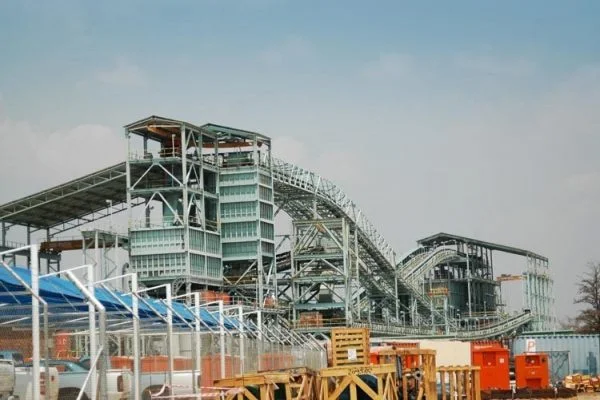
Construction at Segilola, poised to become Nigeria’s first large-scale gold mine, is expected to begin in the second quarter of the year.

Segilola’s development is expected to require an -million investment, recoverable in 1.4 years, and produce 80,000 ounces of gold annually over its five-year mine life.

The Vancouver-based company, which also completed an Independent Preliminary Economic Assessment for a proposed underground extension, said that project would be an initial three-year operation, which can be brought on during the open pit mine life to supplement production.

The underground operation at Segilola, the company said, would require a $13 million-investment and could produce 33,000 ounces of gold annually.

Thor Explorations acquired Segilola, located about 120km from Nigeria’s capital Lagos, in August 2016 and renewed the project’s mining licence (for 25 years) three months later, in November 2016.

The company spent the majority of 2018 undertaking definitive feasibility study work and pre-development work-streams aimed de-risking and optimizing the project following the completion of the prefeasibility study (PFS) in October 2017.

Thor Explorations first captured the attention of the mining and investment community in February last year, when it won the Investing in African Mining Indaba 2018 Battlefield competition and was recognized as the most promising emerging mining company, out of 22 other juniors who participated in the contest.

The company is also working on two other projects: Douta, in south-east Senegal, and Houndé, in western Burkina Faso.

Mining.com

Zambia attracts mining investment

0

Zambia has received bids from Canada’s First Quantum Minerals (FQM) and others for a 17 percent stake in state mining investment arm ZCCM-IH, the finance minister said on Tuesday.

“There are multiple unsolicited offers on the table, including from FQM, which are based on preferential share conversions,” said Margaret Mwanakatwe on the sidelines of a mining conference in Cape Town.

“The offers relate to the ministry’s 17 percent holding in ZCCM-IH and a sale would be subject to cabinet approval,” she said.

Reuters

SA Rand tracks the fortunes of Iron ore

0
If you are searching for clues on how the rand will move next, watch the iron-ore price.

The South African currency is closely tracking the fortunes of the raw material, with the 40-day correlation in daily moves climbing to 0.91 this week, the highest since January 2018. A value of 1 would indicate they moved in lock step.Shares of Kumba Iron Ore Ltd., South Africa’s biggest producer, have jumped 18 percent since the dam collapse

The rand has strengthened 2.5 percent against the dollar since Jan. 25, when a fatal dam disaster at Vale SA’s Brumadinho mine in Brazil curbed iron-ore supplies, sending the price soaring.

About a quarter of the rand’s moves can be ascribed to iron ore prices, according to Standard Bank Group Ltd., with a one percent rise in the commodity equating to about a 0.5 percent gain for the currency. The mineral accounts for 12 percent of total South African mining production and close to 18 percent of base-mineral exports.

“We are in the top 10 ore-producing countries in the world,” Thanda Sithole, a Johannesburg-based economist at Standard Bank, said in a client note. “The rand therefore naturally has a correlation with iron-ore prices.”

Shares of Kumba Iron Ore Ltd., South Africa’s biggest producer, have jumped 18 percent since the dam collapse.

Bloomberg News

Govt targets 4 billion USD mining revenue

0

Zimbabwe is targeting to generate over US$4 billion in revenue from the mining sector this year, Mines minister Winston Chitando has said.

In 2018, the sector earned US$3,4 billion driven by the high performance of the gold sector, which delivered a record 33,2 tonnes, but output could have been higher had it not been for disturbance towards the end of last year.

Foreign currency shortages intensified during the third and fourth quarter last year, leading to cuts in production at a number of mines, which could not pay foreign suppliers.

“Fundamentally, I would like to state that the mining industry is poised to become a US$12 billion industry by 2023 and you may be aware that in 2017, revenues were around US$2,4 billion. Last year, we did about US$3,4 billion. In 2019, we are projecting about US$4 billion and we are getting to US$12 billion by 2023. All the milestones to achieve that are all in place,” Chitando said.

Foreign investor interest in the southern African nation has been growing since the fall of long-time leader Robert Mugabe following a de facto military coup in November 2017.

But the current economic and political turbulence seems to have dampened investor confidence, forcing government officials on a charm offensive.

According to the Chamber of Mines, the country needs up to US$11 billion to modernise its mines and boost production to maximum capacity over the next five years.

Chitando said the diamond sector was also expected to up its contribution in terms of revenue generation.

“We are putting up by the end of this year what we call a Diamond Value Management Centre. This centre will have the latest technology for cleaning and sorting the diamonds because you get higher value for diamond by better cleaning, so we would then put the latest technology and then we get higher value from the cleaning processes,” he said.

Government has an ambitious forecast for diamond output of 4,1 million carats by year-end, up from 1,7 million carats produced in 2018.

NewsDay

Gold delivery surpasses 1999 record

0

GOLD deliveries to Fidelity Printers and Refiners reached a record 33,3 tonnes in 2018, surpassing the 27 tonnes produced in 1999.

The increase has been attributed to measures taken by Government, including curbing leakages.

Government has also introduced a number of programmes to promote gold mining, especially for artisanal miners, who have delivered the largest chunk of the mineral.

In 2017, the country produced 24 tonnes of gold.

President Mnangagwa’s administration introduced empowerment programmes for small scale miners, who mined and delivered 21,67 tonnes of the 33,3 tonnes delivered last year.

Government had set a target of 34 tonnes in 2018.

Addressing a Zanu-PF inter-district meeting in Chegutu over the weekend, Mines and Mining Development Deputy Minister Polite Kambamura said:

“Last year, 21,67 tonnes of gold was produced by artisanal miners, while 11,6 tonnes came from big mining firms.

“After the output as a Ministry, we then approached the President saying the tonnage might rise beyond the current level.”

Deputy Minister Kambamura said Government will continue supporting small scale miners.

“Our President has a noble stance in line with minerals,” he said.

“During his recent tour of Russia and Belarus, among other countries, seeking investment opportunities, he managed to source machines to be used by small scale miners which will be availed soon.”

Deputy Minister Kambamura bemoaned the tendency by some companies to keep claims for speculative reasons.

“For example, Golden Valley has 2 524 claims, but only five blocks are being used,” he said.

“The mine management was told that it should give people tributes, so we gave them up to March 1 this year to cede claims.”

Deputy Minister Kambamura said Government would be forced to take the legal route if such companies did not comply with its directives.

“Government is failing to get returns of its claims,” he said.

“In that case, we will offer capable miners a chance as their little contributions combined can make a significant impact to the fiscus.”

Government has set up a national gold mobilisation task force mandated to ensure all the gold produced in the country goes through formal channels.

The taskforce includes officials from the Ministry of Mines and Mining Development and members of the security forces.

President Mnangagwa has set a target of making Zimbabwe an upper middle income economy by 2030 and mining plays a significant role in attaining this vision.

The Chronicle

Diamond should champion fight against inequality

0

With roughly $15 billion allegedly lost from Marange diamonds, the opportunity to fight inequality through domestic resource mobilisation was possibly squandered. All is not lost though. This undesirable situation can be reversed in the quest to fight inequality.  Government, therefore, must immediately adopt the following measures to ensure that diamonds champion the fight against inequality in Zimbabwe.

The Zimbabwe Consolidated Diamond Company (ZCDC) must give 10% equity to Marange-Zimunya Community Share Ownership Trust (CSOT). This would legally empower the community so that it gets a share of the profit from diamond mining activities in Marange. The softened indigenisation and economic empowerment framework still requires that diamond and platinum sectors cede 10% equity to host communities.

To fully exploit diamonds in Marange in a manner that promotes community access, ownership and control of resources, ZCDC must move with speed to formalise artisanal diamond mining activities. “Indeed, there was greater economic impact from diamonds during times of uncontrolled alluvial panning than what is being realised following introduction of formal diamond mining arrangements,” former Finance minister, Patrick Chinamasa, said in his 2016 National Budget statement. 

Formalising artisanal diamond mining resonates well with the Washington Declaration on Integrating Development of Artisanal and Small Scale Diamond Mining with Kimberley Process Implementation, Kimberly Process (KP).

ZCDC must disclose payments made to different government institutions like Mutare Rural District Council (MRDC), various taxes paid to the Zimbabwe Revenue Authority and Ministry of Mines. 

This disclosure would help the public connect the dots between diamond mining activities and mobilisation of tax revenue to fund social service delivery. 

The Constitution, Section 276 (2) (b) empowers local authorities to mobilise resources from economic activities to fund local service delivery. By disclosing tax contributions to Mutare RDC, ZCDC could acquit itself well on how the entity is contributing to local development rather than glossing over its corporate social responsibility activities. All in all, government must  move with speed to implement the extractive industry transparency initiative.

Former companies linked with the looting of Marange diamonds should not be allowed back. 

NewsDay

10 things the government need to do to improve the mining industry

0

The economy of Zimbabwe has become public discourse where expects have come to the conclusion that every Zimbabwean have turned themselves into economic analysts.

By Rudairo D Mapuranga

However, for Zimbabwe to be back to full economic recovery and growth many miners are of the view that the mining industry will contribute significantly to the transformation of the frugality of the country.

Mining Zimbabwe met mining personnel Masango Mahlahla who is of the view that the government needs to take 10 steps to build Zimbabwe’s mining sector and advance indigenous miner ownership from small scale production to large.

The two believe that there is an immediate need for Government to implement ten key points in order for the industry and economy of Zimbabwe to reach unpredictable outcome.

1. The publishing of real-time market based pricing for all minerals including gemstones

Hundreds of Millions of United Sates Dollars in Mining Industry Revenues are lost monthly in Zimbabwe due to the unavailability of Real-Time Market Based Pricing across all minerals and gemstones. The 60 plus minerals currently identified by the government must receive up to date pricing which is aligned to the international market to facilitate indigenous investment into our diverse mineral and gemstone market.

This will also enable the banking sector who also relies on pricing reports to support the sector via loan programs as banks cannot issue loans without being able to price or value the commodity to be mined and exported. Favorable export sales contract negotiations require Published Real-Time Market Based Pricing. Small Scale miners are vulnerable to predatory buyers across all minerals especially the Semi-Precious Gemstones as pricing is not widely known.

2. URGENT need for a large number of international and domestic buyers for all 60 plus minerals and gemstones

There is an urgent need for Government to attract a large number of international and domestic buyers to boost competition and break up the current mineral buying cartels currently operating in Zimbabwe. Having a small number of international and domestic mineral buyers has led to the establishment of cartels who operating under different names are artificially forcing low pricing which in turn supresses growth within a capital intensive mining sector. A Published List of Buyers along with current pricing is needed to help miners to plan their business investments and prevent predatory buying.

3. There is an urgent need to create a functional semi-precious gemstone market place

Government will greatly benefit from formalizing a semi-precious market or trade centre within the formalized market places: Miners will be able to display their semi-precious stones, receive valuation appraisals, while multiple buyers are onsite to competitively purchase the stones on display. Currently unfavourable transactions occur due to a lack of competitive buyers, often our semiprecious stones leave our nation to be sold outside of Zimbabwe on the informal market.

4. Urgent need for 100% allocation of foreign currency to miners on all mineral and semi-precious stone exports

Mining is heavily capital intensive with all machinery requiring foreign currency for both the purchase of parts and production equipment.

In order to promote indigenous miner growth all of the foreign currency generated by export sales is required for the re-investment into growth and maintenance of operations.

Currently small-scale mining operational growth is suppressed due to the inability to obtain foreign currency to upgrade, replace and maintain mining equipment.

With the recent move to ban companies from obtaining foreign currency on the parallel market, it is now critical to grant miners full access to the export foreign currency they earn via their own operation in order to ensure their businesses remain viable. The current Reserve Bank of Zimbabwe (RBZ) foreign currency allocation of foreign currency allocation to mineral exporters is not viable and has led to the idling of mines across all minerals. Gold, Chrome and other minerals have experienced drastic reductions in production and will continue to experience further decline until this urgent matter is corrected to allow for miners to manage their own foreign currency revenue generation.

5. Need for greater involvement of the banking sector to boost efficiencies in the processing of export documents

As per the prior miner challenges documents, RBZ noted a reduced export period to obtain CD1s in an effort to increase exports, as noted the times were supposed to be reduced to 48hours. However at MMCZ CD1 processing takes between 10-12 days to process and some miners have been made to wait 3 weeks for their export documents. Again this delay discourages exports from small scale miners as the finance cost accrues while the product is waiting at the mine for the export documents to be processed. Note all transactions are based on a prepayment further increasing the cost of purchasing from a small-scale miner further deterring repeat purchases by the buyer. As per international standards, Zimbabwean Banks should process the CD1 directly in order to greatly reduce the processing time and enable the foreign currency generated by the exports to enter the banking system.

6. Need for domestic & international financing options

Currently MMCZ does not accept letters of credit or other internationally recognized bank financing and export trade instruments.

In the case of buyers with strong banking relationships buyers should be allowed via RBZ to transact via their Pan African investment vehicles in order to secure long term contracts and consistent orders using the financing tools of international trade. One example would be to utilize the investment financing arrangements RBZ has with African Export Import Bank. In order to boost sector revenue growth, Government should allow our domestic banks to re-engage our sector and utilize financial instruments in order to facilitate international mineral and semi-precious stone export and trade.

7. Investment into mining production statistics

Investment must be made into statistical software or reporting to aid in the analysis of our mineral portfolios.

This investment will allow Government to track mineral and semi-precious export growth and help to target minerals and semiprecious stones which need further program development and investment.

Current published statistical data is not sufficient to support Mineral and Mining Program Development and the lack of details discourages major investment into the sector by the Investment, banking and financing industries. It also places indigenous miners at a major disadvantage when seeking new mining investment as well during operational investment planning.

8. investment into weighbridge, logistical support, testing centers & centralized consolidation buying hubs

In accordance to sections 43 & 44 of the MMCZ Act, the following will provide strong support for the small scale miner’s sector growth across all minerals and semi-precious stones: Price Regulations of both the foreign and domestic market (Publishing Pricing).

The Establishment of Buying Hubs which would provide support and regional buying hubs within reach of buyers Encourage local Beneficiation of Chrome Ore & Base Metals (via the establishment of Micro Smelters and Smelter Tolling Arrangements) .

Support Logistics and the delivery of minerals to the end customer. Another challenge noted by miners is the extremely high VID weighbridge charges: MMCZ announced in 2017 that a tender was issued to supply weighbridges near the mining towns in order reduce costs from the current average of $7.27 per tonne or $240 per truck which includes reweighs. The hope was that the costs would come down to average $0.91 per tonne or average $30 per truck with reweighs.

9. Support the Zimbabwe Miners Federation formalization programs for ASM and Small Scale Miners

This will greatly increase the sustainable mining production of all minerals and semi-precious stones nationwide by indigenous miners while ensuring compliance to regulation and safety requirements. Equally important, it will aid towards our Nation’s 2030 target set by Zimbabwe’s President to become a middle-income earning country.

10. Partner with Zimbabwe Miners Federation & provide funding for equipment and operational management

ZMF via its affiliated associations is working to formalize and boost production of its growing membership across the nation. Government can fulfil its mandate of promoting production growth of the small-scale miner by providing operational funding to ZMF as well as by dispersing mining equipment and machinery via ZMF.

The structures within ZMF, consisting of miners provide the federation with a strong relationship base as well as an advanced understanding of the needs of the sector and its members making the Federation an effective resource to channel investment to successfully grow the sector. In addition to the formalization drive, there is a need to fund Mineral Identification and Mining Technique and Mineral specialization Programing.

This will ensure our local communities will benefit and exploit their own resources which are either currently being ignored or suffering from predatory buying due to the lack of knowledge of the value of the minerals and semi-precious stones found in the local communities. ZMF is embarking on such programs and requires government support and funding to successfully fulfil this undertaking as it works to boost provincial and national economic growth.


Caledonia life extended

0

Toronto Stock Exchange (TSX) listed Caledonia Mining Corporation, whose main and only producing asset is Zimbabwe based Blanket Mine, says successful exploration at the gold mine has extended the life of mine (LOM) from six to 14 years.

Gold mining is Zimbabwe’s second biggest export earner after tobacco and national production totalled 33,2 tonnes last year against a stretched target of 32 tonnes from 24,8 tonnes achieved in 2017. Blanket is one of Zimbabwe’s major gold producers.

Caledonia, which achieved its 2018 gold production target at Blanket Mine, said it has announced seven successive increases in the resource base, which has more than doubled the gold mine’s LOM.

The mining group, which saw gold production hit the target of 54 000 ounces in 2018, is targeting between 53 000 ounces and 56 000 ounces this year and expects to reach 80 000 ounces by 2021 when it completes its central shaft drilling project designed to ramp up output.

“Following an increase in exploration activity at Blanket, since early 2015 Caledonia has announced  seven successive increases in the resource base as a result of which Blanket’s life of mine has been extended from six years as at the end of 2014, to 14 years as at the end of 2018. Exploration continues at Blanket with the objective of further extending Blanket’s life of mine,” Caledonia said this week.

Until the central shaft has been commissioned in 2021, production at Blanket is expected to remain at broadly the same level as achieved in 2017 and 2018. Caledonia therefore expects to produce between 53 000 and 56 000 ounces in 2019.

Approximately 14 952 ounces of gold were produced during the quarter ended December 31, 2018, 7 per cent higher than the previous quarter. Total gold production for the year to December 31, 2018 was approximately 54 512 ounces, which is in line with 2018 production guidance which was a range of 54 000 to 56 000 ounces

“Blanket finished 2018 with adequate mining and development infrastructure in place to deliver on this target (53 000-56 000oz in 2019) and we have made a good start to 2019,” Caledonia chief executive Steve Curtis said this week.

“Completion of the central shaft is the key to Blanket achieving its planned production of approximately 80 000 ounces of gold per annum from 2021 onwards. I expect that sinking work at central shaft will be completed by mid-year after which we will start to equip the shaft,” Curtis added.

This part of the central shaft project is relatively capital intensive. As such, Caledonia said that it had secured price hedging contracts, which will see the mining group getting a minimum price of US$1 250 per ounce for the next 5 months.

“In light of our significant capital expenditure commitments, we believe it is prudent to take advantage of the recent strengthening of the gold price and we have therefore secured a minimum received gold price of $1 250 per ounce for the 5 months to June 2019 whilst maintaining full upside exposure to the gold price through a cost effective option structure,” Curtis said.

The central shaft project is in the final 18 months of construction and capital investment on this project is projected to be lower in the second half of 2019 and to reduce further in 2020 as it nears completion.

Business Weekly

Gold panning in Manicaland reduced

0

Problems caused by illegal gold mining operations across the country have been a thorn in the flesh for the Government for years.

The police have had running battling battles with gold panners who have, for decades, thrown caution to the wind in search for the yellow metal along river beds, causing untold suffering on humans, wildlife and the environment.

Although Government has been on a drive to formalise and regulate unregistered mining operators, the illegal gold panning has continued to affect communities as the miners use mercury and other dangerous mining methods.

It is estimated that a total of 1,5 million people are engaged in artisanal mining across the country. However, only a quarter of that number is registered. The biggest cause for concern has been the use of mercury that has caused pollution to the water that people living in those communities cannot safely drink.

And this has been a cause for concern in Manicaland and Manica provinces for decades.

Riverbed mining by the gold panners has been a source of headache for the Governments of Zimbabwe and Mozambique as it has contributed to the pollution of two major rivers that are shared by the two countries.

According to research done in 2007, the sediment concentrations in Pungwe River vastly increased between 2003 and 2004 due to an increase of the informal gold mining activities.

The same had happened to Rusitu River, which originates from the Chimanimani Valley and stretches all the way into Mozambique.

The panners have resisted the call to stop riverbed mining as well as the one to stop using dangerous substances like mercury. Even strong arm tactics like bringing in the police to forcibly remove them have only seen them go for a while and coming back the very minute police turn their backs.

The bringing in of professional companies to take over riverbed mining in those contentious areas might be the one that will finally work.

According to the Manicaland provincial administrator Mr Edgars Seenza, Government has engaged a Belarus company to come in to sustainably mine alluvial gold along the Pungwe and Rusitu riverbeds.

“The Joint Operation Command made efforts to contain the illegal gold miners but they came back and continued polluting the environment. The plan now is to bring in companies that will mine sustainably along the riverbeds. The company will employ those miners who have been working there so they can continue to make a decent living through formal employment ,” he said.

The arrangement to bring in the Belarus company was part of the deals signed by Government in Belarus last year in March where the Minister of Mines and Mining Development Winston Chitando and the Chief of Presidential Affairs of Belarus, General Colonel Victor Sheiman, signed a joint mining deal for the extraction of alluvial gold. The company is expected to de-silt Zimbabwean rivers and recover minerals from the rivers.

The company is expected to mine along Pungwe River while another company would take over mining along the Rusitu River.

“We will have the Belarus company mining along the DTZ-OZGEO area. The company is already on the ground carrying out Environmental Impact Assessments (EIA) before they can move on site. Another company will take the area around the Rusitu River,” said Mr Seenza.

To augment this initiative, Government has been coming up with ways of adopting riverbed mining technologies used in countries such as Namibia and South Africa.

The only question, however, remains if the gold panners are willing to be tied down to a company and heed Government’s efforts to channel their expertise towards a more formalised way of working?

Business Weekly

Zimplats earns more money from Palladium than platinum

0

Resources group, Zimplats Holdings Limited’s profit for the quarter to December 2018 jumped 56 percent to $63,8 million from $40,7 million achieved in the prior year comparative  period with the miner making more money from palladium than platinum.

Figures from the platinum group show that profit was also 71 percent above the previous quarter’s $37 million.

Revenue for the quarter fell 17 percent to $152 million from comparable prior year period but rose 10 percent from previous quarter due to an increase in metal prices.

Gross revenue per 4E ounce increased by 19 percent to $1 173, which was partly offset by a 7 percent reduction in volume of 4E metal sold.

Net operating costs decreased by 40 percent compared to the same quarter in the prior year and 14 percent from previous quarter mainly due to the decrease in sales volumes and an increase in export incentive.

Royalty and commission expenses increased by 13 percent from the previous quarter due to the increase in sales revenue (driven mainly by palladium and gold).

During the quarter under review, palladium and platinum were the biggest revenue contributors each accounting for $66 million and $46 million respectively.

Revenue from palladium rose 37 percent from previous quarter, but was 1 percent below prior year comparable period.

At $9 million, revenue from gold was 16 percent below same period in 2017 but 10 percent above the previous quarter.

Revenue from platinum fell 32 percent to $46 million matched to comparable prior year while it was 5 percent below the previous quarter.

During the period under review, ore mined increased by 3 percent from the previous quarter mainly due to productivity improvement initiatives implemented during the quarter.

“However, production for the quarter decreased by 5 percent from the same period last year due to the closure of the South Pit Mine in March 2018,” said Zimplats.

Tonnes milled decreased by 3 percent from the previous quarter due to a lower milling rate and a decrease in the running time of the mills due to the planned SMC concentrator mill reline shutdown.

Zimplats said 4E metal sales for the quarter amounted to 130 432 ounces, which was 7 percent lower than the previous quarter, mainly due to the decrease in metal production and some negative adjustments to sales in the pipeline.

The 4E head grade improved to 3,24g/t from 3,23g/t in the previous quarter, reflecting consistent grade control at the mines.

Concentrates smelted decreased by 5 percent due to a routine seven-day furnace taphole inspection shutdown.

“Overall, 4E metal production in final product decreased by 5 percent from the previous quarter, in line with the decrease in the volume of concentrates smelted,” said Zimplats.

Meanwhile, the redevelopment of Bimha Mine remains on schedule while the development of Mupani Mine (the replacement for Ngwarati and Rukodzi mines) is ahead of schedule, targeting ore contact by August 2019 and full production in August 2025.

Bimha Mine is Zimplats’ biggest mine out of four other mining units in Ngezi. The mine was shut down as a precautionary measure following the partial collapse of the mining footprint in July 2014 due to regional instability induced by the geological Mutambara Shear.

Business Weekly